 73
Intel Panther Lake Review - The Efficiency King That Can Game
Packaging & Contents »Inside Intel Panther Lake
Let's talk about the "elephant in the room" that is revealed: Panther Lake.While the last generation of Intel chips felt like a solid step forward, Panther Lake is the leap Intel has been promising for years. This isn't just another incremental spec bump; it's the moment Intel tries to take back the efficiency crown from Apple's silicon.
On this page we will summarize Panther Lake's most important aspects. For all the details with lots of additional explanation, check out our Panther Lake Technical Deep Dive.
The "Under-the-Hood" Magic (Intel 18A)
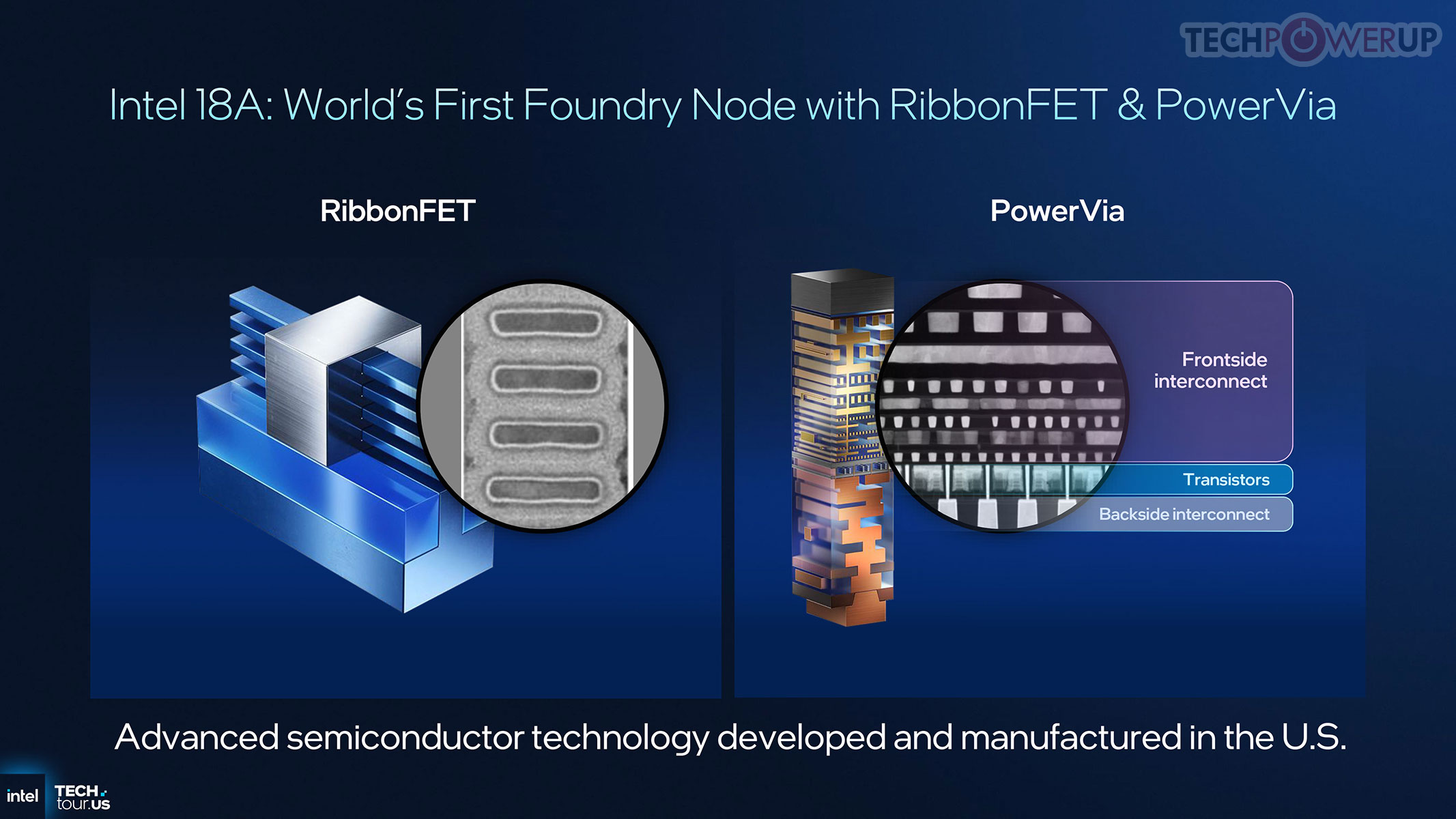
The biggest deal here is the 18A process node. For the first time in a decade, Intel is changing the transistor makeup, by using a brand-new architecture called RibbonFET plus something called PowerVia.
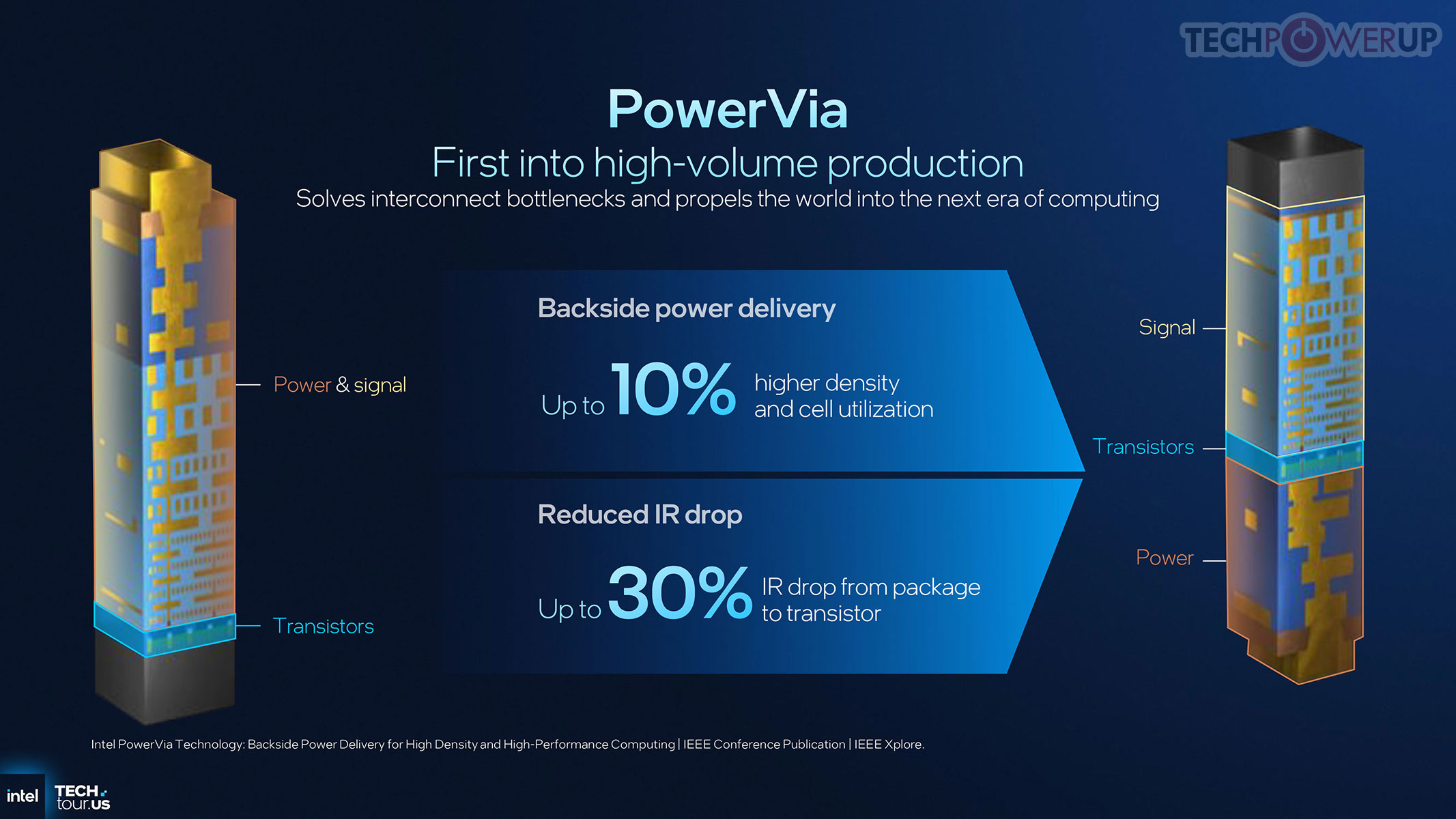
If PowerVia sounds unusual to you, think of it like good cable management. Instead of cramming the power delivery lines in with the data lines, Intel is moving the "power cords" to the back of the chip. This clears up congestion, reduces heat, and lets the chip run much more efficiently and cooler. That translates to a laptop that stays cooler on your lap, it won't burn your hips, and it doesn't need to spin its fans up right away when you open ten Chrome tabs.
Graphics That Might Finally Kill the Entry-Level GPU
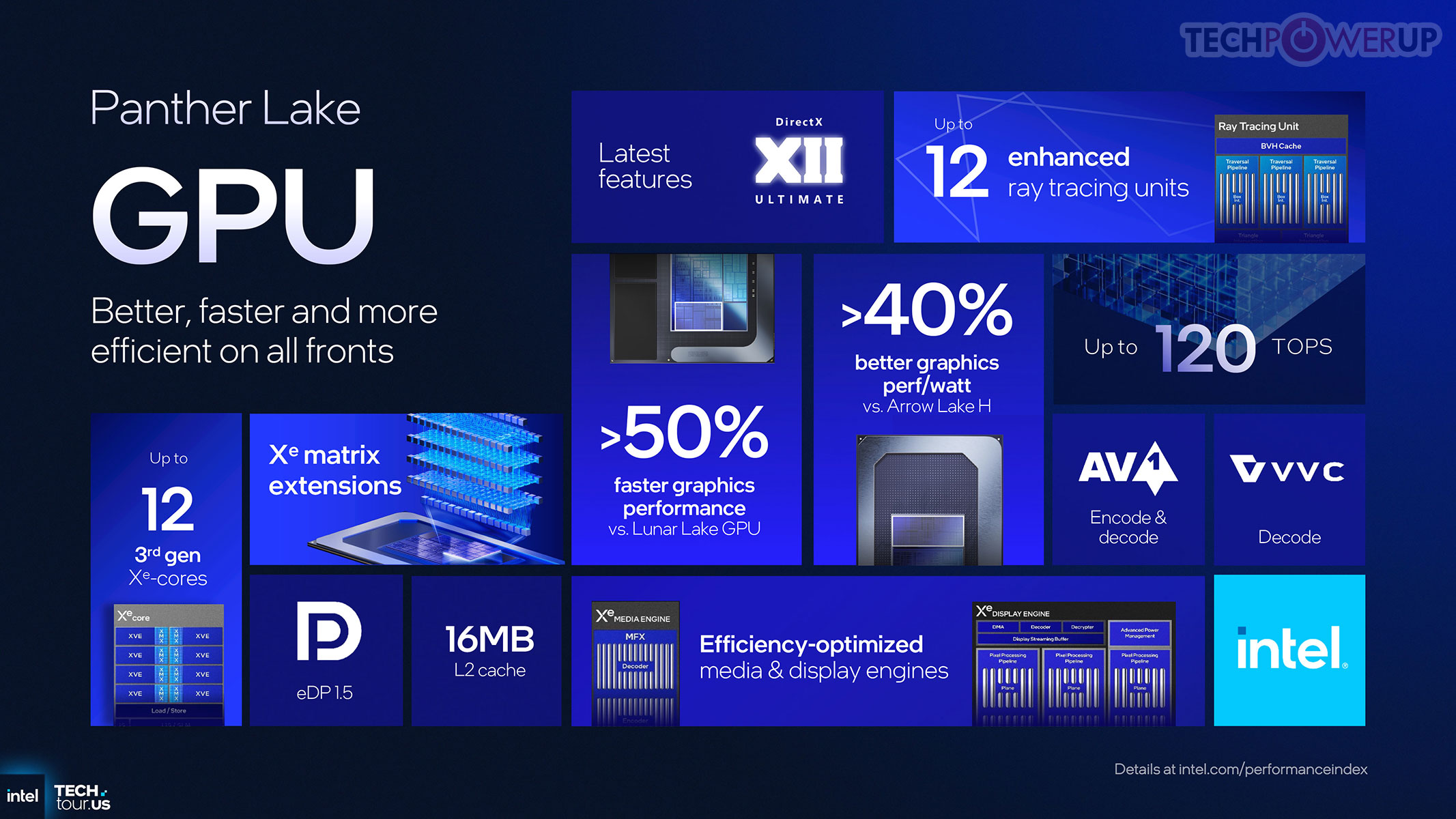
No matter if you are a casual gamer or a photo/video editor, the Xe3 graphics architecture is the part you may care about. While it's still based on an improved Battlemage, i.e. not Celestial, it definitely helps. We've seen huge gains recently with Arc graphics, and PTL comes with a massive jump in performance per watt. We're reaching a point where a thin-and-light laptop might actually handle AAA games at 1080p without needing a bulky, dedicated NVIDIA chip. Yes, Team Green, AMD is kind of in no man's land when it comes to mobile dGPUs.
The Core Hybrid: Efficiency First
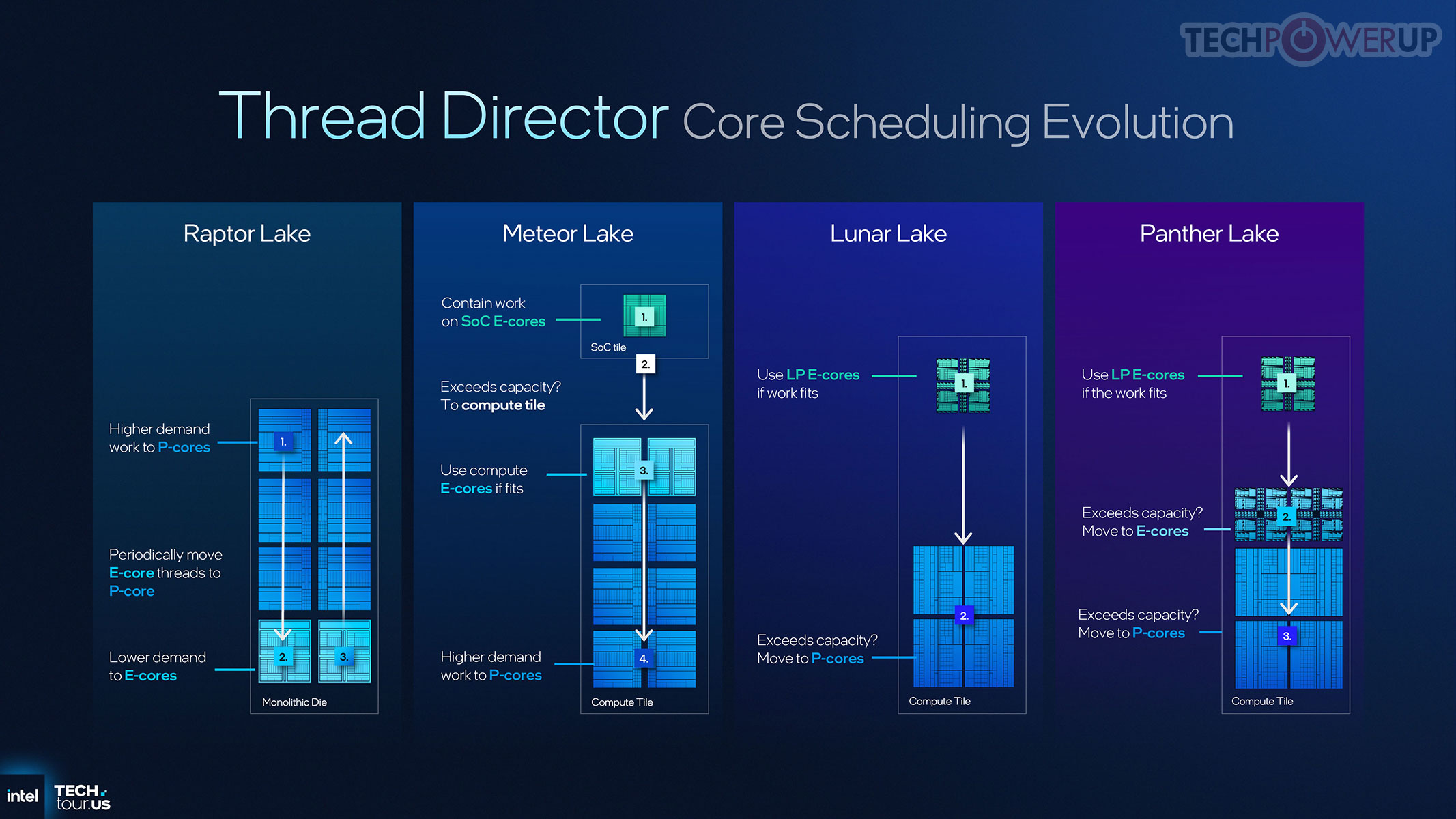
Panther Lake uses a mix of Cougar Cove (P-cores) and Skymont (E-cores). The P-cores are there for the "oomph"—when you're exporting a 4K video, gaming, or crunching a massive spreadsheet. The E-cores are the real heroes for daily use. They've become so efficient that they can handle almost everything you do on battery power, leaving the hungry P-cores "asleep" until they are absolutely necessary.
Why the AI Hype Actually Matters Here
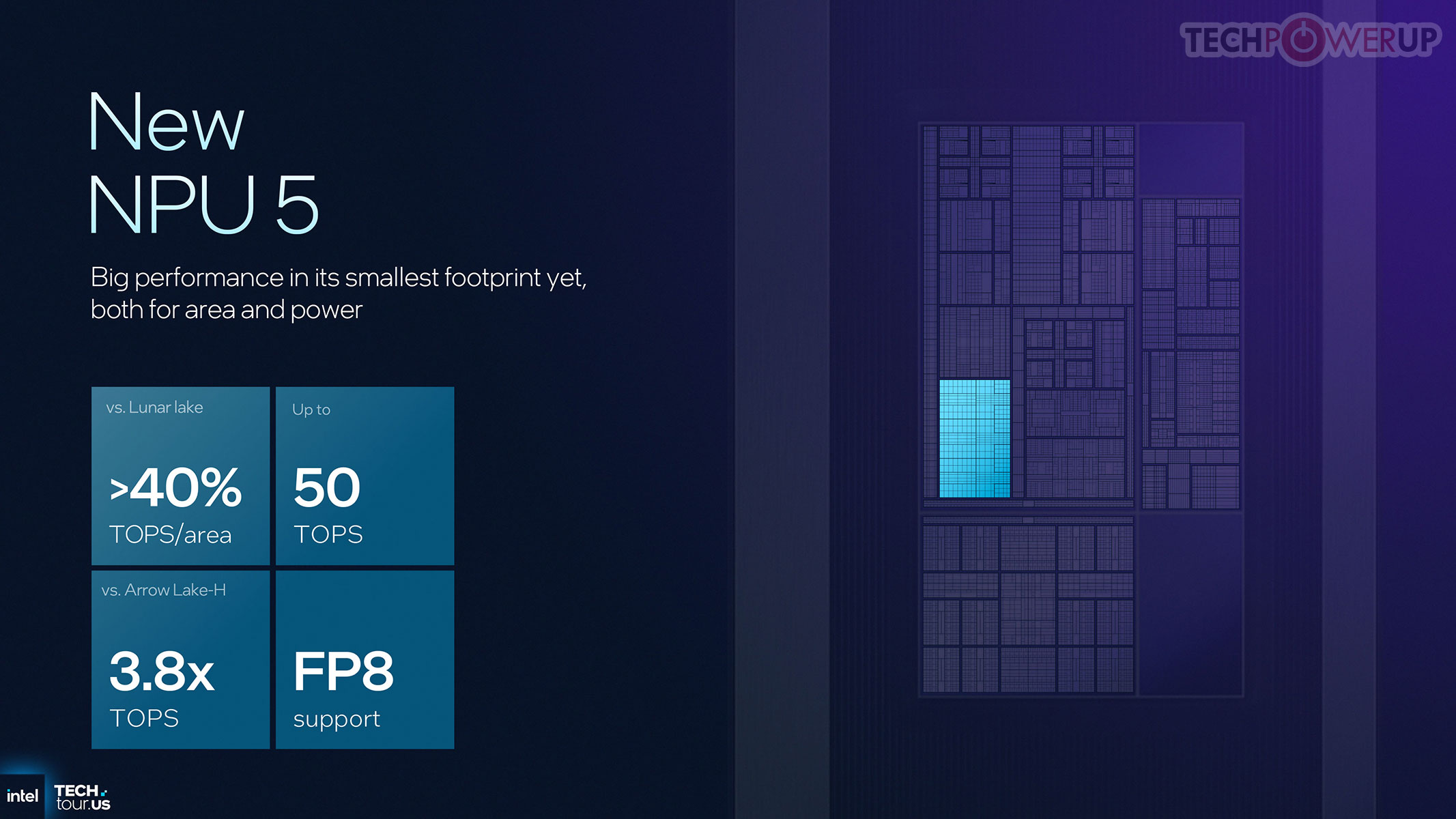
We're all a bit tired of the "AI PC" marketing, but Panther Lake introduces NPU 5. This isn't just about chatbots; it's about background tasks like noise cancellation, eye-tracking during calls, and intelligent battery management that learns your habits. It's essentially a dedicated coprocessor that does the heavy lifting, so your main CPU can stay cool and save energy.
The Bottom Line
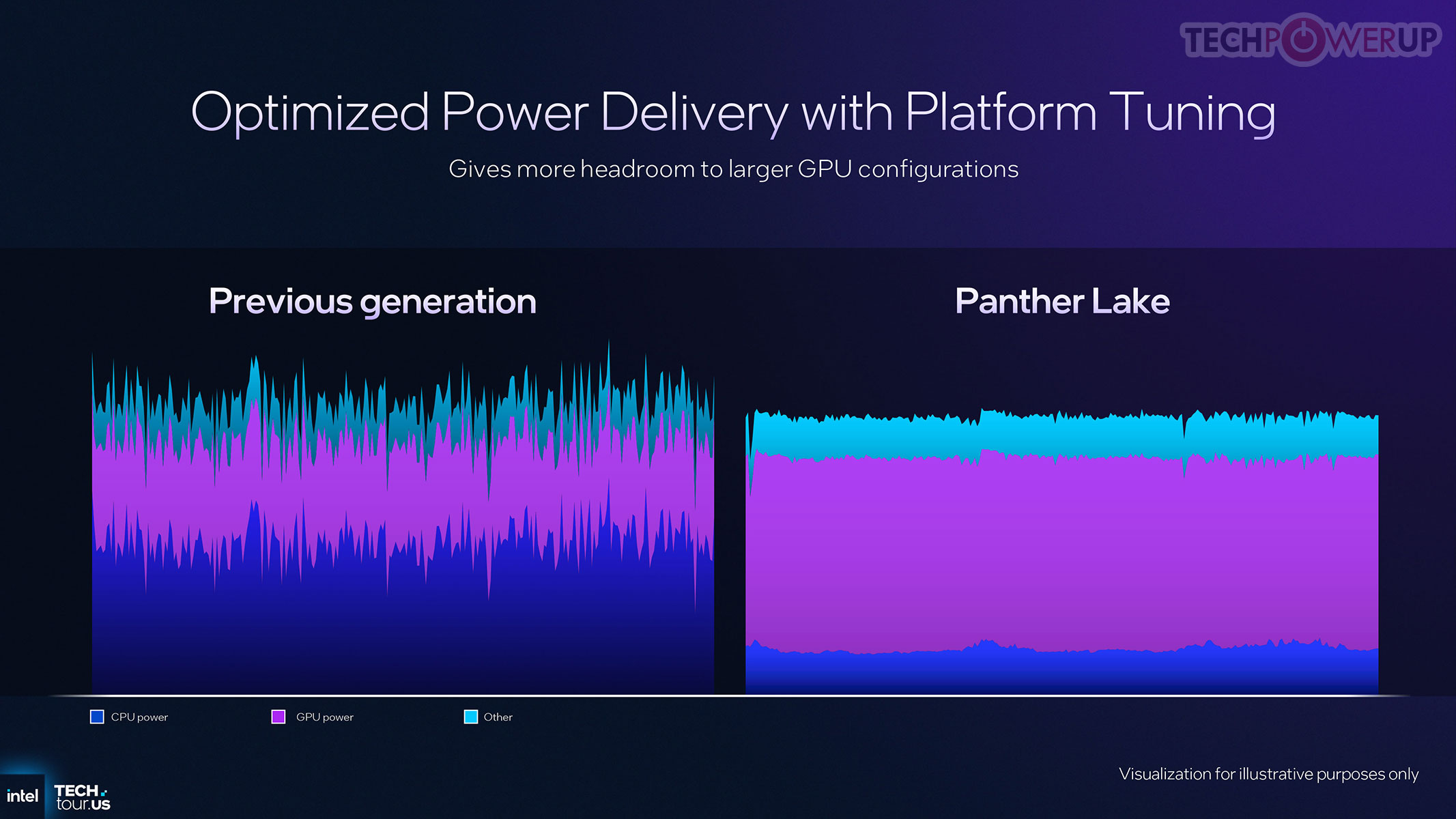
If you're reading this review because you need a laptop now, hardware is always evolving. But Panther Lake is the reason the next eighteen months are going to be interesting. It represents Intel's shift away from "just more power" toward "better intelligence and efficiency." Besides the one off Lunar Lake, it's the first time in a long time that an Intel chip feels designed specifically for how we actually use laptops: on the go, off the charger, and without the heat.
Nov 14th, 2026 14:50 CST
change timezone
Latest GPU Drivers
New Forum Posts
- Your PC ATM (36426)
- Windows 11 General Discussion (7728)
- WarpCoreBench scores! (30)
- Tell me about your favourite graphics card (78)
- What can the FX 8320 do today? Here is the answer. (37)
- Bios Soyo rx580 8g (13)
- auto-closed by somethings by actions (1)
- What card do I get for VR? (30)
- no "PhysX" workable (10)
- TPU's Nostalgic Hardware Club (22162)
Popular Reviews
- AMD Zen 6 Technical Deep Dive
- ASUS ROG Strix B850-I Gaming Wi-Fi7 W Review
- Corsair HX1000i Shift Crystal Review
- NZXT C1200 Platinum Review
- Upcoming Hardware Launches 2027 (Updated Nov 2026)
- Montech King 95 3D PRO Review
- NZXT H7 RGB+ Review
- NZXT H5 Review
- Phantom Blade Zero Performance Benchmark Review - 35 GPUs Tested
- XPG NIMBUS PLUS Review - Mid-range Chair With Strong Competitors
TPU on YouTube
Controversial News Posts
- NVIDIA Co-Founder and CEO Jensen Huang Officially Resigns (403)
- OpenAI CEO Argues Home PCs Waste the World's Limited DRAM Supply (152)
- NVIDIA Launches Investigation Into Jensen Huang's Relationship With Suspected Chinese Spy (136)
- Intel "Raptor Lake Next" 16-Core and 20-Core CPUs Surface (130)
- Legendary Game Studio BioWare Shuts Down Following EA Layoffs (104)
- Dell CEO Says the Memory Shortage Will Get Worse in 2027 (95)
- NVIDIA GeForce RTX 50-Series Scheduled for up to $500 Price Hike This Week (89)
- Modder Fits RTX 5090 With Four 8-Pin Connectors, Halving Current per Wire (80)