 5
Endorfy Viro Infra Wireless Review - Win Some, Lose Some
Sound Quality »Wireless Performance
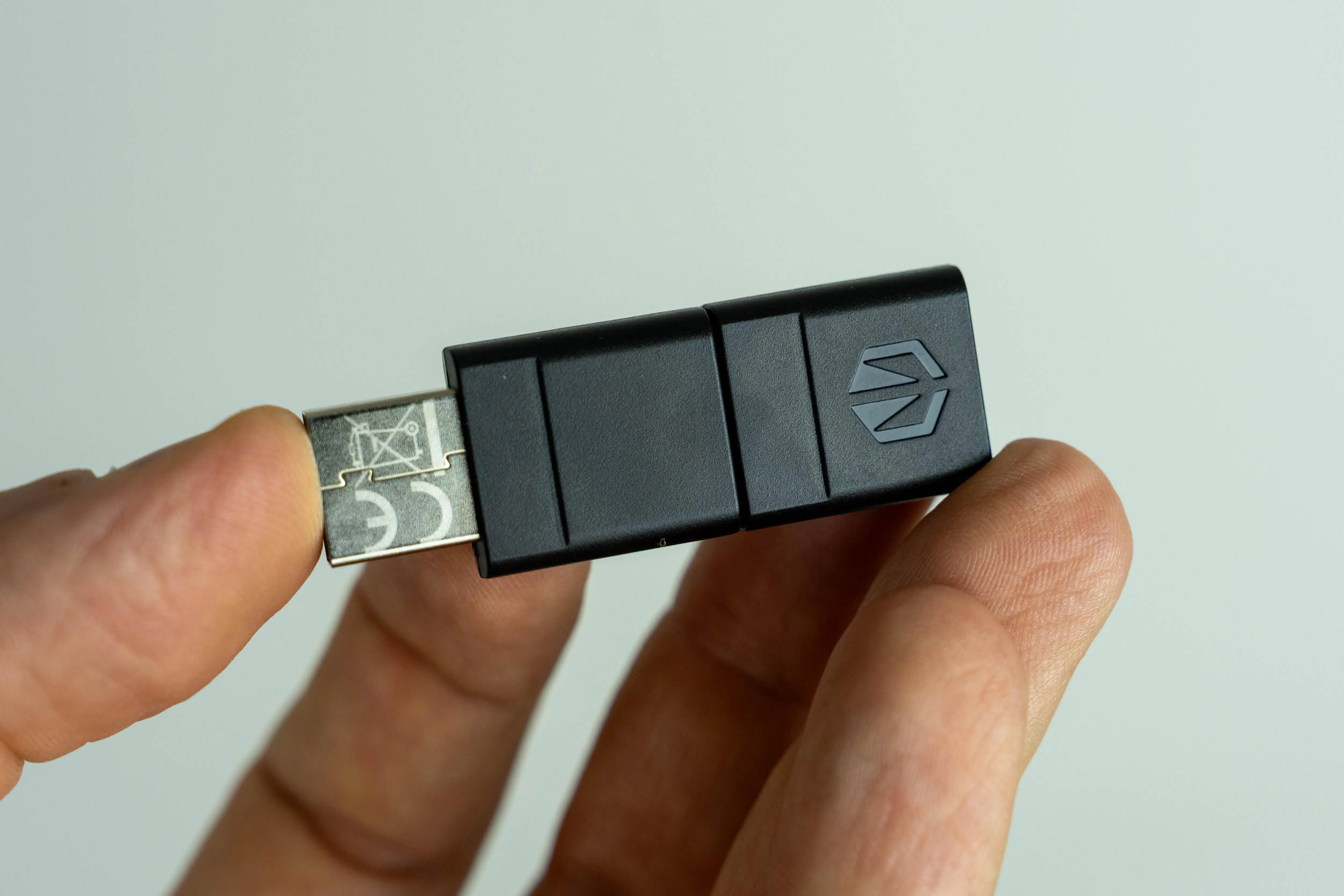
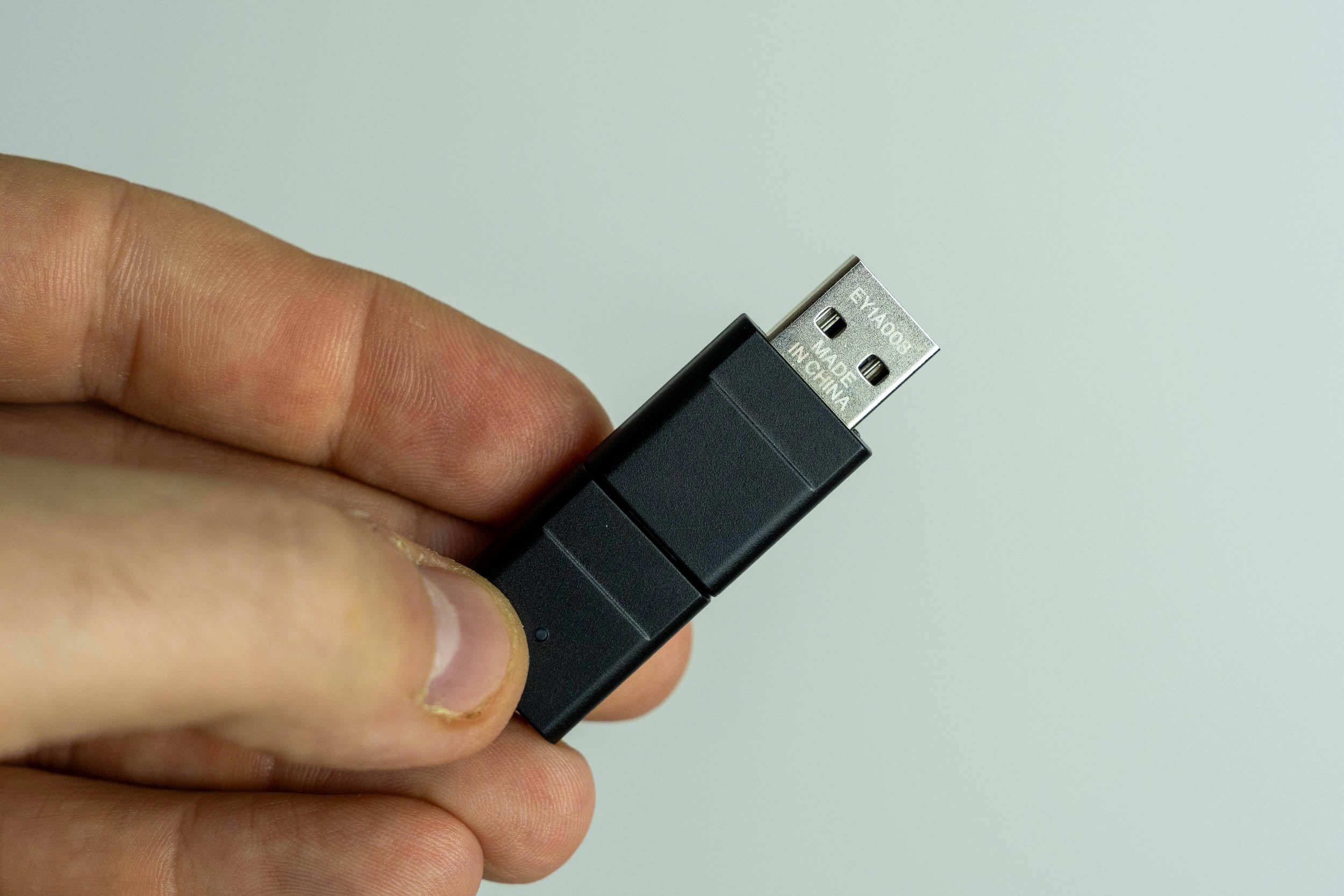
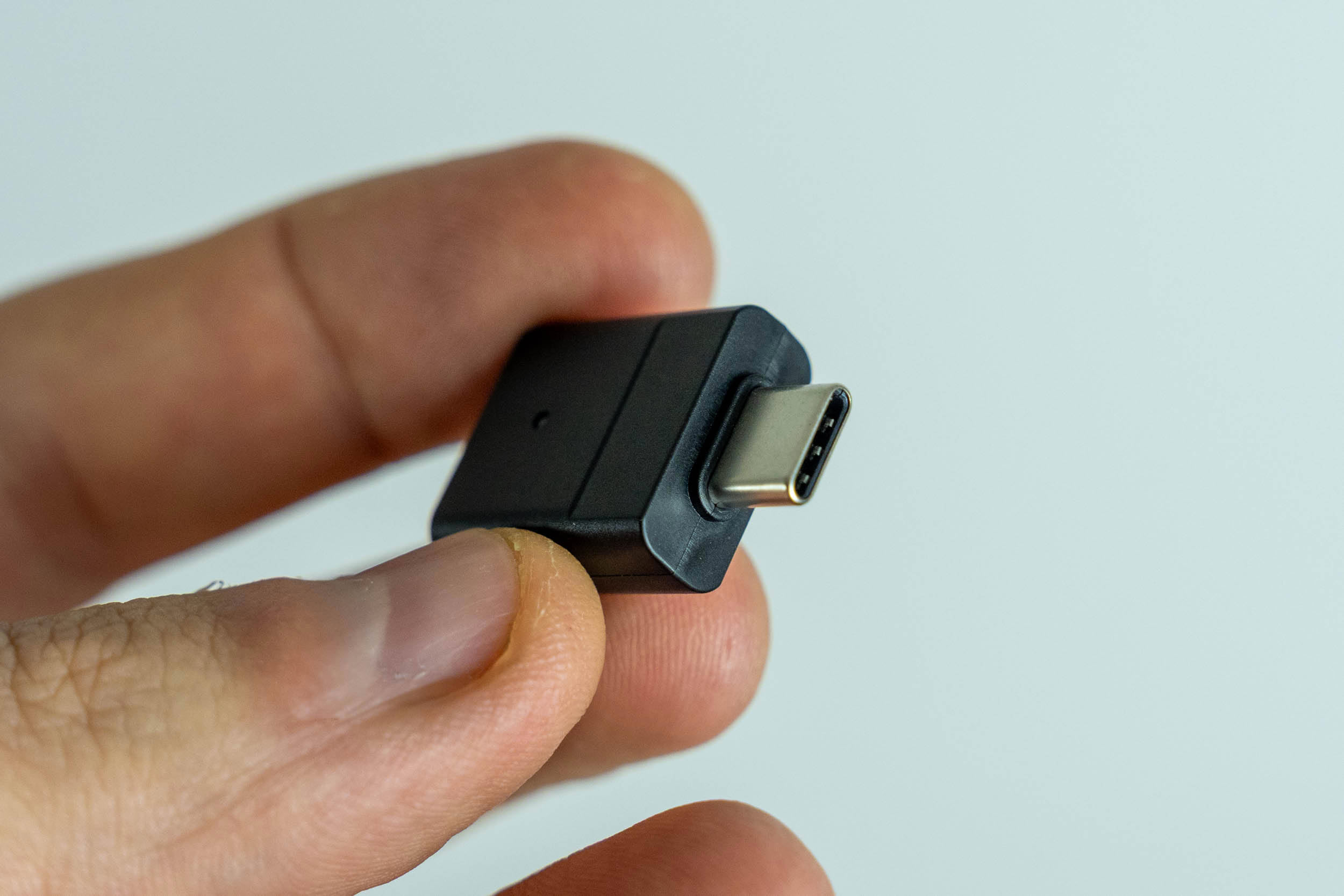
This is one area where the cheaper model does better than the more expensive one. The Viro Infra Wireless comes with a genuinely compact USB-C wireless dongle, and the USB Type-A "dongle" is actually just a small adapter that slips over it. The result is a very practical solution. The USB-C dongle is small enough not to block any adjacent ports, whether you plug it into a laptop, a phone, a PlayStation 5 or a handheld gaming PC, and with the adapter attached, it fits just as neatly into a Type-A port on your PC. There's no dangling cable involved, and no need to worry about which port to use. Frankly, this is how the Viro Wireless' dongle should have been designed, too.
In my tests, the 2.4 GHz link was stable, with no dropouts, and latency was imperceptible, in line with Endorfy's claimed figure of around 29 ms. Bluetooth works as expected, using Bluetooth 5.1 and the SBC codec. Keep in mind that there's no hybrid mode, so the headset can't maintain a Bluetooth connection to your phone while connected to your PC over 2.4 GHz. Switching between the two requires holding the 2.4 GHz/Bluetooth button for two seconds.
Battery Life
According to Endorfy, the Viro Infra Wireless lasts up to 24 hours in 2.4 GHz mode and up to 40 hours in Bluetooth mode, at 50% volume. The headset is powered by a 750 mAh battery, and a full charge takes around 2.5 hours. In 2.4 GHz mode I was able to get around 20 hours of usage from a single charge at a medium-high listening volume. That's perfectly adequate for a €60 headset, and in line with most of its similarly priced competitors, but it means you'll be charging the Infra every couple of days, rather than every couple of weeks. That's arguably the biggest practical difference between the two models. The good news is that the headset can be used in wired USB mode while charging, so a drained battery won't stop you from playing.
Nov 14th, 2026 08:31 CST
change timezone
Latest GPU Drivers
New Forum Posts
- No screen and keyboard with mouse not being powered on (7)
- What can the FX 8320 do today? Here is the answer. (4)
- Tell me about your favourite graphics card (48)
- What are you playing? (26219)
- 3D Printer Club (851)
- Folding Pie and Milestones!! (10202)
- a note from zachary85's son (9)
- Have you got pie today? (17083)
- Requesting original VBIOS for Gigabyte RX 5700 XT GAMING OC 8G Rev 2.0 (Micron) (3)
- Unallocated space in ssd , is it normal? (19)
Popular Reviews
- AMD Zen 6 Technical Deep Dive
- Corsair HX1000i Shift Crystal Review
- ASUS ROG Strix B850-I Gaming Wi-Fi7 W Review
- NZXT C1200 Platinum Review
- Upcoming Hardware Launches 2027 (Updated Nov 2026)
- Montech King 95 3D PRO Review
- NZXT H7 RGB+ Review
- NZXT H5 Review
- Phantom Blade Zero Performance Benchmark Review - 35 GPUs Tested
- XPG NIMBUS PLUS Review - Mid-range Chair With Strong Competitors
TPU on YouTube
Controversial News Posts
- NVIDIA Co-Founder and CEO Jensen Huang Officially Resigns (386)
- OpenAI CEO Argues Home PCs Waste the World's Limited DRAM Supply (152)
- NVIDIA Launches Investigation Into Jensen Huang's Relationship With Suspected Chinese Spy (136)
- Intel "Raptor Lake Next" 16-Core and 20-Core CPUs Surface (130)
- Legendary Game Studio BioWare Shuts Down Following EA Layoffs (104)
- Dell CEO Says the Memory Shortage Will Get Worse in 2027 (95)
- NVIDIA GeForce RTX 50-Series Scheduled for up to $500 Price Hike This Week (89)
- Modder Fits RTX 5090 With Four 8-Pin Connectors, Halving Current per Wire (80)