 0
Gigabyte Sumo Power Silver 900 W Review
(0 Comments) »Introduction

We would like to thank Gigabyte for supplying the review sample.
Gigabyte is one of the largest companies in the IT hardware field, with a very rich product range including motherboards, graphics cards, notebooks, desktops, various PC components, cellular phones and of course Power Supply Units. Although the company is most well known for their motherboards, from time to time they release a new PSU series, however they do not go after the latest technology in this field.
Gigabyte's latest PSU series is named Sumo Power, probably because its only two members enjoy relative high capacity. The stronger of the two can deliver up to 1200W while the smaller one is rated at 900W. Today we will review the Sumo Power Silver 900W in order to find out how it stands against the fierce competition.
Briefly, the Sumo Power Silver 900W, according to Gigabyte, features an entirely new circuit design and on top of that it is 80 Plus Silver certified so it will save you some bucks on the electricity bill. The holdup capacitor is Japan made, in its secondary side solid capacitors are used for prolonged lifespan and the +12V rail is split into five virtual rails. Finally the PSU utilizes a modular cabling design and the 120mm sleeve-bearing cooling fan features blue LED lighting, which can be deactivated by a switch in the front of the unit.

Specifications
| Gigabyte Sumo Power 900W Features & Specs | |
|---|---|
| Max. DC Output | 900W (950W Peak) |
| PFC | Active PFC |
| Efficiency | 80 PLUS Silver |
| Operating temperature | 0°C - 40°C |
| Protections | Over Voltage Protection Under Voltage Protection Over Current Protection Over Power Protection Over Temperature Protection Short Circuit Protection |
| Cooling | 120 mm Sleeve Bearing Fan |
| Dimensions | 150 mm (W) x 86 mm (H) x 200 mm (D) |
| Weight | 2.5 kg |
| Compliance | ATX12V v2.3, EPS 2.91 |
| Warranty | 3 years |
| Price at time of review (exc. VAT) | $199 (MSRP) |
All available protections are present including the rare Over Temperature Protection, which will be useful with the low maximum operating temperature of 40°C. The cooling fan is equipped with sleeve bearings so its lifespan will be not be as long as a ball bearings one, but at low RPMs it will produce less noise. Here we should stress also that for a PSU with 200mm of depth a 120mm fan looks strange. We wonder why the manufacturer didn't use a 140mm fan instead, which would operate at lower RPMs, producting less noise. Finally for merely 900W, the unit has very large footprint. Better make sure that your case supports such a long PSU before you purchase it.
| Gigabyte Sumo Power 900W Power Specs | |||||||||||
|---|---|---|---|---|---|---|---|---|---|---|---|
| Rail | 3.3V | 5V | 12V1 | 12V2 | 12V3 | 12V4 | 12V5 | 5VSB | -12V | ||
| Max. Power | 25A | 25A | 25A | 25A | 25A | 28A | 28A | 4A | 0.5A | ||
| 166W | 864W | 20W | 6W | ||||||||
| Total Max. Power | 900W | ||||||||||
There are five +12V rails present, with two having 3 Amps high max current. The max power each +12V rail can provide is relatively small for power hungry VGAs (e.g. an o/ced GTX580), but thankfully the OCP trigger point is much higher so there won't be any problems. Also the combined power that all +12V virtual rails can deliver is close enough to the max capacity, thus greatly enhancing the PSU's usability. Finally the minor rails are pretty strong with 166W max power and the same applies to the 5VSB rail which can deliver up to 4A.
Cables & Connectors, Power Distribution
| Native Cables | |
|---|---|
| ATX connector (550mm) | 20+4 pin |
| 4+4 pin EPS12V/ATX12V (550mm) | 1 |
| 8 pin EPS12V | 1 |
| Modular Cables | |
| 6+2 pin PCIe (500mm+95mm) | 6 |
| SATA (500mm+150mm+150mm+150mm) | 12 |
| 4 pin Molex (500mm+150mm+150mm) | 3 |
| 4 pin Molex (500mm+150mm) / FDD(+150mm) | 2 / 1 |
As you can see, the unit is equipped with lots of connectors. The problem is that all cables are relatively short, especially the EPS and the PCIe ones, so in large cases users may face problems. Also the distance between the PCIe connectors is really short and we faced problems even while we were connecting the connectors to our test fixture, where PCIe sockets are really close to each other. Thankfully the distance between the peripheral and SATA connectors is the recommended one, by ATX spec. Finally, all connectors use the normal 18AWG gauges but we would prefer at least the native cables to have 16AWG wires.
| Power Distribution | |
|---|---|
| 12V1 | ATX, SATA, Peripheral |
| 12V2 | 4+4pin EPS, 8pin EPS |
| 12V3 | PCIe1, PCIe2 |
| 12V4 | PCIe3, PCIe4 |
| 12V5 | PCIe5, PCIe6 |
As you can see the EPS and PCIe connectors are powered from different +12V rails. The only problem is that, in to our opinion, two EPS connectors on only one +12V rail with 25A max power (at least on paper) is too much. However this was the best option, based on the number of PCIe connectors and the available virtual rails.
Packaging


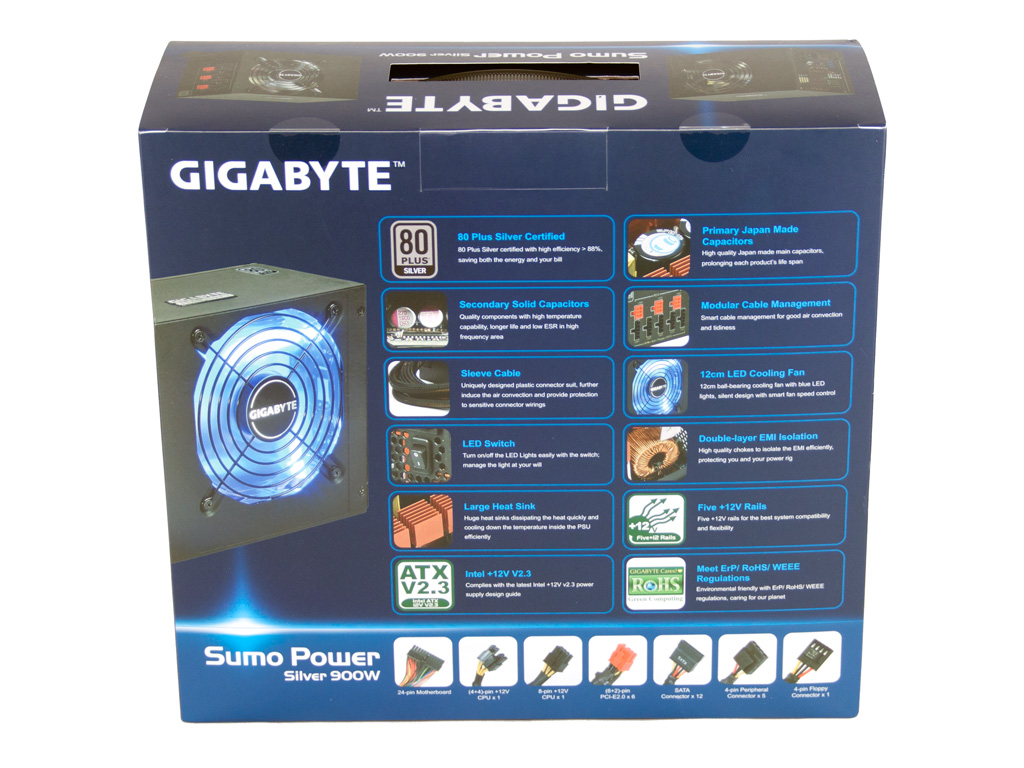
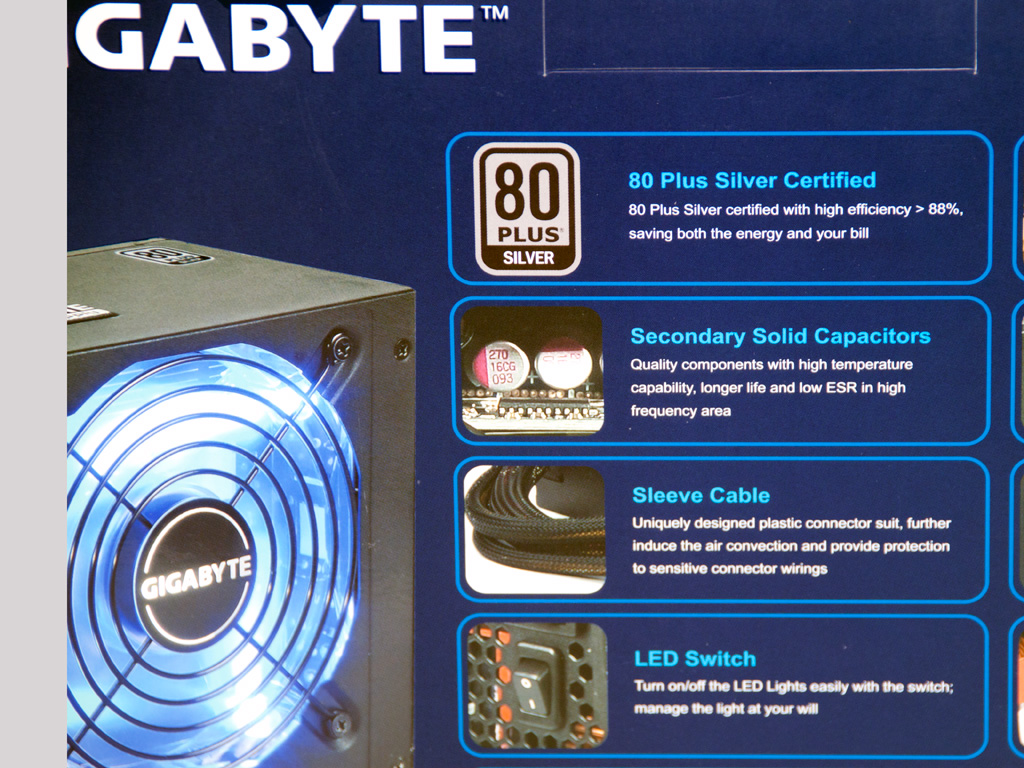
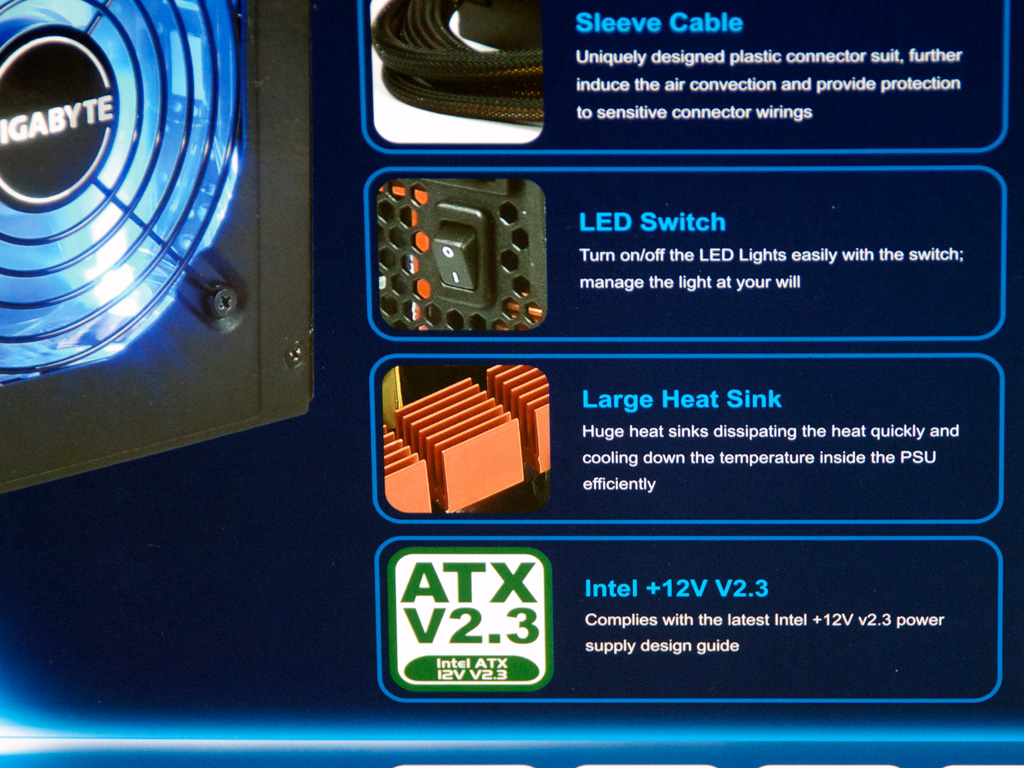
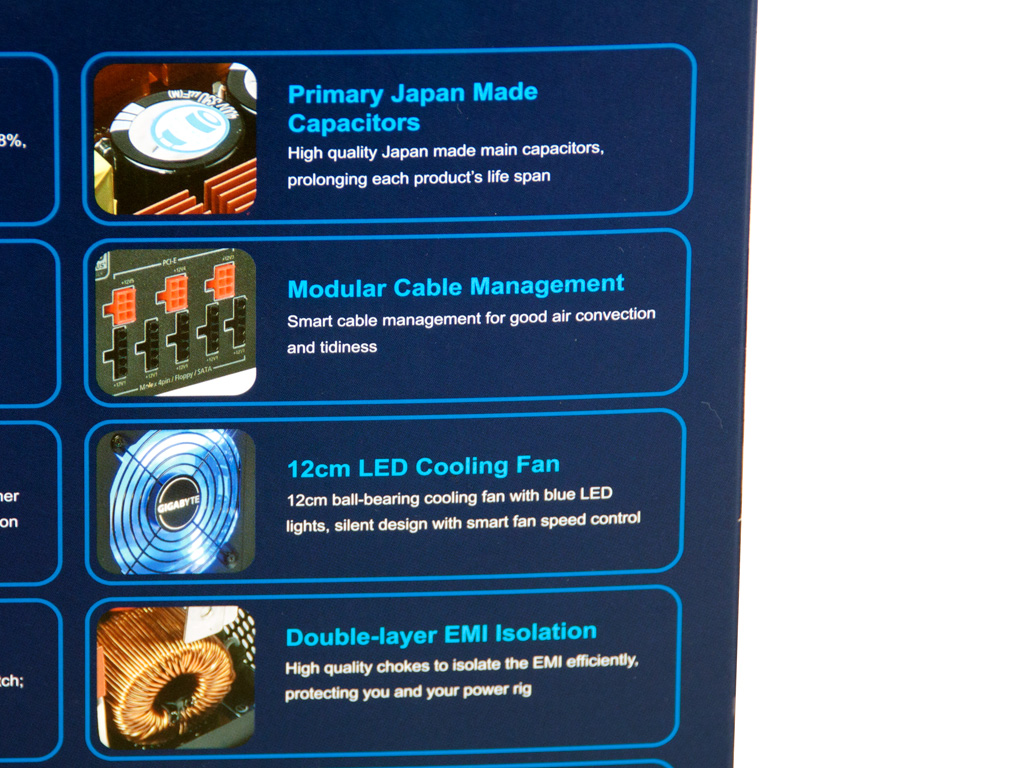
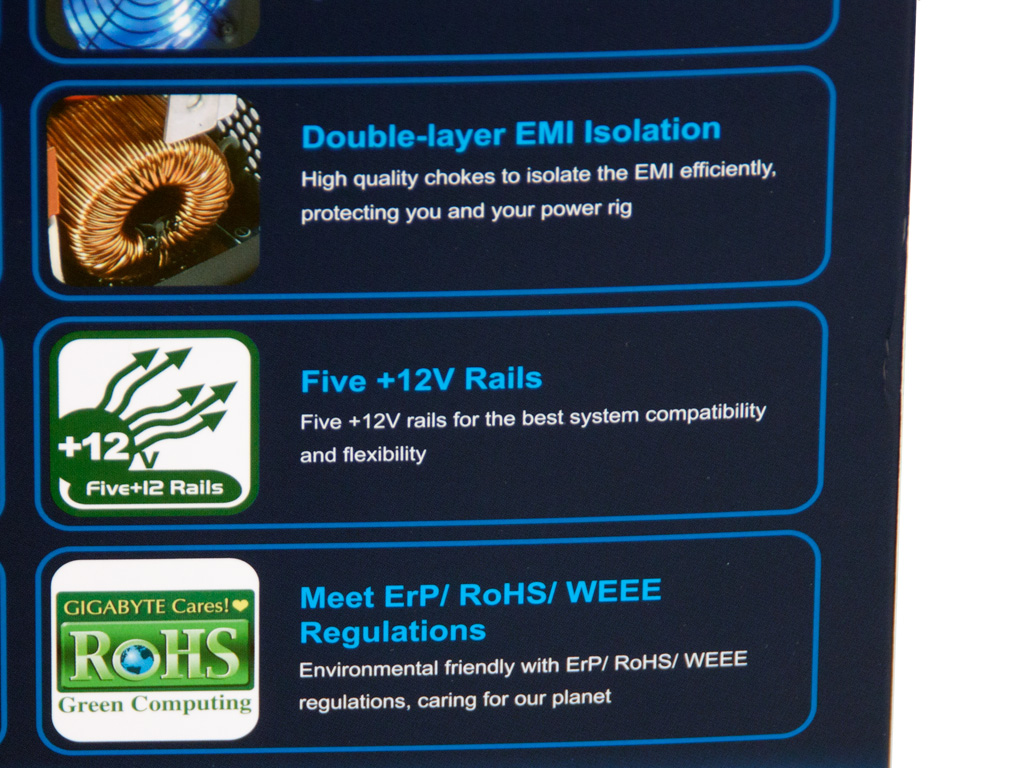
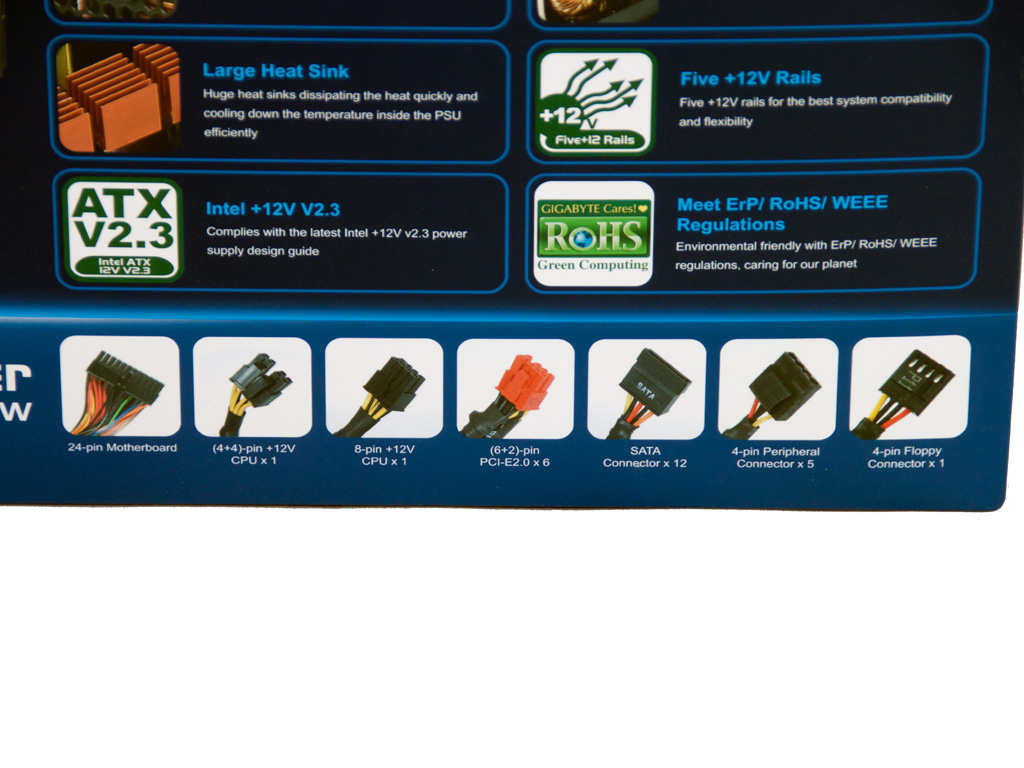
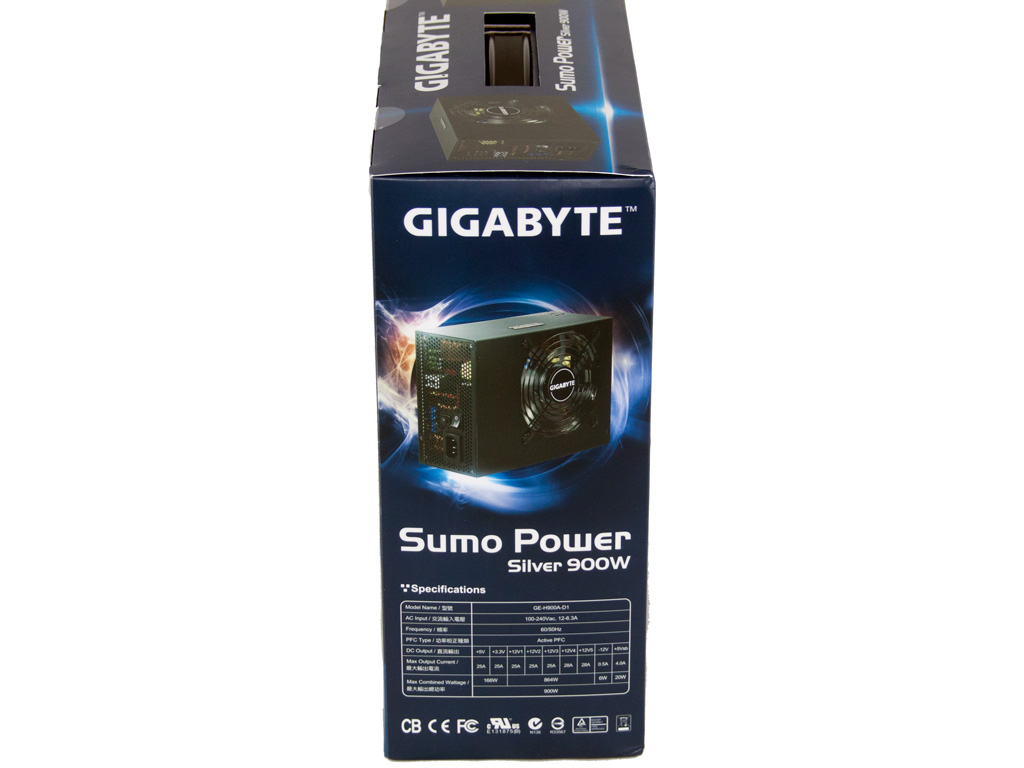

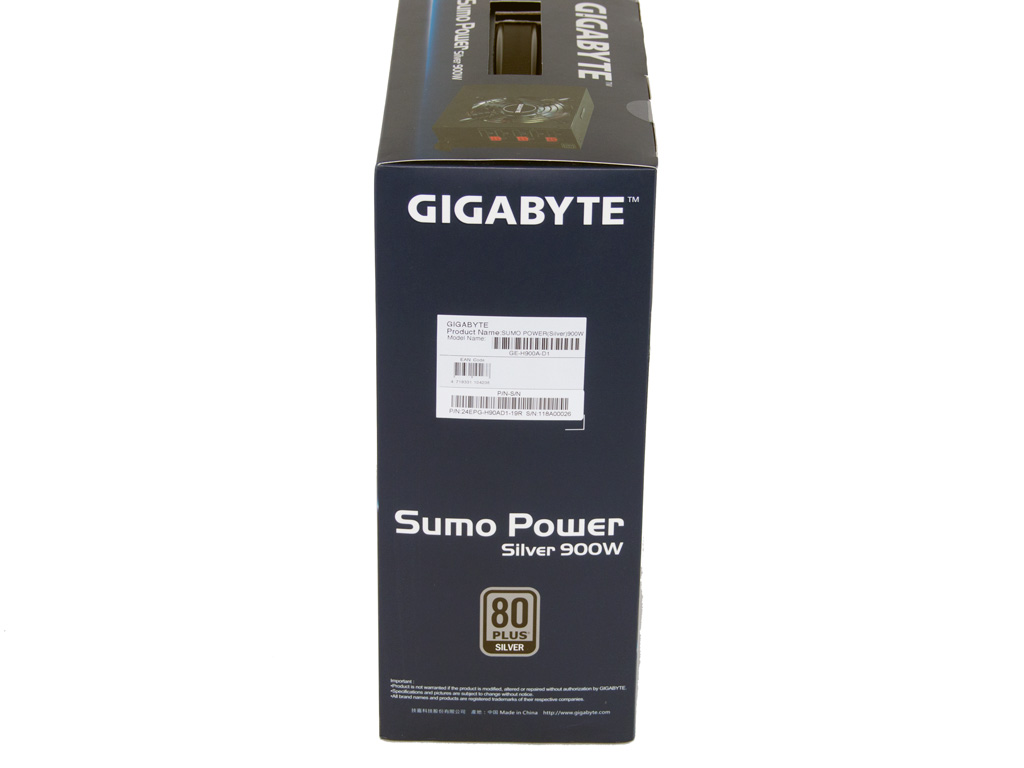

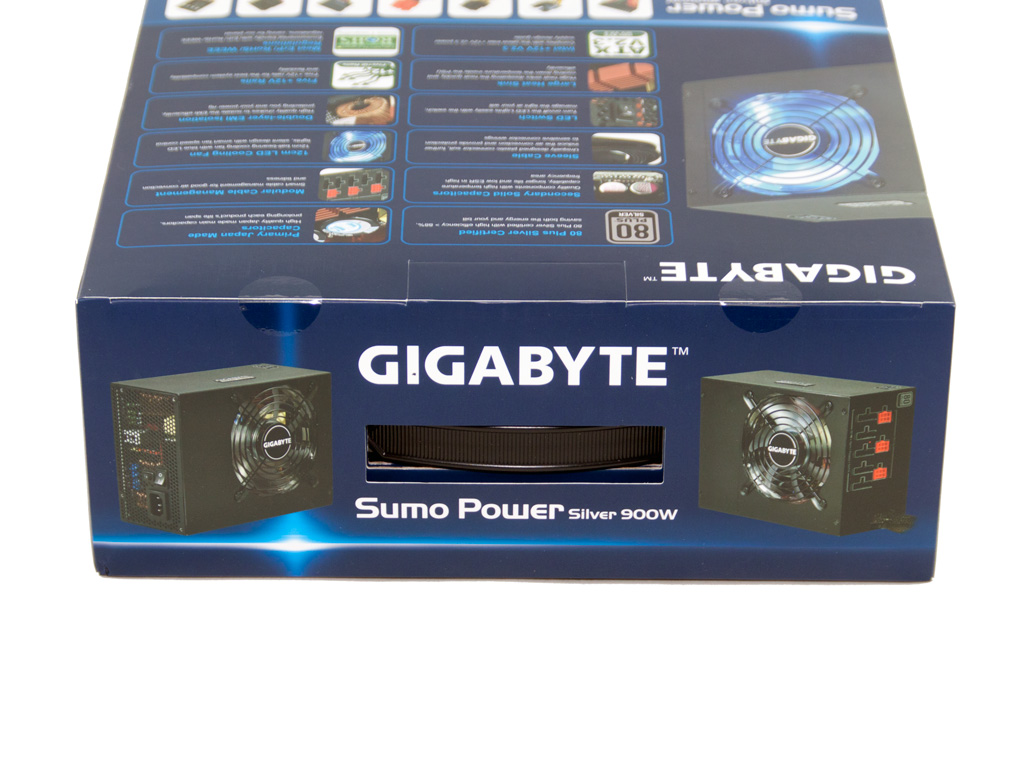
The unit comes in a rather large package. On the front a minimalist design is used. On a dark background we find only the company's name in the top left corner, along with the PSU series and the efficiency badge on the center. As usual, on the rear side there is lots of info about the PSU's features, design and characteristics. Among others we are informed that the unit uses Japan made primary caps, solid caps in the secondary side, large heatsinks to efficiently dissipate the heat and a double EMI filter to suppress electromagnetic interference. Finally, on one of the two sides of the box we can read the unit's power specifications.
Our Patreon Silver Supporters can read articles in single-page format.
Nov 13th, 2026 22:02 CST
change timezone
Latest GPU Drivers
New Forum Posts
- Tell me about your favourite graphics card (29)
- no "PhysX" workable (8)
- AI generated images... (224)
- Crimson Desert (31)
- RenoDX HDR - how to view the differnce Before&After in game? (0)
- Displayport DP80 3M (10ft) cable that can achieve 80gbps stable? (5)
- I'll flash a ASUS ROG Strix RX480 O8G in Cause of Code 43, as a Newbie (1)
- Opinion on Monitor Replacement (6)
- TMOG - post your benchmark results here (16)
- Microsoft Exchange/365 outages? (61)
Popular Reviews
- AMD Zen 6 Technical Deep Dive
- Corsair HX1000i Shift Crystal Review
- NZXT C1200 Platinum Review
- Upcoming Hardware Launches 2027 (Updated Nov 2026)
- ASUS ROG Strix B850-I Gaming Wi-Fi7 W Review
- Montech King 95 3D PRO Review
- NZXT H7 RGB+ Review
- NZXT H5 Review
- Phantom Blade Zero Performance Benchmark Review - 35 GPUs Tested
- XPG NIMBUS PLUS Review - Mid-range Chair With Strong Competitors
TPU on YouTube
Controversial News Posts
- NVIDIA Co-Founder and CEO Jensen Huang Officially Resigns (379)
- OpenAI CEO Argues Home PCs Waste the World's Limited DRAM Supply (152)
- NVIDIA Launches Investigation Into Jensen Huang's Relationship With Suspected Chinese Spy (136)
- Intel "Raptor Lake Next" 16-Core and 20-Core CPUs Surface (130)
- Legendary Game Studio BioWare Shuts Down Following EA Layoffs (104)
- Dell CEO Says the Memory Shortage Will Get Worse in 2027 (95)
- NVIDIA GeForce RTX 50-Series Scheduled for up to $500 Price Hike This Week (89)
- Modder Fits RTX 5090 With Four 8-Pin Connectors, Halving Current per Wire (80)