 9
Logitech MX Keypad Review
Working with the MX Keypad »Packaging
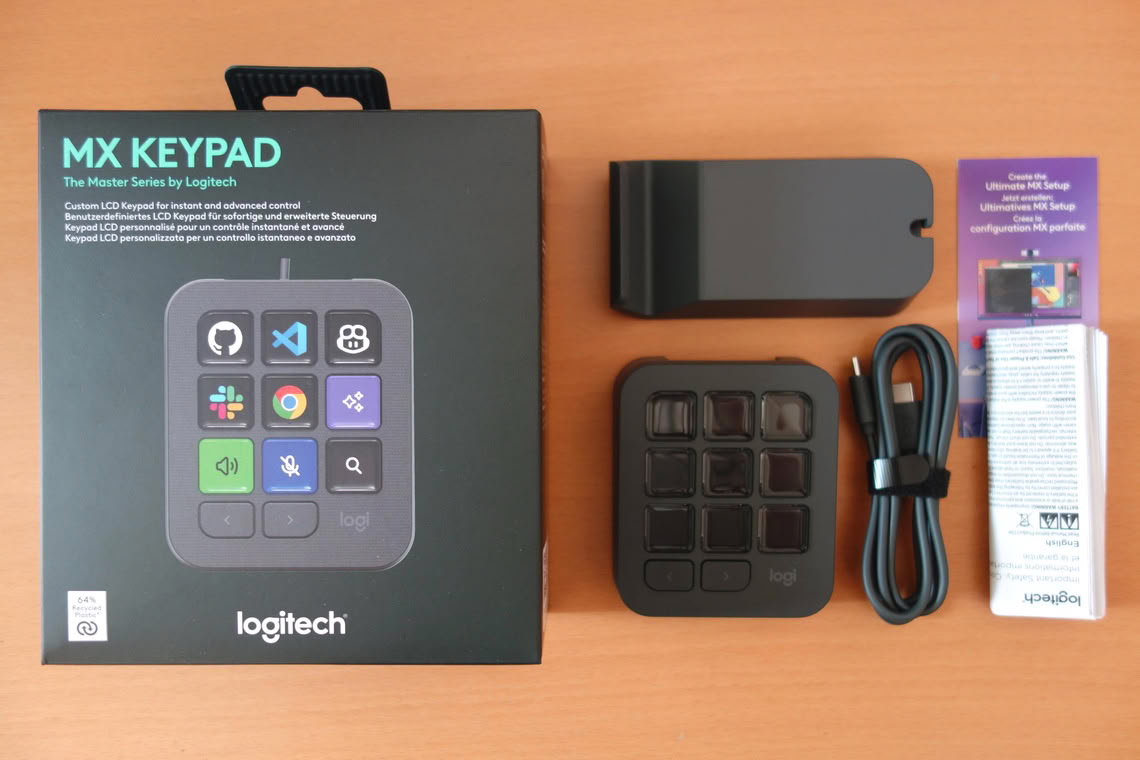
Inside the box, one finds the MX Keypad, a stand, a USB Type-C to Type-C cable, and warranty information.
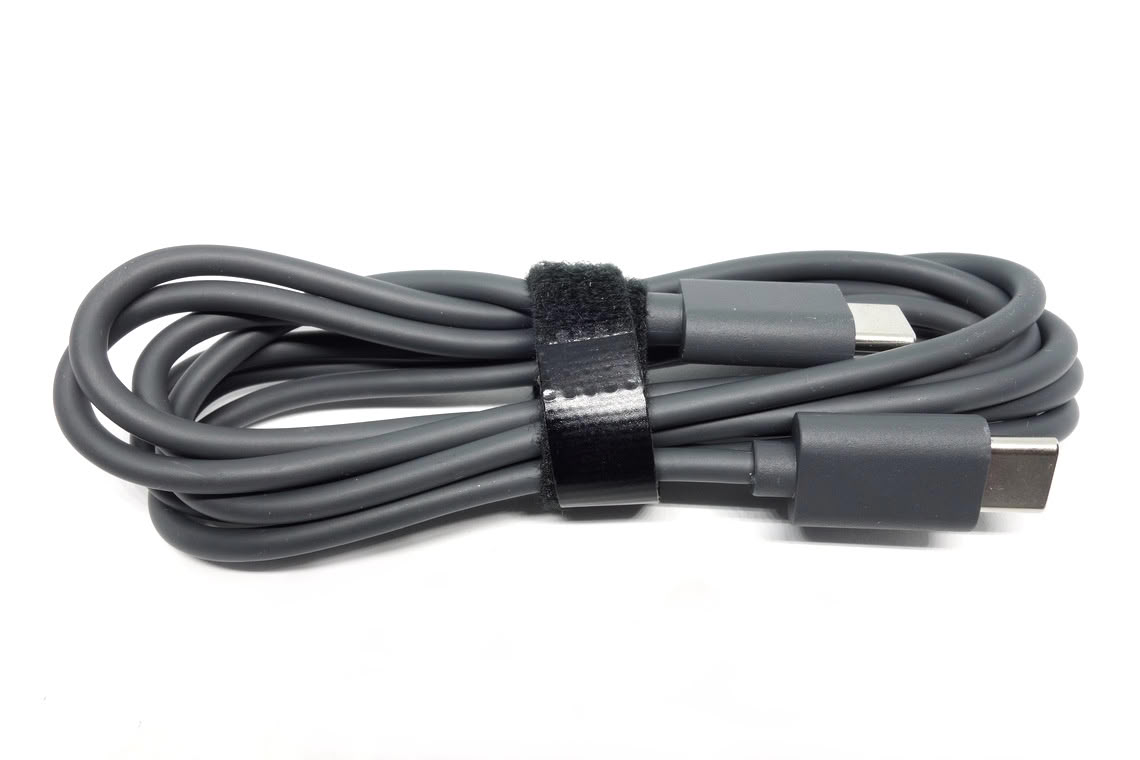
The cable has a measured length of 1.45 m, and the jacket is made of rubber. Due to its stiffness, the cable is best routed through the cable slot at the back of the stand.
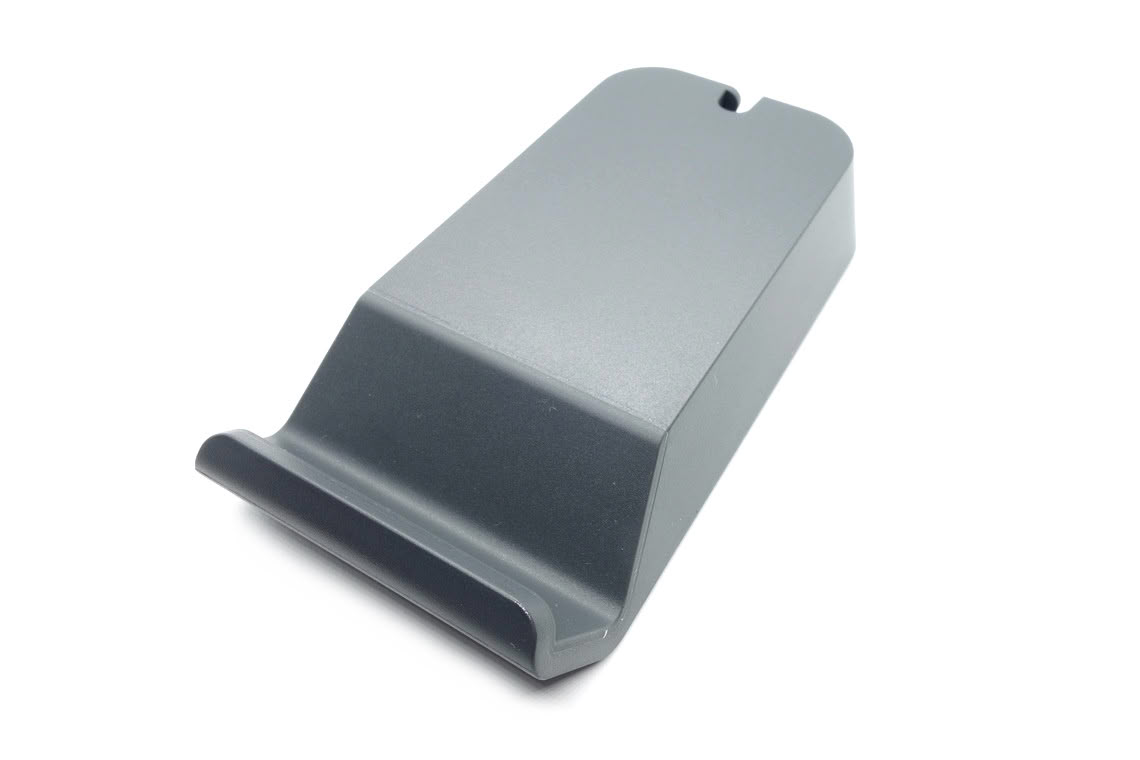
The stand puts the MX keypad at a fixed angle of roughly 45°, and the cable can be routed through a cable slot at the back. Even though the stand does have a rubber base, pushing the keys with above average force will move the stand (and the keypad itself with it) around.
Design
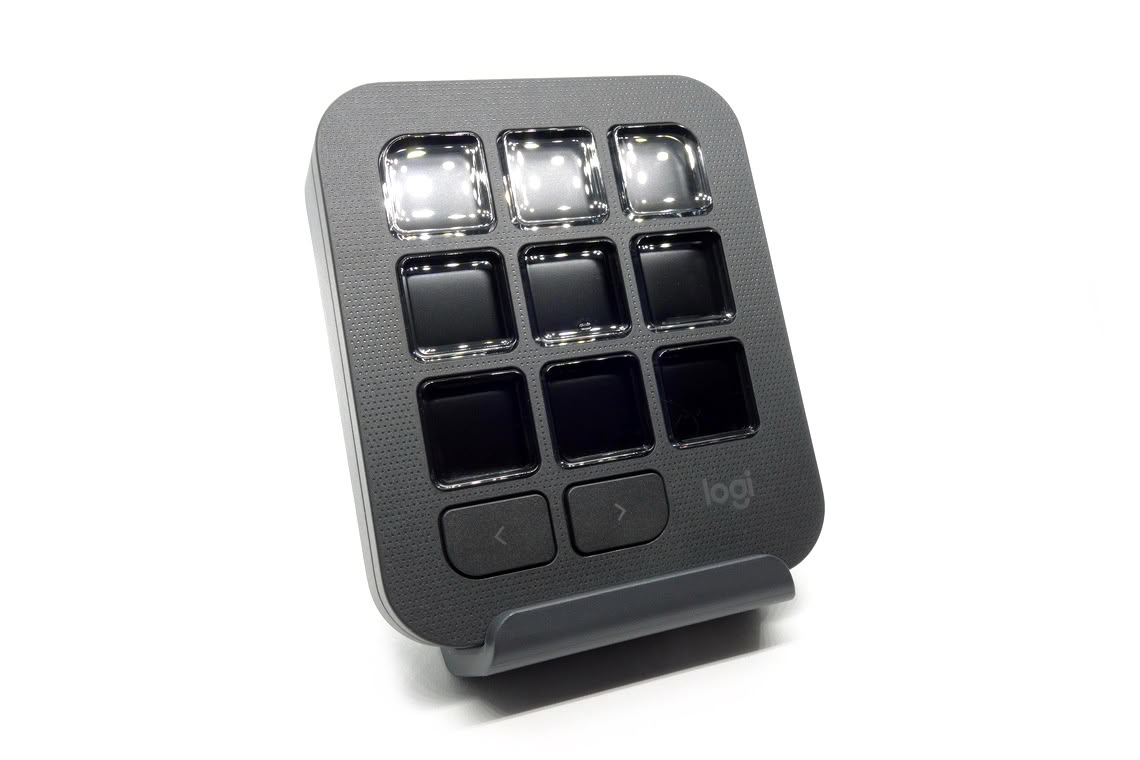
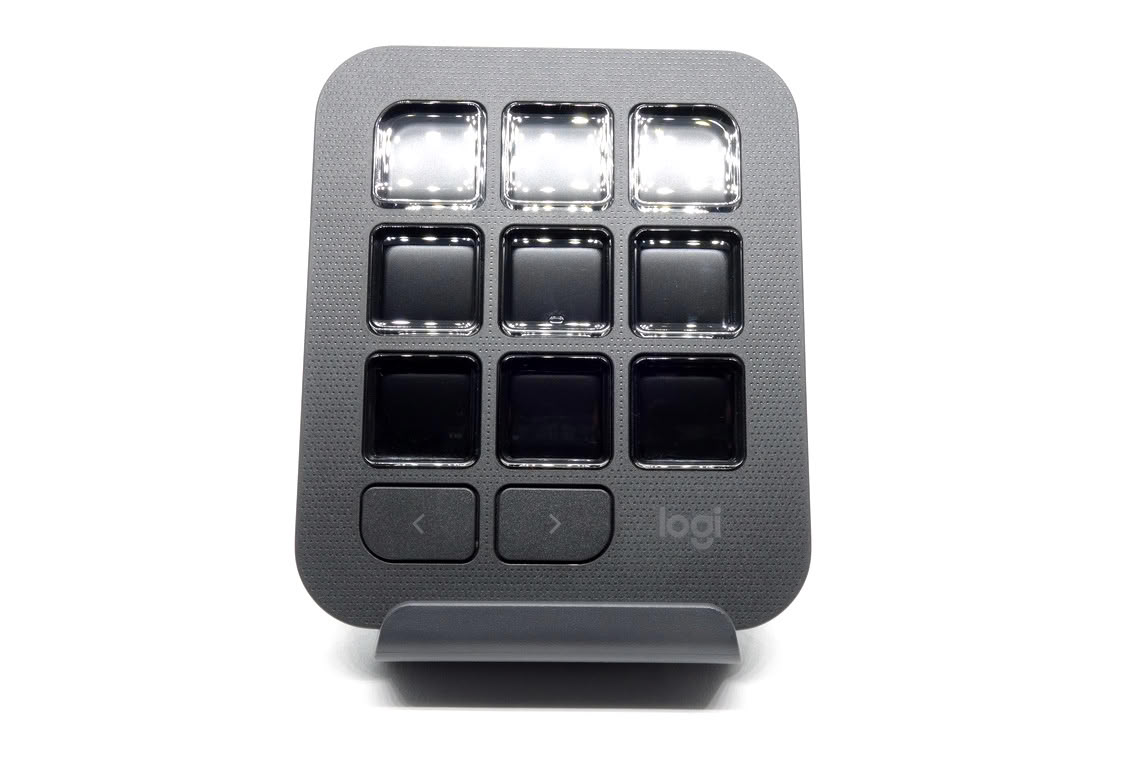
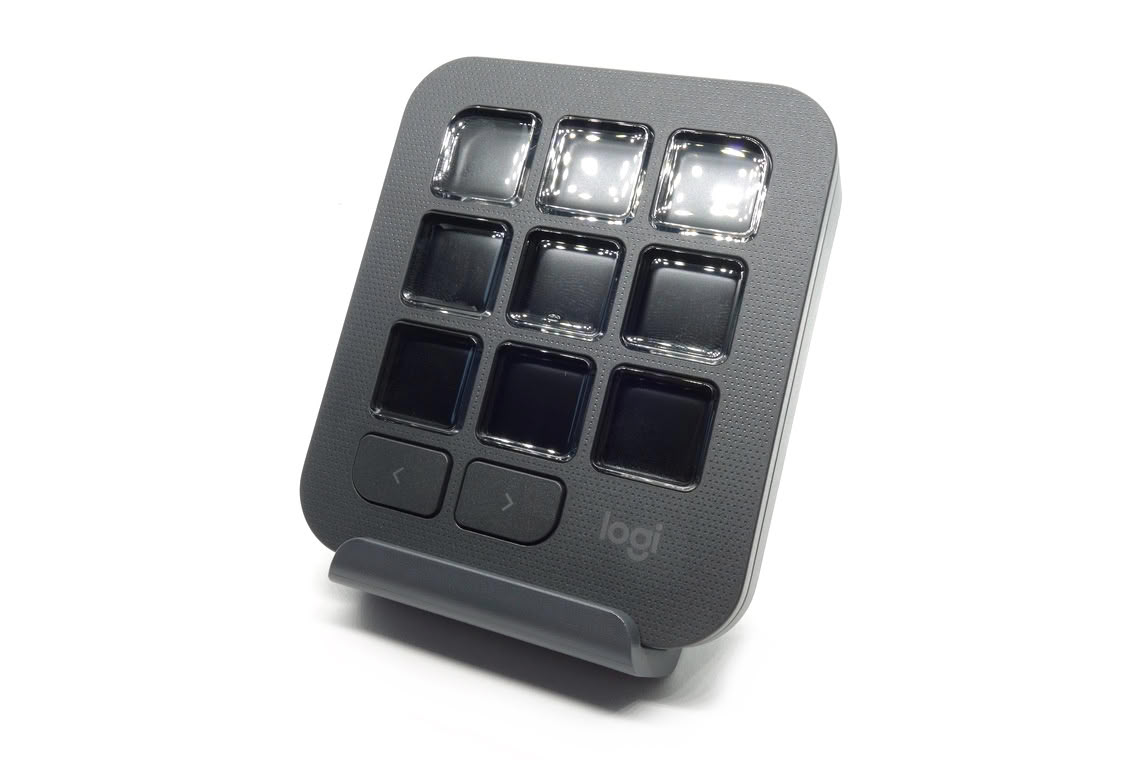
The MX Keypad features nine programmable LCD buttons along with two fixed-function buttons, which are used to go through pages. Up to 15 pages can be set up per profile, though when using the buttons on the MX Keypad to flip through the pages, the pages don't loop, so going from page 15 to page 1 requires going through pages 14 to 2 first. The LCD buttons have beveled edges, which is nice on the haptic level, but can be irritating in that due to being beveled, the edges are at an angle to the LCD, thus reflecting part of what is displayed, and as a result worsening visual clarity. In terms of actuation, the buttons are a double-edged sword. Pressing them towards the edges is possible and requires low force, whereas pressing them in the center requires significantly greater force to where one may end up moving the keypad around on its stand, especially when operating the button rows at the left and right edges.
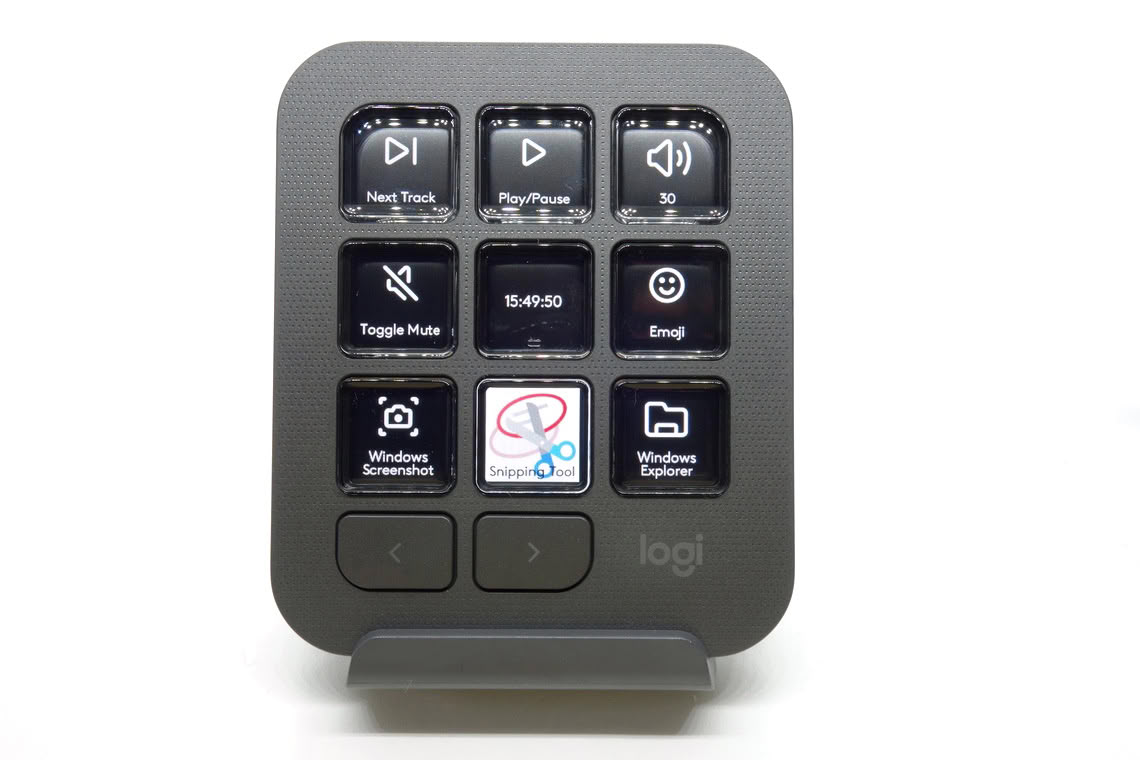
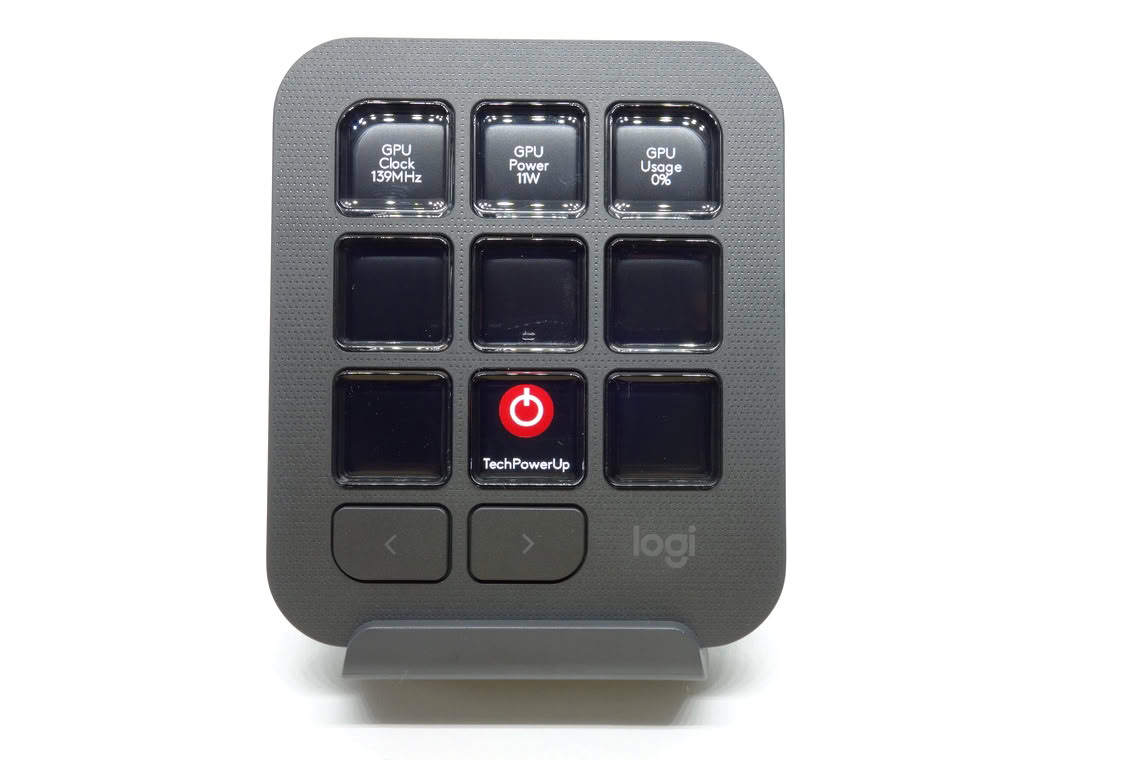
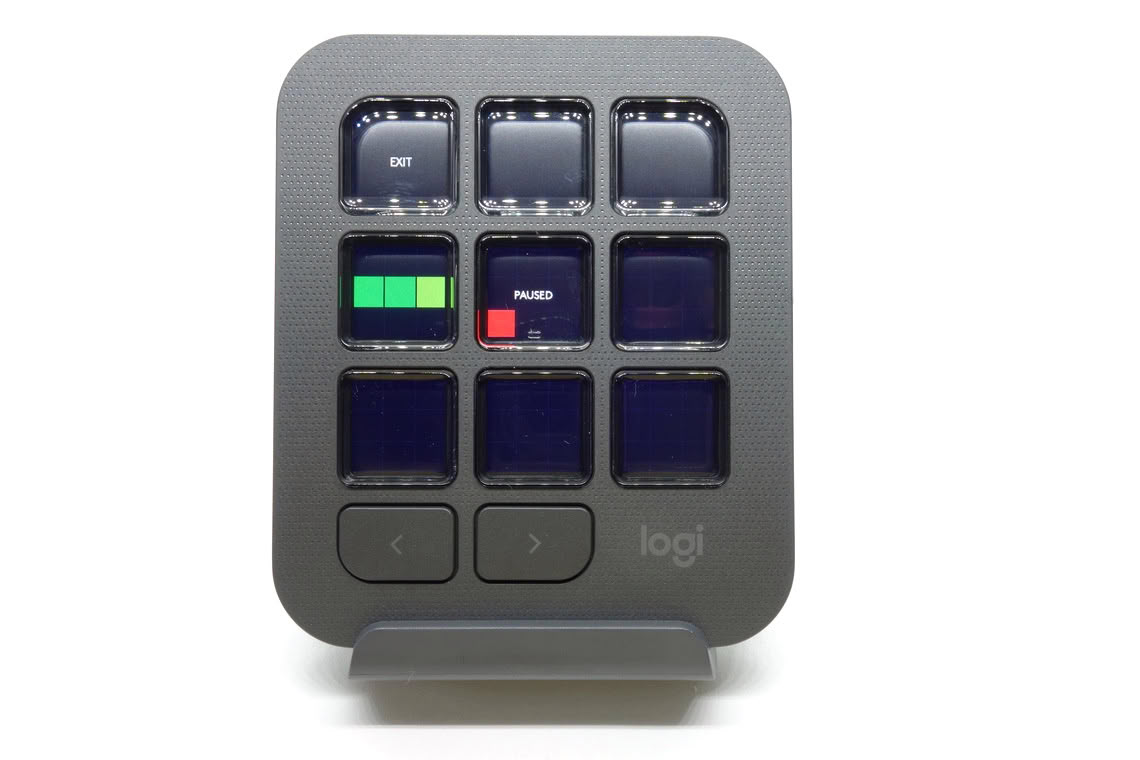
The LCD buttons can be distinguished into two categories. "Press" actions are executed directly by pressing, such as the mute toggle. "Rotate" actions open a sub-menu upon actuation, which then offers additional actions, such as volume control. For each LCD button, text, an icon, or both can be displayed. Depending on the set language, text will sometimes extend beyond the edges of the LCD button, which needs to be corrected manually by adjusting font size. The LCDs are capable of displaying color, and color can be changed for text and backgrounds as well, which is particularly handy when grouping functions thematically.
Button Demonstration
Nov 14th, 2026 08:13 CST
change timezone
Latest GPU Drivers
New Forum Posts
- What are you playing? (26219)
- Tell me about your favourite graphics card (47)
- 3D Printer Club (851)
- Folding Pie and Milestones!! (10202)
- a note from zachary85's son (9)
- Have you got pie today? (17083)
- No screen and keyboard with mouse not being powered on (4)
- Requesting original VBIOS for Gigabyte RX 5700 XT GAMING OC 8G Rev 2.0 (Micron) (3)
- Unallocated space in ssd , is it normal? (19)
- What can the FX 8320 do today? Here is the answer. (2)
Popular Reviews
- AMD Zen 6 Technical Deep Dive
- Corsair HX1000i Shift Crystal Review
- ASUS ROG Strix B850-I Gaming Wi-Fi7 W Review
- NZXT C1200 Platinum Review
- Upcoming Hardware Launches 2027 (Updated Nov 2026)
- Montech King 95 3D PRO Review
- NZXT H7 RGB+ Review
- NZXT H5 Review
- Phantom Blade Zero Performance Benchmark Review - 35 GPUs Tested
- XPG NIMBUS PLUS Review - Mid-range Chair With Strong Competitors
TPU on YouTube
Controversial News Posts
- NVIDIA Co-Founder and CEO Jensen Huang Officially Resigns (385)
- OpenAI CEO Argues Home PCs Waste the World's Limited DRAM Supply (152)
- NVIDIA Launches Investigation Into Jensen Huang's Relationship With Suspected Chinese Spy (136)
- Intel "Raptor Lake Next" 16-Core and 20-Core CPUs Surface (130)
- Legendary Game Studio BioWare Shuts Down Following EA Layoffs (104)
- Dell CEO Says the Memory Shortage Will Get Worse in 2027 (95)
- NVIDIA GeForce RTX 50-Series Scheduled for up to $500 Price Hike This Week (89)
- Modder Fits RTX 5090 With Four 8-Pin Connectors, Halving Current per Wire (80)