 12
Memblaze PBlaze7 7A46 6.4 TB Review - Random Write King
Power Consumption & Efficiency »Thermal Stress Test
We will now perform thermal stress tests to determine whether the SSD suffers from thermal throttling. In this benchmark, the drive is repeatedly filled using sequential 1 MiB block writes at a queue depth of 32. Temperature data is collected every 3600 seconds (60 minutes) through its internal sensors, along with external readings from a thermal camera. To better simulate a real-world server environment—where active airflow is typically present—we also ran the test with a fan blowing air directly over the SSD to observe any differences in thermal behavior.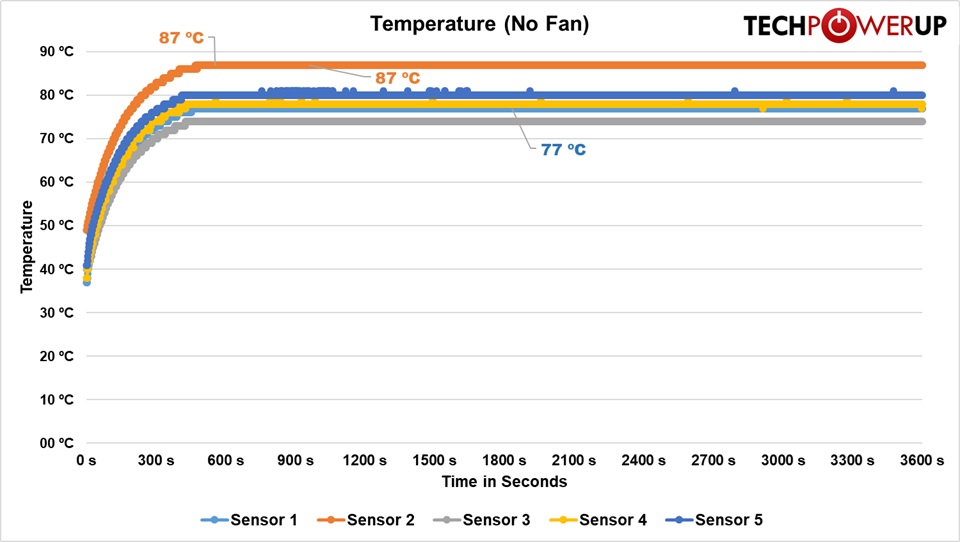
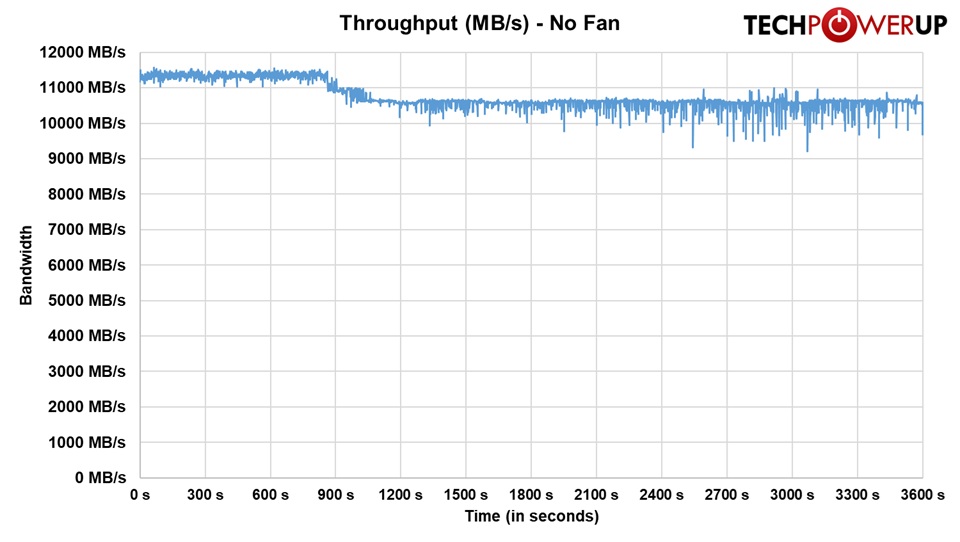
The SSD reaches its thermal limit between 77 and 85°C, after which it enters a thermal throttling state at around 15 minutes into the test. At that point, its sequential write speeds drop from the advertised 11.3 GB/s to approximately 10.5 GB/s, which is still a very high level of performance even while the drive continues operating at elevated temperatures.
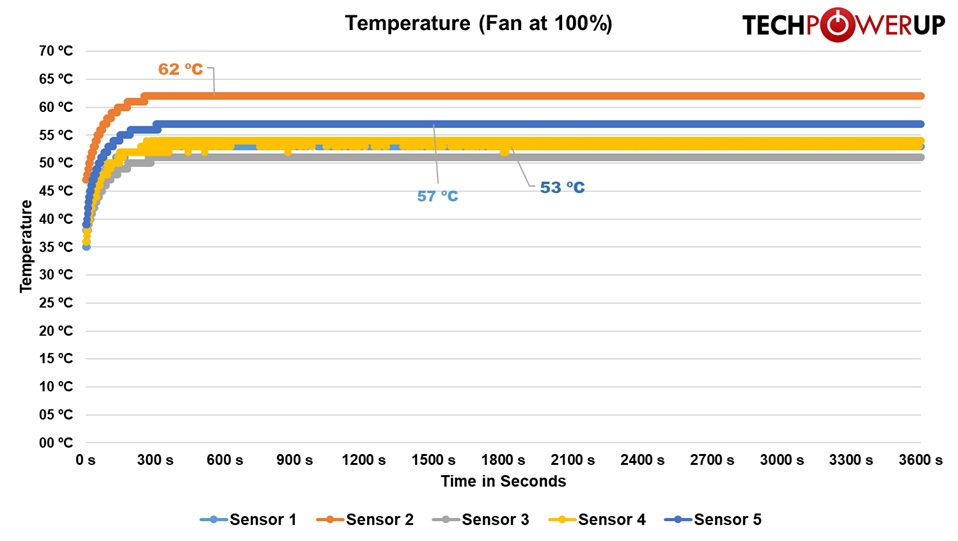
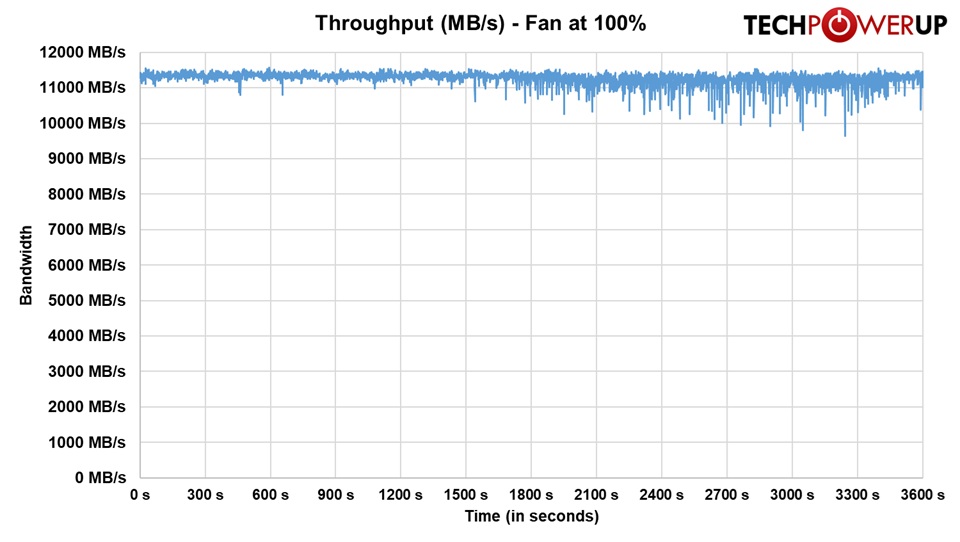
When operating with active airflow, as intended by the manufacturer, since this SSD is designed for use in server racks or systems with proper cooling, the performance remained stable, consistently reaching its rated speeds above 11.3 GB/s. The highest recorded temperature was below 62°C, which is well under the thermal limit set by the manufacturer, ensuring safe and reliable operation.
Thermal Imaging
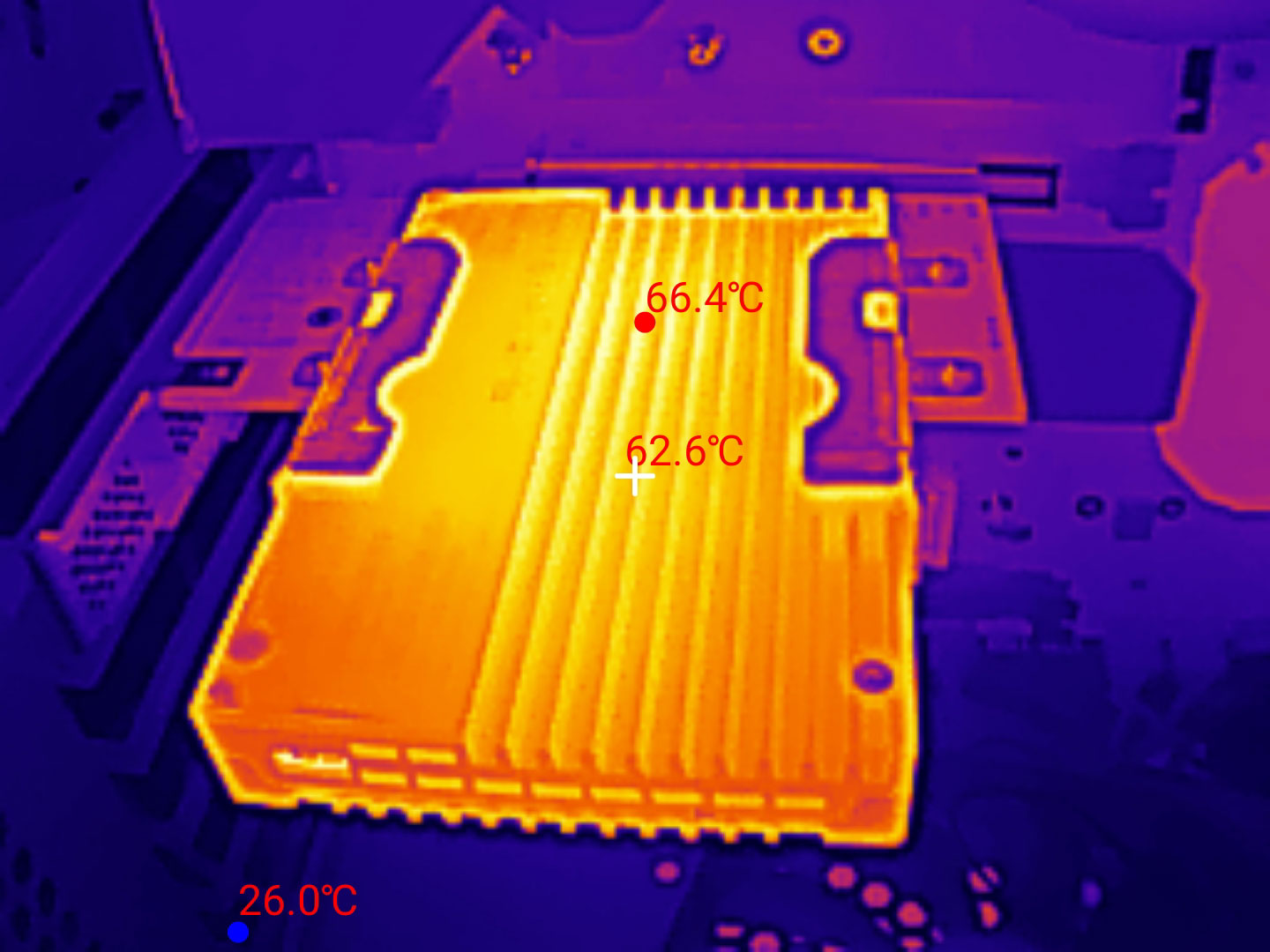
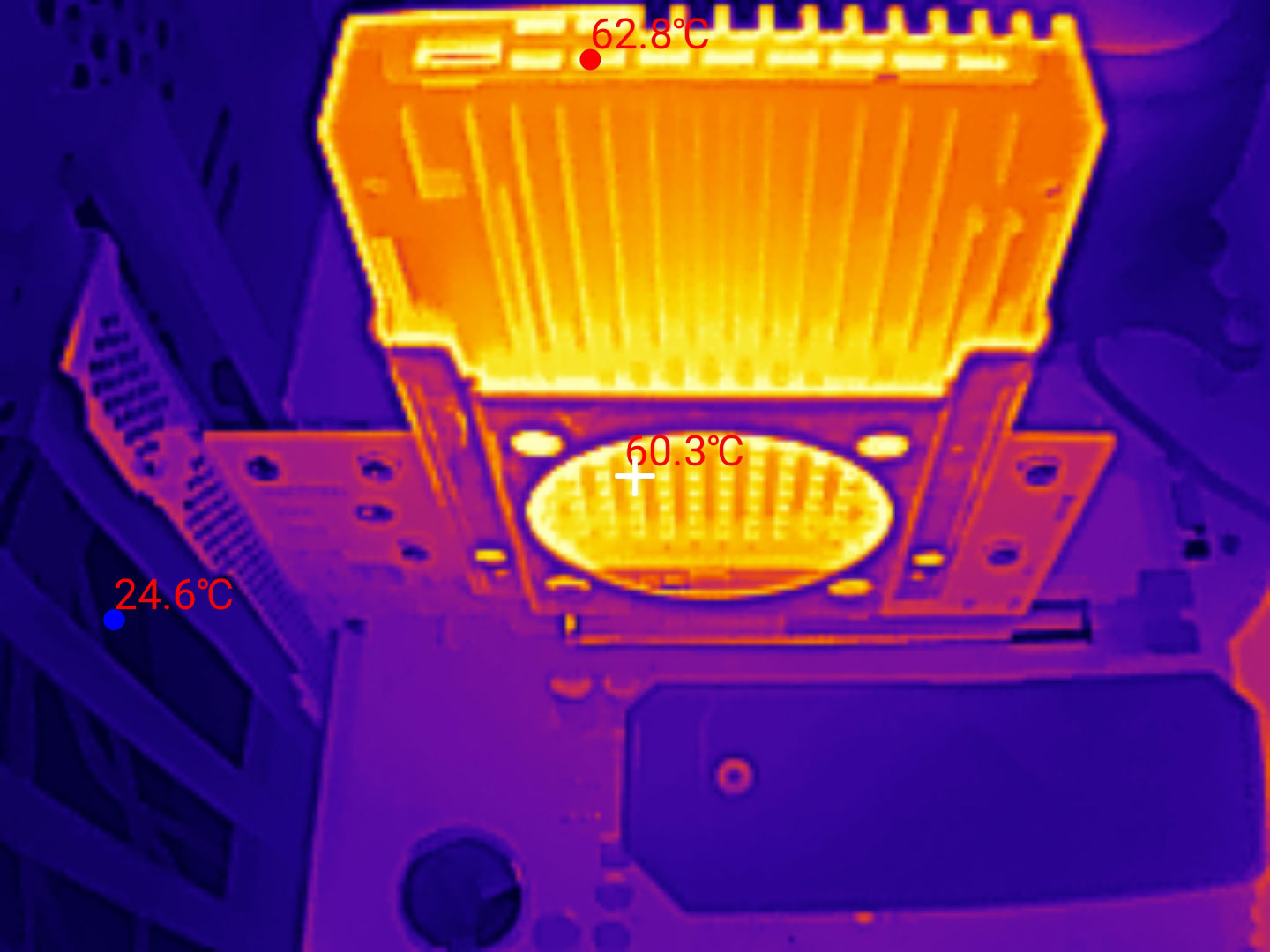
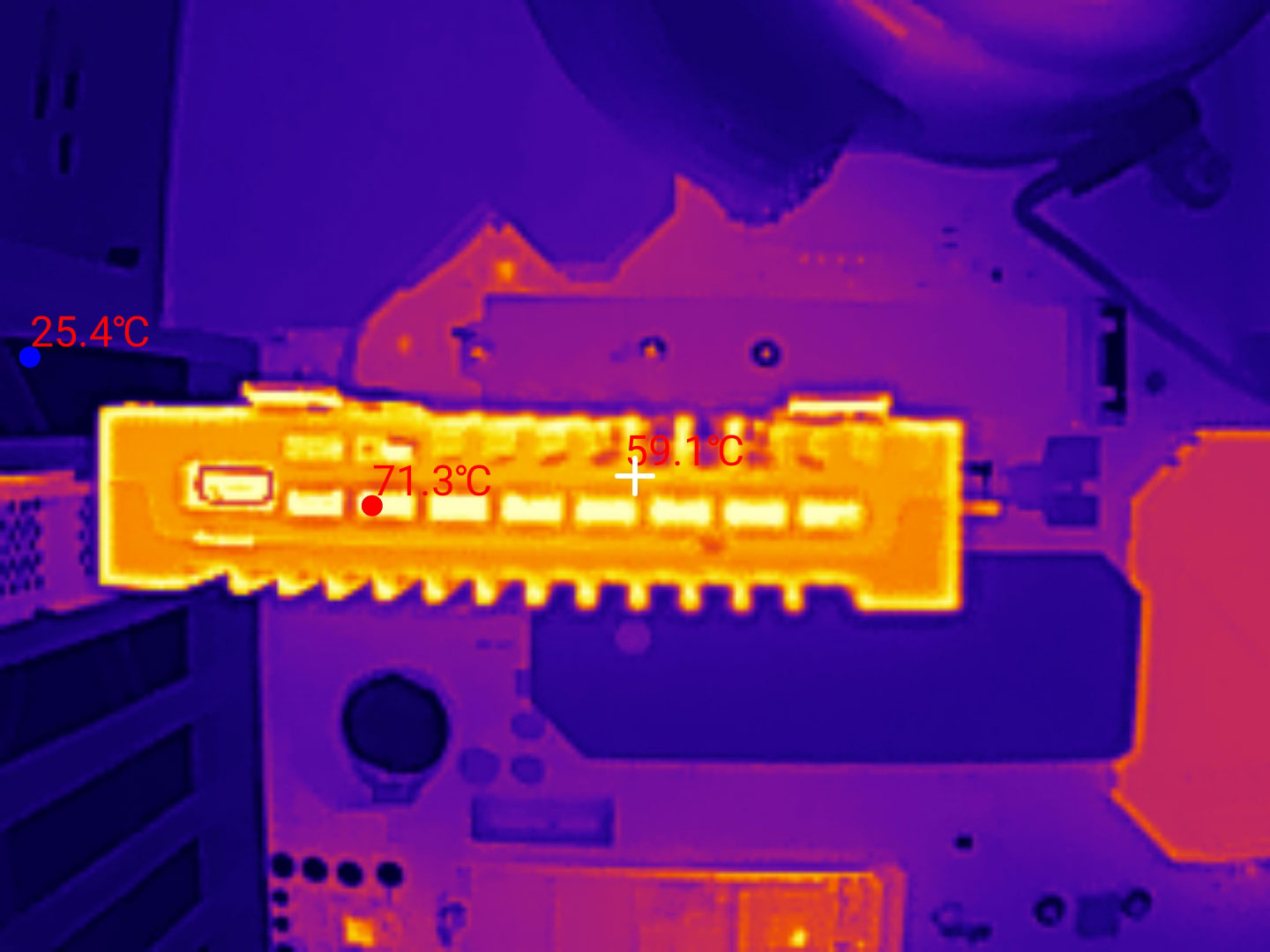
Here you can see a FLIR thermal image of the SSD during testing at full load. The external aluminium housing reached a temperature above 66°C, while internally the temperatures were higher. This SSD requires airflow to function without throttling.
Nov 20th, 2026 16:11 PST
change timezone
Latest GPU Drivers
New Forum Posts
- WarpCoreBench scores! (85)
- What's your latest tech Freebie? (80)
- Honestly, do you care about GTA VI? (212)
- Nvidia GPU undervolting via MVolt+? (0)
- How to prevent OLED burn damage due to PC freezes or power outtages? (49)
- RX 9000 series GPU Owners Club (2249)
- Logitech Headsets Modded Driver — Unlock Dolby in G HUB (23)
- 1 - 5 person file storage server equivalent accasible from anywhere + general VM server. (1)
- When you could finally run Crysis maxed out? (63)
- GTA VI (20)
Popular Reviews
- Microsoft Surface Laptop Ultra Review - The Next-gen Arm Laptop
- Ugreen NASync DXP4800 GT Review
- Corsair RM1200e (Second Generation) Review
- Pulsar Office Tour & First Look at P1 Dual-Sensor Mouse
- Upcoming Hardware Launches 2027 (Updated Nov 2026)
- Acemagic Retro X3 Review
- Biwin Black Opal NV7400 2 TB Review
- AMD Ryzen 7 9800X3D Review - The Best Gaming Processor
- AMD Zen 6 Technical Deep Dive
- Chieftec Iceberg PRO 360 DARK Review
TPU on YouTube
Controversial News Posts
- NVIDIA Co-Founder and CEO Jensen Huang Officially Resigns (491)
- Report: Jensen Huang Eyes NVIDIA Comeback (256)
- Open Letter Asking NVIDIA to Reinstate Jensen Huang Passes 115,000 Signatures (184)
- OpenAI CEO Argues Home PCs Waste the World's Limited DRAM Supply (152)
- NVIDIA Launches Investigation Into Jensen Huang's Relationship With Suspected Chinese Spy (136)
- Intel "Raptor Lake Next" 16-Core and 20-Core CPUs Surface (130)
- Legendary Game Studio BioWare Shuts Down Following EA Layoffs (104)
- Dell CEO Says the Memory Shortage Will Get Worse in 2027 (95)