 6
Mistel Vision MX650 Fanless 650 W Review
(6 Comments) »Introduction

We would like to thank Mistel for supplying the review sample.

Like the majority of you, we only just recently heard of Mistel because of VSG's keyboard reviews. We also did not know that this brand offers power supplies, and it was a nice surprise when they asked us whether we could take a look at one of their fanless models, the MX650.
Although the brand's official site is "mistelkeyboard.com", you will also find several power supplies, including the MX650 and its small brother, the MX550, there. The first is 80 PLUS Platinum and ETA-A certified, while the latter is 80 PLUS Gold and has not been tested by Cybenetics yet.
There might be no fan, but there is RGB lighting in the form of a pair of LEDs which are soldered on to the modular board. Thanks to the great number of perforations on the chassis to increase airflow, the RGB lighting will be readily visible. This is actually the first passive PSU with RGB lighting.

Specifications
| Mistel MX650FL Features & Specs | |
|---|---|
| Max. DC Output | 650W |
| PFC | Active PFC |
| Efficiency | ETA-A & 80 PLUS Platinum |
| Noise | LAMBDA-A++ |
| Modular | ✓ (fully) |
| Intel C6/C7 Power State Support | ✓ |
| Operating temperature | 0°C - 40°C |
| Protections | Over Voltage Protection Under Voltage Protection Over Power Protection Over Temperature Protection Over Current Protection Short Circuit Protection |
| Cooling | Fanless |
| Dimensions | 152 mm (W) x 87 mm (H) x 142 mm (D) |
| Weight | 1.6 kg (3.53 lb) |
| Compliance | ATX12V v2.31, EPS 2.92 |
| Warranty | 5 years |
| Price at time of review (excl. VAT) | $149 |
The unit is super compact at only 142 mm long, and there is no fan. All necessary protection features have also been included, and the provided warranty is long enough at five years. The maximum operating temperature is 40°C, and since this is a passive PSU, we won't push it harder, at up to 45°C, as we do with actively cooled units.
| Mistel MX650FL Power Specs | |||||||
|---|---|---|---|---|---|---|---|
| Rail | 3.3V | 5V | 12V | 5VSB | -12V | ||
| Max. Power | 20A | 20A | 54.1A | 3A | 0.3A | ||
| 100W | 649.2W | 15W | 3.6W | ||||
| Total Max. Power | 650W | ||||||
There is no need for the minor rails to exceed 100 W max combined power, while the +12V rail can deliver the PSU's full power. Finally, the 5VSB rail can go up to 3 A on papers, but is actually much stronger.
Cables and Connectors
| Modular Cables | ||||
|---|---|---|---|---|
| Description | Cable Count | Connector Count (Total) | Gauge | In Cable Capacitors |
| ATX connector 20+4 pin (700 mm) | 1 | 1 | 18-22AWG | No |
| 4+4 pin EPS12V (750 mm) | 1 | 1 | 18AWG | No |
| 6+2 pin PCIe (600 mm+120 mm) | 2 | 4 | 18AWG | No |
| SATA (400 mm+120 mm+120 mm+120 mm) | 2 | 8 | 18AWG | No |
| 4-pin Molex (400 mm+120 mm+120 mm) / FDD (+100 mm) | 1 | 3 / 1 | 18-22AWG | No |
| RGB Cable (400 mm) | 1 | 1 | 24AWG | No |
| AC Power Cord (1400 mm) - C13 coupler | 1 | 1 | 18AWG | - |
The single EPS connector is a real shame as it cripples this unit's usability. A high-end 650 W PSU such as this one should have two EPS cables/connectors. Thankfully, there are an adequate number of PCIe connectors and plenty of peripheral connectors. Finally, all cables are very long, but the peripheral connectors could be further apart; 14–15 cm between these would be ideal.
Unboxing Video
The following video footage shows the unboxing of the MX650.A Look Inside and Component Analysis
Before reading this page, we strongly suggest a look at this article, which will help you understand the internal components of a PSU much better. Our main tool for the disassembly of the PSU is a Thermaltronics TMT-9000S soldering and rework station. It is of extreme quality and is equipped with a matching de-soldering gun. For the identification of tiny parts, we use a Andonstar HDMI Digital Microscope.| Mistel MX650 Fanless Parts Description | |
|---|---|
| General Data | |
| Manufacturer (OEM) | Shang Hung (Taiwan) |
| Primary Side | |
| Transient Filter | 4x Y caps, 2x X caps, 2x CM chokes, 1x MOV (10D561K) |
| Bridge Rectifier(s) | 2x GBJ2506 (600V, 25A @ 100°C) |
| Inrush Current Protection | NTC Thermistor & Relay |
| APFC FETs | 2x Infineon IPA60R099P6 (650V, 24A @ 100°C, 0.099 Ω @ 25°C) |
| APFC Boost Diode | 1x G3S06510A (650V, 10A @ 150°C) |
| Hold-up Cap(s) | 1x Nippon Chemi-Con (450V, 560uF, 105°C, KMW series, 2000h @ 105°C). |
| Main Switchers | 4x Wuxi NCE Power Semiconductor NCE65T180F (650V, 13.2A @ 100°C, 0.180 Ω @ 25°C) |
| APFC Controller | Champion CM6500UNX |
| Resonant Controller | Champion CM6901T6X |
| Topology | Primary side: Full Bridge & LLC Resonant Converter Secondary side: Synchronous Rectification & DC-DC converters |
| Secondary Side | |
| +12V | 4x Excelliance MOS EMP16N04HS (40V, 100A @ 100°C, 1.6mΩ) |
| 5V & 3.3V | DC-DC Converters: Unknown number of FETs PWM Controllers: 1x UP3861 |
| Filtering Capacitors | Electrolytics: Chemi-Con (1-5,000h @ 105 °C, KZE series), Chemi-Con (4-10,000h @ 105°C, KY series) Polymers: FPCAP, Chemi-Con |
| Supervisor IC | WT7527V (OVP, UVP, OCP, SCP, PG ) |
| 5VSB Circuit | |
| Rectifying Diode | 1045 DGAL |
| Standby PWM Controller | Excelliance EM8569 |
This platform reminds us of the Seasonic Focus; however, there are several key differences. According to Mistel, it was designed by its engineers and manufactured by Shang Hung, a factory in Taiwan. We had never heard of this factory before, but judging by this PSU, it does a very good job.

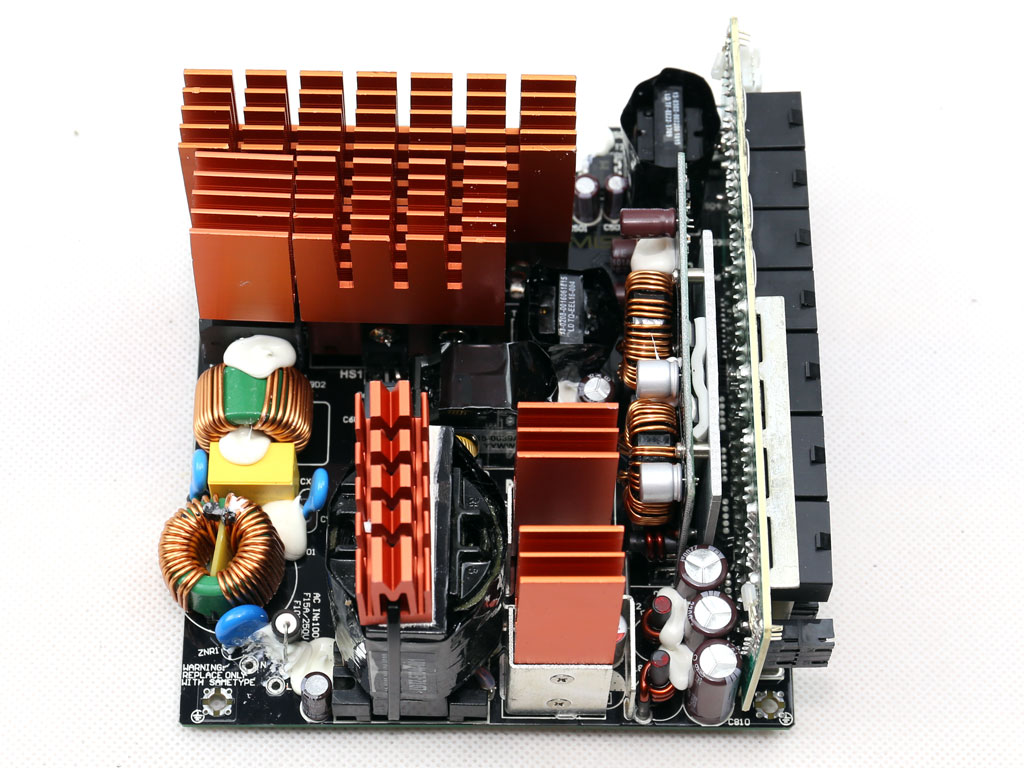
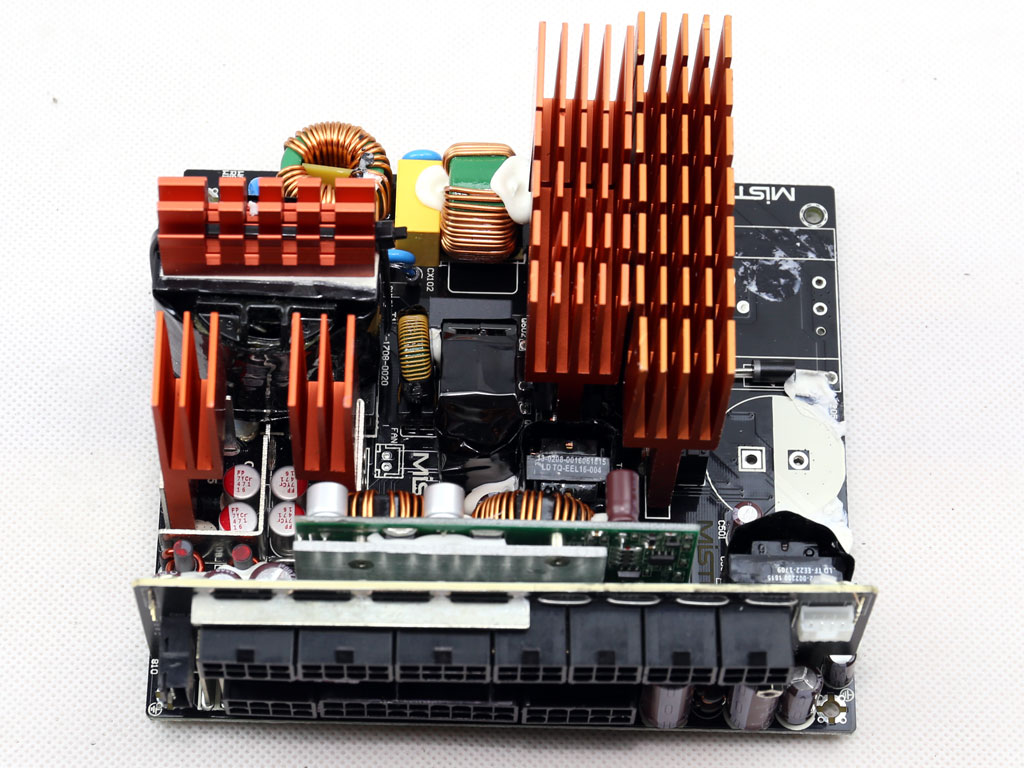
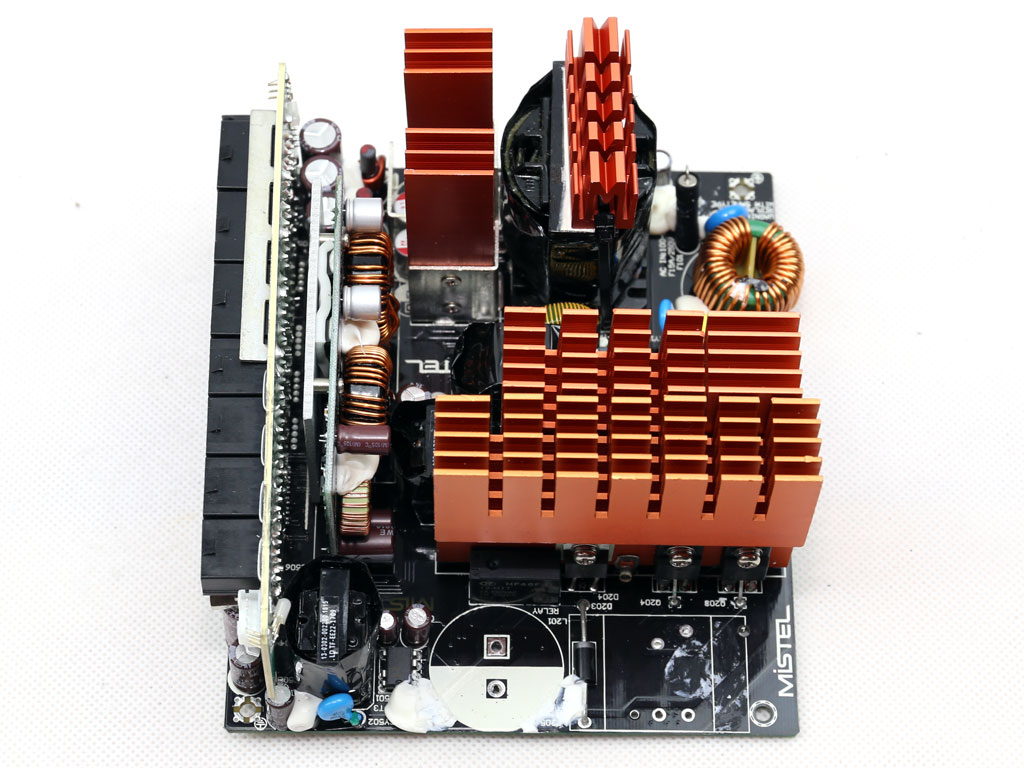
The platform is modern and highly capable. In the primary side is a full bridge topology along with an LLC resonant converter. In the secondary side, a pair of VRMs handle the minor rails, and the +12V rail is regulated by several FETs on the solder side of the main PCB. All caps are of good quality, and Mistel's claim of using nothing but Japanese caps is true. Given the complete lack of forced airflow in a passive unit, lower quality caps would have been bad. Finally, Mistel uses tall heatsinks to increase heat dissipation. It is nice to also a see a heatsink on the main transformer since it can get quite hot, especially under high loads.

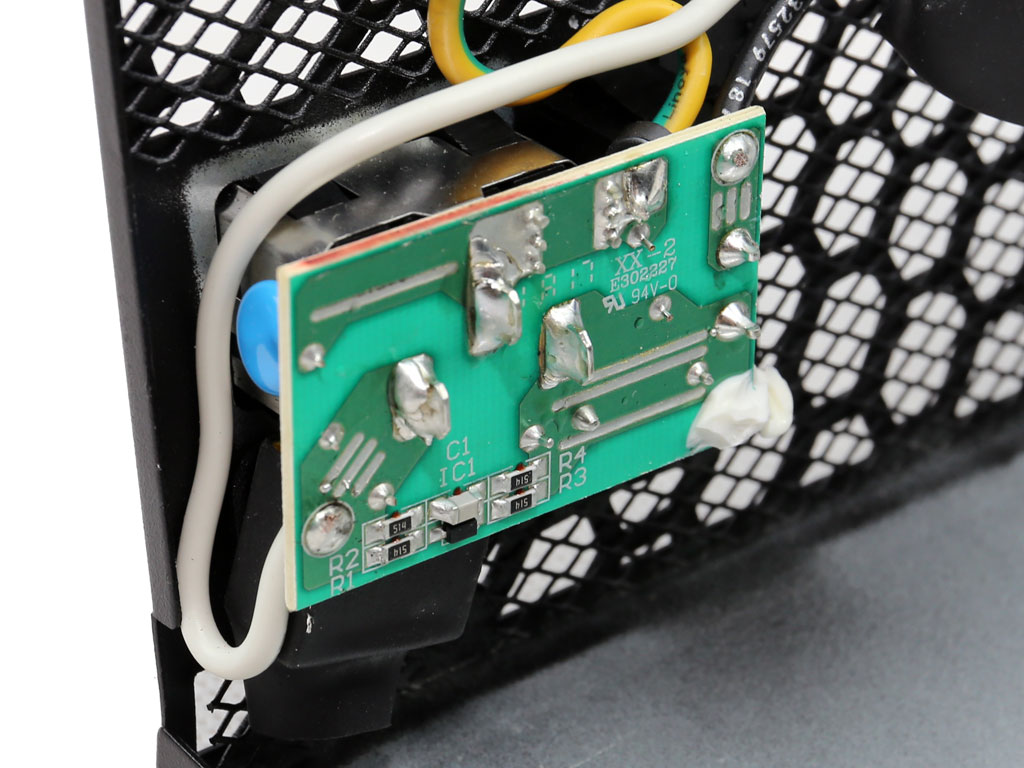
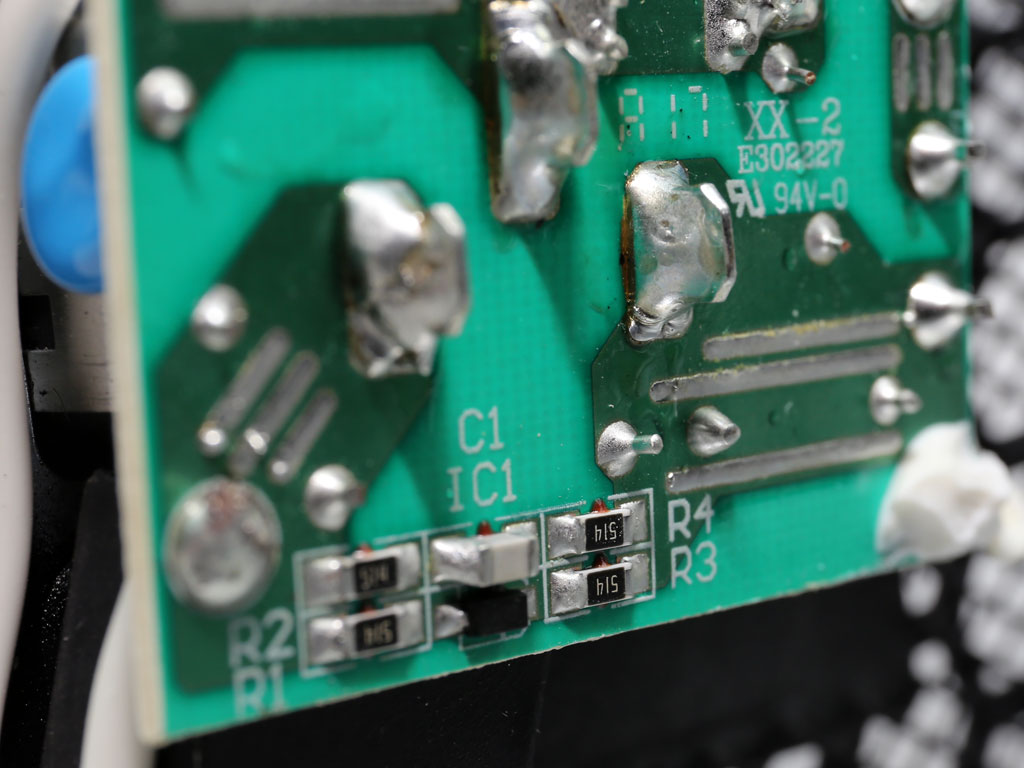
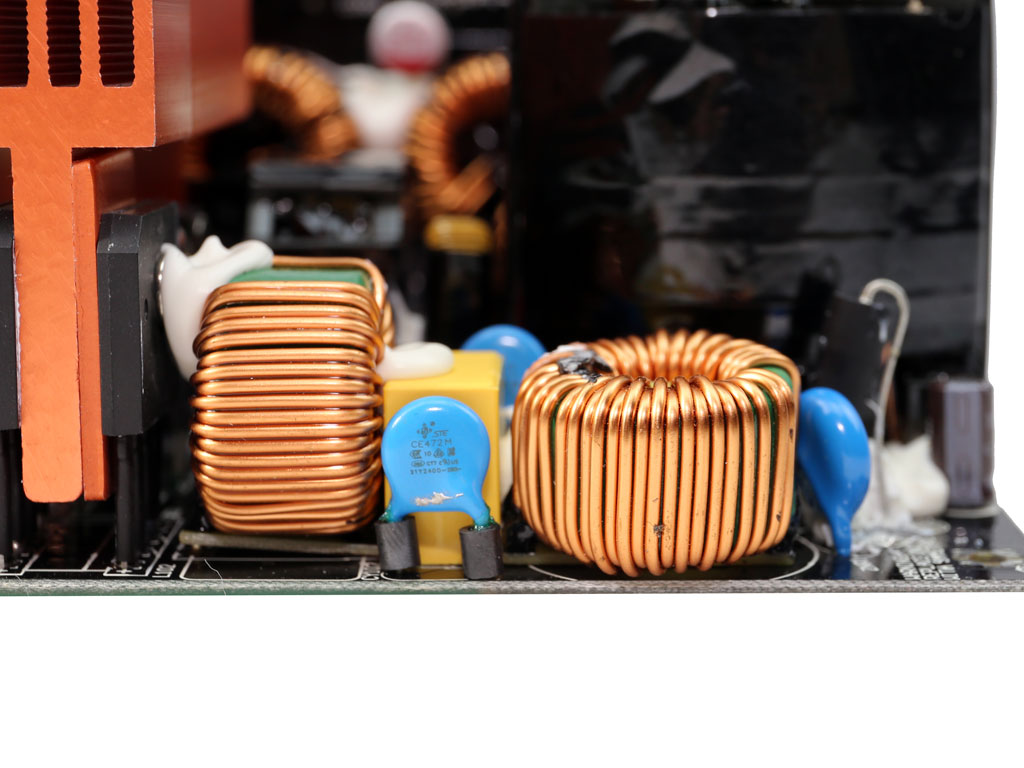
The first part of the transient filter is on the AC receptacle and includes a C cap and two Y caps, and it continuous on the main PCB with the same number of caps, two CM chokes, and an MOV.
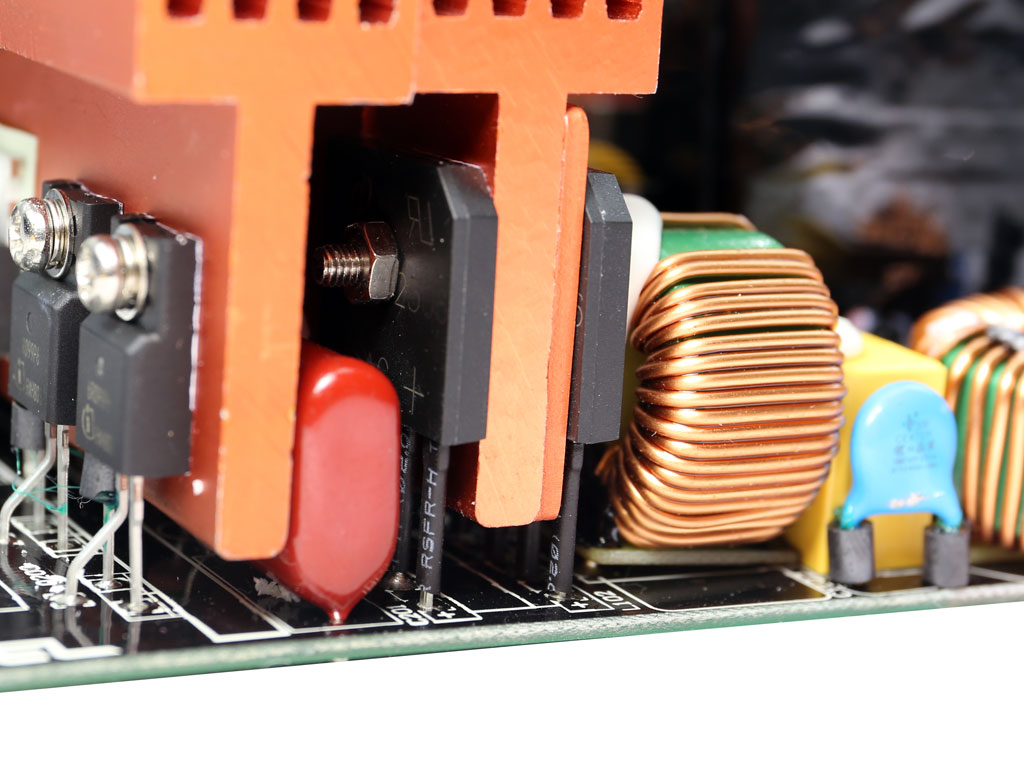
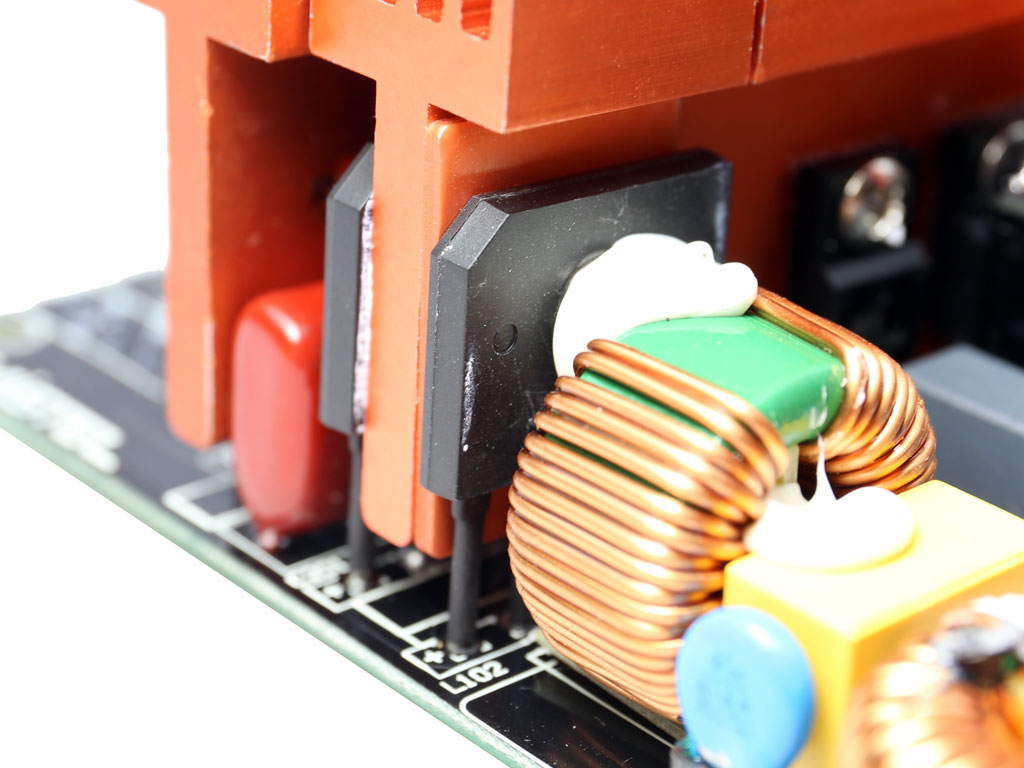

The two bridge rectifiers can handle up to 50 A current, which is a lot.
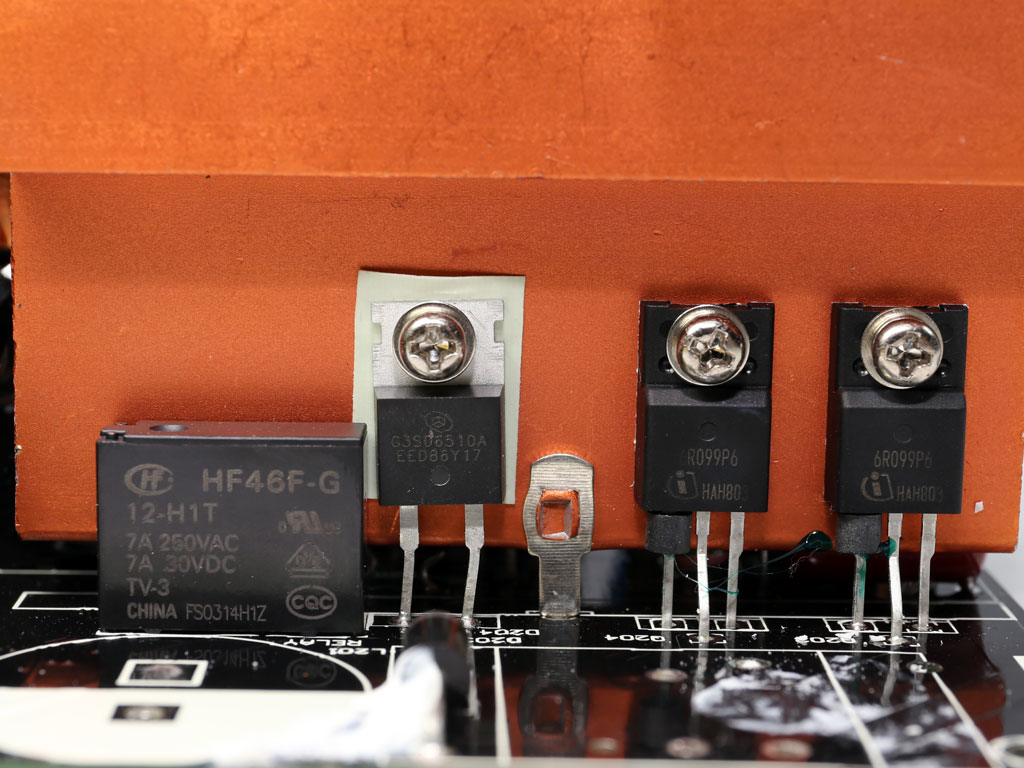
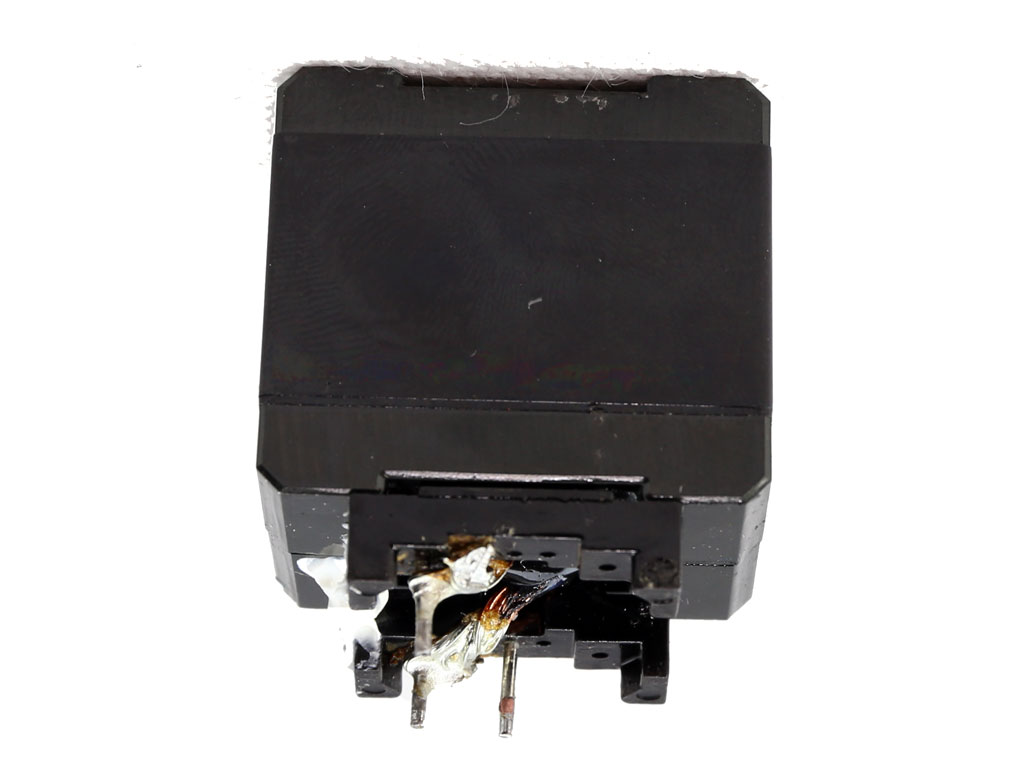
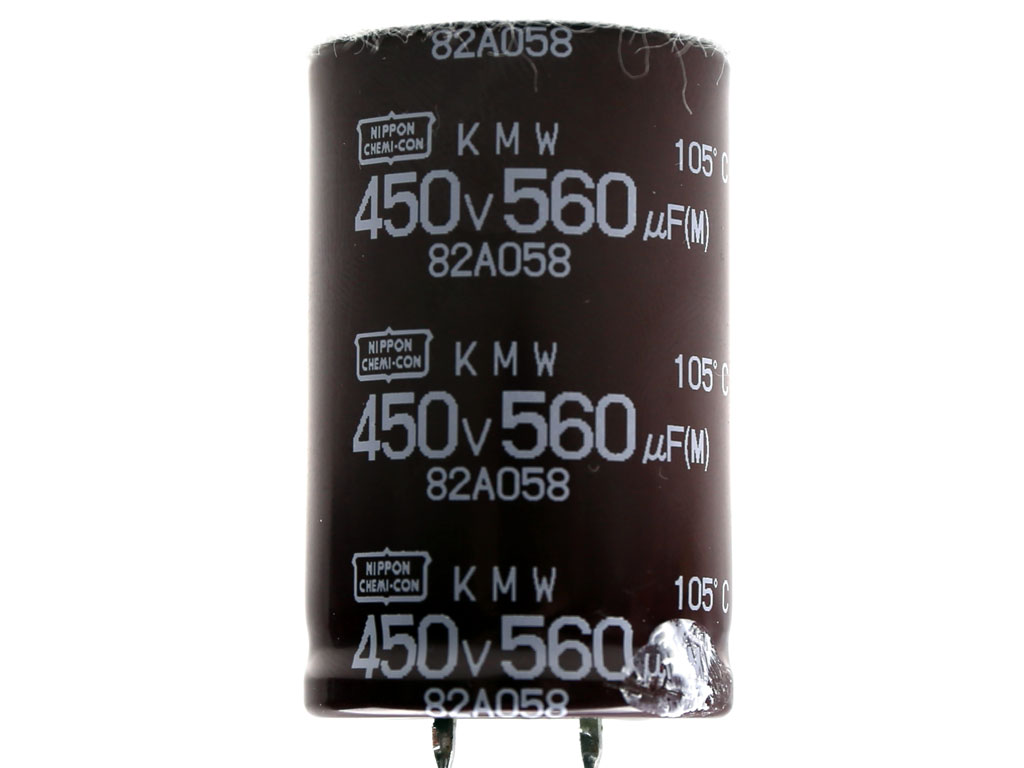
The APFC converter uses two Infineon IPA60R099P6 FETs and a G3S06510A boost diode. This is the first time we have come across this diode model. We would prefer a diode from a more well-known brand instead, like CREE. The bulk cap is of high quality, though, and rated at 450 V, contrary to the majority of bulk caps rated at 400–420 V, which is very close to the APFC's DC bus voltage (385VDC). Finally, next to the APFC FETs and diode is the bypass relay of the NTC thermistor responsible for inrush current protection; it is installed on the other side of the heatsink.
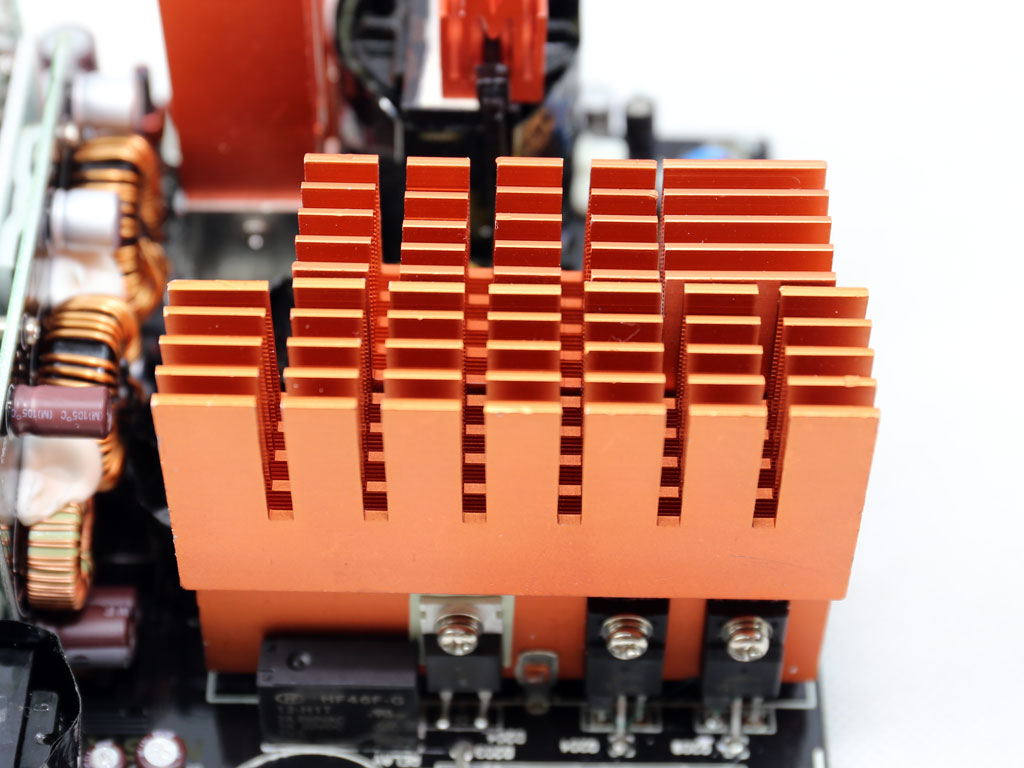
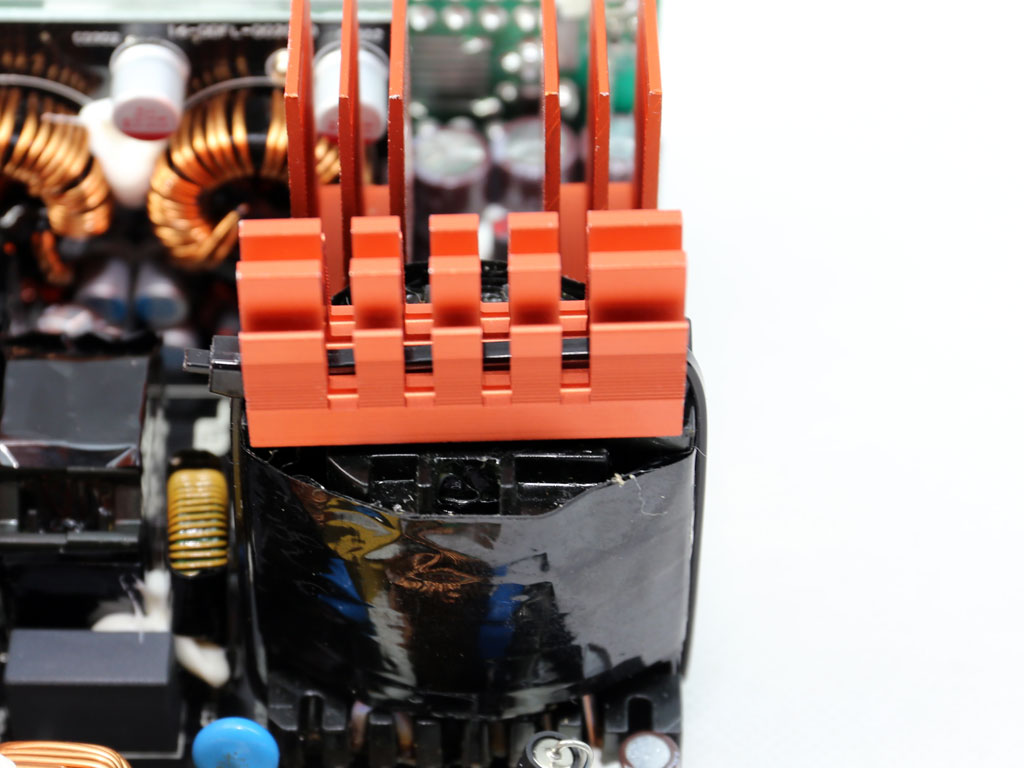
Like all heatsinks in this unit, the APFC's heatsink is quite tall. Even the main transformer has a heatsink, which sounds reasonable given there is no active cooling.
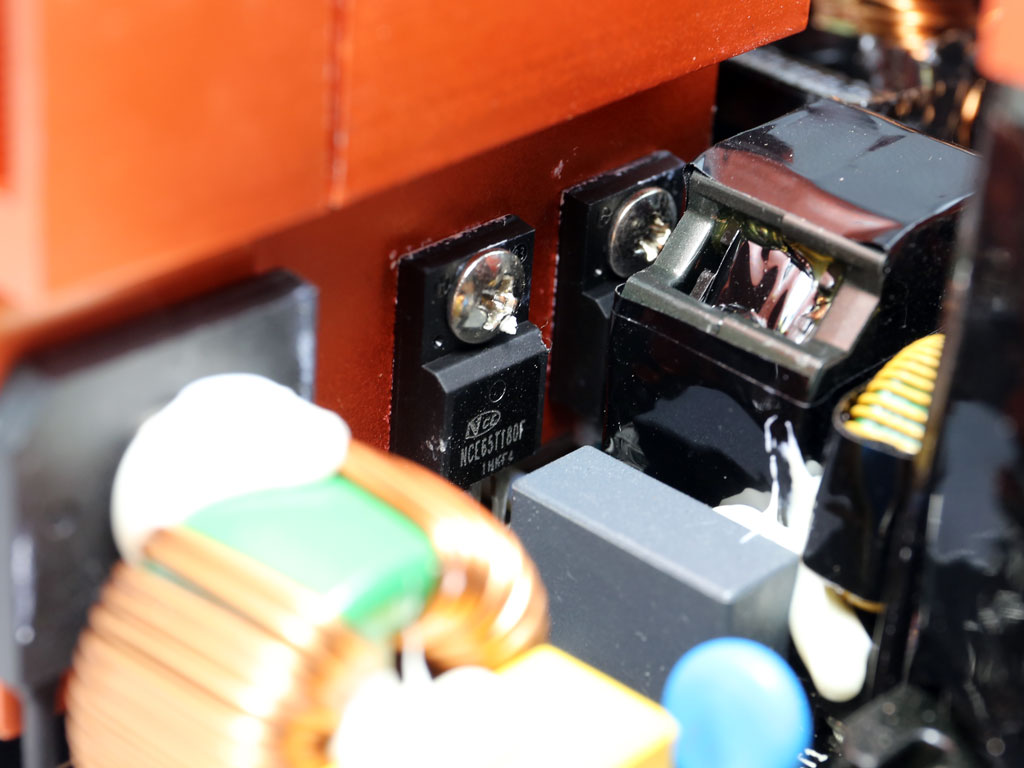
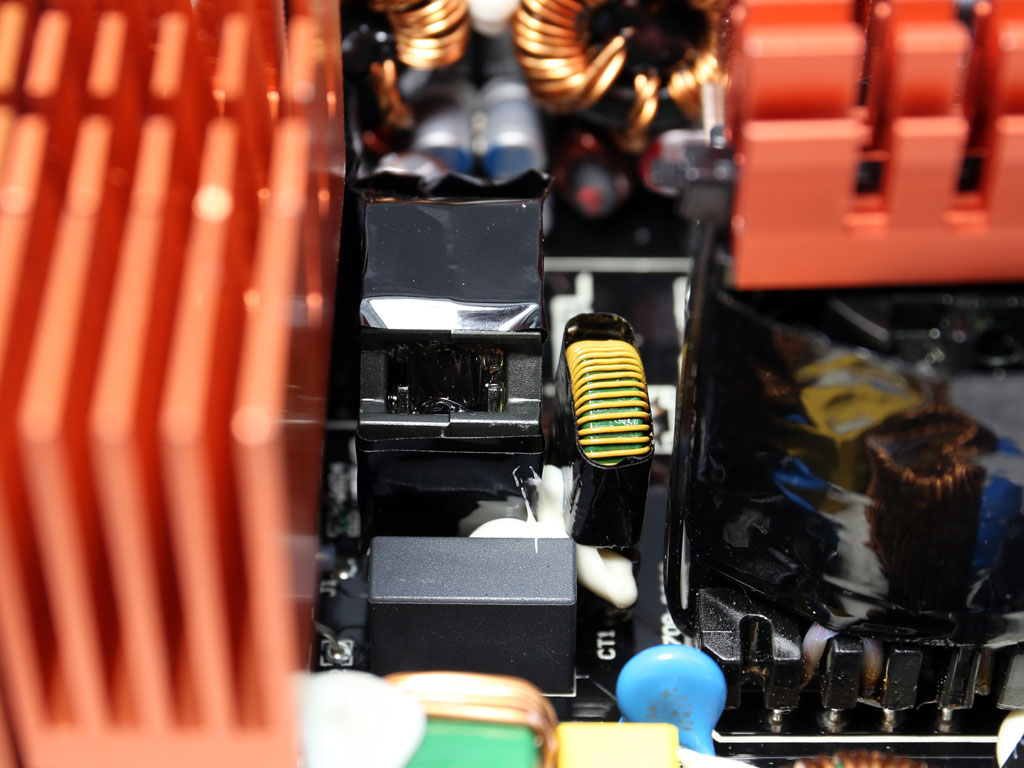
The main switching FETs are Four Wuxi NCE Power Semiconductor NCE65T180Fs. While quite strong for the task, we would like to see Infineon FETs used instead. An LLC resonant converter is also utilized, for increased efficiency.

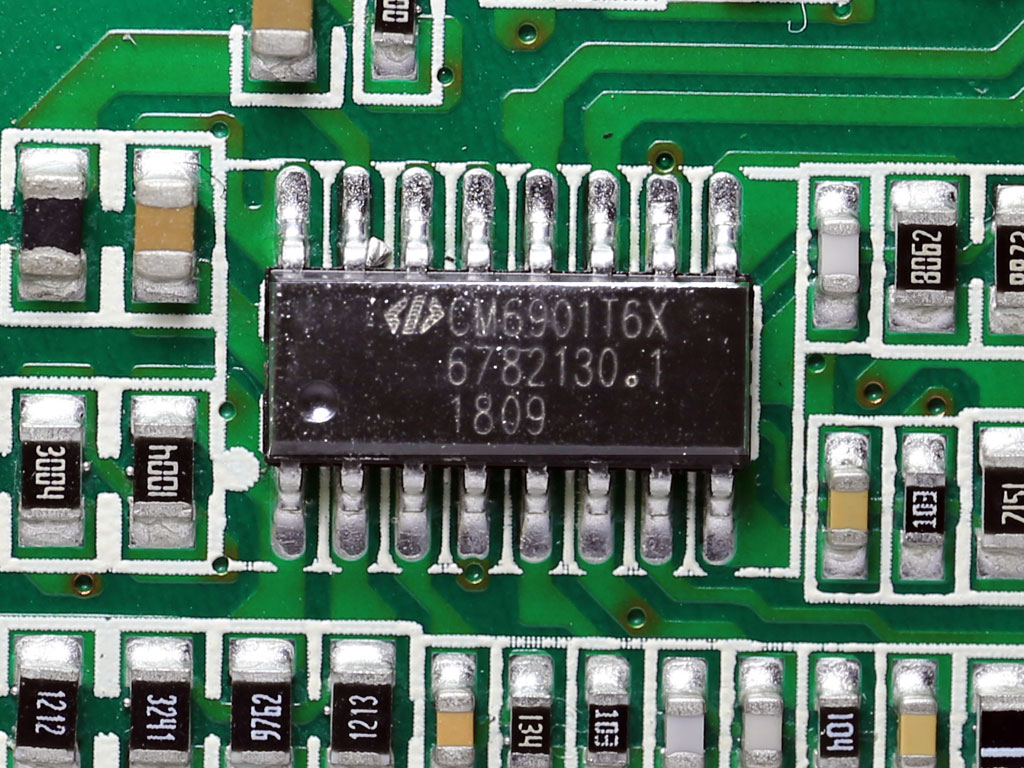
Both the APFC and LLC resonant converters, CM6500 and CM6901 respectively, are provided by Champion and are installed on the solder side of the main PCB.
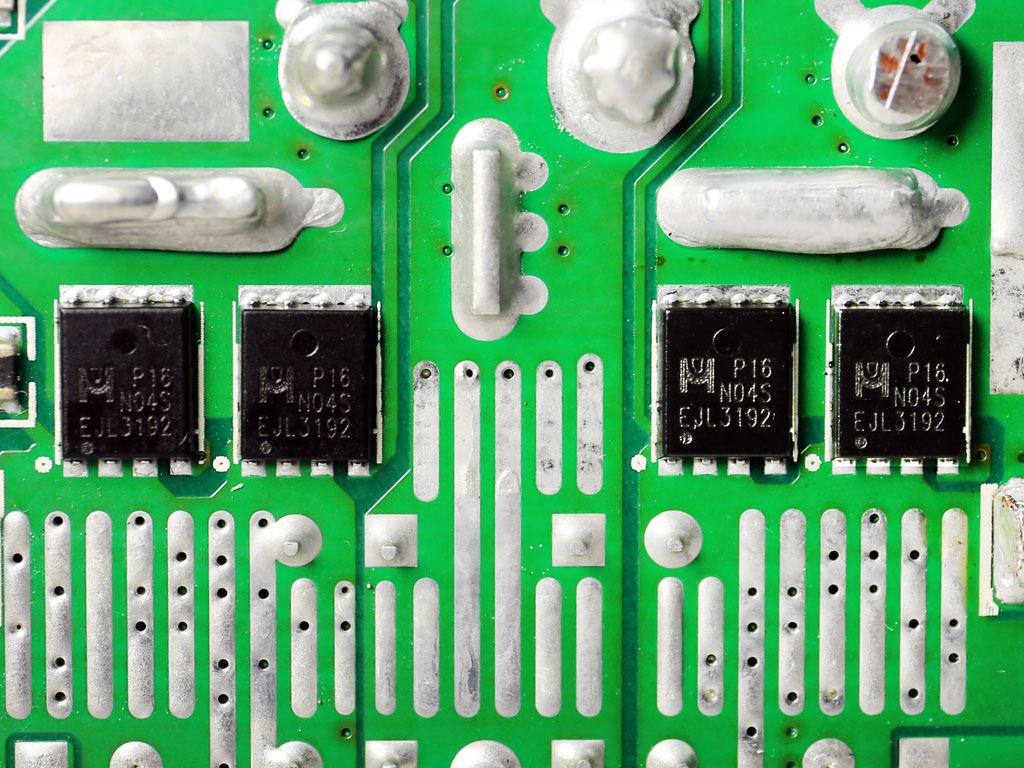
The FETs that regulate the +12V rails are on the solder side of the main PCB. In total, four Excelliance MOS EMP16N04HS FETs are used.
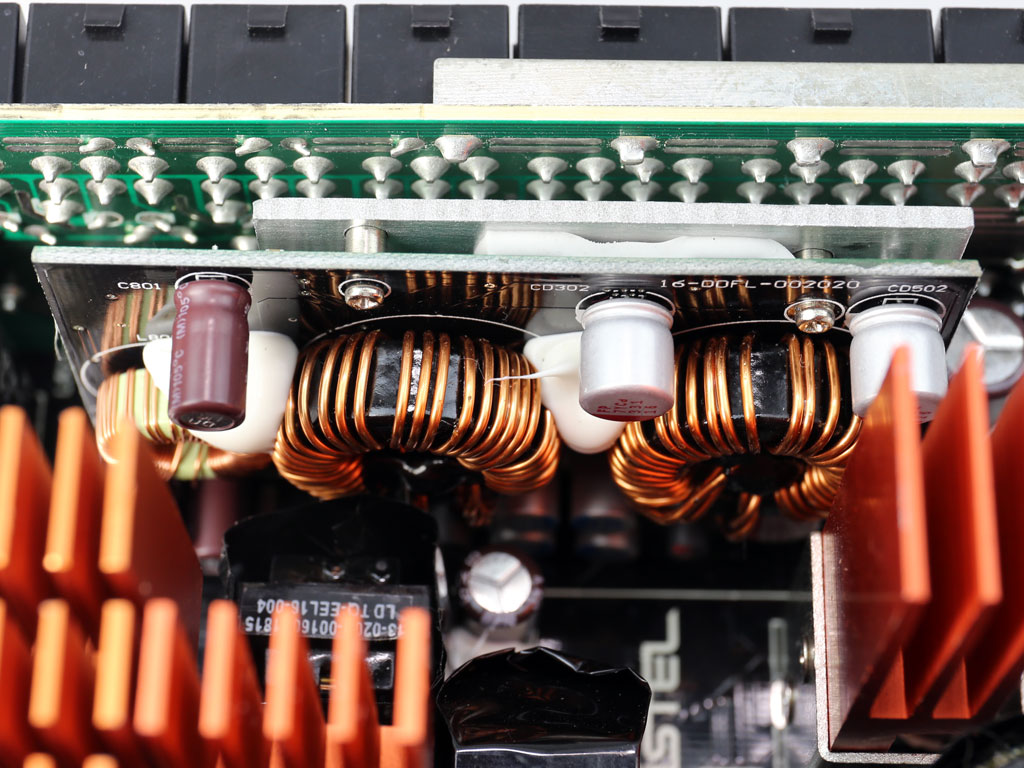
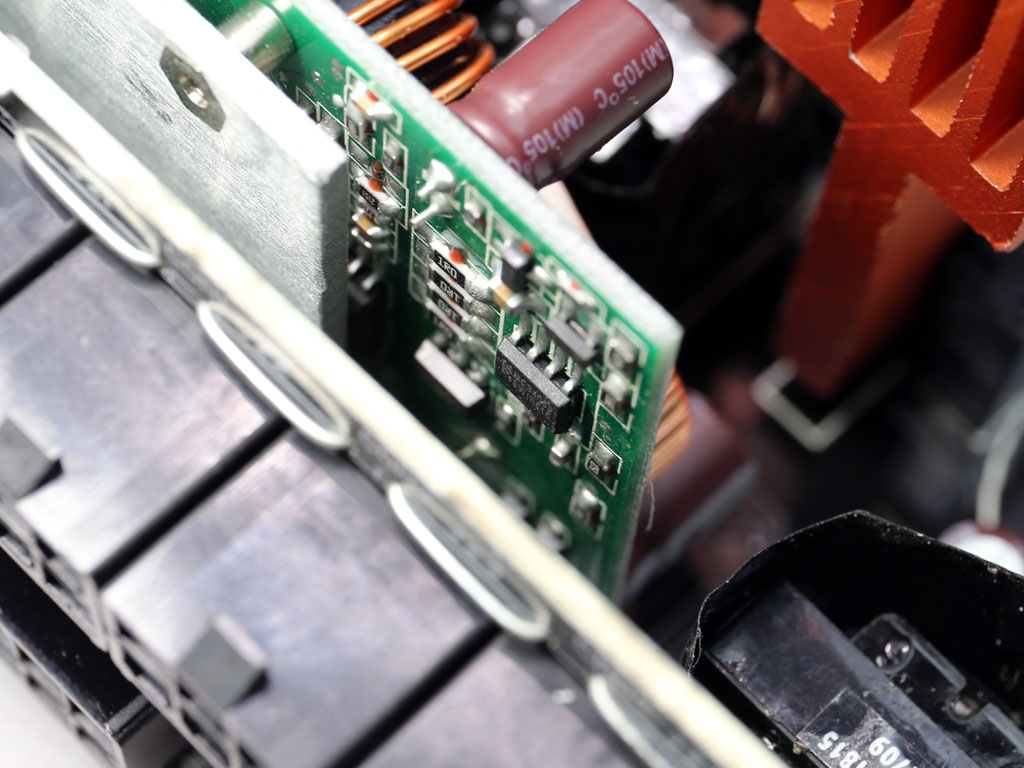
We could only identify the PWM controller of the DC-DC controller, which is a UP3861. To check on the FETs, we would have had to completely remove the daughter board, which we just didn't have the time for.
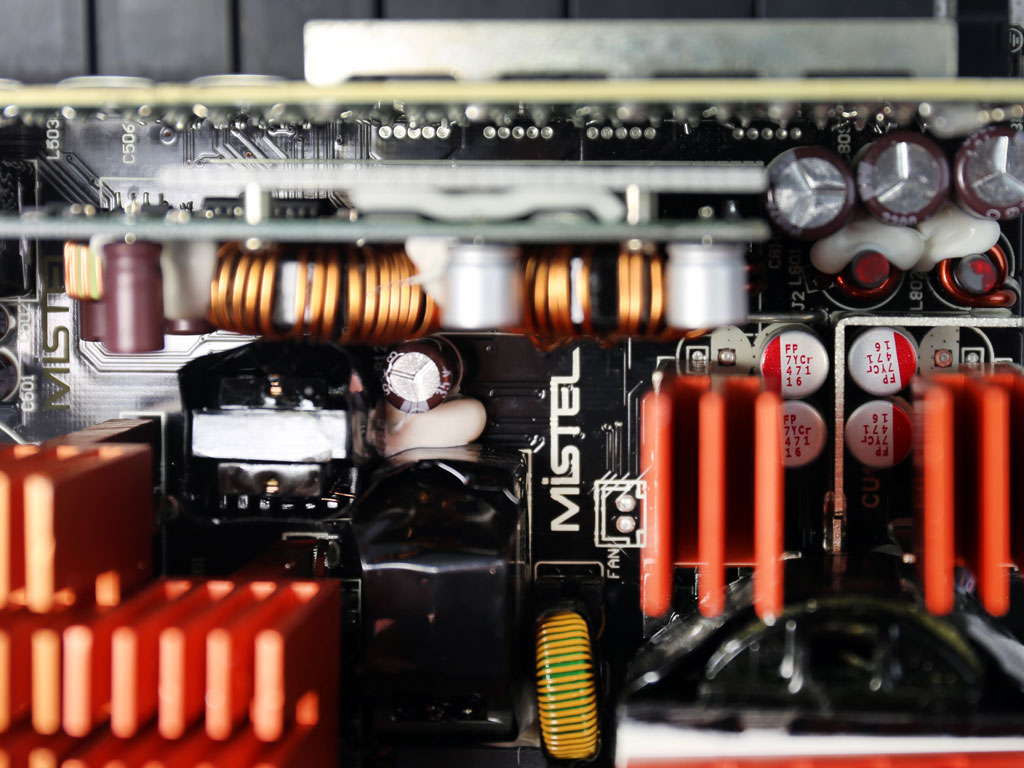
The filtering caps are exclusively provided by Japanese companies. The electrolytic ones are from Chemi-Con, which also provides some of the unit's polymer caps. The polymer caps are by FPCAP. Needless to say, a passively cooled PSU with inferior quality caps wouldn't last long, so good parts had to be used.
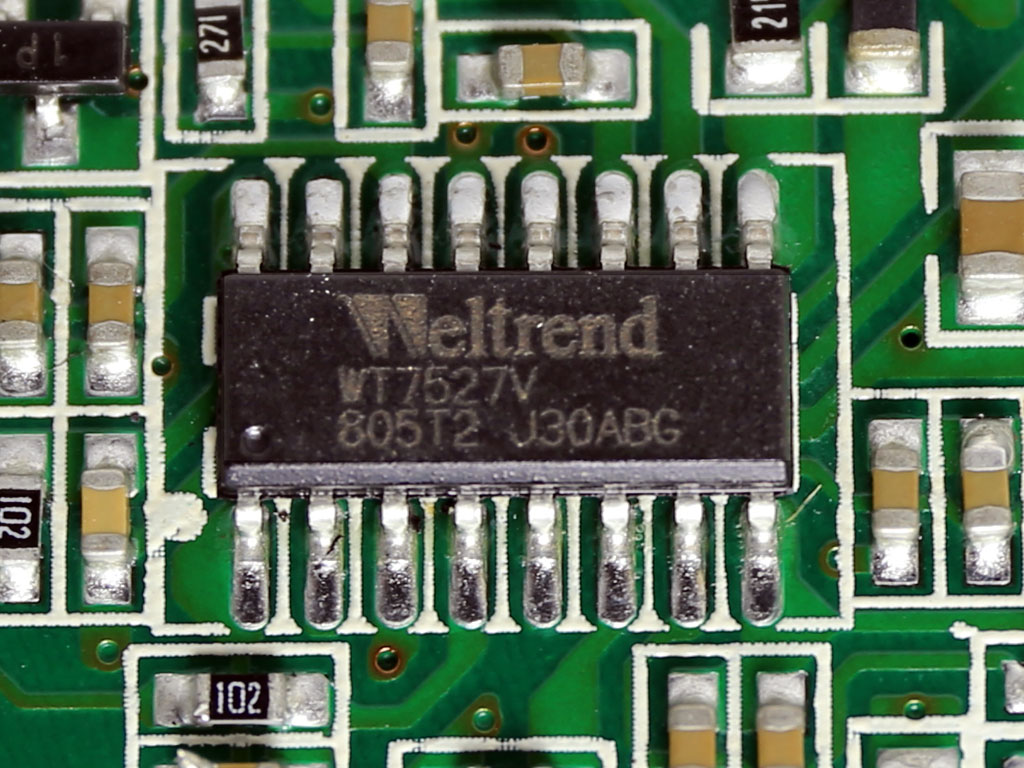
The supervisor IC is a Weltrend WT7527V. It doesn't support OTP (Over Temperature Protection), so another circuit is most likely used to provide OTP.
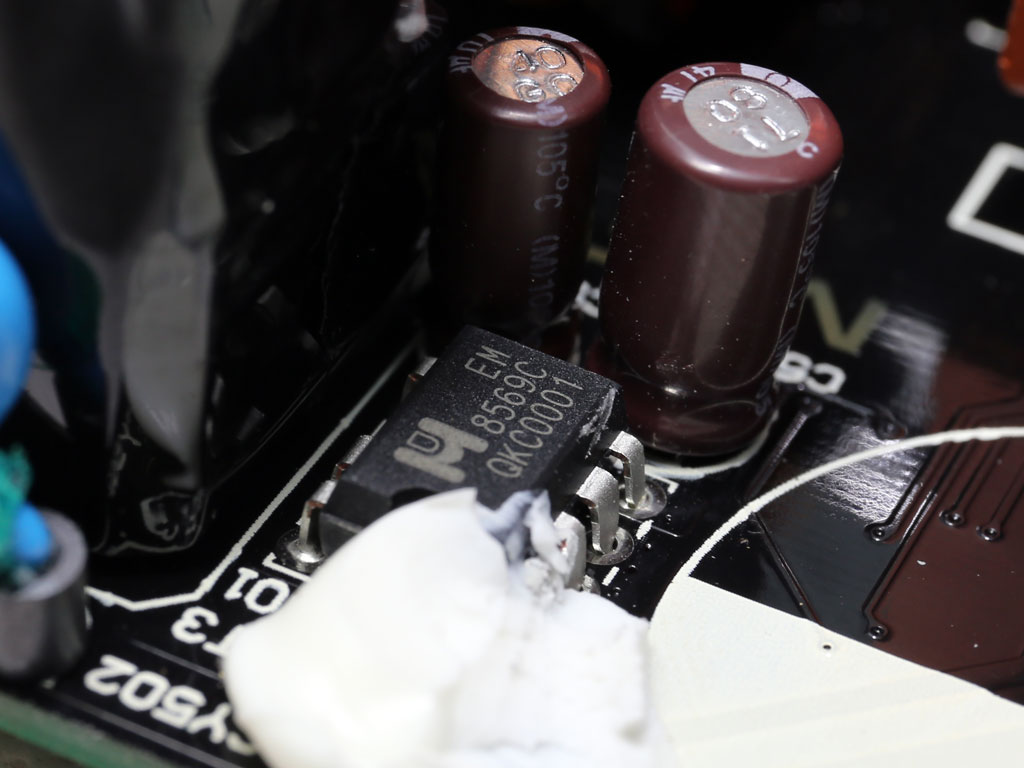
The 5VSB circuit uses a 1045 DGAL SBR diode, and its PWM controller is an Excelliance EM8569.
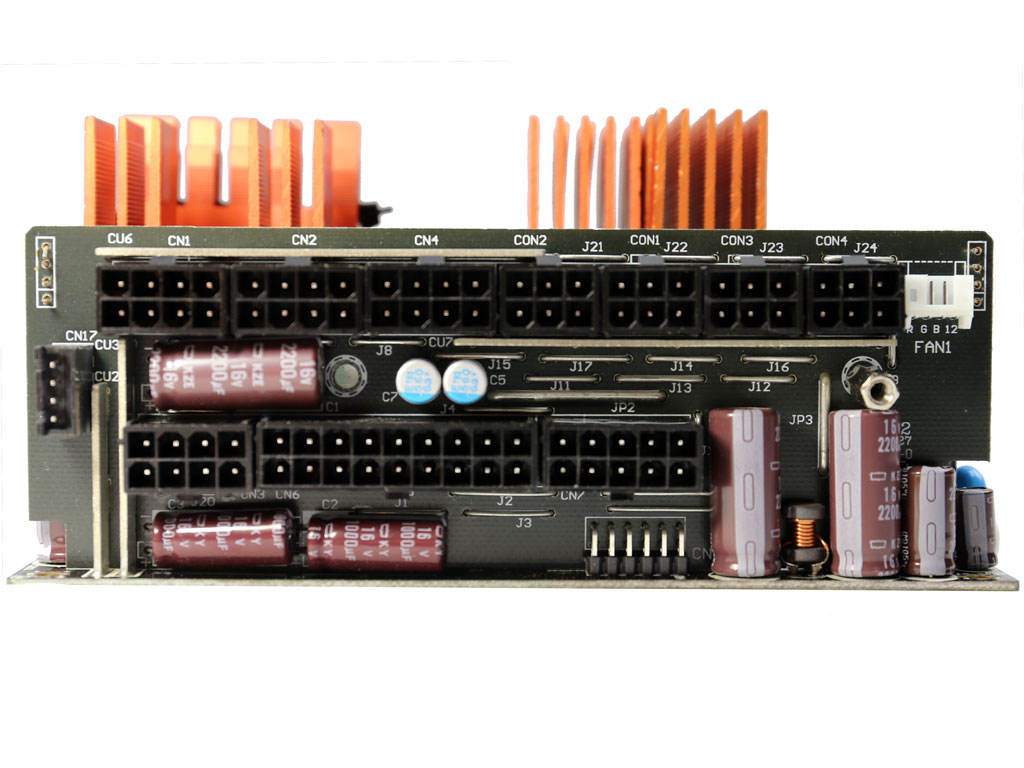
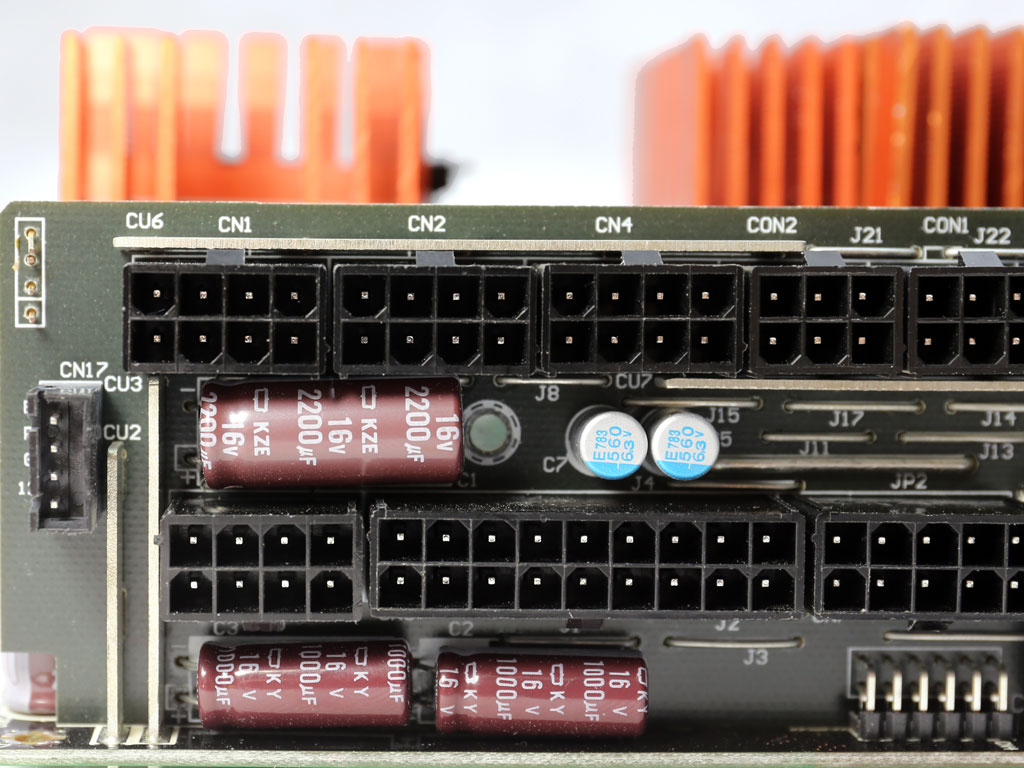
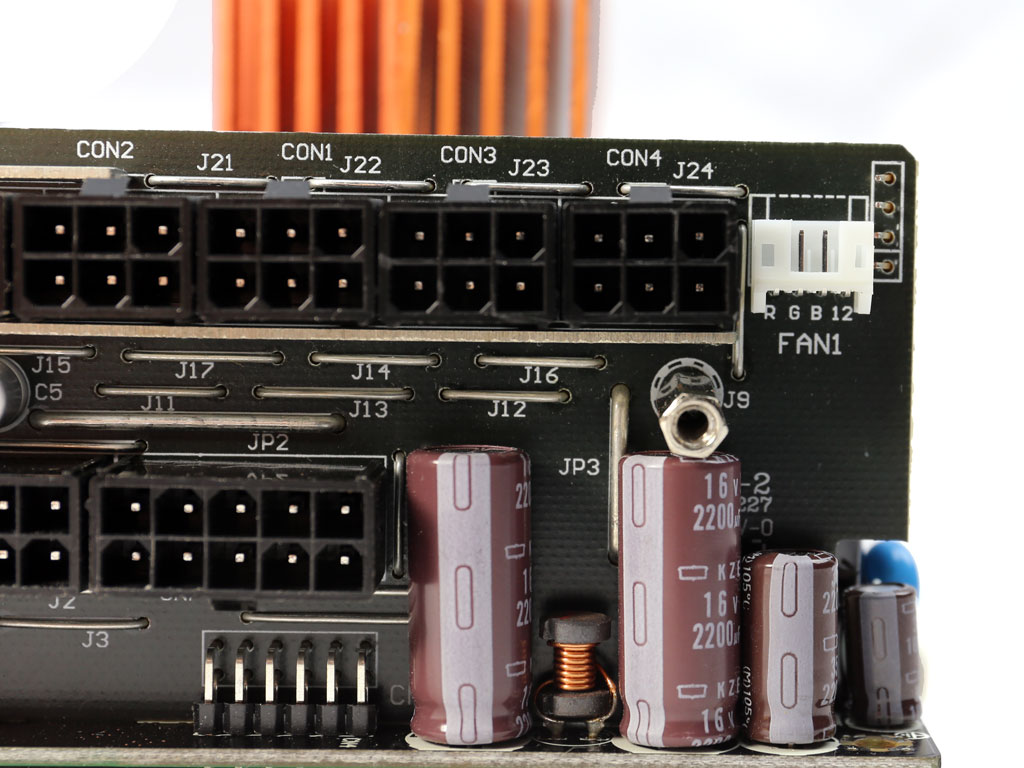
Several polymer caps for ripple-filtering purposes are installed on the primary side of the modular board. We also find a fan header here, which will most likely be utilized by other models based on the same platform.
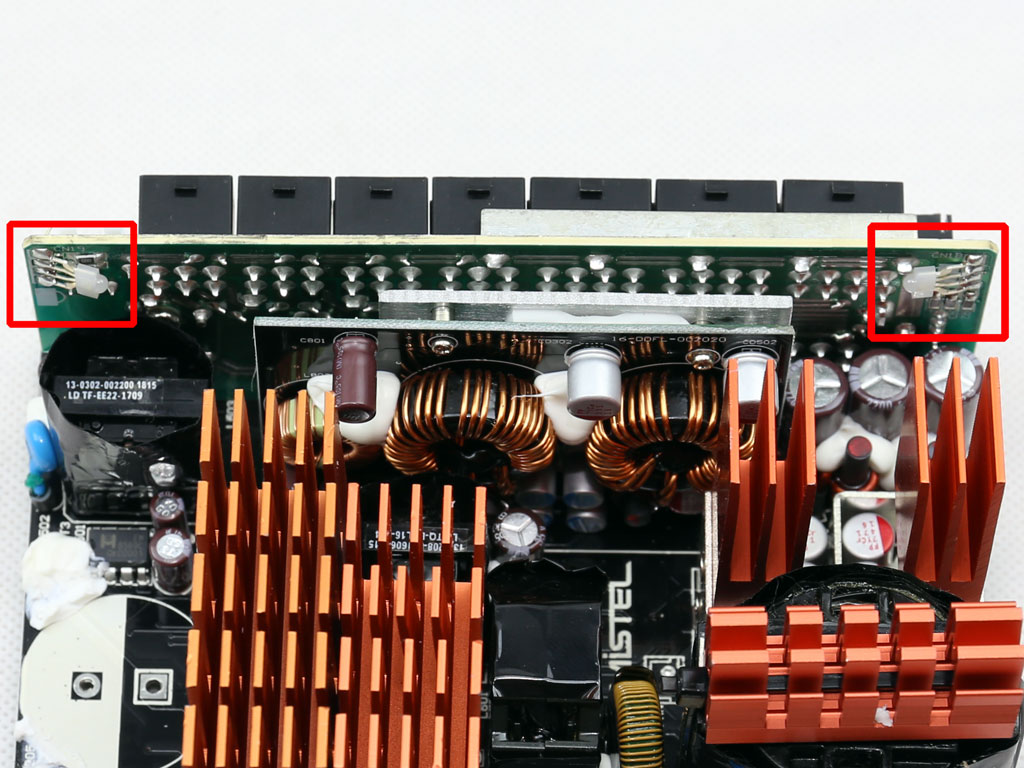
The RGB LEDs are installed on the backside of the modular board.


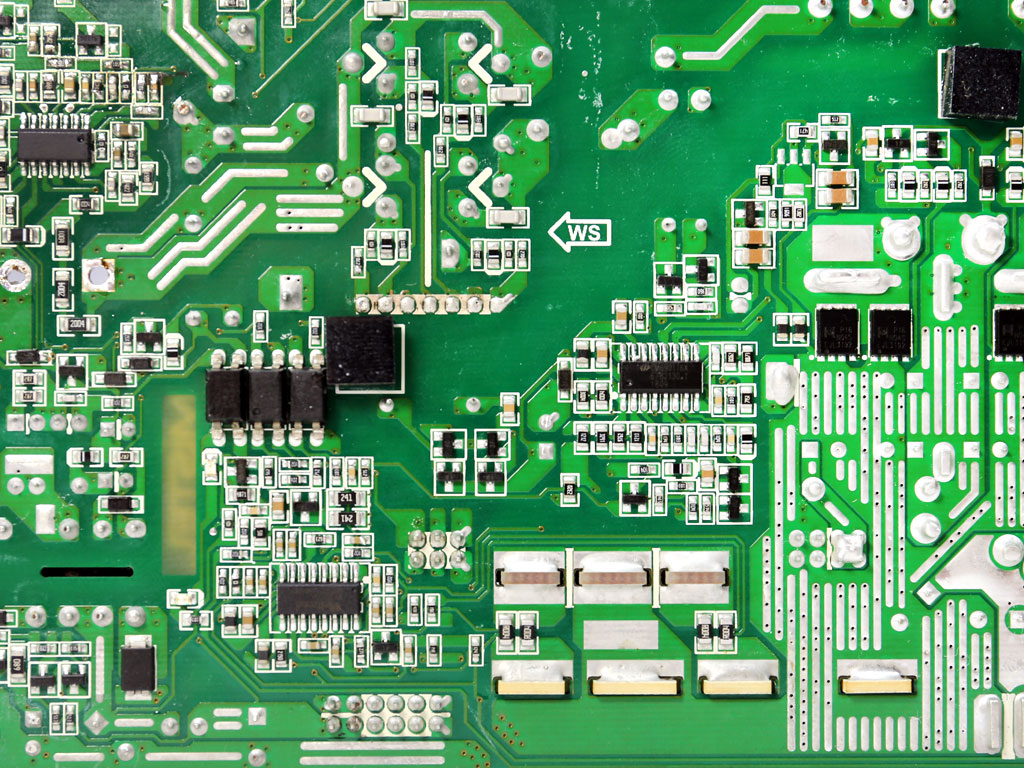
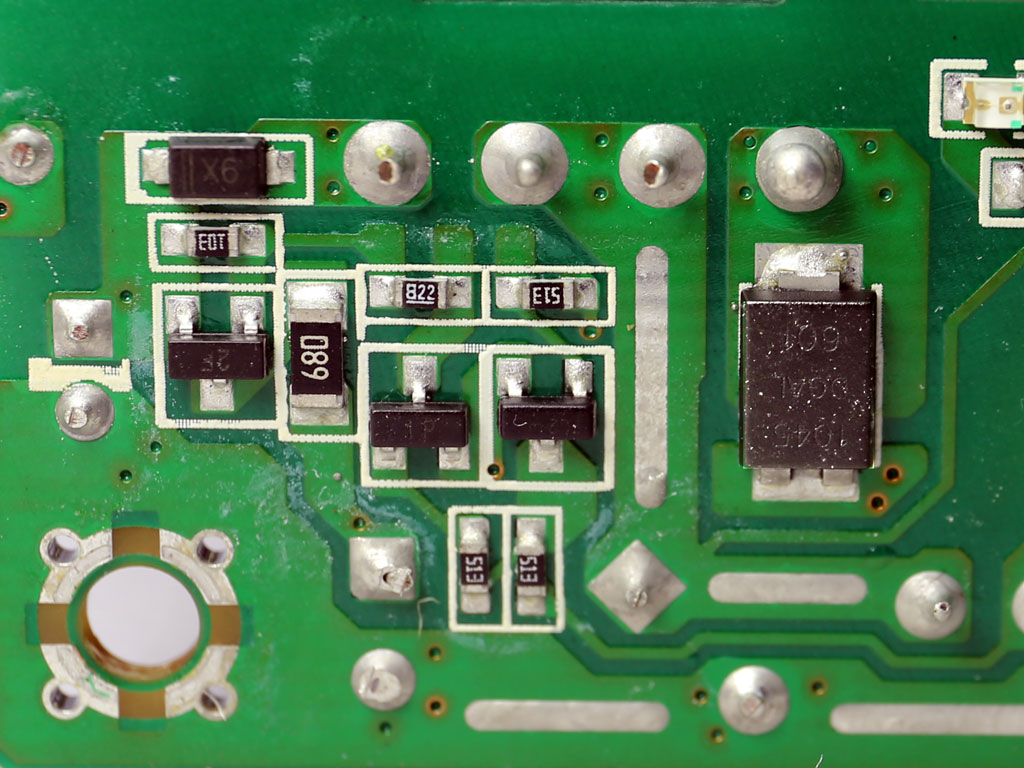
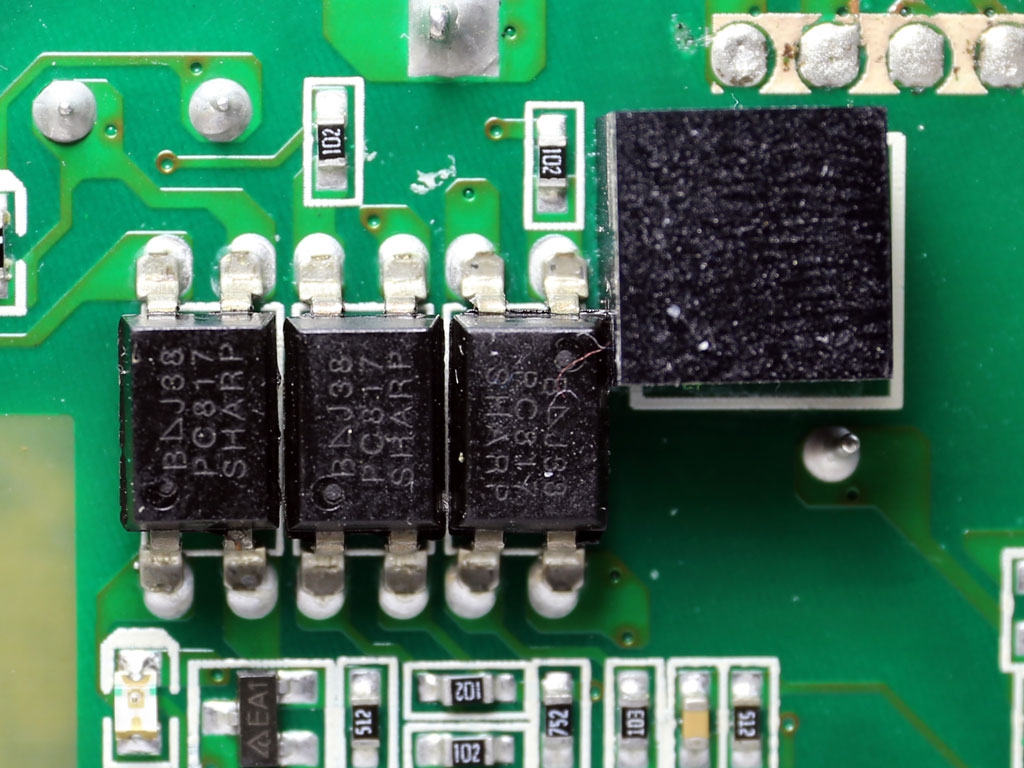
Soldering quality is great, which was a nice surprise given Mistel is a newcomer to the PSU market.
Our Patreon Silver Supporters can read articles in single-page format.
Nov 13th, 2026 21:51 CST
change timezone
Latest GPU Drivers
New Forum Posts
- Tell me about your favourite graphics card (27)
- Crimson Desert (31)
- RenoDX HDR - how to view the differnce Before&After in game? (0)
- Displayport DP80 3M (10ft) cable that can achieve 80gbps stable? (5)
- I'll flash a ASUS ROG Strix RX480 O8G in Cause of Code 43, as a Newbie (1)
- Opinion on Monitor Replacement (6)
- TMOG - post your benchmark results here (16)
- no "PhysX" workable (7)
- Microsoft Exchange/365 outages? (61)
- Unallocated space in ssd , is it normal? (18)
Popular Reviews
- AMD Zen 6 Technical Deep Dive
- Corsair HX1000i Shift Crystal Review
- NZXT C1200 Platinum Review
- Upcoming Hardware Launches 2027 (Updated Nov 2026)
- ASUS ROG Strix B850-I Gaming Wi-Fi7 W Review
- Montech King 95 3D PRO Review
- NZXT H7 RGB+ Review
- NZXT H5 Review
- Phantom Blade Zero Performance Benchmark Review - 35 GPUs Tested
- XPG NIMBUS PLUS Review - Mid-range Chair With Strong Competitors
TPU on YouTube
Controversial News Posts
- NVIDIA Co-Founder and CEO Jensen Huang Officially Resigns (379)
- OpenAI CEO Argues Home PCs Waste the World's Limited DRAM Supply (152)
- NVIDIA Launches Investigation Into Jensen Huang's Relationship With Suspected Chinese Spy (136)
- Intel "Raptor Lake Next" 16-Core and 20-Core CPUs Surface (130)
- Legendary Game Studio BioWare Shuts Down Following EA Layoffs (104)
- Dell CEO Says the Memory Shortage Will Get Worse in 2027 (95)
- NVIDIA GeForce RTX 50-Series Scheduled for up to $500 Price Hike This Week (89)
- Modder Fits RTX 5090 With Four 8-Pin Connectors, Halving Current per Wire (80)