 9
NZXT H2 Mini PC Review
A Look Inside »A Closer Look
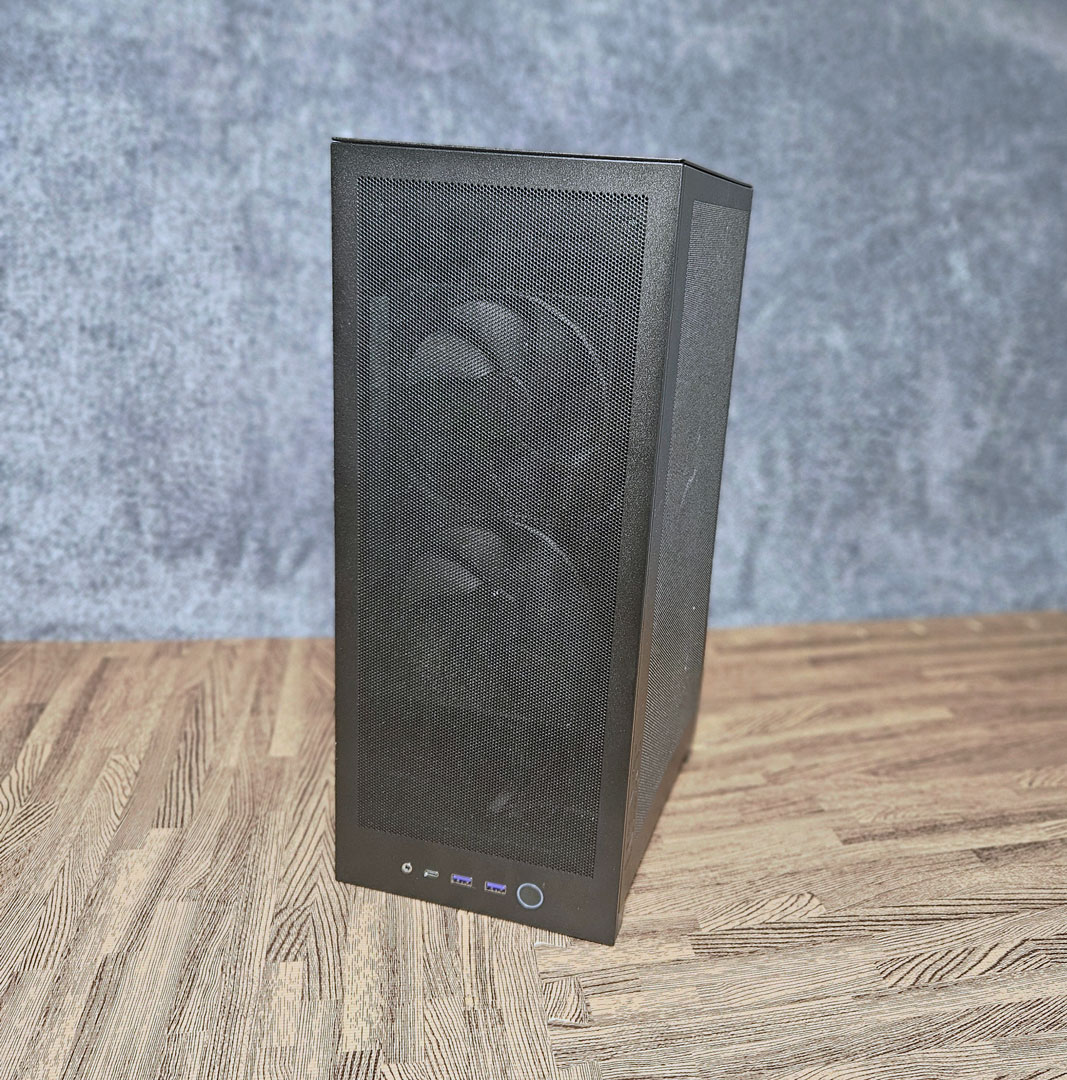

The H2 uses NZXT's 20.7-liter H2 Flow Mini-ITX chassis, with support for a 280 mm radiator and GPUs up to 331 mm. It's compact, but it's still built around standard desktop parts.
The left side is split into two removable sections. The upper half is tempered glass, which gives a clear view of the internals, while the lower half is a ventilated panel. Through the glass, the most visible component is the NZXT Kraken Elite 240 liquid cooler.
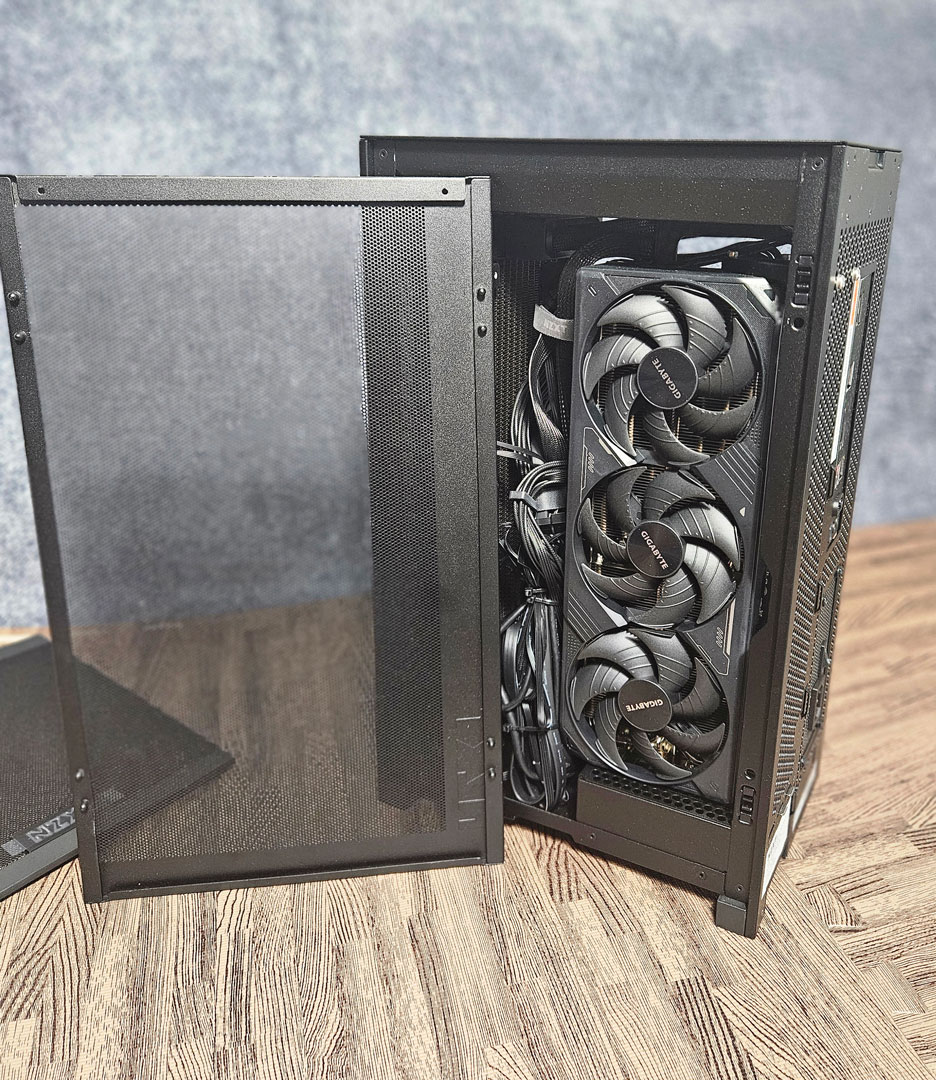
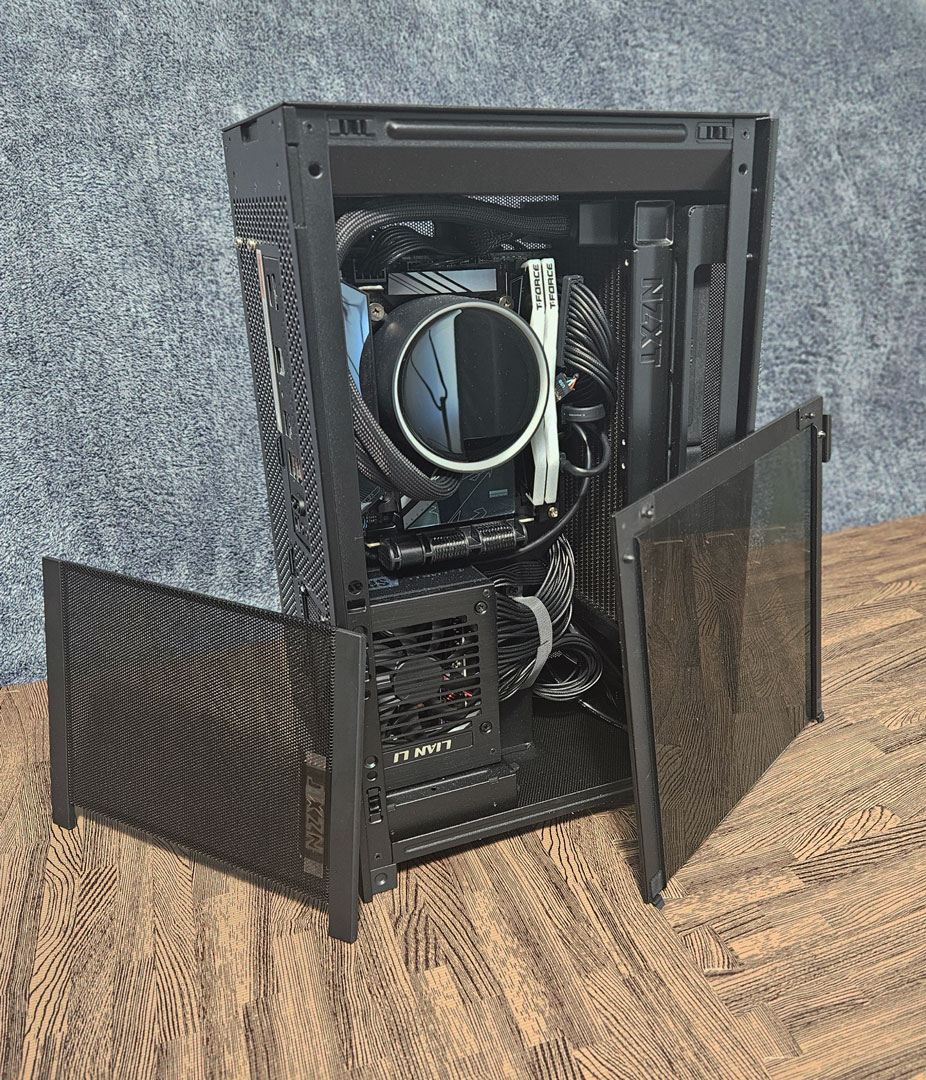
The side panels attach using a kind of hook-and-latch design. A firm pull releases them, and they slide back into place without any need for tools. The glass panel feels secure once mounted. The lower ventilated section comes off the same way, which makes it easier to reach storage and cabling.
Removing the full left panel exposes the Gigabyte RTX 5080, and space inside is tight. There is very little unused volume in a 20.7-liter enclosure, and the GPU sits snugly within the frame, surrounded by neatly routed cables.
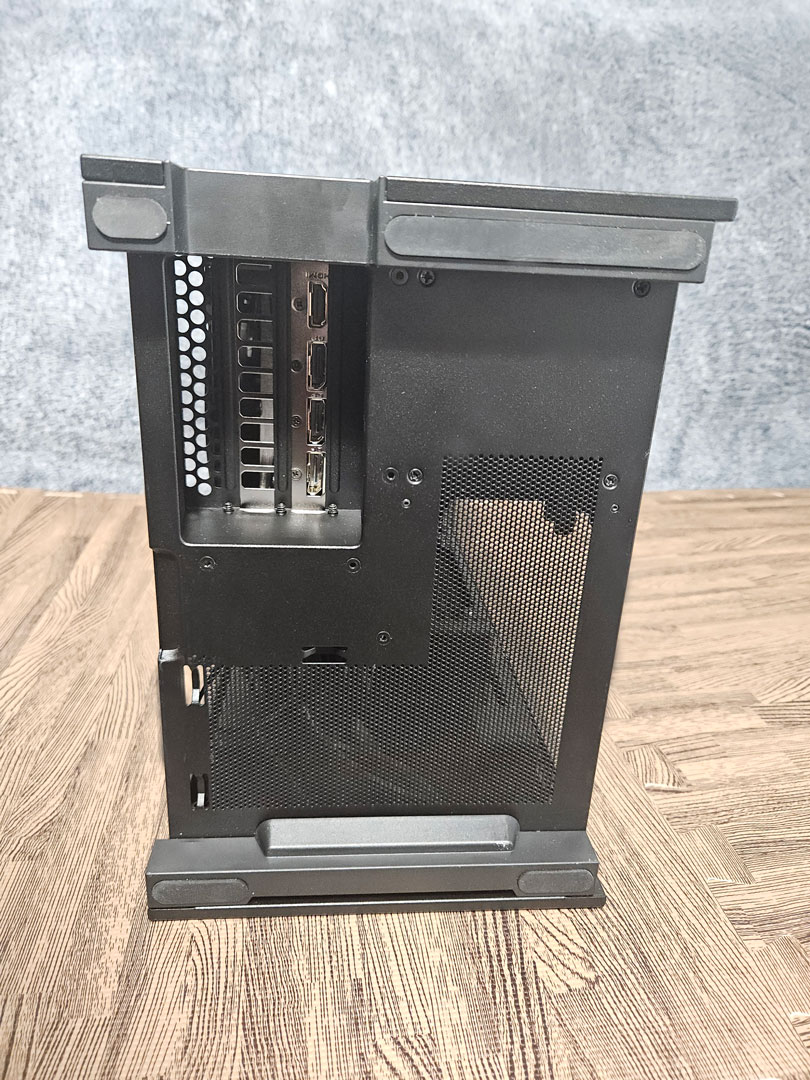
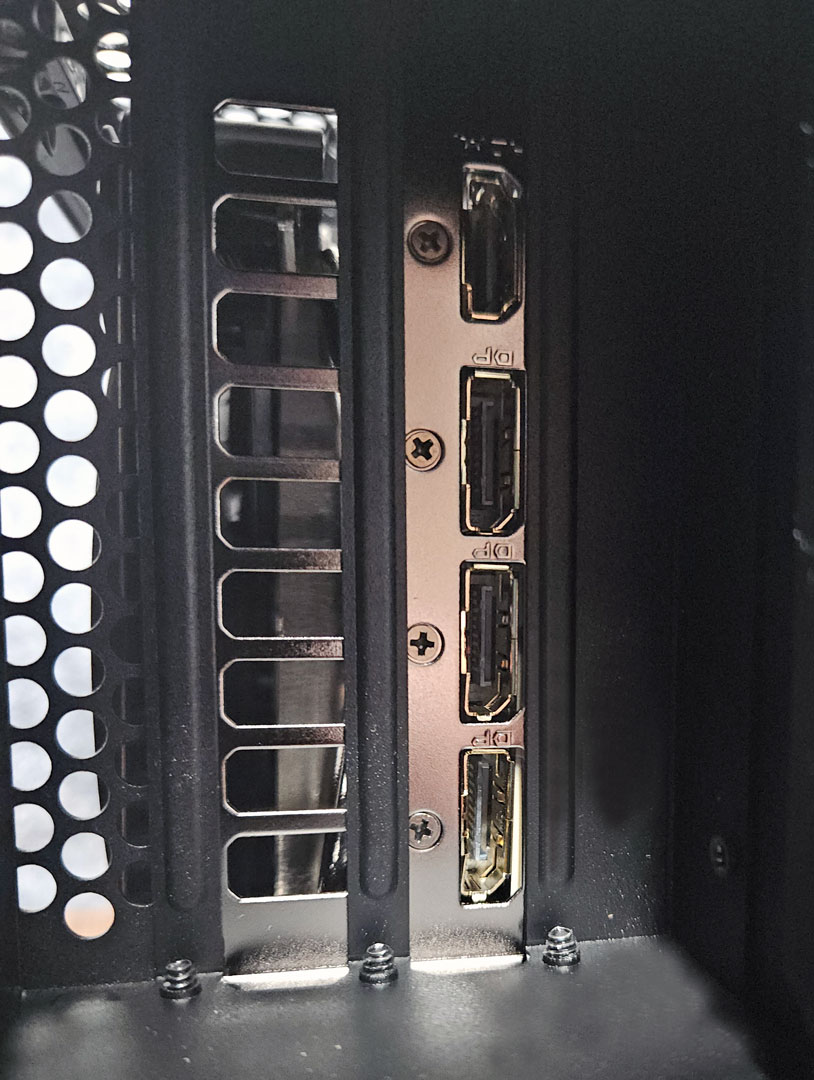
Instead of accessing the GPU ports in the traditional rear-facing position like a mid-tower, all monitor connections are made through the bottom of the chassis. The GPU I/O is oriented downward, and cables plug in from underneath the system. This design keeps the rear panel visually cleaner, but it does take a moment to understand if you are connecting your monitor to this type of system for the first time.
So, when you flip it on its side, you'll see that the bottom of the case includes an opening that exposes the GPU's four DisplayPort outputs and one HDMI port. Cables route through that opening and then exit toward the back, guided under the padded foot, which provides enough clearance for them to pass without pinching (just make sure you don't use a cord that has a bulky end piece). Depending on your desk layout, you may also need slightly longer cables than usual to account for the downward routing.
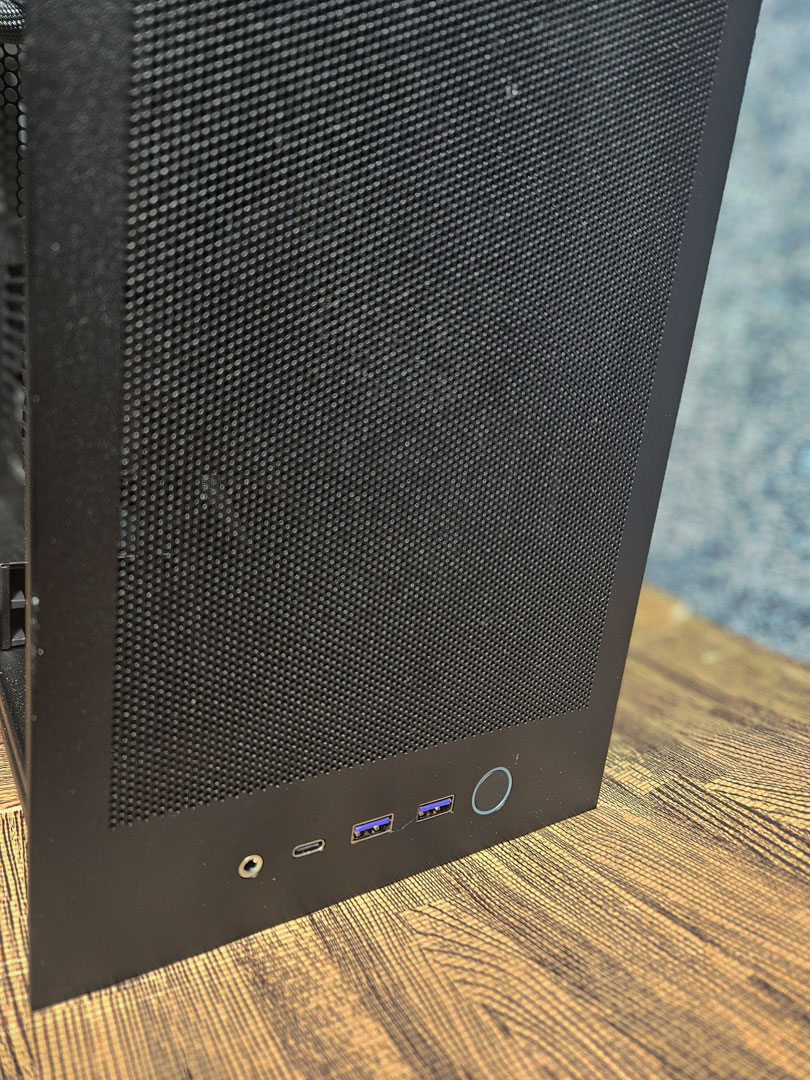
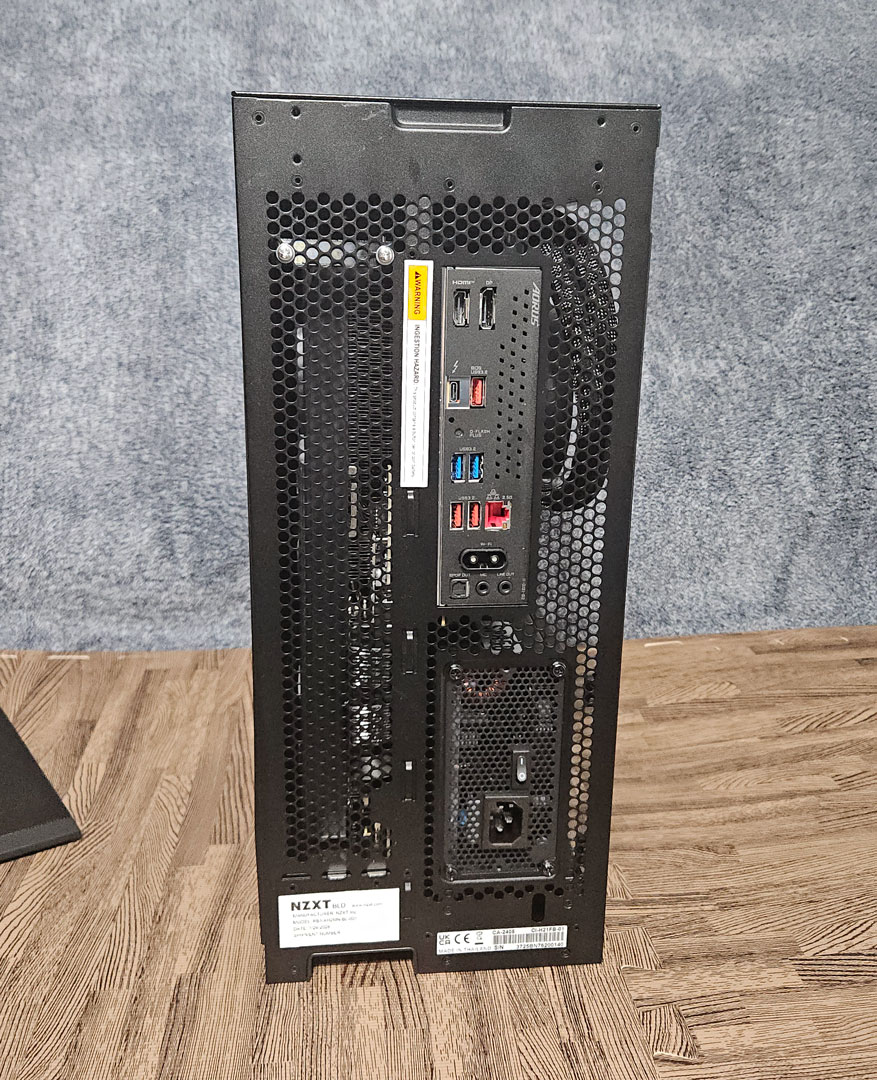
The front I/O is located along the bottom edge of the chassis and includes two USB 3.2 Type-A ports, a USB 3.2 Gen 2x2 Type-C port, and a combined headset jack. Having a front-facing Gen 2x2 Type-C connection is especially useful for high-speed external SSDs if you place the H2 directly on your desk, making large file transfers convenient without reaching around the back of the system. Because the ports are positioned along the lower front edge, they are easy to reach if the H2 is sitting on a desk beside you, keeping them within natural hand level instead of forcing you to reach over the top or fumble around the back. I will admit that with taller cases I have more than once left a USB hub dangling over the top panel simply because the front ports were positioned too high.
Around the back, the motherboard I/O includes one HDMI port and one DisplayPort, though in this configuration most users will rely on the RTX 5080's outputs below for their displays. For USB, there is a single rear USB-C port, three USB 3.2 Gen 2 Type-A ports, and two USB 3.2 Gen 1 Type-A ports, which gives you a total of six rear USB connections. That is enough for a keyboard, mouse, and a handful of external devices, but it is not generous if you tend to keep multiple peripherals permanently connected.
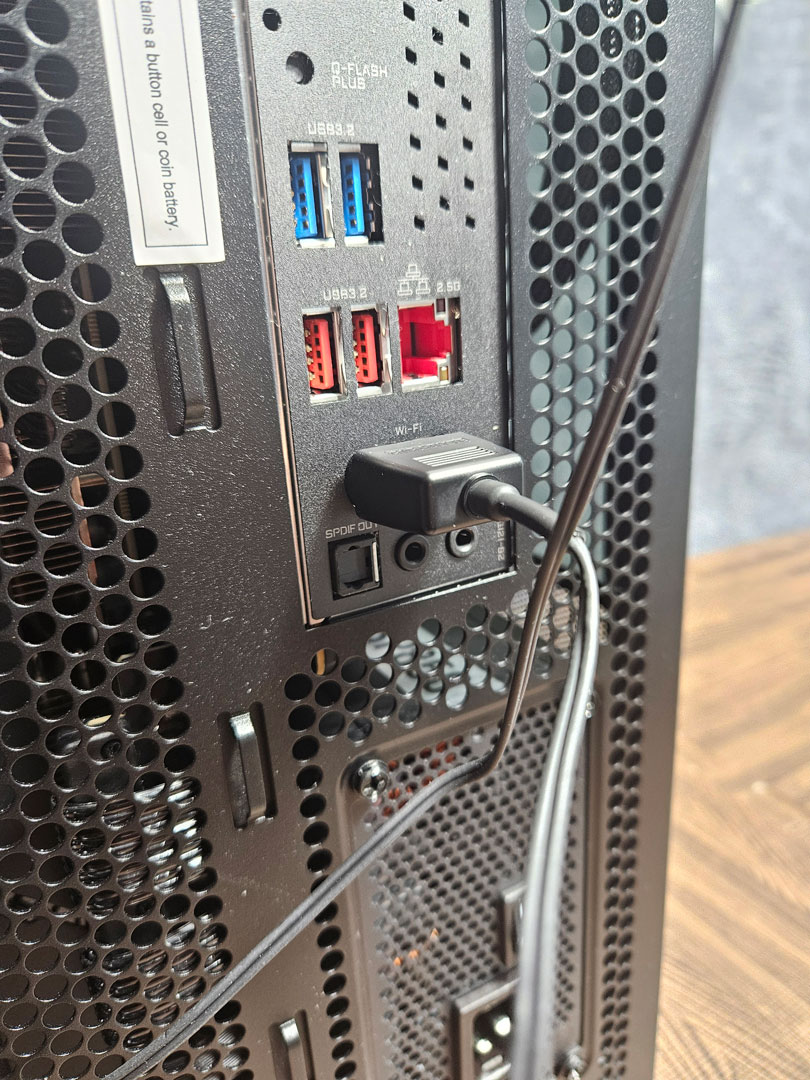
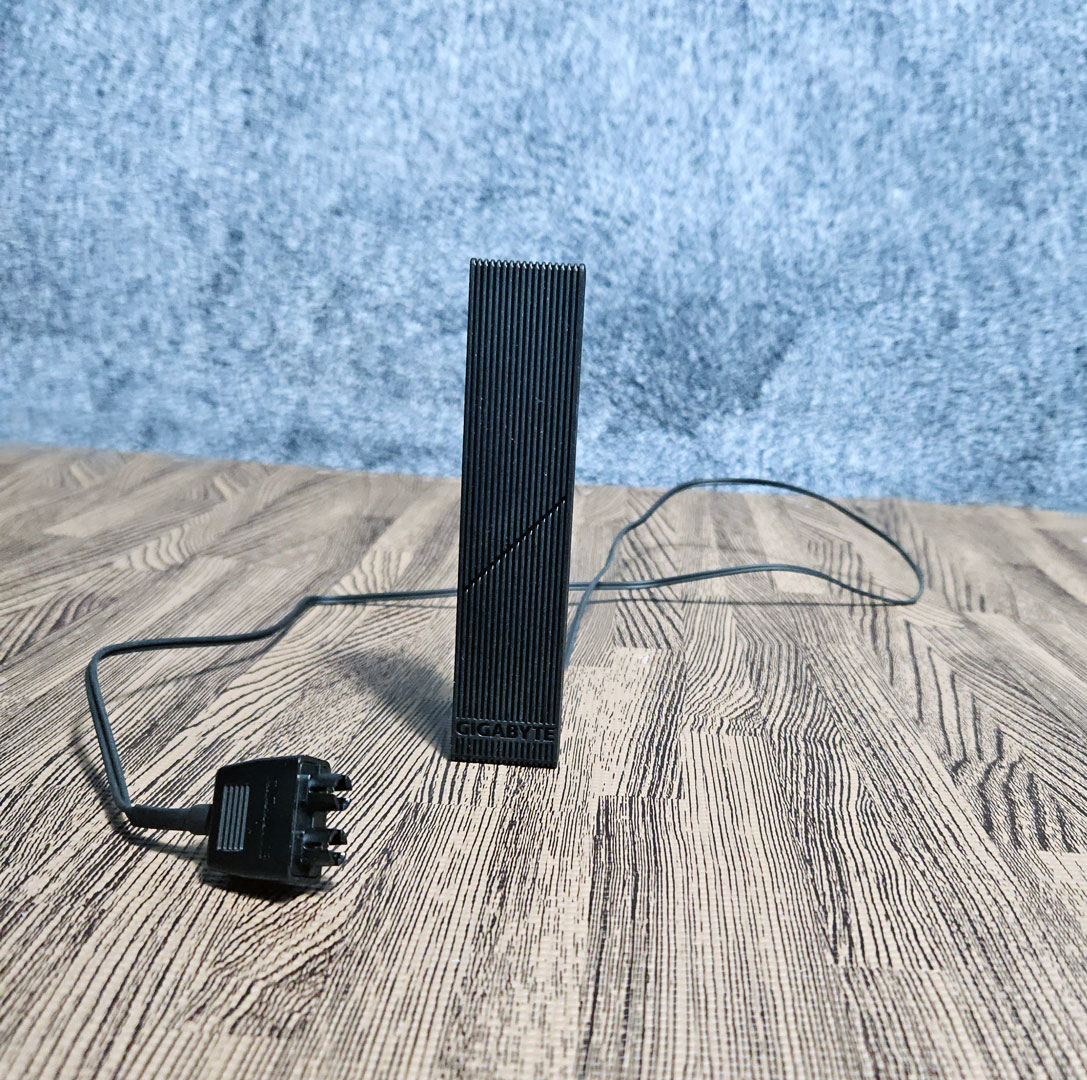
For networking, there is a single 2.5 Gigabit Ethernet port, and a dual-threaded Wi-Fi antenna connectors for the bundled external antennas, which I strongly recommend installing. Without them attached, Bluetooth performance was noticeably unstable and choppy and Wi-Fi signal strength dropped significantly in my testing. With the antennas attached, the connection was stable and Bluetooth stopped cutting out. Audio consists of separate 3.5 mm mic-in and line-out jacks along with a full-size optical S/PDIF output. Nothing critical is missing, but this is a compact I/O layout rather than an expansive one.
Nov 23rd, 2026 00:08 CST
change timezone
Latest GPU Drivers
New Forum Posts
- Last game you purchased? (1416)
- Honestly, do you care about GTA VI? (267)
- Anker SOLIX C2000 Gen 2 + PS400 Solarpanel (1)
- What are you playing? (26241)
- Increasing Power Limit? (9)
- DTS DCH Driver for Realtek HDA [DTS:X APO4 + DTS Interactive] (2818)
- UPS what one to get? (48)
- Your PC ATM (36458)
- Gacha Games - Discussions, Pulls, Updates, etc. (1157)
- Making a game in Godot engine (19)
Popular Reviews
- Microsoft Surface Laptop Ultra Review - The Next-gen Arm Laptop
- Corsair RM1200e (Second Generation) Review
- Upcoming Hardware Launches 2027 (Updated Nov 2026)
- Pulsar Office Tour & First Look at P1 Dual-Sensor Mouse
- Ugreen NASync DXP4800 GT Review
- AMD Ryzen 7 9800X3D Review - The Best Gaming Processor
- AMD Zen 6 Technical Deep Dive
- AMD Ryzen 7 5800X3D 10th Anniversary Review
- Phantom Blade Zero Performance Benchmark Review - 35 GPUs Tested
- Biwin Black Opal NV7400 2 TB Review
TPU on YouTube
Controversial News Posts
- NVIDIA Co-Founder and CEO Jensen Huang Officially Resigns (492)
- Report: Jensen Huang Eyes NVIDIA Comeback (266)
- Open Letter Asking NVIDIA to Reinstate Jensen Huang Passes 115,000 Signatures (184)
- OpenAI CEO Argues Home PCs Waste the World's Limited DRAM Supply (152)
- NVIDIA Launches Investigation Into Jensen Huang's Relationship With Suspected Chinese Spy (136)
- Intel "Raptor Lake Next" 16-Core and 20-Core CPUs Surface (130)
- NVIDIA GeForce RTX 50-Series Scheduled for up to $500 Price Hike This Week (89)
- Intel Razor Lake Gets a 12 P-Core bLLC Chip With No E-Cores, Per Leak (86)