 9
NZXT H2 Mini PC Review
General Performance »A Look Inside
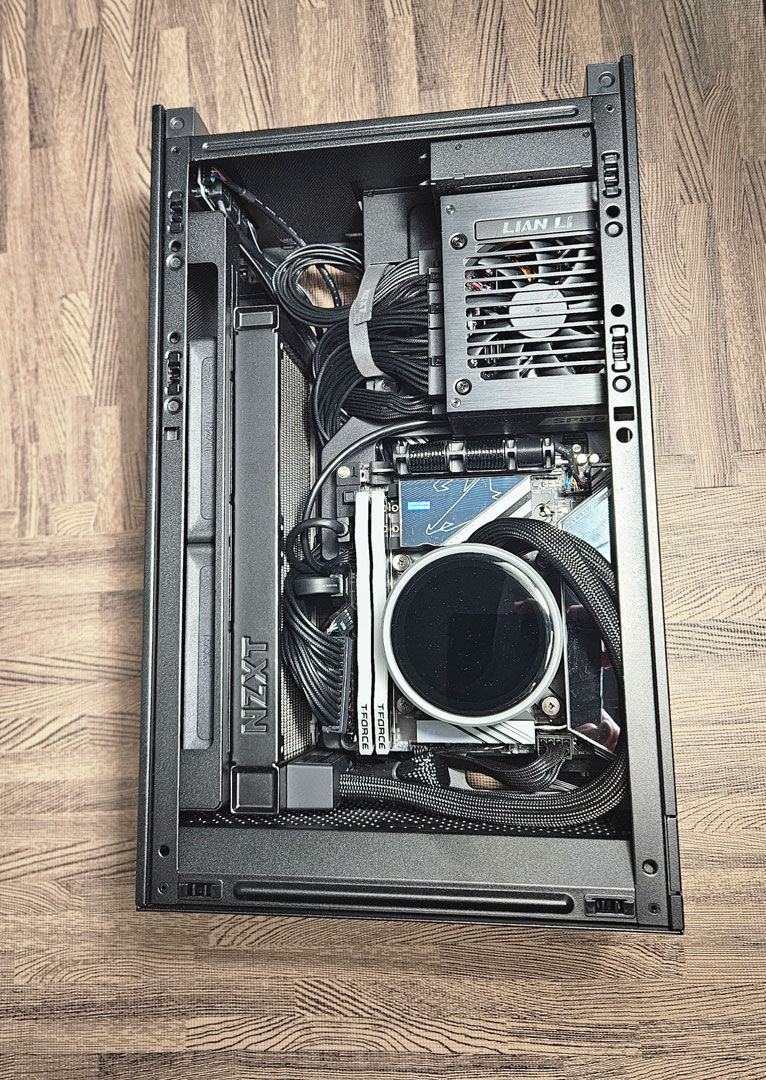
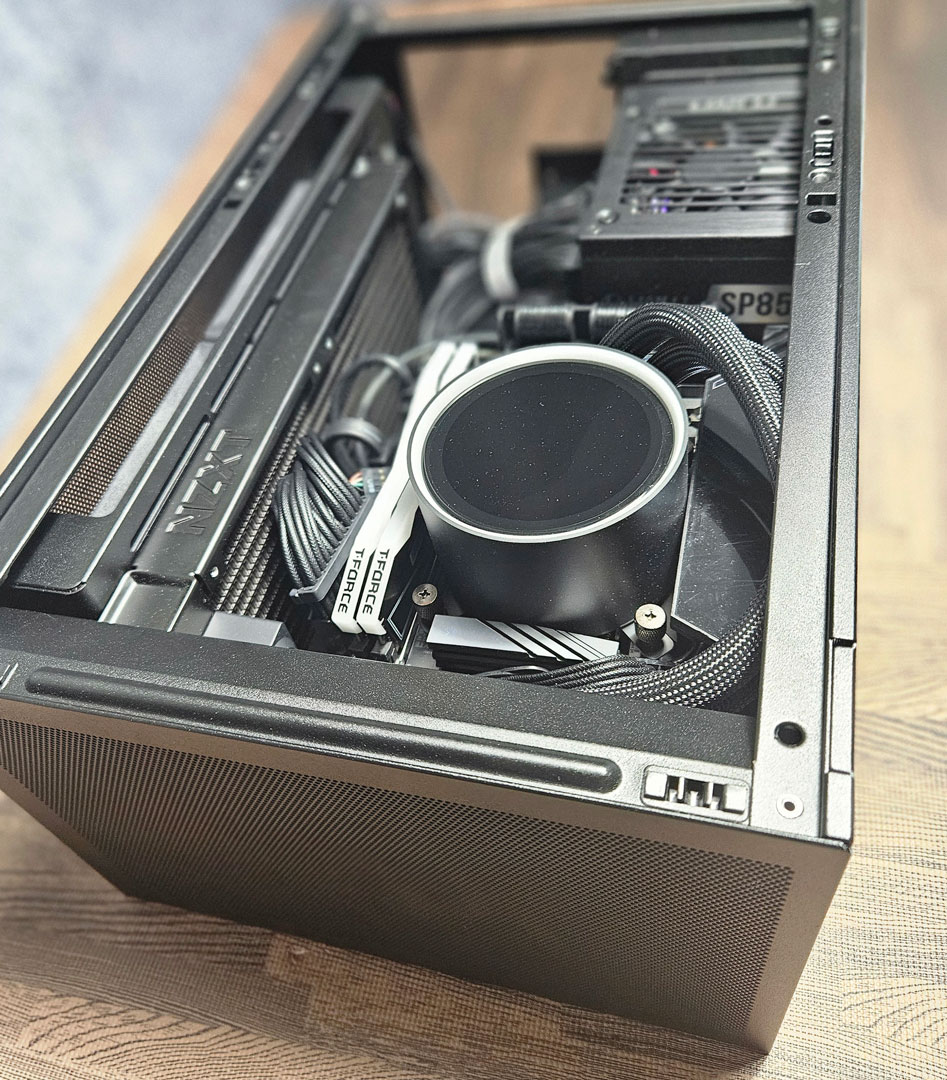
NZXT uses Gigabyte's Z890I AORUS Ultra for the H2 Intel-configuration, a retail Mini-ITX board built around Intel's Z890 chipset and the LGA1851 socket for Arrow Lake processors.
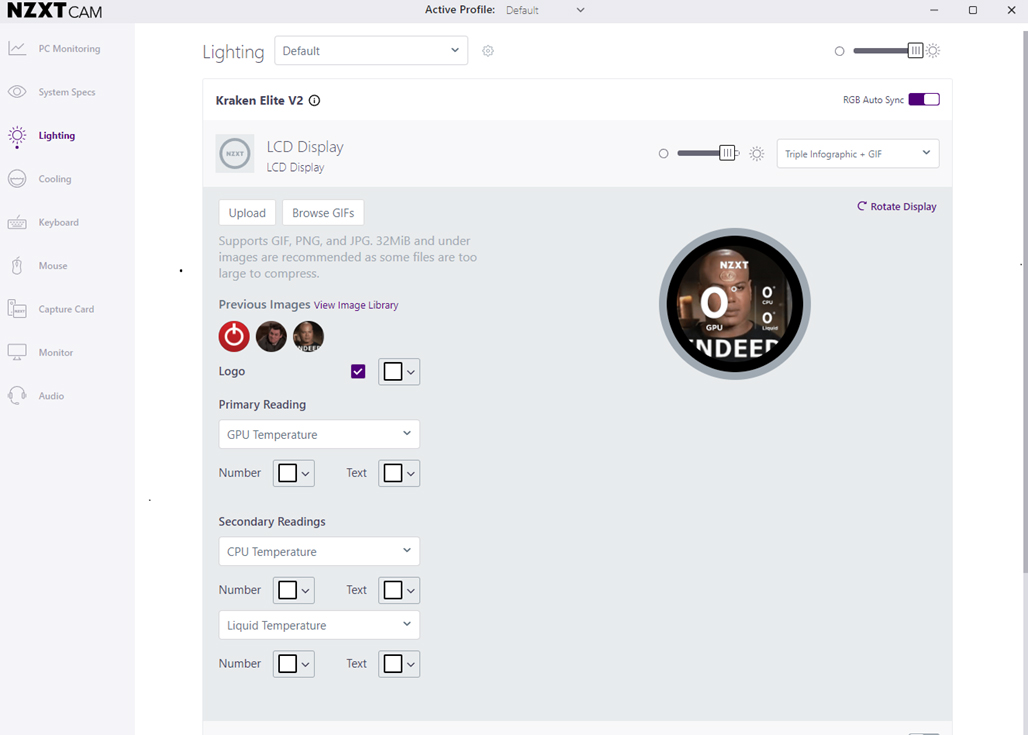
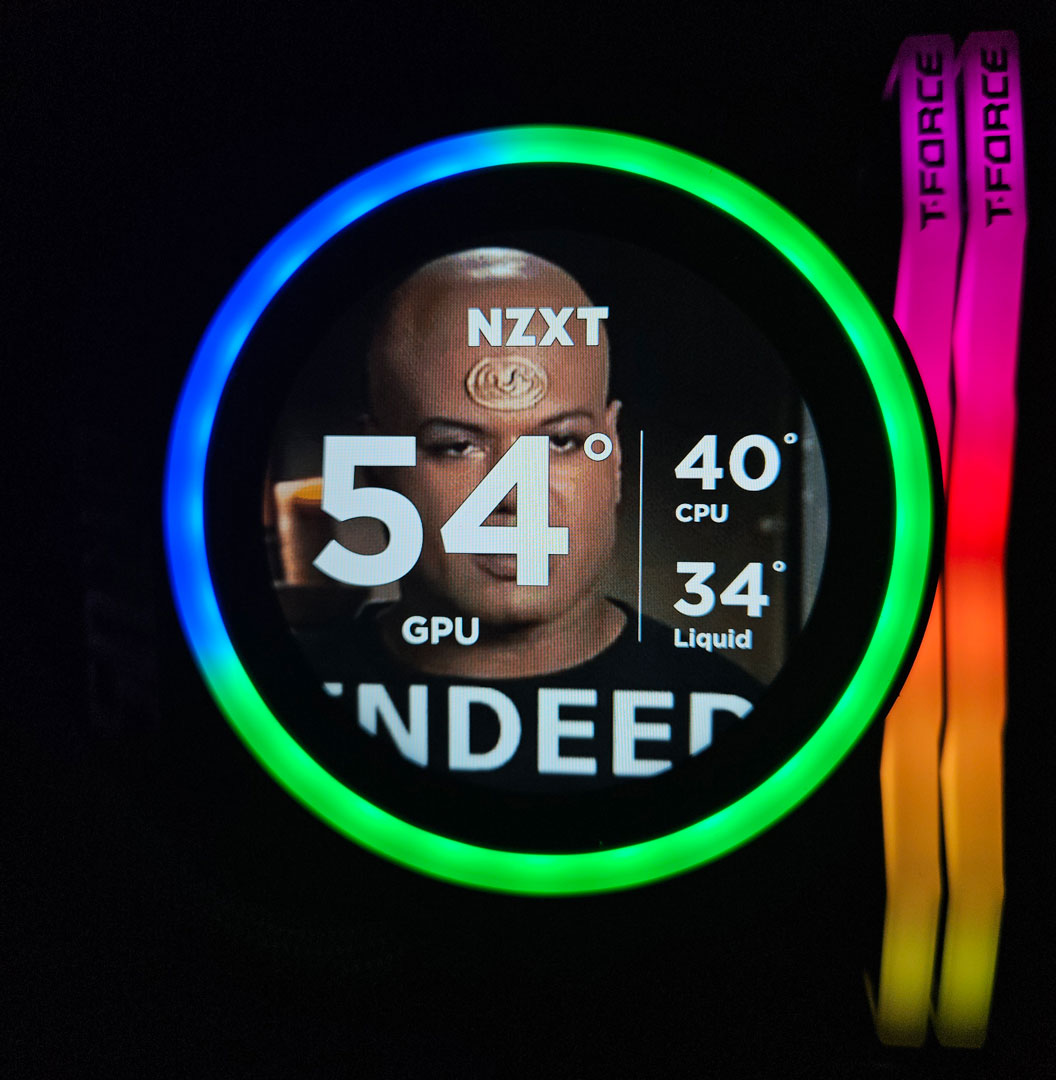
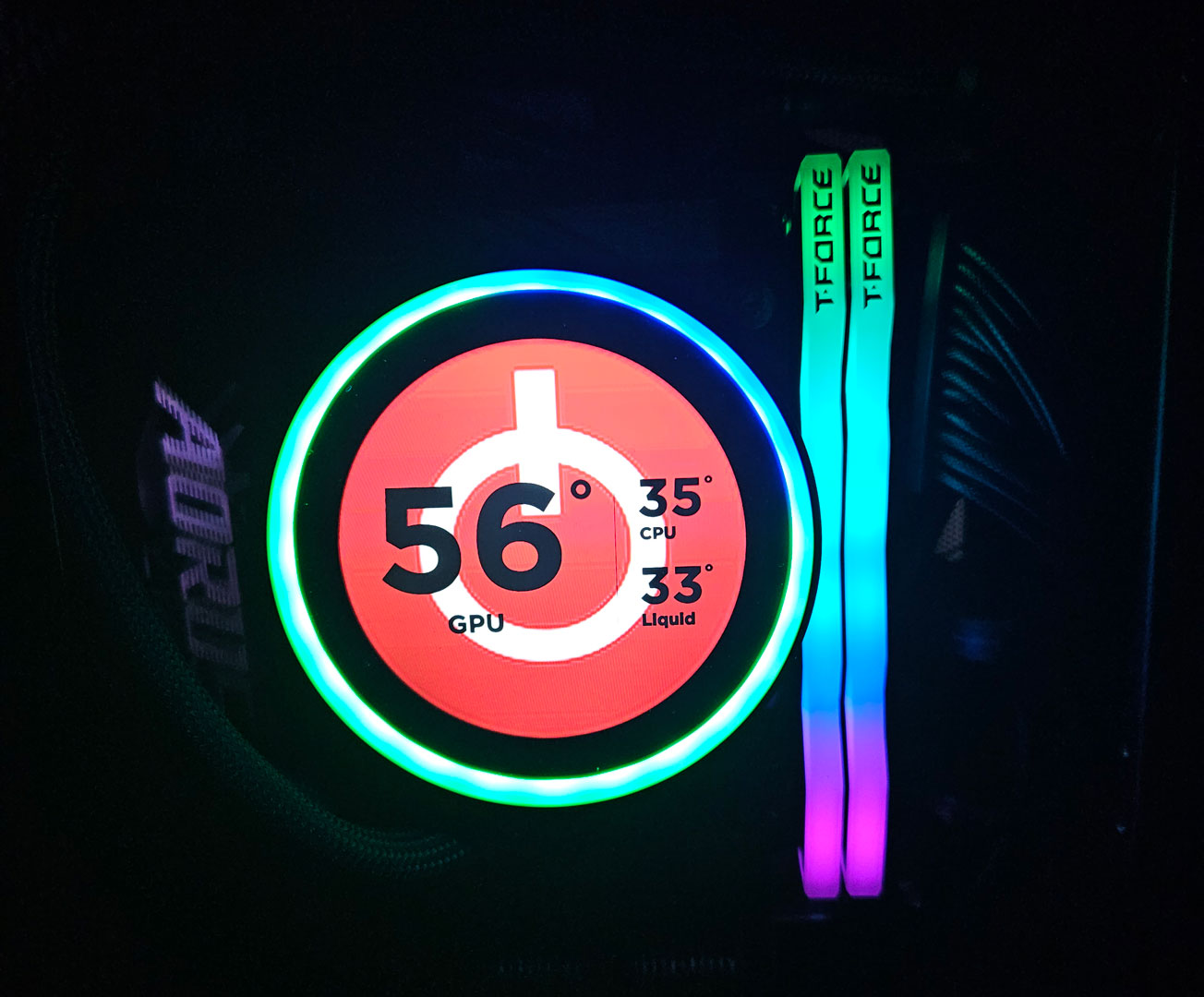
Front and center of the motherboard is the NZXT's Kraken Elite 240. In a chassis this size, a 240 mm radiator is a serious cooling solution. The AIO also has a fully customizable LCD screen through NZXT CAM. You can choose from preset layouts like a triple infographic that shows GPU, CPU, and liquid temps at a glance, or strip it down to a single large reading if you prefer something cleaner. CAM also lets you upload your own images or GIFs, browse Tenor directly from within the app, rotate the display, and adjust brightness, so it's easy to customize and blend the H2 into your work area. Beyond the screen itself, the RGB ring around the pump can be set to effects like Breathing, synced with the rest of your system, or customized with specific LED colors. Speed and brightness sliders give you control over how subtle or bold it appears. The result is a setup that can either stay as minimal or informative as you want, or lean full-color mode, depending on your mood. It's a really cool feature.
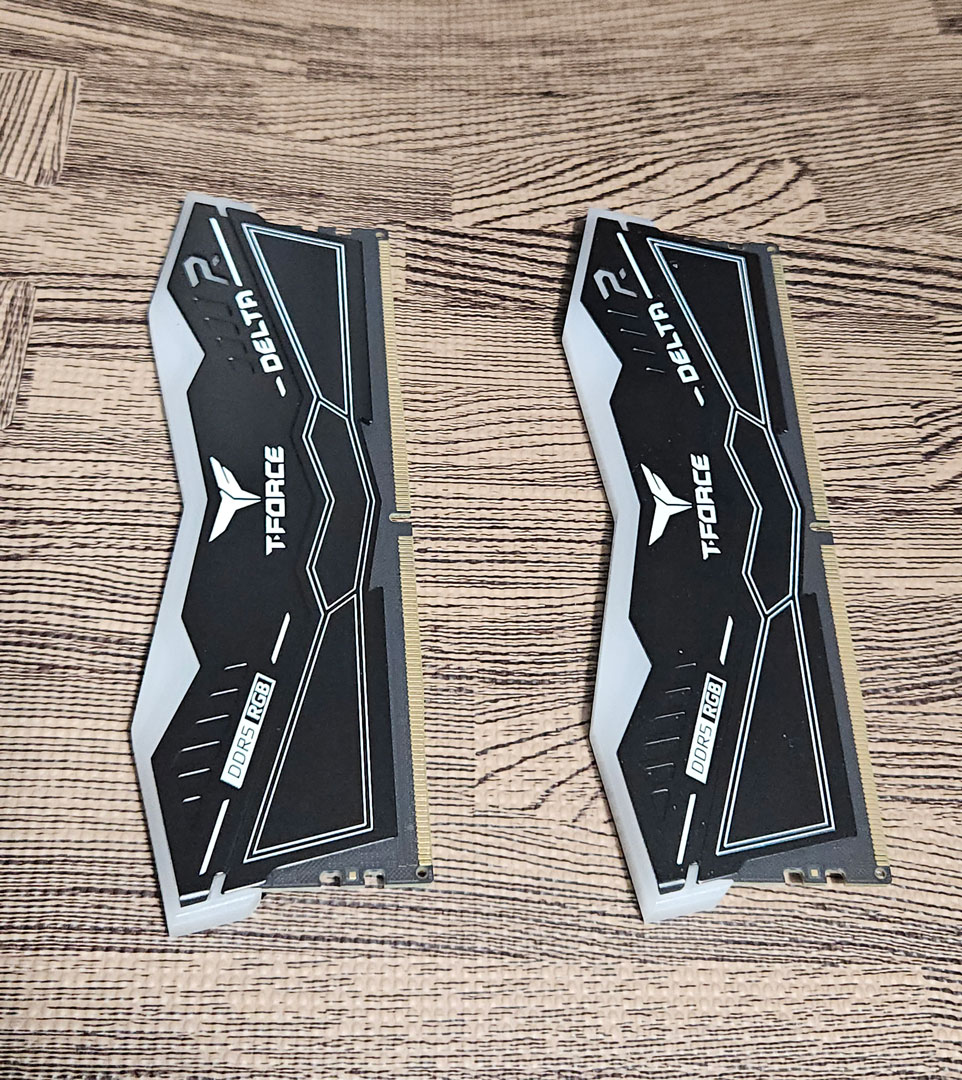
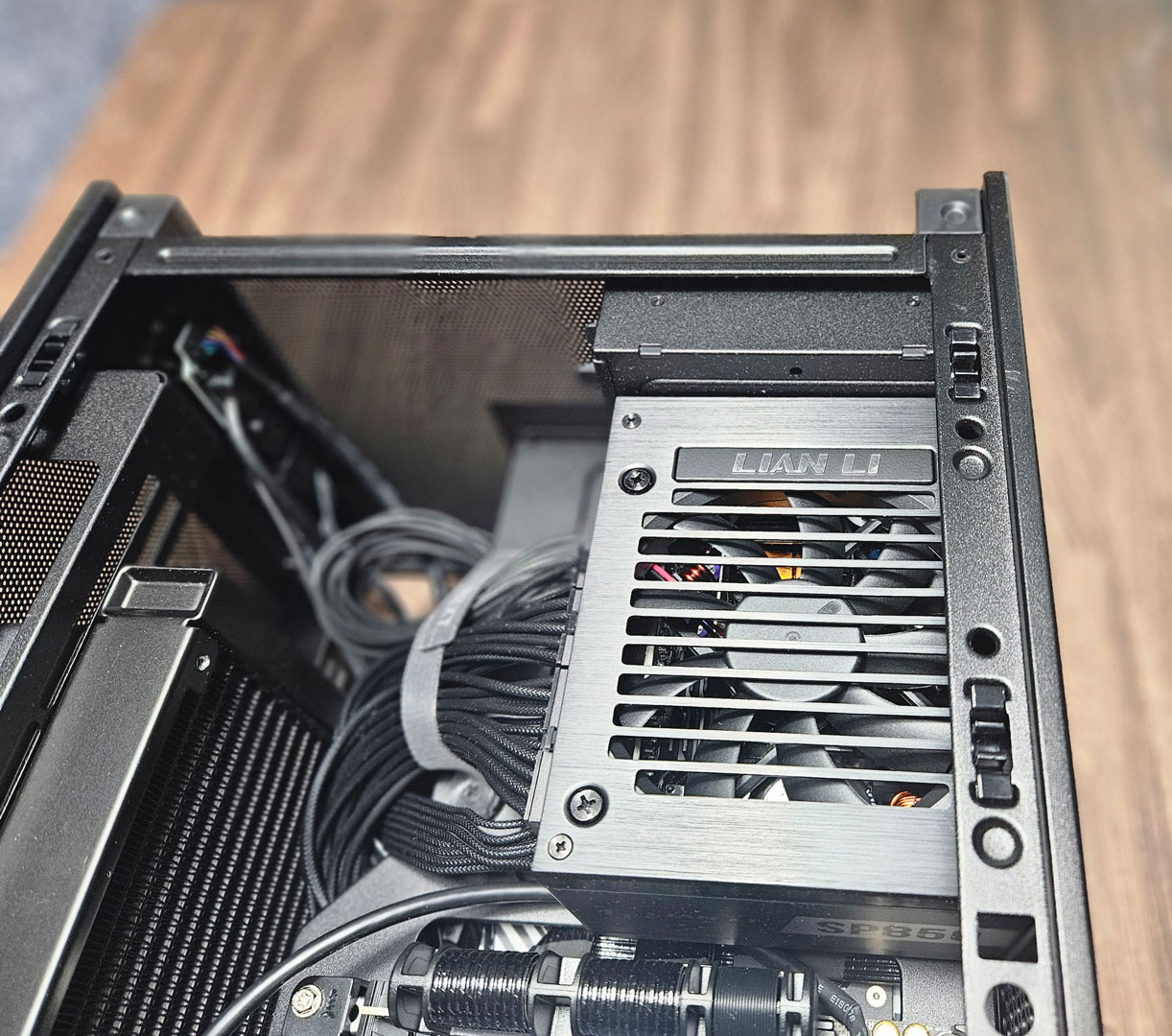
The Z890I AORUS Ultra supports DDR5 memory with XMP profiles, PCIe 5.0 for the primary graphics slot, and PCIe 5.0 for M.2 storage. In this build, 32 GB of DDR5 is installed alongside a 2 TB NVMe SSD. Power delivery is substantial for a Mini-ITX board, as pairing a Core Ultra 9 285K with an RTX 5080 places real demand on the platform, which is why NZXT opted for an 850 W PSU.
Networking and wireless connectivity are integrated directly onto the board, including 2.5 GbE and Wi-Fi 7, which avoids the need for add-in cards in an already space-constrained enclosure. NZXT also uses a standard retail motherboard instead of a proprietary one, which I appreciate. That means full BIOS access, normal firmware updates from the board vendor, and proper memory tuning options just like any DIY build. In a compact system where physically swapping parts can be more involved due to the tight layout, having full control through the BIOS and standard vendor support makes the platform feel more flexible.
Nov 23rd, 2026 00:18 CST
change timezone
Latest GPU Drivers
New Forum Posts
- Last game you purchased? (1416)
- Honestly, do you care about GTA VI? (267)
- Anker SOLIX C2000 Gen 2 + PS400 Solarpanel (1)
- What are you playing? (26241)
- Increasing Power Limit? (9)
- DTS DCH Driver for Realtek HDA [DTS:X APO4 + DTS Interactive] (2818)
- UPS what one to get? (48)
- Your PC ATM (36458)
- Gacha Games - Discussions, Pulls, Updates, etc. (1157)
- Making a game in Godot engine (19)
Popular Reviews
- Microsoft Surface Laptop Ultra Review - The Next-gen Arm Laptop
- Corsair RM1200e (Second Generation) Review
- Upcoming Hardware Launches 2027 (Updated Nov 2026)
- Pulsar Office Tour & First Look at P1 Dual-Sensor Mouse
- Ugreen NASync DXP4800 GT Review
- AMD Ryzen 7 9800X3D Review - The Best Gaming Processor
- AMD Zen 6 Technical Deep Dive
- AMD Ryzen 7 5800X3D 10th Anniversary Review
- Phantom Blade Zero Performance Benchmark Review - 35 GPUs Tested
- Biwin Black Opal NV7400 2 TB Review
TPU on YouTube
Controversial News Posts
- NVIDIA Co-Founder and CEO Jensen Huang Officially Resigns (492)
- Report: Jensen Huang Eyes NVIDIA Comeback (266)
- Open Letter Asking NVIDIA to Reinstate Jensen Huang Passes 115,000 Signatures (184)
- OpenAI CEO Argues Home PCs Waste the World's Limited DRAM Supply (152)
- NVIDIA Launches Investigation Into Jensen Huang's Relationship With Suspected Chinese Spy (136)
- Intel "Raptor Lake Next" 16-Core and 20-Core CPUs Surface (130)
- NVIDIA GeForce RTX 50-Series Scheduled for up to $500 Price Hike This Week (89)
- Intel Razor Lake Gets a 12 P-Core bLLC Chip With No E-Cores, Per Leak (86)