 11
QNAP TS-432X Review - Arm Based NAS
Packaging & Bundle »Introduction

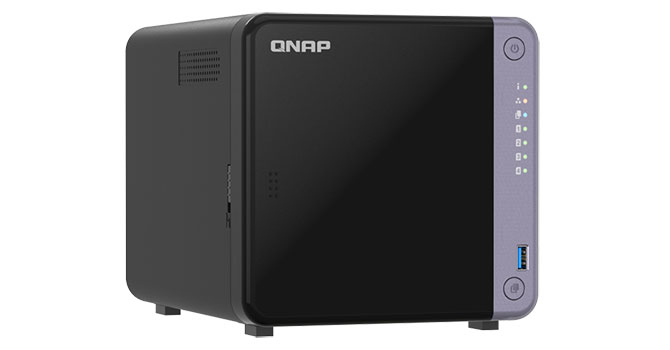
The last time TPU had a QNAP NAS in for review was over five years ago and a lot has happened since then in the NAS market, as well as when it comes to QNAP's in-house QTS operating system. There are several things that make the TS-432X stand out from the crowd, least not its SoC which is from Annapurna Labs, which was bought out by Amazon some years ago and now designs some of the Arm hardware for its AWS service. In this instance, we're looking at an Annapurna Alpine AL524, which is a quad-core Arm Cortex-A57 SoC. Yes, you read that correctly, this is the original Arm big core that launched all the way back in 2012. This is the second generation from Annapurna and it only seems to be available to a select few partners. What makes it interesting compared to other Arm SoCs in this market segment is that it can be paired with standard SO-DIMM memory modules, which is exactly what QNAP has done. The TS-432X comes with 4 GB of DDR4 3200 RAM and this can be upgraded to 16 GB. ECC memory is also supported, but is not supplied as a standard configuration.
The TS-432X is referred to as a cost-effective 10 Gbps NAS by QNAP and this is due to having an SFP+ port, which lacks the costly PHY of a 10 Gbps RJ45 port and would need either optical cables or a transceiver to add the PHY that way. That said, these days a 10 Gbps transceiver can be had for less than $30, which makes the TS-432X a potential option for those looking to get a 10 Gbps NAS. However, as we didn't have access to a transceiver, we decided to try a spare Aquantia AQC-107 based 10 Gbps Ethernet card we had knocking around instead, and it worked flawlessly. Just note that QNAP has its own custom mounting bracket for its add-in cards, so there was no way to fasten the card securely. However, it showed up in QTS and worked as expected, suggesting that QNAP doesn't blacklist third party hardware.
Speaking of QTS, the TS-432X ships with version 5.2, although for some reason it didn't update during the setup process, even though one step of the setup asks if you want to check for a new version of QTS. QNAP recently announced LTS support for version 5.2 of QTS, which is a little bit confusing, as QNAP is using an ancient Linux kernel from 2015, namely version 4.2.8. This specific Linux kernel hasn't been officially supported since December 2015, and we're actually quite surprised that QNAP is using not only an unsupported kernel, but one that is getting close to a decade old. Version 4.4 is at least supported until early 2027 as an LTS kernel, but for some reason, QNAP hasn't moved to it, despite being released in early 2016. To be fair to QNAP, the company does backport a lot of security patches and software, but this kind of practice is simply not acceptable from a security perspective and QNAP is clearly behind both TerraMaster and Ugreen when it comes to this, not something you'd expect.
With something of a mixed bag introduction out of the way, let's move on and examine the TS-432X, with both a closer look at QTS—a much more fully featured operating system than what's on offer from TerraMaster and Ugreen, but it might be too feature rich for some. As we're looking at some very different hardware here, it will also be interesting how it stacks up in terms of performance against the two Intel based NAS devices we've looked at earlier this year, and if it'll be more power efficient or not.
Specifications
| QNAP TS-432X Specs & Features | |
|---|---|
| Processor | Annapurna Labs, an Amazon company Alpine AL524 Arm Cortex-A57, 4c/4t 4x 2.0 GHz |
| Memory | 1x 4 GB DDR4 3200 MHz CL22 SO-DIMM (expandable to 16 GB using one slot) |
| Storage | 4x SATA 6 Gbps / 3.5" or 2.5" |
| RAID Levels: | Single Disk, JBOD, RAID 0, 1, 5, 6, 10 Optional SSD Read or Write caching |
| Capacity | Up to 96 TB (4 x 24 TB HDD) |
| Operating System | QTS 5.2.1.2930 (Linux Kernel 4.2.8) |
| File System (Internal Drives) |
|
| File System (External Drives) |
|
| Networking |
|
| Expansion Interfaces |
|
| I/O Ports |
|
| Dimensions | 165 (H) x 170 (W) x 226.5 (D) mm |
| Weight | 1.99 kg without drives |
| Power Consumption | Operation: ~33 W HDD Idle: ~13 W (with 4x Seagate 4 TB ST4000VN008 installed according to the manufacturer) |
| Power Supply | External, 90 W 100–240 V input 12 V 7.5 A output Delta DBS-90AB-3 |
| Fan | 1x 120 mm |
| Warranty | 2-years |
| Price Excluding VAT (at time of review) | $580 |
Nov 25th, 2026 22:15 CST
change timezone
Latest GPU Drivers
New Forum Posts
- Claude credits purchased on or after Dec. 7 now have an expiry date (15)
- AI generated images... (235)
- Exploring Local LLMs: Models, Hardware and Setup Experiences (1)
- What's your main Black Friday / Cyber Monday purchase? (10)
- Smokin Hot Lappy (10)
- Gacha Games - Discussions, Pulls, Updates, etc. (1165)
- Linpack Xtreme Released (511)
- Sexy Hardware Close-Up Pic Clubhouse. (10345)
- AAF Optimus Modded Driver For Windows 10 & 11 - Only for HDAUDIO Chips [WINDOWS 11 RECOMMENDED] (1155)
- Which ryzen am5 cpu ? (219)
Popular Reviews
- ASRock X870E Challenger Wi-Fi White Review
- VZMORE AX9 Max Review
- Upcoming Hardware Launches 2027 (Updated Nov 2026)
- Microsoft Surface Laptop Ultra Review - The Next-gen Arm Laptop
- AMD Ryzen 7 9800X3D Review - The Best Gaming Processor
- AMD Zen 6 Technical Deep Dive
- Corsair RM1200e (Second Generation) Review
- Phantom Blade Zero Performance Benchmark Review - 35 GPUs Tested
- Pulsar Office Tour & First Look at P1 Dual-Sensor Mouse
- Ocypus lota P1000 Review
TPU on YouTube
Controversial News Posts
- Jensen Huang Reinstated as CEO of NVIDIA (573)
- NVIDIA Co-Founder and CEO Jensen Huang Officially Resigns (492)
- Report: Jensen Huang Eyes NVIDIA Comeback (281)
- Open Letter Asking NVIDIA to Reinstate Jensen Huang Passes 115,000 Signatures (184)
- OpenAI CEO Argues Home PCs Waste the World's Limited DRAM Supply (152)
- NVIDIA Launches Investigation Into Jensen Huang's Relationship With Suspected Chinese Spy (136)
- Intel "Raptor Lake Next" 16-Core and 20-Core CPUs Surface (130)
- Intel Razor Lake Gets a 12 P-Core bLLC Chip With No E-Cores, Per Leak (94)