 32
Sapphire Radeon RX 9060 XT Pulse OC 16 GB Review - An Excellent Choice
Pictures & Teardown »AMD FSR 4 and New AMD Software Features
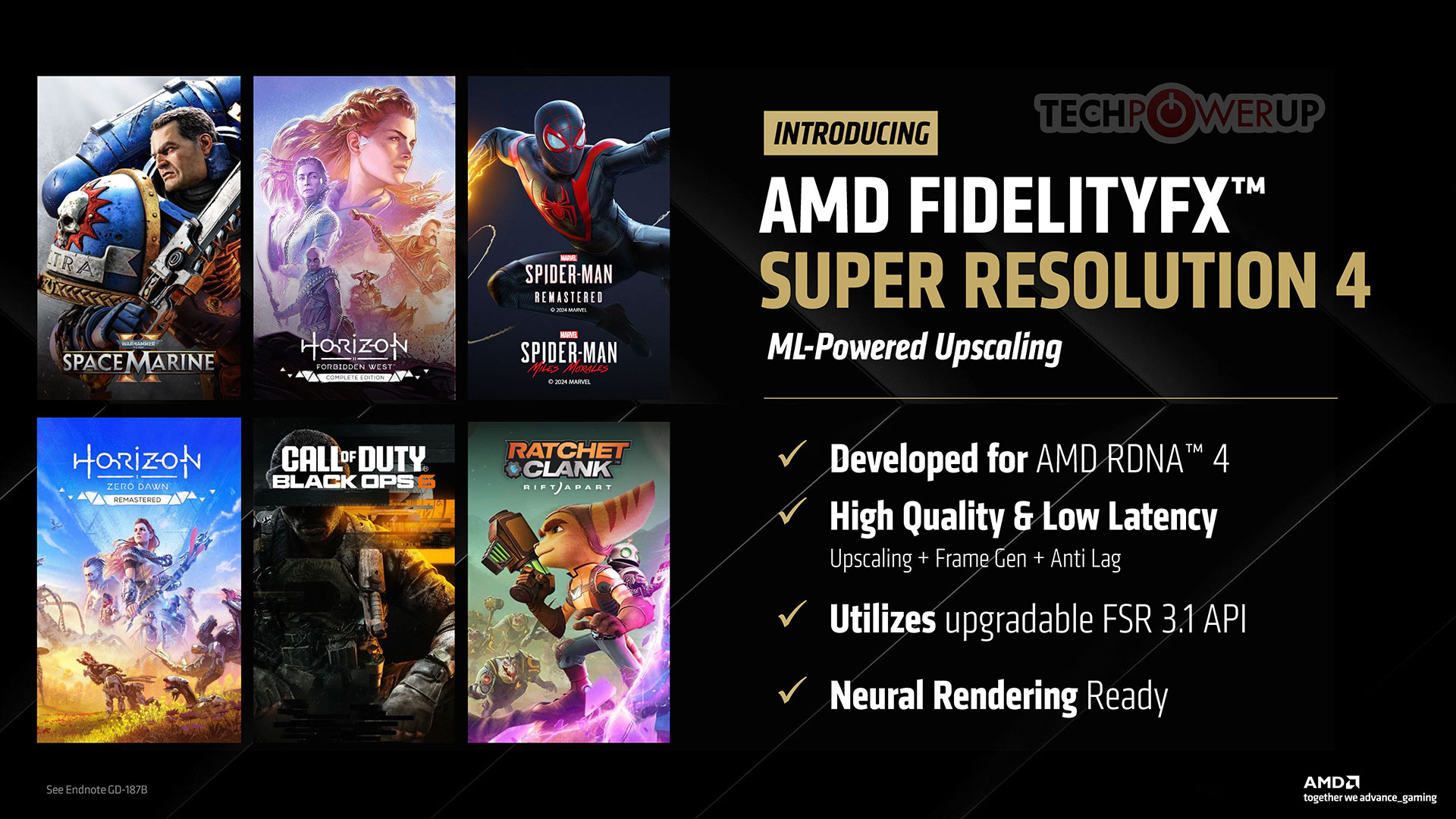
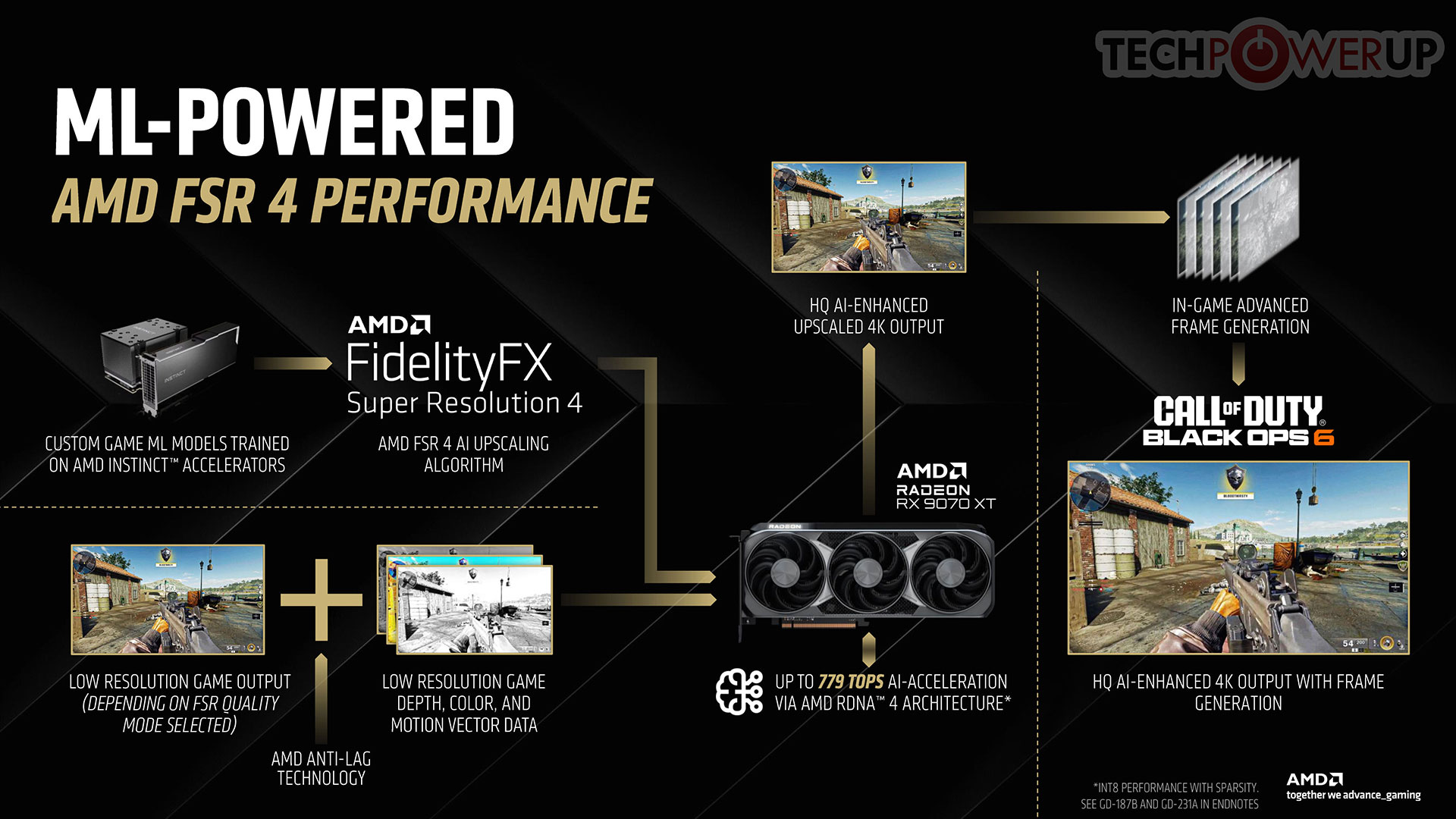
With the Radeon RX 9000-series, AMD is debuting FSR 4, the latest version of its performance enhancement suite. FSR 4 introduces the biggest tech update since FSR 2, which also makes it exclusive to the RX 9000-series (and presumably next-gen cards yet to come), breaking the FSR tradition of being able to be used with almost any modern graphics card, regardless of vendor. With the RDNA 4 generation of GPUs offering significantly higher ML compute throughput, AMD designed a new ML-based upscaler to reconstruct details of the upscaled frame. In that sense, FSR 4 is technologically close to DLSS. RDNA 4 GPUs also leverage AI DNNs to denoise ray tracing and path tracing, unburdening the shaders.
An AI ML based upscaler requires ground truth data, and just as NVIDIA goes through the painstaking task of training game-specific ML models that can later be shipped to end-users through game developers and as driver updates; AMD has set up a large FSR 4 data-center of its own, powered by Instinct MI300-series AI GPUs. On the client side, the ML-based upscaler needs the dedicated AI acceleration hardware from the RDNA 4 family. The frame generation technology appears to be carried over from FSR 3 Frame Generation, and is essentially a smart frame interpolation technology.
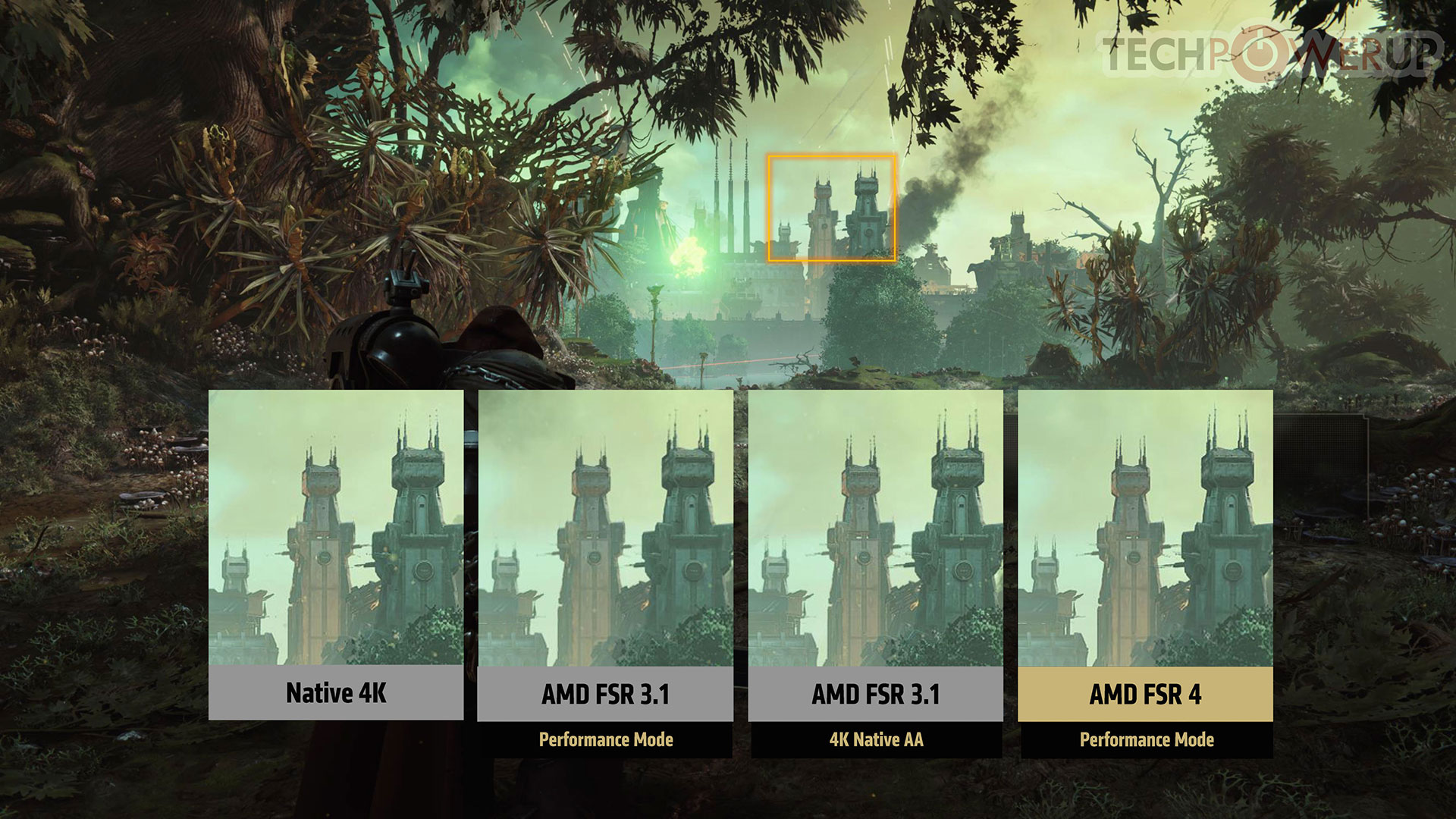
AMD in its presentation provided examples of image quality for FSR 4, claiming that in some cases, FSR 4 presents geometry more accurately than even native resolution. While AMD didn't detail it, FSR 4 comes with preparation for neural rendering. Given that Microsoft has now standardized neural shaders, and the ability for applications to directly address AI acceleration hardware on the GPU via the DirectX API, AMD could in the near future implement neural rendering, however, the company hasn't detailed a timeline. FSR 4 is ready for neural rendered objects.
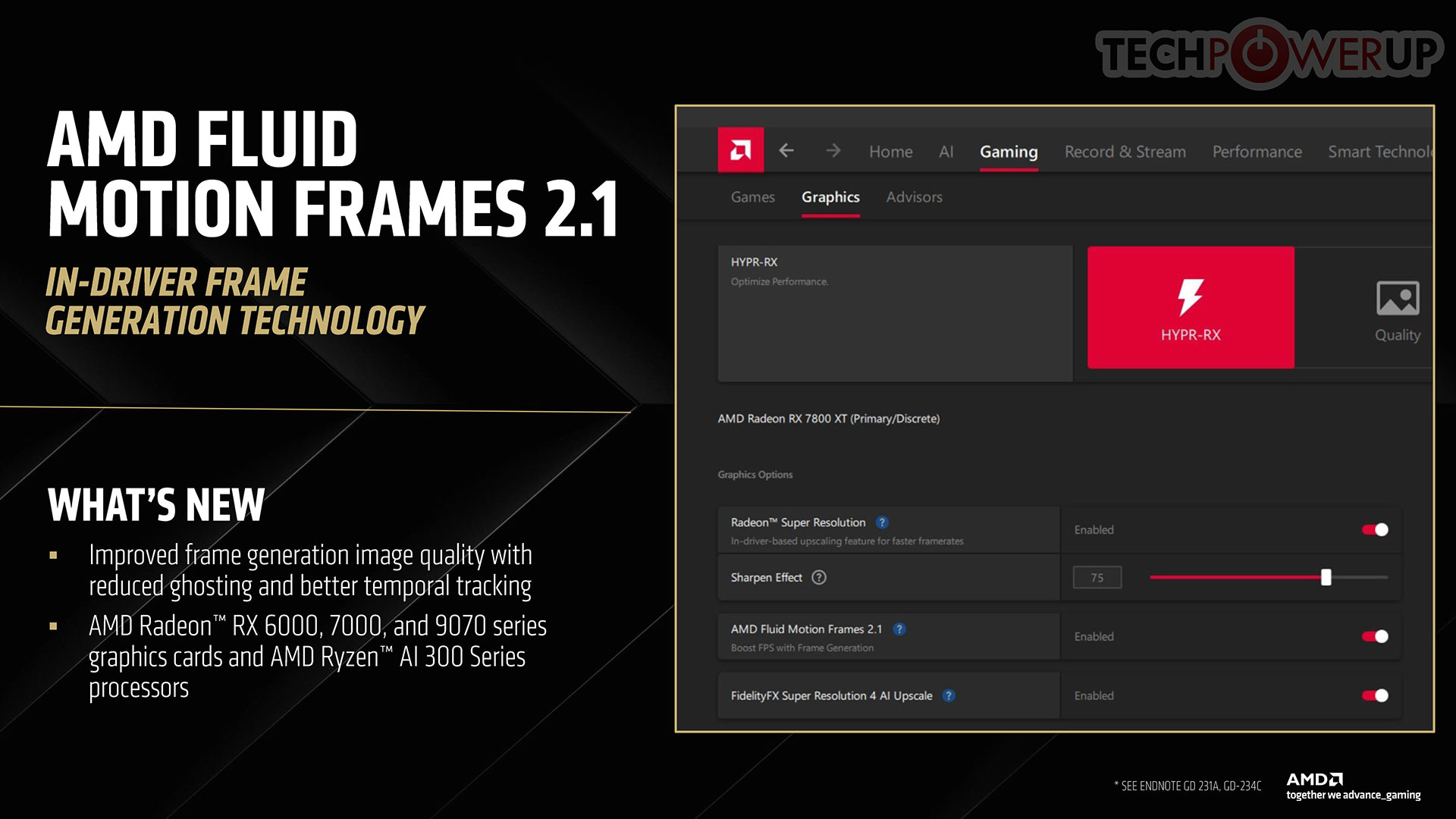
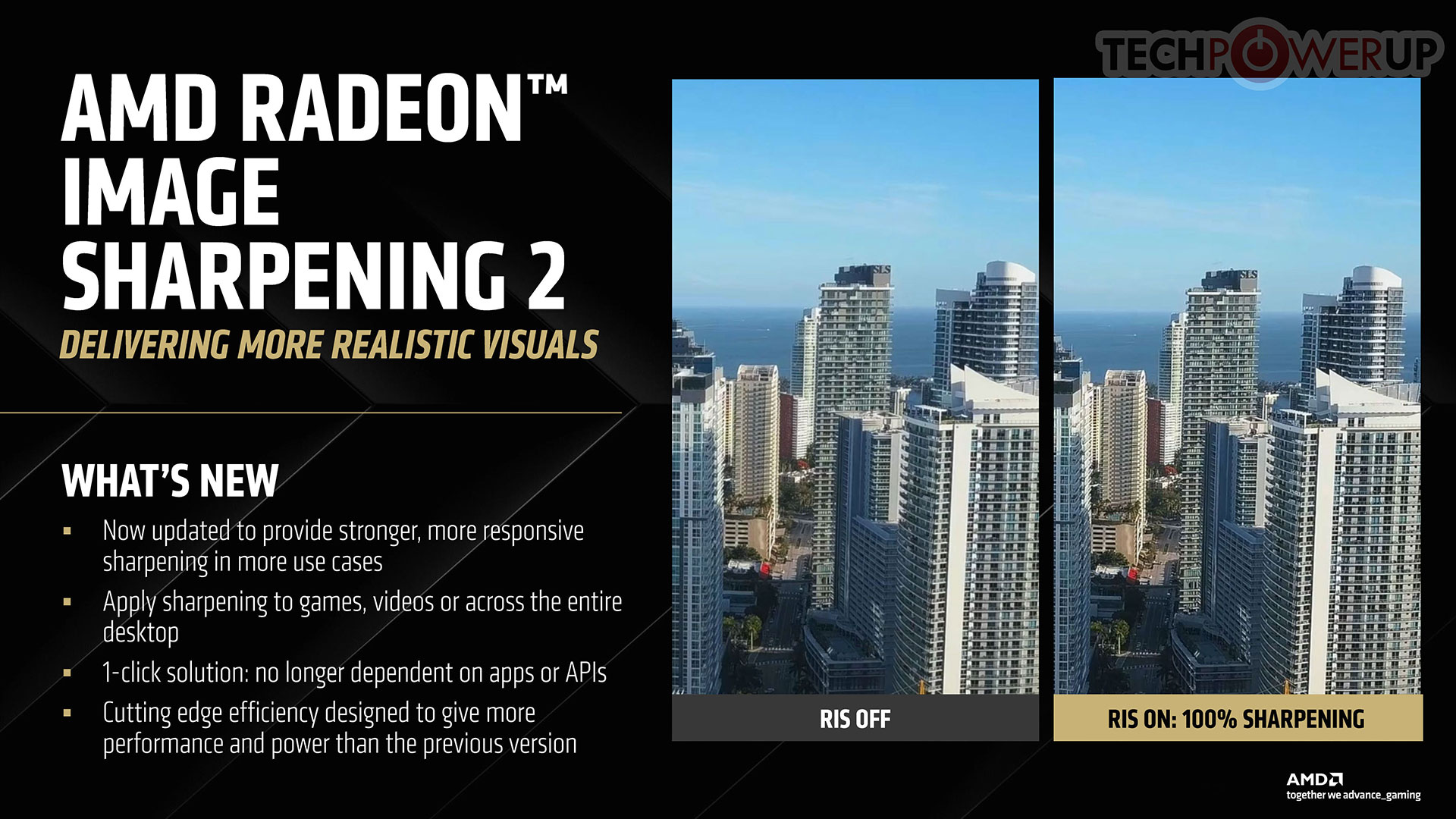
Fluid Motion Frames gets an update with FMF 2.1, with improved image quality, reduced ghosting, and improved temporal tracking. The company also updated its API-agnostic image sharpening tool, with the introduction of Radeon Image Sharpening 2 (RIS 2).
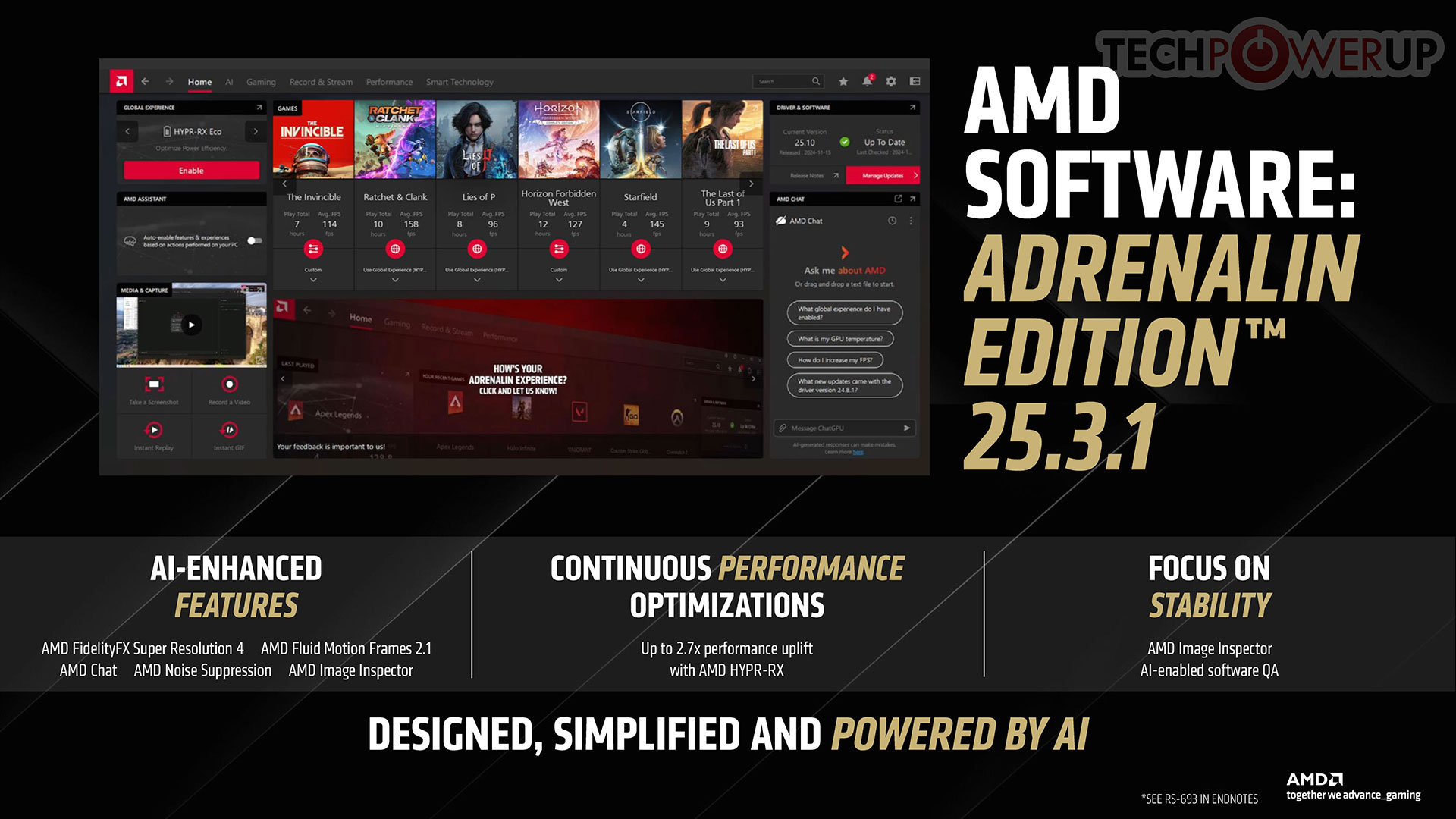
AMD provides a slick driver frontend application called simply "AMD Software." AMD improved the way in which users can report bugs, artifacts, or corruption in games, through a voluntary (opt-in) feature called AMD Image Inspector.
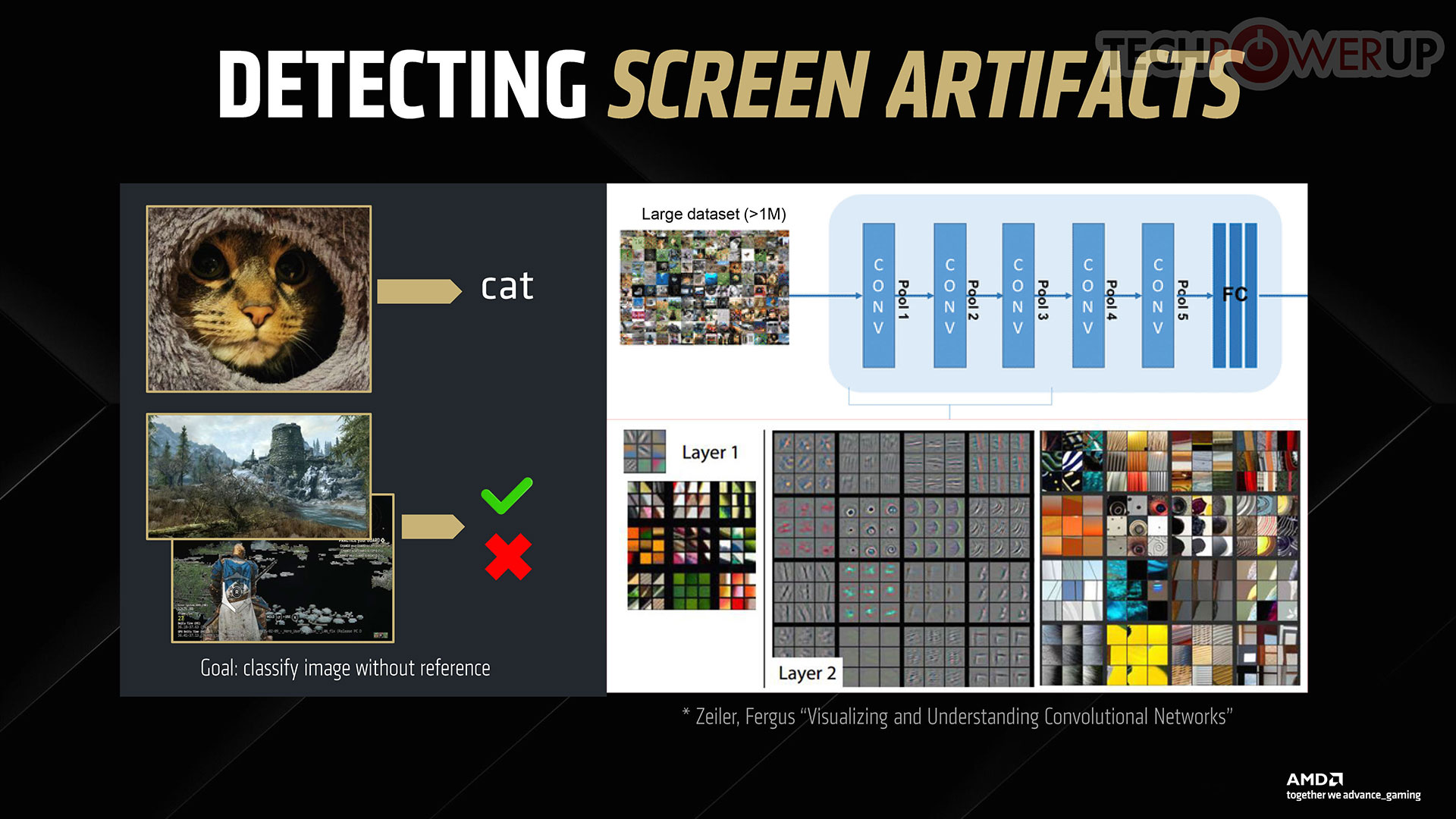

As you submit a screenshot or video sequence to AMD, the company uses an AI model to identify rendering bugs, or corruption in the display. The entire driver-level game optimization, testing, and bug fixing process has been revamped with AI doing the heavy lifting.
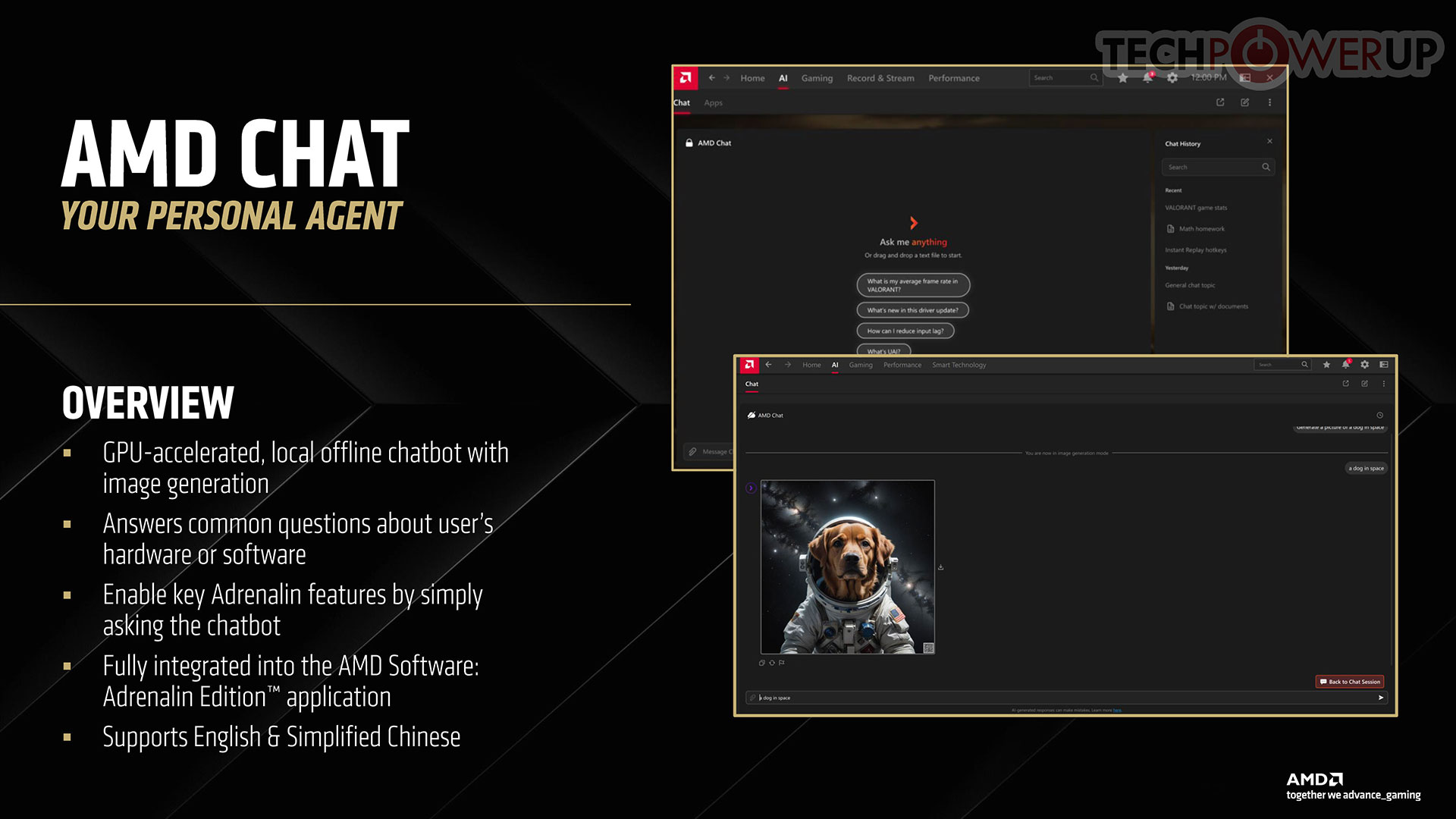
The company also introduced AMD Chat, which is an AI chatbot that runs locally, and is accelerated by the GPU. You can make plain language queries on configuring AMD Software features and settings; and also chat with it on AMD technologies. This is essentially AMD's answer to NVIDIA's ChatRTX, but we don't know if the utility can be trained with custom datasets.
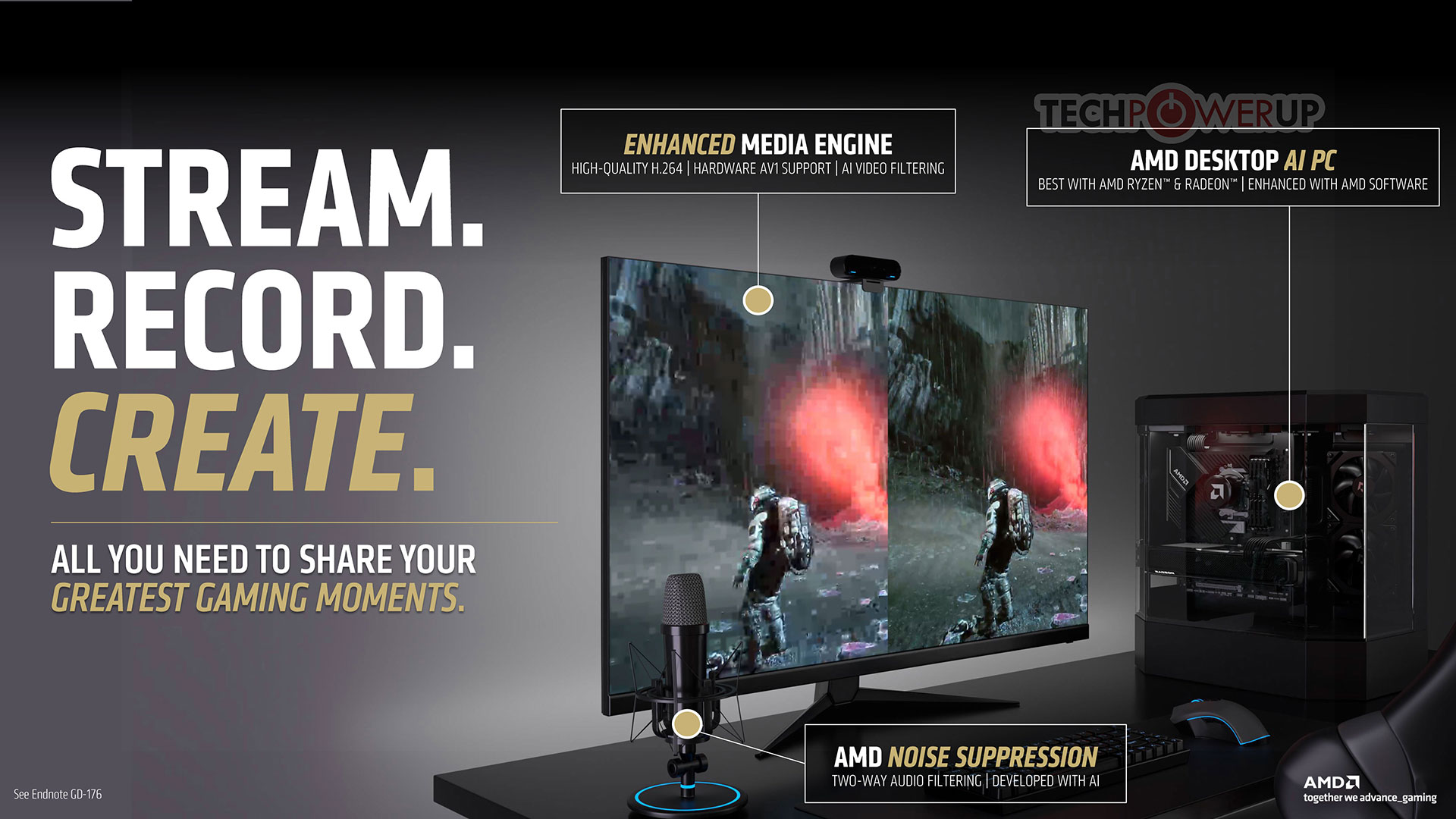
For streamers, AMD Software simplifies connecting their gameplay with their social media and streaming accounts. You can then take advantage of the new dual media engine of RDNA 4 that improves H.264 and HEVC image quality, and use other utilities such as AMD Noise Suppression, which is a 2-way AI-based audio filter.
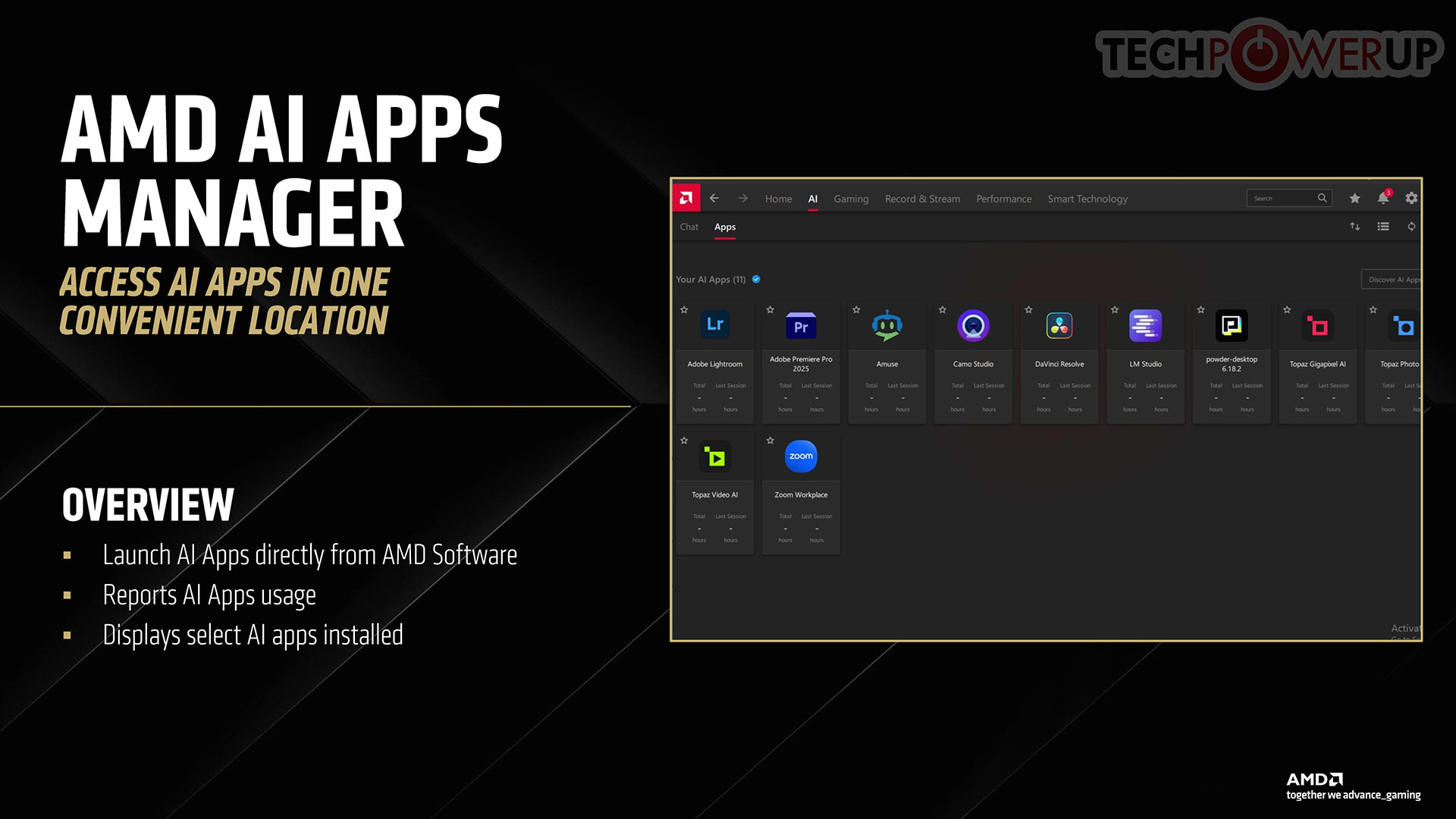
AMD AI Apps Manager consolidates all your AI applications into a simple launcher-like interface resembling a game launcher.
AMD FSR "Project Redstone"
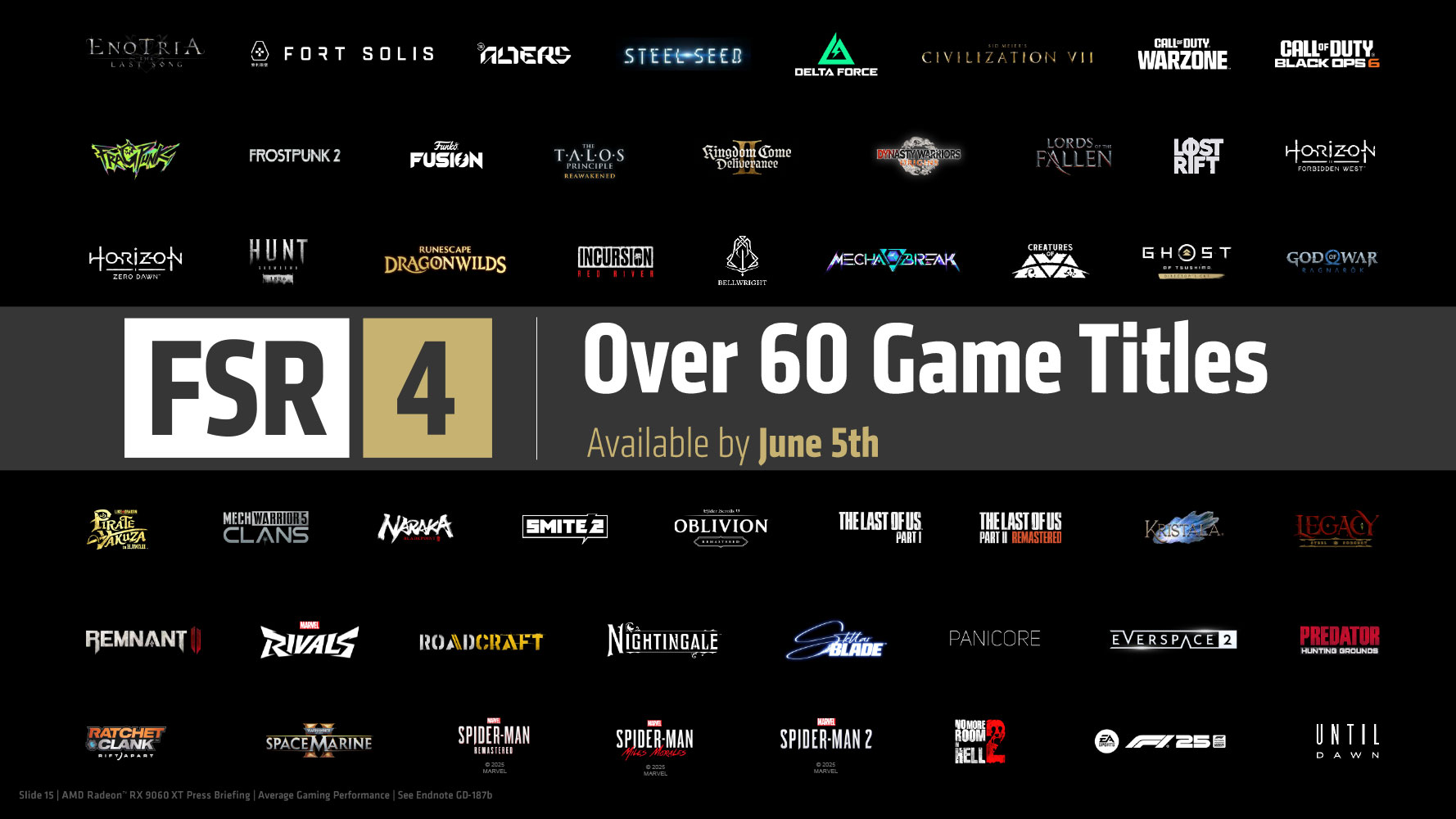
In the second half of 2025, AMD is planning to introduce a major update to FSR 4, which is designed to bring it technologically up to par with NVIDIA. AMD has given this update the working title "Project Redstone." The FSR 4 implementation that launched with the Radeon RX 9070-series comes with an AI ML-based upscaler, which only covers the super resolution-based performance enhancement of the FSR suite. As of June 5, 2025, AMD claims that over 60 titles will have implemented FSR 4 super resolution. "Project Redstone" is a significant step up from this.
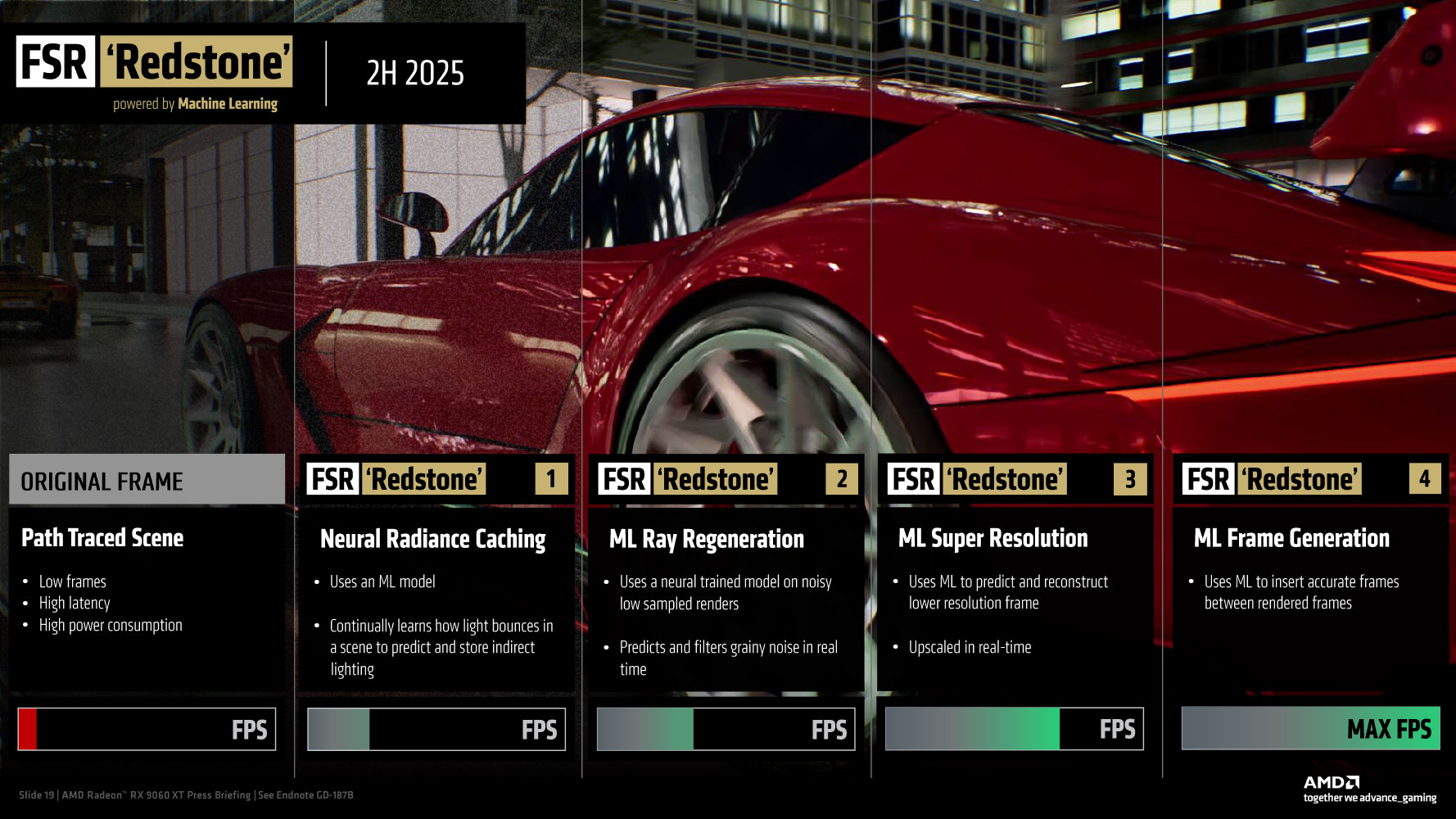
FSR "Project Redstone" introduces four new components besides the AI ML-based upscaler for super resolution AMD introduced earlier this year. The first component is an AI-ML model for Neural Radiance Caching, a method with which the GPU continuously learns how light interacts with ray traced objects in a scene, so it could store indirect lighting data to conserve performance cost of ray tracing. The second key feature is an AI ML-based model for ray regeneration. This should enhance image quality for high sparsity (noisy) low-sampled renders. It predicts and filters grainy noise in real time, and contributes to reduction of the cost of ray tracing.
The third of course is AI ML-based super resolution, which has been rolled out since the RX 9070 series, and significantly uplifts image quality at all performance presets of FSR compared to the previous FSR 2.2. Lastly, AI ML-based Frame Generation. This is a classic single frame generation akin to FSR 3, but with a new ML model that more accurately determines what an intermediate frame to two conventionally-rendered ones could look like, for more visual accuracy and reduced ghosting associated with frame generation tech.
AMD's main aim with FSR 4 and "Redstone" isn't just to improve performance across the board, but make Radeon RX 9000 series GPUs capable of games with path tracing within their recommended resolution and use-cases.
Nov 13th, 2026 22:44 CST
change timezone
Latest GPU Drivers
New Forum Posts
- no "PhysX" workable (9)
- What are you playing? (26215)
- Tell me about your favourite graphics card (32)
- AI generated images... (224)
- Crimson Desert (31)
- RenoDX HDR - how to view the differnce Before&After in game? (0)
- Displayport DP80 3M (10ft) cable that can achieve 80gbps stable? (5)
- I'll flash a ASUS ROG Strix RX480 O8G in Cause of Code 43, as a Newbie (1)
- Opinion on Monitor Replacement (6)
- TMOG - post your benchmark results here (16)
Popular Reviews
- AMD Zen 6 Technical Deep Dive
- Corsair HX1000i Shift Crystal Review
- NZXT C1200 Platinum Review
- Upcoming Hardware Launches 2027 (Updated Nov 2026)
- ASUS ROG Strix B850-I Gaming Wi-Fi7 W Review
- Montech King 95 3D PRO Review
- NZXT H7 RGB+ Review
- NZXT H5 Review
- Phantom Blade Zero Performance Benchmark Review - 35 GPUs Tested
- XPG NIMBUS PLUS Review - Mid-range Chair With Strong Competitors
TPU on YouTube
Controversial News Posts
- NVIDIA Co-Founder and CEO Jensen Huang Officially Resigns (379)
- OpenAI CEO Argues Home PCs Waste the World's Limited DRAM Supply (152)
- NVIDIA Launches Investigation Into Jensen Huang's Relationship With Suspected Chinese Spy (136)
- Intel "Raptor Lake Next" 16-Core and 20-Core CPUs Surface (130)
- Legendary Game Studio BioWare Shuts Down Following EA Layoffs (104)
- Dell CEO Says the Memory Shortage Will Get Worse in 2027 (95)
- NVIDIA GeForce RTX 50-Series Scheduled for up to $500 Price Hike This Week (89)
- Modder Fits RTX 5090 With Four 8-Pin Connectors, Halving Current per Wire (80)