 10
Thermal Grizzly DeltaMate CPU Block - MPII Review
Installation & Lighting »Closer Examination
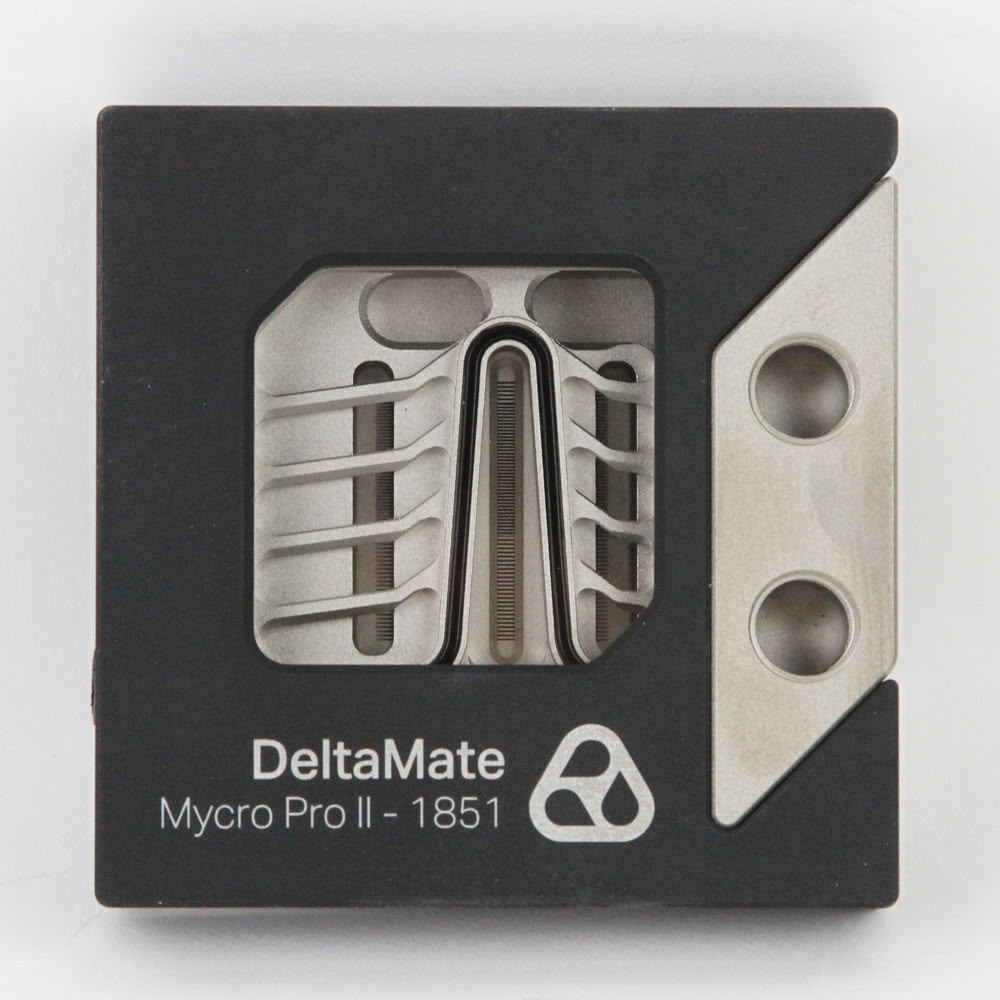
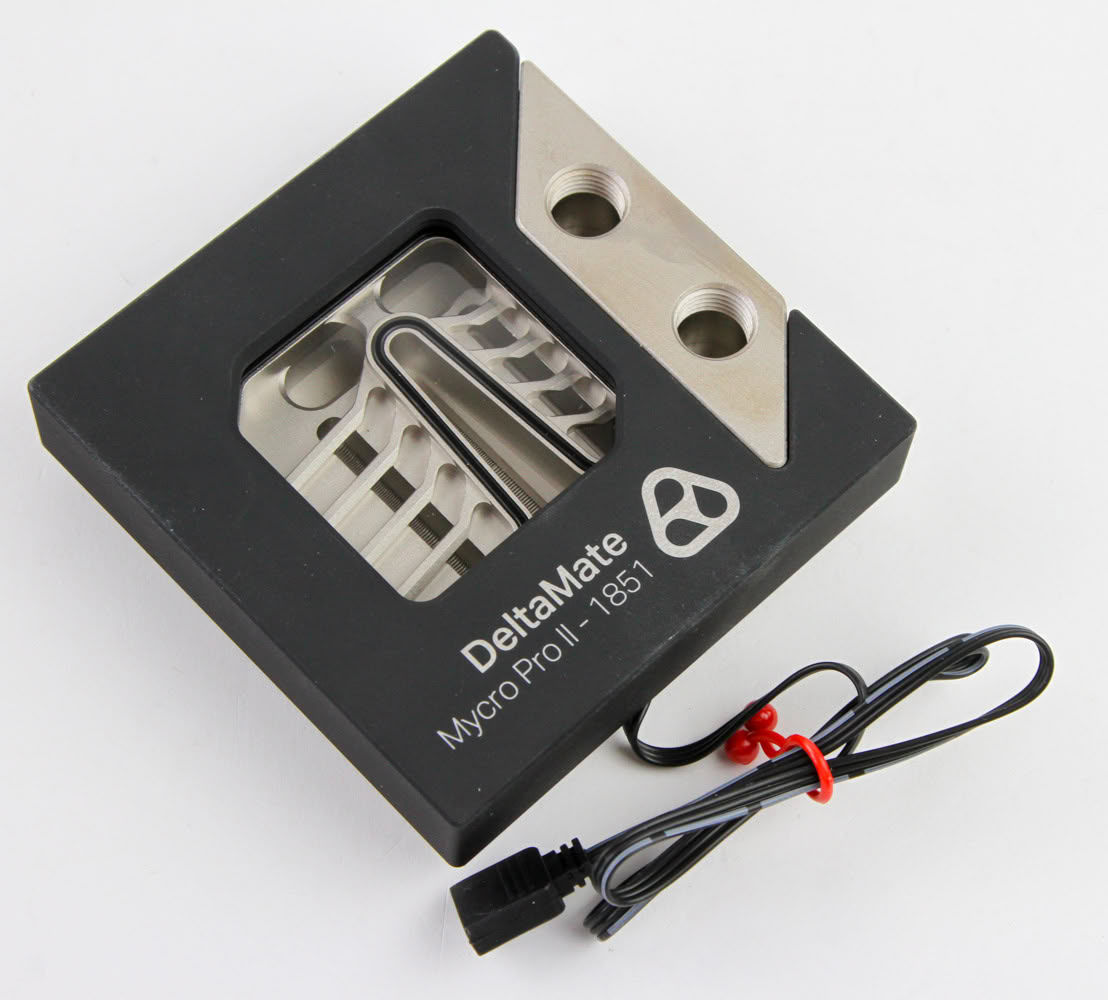
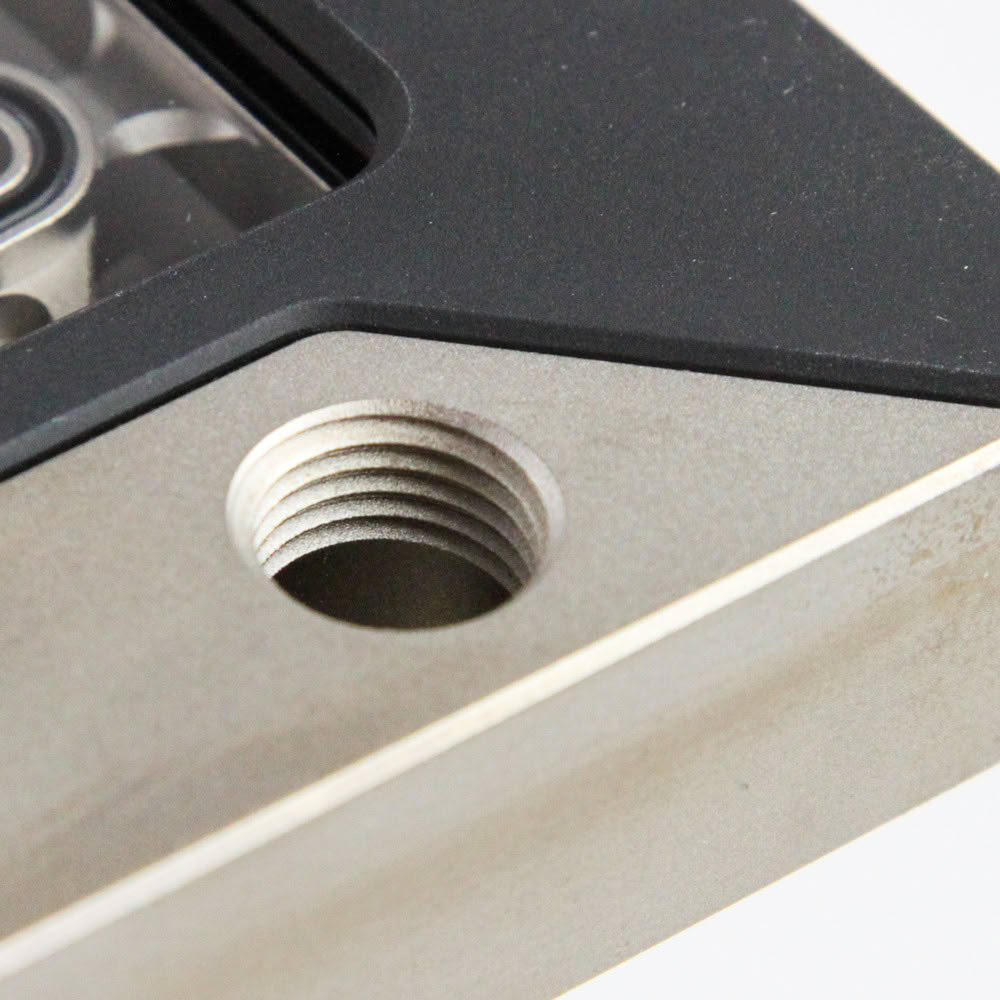
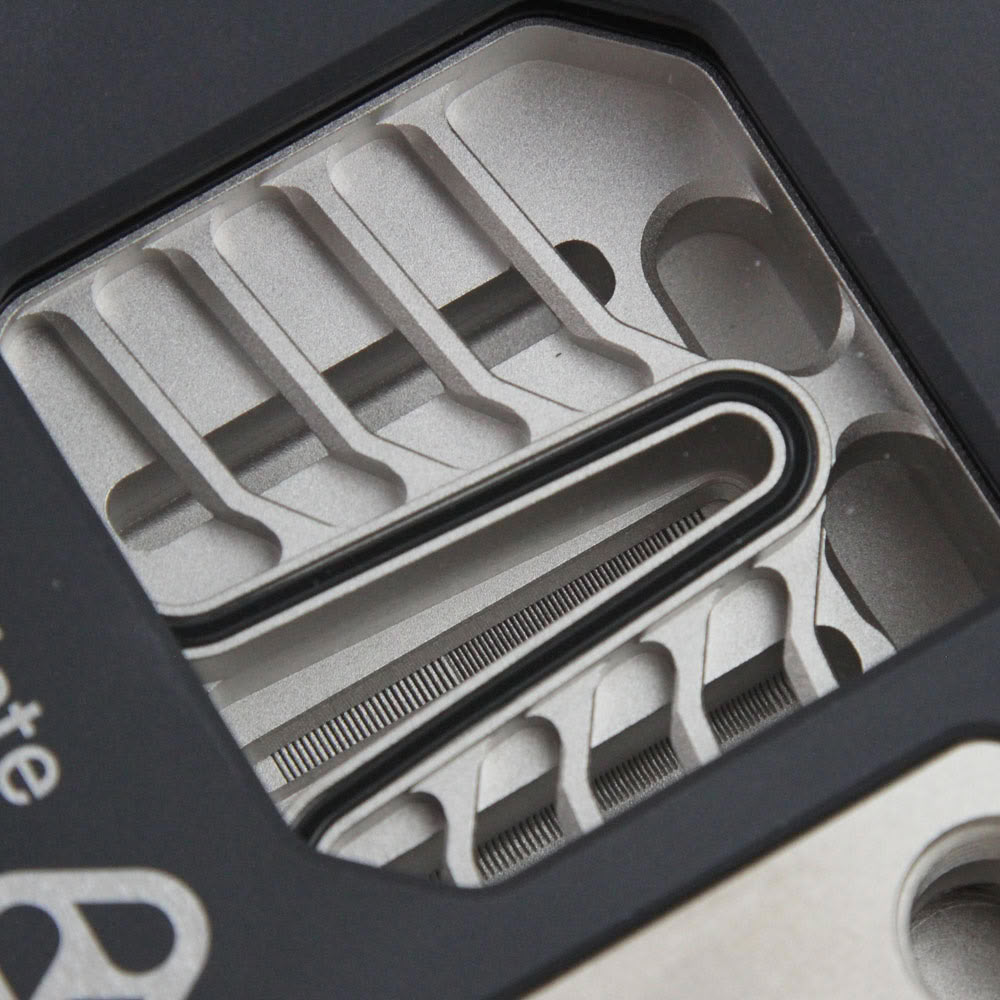
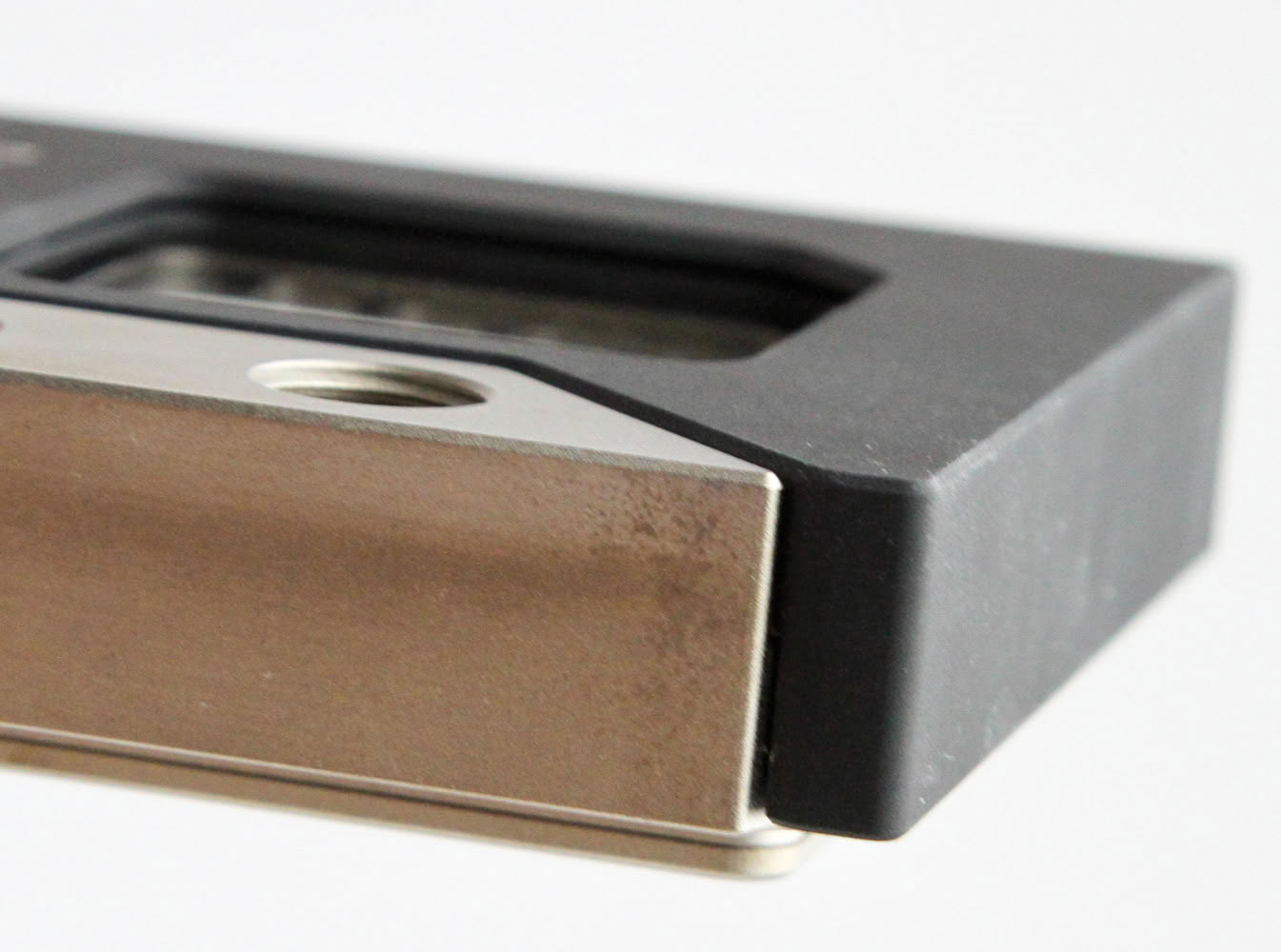
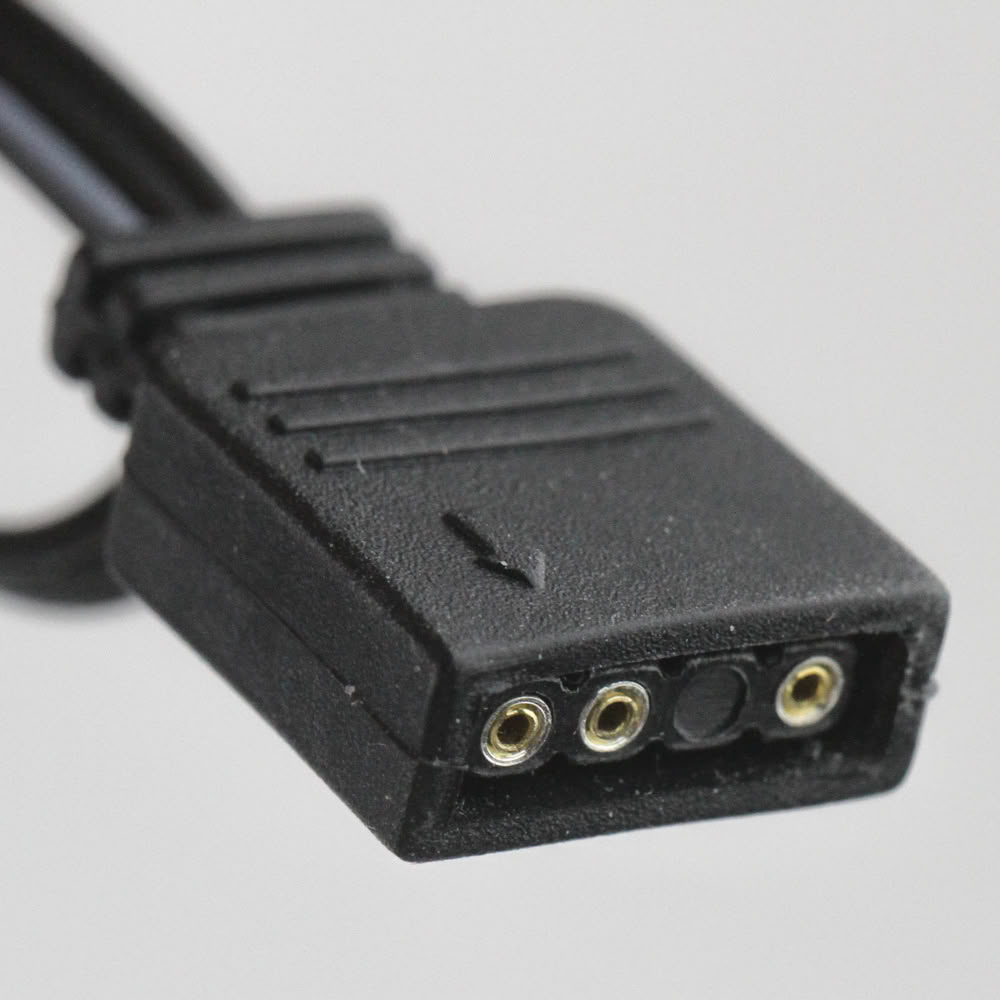
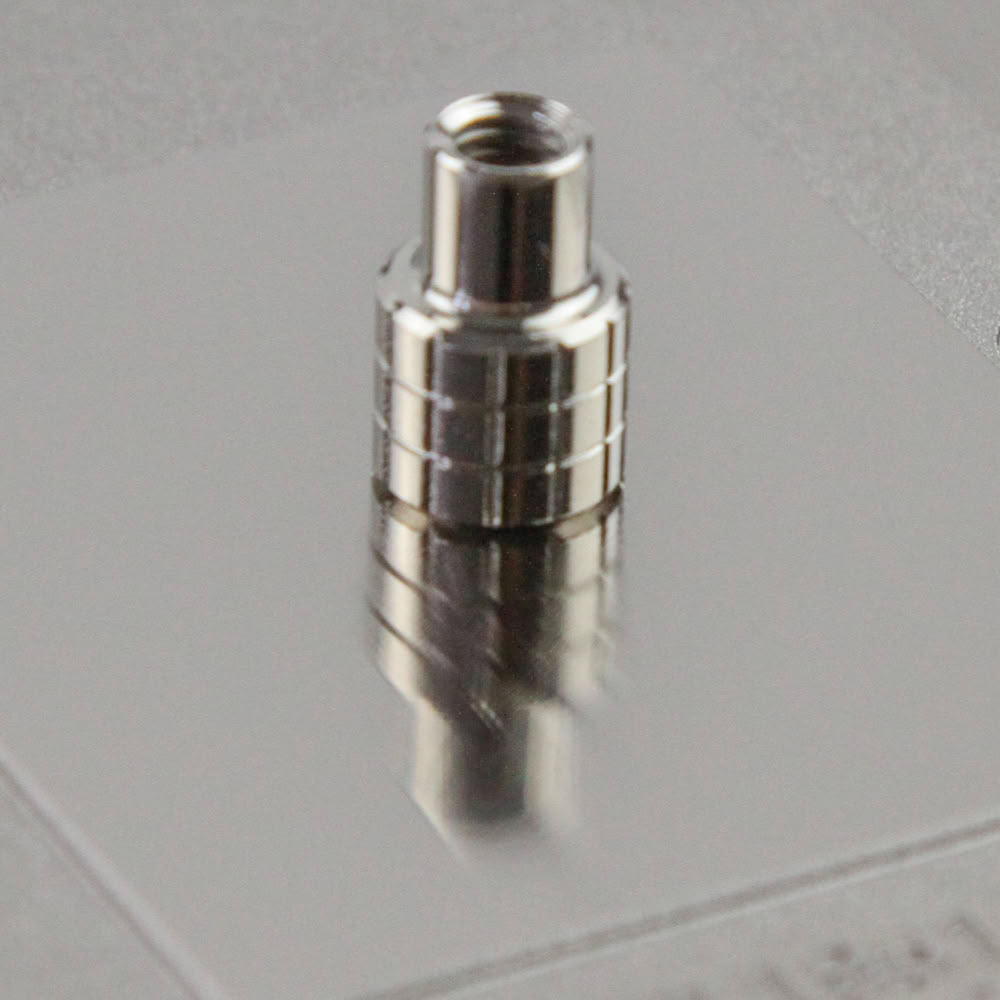
I have seen my fair share of CPU blocks, including some extremely large and/or heavy ones, and this Thermal Grizzly offering might just be the biggest and bulkiest one yet. The DeltaMate MPII for the Intel LGA 1851 socket is ~95 × 95 mm in form factor, and is 33 mm thick when installed. Did I also mention the part where it weighs over 1 kg? Of course this relatively heavy mass is a result of the metal parts used here, as the DeltaMate MPII only comes in this single SKU unlike what you might see from other brands. I would say the design language here is more industrial than artisan, with good build quality and performance being prioritized over pure aesthetics. The block has matte finishes to all the surfaces you see from the top and sides, and the black anodized aluminium cover is susceptible to contact marks and smudges—which can be wiped off. I am not sure how I feel about the product name being so prominently written on the top though, with perhaps the side being a better location to keep with the overall clean look here. Perhaps the logo would have sufficed for branding, but this is a pet peeve only. The cooling engine can be seen through the glass window, which also helps users see the integrated RGB lighting, the coolant flowing through, and check for any trapped air bubbles too. The nickel-plated brass housing, again not given a mirror polish as with some others and in line with the rest of the block, houses two BSP G1/4" threads machined 6 mm deep and as perfectly as one could expect—you won't have any threading issues with fittings here. There are no markings to indicate the preferred inlet and outlet ports, although the cooling engine suggests the top port in the photos above as the inlet would work more ideally. The bottom side has a thin ribbon-style cable terminating in a 3-pin connector for the ARGB LEDs in the block.
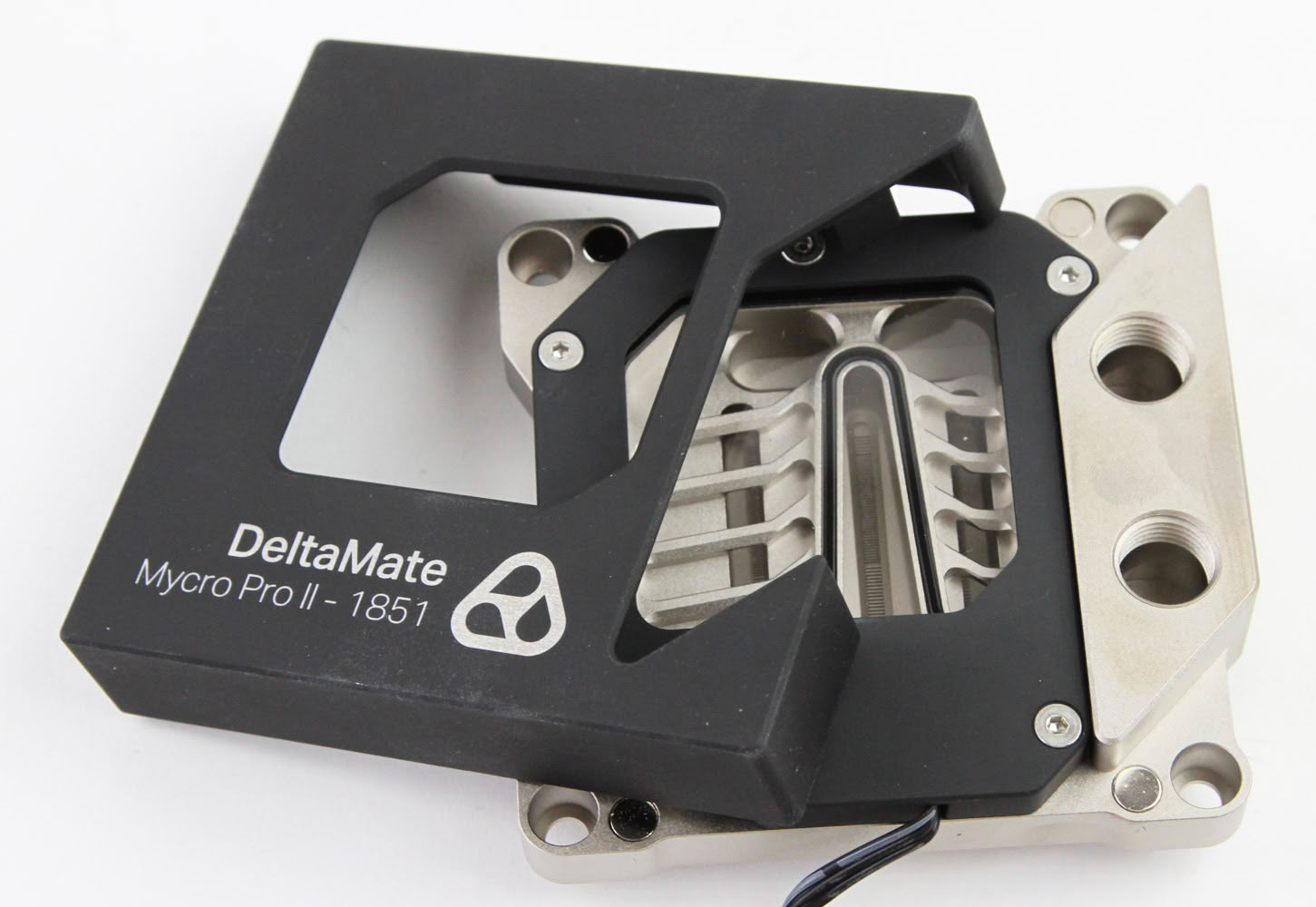
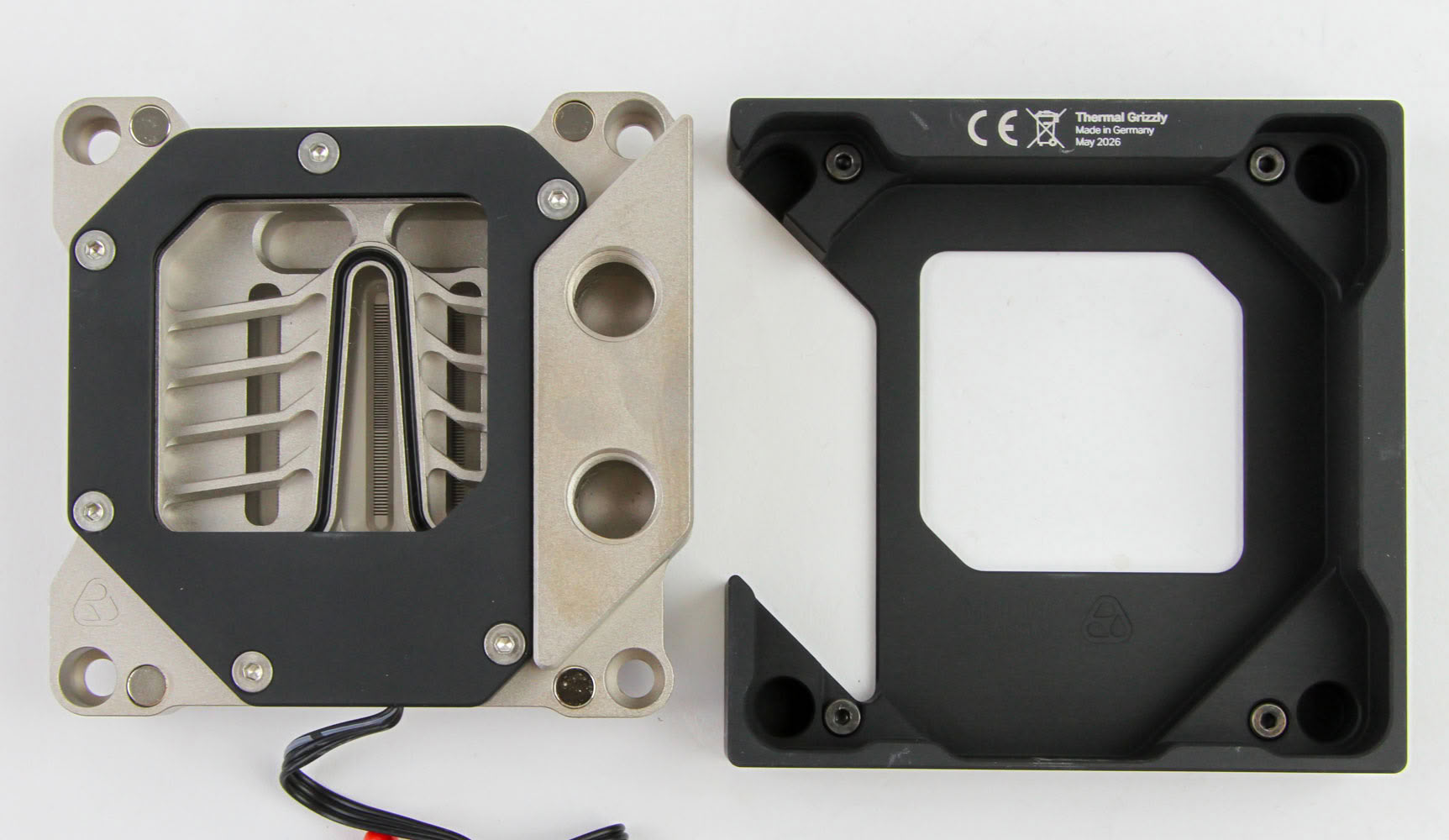
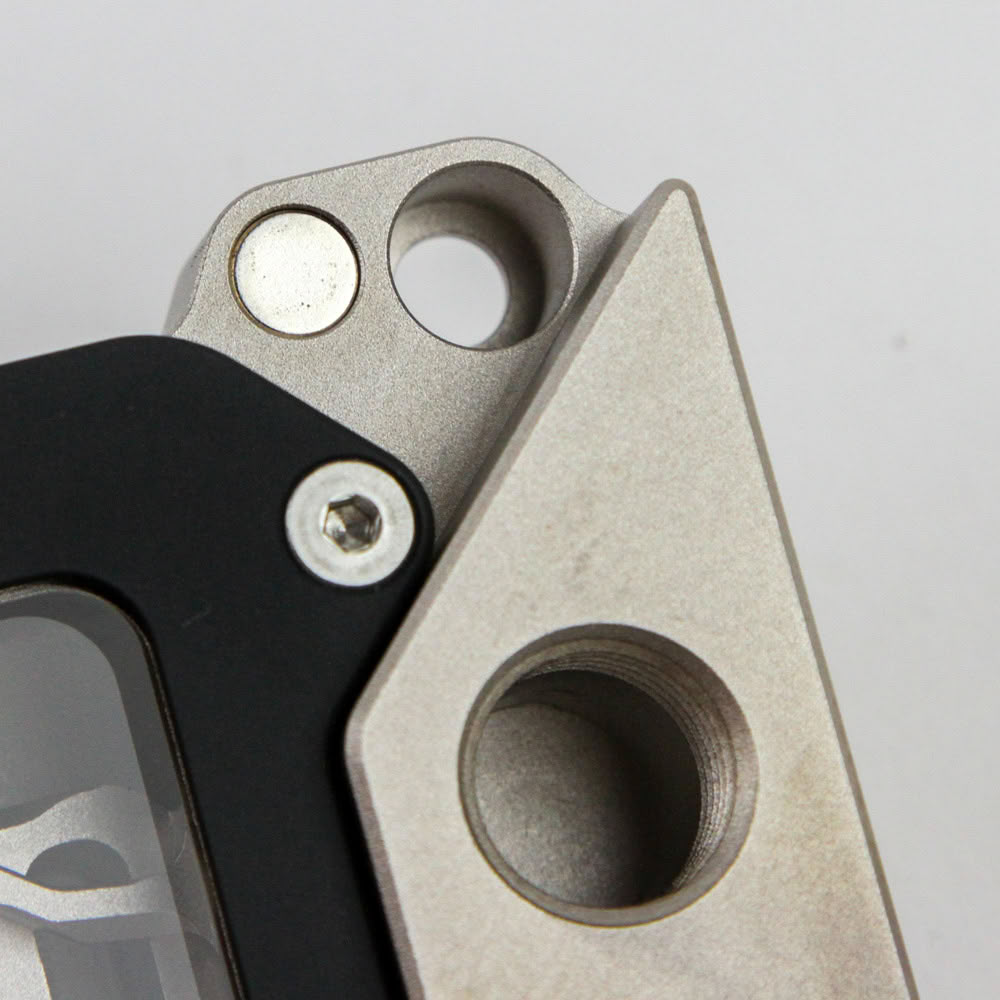
If you have already held this block in your hands before, chances are you might have figured out what I was alluding to on the previous page. The black aluminium cover can lift off if you hold the block by it alone, since it's just a magnetic cover that slides over the actual CPU block. This means you can choose to use it or keep it away, if you prefer the looks without it. Note that you will need to have the cover off for installation, at least temporarily. I personally find the DeltaMate MPII to look unfinished without the cover, so I kept it on always when in use.
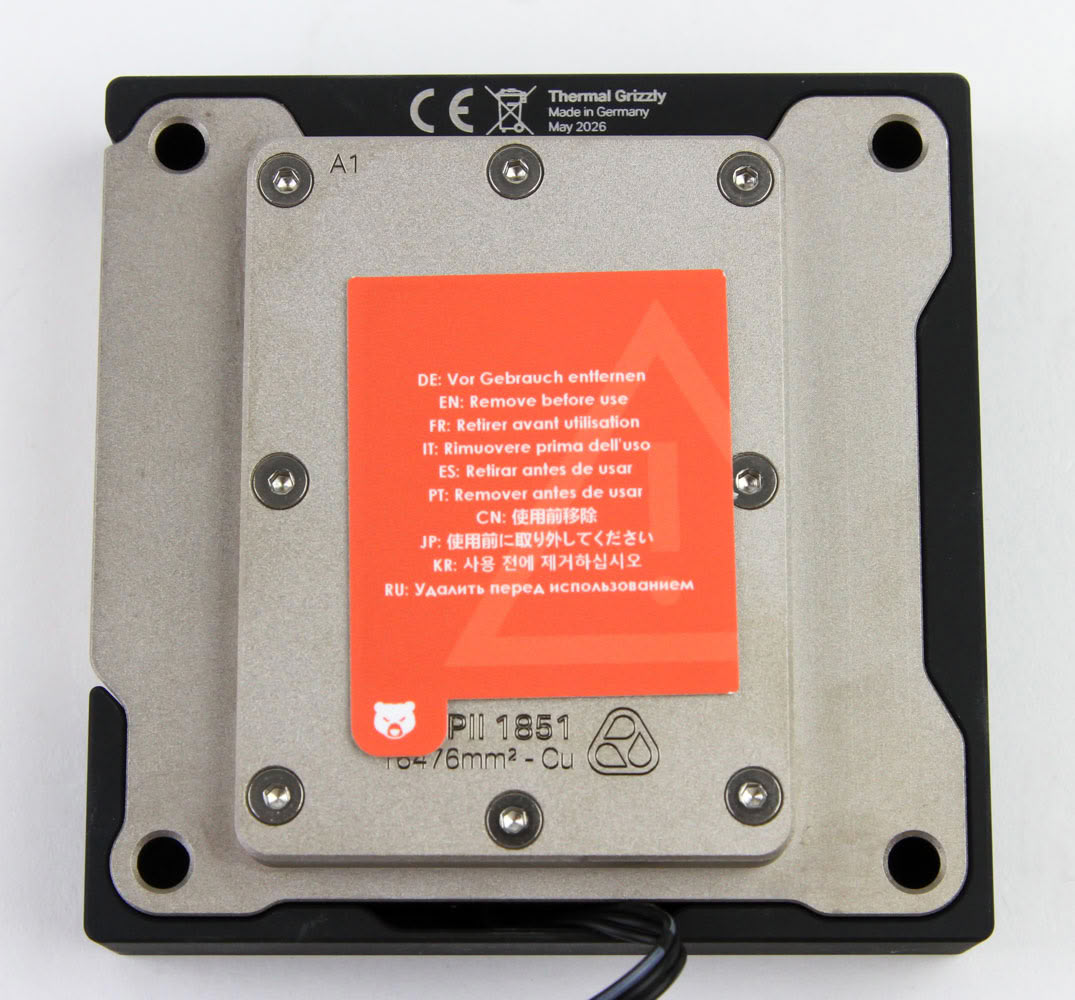
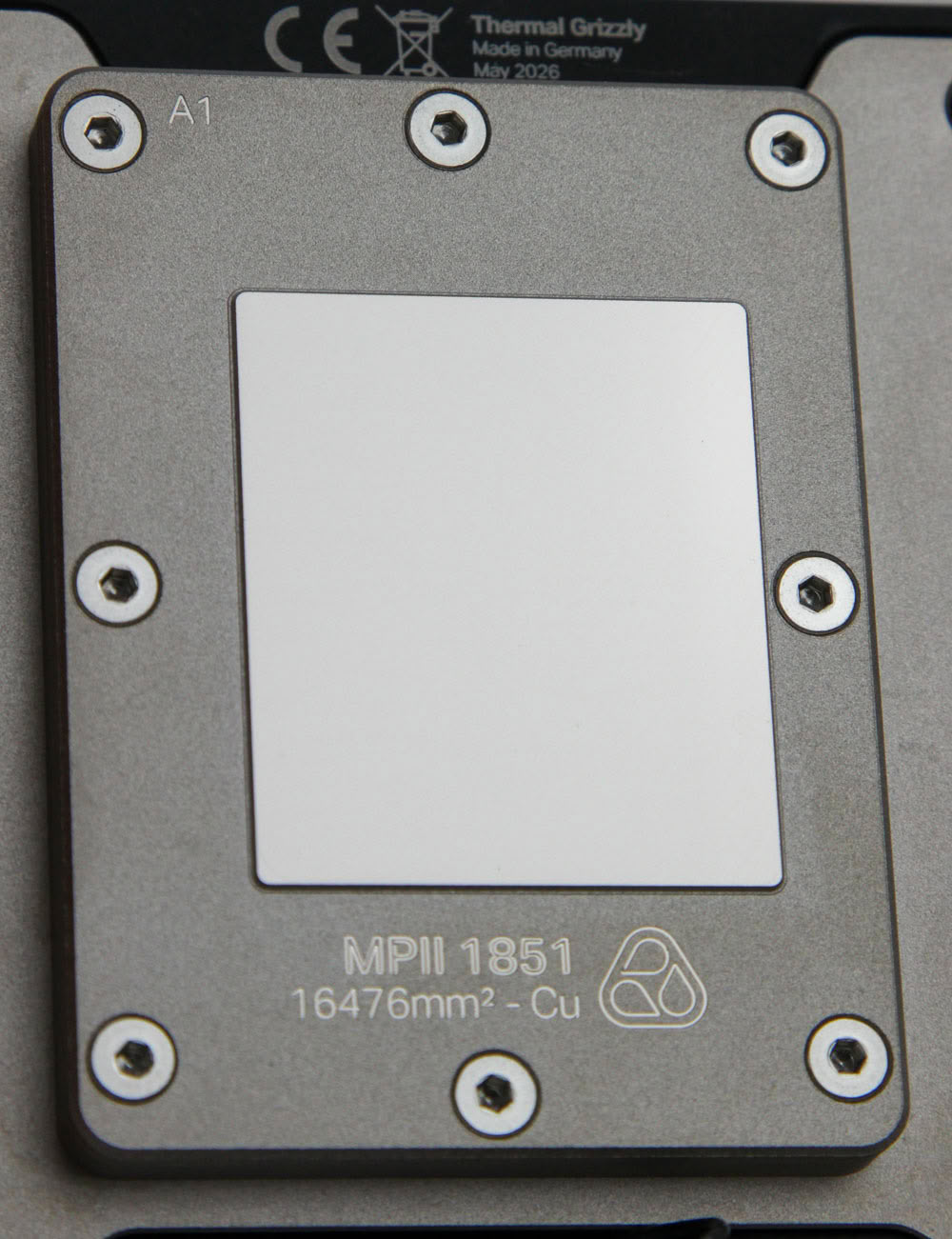
Turning the block around reveals a plastic warning sticker placed over the cold plate. Remove this to reveal a well-lapped finish applied to the nickel-plated copper cold plate. Not the most reflective, again in accordance with the rest of the block, but this aspect doesn't influence performance and I prefer this for added accidental impact resistance.
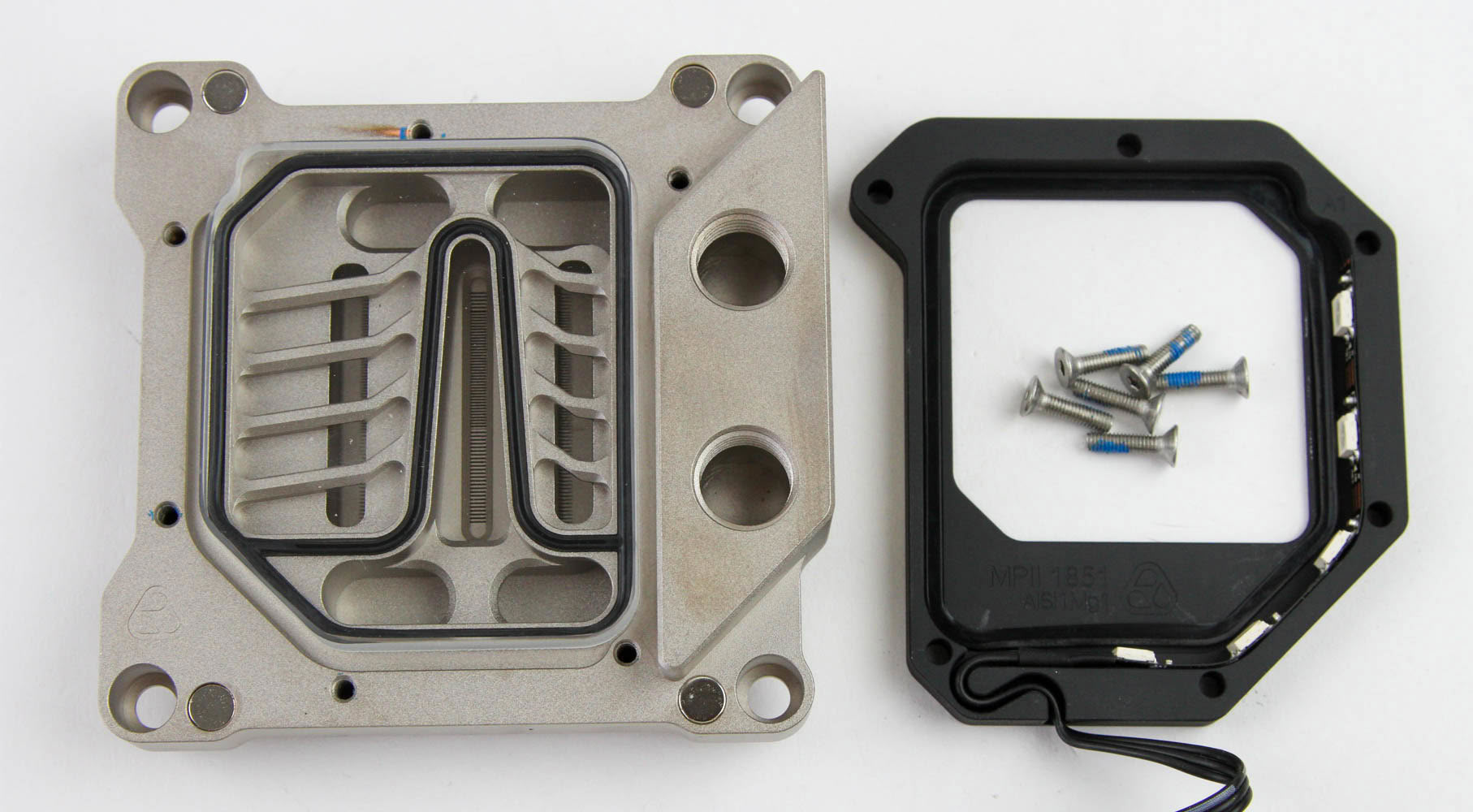
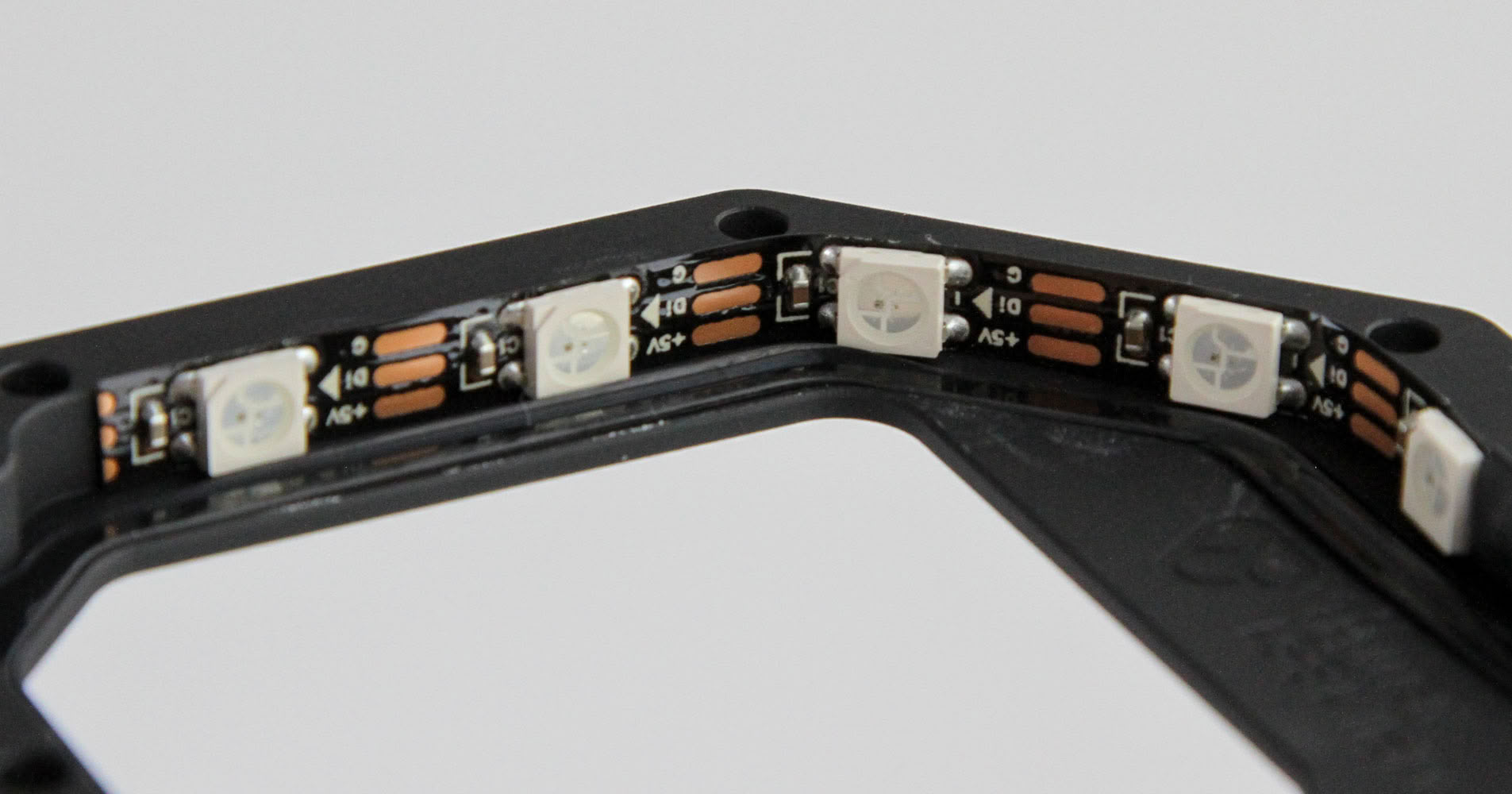
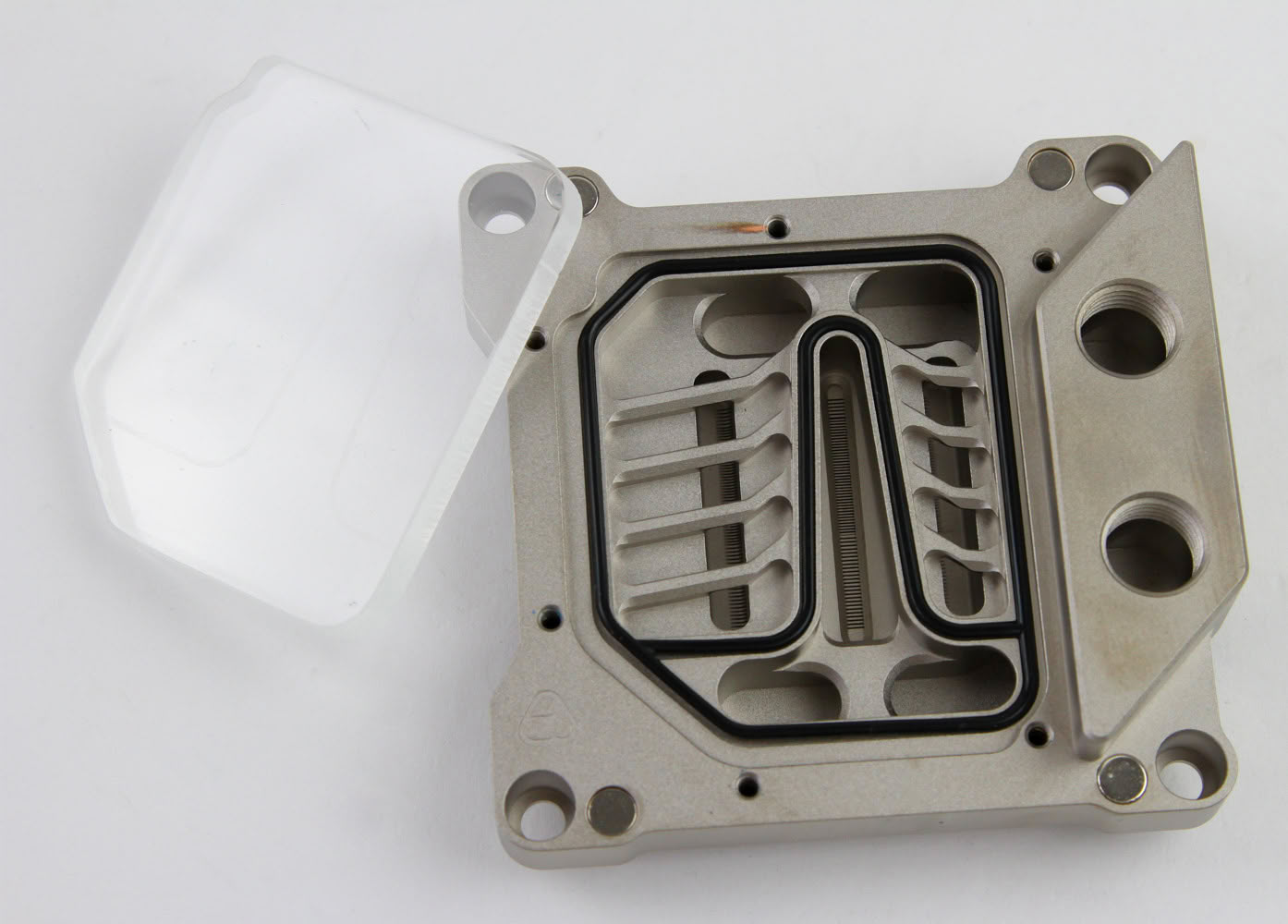
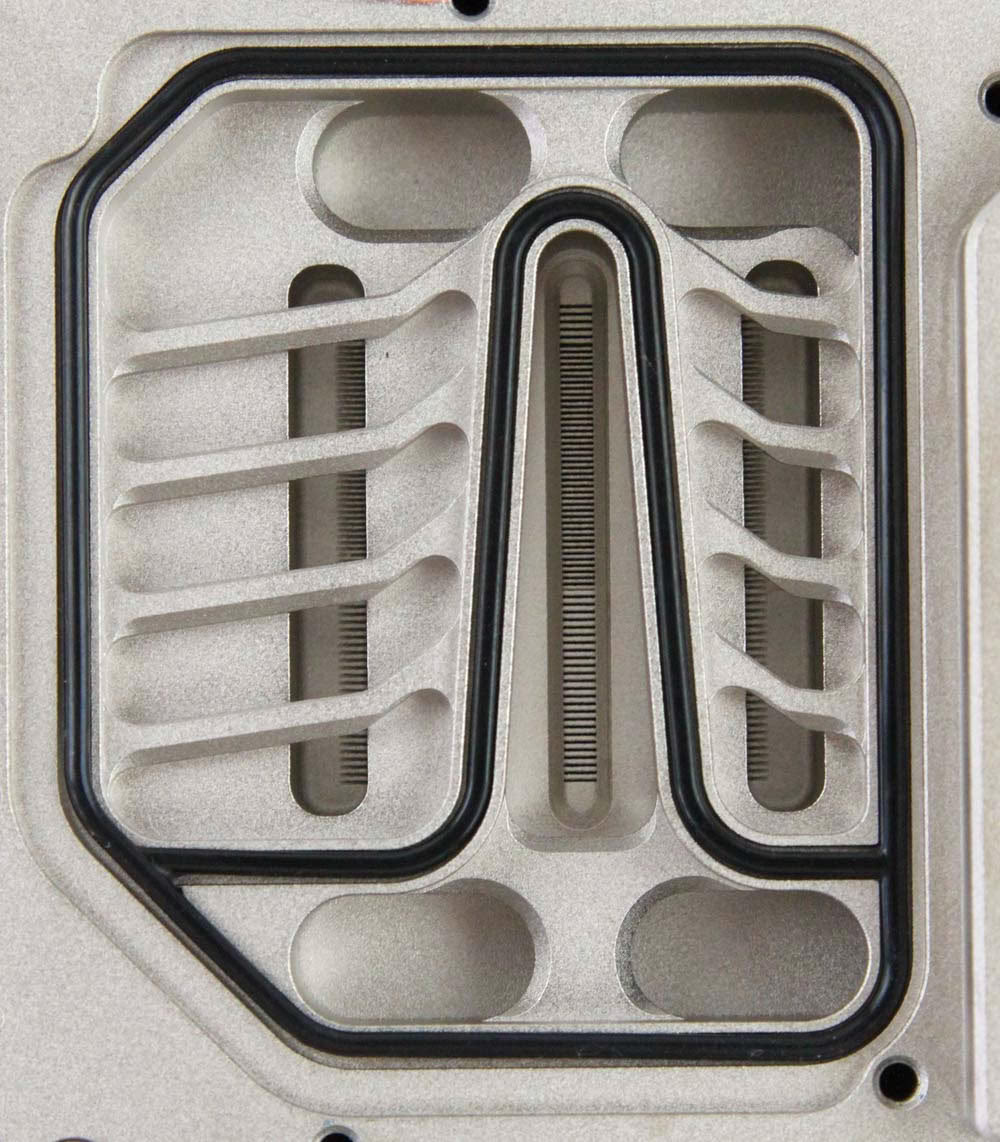
Disassembly was done after all testing was completed, and there are two stages. Thermal Grizzly does not void the warranty for disassembly, but lets the user know to take precautions when assembling the block back to ensure no leaks or damage to the EPDM O-rings used. From the top, the borosilicate glass window can be removed to better examine the cooling engine. The window itself is different from the norm that happens to be acrylic, or nylon in some rare cases. The company says this piece is Schott BOROFLOAT glass and a waterjet cutter was used to shape it, before the sides were sanded by hand. The advantage of this material is mostly increased tolerance to any coolant that uses alcohols inside, but it is also more UV- and scratch-resistant, so it won't turn yellow over time, and will continue to give you a good look inside. We also see five ARGB LEDs firing inward, albeit only from a corner, for RGB lighting of the block.
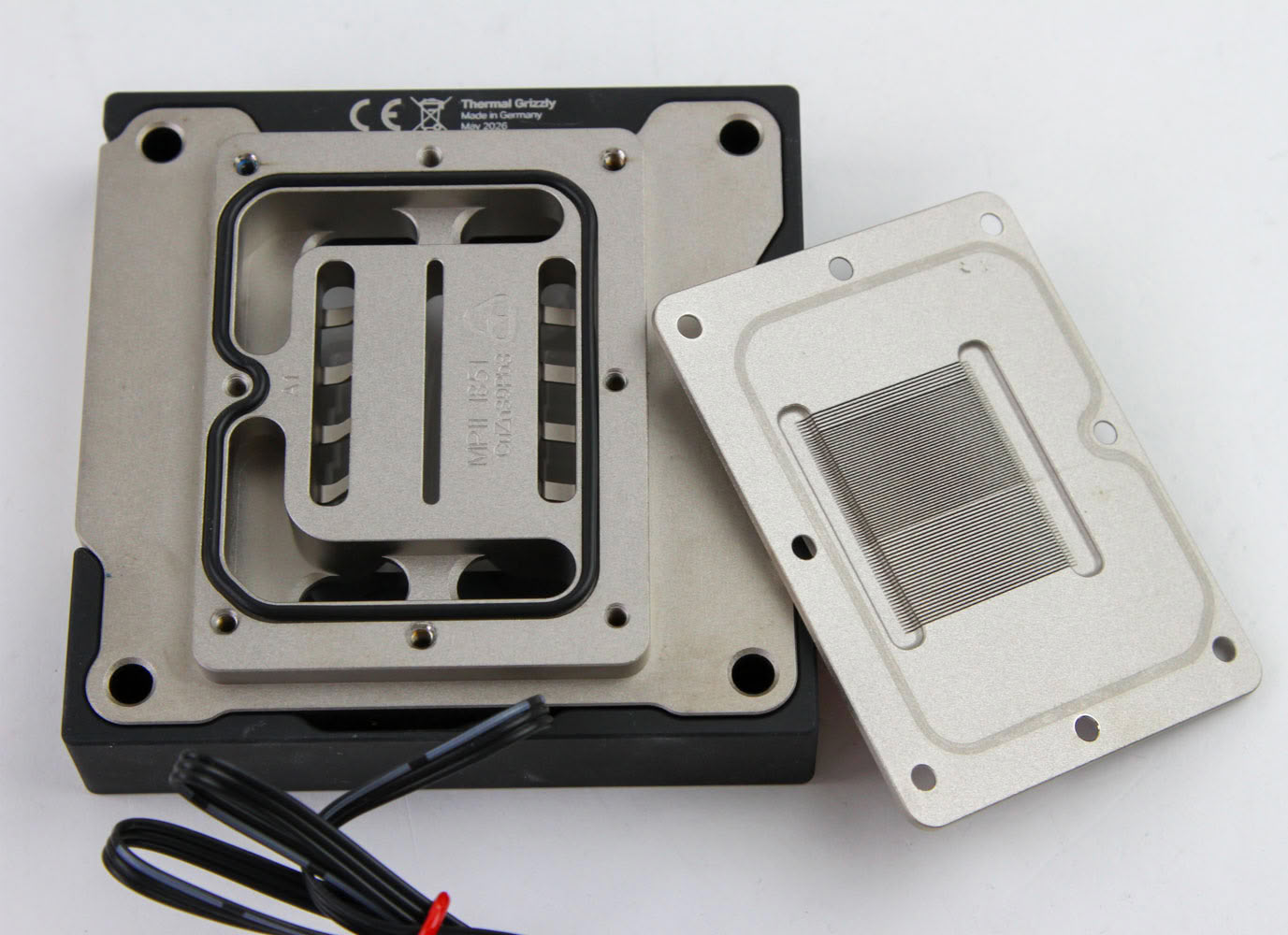
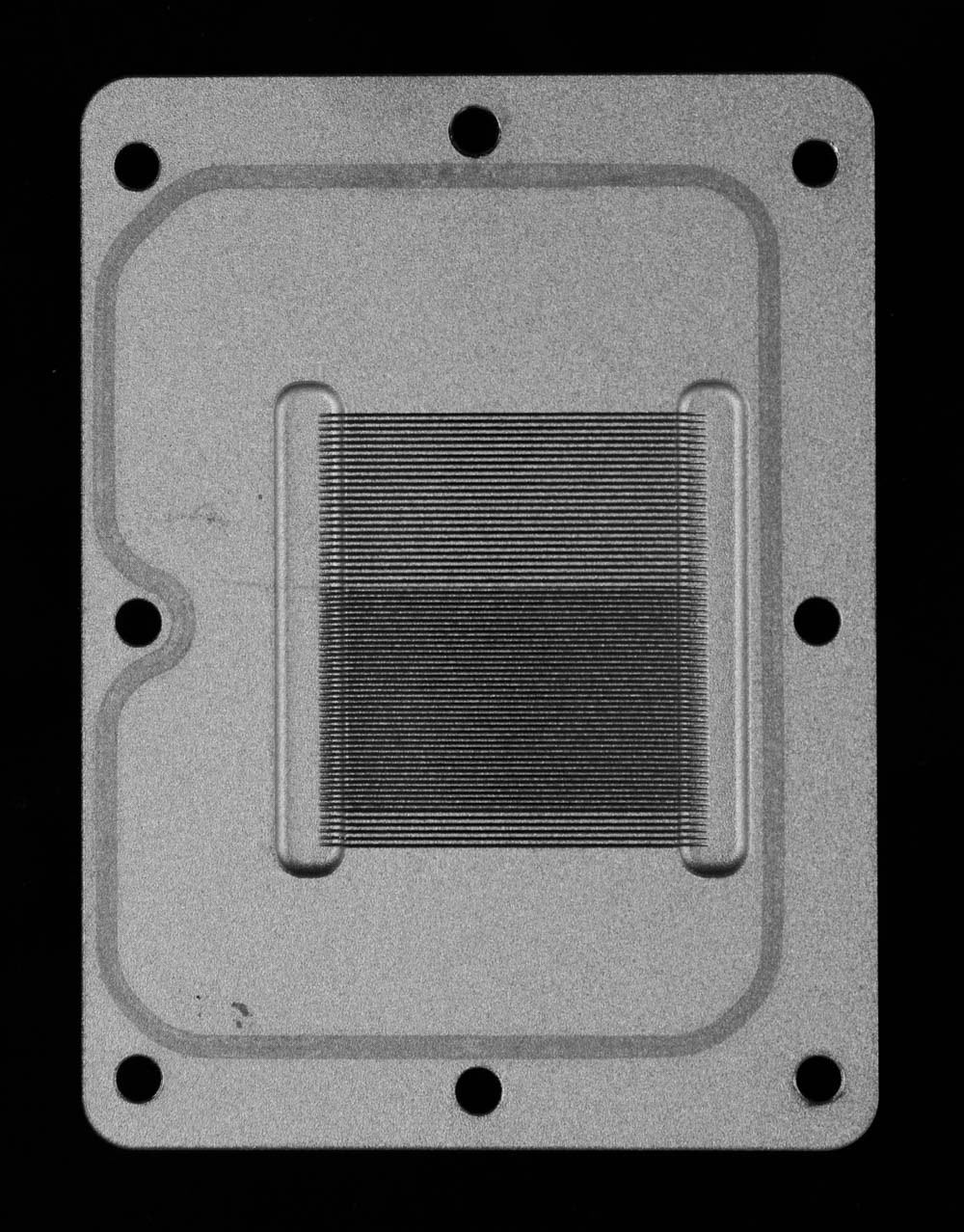
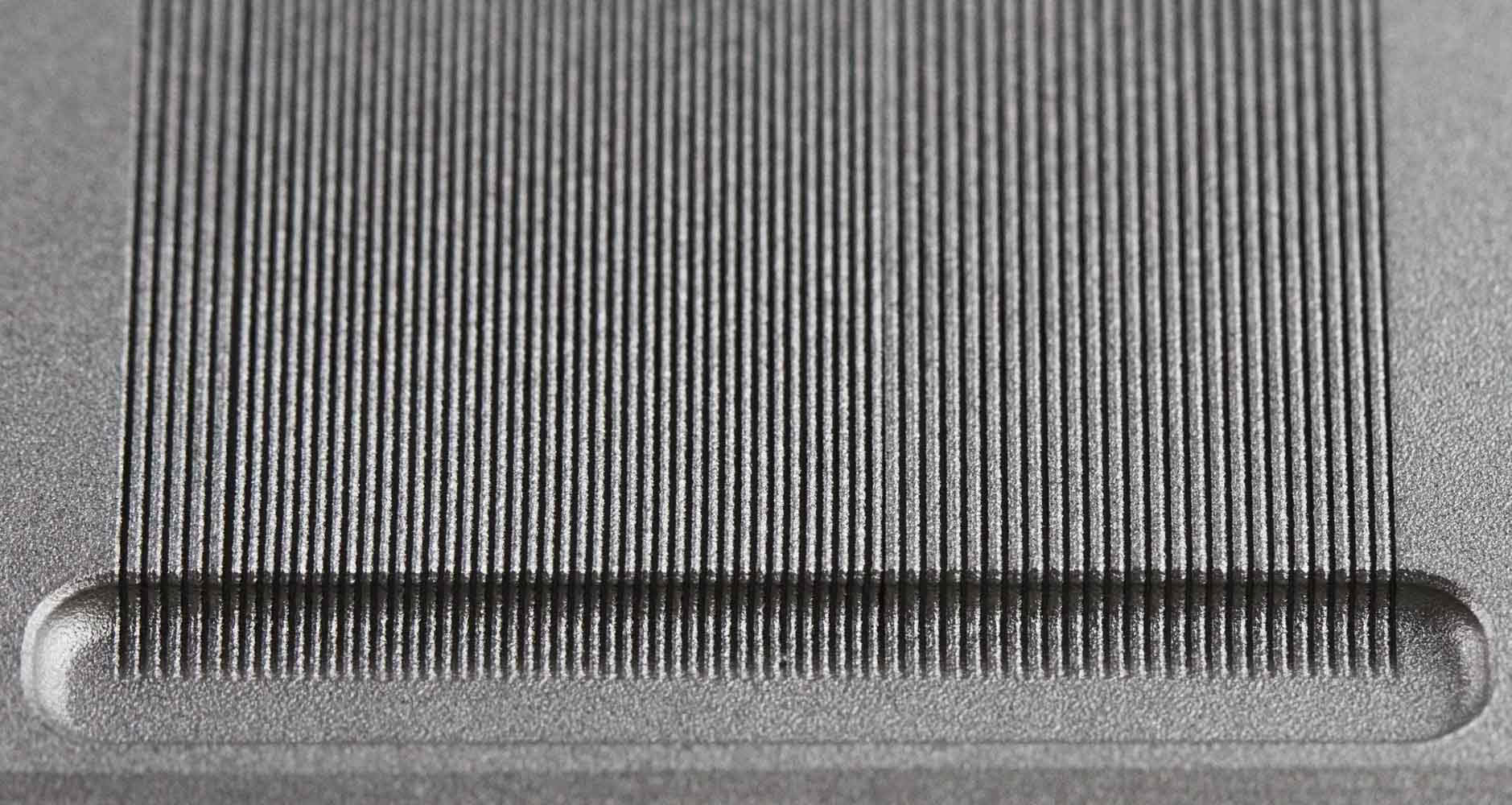
Further disassembly happens from the underside, with eight more screws to remove. There is no standalone jetplate here, as everything is machined into the brass housing to allow for split central-inlet flow. The socket-specific nature of the block means Thermal Grizzly was also able to make a cold plate specific to the Intel LGA 1851/1700 sockets, with extremely fine microfins as seen above. This cold plate has 40 fins above where the CPU chiplet is, and these are just 200 µm thick, with an identical gap between each for the microchannels to allow the coolant to pass through. On either side are a total of 30 more fins; these are slightly thicker at 300 µm with the same gap to help keep coolant flow restriction under some control. Overall this still comes off as a medium-high restriction CPU block though, but it does bode well for performance owing to the increased heat transfer area. This is in combination with the housing that takes the hot coolant and evenly collects it back up across the length of these fins for more uniform heat transfer too.
Nov 18th, 2026 16:11 PST
change timezone
Latest GPU Drivers
New Forum Posts
- Got a new laptop! What should I do with it? (5)
- Honestly, do you care about GTA VI? (147)
- Dell Workstation Owners Club (3514)
- Making a game in Godot engine (2)
- [Poll] 12V-2x6 Connector Protection: What Are You Using? (WireView / Ampinel / Equalizer / Other / Nothing) (39)
- Last game you purchased? (1406)
- Time to upgrade CPU and MOBO (34)
- Can i play GTA 6 now? (Joke) (7)
- What are you playing? (26234)
- Very unusual two gaming-pc scenarios. (12)
Popular Reviews
- Acemagic Retro X3 Review
- Upcoming Hardware Launches 2027 (Updated Nov 2026)
- AMD Zen 6 Technical Deep Dive
- Ugreen NASync DXP4800 GT Review
- Biwin Black Opal NV7400 2 TB Review
- Pulsar Office Tour & First Look at P1 Dual-Sensor Mouse
- Chieftec Iceberg PRO 360 DARK Review
- Sapphire Radeon RX 7700 XT Pure Review
- ASUS ROG Strix B850-I Gaming Wi-Fi7 W Review
- Sapphire Radeon RX 7700 XT Pulse Review
TPU on YouTube
Controversial News Posts
- NVIDIA Co-Founder and CEO Jensen Huang Officially Resigns (478)
- Report: Jensen Huang Eyes NVIDIA Comeback (193)
- Open Letter Asking NVIDIA to Reinstate Jensen Huang Passes 115,000 Signatures (184)
- OpenAI CEO Argues Home PCs Waste the World's Limited DRAM Supply (152)
- NVIDIA Launches Investigation Into Jensen Huang's Relationship With Suspected Chinese Spy (136)
- Intel "Raptor Lake Next" 16-Core and 20-Core CPUs Surface (130)
- Legendary Game Studio BioWare Shuts Down Following EA Layoffs (104)
- Dell CEO Says the Memory Shortage Will Get Worse in 2027 (95)