 3
VZMORE AX9 Max Review
Value & Conclusion »Power and Noise Levels
Power and efficiency can be just as important as raw performance in a compact system, so I measured how much the system draws under CPU stress, during GPU-heavy tests, while gaming, and during a 24-hour idle period. Noise readings add context for how noticeable the cooling system becomes during light use and sustained workloads.24-Hour Idle Power Draw
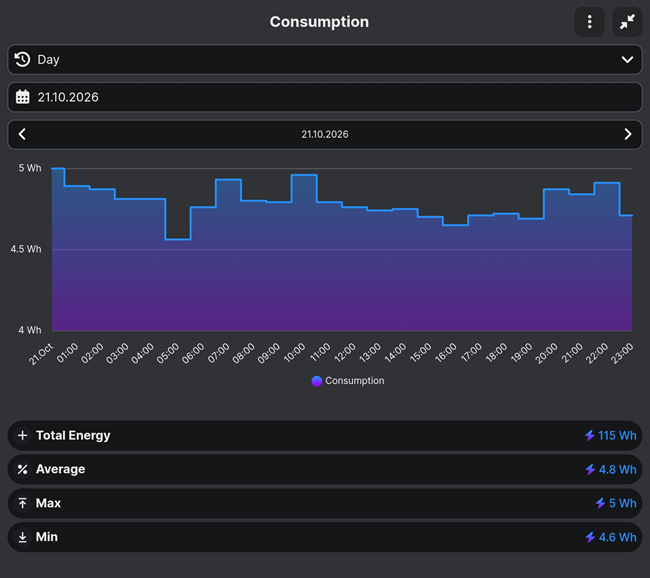
During the 24-hour idle recording, the AX9 Max consumed just 115 Wh in total, with an average of 4.8 Wh per hourly interval. Consumption was remarkably consistent throughout the test, ranging from a low of 4.6 Wh to a high of 5 Wh. There were a few minor fluctuations, but no significant spikes or drops. This translates to an average idle power draw of approximately 4.8 W, which is an excellent result for a Mini-PC with this level of processing power.
At that average idle draw, leaving the AX9 Max running continuously for an entire year would consume approximately 42 kWh, costing just $6.30 to $8.40 annually at electricity rates of $0.15 to $0.20 per kWh. Actual consumption will be higher with regular work and gaming, but these results show how little electricity the system requires when it's not doing much. The higher power readings in the benchmarks below reflect sustained workloads rather than typical day-to-day usage.
System Power Draw Under CPU and GPU Workloads
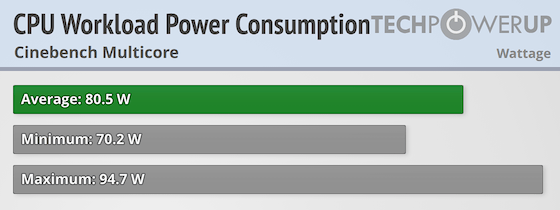
During the Cinebench multicore run, system power draw averaged 80.5 W at the wall, with a low of 70.2 W and a high of 94.7 W. The result is reasonable for a compact desktop using AMD's Ryzen AI 9 HX 470, and the trace settles after the initial rise without prolonged excursions near the top of the recorded range.
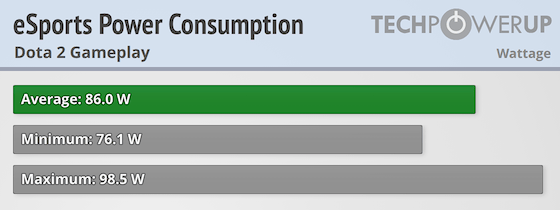
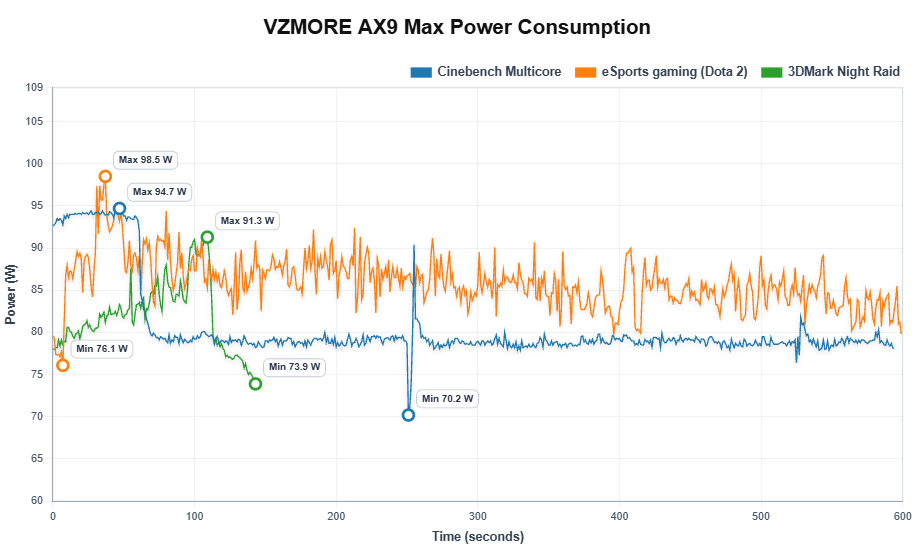
Dota 2 generated the highest average wall power of the three measured workloads at 86.0 W, with measurements ranging from 76.1 W to 98.5 W. Interestingly, Dota 2 drew slightly more power than Cinebench, averaging 86.0 W compared with 80.5 W. It also reflects what this specific workload drew from the outlet, not a separate GPU power measurement.
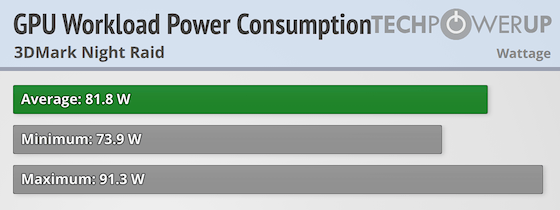
Night Raid averaged 81.8 W, reaching a minimum of 73.9 W and a maximum of 91.3 W across the shorter graphics-oriented run. The three workloads produced relatively similar wall-power readings, despite placing different demands on the system. All load measurements were recorded in Balanced Mode, so the recorded wall power should not be confused with the separate 45 W, 54 W, and 65 W processor power settings.
Here's how the AX9 Max's power consumption compared across the three workloads:
Noise Levels
With the fan left on automatic in Balanced Mode, my sound-level meter measured 30.1 dBA at idle, 35.5 dBA with lighter activity, and 41.1 dBA under heavier load from a distance of 30 cm. Sound was steady during testing, especially as the system worked harder and the fan became more audible. At 41.1 dBA under heavy load, the measured fan level stayed modest considering the Ryzen processor inside such a small enclosure.Switching to Performance Mode kept the fan in the high 40s dBA during testing (sometimes surpassing 50 dBA), while Silent Mode generally stayed in the low 30s dBA even when I ran heavier workloads.
Nov 28th, 2026 23:19 CST
change timezone
Latest GPU Drivers
New Forum Posts
- -18C on GPU by moving it to the front of the case. (33)
- Ghetto Mods (4885)
- What's your main Black Friday / Cyber Monday purchase? (50)
- SB SSD Temps / TBW Tracker / Pulse Drive updated. (40)
- CPU Database (309)
- 9070XT Red Devil RGB completely stopped working (18)
- Which new games will you be buying? (366)
- Exit Adobe - PDF reader, and PDF editor recommendations (19)
- ASUS Prime 5060 ti 16gb x4 instead of x8 PCIe (13)
- What are you playing? (26261)
Popular Reviews
- Upcoming Hardware Launches 2027 (Updated Nov 2026)
- Moaiplay Ora Pro G1 850 Review
- Montech CyberFlow ARGB 360 Review
- AMD Ryzen 7 9800X3D Review - The Best Gaming Processor
- ORICO Obook15 AI Review
- AMD Zen 6 Technical Deep Dive
- VZMORE AX9 Max Review
- Acemagic Retro X3 Review
- Phantom Blade Zero Performance Benchmark Review - 35 GPUs Tested
- Microsoft Surface Laptop Ultra Review - The Next-gen Arm Laptop
TPU on YouTube
Controversial News Posts
- Jensen Huang Reinstated as CEO of NVIDIA (630)
- NVIDIA Co-Founder and CEO Jensen Huang Officially Resigns (492)
- Report: Jensen Huang Eyes NVIDIA Comeback (281)
- Open Letter Asking NVIDIA to Reinstate Jensen Huang Passes 115,000 Signatures (184)
- OpenAI CEO Argues Home PCs Waste the World's Limited DRAM Supply (154)
- NVIDIA Launches Investigation Into Jensen Huang's Relationship With Suspected Chinese Spy (136)
- Intel Razor Lake Gets a 12 P-Core bLLC Chip With No E-Cores, Per Leak (94)
- NVIDIA GeForce RTX 50-Series Scheduled for up to $500 Price Hike This Week (89)