Thursday, April 26th 2018

Intel Confirms Z390 and X399 Chipsets in Official Documents
Intel unintentionally confirmed the existence of two of its upcoming client platform chipsets, the Z390 Express, and the X399 Express. The latest release-notes documentation of its Rapid Storage Technology driver, mentions Z390 and X399, alongside the CPU micro-architectures they support. The Z390 supports current-generation "Coffee Lake" and upcoming "Cannon Lake" processors, while the X399 supports HEDT derivatives based on the two architectures, namely "Coffee Lake-X" and "Cannon Lake-X," with no mention of "Skylake-X."
What happens to the X299, you ask? The table mentions the chipset as supporting SKL-X (Skylake-X) and KBL-X (Kaby Lake-X), but it's not clear if Intel is only referring to the forgettable i7-7740X and i5-7640X with "KBL-X." The Z390 is rumored as being Intel's next top mainstream-desktop chipset, with a long overdue update to onboard audio standards, in being a departure from the "Azalia" HD audio specification, onward to the new Programmable Quad-Core Audio with new SoundWire digital audio interface. The chipset is also rumored to feature 10 Gbps USB 3.1 ports.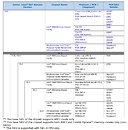
What happens to the X299, you ask? The table mentions the chipset as supporting SKL-X (Skylake-X) and KBL-X (Kaby Lake-X), but it's not clear if Intel is only referring to the forgettable i7-7740X and i5-7640X with "KBL-X." The Z390 is rumored as being Intel's next top mainstream-desktop chipset, with a long overdue update to onboard audio standards, in being a departure from the "Azalia" HD audio specification, onward to the new Programmable Quad-Core Audio with new SoundWire digital audio interface. The chipset is also rumored to feature 10 Gbps USB 3.1 ports.

26 Comments on Intel Confirms Z390 and X399 Chipsets in Official Documents
I am talking about AMD resorting to childish and petty tactic of trying to piss a competitor off by using up their very apparent future version numbering. If I didn't know better, I'd say AMD did not have the balls to create their own scheme, but I know this is not true; look at "Ryzen", "Threadripper" and "EPYC", and their CPU numbering. I'm baffled and disappointed because I root for them and because their naming and numbering in the ZEN era shows braZEN (TM, lol, just kidding, you can use it AMD ;)) balls, while chipset naming is the stark opposite.This is funny, because all this "joke" ever achieved is to confuse both AMD and INTEL customers. So, in one fell swoop, AMD negatively impacted the whole market and created nothing but resentment (in varying degrees).
Intel has been using B, H, Q, X, and Z in the desktop market for long that it's part of their brand. Why get into that?? Lack of letters in the English alphabet?? The only answer is petty childishness.
AMD's chipset is called Promontory internally, why not use "P", for example? A series was used by AMD for APUs, so that's fine, for mainstream desktop they could use P, and high-end desktop they could use PX. What I mean is there was so many ways to name their chipset without creating this fuss...