Thursday, August 9th 2018

NVIDIA GTX 1080-successor a Rather Hot Chip, Reference Cooler Has Dual-Fans
The GeForce GTX 1080 set high standards for efficiency. Launched as a high-end product that was faster than any other client-segment graphics card at the time, the GTX 1080 made do with just a single 8-pin PCIe power connector, and had a TDP of just 180W. The reference-design PCB, accordingly, has a rather simple VRM setup. The alleged GTX 1080-successor, called either GTX 1180 or GTX 2080 depending on who you ask, could deviate from its ideology of extreme efficiency. There were telltale signs of this departure on the first bare PCB shots.
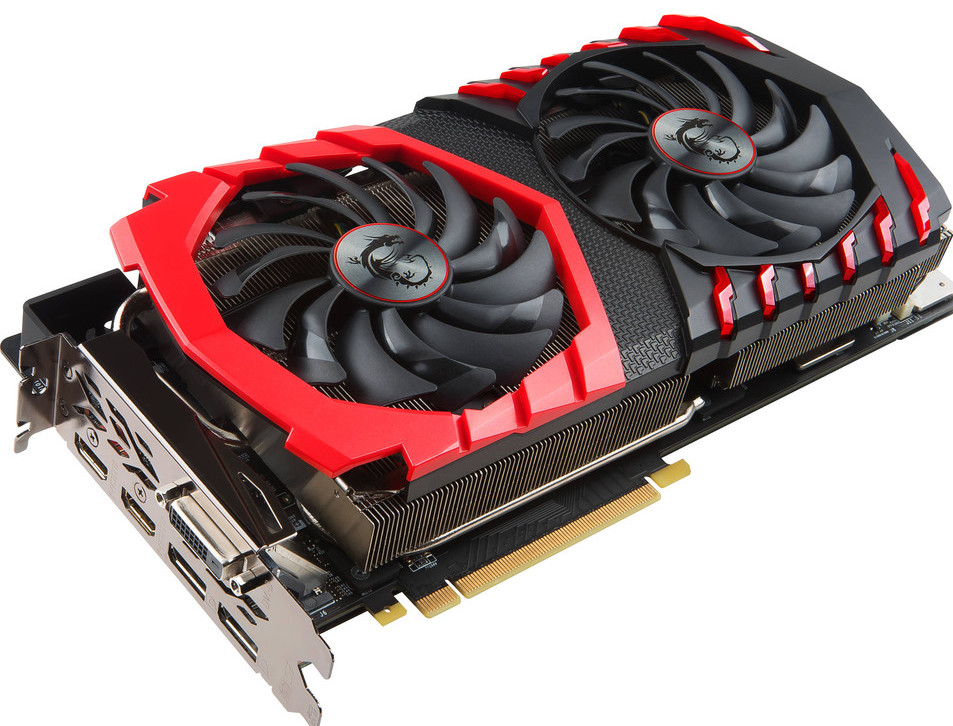
The PCB pictures revealed preparation for an unusually strong VRM design, given that this is an NVIDIA reference board. It draws power from a combination of 6-pin and 8-pin PCIe power connectors, and features a 10+2 phase setup, with up to 10 vGPU and 2 vMem phases. The size of the pads for the ASIC and no more than 8 memory chips confirmed that the board is meant for the GTX 1080-successor. Adding to the theory of this board being unusually hot is an article by Chinese publication Benchlife.info, which mentions that the reference design (Founders Edition) cooling solution does away with a single lateral blower, and features a strong aluminium fin-stack heatsink ventilated by two top-flow fans (like most custom-design cards). Given that NVIDIA avoided such a design for even big-chip cards such as the GTX 1080 Ti FE or the TITAN V, the GTX 1080-successor is proving to be an interesting card to look forward to. But then what if this is the fabled GTX 1180+ / GTX 2080+, slated for late-September?
Sources:
VideoCardz, BenchLife.info
The PCB pictures revealed preparation for an unusually strong VRM design, given that this is an NVIDIA reference board. It draws power from a combination of 6-pin and 8-pin PCIe power connectors, and features a 10+2 phase setup, with up to 10 vGPU and 2 vMem phases. The size of the pads for the ASIC and no more than 8 memory chips confirmed that the board is meant for the GTX 1080-successor. Adding to the theory of this board being unusually hot is an article by Chinese publication Benchlife.info, which mentions that the reference design (Founders Edition) cooling solution does away with a single lateral blower, and features a strong aluminium fin-stack heatsink ventilated by two top-flow fans (like most custom-design cards). Given that NVIDIA avoided such a design for even big-chip cards such as the GTX 1080 Ti FE or the TITAN V, the GTX 1080-successor is proving to be an interesting card to look forward to. But then what if this is the fabled GTX 1180+ / GTX 2080+, slated for late-September?
75 Comments on NVIDIA GTX 1080-successor a Rather Hot Chip, Reference Cooler Has Dual-Fans
I think he didn't really pay attention to that 23/4 number. 23 could be SM (2944 cuda), but that "4" number on rtx 2080 could be tensor units, 4x64/128 = 256/512 tensor on rtx 2080 ?
What's the point of tensor cores on a consumer graphics card? I thought those were for AI. What do they do for gaming? Maybe the miners will take advantage of them somehow?
What causes Pascal to "max out" at 250w? Surely they could push that figure further, if they wanted to. Such a card would be absurd, but it could be done, especially if they're just gonna roid up the current architecture without much real innovation. As said already, those who want the fastest will still buy it even if it consumes 300w or more, because it's the fastest. As for me, I think my 1070 will serve me well for a long time. I'll probably upgrade only when something comes along that's faster and also draws less power...
1) promote ray tracing/tensor cores
2) move to 12nm to decrease production costs
Both secure higher profitability in the future regardless of what AMD does.
None of these things secure Nvidia anything, whatever advantage 12nm brings will be offset by the increase in die space and clocks and the latter is nothing more that a promise for an obscure technology which in spite of all the aggressive coverage and marketing lacks any prospect of becoming relevant and feasible in the future (in other words no support from the console side of things). This is one of Nvidia's weakest releases in the last decade , similar to the 500 and 700 series more so to the former actually.
Nvidia is well within the realm of diminishing returns on their efforts to garner the remaining market share and they know it , hence the late and lackluster new generation of cards. Against popular belief that's their number one reason not to put a lot of effort in their products not the fact that there is no competition , they have dealt with that more than a decade ago when they made it so that whatever their competition does they still win.
It's PhysX all over again. Soon they'll be dancing around, screaming in people's face that they need a second GPU so they can real time ray trace in their games.
RTX does have professional uses but NVIDIA isn't going to settle for that.
NVIDIA is launching GTX 20xx knowing AMD doesn't have a response; hence, creating their own market pressure to get people to upgrade via RTX.
If companies performed proportionally to their market share, the margin between them would only widen to the point that in order to keep the little guy alive, they'd need government intervention. But I guess it's hard to think straight when you have one point to make. And point only.
1. While Ryzen is an engineering marvel in the sense that it delivers well in both workstation and consumer / gaming market niches, it's isn't topping the charts in either. So while an excellent choice for the gamer who spends 30% of his / her time video editing, outside that, it's hard to justify on a numbers basis. But for the gamer, all the extra cores are not delivering fps ... for the video editor, the $7800 1950x leads the $450 7820x by less than 1 percentage point. It's kinda like a hamburger chain having the best gluten free veggie burger sandwich ... great accomplishment, but not going to have big impact on bottom line.
2. While AMD got a nice bump from recent releases, ther market share has decreased 1.16% in the last two months and 1.05 % in the last month alone. And with Intel having some significant new releases in Q3 and Q4, that can only continue the trend.
3. While year over year, AMD has shown a nice bump, nVidia's year over year is still larger.
4. AMD doesn't have a competitive offering from the 1060 on up.
5. nVidia has expanded their dominance in an additional market tier with each successive generation for 3 generations now
6. nVidia has 5.5 times market share of AMD in the discrete GFX card arena and Intel has 5.6 times the market sharein CPU arena.
7. For every 5 non-nvidia GPUs detected by steam servers, 3 of them are AMD, 2 of them are Intel. AMDs most popular card ranks 30th in market share.
8. A significant % of AMD's stock buys (25% last time I saw published) are still being sold short within 24 hours
9. In US, tarriffs ... and more tariffs. This will cut across all vendors but 25% tariff on imports (so far) and will certainly mean less new builds. And of those built, budget considerations will push down sales on the high margin, top end products.
Their next candidate Navi will be targeting consoles, and all their GPU focus is on SoCs these days. Their market participation on the desktop is practically non-existent, and the best we can hope for is Navi to reach up into the mid-range. Most of AMD's GPU sales for the desktop are low-end OEM parts.
These SoC deals might seem like easy money for AMD now, but they do take the focus away from making competitive products in the gaming market. If they fall further behind, they wouldn't even land such deals.
Pascal, on the other hand, is a good example of refinement done right. It's basically a re-tuned Maxwell (or so I've read, I'm no hardware engineer). Now whatever monstrosity they're coming up with now doesn't seem to go that way. Seems they're just taking the same architecture and attaching the afterburners... which I think is fine, in the game generation anyway (e.g. a fictional GTX1090 or something) but to make a whole new product line that way is just silly.
I was also okay with Intel basically refining the same architecture since Sandy Bridge. Each time it got a little faster and more efficient. There were a lot of things they did I didn't like, but I was okay with the architecture itself. 6 core chips could have come a little sooner to the mainstream platform (Skylake would have been good), but again there's that lack of innovation... only Intel did it because they could. AMD's GPU team has got some serious issues right now.
@hat AMD was in such a mess, they couldn't possibly compete on several fronts at once. Let's just hope they use the cash Zen rakes in to boost their GPU division as well.
wccftech.com/nvidia-geforce-gtx-rtx-20-series-titan-rtx-geforce-rtx-2080-rumors/
Vega is more power hungry, more expensive and harder to come by than equivalent Nvidia cards. It does offer roughly the same performance, but we're not defining "competitive" going by HP alone, are we?