Friday, October 12th 2018

New PT Data: i9-9900K is 66% Pricier While Being Just 12% Faster than 2700X at Gaming
Principled Technologies (PT), which Intel paid to obtain some very outrageous test results for its Core i9-9900K eight-core processor launch event test-results, revised its benchmark data by improving its testing methodology partially. Initial tests by the outfit comparing Core i9-9900K to the Ryzen 7 2700X and Ryzen Threadripper 2950X and 2990WX, sprung up false and misleading results because PT tested the AMD chip with half its cores effectively disabled, and crippled its memory controller with an extremely sub-optimal memory configuration (4-module + dual-rank clocked high, leaving the motherboard to significantly loosen up timings).
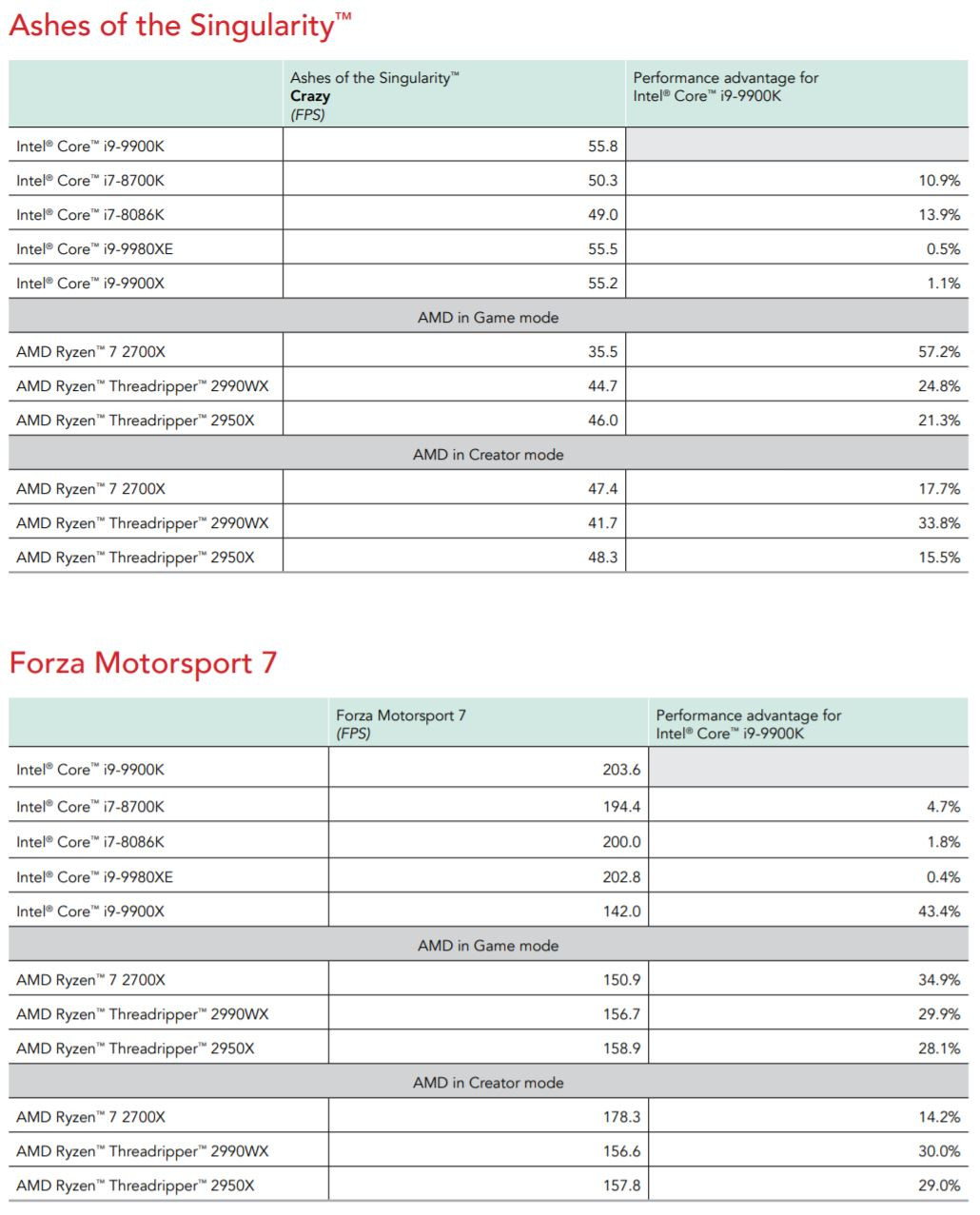
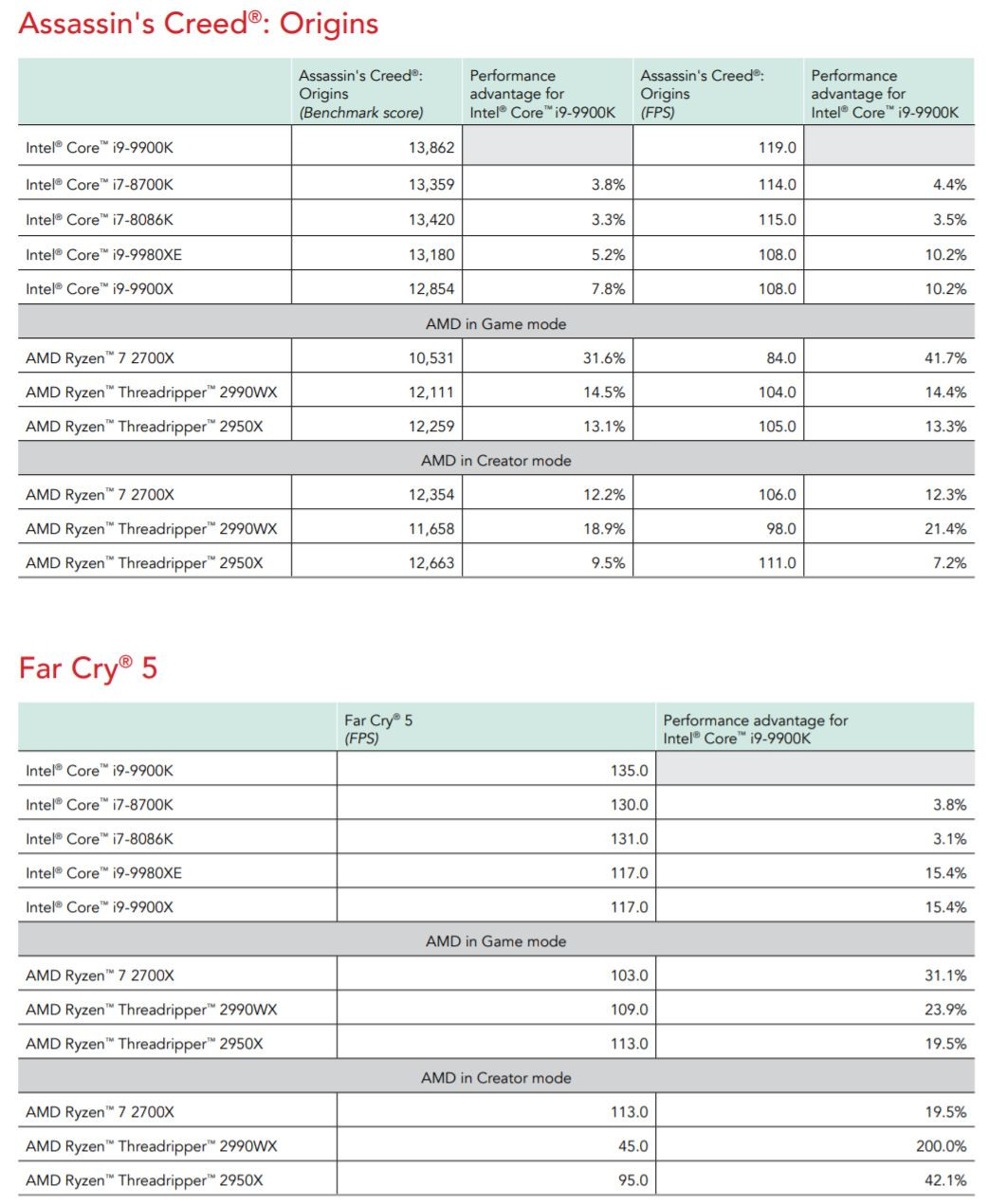
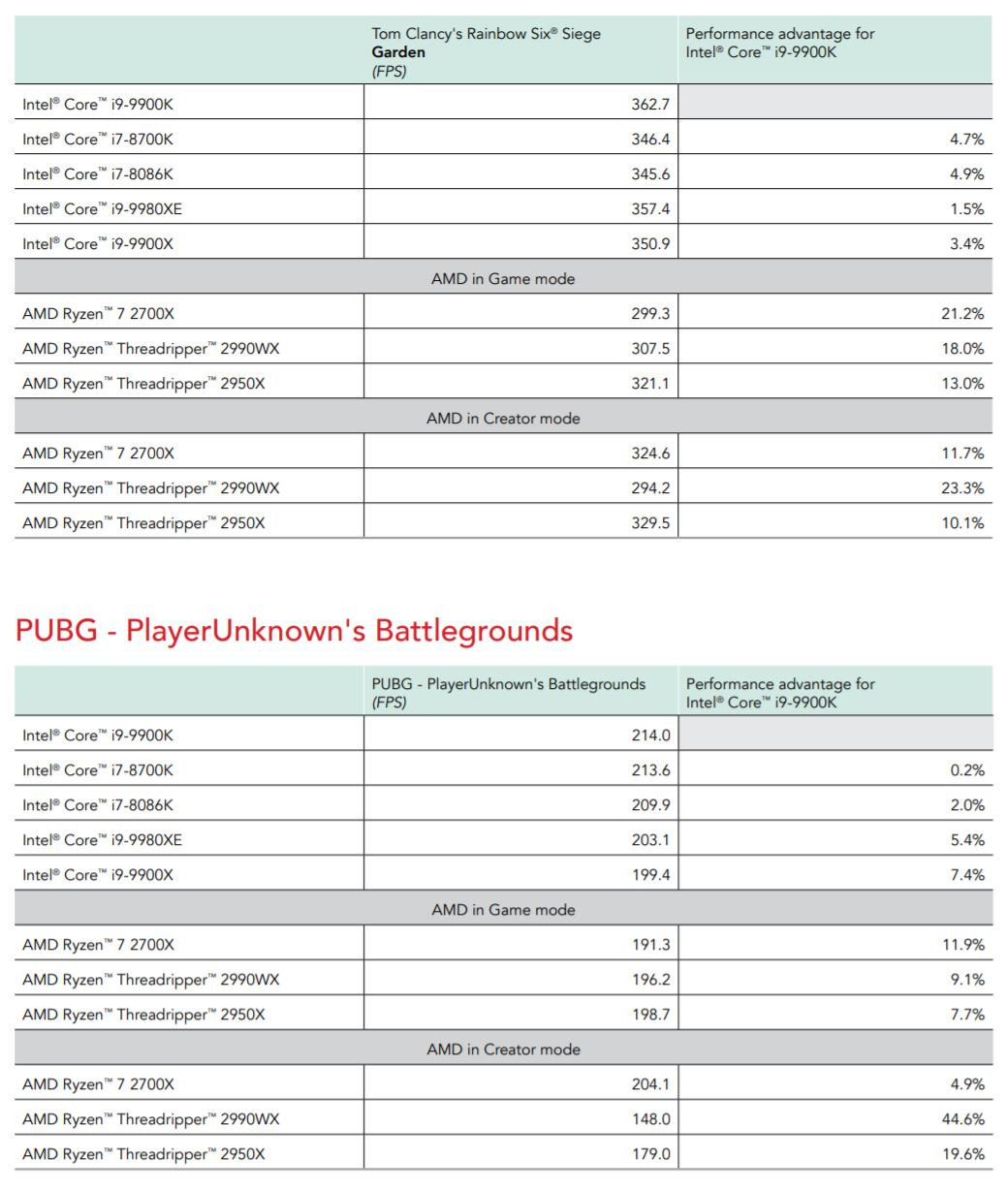
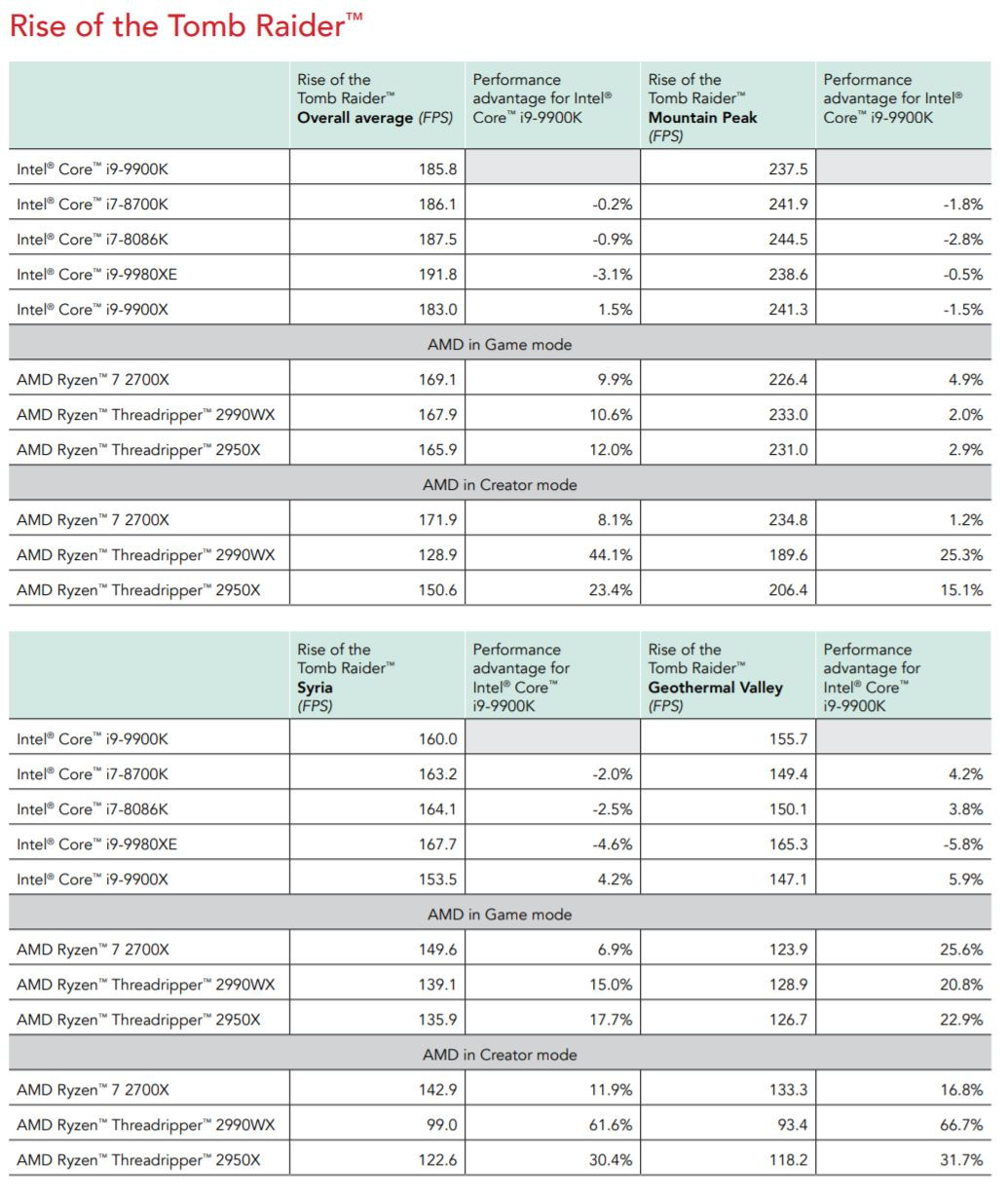
The original testing provided us with such gems as the i9-9900K "being up to 50 percent faster than 2700X at gaming." As part of its revised testing, while Principled Technologies corrected half its rookie-mistakes, by running the 2700X in the default "Creator Mode" that enables all 8 cores; it didn't correct the sub-optimal memory. Despite this, the data shows gaming performance percentage-differences between the i9-9900K and the 2700X narrow down to single-digit or around 12.39 percent on average, seldom crossing 20 percent. This is a significant departure from the earlier testing, which skewed the average on the basis of >40% differences in some games, due to half the cores being effectively disabled on the 2700X. The bottom-line of PT's new data is this: the Core i9-9900K is roughly 12 percent faster than the Ryzen 7 2700X at gaming, while being a whopping 66% pricier ($319 vs. $530 average online prices). This whopping 12.3% gap between the i9-9900K and 2700X could narrow further to single-digit percentages if the 2700X is tested with an optimal memory configuration, such as single-rank 2-module dual-channel, with memory timings of around 14-14-14-34, even if the memory clock remains at DDR4-2933 MHz.
Intel responded to these "triumphant" new numbers with the following statement:
The entire testing data follows: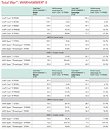
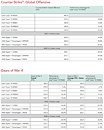
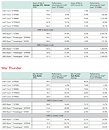
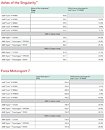
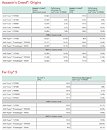
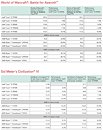
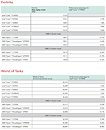
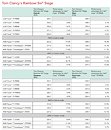

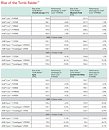
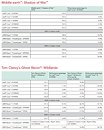
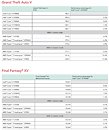
Source:
Principled Technologies (PDF)
The original testing provided us with such gems as the i9-9900K "being up to 50 percent faster than 2700X at gaming." As part of its revised testing, while Principled Technologies corrected half its rookie-mistakes, by running the 2700X in the default "Creator Mode" that enables all 8 cores; it didn't correct the sub-optimal memory. Despite this, the data shows gaming performance percentage-differences between the i9-9900K and the 2700X narrow down to single-digit or around 12.39 percent on average, seldom crossing 20 percent. This is a significant departure from the earlier testing, which skewed the average on the basis of >40% differences in some games, due to half the cores being effectively disabled on the 2700X. The bottom-line of PT's new data is this: the Core i9-9900K is roughly 12 percent faster than the Ryzen 7 2700X at gaming, while being a whopping 66% pricier ($319 vs. $530 average online prices).

Intel responded to these "triumphant" new numbers with the following statement:
Given the feedback from the tech community, we are pleased that Principled Technologies ran additional tests. They've now published these results along with even more detail on the configurations used and the rationale. The results continue to show that the 9th Gen Intel Core i9-9900K is the world's best gaming processor. We are thankful to Principled Technologies' time and transparency throughout the process. We always appreciate feedback from the tech community and are looking forward to comprehensive third party reviews coming out on October 19.The media never disputed the possibility of i9-9900K being faster than the 2700X. It did, however, call out the bovine defecation peddled as "performance advantage data."
The entire testing data follows:






322 Comments on New PT Data: i9-9900K is 66% Pricier While Being Just 12% Faster than 2700X at Gaming
- Both Intel 9900K and a handbag are luxuries. You can do the same work with any other CPU, albeit slower. You can carry your wallet in any other handbag, at lower cost, and looking less good.
You may consider things a joke, and that's fine, but that doesn't change reality. You value a CPU over a handbag, not everyone does. You don't value the top-end performance of a 9900K at the price point it is at, but others do. The similarities are all over the place, you need to start seeing them.
They precisely said the choice is because 1080p is the most popular resolution on Steam and it lowers the probability of GPU bottleneck. The Steam part is quite important.The argument here is about how much margin is there for the CPU maker. High margins made Intel a stable, huge, multi-sector giant that it is today.
Low margins made AMD a relatively small, highly specialized company that makes 2 kinds of products, but only one good at a time.
At this point AMD's CPU lineup doesn't even cover the whole Intel offer, i.e. they don't have competing products for a big chunk of what Intel has.
And it's x86 processors were talking about. They run our civilization. And we only have 2 large makers.
This means that if this price war results in financial troubles, Intel will be bailed out just like big banks were during the last crisis. And do you really want a state-owned CPU manufacturer? :-)Zen 3 is far away. We got Zen and Zen+ for now. Zen 2 is expected to come in 2019 and year after that we should get a new socket or a Zen 2+ at best.Why not? Why do we even need 2 sockets for consumers? :o
HEDT is just a showcase product. It has no meaningful position in Intel's lineup. It's not made for professional use, it's not the best choice for gaming and it's way overpowered for any other consumer use case.
We should be happy that Intel is moving high-core CPUs to the mainstream offer.
I have to be curious though, what's with Intel yelling about gaming performance, especially around 9900K. Shouldn't that be objectively faster than 2700x in everything?
From Intel's ARK 9900K Recommended Customer Price is $488 - $499.
The point is intel was milking people from 4c8t's - the 1800x's price is only justified then - it's twice the cores and threads than the 6700k/7700k - by putting this price they would rip through intels marketshare - that's also why they cut the MSRP for when zen+ dropped, they needed the cash to compete - there is already a 8c16t amd processor and yet intel shoves up the msrp pretending ryzen doesn't exist.
The CPUs we're discussing now are all unlocked variants for custom build systems. But non-K variants will follow soon.
AMD is locked at 4 cores with their Ryzen APUs. Intel offers 6 and will move to 8 soon enough.
Funny how a company that can make both high-end CPUs and GPUs, is voluntarily marginalized in the IGP market...
R&D was also the reason vega was considered a failure:
Conveniently, of course, you side stepped the issues I listed in the 2nd para. Why are corporations able to make so much money, pay so few taxes & continue to exert an ever increasing influence over our lives & in politics too?
I'm sure you won't address it, since that's off topic but there seems to be a trend here & one which I don't agree with.
Entitlement is a funny word, because I find it slightly amusing that corporations can show misleading results & yet are entitled to all the profits based on those results? Do you remember 3.5GB from you know who?
Why are corporations able to make so much money > because different (tax) rules apply to them > and that happens because governments and countries want to attract those big corporations and companies because it also helps their economy. Its a catch 22. The same with the race to the top for CEO salary: its a hot topic in Netherlands, and one that will never really cease, but this is the sheer force of capitalism and always needing/wanting more at work right here. It has nothing to do with the price companies may or may not charge for a product and it has nothing to do with the margin on that price point. The real reason companies get rich, and more importantly, why the fat toads get even fatter, is because that is how money, power and influence simply works. It needs correcting, I agree, but that won't ever - EVER - happen through the price of a product for consumers.
As for punishing misleading results: yes, there should be more severe punishment of it, but the 3.5GB example was one of the few that wás actually punished and led to a sentence.
You seem to be mixing up several things here. Because even with misleading results, the reality is no different and even with the corrected results, there is a performance gap that Intel will, can and should be cashing in on. Its not like the Intel CPU is in fact slower than the cheaper alternative. The gap is just a bit less pronounced as it was made out to be.
As for 'entitled' to all the profits - that's a wrong use of the definition. They are not entitled to anything. They have created a (misleading) reality that some people will fall for, and many in fact do not. This goes back to the eternal argument that AMD can do whatever they won't be successful because Intel and Nvidia are evil and control the market. Its simply not true. The AMD offerings are often really, truly not that much of an advantage, OR they fail to sell them in the right way. History is filled to the brim with AMD PR and marketing fails. When something is going wrong, and you start pointing fingers at others to blame, you had best make sure you've got everything perfectly in order in your own house first... otherwise you're easy prey. Look at Intel, recently with their multitude of PR fails and security issues. Those have made AMD all the more interesting as an alternative.
Its that simple back and forth of mindshare that is of great influence to price. And in that tiny space, us, consumers, still have some real weight. Yes, it matters what an internet community says about a new release. Yes, it matters that we identify the 9900K as essentially overpriced. But its wrong to think that Intel 'should' price it lower. We do not know their strategy for the mid- or long term at all.
Things are cheaper now because of supply and demand, streamlined supply and production lines and most importantly, automation.
Read a book.
I know they teach that in elementary schools in many countries, but this notation is awful and it just makes an unnecessary confusion as people expand their math knowledge.
As for the CPUs: you're obviously right. The {gen}600 model has been the gaming "value" choice for a while. That's the way Intel positions the CPUs.