Thursday, December 3rd 2020
2 TB Samsung 980 Pro PCIe 4.0 NVMe SSD Listed at Retailer
Samsung's latest 980 Pro SSD is not unlike the hypercar of solid state storage: ridiculously fast, ludicrously expensive. The company had announced that a 2 TB version would be available sometime near these holidays, and Scan.co.uk has just listed one such 2 TB part. If you want one of the best PCIe 4.0 SSDs money can buy, and one of the only ones based on TLC (Triple Layer Cell) technology, then you might be in luck.
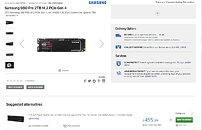
The reseller is listing the 2 TB version of the 980 Pro for a cool £443 (including tax), which translates to about $590. That's more than double the pricing of some very interesting PCIe 4.0 solutions. Considering the 1 TB version ticks at read speeds up to 7,000 MB/s and write speeds at up to 5,000 MB/s with an endurance of 600 TBW, expect the 2 TB version to be even faster and more consistent. Maybe improve your storage subsystem while we are faced with the current gaming hardware shortages? Consider, however, that delivery is estimated for early January 2021.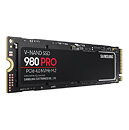
Sources:
Tom's Hardware, Scan.co.uk
The reseller is listing the 2 TB version of the 980 Pro for a cool £443 (including tax), which translates to about $590. That's more than double the pricing of some very interesting PCIe 4.0 solutions. Considering the 1 TB version ticks at read speeds up to 7,000 MB/s and write speeds at up to 5,000 MB/s with an endurance of 600 TBW, expect the 2 TB version to be even faster and more consistent. Maybe improve your storage subsystem while we are faced with the current gaming hardware shortages? Consider, however, that delivery is estimated for early January 2021.


26 Comments on 2 TB Samsung 980 Pro PCIe 4.0 NVMe SSD Listed at Retailer
This makes Optane well suited for enterprise use.
So both NAND and Optane each have their strenghts and weakenesses.
Gen4 Optane (Alder Stream) is supposed to come out soon. I assume it has been postponed because Rocket Lake (that has Gen4 support) was postponed to Q1 2021.
Alder Stream should be much closer to NAND Flash in terms of sequential speeds nearly maxing out the Gen4 link. Thus eliminating one of it's main downsides compared to NAND. The price difference will remain tho.
Obviously we wont know until independent reviews and it will likely be enterprise oriented with a price tag to match. Still i could see this being the fastest OS drive with great speeds and low latency and with nearly unlimited endurance.