Monday, October 17th 2022

AMD Cuts Down Ryzen 7000 "Zen 4" Production As Demand Drops Like a Rock
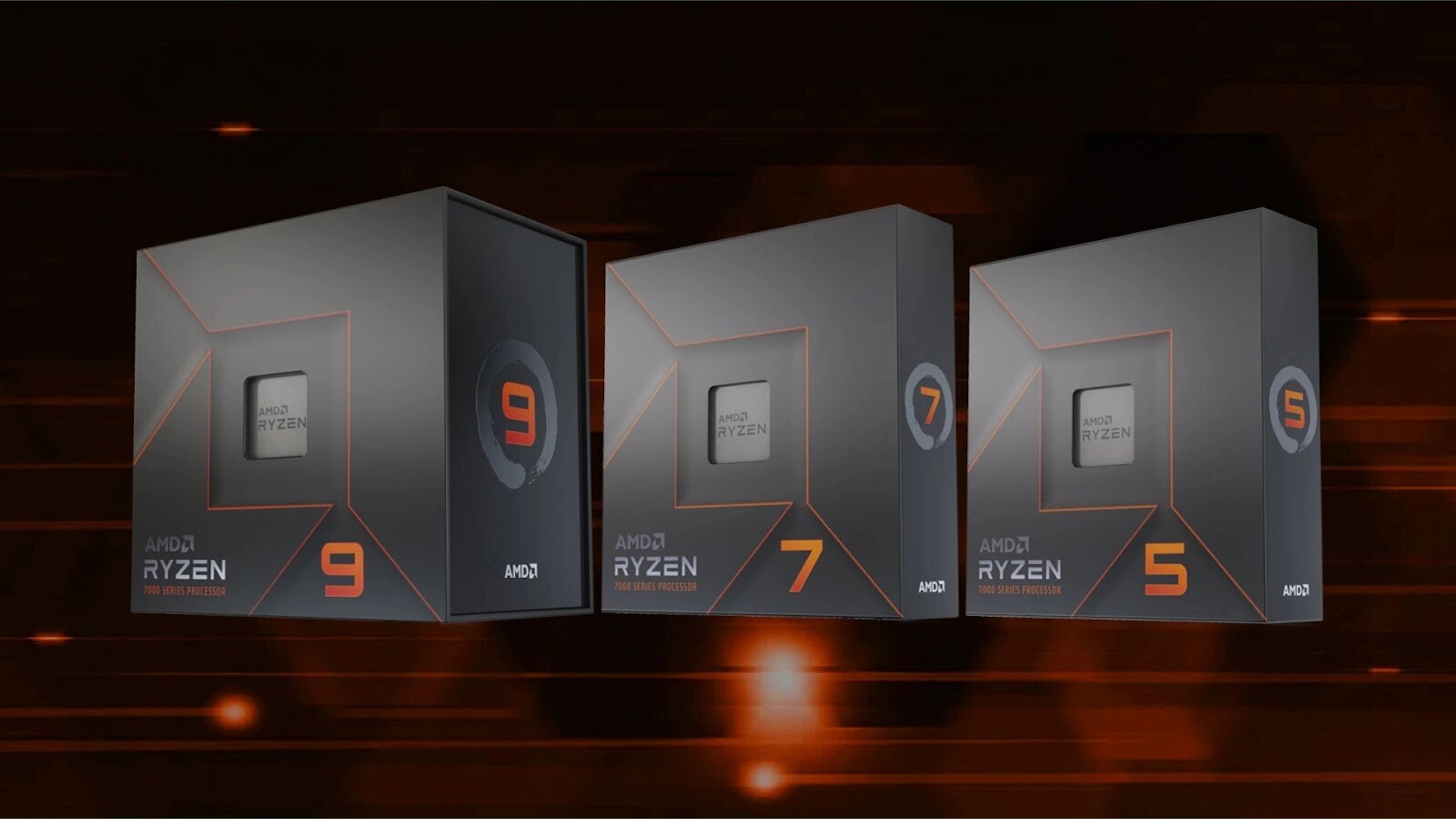
AMD reportedly scaled down production of its Ryzen 7000 series desktop processors in response to bleak demand across the PC hardware industry. Wccftech claims to have read an internal company document calling for reduced supply to the channel as market response to the Ryzen 7000-series is weak. This comes hot on the heels of AMD revising its Q3-2022 forecast, trimming its guidance by a $1 billion drop in revenue, citing weak demand in the PC market. However, we are seeing no deviation from the launch pricing for Ryzen 7000-series SKUs or compatible Socket AM5 motherboards. The platform went on sale from late September, on the same day that Intel announced its competing 13th Gen Core "Raptor Lake" processors. The new Intel chips are expected to start selling from a little later this month.
Unlike 13th Gen Core processors, Ryzen 7000 series processors appear to be a victim of the platform—notwithstanding the high pricing of the processors, which start at $299 for the 6-core 7600X, buyers lack access to affordable motherboards, and have to contend with expensive DDR5 memory. Pricing of cheaper LGA1700 motherboards based on entry-level H610 and B660 chipsets with cost-effective DDR4 memory support have added depth to consumer choice, besides Intel's 12th Gen range starting from under $150.
Source:
Wccftech
Unlike 13th Gen Core processors, Ryzen 7000 series processors appear to be a victim of the platform—notwithstanding the high pricing of the processors, which start at $299 for the 6-core 7600X, buyers lack access to affordable motherboards, and have to contend with expensive DDR5 memory. Pricing of cheaper LGA1700 motherboards based on entry-level H610 and B660 chipsets with cost-effective DDR4 memory support have added depth to consumer choice, besides Intel's 12th Gen range starting from under $150.
242 Comments on AMD Cuts Down Ryzen 7000 "Zen 4" Production As Demand Drops Like a Rock
AMD Zen architecture since introduction in 2017 have been competing with Intel.
Depend what you are using, Intel is still a better platform as not only games but most application are optimized for Intel.
AMD wise have been catching up these few years, 65 watt doesn't mean it is slow so again wrong info there.
65 watt TDP is the Thermal design power meaning how easy it can be cooled like using stock cooler.
Intel also have 65 watt TDP CPU, are these slow CPU no.
Both Intel and AMD CPU have different model, that doesn't mean entry level tier are bad and should avoid?
It depends what are you using, if it is a office PC do you need a Intel i9 125watt TDP for 24/7 PC just for editing document etc?
No, different CPU model example Ryzen 3 for normal use is fine.
Gaming wise Ryzen 5 and above will be recommend as different tier CPU have different core counts.
Ryzen 3 are quad core while Ryzen 5 are six core etc. while Intel CPU you have to check as 12th CPU design is different.
TDP should never be a part of consideration when buying a CPU but only when choosing a CPU cooler.
The way you put is as if you are talking about AMD Phenom VS AMD FX, back than the term AMD is very slow
is understandable.
I still have a working AMD Phenom II rig but it is too slow for today's standard.
Perhaps they can offer 5900X 3D. That's all.I wonder why 11900K, a proverbial oven, the last breath of 14nm+++, is that cheap? It might work for someone as one off purchase without any ability to upgrade.
How long did it take for the L3 cache fix for Ryzen 5000 series? 3 months or so after launch? I waited for that fix before upgrading to 5600x.
Well AMD screwed up royally IMO. Not only are the platform costs much higher than they promised, people remember the fiasco of all new AM4 MB's when they released Zen, the cpu prices are too dear, especially 7600X and 7900X, they were caught with their pants down by Intel Raptor Lake pricing being largely unchanged and not 15-20% higher, they told us many v-cache models are coming are are going to be much faster, and launched with high prices knowing the world is entering a full blown recession. Sucked in.
I had all intentions of doing a new build based on a 7900X3D, but now I may update my old 1700X with a 13700K and Z690, H760 combo unless their are serious downward price adjustments by Q2 next year from AMD and MB makers.
Will they now repeat the mistakes with the RDNA3 cards. The cards are much cheaper to manufacture than Lovelace, but will they go for fat margins or hammer Nvidia on pricing. There is no reason prices should rise at all compared to RDNA2.
"AMD Cuts Down Ryzen 7000 "Zen 4" Production As Demand Drops Like a Rock"
Am i the only one who sees this as a positive sign (for the consumer)? These are the headlines i've been looking for amongst "the tech market is generally in decline"The only headline missing is "NVIDIA fell down the market trend line escalators and broke a toe nail.....4090's for $900 for everyone!!! yayyy.... oh, and 4070-12apples for $379, yippee ya yayyyyyy!!!"
Or am i being too optimistic with price drops across the board?
Should've never done that, it's too good to it's own good, now they can't push their new generation product
just like nvidia with their 1080 Ti,
Now if they launch 7000 X3D sometimes later, will the 7000X3D do the same thing again with 8000 series?
Unless they can launch x3D chip at launch, this will be thorn for them, not for us, customer is winning here, but for them if they want to make their next launch success, they need to plan the launch -_-
Now consumers wants to adopt your new CPU architecture and the cost of Mobo killing it. Crazy pricing, unbelievable.
- AsMedia did not manage to prepare and validate such solution in time for board production
- it would have been even more expensive, another $20-30, due to PCIe Gen5 switch chip inside and more complex traces
- a total overkill for vast majority of mainstream boards and systems
I'd expect Gen5 upgrade on the chipset in the next gen, on B750 and X770, probably with Zen5. Lack of Gen5 link on the chipset does create a minor bottleneck, but I do not think it's a blunder. Most users will not need such throughput for years. Besides, those who do need more data traffic can buy boards with two M.2 Gen5 drives directly attached to CPU and get access to theoretical ~15.8 GB/s traffic.
Also, motherboard vendors can easily install PCIe 5.0 switch chip from CPU to both chipset. This would give full link of 128 Gbps that CPU offers, which is then split to 64 Gbps to each chipset's native speed. Quite elegant solution. C'mon mobo vendors, you can do this!
I think mobo vendors were more conservative with initial AM5 roll-out. There is a lot other things that new boards can improve. For example, no vendor has enabled DP 2.0/2.1 port from CPU at 40 Gbps via USB4. They installed Thunderbolt 4 chip instead and call it "USB4". Both Asus and Asrock. This chip supports DP 1.4. I do not even understand why is it that they do not call it TB4? There is a thunder logo on rear I/O. No certification?5800X 3D was, and is, a big success. AMD has introduced a second line of CPUs, specifically for gamers. Intel does not have such offer. They only have generic CPU with or without iGPU.
AMD has a new segmentation:
1. general CPU for productivity workloads that also happens to be great in gaming
2. 3D SKUs, specifically for gamers, with slightly less productivity, but gaming champion.
The public will need to learn to live with this new line of products. I agree that they could consider launching gerenal and 3D SKUs together in next gen, but that is not necessary now.
I had in mind to consider AMD AM5 for longevity and future proof, we factored in DDR5 cost and was kind of manageable. After seeing the cost of AM5 pricing, I was shocked! Ludicrous or outrage pricing for a mid to high end models.
Now I relegate my consideration to 12th Intel CPU instead and spare more for the GPU.
Come on man AMD, you shot yourself in the foot with outrages Mobo prices. Although I can afford AM5 mobo but seriously why should I? It has to be rationale spending. Would you drink, eat and binge from the hotel's mini fridge?
As for the last part, it just shows what is kind of a common sense which most people obviously lack. When you vote with your wallet, it WORKS, and the companies take notice and do something about it.Oh, it most certainly would. As the main issue with Zen 4 is the platform cost and not necessarily the CPU cost.
I don't expect AM5 motherboard prices to be as low as AM4. This time motherboard vendors have planned for 4years support from the beginning. With AM4 it felt like they're somehow managing it due to AMD's promise, market demand, people's hue and cry, Intel's improved performance, etc. The build quality is also better compared to most of the boards of AM4 time. I expect the prices to drop with time, but not at AM4 level.
The sale of 5000 series CPUs have increased since 7000 series release, especially 5800X3D. AM4 processors sell more than double of all other platforms combined if I remember correctly (mindfactory's data). But this isn't true for AM4 motherboards. I think motherboard vendors have taken into account this aspect too.
Going from 4 layer to 8 layer PCB would increase the cost 70 - 90%.
I have used this site here www.allpcb.com/superior_quote.html which gave me a quote of
- 29$/unit for 10k units of 500x300mm 4 layer boards
- 58$/unit for 10k units of 500x300mm 8 layer boards
When I used the 305x244mm (which is actual ATX size spec) it gave me the following quotes:- 15$/unit for 10k units of 305x244mm 4 layer boards
- 30$/unit for 10k units of 305x244mm 8 layer boards
and these numbers are in-line with the previous estimation of 70 - 90%. This happened to be 100% increase due to doubling of layers, so makes sense.So you get an increase of 15$ when going from 4 to 8 layers per motherboard, and since this was a quote from a 3rd party, in case of in-house manufacturing, those increases would be even smaller than that.
Which brings us to the next question.
Did these motherboard makers started asking additional 200+ USD per board due to more layers in the board 8 vs 4 in AM4? Given that such an increase costs them at most 15$ per unit, but probably less than that.
NOBODY BUYS IT. Saying these boards cost more since they have more copper layers needed for signal integrity and for PCIe 5 is pure bullshlt. And they are being punished for it, like they should.
AMD don't operate in a vacuum, they have a viable competitor whose motherboards aren't priced obscenely. It doesn't take a rocket surgeon to work out that people are choosing Alder Lake as the better-value option.
2.55$
2.62$
Mind you, these are from Aliexpress, if a company bought these in bulk of 10k+ quantities, they'd probably get them for a 1$ a pop or less.
Bottom line is: No amount of reasons or factors could make a 80$ AM4 board turn into 300$ AM5 board. NO AMOUNT OF REASONS.
Well except for greed.