Monday, October 17th 2022
PC Graphics Market on Track for Post-pandemic Correction
Jon Peddie Research (JPR) has responded to the recent dramatic reports by Canalys, Gartner, and IDC showing a precipitous drop in Q3 2022 PC shipments. In addition, JPR is providing guidance on the impact to graphics chip and AIB shipments. Jon Peddie, president and founder of JPR, said, "Our advice to clients has been consistent since 2020: The pandemic boom was not a surge in demand brought about by real growth in the market. The PC market is now correcting itself after a period of extraordinary growth spurred on by spending from an overwhelming surge of users working from home."
Peddie continued, "People were forced to work at home in 2020 and 2021, and many needed equipment. As a result, PC sales surged. Those people have what they need, and some of them are going back to the office. They don't need new PCs, and won't for three to five years. So, we are back to the nominal growth of the PC market, which was, and will be again after two quarters' adjustment, tracking GNP growth." Supply chain disruptions have now eased, but high inventory is a problem. In addition, TSMC is expected to see its fab capacity utilization trending downward in the next six months as order cuts by fabless clients begin to take a toll on the foundry.
Finally, the AIB market was also buffeted by a surge in late 2021 from crypto miners. This period of readjustment is expected to have a short-term impact on the irrational exuberance of the pandemic buying era. However, it does not indicate anything other than the end of an anomaly in sales, meaning the market is resilient and well-positioned to remain strong going forward.
Source:
Jon Peddie Research
Peddie continued, "People were forced to work at home in 2020 and 2021, and many needed equipment. As a result, PC sales surged. Those people have what they need, and some of them are going back to the office. They don't need new PCs, and won't for three to five years. So, we are back to the nominal growth of the PC market, which was, and will be again after two quarters' adjustment, tracking GNP growth."
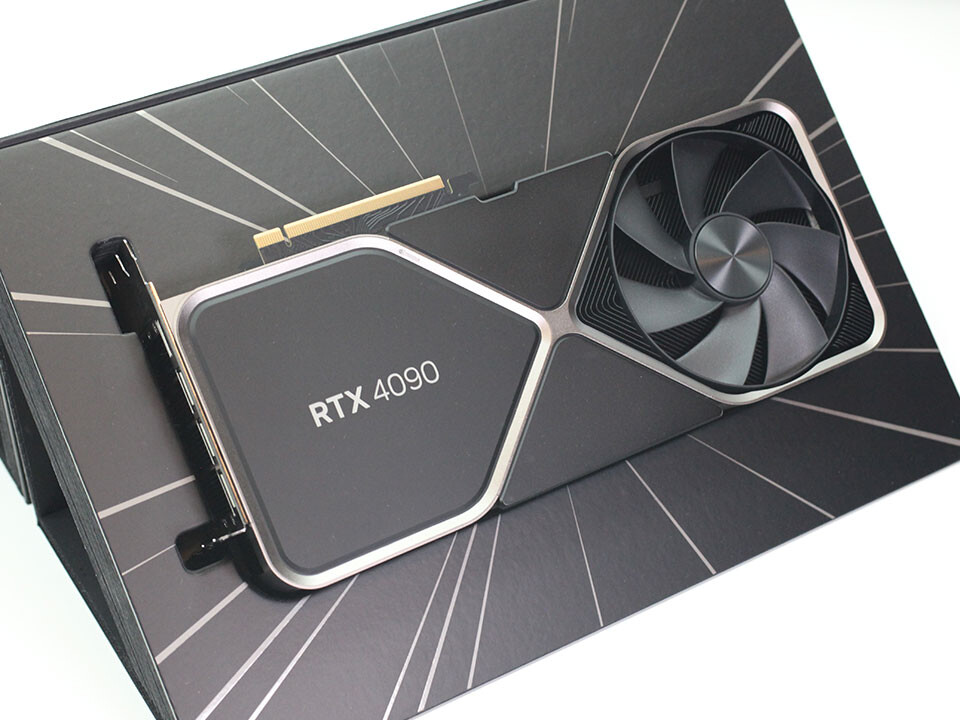
Finally, the AIB market was also buffeted by a surge in late 2021 from crypto miners. This period of readjustment is expected to have a short-term impact on the irrational exuberance of the pandemic buying era. However, it does not indicate anything other than the end of an anomaly in sales, meaning the market is resilient and well-positioned to remain strong going forward.
57 Comments on PC Graphics Market on Track for Post-pandemic Correction
This would FORCE nVidia to lower their prices @ the very least and maybe even lose money by being forced to sell below cost.
However, such a move would be a HUGE GAMBLE: does AMD "have to stones" to try it?
It's not like AMD is a charity. Their primary responsibility is to increase shareholder value.
NVIDIA sells four times more PC graphics cards than AMD. Datacenter is NVIDIA's largest business and growing at a much faster rate than their runner-up Gaming business.
I think AMD can grab a little short term marketshare with strategic pricing but they aren't going to knock NVIDIA off their throne anytime soon.
Not only does NVIDIA have superior technology they also have a much deeper and expansive developer environment. NVIDIA's software prowess is easily a major contributor to their ongoing success.
It all depends on the performance of this new generation:
- if their new halo product is not @ least on par in raster, such a move would likely not work
- if their halo product is noticeably faster @ least in raster, then such a move would likely have good odds of success, IMO
Either way, it would be a MASSIVE gamble.
And that's just the home PC business.
To use an analogy, it's better to sell 100 Kg of apples @ 1.5€ per kg than to sell 40 Kg of apples @ 2.5€ per kilo.
They don't need to overtake nVidia's market share: raising it by 10 to 15% would already be massive for AMD. They could then expand on that in the next generation.
Chiplets are coming to AMD's GPUs, and with them is far lower GPU manufacturing costs: unless nVidia can also come up with chiplets of their own, there's only so much they can do with monolithic designs, from a cost perspective.
Revenue ≠ profit
Let's say the cost to grow apples is 1.00€ per kg.
100 kg x (1.50€ -1.00€) = 50€ profit off of 150€ revenue, gross margin 33.3%
40 kg x (2.50€ -1.00€) = 60€ profit off of 100€ revenue, gross margin 60%
...
60 kg x (2.00€ -1.00€) = 60€ profit off of 120€ revenue, gross margin 50%
80 kg x (1.75€ -1.00€) = 60€ profit off of 140€ revenue, gross margin 42.9%
The problem? We don't know AMD's COGS for Radeon 7000 series cards. While AMD might report gross margin at a very high level, they certainly won't report it for a product line like Radeon RX 7700 XT.
Sure, shareholders would love to see revenue, profits, and gross margins all go up. That's very hard to do when your business is contracting.
There's no one perfect formula/ratio for this. If you heavily discount prices, customers may balk at future price increases. If you bump up prices too fast, some will show their displeasure.
AMD has an opportunity to gnaw away at NVIDIA's market share by undercutting prices. Doing so comes with the risk of eroding gross margin and possibly setting a tone to customers that your products aren't as good as the competition.
One unanswered question: whose apples taste better?
Still, the general idea is to have a VERY LOW profit now (this generation, @ least until RDNA 2 is sold out) to have high profits later, with the advent of chiplet based GPUs, but that's not the target of this strategy: the target is to increase significantly their market share.
But what if AMD's offer better performance, @ least in raster?
If you see something that was priced at $30,000 and now it's discounted to $18,000, the natural response is, "Hey, those guys were robbing us all those years." What happens when they reprice it at $25,000 the following year? "Forget it, the true value is about $18,000. That's what it's worth. The most I'll pay is $18,500 now."
For sure, AMD knows what COGS are for their products. They control gross margin by setting the price.
Customers control revenue and profit by the number of times they open their wallet.
If a product price bounces from $30K to $18K to $25K, I assure you that a lot of wallets will stay in pockets with that third price change.
Now AMD knows NVIDIA's pricing (at least for the 4090 and 4080 16GB). Performance results are starting to emerge. AMD can't go back to the lab and make their cards any better in the next week, they have to go with what they came up with.
If RDNA3 is an Ada Lovelace killer, AMD can charge more than NVIDIA's prices. If the two are comparable and the price are the same, it'll be a toss up for the customers (but the card features aren't the same as AusWolf pointed out). If the market decides that the RDNA3 cards are less performant than Ada Lovelace, they won't want to pay as much.
Customers don't know what the gross margin is. Even if they have an idea of a top level, companywide GM, they aren't going to buy a product simply because they think the GM is lower than that of the competition. They'll buy the product that fits their needs and budget the best. You buy a GPU to do something with it.
As for DLSS, remember that you can turn it off if you don't want it. There's also a performance-quality slider. Higher image quality results in less of a performance boost. Same with DLSS Frame Injection on or off. For some gaming titles, increased latency is not so noticeable. More game reviewers are noting whether or not DLSS 3-related latency increases are impacting the game's enjoyment. I know I've read some DSOG reviews that touch of this topic.
However on Radeon cards, you don't even get this choice. You basically have a vanilla raster engine with some ray tracing cores that aren't as good as NVIDIA's. There's more varied functionality in GeForce RTX cards which helps users who want those additional special functions.
They aren't just competing with Apple, Nvidia, even Intel now at TSMC orders, AMD graphics departnent is also competing with AMD processors - both consumer and server. Even if it's not on a completely same process.
Couple that with a long lead time from placing an order to shipping products to customers, AMD would have to plan a large market grab months ago. At the time when none of Nvidia's bizzare choices were public.
So, pricing revolution is very unlikely. Also, judging from price increases in motherboards, we're heading for a more "sell less products, with higher profit" era.
Even when nVidia has bombs like fermi they sell at a premium. There's really been only one time nVidia was under pressure and that was the diaserous 5800 FX which got crushed by the 9700 PRO followed by the bundling of Half Life 2 with ATi cards. Then once the 6800 hit that era was over again.
Like it or not nVidia is the premium brand. That means you have to sell at a premium or flush it all away so the one thing you must not do is lower prices, ever. Brands like apple, Rolex, BMW all get this. It's worth more because you charge more for it and the high cost of it justifies the high cost. The moment you sell cheap or prices go down you are not a premium brand and it's over. Other brands cannot put market pressure on you because you charge more. All that cheap budget stuff might be as good or better, but it will never be worth more because it's budget and people won't buy them because they aren't the name brand and you are only the name brand because you charge a premium.It's not even ray tracing and DLSS. People just don't want to buy AMD, they want to buy nVidia. How do you know nVidia is better, it costs more! That's the trap. The average person does not understand DLSS or ray tracing or even care. If they go out and look at what's in the premium systems at stores or what reviewers actually use it's always nVidia. The sorry situation is nVidia could release a card that performs worse than AMD has less features and still charge more of it and it will still be what peoplle buy.
When you look at the hot selling GPUs these aren't ones that you're going actually ray trace on. It's all mid range stuff to push 1080p. DLSS, raw performance, ray tracing do not matter here. AMD is competitive or out right better in this area routinely. Yet this is where nVidia gets most of it's sales.
If you're the premium brand and the competition is the budget brand you don't have to react to their pricing at all.
However, these ARE NOT normal circumstances: we're in a global economic downturn, which means people consider prices A LOT MORE than they'd normally would.
While this won't apply nowhere near as much for those that can afford the high end, for the vast majority of people, it most definitely will.
Doesn't the PS5 do Ray tracing? There is also the thought that you will no longer be able to buy an EVGA Nvidia card and now that the counterpoint to Nvidia's morally irresponsible behaviour with excellent Customer Service is not there anymore. Good luck working with MSI, ASUS and Gigabyte on Warranty issues. Especially given the size of that card. The weather is getting colder and heat is way more important than Gaming in the Northern Hemisphere so that 1600 will look worse and worse.
I also want to address the scummy. AMD releases the 6500XT at the height of the Mining craze. The card is great for 1080P Gaming but it can't encode so all the people that made their money making videos dismissed the card. Now I have seen it said that the RX570 is about as good as a 6500XT but that is complete BS. RX570 does not support HDMI 2.1 so no 120HZ 4K Freesync for you there. Especially on a 4KTV with HDMI 2.1 ports. All for about $160 US.
Let's see what Nvidia did. They released the 3060 laptop version and it is the best solution in terms of price/performance in 2021 for Gaming. Meanwhile they were not even letting cards get into the consumer chain by supplying directly to mining farms as twitter and Youtube has many examples of. Then Nvidia releases the 3050 and that card is the replacement 1030 in this generation for me and not nearly as fast as the 3060 but the laptops are more expensive?
Let's look at software. Does Nvidia's software have the functionality of AMD Adrenline? One of the great GPUs that are out in the wild are the 6600M chips. You can even get Mini PCs with that chip and it is cheaper than the 6400. The thing is the drivers are so universal that you don't have to worry about buying a card from China.
We'll know either way when the prices of RDNA 3 are officially announced: if prices are similar to nVidia's, AMD will have opted to NOT MAKE such a gamble.
But one thing that's pretty certain (well, to everyone except those who have zero grasp on reality) is that prices aren't going down with the RNDA3 generation.