Tuesday, August 5th 2025

PCI-SIG Announces PCI-Express Gen 8 Specification: 256 Gbps Per Lane Per Direction, Arrives 2028

PCI-SIG today announced the PCI Express (PCIe) 8.0 specification will double the data of the PCIe 7.0 specification to 256.0 GT/s and is planned for release to members by 2028. "Following this year's release of the PCIe 7.0 specification, PCI-SIG is excited to announce that the PCIe 8.0 specification will double the data rate to 256 GT/s, maintaining our tradition of doubling bandwidth every three years to support next-generation applications," said Al Yanes, PCI-SIG President and Chairperson. "With the increasing data throughput required in AI and other applications, there remains a strong demand for high performance. PCIe technology will continue to deliver a cost-effective, high-bandwidth, and low-latency I/O interconnect to meet industry needs."
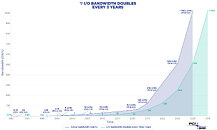
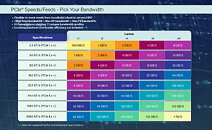
PCI-SIG technical workgroups will be developing the PCIe 8.0 specification with the following feature objectives:
  • Delivering 256.0 GT/s raw bit rate and up to 1 TB/s bi-directionally via x16 configuration
  • Reviewing new connector technology
  • Confirming latency and FEC targets will be achieved
  • Ensuring reliability targets are met
  • Maintaining backwards compatibility with previous generations of PCIe technology
  • Developing protocol enhancements to improve bandwidth
  • Continuing to emphasize techniques to reduce power
"As artificial intelligence and other data-intensive applications continue to scale rapidly, PCIe technology demand will be sustained in the long run due to its high bandwidth, scalability and power efficiency," said Reece Hayden, Principal Analyst, ABI Research. "Data center networks are already preparing to implement PCIe 6.0 technology and are showing great interest in the PCIe 7.0 specification. The introduction of the PCIe 8.0 specification further ensures that the industry's bandwidth requirements will be supported well into the future."

The PCIe 8.0 specification is aimed at supporting emerging applications like Artificial Intelligence/Machine Learning, high-speed networking, Edge computing and Quantum computing; and data-intensive markets like automotive, hyperscale data centers, high-performance computing (HPC) and military/aerospace.
Add your own comment

28 Comments on PCI-SIG Announces PCI-Express Gen 8 Specification: 256 Gbps Per Lane Per Direction, Arrives 2028

#1
Sabotaged_Enigma
I'm not sure how I'm feeling right now... I'm still using a Gen 4 SSD, and I've only been using Gen 5 RX 9060 XT for 2 months on a *Gen 4* mainboard. And I don't think Gen 5 has been mainstream already. Yet now they're talking about Gen 8? If it's just to tell us the specs, I can do the maths too.
Posted on Reply
#2
Onasi
Sabotaged_EnigmaI'm not sure how I'm feeling right now...
No reason to feel any particular way. The new PCI-e standards are basically irrelevant for the consumer market going forward. There is no practical difference between Gen 4 and 5 SSDs for 99% of tasks and it will be a while till mainstream GPUs benefit from even Gen 5, let alone anything beyond.
Posted on Reply
#3
ymdhis
What would be really cool is if this meant we could use PCIE x1 slots and have SSDs with the same performance as on PCIE 5.0 x4 (or faster).
And then we could just have 8+ NVME slots all running PCIE 8.0 x1 and still keep the 16x slot for the videocard.
Posted on Reply
#4
A Computer Guy
I wonder how thicc (in layers) motherboards are going to have to be to support PCIe 8.0.
Posted on Reply
#5
igormp
Hopefully those new specs don't take as long to validate as it happened with PCIe 6.0. Lot's of devices that already support it, but could not be validated due to delays on the SIG's part.
Posted on Reply
#6
TheLostSwede
News Editor
ymdhisWhat would be really cool is if this meant we could use PCIE x1 slots and have SSDs with the same performance as on PCIE 5.0 x4 (or faster).
And then we could just have 8+ NVME slots all running PCIE 8.0 x1 and still keep the 16x slot for the videocard.
If you look at the second picture above, you'll note that PCIe 7.0 can already do this.
Posted on Reply
#7
Oren_elec
@btarunr
pciex spec are wrong. at PCIX 1.0 2.5 giga transfer/sec => PCIE 1.0 X1 lane 250MB/sec not 500MB/sec
Posted on Reply
#8
TumbleGeorge
ymdhisWhat would be really cool is if this meant we could use PCIE x1 slots and have SSDs with the same performance as on PCIE 5.0 x4 (or faster).
In theory PCIe 8.0 x1= PCIe 5.0 x8 by transfer rate.
Posted on Reply
#9
igormp
TheLostSwedeIf you look at the second picture above, you'll note that PCIe 7.0 can already do this.
I guess they meant shoving a bunch of PCIe 5.0 x4 NVMes on a PCIe 7.0 x1 slot and achieving full bandwidth for each drive, which won't really be a thing without proper switches (so $$$).
Posted on Reply
#10
The Tech Guy
"Reviewing new connector technology" While other interfaces like USB Type C does have it's uses due to it's size PCIe is the fastest interconnect and will remain so into the future . It's high bandwidth, scalability and power efficiency should be being utilized now with a Gen4 connector on the rear motherboard IO plate. This would open up a lot of external peripherals to also take advantage of this. External storage devices would be faster and cheaper than USB4 or Thunderbolt 4 which bottle-necks even Gen 4 SSD speeds.
Posted on Reply
#11
windwhirl
Oren_elecpciex spec are wrong. at PCIX 1.0 2.5 giga transfer/sec => PCIE 1.0 X1 lane 250MB/sec not 500MB/sec---------------------------------------------------------- Dear btarunr , do homework
The graphic comes from elsewhere. Besides, it's still sort of correct, since it's 250 MB/s per lane, per direction. So you could technically have up to 500 MB/s simultaneously, just limited to 250 MB/s in whichever direction.
Posted on Reply
#12
dismuter
A single PCIe 8.0 lane provides the bandwidth of 16 lanes of PCIe 4.0. Imagine the RTX 4090 upgraded to PCIe 8.0 with a tiny x1 connector on it.
Posted on Reply
#13
ymdhis
igormpI guess they meant shoving a bunch of PCIe 5.0 x4 NVMes on a PCIe 7.0 x1 slot and achieving full bandwidth for each drive, which won't really be a thing without proper switches (so $$$).
Not necessarily with switches, but with native 7.0 x1 NVME drives. The point is that this way we can split up the lanes more and be able to connect more drives to a motherboard instead of only 2-4 NVME slots on current ones (and with all but one of those coming from the chipset). We can barely max out PCIE 5.0 x4 drives without massive thermal throttling, so I doubt we will need anything more faster than those - but if we transitioned to x1 ports, we could go back to having 4-8 drive ports on a motherboard. Similar to how back in 2012 you could have 8-10 SATA ports on a motherboard, you could have 4-8 PCIE x1 slots for NVME drives.
Of course with m.2 standard this may be tricky, so perhaps a new form factor is in order.
Posted on Reply
#14
N/A
1TB/s is like the bandwidth of a 5080 Super memory. But there is no fast enough system memory or nvme to saturate it.
Posted on Reply
#15
TheLostSwede
News Editor
The Tech Guy"Reviewing new connector technology" While other interfaces like USB Type C does have it's uses due to it's size PCIe is the fastest interconnect and will remain so into the future . It's high bandwidth, scalability and power efficiency should be being utilized now with a Gen4 connector on the rear motherboard IO plate. This would open up a lot of external peripherals to also take advantage of this. External storage devices would be faster and cheaper than USB4 or Thunderbolt 4 which bottle-necks even Gen 4 SSD speeds.
It's unlikely to be for external ports, more like a replacement for current board connectors, as they might not be able to handle this kind of speed.
The PCI-SIG has other standards for external connectors.
Also, you already have PCuLink if you want a current connector that can do PCIe over a cable.
The PCI-SIG also offers CopprLink for enterprise solution and will have a consumer version of some kind as well.
www.techpowerup.com/322044/pci-sig-announces-copprlink-cable-specifications-for-pcie-5-0-and-6-0-technology
Oren_elecpciex spec are wrong. at PCIX 1.0 2.5 giga transfer/sec => PCIE 1.0 X1 lane 250MB/sec not 500MB/sec---------------------------------------------------------- Dear btarunr , do homework
Or maybe, just maybe, you should put on your glasses and read what it says?

Yes, they're playing tricks, but before you have a go at innocent people, read all the available information.
The image is courtesy of the PCI-SIG btw.
Posted on Reply
#16
dismuter
N/A1TB/s is like the bandwidth of a 5080 Super memory. But there is no fast enough system memory or nvme to saturate it.
It's actually 512 GB/s each way. System memory can nearly saturate that on the Threadripper WX platform.
Posted on Reply
#17
Oren_elec
windwhirlThe graphic comes from elsewhere. Besides, it's still sort of correct, since it's 250 MB/s per lane, per direction. So you could technically have up to 500 MB/s simultaneously, just limited to 250 MB/s in whichever direction.
he need to check it before publish here. if 2.5 giga tranafer per sec = 250Mbyte /sec . i ask you in USB 3 5G can you at the same time read and write at full speed. -------------------------------------------------------------------------------------------------------------------------------------------------------------------------------------- it not two direction a total bandwidth 2.5 giga tranfere per lane. in network in 8 wires you can deliver upto 1Gb/sec full direction but i think not at the same time. even speedtest on internet speed first download speed and then upload speed not at the same time.-----------------------------------------------------------------------------------------------------------------------------
Posted on Reply
#18
m4gicfour
It'd be real nice if they could give us one or two x16 slots of whatever the new hotness is at board manufacture time for GPU, and then a bunch of full length slots at, say PCIe8x1 with configurability to drop gen but increase lanes (so a theoretical slot could be configured as Gen 8x1, Gen7 x2, Gen6 x4, Gen5x8, Gen4x16). Bonus points for bifurcation support. Heck I mean, I know it's not going to happen, and it'd be expensive as hell if it did, but I miss the old days where you could put more than 2 expansion cards in a fullsize ATX board without stepping up to a server board or hobbling your card. I don't miss PCI but I feel like a more realistic configuration could be like the AGP days where you had the dedicated GPU slot and then a PCI bus for everything else (I know, I know, shared bus vs dedicated lanes) but I mean, no consumer realy needs more tha one, maybe two current gen x16 slots but even a Gen3 x16 slot provides a heck of a lot of utility. Like I said it's not going to happen, but a guy can dream. If there was an AM4/5 board with a decent number of PCIe lanes; even PCIe 3 - I wouldn't need to keep my hilariously obsolete/inefficient dual socket Xeon e5 supermicro board anymore without spending $10K on a threadripper Pro or Epyc system. I really just need expansion, not CPU (at least not more than current consumer systems provide)
Oren_elecpciex spec are wrong. at PCIX 1.0 2.5 giga transfer/sec => PCIE 1.0 X1 lane 250MB/sec not 500MB/sec---------------------------------------------------------- Dear btarunr , do homework
If you're going to throw stones, you probably should at least reference the right specification.
PCIX is not PCIe
TheLostSwedeOr maybe, just maybe, you should put on your glasses and read what it says?

Yes, they're playing tricks, but before you have a go at innocent people, read all the available information.
The image is courtesy of the PCI-SIG btw.
That too.
Posted on Reply
#19
Oren_elec
m4gicfourIt'd be real nice if they could give us one or two x16 slots of whatever the new hotness is at board manufacture time for GPU, and then a bunch of full length slots at, say PCIe8x1 with configurability to drop gen but increase lanes (so a theoretical slot could be configured as Gen 8x1, Gen7 x2, Gen6 x4, Gen5x8, Gen4x16). Bonus points for bifurcation support. Heck I mean, I know it's not going to happen, and it'd be expensive as hell if it did, but I miss the old days where you could put more than 2 expansion cards in a fullsize ATX board without stepping up to a server board or hobbling your card. I don't miss PCI but I feel like a more realistic configuration could be like the AGP days where you had the dedicated GPU slot and then a PCI bus for everything else (I know, I know, shared bus vs dedicated lanes) but I mean, no consumer realy needs more tha one, maybe two current gen x16 slots but even a Gen3 x16 slot provides a heck of a lot of utility. Like I said it's not going to happen, but a guy can dream. If there was an AM4/5 board with a decent number of PCIe lanes; even PCIe 3 - I wouldn't need to keep my hilariously obsolete/inefficient dual socket Xeon e5 supermicro board anymore without spending $10K on a threadripper Pro or Epyc system. I really just need expansion, not CPU (at least not more than current consumer systems provide)


If you're going to throw stones, you probably should at least reference the right specification.
PCIX is not PCIe


T
TheLostSwedeIt's unlikely to be for external ports, more like a replacement for current board connectors, as they might not be able to handle this kind of speed.
The PCI-SIG has other standards for external connectors.
Also, you already have PCuLink if you want a current connector that can do PCIe over a cable.
The PCI-SIG also offers CopprLink for enterprise solution and will have a consumer version of some kind as well.
www.techpowerup.com/322044/pci-sig-announces-copprlink-cable-specifications-for-pcie-5-0-and-6-0-technology


Or maybe, just maybe, you should put on your glasses and read what it says?

Yes, they're playing tricks, but before you have a go at innocent people, read all the available information.
The image is courtesy of the PCI-SIG btw.
you are right the total bandwdth for RX+TX=2.5 GT/sec not 5GT/sec as he said.
Posted on Reply
#20
dismuter
m4gicfourIt'd be real nice if they could give us one or two x16 slots of whatever the new hotness is at board manufacture time for GPU, and then a bunch of full length slots at, say PCIe8x1 with configurability to drop gen but increase lanes (so a theoretical slot could be configured as Gen 8x1, Gen7 x2, Gen6 x4, Gen5x8, Gen4x16). Bonus points for bifurcation support.
It's not the bandwidth that costs, it's the electrical lanes. They would require a bigger I/O die, more interconnect with the CCD, more pins on the socket, and more traces on the board. That would make the price of motherboards jump significantly. Forget about sub-$500 boards then.

Edit: Unless there was a chip next to the PCIe port that could convert a single Gen 8 lane to 16 Gen 4 ones. Not sure if that's practical or how expensive it would be.
Posted on Reply
#21
m4gicfour
Yep, I know. Ain't gonna happen. I would be happy to pay for a $500 board to get expandability if it meant not paying for a $1000+ CPU and $1000+ board in the workstation range, nevermind server gear.
Posted on Reply
#22
A Computer Guy
m4gicfourIt'd be real nice if they could give us one or two x16 slots of whatever the new hotness is at board manufacture time for GPU, and then a bunch of full length slots at, say PCIe8x1 with configurability to drop gen but increase lanes (so a theoretical slot could be configured as Gen 8x1, Gen7 x2, Gen6 x4, Gen5x8, Gen4x16). Bonus points for bifurcation support. Heck I mean, I know it's not going to happen, and it'd be expensive as hell if it did, but I miss the old days where you could put more than 2 expansion cards in a fullsize ATX board without stepping up to a server board or hobbling your card. I don't miss PCI but I feel like a more realistic configuration could be like the AGP days where you had the dedicated GPU slot and then a PCI bus for everything else (I know, I know, shared bus vs dedicated lanes) but I mean, no consumer realy needs more tha one, maybe two current gen x16 slots but even a Gen3 x16 slot provides a heck of a lot of utility. Like I said it's not going to happen, but a guy can dream. If there was an AM4/5 board with a decent number of PCIe lanes; even PCIe 3 - I wouldn't need to keep my hilariously obsolete/inefficient dual socket Xeon e5 supermicro board anymore without spending $10K on a threadripper Pro or Epyc system. I really just need expansion, not CPU (at least not more than current consumer systems provide)
Ebay often had 3960x/3970x Threadripper TRX40 deals (MB, CPU, RAM) for between $800 to $1300 if you just need expansion slots and not too worried about having the fastest thing. For $2500 to $3500 and the right deal you can score a 5000 series wx MB/CPU combo or if your lucky 7000x MB/CPU combo. It seems in recent weeks though a lot of opportunities at those pricing levels have disappeared.
Posted on Reply
#23
m4gicfour
A Computer GuyEbay often had 3960x/3970x Threadripper TRX40 deals (MB, CPU, RAM) for between $800 to $1300 if you just need expansion slots and not too worried about having the fastest thing. For $2500 to $3500 and the right deal you can score a 5000 series wx MB/CPU combo or if your lucky 7000x MB/CPU combo. It seems in recent weeks though a lot of opportunities at those pricing levels have disappeared.
Again, I know. I already have a Supermicro X9DRi-F with dual Xeon e5-2690v2 and 128GB RDIMM; I'm mostly just complaining - Threadripper was the thing I was going to upgrade to once a few gens had come out - and then AMD basically abandoned Threadripper for their Threadripper Pro lineup at significantly higher price point. Some day I'll pick up a used Threadripper/TR Pro system or a low end Epyc, but my current workload doesn't need fast threads, just a bunch of RAM and expansion; though better idle power use, or much faster threads for the same power WOULD be nice.

Anyway. Back on topic.
Posted on Reply
#24
A Computer Guy
m4gicfourAgain, I know. I already have a Supermicro X9DRi-F with dual Xeon e5-2690v2 and 128GB RDIMM; I'm mostly just complaining - Threadripper was the thing I was going to upgrade to once a few gens had come out -
Ok. I used to complain a bit about the pricing too but after putting one together with a few deals here and there and using it for a few months now I gripe much less about the pricing. I'm starting to feel that $800 motherboard is totally worth it considering I wasn't going to pay $400-$600 for an AM5 motherboard.
m4gicfourand then AMD basically abandoned Threadripper for their Threadripper Pro lineup at significantly higher price point.
5000 series right? 5000 series also gets little love from reviewers and being on lists to compare performance as I often see 3000/7000 series on charts together but no love for the 5000wx series.
m4gicfourSome day I'll pick up a used Threadripper/TR Pro system or a low end Epyc, but my current workload doesn't need fast threads, just a bunch of RAM and expansion; though better idle power use, or much faster threads for the same power WOULD be nice.
When I was briefly looking at (big) Epyc (not little AM5 Epyc) used pricing seemed to be a lot better but I needed more of a consumer type motherboard rather than rackmount server type motherboard. If they could have given little Epyc some more PCIe lanes and slots I probably would have gone that route instead.
m4gicfourAnyway. Back on topic.
but your right, back on topic.
Posted on Reply
#25
Contra
m4gicfourIf there was an AM4
Asus pro ws x570-ace
Posted on Reply
Add your own comment
Nov 11th, 2026 18:00 CST change timezone

New Forum Posts

Popular Reviews

TPU on YouTube

Controversial News Posts