Monday, August 18th 2025

NVIDIA Updates GeForce NOW with RTX 5080, Cinematic Streaming, New Low-Latency Tech, and More
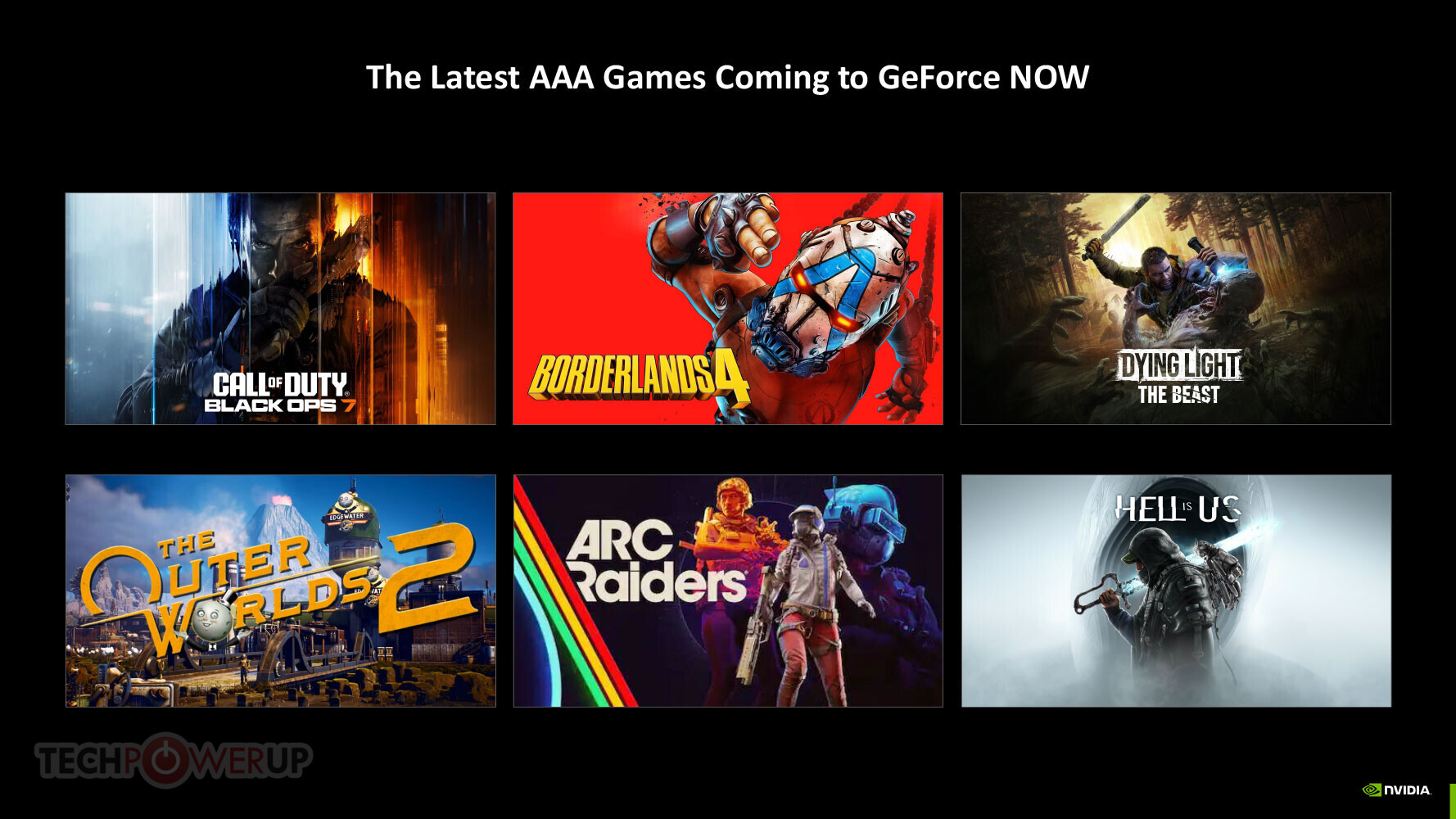
NVIDIA today at Gamescom 2025 announced a slew of updates to the GeForce NOW cloud gaming platform. The company eyes GeForce NOW as the future of PC gaming, especially given the rising costs of gaming graphics cards. With games being rendered on cloud machines instead of locally, gamers have the ability to turn pretty much any platform with a screen and a suitable set of input devices into a premium gaming PC, from thousands of games across PC gaming platforms such as Steam, Epic Games, GOG, Xbox, and Ubisoft, can be accessed. Today, the platform is being updated with new features and technology.
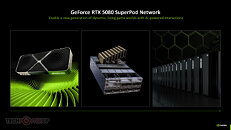
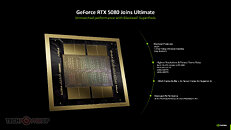
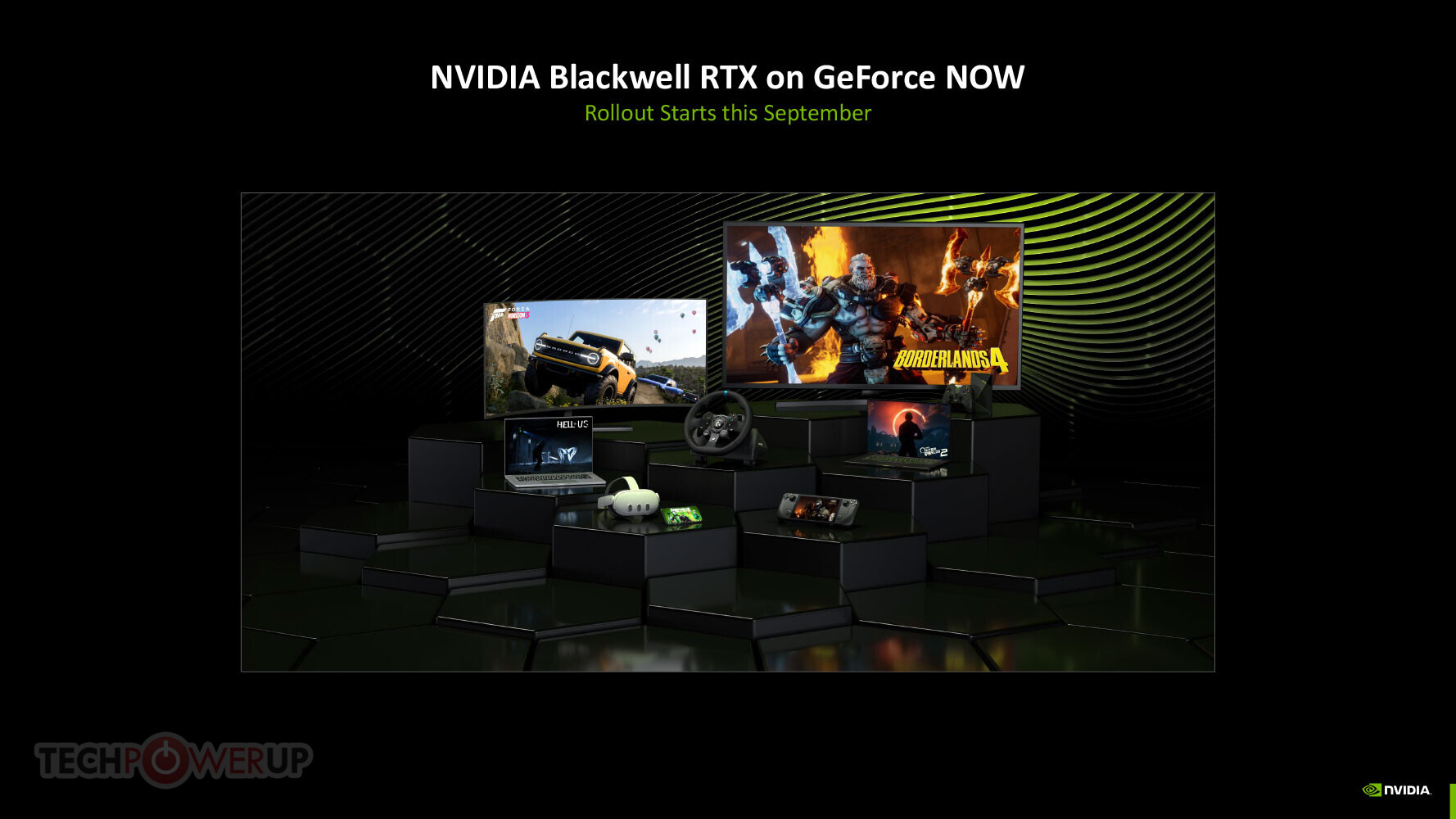
To begin with, NVIDIA is bringing GeForce RTX 5080 to GeForce NOW as the new Ultimate tier, replacing the current one powered by the RTX 4080. This service lets you play games with the eye-candy and performance comparable to a gaming PC powered by an RTX 5080 GPU, with up to 4K Ultra HD resolution, and up to 240 FPS to be had, and gaming sessions as long as 8 hours. Ultimate RTX 5080 should also give you options such as DLSS 4 Multi Frame Generation, and be ready for games implementing new features such as ray tracing with Mega Geometry, and Neural Rendering—something not available on the RTX 4080. Thanks to Multi Frame Generation, the Ultimate RTX 5080 tier now offers up to 2.8x higher frame-rates than the previous Ultimate RTX 4080 tier.

 Latency and Streaming Quality Updates
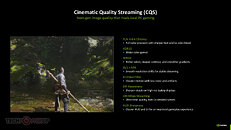
Next up, NVIDIA introduced Cinematic Quality Streaming (CQS), a new streaming technology that significantly improves the image quality of GeForce NOW sessions, particularly in games with high geometry and shadow (think forest vegetation). The technology combines YUV 4:4:4 Chroma with HDR10, a high bitrate AV1 + RPR CODEC, with AI video filtering, greater awareness of Hi-DPI settings (particularly on laptops with high pixel density displays); higher quality game HUD sharpness, and a stream bitrate of up to 100 Mbps.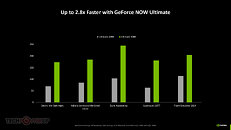

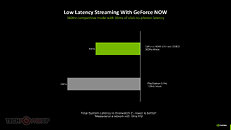
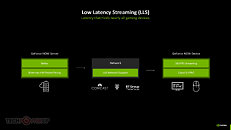 With each new year's announcements of GeForce NOW, NVIDIA has been working on the single biggest put-off for cloud gaming, and that is network latency. Today, NVIDIA is announcing improvements in this area with the new low-latency streaming (LLS). The company has worked with leading Internet service providers, namely BT Group, Comcast, and T-Mobile, to take advantage of their new L4S Network standard (Low Latency, Low Loss, and Scalable Throughput) infrastructure, paired with NVIDIA Reflex the new Rivermax hardware packet pacing technology on the GeForce NOW server side. On the client-side, NVIDIA is working to implement cloud G-SYNC, and streaming at frame-rates of up to 360 FPS. GeForce NOW Ultimate RTX 5080 with its 360 FPS mode offers latency of 30 ms, which is lower than even a PlayStation 5 Pro rendering the game locally at 120 Hz, when tested with Overwatch 2 on a network with 10 ms RTD.
 New Hardware Support
NVIDIA is working with leading handheld gaming PC makers to bring GeForce NOW to these devices, where the service can double battery life, because the SoC is only handling the streaming service, not rendering the game locally. NVIDIA announced that Valve Steam Deck comes with 90 FPS mode on GeForce NOW, and Lenovo Legion Go S supports up to 120 FPS. There are a host of new handheld devices being planned specifically for cloud gaming, which does away with the bulk of having a whole Windows PC environment on the device.

 Besides improving things for the handheld console crowd, NVIDIA also added hardware support for new game controller types, such as racing wheels, including haptics. The company is working with LG to add GeForce NOW apps to LG TVs and PC monitors. On TVs, the GeForce NOW app supports up to 4K 120 FPS with HDR. On monitors, depending on the model, resolutions as high as 5K 120 FPS are supported.
New Ways to Acquire, Own, Store, and Play Games
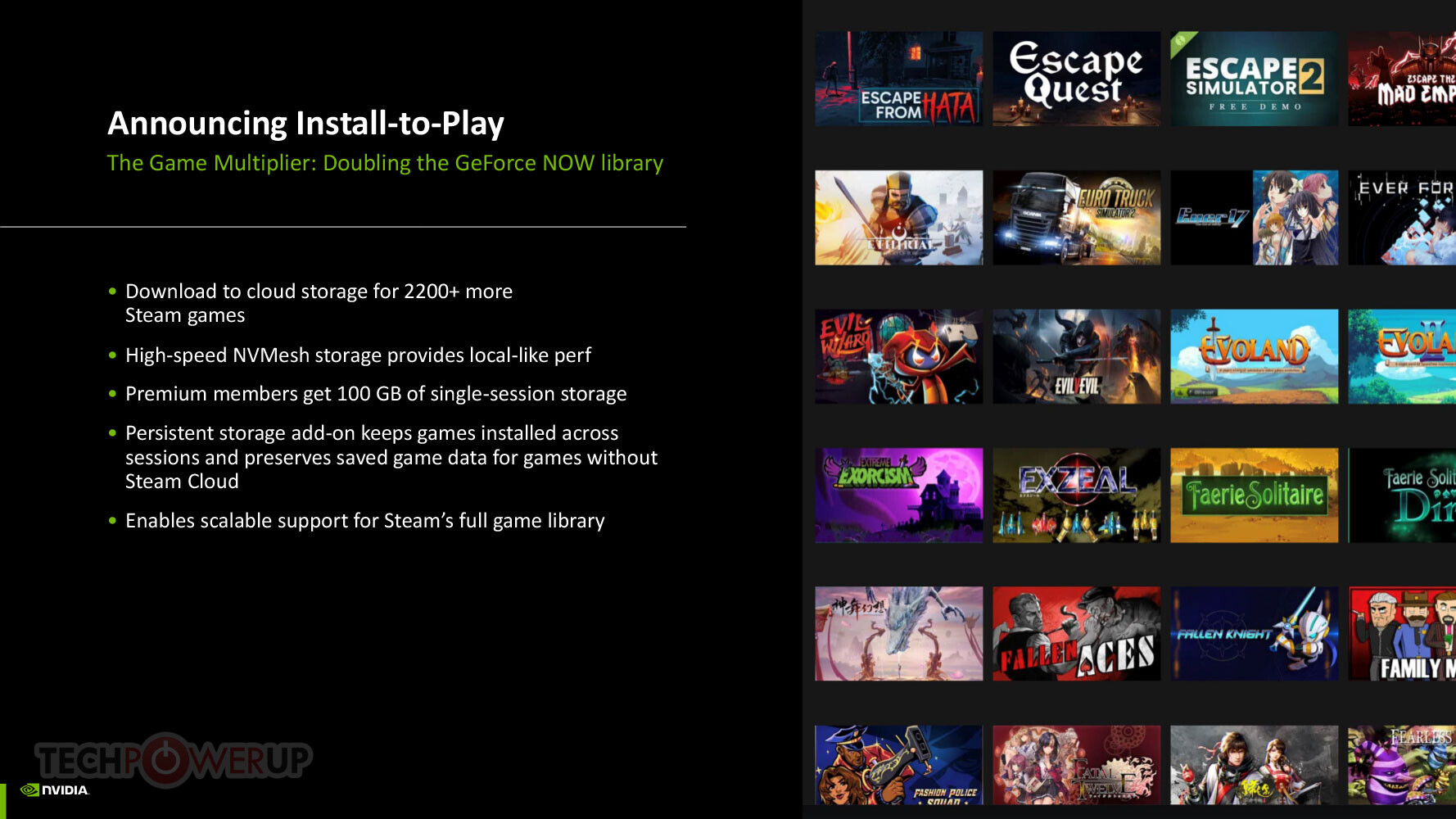
NVIDIA at Gamescom 2025 introduced new concepts that enable frictionless gameplay. See your buddy playing something on Discord or Fortnite? Instantly jump into their game. The company also announced Install-to-Play. By default, your GeForce NOW subscription gives you 100 GB of storage that lasts you a gameplay session of 8 hours, into which you can get the service to download and install games you own from your DRM platform, which will last you the session (your saved games remain with your game's DRM cloud storage, so you can pick up where you left off in the next session). You can opt to have persistent storage for additional costs, which is essentially cloud storage, so you can keep games installed at all times.
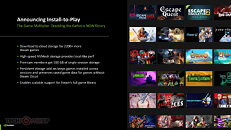
 Persistent storage is a crucial aspect of Install-to-Play, a new feature being announced at Gamescom. You can download and install games from your DRM platforms to this persistent storage media, which operates at speeds comparable to local NVMe SSDs. Once a game is installed, it works like any game installed on a local machine, and its install state persists across sessions.
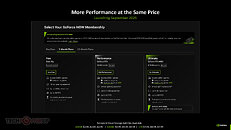
NVIDIA is offering a free, ad-supported version of GeForce NOW for people looking to try the platform. All serious gaming begins with the paid GeForce NOW Performance tier, priced at $9.99/month for 1440p @ 60 FPS gaming, and 6-hour gaming sessions. The Ultimate tier gives you performance resembling an RTX 5080, priced at $19.99, with 8-hour gaming sessions, up to 4K @ up to 240 FPS resolution. Persistent storage starts at $2.99 per month for 200 GB, $4.99 per month for 500 GB, and $7.99 per month for 1 TB. The Ultimate RTX 5080 tier will begin rolling out from September 2025.
To begin with, NVIDIA is bringing GeForce RTX 5080 to GeForce NOW as the new Ultimate tier, replacing the current one powered by the RTX 4080. This service lets you play games with the eye-candy and performance comparable to a gaming PC powered by an RTX 5080 GPU, with up to 4K Ultra HD resolution, and up to 240 FPS to be had, and gaming sessions as long as 8 hours. Ultimate RTX 5080 should also give you options such as DLSS 4 Multi Frame Generation, and be ready for games implementing new features such as ray tracing with Mega Geometry, and Neural Rendering—something not available on the RTX 4080. Thanks to Multi Frame Generation, the Ultimate RTX 5080 tier now offers up to 2.8x higher frame-rates than the previous Ultimate RTX 4080 tier.


Next up, NVIDIA introduced Cinematic Quality Streaming (CQS), a new streaming technology that significantly improves the image quality of GeForce NOW sessions, particularly in games with high geometry and shadow (think forest vegetation). The technology combines YUV 4:4:4 Chroma with HDR10, a high bitrate AV1 + RPR CODEC, with AI video filtering, greater awareness of Hi-DPI settings (particularly on laptops with high pixel density displays); higher quality game HUD sharpness, and a stream bitrate of up to 100 Mbps.


NVIDIA is working with leading handheld gaming PC makers to bring GeForce NOW to these devices, where the service can double battery life, because the SoC is only handling the streaming service, not rendering the game locally. NVIDIA announced that Valve Steam Deck comes with 90 FPS mode on GeForce NOW, and Lenovo Legion Go S supports up to 120 FPS. There are a host of new handheld devices being planned specifically for cloud gaming, which does away with the bulk of having a whole Windows PC environment on the device.


New Ways to Acquire, Own, Store, and Play Games
NVIDIA at Gamescom 2025 introduced new concepts that enable frictionless gameplay. See your buddy playing something on Discord or Fortnite? Instantly jump into their game. The company also announced Install-to-Play. By default, your GeForce NOW subscription gives you 100 GB of storage that lasts you a gameplay session of 8 hours, into which you can get the service to download and install games you own from your DRM platform, which will last you the session (your saved games remain with your game's DRM cloud storage, so you can pick up where you left off in the next session). You can opt to have persistent storage for additional costs, which is essentially cloud storage, so you can keep games installed at all times.
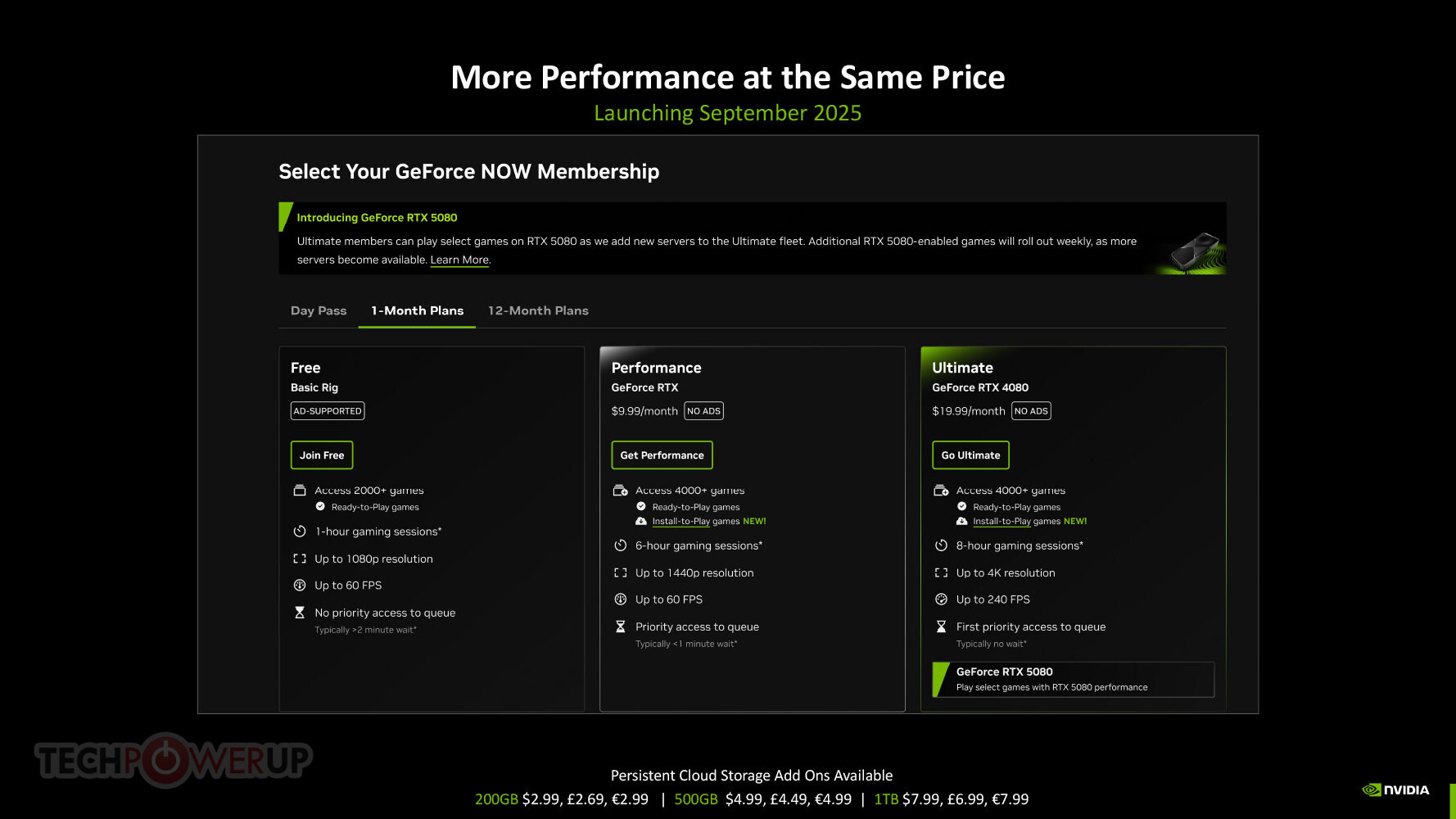
NVIDIA is offering a free, ad-supported version of GeForce NOW for people looking to try the platform. All serious gaming begins with the paid GeForce NOW Performance tier, priced at $9.99/month for 1440p @ 60 FPS gaming, and 6-hour gaming sessions. The Ultimate tier gives you performance resembling an RTX 5080, priced at $19.99, with 8-hour gaming sessions, up to 4K @ up to 240 FPS resolution. Persistent storage starts at $2.99 per month for 200 GB, $4.99 per month for 500 GB, and $7.99 per month for 1 TB. The Ultimate RTX 5080 tier will begin rolling out from September 2025.
15 Comments on NVIDIA Updates GeForce NOW with RTX 5080, Cinematic Streaming, New Low-Latency Tech, and More
It's especially good for targeting console gamers, who are already accustomed to monthly fees and a more limited game market. This provides a far better experience than buying a PS5 and paying $20 a month for PlayStation network.
I think she's the perfect market for it.
Ask me how I know.......
Yeah, and who exactly made those prices skyrocket in the first place? NVIDIA lights the fire, then rents us the extinguisher by the month.