Friday, September 26th 2025

D-Link Launches New Wi-Fi 7 Dual-Band Routers
D-Link Corporation (TWSE: 2332), global leader in networking solutions, today announced the launch of its latest Wi-Fi 7 routers: the AQUILA PRO AI M36 BE3600 Wi-Fi 7 Smart Mesh Router and the AQUILA PRO AI R36 BE3600 Wi-Fi 7 Smart Router. As hybrid work, streaming, and smart home adoption accelerate, households and small businesses increasingly require reliable, high-speed connectivity without complexity. In line with its brand promises of MIT quality, creative innovation, solution-oriented, one-stop service, and sustainable design, D-Link introduces these new Wi-Fi 7 solutions to deliver secure, easy-to-manage, and future-ready networks.
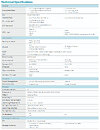
These cutting-edge routers are powered by the latest Wi-Fi 7 dual-band (2.4 GHz and 5 GHz) technology, featuring Multi-Link Operation (MLO), wider 160 MHz channels, and advanced 4K-QAM modulation to deliver significantly higher speeds, lower latency, and greater efficiency to meet the diverse needs of modern households. Equipped with 2.5G WAN and LAN ports for fast wired connectivity, advanced AI Wi-Fi traffic management for efficient bandwidth allocation and reduced congestion, WPA3 encryption, and parental controls for safer protection. Easily managed through the AQUILA PRO AI app, they offer intuitive setup, monitoring, and customization, setting a new benchmark for Wi-Fi performance in smart homes and SMBs.

 Stylish Mesh Wi-Fi for Modern Living- M36 BE3600 Wi-Fi 7 Smart Mesh Router
Engineered for whole-home coverage, the M36 features a mesh network and built-in omnidirectional antennas that deliver 360° spherical coverage, eliminating dead zones. With support for MLO Mesh, it strengthens the connection between routers and devices, delivering smooth connectivity. The M36 also offers the high performance needed for demanding usage scenarios such as 4K streaming and online gaming, while showcasing refined aesthetics inspired by the elegance of an eagle in flight, with a sleek curved form, integrated wing-like antennas, and feather-patterned ventilation.
Engineered for the Next-Gen Smart Home- R36 BE3600 Wi-Fi 7 Smart Router
The R36 is designed to provide powerful performance, featuring four external high-gain antennas for stronger signals, wider coverage, and high-speed connectivity even in environments with multiple obstacles. Optimized for gaming, 4K streaming, and IoT device integration, delivering stable connections for wireless devices throughout the home. The R36 also supports MLO for seamless, low-latency performance that keeps every device running smoothly.
D-Link's new Wi-Fi 7 routers represent transformative capabilities in wireless networking. The launch of the M36 and R36 highlights D-Link's commitment to advancing home networking, giving households and small businesses the speed, reliability, and intelligence required to thrive in today's digital world. With Wi-Fi 7 technology, MLO, 4K-QAM, and 2.5G connectivity. These new routers deliver next-level wireless performance built for the future. With these innovations, D-Link continues to embody its brand spirit of "One Connection - Infinite Possibilities."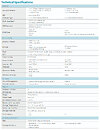
Sources:
D-Link M36, D-Link R36
These cutting-edge routers are powered by the latest Wi-Fi 7 dual-band (2.4 GHz and 5 GHz) technology, featuring Multi-Link Operation (MLO), wider 160 MHz channels, and advanced 4K-QAM modulation to deliver significantly higher speeds, lower latency, and greater efficiency to meet the diverse needs of modern households. Equipped with 2.5G WAN and LAN ports for fast wired connectivity, advanced AI Wi-Fi traffic management for efficient bandwidth allocation and reduced congestion, WPA3 encryption, and parental controls for safer protection. Easily managed through the AQUILA PRO AI app, they offer intuitive setup, monitoring, and customization, setting a new benchmark for Wi-Fi performance in smart homes and SMBs.


Engineered for whole-home coverage, the M36 features a mesh network and built-in omnidirectional antennas that deliver 360° spherical coverage, eliminating dead zones. With support for MLO Mesh, it strengthens the connection between routers and devices, delivering smooth connectivity. The M36 also offers the high performance needed for demanding usage scenarios such as 4K streaming and online gaming, while showcasing refined aesthetics inspired by the elegance of an eagle in flight, with a sleek curved form, integrated wing-like antennas, and feather-patterned ventilation.
Engineered for the Next-Gen Smart Home- R36 BE3600 Wi-Fi 7 Smart Router
The R36 is designed to provide powerful performance, featuring four external high-gain antennas for stronger signals, wider coverage, and high-speed connectivity even in environments with multiple obstacles. Optimized for gaming, 4K streaming, and IoT device integration, delivering stable connections for wireless devices throughout the home. The R36 also supports MLO for seamless, low-latency performance that keeps every device running smoothly.
D-Link's new Wi-Fi 7 routers represent transformative capabilities in wireless networking. The launch of the M36 and R36 highlights D-Link's commitment to advancing home networking, giving households and small businesses the speed, reliability, and intelligence required to thrive in today's digital world. With Wi-Fi 7 technology, MLO, 4K-QAM, and 2.5G connectivity. These new routers deliver next-level wireless performance built for the future. With these innovations, D-Link continues to embody its brand spirit of "One Connection - Infinite Possibilities."


15 Comments on D-Link Launches New Wi-Fi 7 Dual-Band Routers
It's just all about offering something cheap, but consumers don't understand that the wireless performance will suffer if there are a lot of wireless devices using them concurrently.
This new BE model looks to be Very light in actual qualifications. It appears to be "low hanging sub-par fruit".
Its incredibly sensitive to interference, even a door (interior, not exterior door!) can easily stop the signal, and very short range as well. And many chipsets even now still are buggy and prone to crashing or odd slow downs when you turn on 6Ghz band. On top of that plenty of countries don't even allow you to use it since its not certified for use in them. Even fewer devices support the band and they're often buggy too.
Nearly everyone can safely ignore it. The other wifi7 benefits are still nice and will help with traffic congestion a whole lot more than another near useless signal band anyways.
Even white colour isn't that common in predatory birds...
Though I'm sure it manages to hunt and catch stains very well.
"Easily managed through the AQUILA PRO AI app..."
So no web browser usable interface?
Whole release is like reading BS bingo material...
Admittedly, even on a 4x4 router you can get this problem, but you do at least have twice as many transmitters/receivers and you get properly working MU-MIMO, even tough that isn't a silver bullet to this problem.
It obviously helps splitting devices between the various bands, but when both bands are gimped, it's not going to help much.
Tri-band 2x2 routers help a bit, as you have to high-bandwidth bands, as long as you get a signal on the 6 GHz where you need it.I think you need to refresh your knowledge. Most of the world allows for 6 GHz devices and there are no real issues any more. Yes, it's not as good as the 5 GHz band when it comes to range, but it's not buggy.
en.wikipedia.org/wiki/List_of_WLAN_channels#6_GHz_(802.11ax_and_802.11be)
Are some features missing, like the ability to connect to multiple bands for higher throughput? Yes, it seems to be very hit and miss depending on what hardware you have, but that's not a bug.
Every new generation of Wi-Fi seems to have bugs, but they get ironed out with time and this is why you should never buy a first generation router. For example, when 802.11ac launched, QCA messed up and released a Wi-Fi radio that had a hardware bug, yet TP-Link rushed out products with it and they pretty much screwed over their customers, as those routers never saw any firmware updates and QCA was unable to fix the hardware bug in firmware. How do I know this? Because I worked for a router maker at the time and we where planning on using said Wi-Fi radio and it was just lucky that the product got delayed so we missed on the buggy hardware.
Not sure I agree with calling 12 meters long range, but this is from Dong Knows Tech who tests a lot of routers and clearly 6 GHz isn't that bad.
My knowledge is very current.
Also if you actually read Dong's articles he tends to crap on 6Ghz or says quite clearly you can usually ignore it as a typical home user. He also has the router I'm using rated as one of the best he's ever used.Doesn't matter unfortunately. Too many have it banned still. Its part of the reason it hasn't taken off despite being around for years with the intro of wifi6E.If it don't work as advertised, causes the routers that use it to lock up or randomly slow down, or slow down the whole network then I'd say the chipsets supporting are bugged in some fashion.6Ghz band has been around since 2021 or so when wifi6E was introduced.
Minor bugs that are around for a few months are tolerable. Its been years and a whole 2nd wifi standard was introduced to "fix" the band and its still not working right most of the time. And the few times it does work right little works with it. And even then its too short range and touchy to matter most of the time.
You can and should be ignoring it until the router companies and chipset companies get their act together.
Since Netfear has already offered me, a long-time customer, a substantial discount on their new, much more "NORMAL-LOOKING" WiFi-7 Dual Band model to replace my current, EOS model....
And just think, NO EARS, WINGS or other silly accoutrements to look at or try to explain to my family what they are for either, hahahahaha :D