Monday, October 13th 2025

NVIDIA Moves to 800 Volt DC Power Infrastructure to Drive Gigawatt-Scale AI

NVIDIA is implementing a major change in data center power architecture by using 800-volt DC distribution as the practical foundation for next-generation AI systems. Presented at the 2025 OCP Global Summit, the company's specifications and partner commitments frame 800 VDC not as an experimental idea but as a necessary response to racks that already draw well over 100 kW and are headed toward megawatt levels, soon to reach gigawatt of power per cluster. The core problem is simple and physical: low-voltage, high-current delivery forces bulky copper conductors and complex buswork into every rack, wasting space and money while creating thermal and installation headaches. Raising the distribution voltage reshapes those tradeoffs. At 800 volts, the same conductors can carry substantially more power, shrinking copper mass and freeing rack real estate for compute instead of power hardware.

NVIDIA's approach also simplifies the conversion chain by moving the main AC-to-DC rectification to the grid edge and using compact DC-DC modules in racks, reducing the number of conversion stages that generate heat and incur losses. Across large installations that efficiency improvement compounds. Even a few percentage points saved in delivery translates to megawatts less wasted energy at the gigawatt scale. Practical deployment plans tie the electrical advances to cooling and mechanical design: water-cooled busbars and integrated liquid cooling will be central to new rack designs that pack hundreds of GPUs while keeping temperatures and copper needs manageable.

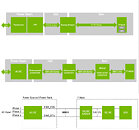
NVIDIA is contributing designs to the Open Compute Project and working with power-infrastructure and component manufacturers to standardize connectors, protection, and safety practices. The result is likely a split market: greenfield gigawatt facilities built around 800 VDC, and legacy sites that remain on lower-voltage systems until major refreshes. For AI's appetite for scale, the higher-voltage path looks like the more sustainable way forward. NVIDIA's Kyber rack-scale system is the first in the adoption path. With 800 VDC, the same copper design as previous NVL systems can deliver over 150% more power, removing the need for massive 200-kilogram busbars to supply a single rack.
Source: NVIDIA
Add your own comment

27 Comments on NVIDIA Moves to 800 Volt DC Power Infrastructure to Drive Gigawatt-Scale AI

#1
Space Lynx
Astronaut
make electricity more expensive for the poor people, all hail the AI overlords!
Posted on Reply
#2
Solaris17
Super Dainty Moderator
makes sense, our busbars are spicy and we already run highV low amp.
Posted on Reply
#3
LastDudeALive
Space Lynxmake electricity more expensive for the poor people, all hail the AI overlords!
This actually conserves electricity.
NVIDIA's approach also simplifies the conversion chain by moving the main AC-to-DC rectification to the grid edge and using compact DC-DC modules in racks, reducing the number of conversion stages that generate heat and incur losses. Across large installations that efficiency improvement compounds. Even a few percentage points saved in delivery translates to megawatts less wasted energy at the gigawatt scale.
You convert AC to DC a single time at the entrance to the datacenter, instead of doing it for each rack a thousand times.
Posted on Reply
#4
Vayra86
LastDudeALiveThis actually conserves electricity.
To enable the usage of more. Electricity is part of a business case, no single business is working to reduce their footprint at all, they're just hoping to save some money while growing.

This could have been done before, it is only done now because the energy usage is exceeding expectations - because AI, much like RT, is just raw crunching with no upper ceiling. Sky's the limit.
Posted on Reply
#5
Visible Noise
Space Lynxmake electricity more expensive for the poor people, all hail the AI overlords!
Where are you that residential electric rates aren’t regulated?
Posted on Reply
#6
LastDudeALive
Visible NoiseWhere are you that residential electric rates aren’t regulated?
Where are you that the laws of economics don't apply? If demand goes up, and supply stays the same, there's only two options. Price goes up, or some people don't get the product. If the "sticker price" rate the utility charges is capped, the cost just gets moved somewhere else in the system (taxes for subsidies, debt, neglected infrastructure, etc), and you pay for it anyway, or you get blackouts.
Posted on Reply
#7
Vayra86
Visible NoiseWhere are you that residential electric rates aren’t regulated?
Regulation does not fix this entirely, unfortunately.

You should take a brief look at the tax rate on energy for larger capacities compared to what you and I pay on it.
Posted on Reply
#8
Space Lynx
Astronaut
Visible NoiseWhere are you that residential electric rates aren’t regulated?
? its not regulated anywhere. this is basic economics 101, if x, y, z data centers build in your area, even if they are buying their electricity from somewhere else, its basic supply and demand. prices have gone up over 200% in Texas for residents that live near data centers, for one example.
Posted on Reply
#9
Vayra86
Space Lynx? its not regulated anywhere. this is basic economics 101, if x, y, z data centers build in your area, even if they are buying their electricity from somewhere else, its basic supply and demand. prices have gone up over 200% in Texas for residents that live near data centers, for one example.
There are regulated energy markets, the level of it does vary. The US is probably pretty messy with state to state differences. The EU is slightly less so, but still messy. Governments will step in though to curb the price increases, because this is naturally an electoral bomb.
Posted on Reply
#10
dyonoctis
Vayra86There are regulated energy markets, the level of it does vary. The US is probably pretty messy with state to state differences. The EU is slightly less so, but still messy. Governments will step in though to curb the price increases, because this is naturally an electoral bomb.
It used to be state owned in France, but the rich wanted a piece of that pie. So it joined the capitalist fray.
Posted on Reply
#11
Vayra86
dyonoctisIt used to be state owned in France, but the rich wanted a piece of that pie. So it joined the capitalist fray.
Yes, so it enters a market and that market does get regulated. Nowhere does it mean regulation equals your prices never increase ;)
Posted on Reply
#12
Visible Noise
LastDudeALiveWhere are you that the laws of economics don't apply? If demand goes up, and supply stays the same, there's only two options. Price goes up, or some people don't get the product. If the "sticker price" rate the utility charges is capped, the cost just gets moved somewhere else in the system (taxes for subsidies, debt, neglected infrastructure, etc), and you pay for it anyway, or you get blackouts.
Space Lynx? its not regulated anywhere. this is basic economics 101, if x, y, z data centers build in your area, even if they are buying their electricity from somewhere else, its basic supply and demand. prices have gone up over 200% in Texas for residents that live near data centers, for one example.
Where I live the cost of utilities is regulated.

www.michigan.gov/mpsc
Posted on Reply
#13
LastDudeALive
Visible NoiseWhere I live the cost of utilities is regulated.

www.michigan.gov/mpsc


Like I said, the laws of economics apply everywhere. You always pay for it.
Posted on Reply
#14
windwhirl
If it's not in your utility bill, it's in your taxes. And if it's not in your taxes then there's something that didn't get done that would been done otherwise (like a pothole that didn't get patched).

> NVIDIA is contributing designs to the Open Compute Project and working with power-infrastructure and component manufacturers to standardize connectors, protection, and safety practices

Insert 16-pin embarrassment meme, but that aside, that'd be interesting to see in detail
Posted on Reply
#15
Visible Noise
LastDudeALive

Like I said, the laws of economics apply everywhere. You always pay for it.
Did you read the link?
Posted on Reply
#16
LabRat 891
Spicy.
That's some industrial voltage. I've heard stories of 'objects' practically dematerializing in dead shorts.

I wonder what extra safety and training has to be implemented, and if they're straight-borrowing from Industry that utilize HVDC?
Posted on Reply
#17
LastDudeALive
Visible NoiseDid you read the link?
Yeah, they give your tax money to power companies through grants instead of letting the power companies charge the market rate for electricity. That's what it shows.
Posted on Reply
#18
Visible Noise
LastDudeALiveYeah, they give your tax money to power companies through grants instead of letting the power companies charge the market rate for electricity. That's what it shows.
Please show which of the 14 recipients is a power company.

Please show where these grants go to operating expenses.

Even if these grants were somehow offsetting electricity prices, the State of Michigan has a population of over 10 million people. So how far do you think a tiny $4.875M is going to offset the cost of power.

These are climate grants. Look where Michigan gets its power from.


So, yeah, government doing what a government is supposed to do. What’s the issue again? I showed you Michigan electricity rates are regulated by the state. Anything after that is you trying to protect your ego.
Posted on Reply
#19
yfn_ratchet
Vayra86To enable the usage of more. Electricity is part of a business case, no single business is working to reduce their footprint at all, they're just hoping to save some money while growing.

This could have been done before, it is only done now because the energy usage is exceeding expectations - because AI, much like RT, is just raw crunching with no upper ceiling. Sky's the limit.
This is exactly what I try to drill into people in terms of 'efficiency'; for the average joe, being 'efficient' means making operation more economical, not offsetting increased consumption. An efficient car is one that gets 40 miles to the gallon, not one that stuffs 500hp into a 2L engine—even if the 500hp engine is more thermally efficient.

Increasing power usage is a net loss for anyone that isn't getting a kickback on the price repurcussions, regardless of the innovations made to enable it. HEV-styled high voltage DC cabling is cool and all, but it's being used to enable Colorado-drying levels of power draw instead of reducing whatever marginal losses are caused by unit-scale AC rectification and power delivery-related heat losses. I can't approve of that with any level of conscience.
Posted on Reply
#20
agent_x007
Is it that scary to scale down per datacenter per GPU TDP to ~250W ?
Forcing 800V on everyone wanting NV-AI, looks to me like easiest "cash grab" to pull of (ie. making buyers get even more NV stuff).
Posted on Reply
#21
windwhirl
agent_x007Is it that scary to scale down per datacenter per GPU TDP to ~250W ?
I think they're doing +1000 or +2000W these days. Per accelerator.

AMD does it too, btw. It's not just Nvidia with massive power needs. They have a MI355X that can draw 1400W
Posted on Reply
#22
cfenton
LastDudeALiveWhere are you that the laws of economics don't apply? If demand goes up, and supply stays the same, there's only two options. Price goes up, or some people don't get the product. If the "sticker price" rate the utility charges is capped, the cost just gets moved somewhere else in the system (taxes for subsidies, debt, neglected infrastructure, etc), and you pay for it anyway, or you get blackouts.
Well they could pass all the costs of the increased demand on the commercial entities driving up demand. I'm sure lots of places already have different rates for residential and commercial customers. Just keep the residential rate flat and increase the commercial rate. They could even create a rate system that increases cost per kwh the more energy you use in order to protect smaller commercial customers.
Posted on Reply
#23
lesovers
One reason is the AC mains power factor correction can be done once with complex and expensive hardware giving a clean conversion to 800Vdc. The power factor would be extremely close to 1 with a pure clean sineware current draw on the mains. The many DC-DC converters they need are also much cheaper and smaller than AC-DC converters and you have the advantage of low losses in the high voltage/low current DC bus system.
Posted on Reply
#24
Jtuck9
Not sure how much of a drop in the bucket this is according to Ed's calculations.

The AI Bubble's Impossible Promises
www.wheresyoured.at/the-ai-bubbles-impossible-promises/

Speaking of which:

China's underwater data center facility could save 122 million kWh of electricity and 105,000 tons of water each year
www.techradar.com/pro/a-mini-data-center-village-under-the-sea-china-sinks-tens-of-thousands-of-powerful-servers-in-fresh-seawater-as-it-grapples-with-demand-for-more-power

I like Gary's example of AlphaFold:
Posted on Reply
#25
Dr. Dro
That has gotta be one amazing piece of circuitry, alright. As far as I'm aware, VRMs don't have perfect conversion efficiency, so getting rid of that stage at the board level and supplying them with clean power from a single source should save, at this scale, tens of thousands of watts. Very impressive.
Posted on Reply
Add your own comment
Nov 17th, 2026 19:33 CST change timezone

New Forum Posts

Popular Reviews

TPU on YouTube

Controversial News Posts