Wednesday, October 15th 2025

Apple Unveils New 14-Inch MacBook Pro Powered by the M5 Chip
Apple today unveiled a new 14-inch MacBook Pro, featuring the incredibly powerful M5 chip. With M5, the 14-inch MacBook Pro gets even faster, more capable, and delivers a huge leap in AI performance. The M5 chip features a next-generation GPU with a Neural Accelerator in each core, delivering up to 3.5x the AI performance and up to 1.6x faster graphics than the previous generation. M5 also includes a faster and more efficient CPU, an enhanced Neural Engine, and higher memory bandwidth that accelerates everything from launching apps to running large language models (LLMs) on device.
Additionally, it offers phenomenal battery life of up to 24 hours, so users can take their pro workflows anywhere. With the latest storage technology, the new 14-inch MacBook Pro with M5 brings faster SSD performance than the previous generation for tasks like importing RAW image files or exporting large videos. Renowned features—including a gorgeous Liquid Retina XDR display with a nano-texture option, a 12MP Center Stage camera, a six-speaker sound system, a wide array of ports, Apple Intelligence capabilities, and the unrivaled power of macOS Tahoe—complete the MacBook Pro experience. Altogether, the 14-inch MacBook Pro with M5 delivers an industry-leading combination of capabilities for the same starting price of $1,599—making it an even better value and upgrade for current and new Mac users. Available in space black and silver, the new 14-inch MacBook Pro with M5 is available to pre-order today, with availability beginning Wednesday, October 22.



Apple silicon leads the industry with blazing performance, advanced technologies, power efficiency, and AI capabilities. With its advanced CPU, GPU, and faster Neural Engine, M5 propels the capabilities of the new 14-inch MacBook Pro even higher and takes the next big leap in AI for the Mac. Featuring a next-generation 10-core GPU—with a Neural Accelerator in each core—it delivers up to 3.5x faster AI performance than M4, and up to 6x faster performance than M1. From college students transcribing lecture notes, to creators storyboarding a new project with AI tools, to business users uncovering insights by running local models in webAI, the new 14-inch MacBook Pro with M5 is the ultimate laptop for everyday AI workflows and so much more. Users will experience faster text-to-image generation when running diffusion models in apps like Draw Things, and LLMs will run even faster in popular apps like LM Studio. The M5 chip also speeds up a wide variety of pro workflows, like deep learning, data modeling, and AI video enhancement. A faster 16-core Neural Engine further accelerates on-device, AI-driven tasks and enhances performance of the generative models that power Apple Intelligence. Additionally, with up to 2x faster SSD performance than the prior generation, the new 14-inch MacBook Pro lets users load a local LLM faster, and they can now choose up to 4 TB of storage.

 Next-Level Performance with M5
The M5 chip also brings even faster systemwide performance and more capabilities to the 14-inch MacBook Pro. With the new GPU in M5, the 14-inch MacBook Pro delivers up to 1.6x faster graphics performance in pro apps and enables up to 1.6x higher frame rates in games compared to the M4 model. The M5 CPU features the world's fastest CPU core for even more responsiveness. The 10-core design delivers up to 20 percent faster multithreaded performance versus M4 for workloads like code compiling, and is perfect for multitasking or speeding through creative applications. The new 14-inch MacBook Pro is great for data analysts querying databases in Python and for professionals like product designers, who routinely multitask across applications like Rhino, Notion, and Jira. Additionally, with over 150 GB/s of unified memory bandwidth, users can work with large AI models on device or manipulate massive scenes in 3D apps.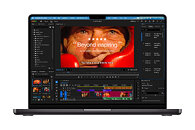
 14-inch MacBook Pro with M5 delivers:
 A Breakthrough for M1 and Intel-Based Upgraders
With game-changing improvements over Intel-based and M1 models, there's never been a better time to upgrade or switch to a 14-inch MacBook Pro.

 An Unrivaled Experience with macOS Tahoe
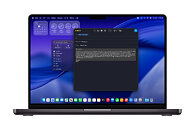
The new 14-inch MacBook Pro comes to life with the beautifully designed macOS Tahoe, which delivers powerful features to maximize productivity. Major updates to Spotlight make it easier to find relevant apps and files and immediately take action—like sending an email or creating a note—right from the search bar. With Continuity, business users can use the new Phone app to conveniently access their Recents, Contacts, and Voicemails, and make calls directly from their Mac. And with Live Activities from iPhone, users can stay on top of things happening in real time, like an upcoming flight.
The new design featuring Liquid Glass offers users even more ways to personalize their Mac with an updated Control Center and new color options for folders, app icons, and widgets. And the menu bar is now completely transparent, making the display feel even larger.
Apple Intelligence also expands with powerful new features that elevate the Mac experience further, while protecting privacy at every step. Integrated into Messages, FaceTime, and the Phone app, Live Translation helps users easily communicate across languages, translating text and audio. Shortcuts get even more powerful with intelligent actions and the ability to tap directly into Apple Intelligence models, so users can automate complex tasks like sorting through photos. Additionally, developers can bring Apple Intelligence capabilities into their applications, or tap into the underlying Foundations Model framework for specialized intelligence tasks on device.
14-Inch MacBook Pro with M5 and the Environment
Apple 2030 is the company's ambitious plan to be carbon-neutral across its entire footprint by the end of this decade by reducing product emissions from their three biggest sources: materials, electricity, and transportation. The new 14-inch MacBook Pro with M5 is made with 45 percent recycled content by weight, including 100 percent recycled aluminium in the enclosure, 100 percent recycled rare earth elements in all magnets, and 100 percent recycled cobalt in the battery. It is manufactured with 55 percent renewable electricity, like wind and solar, across the supply chain. Additionally, the new 14-inch MacBook Pro ships in 100 percent fiber-based packaging, which can be easily recycled. It also is designed to last, offering industry-leading software support, and meets Apple's high standards for energy efficiency and safe chemistry.
Pricing and Availability
Customers can pre-order the new 14-inch MacBook Pro with M5 starting today on apple.com/store and in the Apple Store app in 30 countries and regions, including the U.S. It will begin arriving to customers, and will be in Apple Store locations and Apple Authorized Resellers, starting Wednesday, October 22.
The 14-inch MacBook Pro with M5 starts at $1,599 (U.S.) and $1,499 (U.S.) with education savings, and is available in space black and silver. Additional technical specifications, configure-to-order options, and accessories are available at apple.com/mac.
Additionally, it offers phenomenal battery life of up to 24 hours, so users can take their pro workflows anywhere. With the latest storage technology, the new 14-inch MacBook Pro with M5 brings faster SSD performance than the previous generation for tasks like importing RAW image files or exporting large videos. Renowned features—including a gorgeous Liquid Retina XDR display with a nano-texture option, a 12MP Center Stage camera, a six-speaker sound system, a wide array of ports, Apple Intelligence capabilities, and the unrivaled power of macOS Tahoe—complete the MacBook Pro experience. Altogether, the 14-inch MacBook Pro with M5 delivers an industry-leading combination of capabilities for the same starting price of $1,599—making it an even better value and upgrade for current and new Mac users. Available in space black and silver, the new 14-inch MacBook Pro with M5 is available to pre-order today, with availability beginning Wednesday, October 22.


"MacBook Pro continues to be the world's best pro laptop, and today, the 14-inch MacBook Pro gets even better with the arrival of the M5 chip," said John Ternus, Apple's senior vice president of Hardware Engineering. "M5 marks the next big leap in AI for the Mac and delivers a huge boost in graphics performance, accelerating demanding workflows for everyone from students to creatives, developers to business professionals, and more. With its amazing performance, extraordinary battery life, and unrivaled display, M5 takes the new 14-inch MacBook Pro to another level."M5: The Next Big Leap in AI for the Mac
Apple silicon leads the industry with blazing performance, advanced technologies, power efficiency, and AI capabilities. With its advanced CPU, GPU, and faster Neural Engine, M5 propels the capabilities of the new 14-inch MacBook Pro even higher and takes the next big leap in AI for the Mac. Featuring a next-generation 10-core GPU—with a Neural Accelerator in each core—it delivers up to 3.5x faster AI performance than M4, and up to 6x faster performance than M1. From college students transcribing lecture notes, to creators storyboarding a new project with AI tools, to business users uncovering insights by running local models in webAI, the new 14-inch MacBook Pro with M5 is the ultimate laptop for everyday AI workflows and so much more. Users will experience faster text-to-image generation when running diffusion models in apps like Draw Things, and LLMs will run even faster in popular apps like LM Studio. The M5 chip also speeds up a wide variety of pro workflows, like deep learning, data modeling, and AI video enhancement. A faster 16-core Neural Engine further accelerates on-device, AI-driven tasks and enhances performance of the generative models that power Apple Intelligence. Additionally, with up to 2x faster SSD performance than the prior generation, the new 14-inch MacBook Pro lets users load a local LLM faster, and they can now choose up to 4 TB of storage.



The M5 chip also brings even faster systemwide performance and more capabilities to the 14-inch MacBook Pro. With the new GPU in M5, the 14-inch MacBook Pro delivers up to 1.6x faster graphics performance in pro apps and enables up to 1.6x higher frame rates in games compared to the M4 model. The M5 CPU features the world's fastest CPU core for even more responsiveness. The 10-core design delivers up to 20 percent faster multithreaded performance versus M4 for workloads like code compiling, and is perfect for multitasking or speeding through creative applications. The new 14-inch MacBook Pro is great for data analysts querying databases in Python and for professionals like product designers, who routinely multitask across applications like Rhino, Notion, and Jira. Additionally, with over 150 GB/s of unified memory bandwidth, users can work with large AI models on device or manipulate massive scenes in 3D apps.

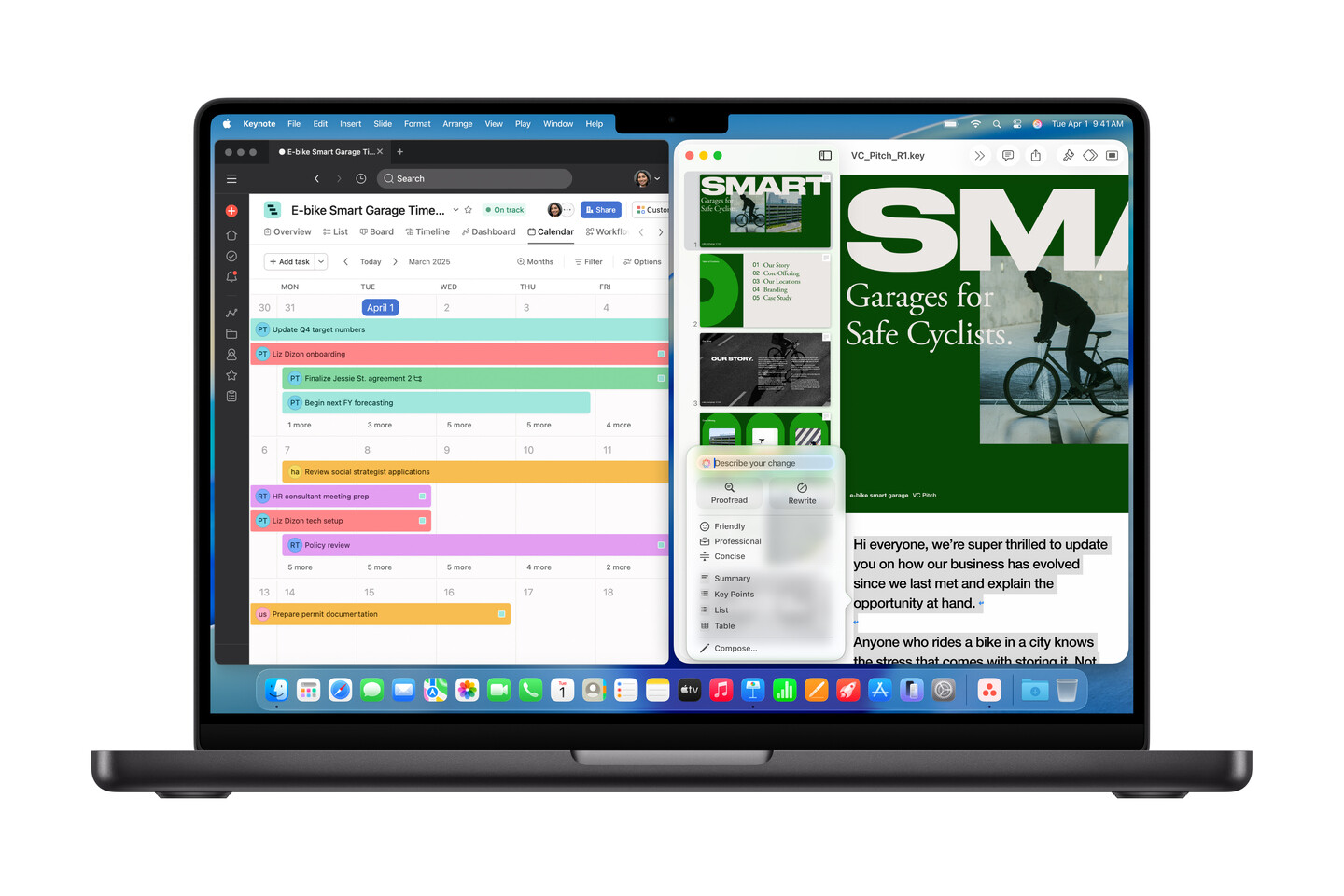
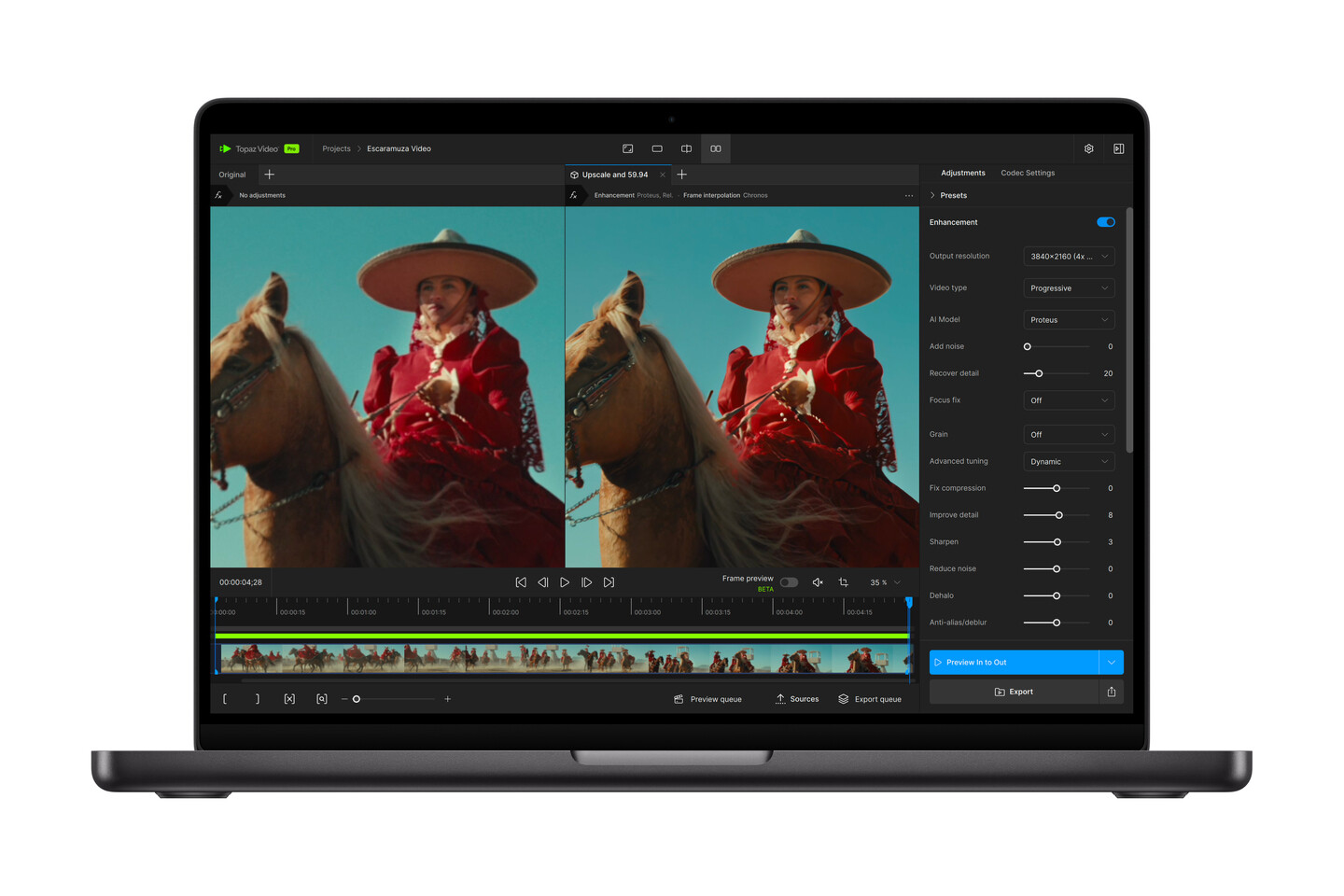
- Up to 7.7x faster AI video-enhancing performance in Topaz Video when compared to the 13-inch MacBook Pro with M1, and up to 1.8x faster than the 14-inch MacBook Pro with M4.
- Up to 6.8x faster 3D rendering in Blender when compared to the 13-inch MacBook Pro with M1, and up to 1.7x faster than the 14-inch MacBook Pro with M4.
- Up to 3.2x higher frame rates in games when compared to the 13-inch MacBook Pro with M1, and up to 1.6x faster than the 14-inch MacBook Pro with M4.
- Up to 2.1x faster build performance when compiling code in Xcode when compared to the 13-inch MacBook Pro with M1, and up to 1.2x faster than the 14-inch MacBook Pro with M4.
With game-changing improvements over Intel-based and M1 models, there's never been a better time to upgrade or switch to a 14-inch MacBook Pro.
- Staggering performance gains: The new 14-inch MacBook Pro with M5 is a big upgrade. When compared to Intel-based systems, it delivers up to 86x faster AI performance, up to 30x faster GPU performance with ray tracing, and up to 5.5x faster CPU performance. M1 upgraders will experience up to 6x faster AI performance, up to 6.8x faster GPU performance with ray tracing, and up to 2x faster CPU performance.
- Phenomenal battery life: Battery life soars up to 14 additional hours for Intel-based upgraders, and up to four more hours for users coming from M1, delivering up to 24 hours overall, so users can get more done on a single charge. And unlike many PC laptops, MacBook Pro delivers the same incredible performance whether plugged in or on battery. New Mac users and upgraders coming from Intel-based and M1 systems can also take advantage of fast charge to charge up to 50 percent in just 30 minutes using a 96 W or higher USB-C power adapter.
- Industry-leading Liquid Retina XDR display: Upgraders will enjoy the 14-inch Liquid Retina XDR display with a nano-texture option, which offers 1600 nits peak HDR brightness and up to 1000 nits of brightness for SDR content. Upgraders will also be able to drive up to two high-resolution external displays.
- Advanced camera, mics, and speakers: With an advanced 12MP Center Stage camera and studio-quality mics, upgraders will look and sound their best while taking calls. They will also experience an immersive six-speaker sound system with support for Spatial Audio.
- Powerful Apple Intelligence capabilities: Built seamlessly into macOS with groundbreaking privacy, Apple Intelligence provides both upgraders and new Mac users with intuitive features that make their Mac experience even more helpful and powerful.
- Even more value: Users coming from Intel-based and M1 systems will also get 16 GB of starting unified memory, an additional Thunderbolt port, and the space black finish with an anodization seal.



The new 14-inch MacBook Pro comes to life with the beautifully designed macOS Tahoe, which delivers powerful features to maximize productivity. Major updates to Spotlight make it easier to find relevant apps and files and immediately take action—like sending an email or creating a note—right from the search bar. With Continuity, business users can use the new Phone app to conveniently access their Recents, Contacts, and Voicemails, and make calls directly from their Mac. And with Live Activities from iPhone, users can stay on top of things happening in real time, like an upcoming flight.
The new design featuring Liquid Glass offers users even more ways to personalize their Mac with an updated Control Center and new color options for folders, app icons, and widgets. And the menu bar is now completely transparent, making the display feel even larger.
Apple Intelligence also expands with powerful new features that elevate the Mac experience further, while protecting privacy at every step. Integrated into Messages, FaceTime, and the Phone app, Live Translation helps users easily communicate across languages, translating text and audio. Shortcuts get even more powerful with intelligent actions and the ability to tap directly into Apple Intelligence models, so users can automate complex tasks like sorting through photos. Additionally, developers can bring Apple Intelligence capabilities into their applications, or tap into the underlying Foundations Model framework for specialized intelligence tasks on device.
14-Inch MacBook Pro with M5 and the Environment
Apple 2030 is the company's ambitious plan to be carbon-neutral across its entire footprint by the end of this decade by reducing product emissions from their three biggest sources: materials, electricity, and transportation. The new 14-inch MacBook Pro with M5 is made with 45 percent recycled content by weight, including 100 percent recycled aluminium in the enclosure, 100 percent recycled rare earth elements in all magnets, and 100 percent recycled cobalt in the battery. It is manufactured with 55 percent renewable electricity, like wind and solar, across the supply chain. Additionally, the new 14-inch MacBook Pro ships in 100 percent fiber-based packaging, which can be easily recycled. It also is designed to last, offering industry-leading software support, and meets Apple's high standards for energy efficiency and safe chemistry.
Pricing and Availability
Customers can pre-order the new 14-inch MacBook Pro with M5 starting today on apple.com/store and in the Apple Store app in 30 countries and regions, including the U.S. It will begin arriving to customers, and will be in Apple Store locations and Apple Authorized Resellers, starting Wednesday, October 22.
The 14-inch MacBook Pro with M5 starts at $1,599 (U.S.) and $1,499 (U.S.) with education savings, and is available in space black and silver. Additional technical specifications, configure-to-order options, and accessories are available at apple.com/mac.
43 Comments on Apple Unveils New 14-Inch MacBook Pro Powered by the M5 Chip
I read, so yes in the "multipliers" comparison, they also mentioned the M4 (which one, we have to guess), but all the way is the M1. I get it, provoke people to "upgrade" though the M1 is still completely capable of demanding processing (your fault btw, Apple). Next is artificial performance drops and then the inevitable "MacOS will drop support for M1-based macs" (except for X, Y and Z products that somehow, aren't affected).
That's kind of an unusable spec for real work, and it's nice to see Apple finally offer matte displays you can use in a room with overhead lights or near a window, but that means the reality of a Mac Pro that can hold project work and has enough RAM to even run projects is a $2149.
The fact Apple still have the gall to charge $1200 for the upgrade option to a 4TB SSD is why so many people think Apple are assholes. It's not actual, legally-defined theft, but it's indistinguishable from daylight robbery so it might as well be....
If you mean the base model is efficient enough to be installed in a tablet... I guess, but that tablet still beats the vast majority of socketed desktop chips while using 1/4 of the power, so...
My one and only 4K VR Macbook Pro gamer friend...
Read that one again... :rolleyes:
Was able to do it all by shutting off half the CPU cores of his i9 and this kind of allotted him enough power budget.
He was stupid though. All he saw from M1 announcement is "Apple good" and so he upgraded to whatever had it.
Never saw him login again.
I appreciate this more than some PC hardware reviews when all they only compare the new hotness with the last generation hotness and I'm like "well... I'm not on last generation, I'm on the generation before." Sure I could go look for those reviews that include my part, but then I have to hope they kept the same benchmark suite because sometimes that changes over time.
www.macrumors.com/2025/10/15/new-macbook-pro-lacks-charger-in-europe/
Also: That's insane. Is it e-waste regs or tariffs?
Since 2020 every time Apple has released a new SoC we go through this discussion yet some people simply are too thick headed to understand these concepts. A lot of them are still in that archaic paradigm of desktop CPUs with the top benchmark figures. It's particularly strange because everyone has a smartphone where performance-per-watt is super important.
Over 85% of Macs sold are notebook models and MacBooks eclipsed desktop models like twenty years ago and yet here we are with dimwits still shouting out "but my 24-core SuperStudly 26900X3D Ultra Pro CPU blows this out of the water if I overclock to 250W TDP". These are the same brainiacs who jeer "Lol, look at how poorly the M5 compares to the M4 Pro and M4 Max."
And I'm sure we'll be here again in the near future, when Apple unveils their M5 Pro, M5 Max, M6, M7, M8, A20, A21, A22, A23....
Comparisons Between M5 and Earlier Silicon
It makes the most sense for Apple to compare M5 to the M1 and Intel chips because the owners of devices using that silicon would be the most likely candidates to upgrade their hardware to Apple's latest and greatest.
Apple knows how many people are still using Intel Macs after all and they want all of those people to migrate to Apple Silicon especially now that macOS 26 Tahoe has dropped support for Intel CPUs (which a couple of minor exceptions). macOS 15 Sequoia and macOS 14 Sonoma continue to receive security patches so we are still looking at a couple more years before the most recent Intel Macs are no longer receiving security patches for their last version of macOS.
A ~10% performance uplift between chip generations is pretty normal. This is what we are seeing in A19 and M5 for single-core CPU performance per synthetic benchmarks.
For multi-core performance there's a bigger lift around 15% because Apple has introduced new architecture for their efficiency cores which are doing more work at the same power consumption.
For GPU performance, there's a much larger increase in AI task performance on the GPU because of Apple's introduction of "neural accelerators" in each graphics core.
There are improvements in memory bandwidth as well.
Power adaptor
The AC adaptor is not being included in the box in some markets due to local regulations -- not due to Apple's whims. This is new for EU customers. The AC adaptor continues to ship in the box where there is no regulation preventing it.
One can argue pros and cons about the EU's stance but their earlier policy about USB-C connectors did ultimately help coerce Apple into switching from their proprietary Lightning connector to the industry standard.
Overall comparison M5 to Prior Apple Silicon
M5 is an iterative improvement. There really isn't anything that the M5 can do that the M1, M2, M3, and M4 cannot. The M5 just does them faster. Even Apple Intelligence runs on all M-series silicon powered devices because they have all shipped with 8GB or more in RAM.
Rumors of an A-series SoC in a future entry-level MacBook
During the iPhone launch presentation in early September, the Apple executive presenting explicitly called out the A19 Pro has having PC caliber graphics capabilities. This makes the A19 Pro a likely candidate if Apple should decide to release this lower-priced A-series MacBook. These chips are powerful enough for general productivity (office, e-mail, web browsing, light photo/video editing, etc.) and we know they will be able to support Apple Intelligence. The main benefits would be lower price and better battery performance compared to an M-powered device.
Lack of WiFi 7 and cellular connectivity
We do know that Apple tests multiple combinations of features using multiple combinations of hardware components in their vast array of prototype designs. It is probable that Apple testing things like WiFi 7 and cellular connectivity in MacBook Pro prototypes before ultimately deciding on not including these features. My hunch is that there's something about the current industrial design of the chassis that makes antenna configuration less than ideal for multi-band WiFi 7 let alone the addition of cellular antennas to support a wide range of those bands.
> 150 GB/s
Lol
Additionally, if you need more storage, I'd recommend not getting anything more than 1TB for the fastest storage possible and buy an external Thunderbolt enclosure and use the biggest NVME drive you want. It save you a ton of money.