Tuesday, October 28th 2025

Creative Technology Launches Kickstarter Campaign for Sound Blaster Re:Imagine
Creative Technology, the company that brought the world the original Sound Blaster and transformed PC audio in the 90s, today announces Sound Blaster Re:Imagine, a next-generation modular audio hub that redefines what a sound card can be. The campaign goes live on Kickstarter on October 28, 2025 (10am EST).
Since its debut in 1989, Sound Blaster has shipped more than 400 million devices worldwide, shaping the soundtrack of the digital age. The original Sound Blaster gave PCs a voice, powering the rise of multimedia, gaming, and digital creativity. Sound Blaster Re:Imagine builds on that heritage - taking the DNA of Sound Blaster and evolving it into a modern, modular platform designed for creators, gamers, and anyone who lives at the intersection of work and play.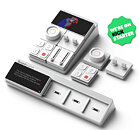
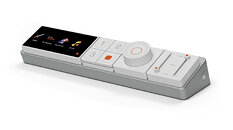
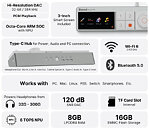 RE:IMAGINE WHAT A SOUND BLASTER CAN DO
Sound Blaster Re:Imagine is far more than just a sound card:
With over 400 million Sound Blaster units shipped, Creative's audio legacy is well established. But Sound Blaster Re:Imagine represents more than an evolution - it is a recontextualization of Sound Blaster as a next-generation audio, control, and creative platform.
Launching on Kickstarter is a conscious choice: it allows Creative to work directly with the community to shape this new chapter. Just as gamers, creators, and dreamers fueled the Sound Blaster revolution in the 90s, today's backers will help guide the evolution of Re:Imagine.
LEGACY, REBORN
"The original Sound Blaster changed the way millions experienced sound - powering gaming, creativity, and discovery. With Sound Blaster Re:Imagine, we set out to reimagine what a Sound Blaster can be: not just a sound card, but a modular hub, a control deck, and a creative playground with endless possibilities. We are making the Sound Blaster relevant again, for today's generation, in today's multi-device world," said Darran Nathan, Vice President of Operations & Products, Creative Technology.
At launch, it introduces a suite of playful experiences alongside its powerful audio capabilities. An AI DJ can generate entirely new music based on desired themes, while longtime fans will be delighted to see nostalgic favorites like Dr. Sbaitso and the Sound Blaster Parrot return - now reimagined with modern AI. These moments of fun sit alongside serious audio power, underscoring that Re:Imagine is built for both creativity and discovery.
By opening the platform with full superuser access, Creative invites developers to expand it further: to build their own apps that utilize the hardware in any way they imagine and share creations with the community.
KICKSTARTER LAUNCH DETAILS
The original Sound Blaster defined the soundtrack of a generation. Sound Blaster Re:Imagine is built to define the next one - an open, evolving platform shaped hand in hand with its community.
Be the first to experience Sound Blaster Re:Imagine at launch, head to the KickStarter link here.
Source:
Kickstarter
Since its debut in 1989, Sound Blaster has shipped more than 400 million devices worldwide, shaping the soundtrack of the digital age. The original Sound Blaster gave PCs a voice, powering the rise of multimedia, gaming, and digital creativity. Sound Blaster Re:Imagine builds on that heritage - taking the DNA of Sound Blaster and evolving it into a modern, modular platform designed for creators, gamers, and anyone who lives at the intersection of work and play.


Sound Blaster Re:Imagine is far more than just a sound card:
- The Ultimate Audio Hub
- Seamlessly connect devices such as PCs, laptops, mobile phones, tablets, gaming consoles, as well as microphones, headphones, speakers, and instruments, all in one place. Route any input to any output instantly with a simple tap, without tangled setups.
- Modular and Customizable
- Expand and reconfigure with magnetically attached swappable modules such as Smart Screens, sliders, knobs, and quick keys. Allows users to adapt their setup as it evolves.
- Fully Programmable Controls
- Every button can be configured as macros to perform any action a user wants, for example, mute a call, trigger a software code compile, or activate any Matter-enabled smart home device.
- Studio-Grade Sound
- High-resolution 32-bit/384 kHz playback with a studio-quality DAC and amp powerful enough to drive everything from professional headphones to large desktop speakers.
- Superuser Access
- With root access to hardware, developers can build and share their own custom apps that utilize this open platform in any creative way - making this a truly community-driven platform.
- Many Fun Apps Included
- Enjoy retro DOS games, music visualizers, an AI-powered DJ, and the iconic Sound Blaster Parrot and Dr.Sbaitso, reborn as AI-powered companions.
With over 400 million Sound Blaster units shipped, Creative's audio legacy is well established. But Sound Blaster Re:Imagine represents more than an evolution - it is a recontextualization of Sound Blaster as a next-generation audio, control, and creative platform.
Launching on Kickstarter is a conscious choice: it allows Creative to work directly with the community to shape this new chapter. Just as gamers, creators, and dreamers fueled the Sound Blaster revolution in the 90s, today's backers will help guide the evolution of Re:Imagine.
LEGACY, REBORN
"The original Sound Blaster changed the way millions experienced sound - powering gaming, creativity, and discovery. With Sound Blaster Re:Imagine, we set out to reimagine what a Sound Blaster can be: not just a sound card, but a modular hub, a control deck, and a creative playground with endless possibilities. We are making the Sound Blaster relevant again, for today's generation, in today's multi-device world," said Darran Nathan, Vice President of Operations & Products, Creative Technology.
At launch, it introduces a suite of playful experiences alongside its powerful audio capabilities. An AI DJ can generate entirely new music based on desired themes, while longtime fans will be delighted to see nostalgic favorites like Dr. Sbaitso and the Sound Blaster Parrot return - now reimagined with modern AI. These moments of fun sit alongside serious audio power, underscoring that Re:Imagine is built for both creativity and discovery.
By opening the platform with full superuser access, Creative invites developers to expand it further: to build their own apps that utilize the hardware in any way they imagine and share creations with the community.
KICKSTARTER LAUNCH DETAILS
- Campaign Launch
- October 28, 2025 (10am EST).
- Limited Quantity Early Backer Rewards
- Every pledge includes the Horizon Base Unit with Smart Screen and modular controls.
- Stretch Goal
- Unlock Vertex Base Unit, a larger model with additional expansion slots.
The original Sound Blaster defined the soundtrack of a generation. Sound Blaster Re:Imagine is built to define the next one - an open, evolving platform shaped hand in hand with its community.
Be the first to experience Sound Blaster Re:Imagine at launch, head to the KickStarter link here.
94 Comments on Creative Technology Launches Kickstarter Campaign for Sound Blaster Re:Imagine
It's bad enough with LC3, which is technically a beta feature in Android that forces you to switch mode on your headphones so they don't work with anything else at the time and appears to have so so support in Windows 11.
Even Creative's USB Bluetooth dongle that they claim have LC3 support, is not working with a lot of LC3 headphones, especially models from Sony from what I have read, but in all fairness, Sony has a weird way of switching their products into LC3 mode as well.Neither am I, but I post news here 🤷♂️
I believe Creative was on of only a couple of companies that was launch partners with xMEMS, but the reviews where middling, even though it appears they've improved in later versions. The problem is that you can't even tell which models does what from the model names, which is very typical Creative a well.
The latest model with all the bells and whistles are called the Aurvana Ace Mimi, like really?
Here's a review of those if you're interested.
www.soundguys.com/creative-aurvana-ace-mimi-review-130238/
As an "old-school-ish" tech journalist I will say this much, Creative held som of the very best events for media when they launched new products and I have a few really good memories from one of those events, that I will hopefully never forget, but I doubt they can afford those kind of things any more.
*typical mainstream V shaped tuning*
Yeah, and that’s pretty much why I am not into that part of the market. Almost all TWS earbuds are tuned around that sound, which I despise. Moondrop had a couple of models with a more “audiophile” sound, but those had software/feature issues as I recall. Fiio did too with similar problems, IIRC. I would be more interested if Creative decided to experiment, the xMEMS tech certainly looks interesting. But, I suppose, they want the mass appeal.
www.techradar.com/audio/earbuds-airpods/creative-aurvana-ace-3-review
TL;DR: Battery life on both the earpieces and the case is greatly improved. Problems with connection persist (though they are much better now on the Ace 2 than they were on release) and ANC is still subpar when compared to other models in the same price range. Sound quality is apparently the same, i.e. they're still using the same xMEMS + 10mm driver combo but those were already a winning solution IMO.
The Ace Mimi IIRC are a version of the Ace with a different bluetooth chipset that doesn't support AptX but supports LDAC and a form of user-customized sound profile from Mimi (hence the name). The Ace 3 use a newer Snapdragon Sound chipset that supports everything (LC3, LDAC, AptX Losssless, AptX Adaptive, etc.), and also supports both the Mimi profile and SXFi.
IMO you can't go wrong with either of these in the sound quality department. Those xMEMS really shine in what comes down to demanding audio sources in the mid and high range. But if you want lower latency for games you need to go with a version that supports either AptX Adaptive or LC3.
Who wants to borrow a pole to prevent buying that bridge?
Yeah, it's wild how onboard audio went backwards. There was a period when motherboards used top of the line ALC4000 series audio from Realtek, now they all use garbage ALC897. Only one that uses ALC4000 is AsRock and they have issues with burning Ryzen CPU's so yeah F that.
en.creative.com/p/headphones-headsets/creative-aurvana-ace-sxfiI believe the Pebble line is more popular than the Aurvana.
aptX Adaptive and LL are obviously not supported by non Qualcomm hardware, which was sort of my point above, whereas LDAC is part of the Android OS.But there's zero new technology there, anyone could've made those speakers. At least the Aurvana's brought something a bit new and exciting, even though Creative didn't quite deliver on the promise of the technology. Also, the fact that they only support SBC over Bluetooth is meh.
Nvidia had an alternative but that didn't last either.
I believe Steam Audio has this implemented for all GPUs via OpenCL (or similar). There's a few other packages out there.
It's a market Creative should be all over with their cards IMO. Combine high quality audio with a few GPU shaders running OpenCL.
Sound quality is... different? than AAC (unfortunately, the best quality codec the headset supports).
Not necessarily worse; perhaps a bit better quality in vocals, and slightly worse in other areas 🤔
The latency improvements are extremely impressive, though, essentially matching my wired IEMs.
Connections are also as stable and reliable as any other non-LE device I have used.
The reason is cutting cost and avoiding risk, and instead moving that risk to the potential buyers. And as a bonus, you 'involve' them to feed your product development. And now, if it fails anywhere along the way, or if you as a company fail in fulfillment, you have an easy escape.
I can tell the difference between SBC and LC3 on the SteelSeries headset I recently got, LC3 has much better quality sound.
I normally use LDAC with my Sony TWS earbuds though.Great, but they're not new technology or something really standout, whereas with the Aurvana's Creative is trying to push some new technology, which was the point I was trying to make, something the company hasn't done for years, which is why they've been fading into irrelevance.I was more after the weirdness of connecting to LC3/LE Audio devices in Android, it feels like an afterthought and it's still in "beta" so to speak.
I find LC3 far better than SBC, but that's on my SteelSeries headset, which is the only thing I own that can use LC3.
Not sure how you'd test the latency. Do you use Bluetooth when on public transport with a lot of other people using it near you? It's a mess, regardless of the codec, although I haven't tried LC3 on public transport in all honesty.
Back then, I always used wired IEMs, and as such, did not have a chance to experience any issues when sardining myself daily into public transportation.
I can imagine, though, that it would be an issue, especially with everybody using Bluetooth nowadays.
Other than watching videos (I am fairly sensitive to lip sync issues), I would recommend a simple A/V Sync Test, like the YouTube video below.
With other headsets/codecs, it is pretty easy to see, that there is a good amount of latency.
Using LC3 on the Corsair headset, latency ends up essentially indistinguishable from wired headphones.
Was using a asus xonar d2x for ages, but its drivers are from Windows 8 era, and was starting to get issues with it, so replaced with an AE9, although I think the AE7 would have been a better purchase for me.
Did consider external before buying the AE9 as so many people recommend them now, but I just have too much clutter around my PC so had to be internal.
Still I am thankful Creative have persisted, without them PC audio would have been very grim.