News Posts matching #Control

Return to Keyword Browsing

8BitDo Launches Ultimate 3C+ Wired Controller for XBOX and PC

8BitDo has officially announced the Ultimate 3C+ Wired controller for Xbox as a $39.99 Xbox controller that incorporates many of the same features as the Ultimate 3C+ Wireless launched in October, but at a much lower price. The 3C+ Wired controller has a traditional Xbox layout on both the face buttons and the offset analog sticks, but it features additional customization options that set it apart from a regular Xbox controller.

The headline features of the Ultimate 3C+ Wired controller include TMR joysticks with adjustable tension, which are supposed to resist joystick drift; remappable fast-trigger L4 and R4 buttons for additional inputs and faster trigger response times; Hall effect triggers with switchable dual-mode functionality; and a 3.5 mm audio jack at the bottom of the controller for more immersive sound. It also has two additional back paddles with an integrated paddle lock to prevent accidental activations.


NVIDIA App Update Adds DLSS Override Support to 19 More Games

NVIDIA has released NVIDIA App 11.0.9.585, a small update that adds DLSS Override profiles for 19 games and Optimal Settings profiles for six. The list mixes older titles like PUBG: Battlegrounds, The Witcher 3: Wild Hunt, and Dragon's Dogma 2 with Control Resonant, Silent Hill: Townfall, Ace Combat 8: Wings of Theve, Gears of War: E-Day, and Star Wars: Galactic Racer, all of which were scheduled to launch in September or October. Oddly enough, 007 First Light was already listed in the main 11.0.9 release, and Active Matter showed up back in 11.0.8. NVIDIA doesn't explain the repeats, and it doesn't say which overrides each game supports either.

The changelog otherwise only mentions "various stability/security fixes" without any details. This build follows two bigger ones that added significantly more features. The main 11.0.9 release brought DLSS 4.5 Ray Reconstruction and per-game Resizable BAR controls, while 11.0.9.565 added RTX Spark support, a local MCP server for AI agents, and a faster Performance Mode for DLSS Frame Generation. As a refresher, DLSS Override lets GeForce RTX owners use newer DLSS models, or modes like DLAA, that a game may not offer on its own. It sits under Graphics > Program Settings > Driver Settings. Below is the full list of games.

Bazzite 45 Launches With Start of Linux EAC V2 Support and Wider Handheld Compatibility

Shortly after the official Fedora 45 launch, Bazzite 45 has launched, with a rebase to Fedora 45, Gnome 51.1, and KDE Plasma 6.8.2. The new Bazzite version lists updated OGC Linux kernels—7.2.15 for AMD and Intel, and 6.18.60 for NVIDIA users—and additional hardware support, including for the Acer Predator Atlas 8 and ASUS ROG Xbox Ally X20, but also for more peripherals, including the Logitech TrueForce racing wheel hardware. The Mesa driver version has also been updated to 26.2.6, InputPlumber has been updated, and CoolerController has been moved to the official docker container, while XWaylandVideoBridge has been removed in the name of stability and squashing KDE bugs. The rest of the actual updates are minor back-end changes, save one.

As per the announcement post on the Universal Blue Discourse page, as of Bazzite 45, Bazzite has become accepted by Epic Games as a signing key provider, and the development team behind Bazzite has added a Linux EAC V2 readiness checker to Bazzite 45. The checker automatically updates the latest Linux EAC V2 requirements and compares the requirements to the current kernel and BIOS configurations—specifically kernel and module signing, Secure Boot, TPM 2.0, measured boot, IOMMU, kernel lockdown, kexec, and BPF LSM. If there are any incompatibilities, the user will be notified by the readiness checker.

Linux Kernel 7.4 HID Support Includes Nintendo Switch 2 Controllers and Pulsar Gaming Mice

Valve has been a major contributor to the Linux gaming scene since it launched the Arch-based SteamOS alongside the Steam Deck, and the company's latest contribution to the Linux gaming ecosystem comes by way of a series of patches by Vicki Pfau, a developer working on hardware support on behalf of Valve Software. In the patch notes, Pfau notes that the preliminary driver supports "general input for the Joy-Con 2, Pro Controller 2, and GameCube NSO controllers," including Bluetooth for all controllers and USB mode for the Pro Controller. The Linux kernel version 7.4 is slated to land in a fully stable form in January 2027.

Crucially, the Nintendo Switch 2 controllers were already largely supported on Linux via Steam, but kernel support means the controller won't need to run via Steam Input and can work in other game launchers without Steam being open. In addition to the Nintendo Switch 2 controllers, Linux 7.4 should bring hardware enablement and several features for a host of other peripherals, both gaming and otherwise, including additional sensor support for new AMD SoCs, better trackpad handling on T2 Macs, a new HID driver for Pulsar gaming mice—with support for reading the battery level, voltage, and charging status over both wired and wireless connection modes. On the topic of mice, the Kysona M600V2 also gets an HID driver. There are also new fixes incoming for the ASUS ROG Ally power management, and support was improved for the Lenovo Legion Go S controllers and lighting.

HYTE Launches Nexus App to Unify PC Monitoring, RGB Control, and More

Today, HYTE officially launched the Nexus 3.1.0 desktop application, a completely rebuilt PC management tool that unifies hardware monitoring, lighting control, gaming statistics, and system customization into one package. The software is designed to reduce the need for multiple background utilities while keeping resource consumption low, with support for Windows, macOS, and Linux. Unlike its predecessor, Nexus 2.0, the new Nexus 3.1.0 has been rewritten from the ground up. HYTE claims the application occupies less than 50 MB at launch and uses just 0.1% to 1% of system resources across the CPU, GPU, and memory.

In our testing, we observed the application using about 142 MB of RAM and roughly 0.2%-0.5% of CPU resources, so HYTE's claims were not far off. Perhaps with a fresh reboot, things would be different. The software can monitor individual components, tracking temperatures, storage, memory, graphics hardware, fans, and liquid-cooling pumps in real time. It can also identify conflicting applications and close them, potentially helping users avoid running several overlapping utilities simultaneously. HYTE says the monitoring system will notify users when it detects issues that could require attention.

DOWNLOAD: HYTE Nexus 3.1.0

Sony Patent Describes Stream Viewers Controlling a Cursor on the Streamer's Screen

Sony has been granted a US patent for a system that lets livestream viewers point things out on a streamer's screen and even change what happens in the game. Titled "Adaptive screen share pointer and reactions during gameplay," US 12752199 was filed in October 2023 and appears to have been issued on October 6. A viewer gets a cursor that shows up over the streamer's gameplay, and its look changes with the game being played. The patent gives examples like marking a boss's weak point or showing where to aim a shot. Viewers could also drop stickers on the screen, or send emoji reactions that the streamer feels as vibration through a controller, VR headset, or phone.

It goes further than pointing, however. The patent describes game actions reserved for viewers who aren't controlling the character, such as triggering a lever or revealing a hidden item, and publishers would define these through an SDK. Only one cursor may appear at a time, with control passed between viewers through a queue based on engagement points. Streamers could earn a virtual trophy from the reactions they receive, while viewers get tiered rewards of their own. Consoles from Sony, Microsoft, and Nintendo are all listed as client devices.

Steam Beta Update Automatically Sets Non-Steam Windows Apps To Launch Under Proton

Seemingly as part of the ongoing efforts to streamline and polish Steam and SteamOS, Valve has published a new beta update for the Steam client that fixes a handful of issues with the library, Steam Input, the Steam Controller's BLE mode, and Big Picture mode. More notably, with this update, Steam clients installed on Linux machines will automatically set Windows programs added to Steam as non-Steam games to launch via Proton by default.

This change only removes one step in the installation process, but it may help shift the compatibility burden away from the consumer, since they would only have to go digging for the compatibility options if the program doesn't initially launch. This simplification seems to be part of Valve's strategy to bring in more users and more or less goes hand-in-hand with recent changes that give developers more tools to optimize their games for Valve's hardware and SteamOS—again, taking some of the fiddliness out of running Linux and SteamOS by placing optimization in the hands of developers. The full update notes follow.

Imminent Control Resonant Updates To Add Unlimited "New Game++" and Photo Mode

Control Resonant launched on September 24 to a rather positive reception, and less than a week after launch, Remedy, the studio behind the game, is promising an October update that makes sizeable changes to gameplay, including adding what it calls "New Game++" mode, which is likely the most interesting part of the blog detailing the upcoming update.

At the time of writing, Control Resonant has a New Game+ mode, which allows players to play through the story once more before needing to start a new savegame. With New Game++, Remedy will allow players to "start NG+ run after NG+ run, without needing to erase all your progress," and thoroughly explore the world and lore. New Game++ is slated to land in Control Resonant sometime in October, although no specific launch date has been announced yet.

Sony Patents Tap-to-Pay Technology for PlayStation Controllers

Sony has filed a patent for a PlayStation controller that can read payment details from a nearby credit card or phone, letting players pay for games without typing in card information. The filing, titled "Video Game Controller-Driven Information Transfer," was submitted in March 2025 and published on September 17, 2026. The controller acts as a go-between for a payment method and the console. When the system asks for payment, the player brings a phone, credit card, or gift card close to the controller, which picks it up via NFC, Bluetooth, or direct contact, then confirms the read with a light, sound, or vibration before passing the details along. One diagram shows a gift card being swiped to add funds to an account, skipping the usual back-and-forth of typing in codes.

Potentially, the same link could also transfer player IDs, let guests join multiplayer sessions, or send screenshots and clips to a phone. Another scenario describes trying a demo at a store or expo, then tapping a phone to the controller to add the full game to your library for later. This is just a patent, though, and Sony files plenty of these that never turn into actual products. The controller in the diagrams looks like a regular DualSense, with no mention of a new device specifically built for this purpose. Sony has filed several unusual controller patents in the past, including AI that fills in controller inputs and a fully touchscreen design, so this is another example of exploring ambitious ideas, even though they may never ship. There's no confirmation that this is headed for the PS5 or PS6.

This Week in Gaming (Week 39)

As we enter the last full week of September, we kick off with a sequel AAA release from a Finnish developer that has many famous games in its catalogue. If that's not for you, then how about a racing game unlike any other racing game you've seen or maybe you prefer to manage a graveyard? We also have some slow cruising and a horror spin-off from a franchise that started back in 1999, as well as the option to be a wild west pioneer, hopefully without dysentery on the trail. Don't forget to check out some of the other games launching this week as well.

Control Resonant / This week's AAA release / Thursday 24 September
After years in confinement at the hands of the Federal Bureau of Control (FBC), Dylan Faden emerges into a warped Manhattan at the peak of a paranatural crisis. Charged with combating a mysterious cosmic entity as it alters fundamental aspects of our reality, Dylan must harness his new-found powers to take the fight to the myriad threats overwhelming Manhattan. Steam link

Razer Unveils the Tartarus V2 Pro

Razer, the leading global lifestyle brand for gamers, today announced the Razer Tartarus V2 Pro, the next evolution of its Tartarus gaming keypad line. Built to carry forward the accuracy and speed players expect from the Tartarus name, the Tartarus V2 Pro brings Razer's flagship switch technology and true 8000 Hz HyperPolling into a dedicated keypad for the first time, alongside a wrist rest designed to move with the player rather than around them.

Equipped with 31 programmable controls, a full-sized anti-drift thumbstick, and a fully-adjustable ergonomic wrist rest, the Tartarus V2 Pro is designed to give competitive MMO and FPS players alike near-infinite customization without sacrificing comfort over long sessions.

Iqunix Adds Controller Emulation to EV63 Gaming Keyboard

It seems as though Iqunix is finally getting serious about its Hall effect gaming keyboards, with firmware updates becoming more frequent for keyboards like the EV63. The latest firmware update for the EV63 HE keyboard adds controller emulation, a feature that has otherwise only been available from a handful of HE keyboard makers, including Wooting, GravaStar, and Keychron.

Controller emulation is called Gamepad Mode in the Iqunix EV63 HyperCore software, and it allows users to assign controller bindings to keyboard keys, which is particularly useful in games that allow for walking or driving at different speeds depending on how far a joystick is moved or how deep an analogue trigger is depressed.

Control Resonant PC Hardware Requirements: Accessible Minimums With Lofty Goals

Control Resonant is slated to launch later in 2026, and ahead of that launch, Remedy Entertainment has officially published the minimum PC hardware requirements, detailing not only the hardware players will need to play the new game, but also what level of performance players can expect from their hardware. All of the hardware requirements call for a pedestrian 16 GB of RAM and a 120 GB SSD, as well as either Windows 10 or 11.

While the game does support path tracing at up to 4K, which Remedy says will call for an Intel Core i7-10700 or AMD Ryzen 7 3700X, at least, paired with an NVIDIA GeForce RTX 5080—no AMD cards are supported for the "Enthusiast" path tracing preset—the game will also be playable on hardware as slow as the NVIDIA GeForce GTX 1070, AMD Radeon RX 5600 XT, or Intel Arc A580, paired with an Intel Core i5-8500 or AMD Ryzen 5 3500. The game will also allegedly run at 60 FPS at 4K, with graphics set to high, and with upscaling set to Performance mode, and without ray tracing, on an NVIDIA GeForce RTX 3080 or AMD Radeon RX 6800 XT, which indicates at least a decent level of optimization.

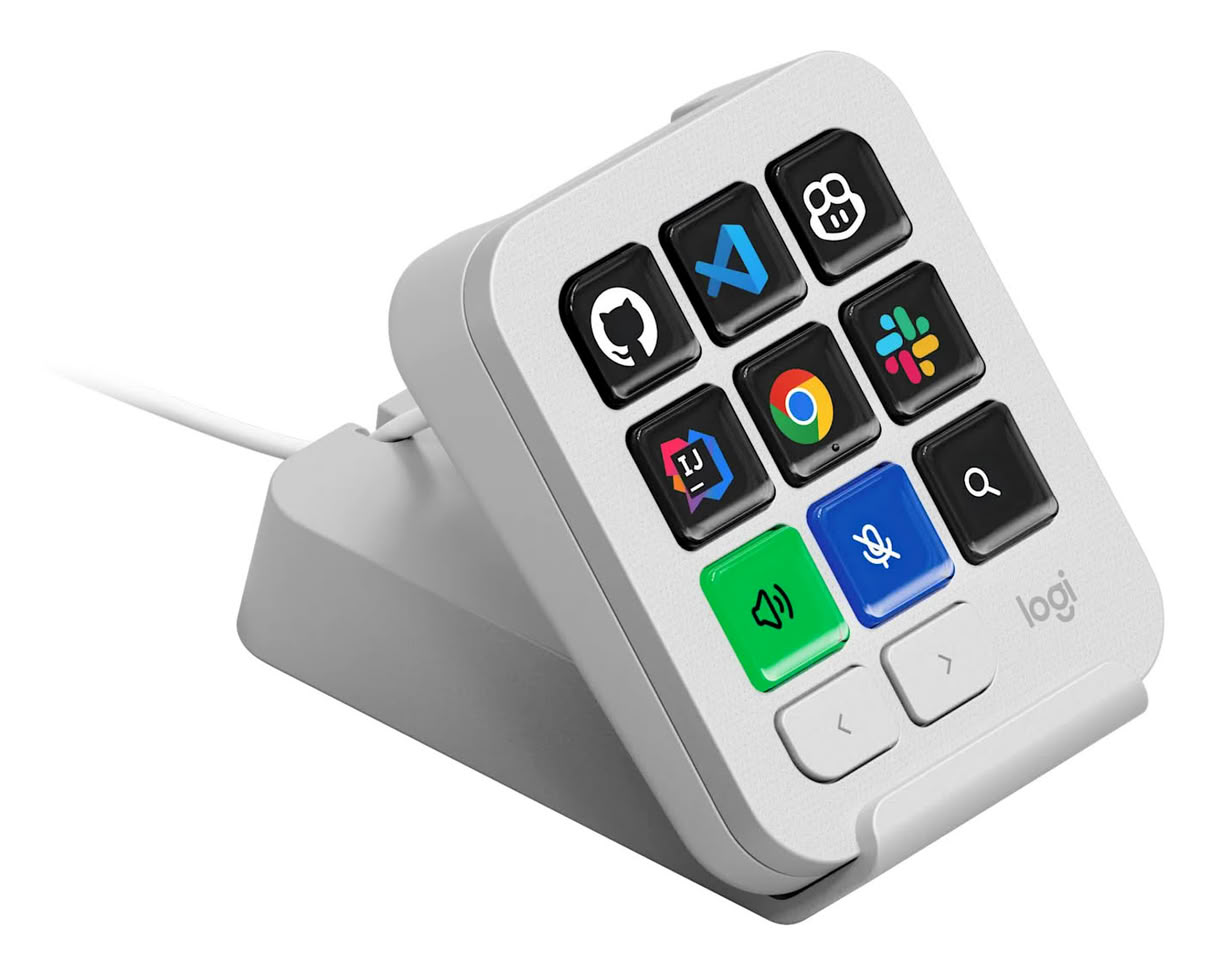
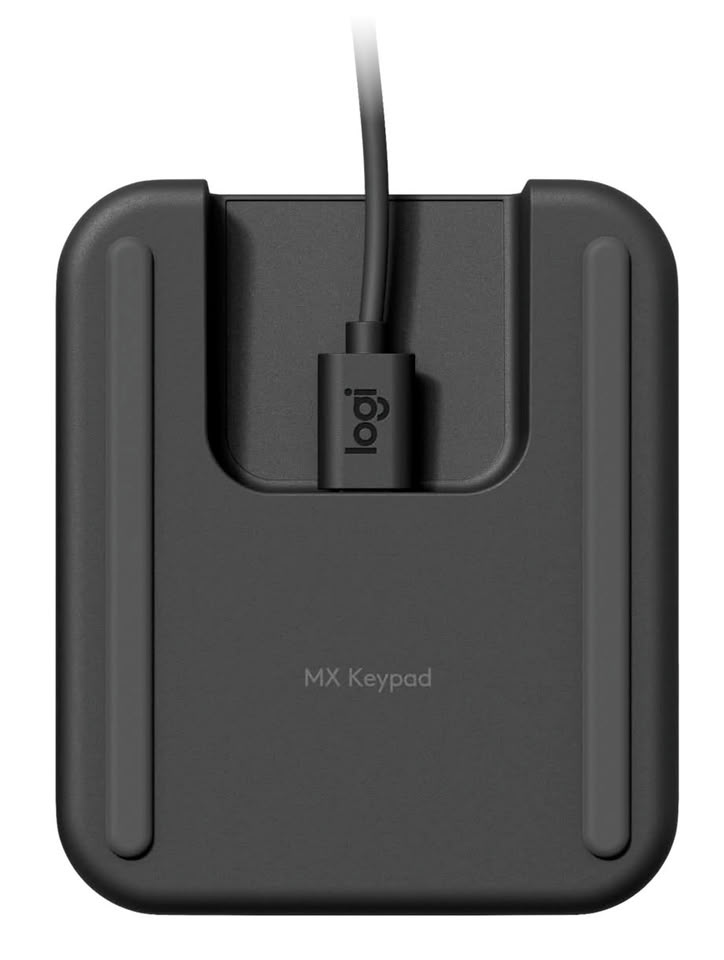
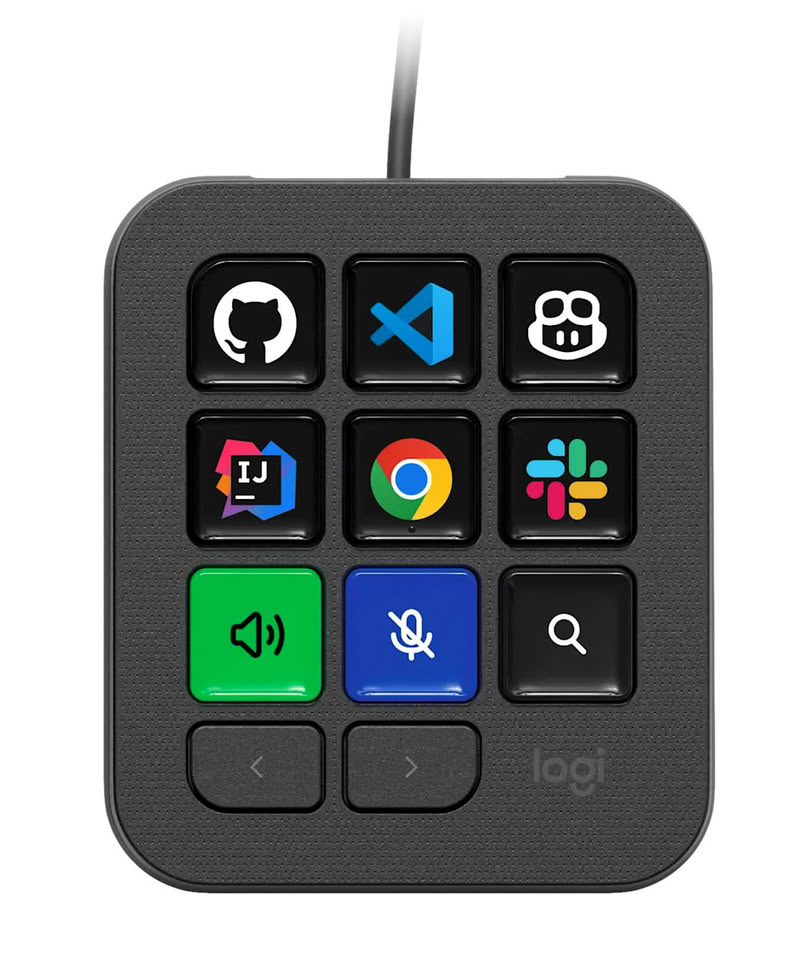
Logitech Unveils MX Keypad for Developers: The Customizable Multi-App Control Center

Logitech (SIX: LOGN) (NASDAQ: LOGI) today announced MX Keypad, the AI control center designed for multi-app, multi-agent coding to put developers in command of their evolving workflows.

Unlike other solutions on the market, MX Keypad offers cross-app compatibility with major coding platforms, allowing for unlimited customization tailored to each individual workflow. This unique level of versatility and personalization allows coders to unify their AI workflows, complex prompts, and dev tools, for a continuous, uninterrupted flow across their entire stack. MX Keypad includes a selection of plugins, created and tested by developers, for GitHub Copilot and Claude Code.

CXMT and YMTC Stockpile ASML Tools for Three-Year Expansion Plans

Chinese memory and storage makers have reportedly stockpiled enough lithography tools from ASML to ensure their expansion plans for the next three years, even if they are cut off from the supply chain. According to a report from the Financial Times, memory maker CXMT and storage giant YMTC have secured sufficient DUV lithography tools from ASML to support their growth plans for the next three years, despite increasing tensions and potential bans on exporting these older DUV tools to China. The United States government is reportedly pressuring the Dutch government to completely halt tool exports to China.

In a new bipartisan bill called the Multilateral Alignment of Technology Controls on Hardware (MATCH) Act, the US government is considering forcing allied countries to implement a technological ban on exporting even the older DUV machines. This could mean that ASML might nearly cease all exposure to China, as the older DUV tools are targeted by US export restrictions. For ASML, this means that nearly one-fifth of its projected revenue for this year could suddenly disappear if the bill is passed.

Early DLSS 5 Testing Suggests the RTX 5090's Single Power Connector Might Be the Bottleneck

Community testing of leaked DLSS 5 builds suggests the tech may already be hitting a wall on NVIDIA's own flagship GPU. Tom's Hardware ran the neural rendering model through Cyberpunk 2077, Hogwarts Legacy, and Control on an RTX 5090 Founders Edition, as well as an MSI RTX 5090 Lightning Z. Surprisingly, the results point to power delivery as the potential bottleneck rather than compute horsepower. The test used a community Optiscaler injection method built on the leaked DLSS 5 DLL, not NVIDIA's official Streamline path, though the cost lined up closely with NVIDIA's own published 8 ms-per-frame figure.

The Founders Edition, limited to a single 12V-2x6 connector, dropped framerates by 42 to 49 percent with DLSS 5 enabled and consistently hit its 575 W power limit while doing so. The MSI Lightning Z, with a dual-connector setup and a 1000 W limit, took a smaller hit and held better 1% lows, while pulling far more power. In Hogwarts Legacy, it jumped from 480 W to 720 W with neural rendering active, which is a sizeable 50% increase. That leaves single-connector RTX 5090 cards apparently underprovisioned for a feature this demanding, at least unofficially.

Gigabyte Collaborates with NVIDIA to Enhance Gaming with GeForce RTX 50 Series and Control Resonant Bundle

Gigabyte, the world's leading computer brand, announced a collaboration with NVIDIA for the CONTROL Resonant game bundle across eligible graphics cards, laptops, and gaming desktops powered by NVIDIA GeForce RTX 5070 or above GPUs and Laptop GPUs. Combining NVIDIA technologies including path tracing and DLSS 4.5 with Gigabyte's advanced cooling solutions, the bundle enables gamers to experience the highly anticipated title with enhanced visual fidelity and performance across a wide range of gaming platforms.

For graphics cards, the lineup includes the AORUS GeForce RTX 50 INFINITY Series, spanning the GeForce RTX 5090, 5080, 5070 Ti, and 5070 models. The series features the WINDFORCE HYPERBURST cooling system to support sustained GPU performance under demanding gaming workloads, while the GeForce RTX 5080, 5070 Ti, and 5070 INFINITY models feature a STEALTH design for cleaner cable management and streamlined PC builds. The bundle also covers the Gigabyte RTX 5090 AI BOX, which integrates WATERFORCE cooling for efficient thermal management. Together with NVIDIA path tracing and DLSS 4.5, these solutions bring greater realism and AI-enhanced performance to supported games.

8BitDo Launches "Ultimate Software Online" Browser-Based Configuration Tool for Linux Users

There has been a recent trend among peripherals brands to move to online or browser-based configuration and remapping tools, with tools like Wooting, Keychron Launcher, and open-source varieties like QMK/VIA and ZMK Studio leading the charge in the keyboard world. Now, it seems as though 8BitDo has seen the writing on the wall and announced the 8BitDo Ultimate Software Online to broaden compatibility for its suite of reprogrammable peripherals.

At the time of writing, the browser-based configurator is still in beta, and it seems to only support nine devices. 8BitDo notes that the software is designed to expand compatibility specifically for Linux, and it recommends that users on Windows and macOS continue to use the installable version of the software, since it is currently more feature-complete. The brand also says that it will continue adding device and feature support to the web app.

SCUF Gaming Introduces the SCUF Nemesis Pro 8K PC Controller Family

SCUF Gaming, creator of the high-performance gaming controller category, today announced the SCUF Nemesis Pro 8K PC controller family, introducing both the SCUF Nemesis Pro 8K PC Wireless and SCUF Nemesis Pro 8K PC Wired. The new controllers combine up to 8,000 Hz polling, TMR thumbsticks, mechanical ABXY buttons, four integrated rear paddles, dual-mode instant triggers, and advanced software personalization for players who demand every competitive advantage. Built on fifteen years of innovation in performance gaming, the Nemesis Pro 8K PC family represents SCUF's most focused PC controller platform to date. Whether players prefer the freedom of ultra-low-latency 2.4 GHz wireless or the simplicity of a dedicated wired connection, both models deliver the speed, precision, and control required for competitive play.

With more than 160 patented innovations, SCUF has continually pushed controller performance forward by giving players faster inputs, greater customization, and ergonomics refined through years of competitive play. Nemesis Pro 8K PC builds on that legacy with a performance-driven design created for immediate, consistent, and precise control.

Windows 11 to Get Unified Memory Control Options Ahead of RTX Spark Launch

Microsoft is working on providing processors with unified memory dedicated control parameters in Windows 11, as indicated by the recent Windows 11 build 29648.1000. This build, originally released on August 17, includes a hidden feature called IntelligentCarveout. This feature will allow the system to manage unified memory in SoCs like NVIDIA's upcoming RTX Spark, AMD Ryzen Halo, and other APU-like chips that integrate the CPU and GPU into a single package. These are connected to external LPDDR5X memory, which acts as a unified pool for both the CPU and GPU. With the new feature, we will see specialized controls that allow settings to be configured for independent partitions of this unified memory. During Computex, Microsoft even hinted at this feature arriving for Windows 11 in their announcement for NVIDIA's RTX Spark platform.
MicrosoftTo realize the potential of up to 128 GB of unified memory on RTX Spark, we have focused on improving how Windows supports unified memory systems, starting with a new higher, smarter limit on total system memory accessible by the GPU. This updated limit increases the memory available to the GPU on high-memory systems, unlocking the ability to load larger local AI models or render more complex projects.

United States Government May Restrict ASML's DUV Tool Exports to China

According to the Netherlands-based NU portal, the United States government (USG) might pressure the Dutch government to compel ASML to halt nearly all exports of chip-making equipment to China. The report indicates that the Netherlands-based ASML is under pressure to stop exporting its machinery to Chinese clients, as the USG is lobbying against the export of these machines to mainland customers. Readers may recall that the most advanced Extreme Ultraviolet (EUV) lithography tools are already banned from being sold in China, as the USG previously pressured the Dutch government to halt sales of these advanced tools. In fact, ASML has never shipped a single EUV scanner to China, as the Dutch government, under USG pressure, blocked exports in 2019.

In the years following that ban, export restrictions have shifted focus to older Deep Ultraviolet (DUV) scanners, requiring a national export license before shipping to China. However, a new bipartisan bill is now before Congress to tighten export controls even further. Called the Multilateral Alignment of Technology Controls on Hardware (MATCH) Act, the USG is considering forcing allied countries to implement a technological ban on exporting even the older DUV machines. This could mean that ASML might nearly cease all exposure to China, as the older DUV tools are targeted by US export restrictions.

Drakong by Hyperkin Introduces the PixelByte Controller and Blindbox Gamepads

Drakong by Hyperkin, a leading L.A. based gaming hardware company, announced today the PixelByte Controller, a new range of highly collectible, fully-functional controllers, and the world's first line of Blindbox gamepads!!

Tiny in size, huge on fun, the PixelByte Controller range offers a fully-functional gamepad that's small enough to go where you go, and thanks to its integrated keychain, the PixelByte can attach to your belt loop, bag, purse, or practically anything, ideal for travel or for fans who thrive on Blindbox collecting. Impossibly small and equally as adorable, the PixelByte range will be available in multiple series of collectible designs (coming soon), featuring some of the world's best-loved licenses, themes and IP's.

LACT Brings More NVIDIA OC Controls and GPU Sensors to Linux

Linux GPU overclocking and monitoring tool, LACT, has officially launched v0.10.0, adding a host of new overclocking and sensor options for NVIDIA GPUs. The update notes mention PowerMizer mode, which allows users to force the NVIDIA GPUs into the highest p-state. The update also adds "Voltage boost," a new slider that allows the GPU to draw more voltage—as opposed to a more traditional voltage offset slider. The developers note that this slider merely adds more headroom for certain overclocks.
The update also adds new sensor read-outs for both NVIDIA and AMD GPUs. NVIDIA users on Blackwell GPUs now have access to hotspot sensors and per-memory-chip temperature sensors for both GDDR6x and GDDR7. On the AMD side of things, there is now support for graphical GTT memory display—GPU-accessible system memory—which is noted to be particularly helpful for iGPUs in high-memory-load applications and games, but may also be helpful when using older, low-VRAM GPUs, since those may also require spilling over into system memory more often. Check out the full update notes for more.

AMD "Zen 6" to Improve 1% Lows and In-Game Stuttering

AMD's latest "Zen 6" microarchitecture was unveiled at the Advancing AI event in a server format. However, we still anticipate a consumer version in the coming months, which might surprise gamers. According to 1usmus, the creator of the HYDRA OC tool, who shared insights with VideoCardz, AMD's "Zen 6" CPUs will focus on improving 1% lows in games through several software methods, besides hardware advancements. The first is Collaborative Processors Performance Control (CPPC). CPPC Performance Priority allows the operating system and firmware to manage the performance of each individual CPU core. This means the OS can direct maximum power and frequency to specific cores based on workload demands. For instance, if a game utilizes only about 8 cores, those cores will receive maximum power and frequency to enhance frame rates to their highest potential.

CPPC includes Performance Priority and HighestFreq settings, which manage task priority and allocate the highest performance, respectively. Additionally, when the CPU reaches its maximum temperature or power limit, the FloorPerf feature ensures that only the most critical tasks run at maximum frequency, while other cores are throttled to reduce power or temperature. This dynamic scheduling is expected to enhance various gaming aspects, particularly when addressing 1% lows in gaming tasks. Other features include per-core EPP boost, allowing specific CPU cores to boost to their maximum state without pushing the entire CPU to its limit. The CPU also offers improved frequency tuning with more dynamic scaling, focusing on maintaining stable clock speeds to deliver maximum performance when needed and ensuring a smooth gaming experience.

Steam Frame Verified Ratings Roll Out With Portal 2

With the Steam Controller and the Steam Machine now officially launched and presumably making their way into the hands of consumers, the only new hardware product left for Valve to launch is the Steam Frame. Now, it seems as though the launch date for the new VR headset may be approaching, with Valve's Portal 2 getting a new update on June 29 that includes Steam Frame compatibility information. The official Steam Frame rating for Portal 2 is "Playable," with the game missing out on Frame Verified status due to not rendering in the Frame's native resolution. Curiously, Half-Life: Alyx, Valve's VR-only Half-Life game, has not yet received a similar compatibility update at the time of writing.

The Frame Verified rating has not yet been added to Steam's storefront, with compatibility information listed on SteamDB, but a June 29 update also fixed an issue with Portal 2 launching on Linux, suggesting Valve is putting in active development work to get its games and verification system ready for the official launch of the Frame hardware. According to the recently published Steam Frame Verified specifications, games need to be fully playable on the Frame controllers and reach at least 90 FPS for standalone VR titles and 30 FPS for standalone 2D titles at 1280 × 720 p, and it must have a legible UI at the default resolution of the Frame.
Return to Keyword Browsing
Nov 11th, 2026 03:12 CST change timezone

New Forum Posts

Popular Reviews

TPU on YouTube

Controversial News Posts