Monday, January 5th 2026

NVIDIA Updates G-SYNC Pulsar Standard and Ambient Adaptive Technology
NVIDIA today announced updated G-SYNC Pulsar display standard for fast-paced competitive e-sports gaming. The standard builds on NVIDIA's proven G-SYNC variable refresh-rate technology that ensures that the display and GPU are in perfect sync with output framerates and display refresh-rates, to eliminate screen tearing and stuttering. The new G-SYNC Pulsar spec calls for a standardized 27-inch QHD (2560 x 1440 pixels) gaming display with refresh rate of 360 Hz on the display's side, and the capability of over 1000 Hz perceived motion clarity that works at the game rendering level to eliminate motion blur. In the example shown below, G-SYNC Pulsar in "Counter Strike 2" is shown improving effective motion clarity by 4 times.
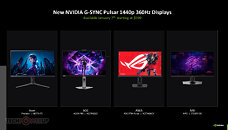
The other new standard being introduced today is Ambient Adaptive Technology. Similar to your smartphone, which uses its front-camera to gauge ambient lighting conditions to dynamically adjust display and color temperature, this feature relies on an optical sensor on the display to analyze ambient lighting conditions, and respond to broad daylight with 100% brightness, cooler white colors (higher color temperatures); and nighttime with 36% brightness, and warmer colors (lower color temps). At CES, popular gaming monitor manufacturers are announcing their G-SYNC Pulsar capable monitors, which include Acer Predator XB273U F5, AOC AGON Pro AG276QSG2, ASUS ROG Strix Pulsar XG27AQNGV, and MSI MPG 272QRF X36. These displays will be available from tomorrow (January 7), with prices starting at $599.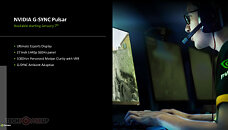


The other new standard being introduced today is Ambient Adaptive Technology. Similar to your smartphone, which uses its front-camera to gauge ambient lighting conditions to dynamically adjust display and color temperature, this feature relies on an optical sensor on the display to analyze ambient lighting conditions, and respond to broad daylight with 100% brightness, cooler white colors (higher color temperatures); and nighttime with 36% brightness, and warmer colors (lower color temps). At CES, popular gaming monitor manufacturers are announcing their G-SYNC Pulsar capable monitors, which include Acer Predator XB273U F5, AOC AGON Pro AG276QSG2, ASUS ROG Strix Pulsar XG27AQNGV, and MSI MPG 272QRF X36. These displays will be available from tomorrow (January 7), with prices starting at $599.


12 Comments on NVIDIA Updates G-SYNC Pulsar Standard and Ambient Adaptive Technology
I don't play esports, but don't these people play at 1080p or even lower resolutions?
There's still some that prefer 24" monitors for 1080p since the screen is smaller and easier to focus on completely, but most of these esports monitors have a 24" mode within 27".