Wednesday, January 28th 2026

Google's Desktop Operating System "Aluminium OS" Has Leaked
Google's return to the desktop has been now cemented with the latest leak of the so-called "Aluminium OS." Accidentally shared by Google, 9to5Google managed to capture some screen recordings of this new creation that Google has been developing behind the scenes. A recent submission to the Google Issue Tracker revealed a Chrome Incognito bug, complete with video evidence from a system running Aluminium OS. Before the video was removed, 9to5Google obtained recordings showing a new Android-powered PC operating system. Running on the latest Android 16 platform, the system is being internally tested on an HP Elite Dragonfly 13.5 Chromebook laptop equipped with 12th Generation Intel "Alder Lake-U" Core processors. As a test unit, this marks a significant shift from the Android OS used on mobile Arm-based systems, as Aluminium OS now operates smoothly on x86 architecture.
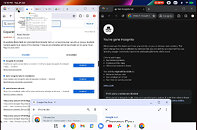
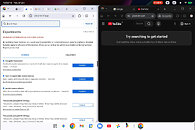
Pictured is the new operating system in all its glory. The desktop design resembles a blend of macOS aesthetics and elements from the Gnome desktop environment typical of Linux distributions. It features a taskbar at the bottom, centrally positioned like in the default version of Windows 11. The battery status and Wi-Fi icons are located in the top right corner, alongside a Gemini button for easy AI access. In September 2025, at Qualcomm's 10th annual Snapdragon Summit, Qualcomm CEO Cristiano Amon and Google's head of platforms and devices, Rick Osterloh, discussed this new operating system. Google plans to merge its ChromeOS and Android for PC projects into a single branch, resulting in an Android for PC version called "Aluminium OS." This new OS will incorporate Google's advanced AI technologies from Gemini, running on more powerful mobile designs powered by the latest x86 architecture. It will feature processors with capable NPUs, allowing Google's open-source Gemma models to run locally without any issues.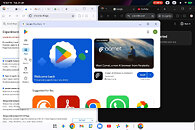
 You can check out the screen-recorded YouTube videos below, uploaded by Android Authority.
Source:
9to5Google
Pictured is the new operating system in all its glory. The desktop design resembles a blend of macOS aesthetics and elements from the Gnome desktop environment typical of Linux distributions. It features a taskbar at the bottom, centrally positioned like in the default version of Windows 11. The battery status and Wi-Fi icons are located in the top right corner, alongside a Gemini button for easy AI access. In September 2025, at Qualcomm's 10th annual Snapdragon Summit, Qualcomm CEO Cristiano Amon and Google's head of platforms and devices, Rick Osterloh, discussed this new operating system. Google plans to merge its ChromeOS and Android for PC projects into a single branch, resulting in an Android for PC version called "Aluminium OS." This new OS will incorporate Google's advanced AI technologies from Gemini, running on more powerful mobile designs powered by the latest x86 architecture. It will feature processors with capable NPUs, allowing Google's open-source Gemma models to run locally without any issues.


82 Comments on Google's Desktop Operating System "Aluminium OS" Has Leaked
What does that mean? Locked down (no default root or admin account), no real filesystem access to the system partition by design, etc etc.Wasn't always this way. It was once very valuable, like gold, due to not having cheap electricity. Fun fact: the tip of the Washington Monument features a once "priceless" aluminum capstone.
@ Google
Take Android, compile for X86/X64, adjust for a few things that need it, improve on the cross-platform libraries, tweak for landscape screens and call it good. Android X86 & it's forks already exist and work like a dream. Seriously? Pull your heads out and make it happen. It would be reasonably easy to create and trivial to maintain.
I'm not sure how Android x86 works with a keyboard and mouse, but it sounds awful. Windows 8 flopped for a good reason.
I would be delighted if Google mainstreamed it!
sourceforge.net/projects/blissos-x86/files/Official/
Of course, it can be avoided, but in default state it is transmitting privacy and your whole life to Google and wholeUS government.
Last thing we need is desktop OS with same behavior.
Every minor or major tech outlet regularly reports Microsoft mistakes.
Also, alternatives to Windows are developing.
On the other side, about Google wrongdoings we have only silence and alternatives are almost non existent.Are you serious? Google is major data hoarder that have more data about any user than Microsoft and Meta combined.
What is publicly declared is not even 30% of their usual data hoarding.
Anonymous??? Just tell me - you work in/for Google, or just trolling for fun?No, not at all. It is enough that you used gmail on Android and anyone, even with not so much knowlssgey, can get to know you bettet than your family 🙄
Oh, and it is dirt cheap on dark web to scout someone this way...So, when some app fucks something up on Windows, it is all guns out on Microsoft, but when some app on Android is miabehaving, then it is not Google fault? Even though Goofle almost completely crrated perfect walled garden with Google Play (from the ordinary user standpoint)?
Also, it is not about apps, but Google mains services. We used Google Workspace for years, and amount of data leaking from it is unacceptable even if it was free, let alone if it was paid service 🙄 It is worse than anything else out there, Outlook included (which is quite bad and data hoarder).Still magnitude of order more complicated than on Windows...Yes, like Windows. I did not bring Windows into discussion, you did.
If you seriously suggest ChromeOS / Android as more private alternative to Windows, then we really have nothing to discuss.
Lose the ego, I'm correcting your misinformation, not challenging you.
- Secretly collecting Wi-Fi data (including payloads) via Street View cars (2010 settlement).
- Project Dragonfly - developing a censored search engine for China (2018).
- Aggressive antitrust behavior in search, Android, and digital advertising (multiple US/EU cases and fines).
- Extensive user tracking and data collection practices that prioritize ad revenue over privacy.
- YouTube’s algorithmic amplification of extreme or harmful content while selectively moderating others.
- Tax avoidance strategies using subsidiaries in low-tax jurisdictions (e.g., “Double Irish”).
- Firing or sidelining AI ethics researchers (eg.: Timnit Gebru, Margaret Mitchell) who raised internal concerns.
- Alleged union-busting and retaliation against worker organizing efforts.
- Working with governments on surveillance-related contracts and data access (various countries).
- Acquiring potential competitors (e.g., DoubleClick, Waze, Fitbit) in ways that reduced market competition.
I think I could list another ten if asked - at the risk of being visited by the FBI.Data about users is ALWAYS anonymized. There is no way, outside of Google and STRICT regulations, to unanonymize that data. Even then, it's mostly useless data outside of marketing and advertising purposes.
- PRISM (Snowden revelations, 2013) where Google was listed as a provider in the NSA program that collected emails, chats, videos, and other data on foreign targets directly from company servers under FISA authority.
- MUSCULAR where the NSA and GCHQ secretly tapped the private fiber links between Google data centers (outside the U.S.), allowing bulk collection of data without warrants for the companies themselves.
- Project Maven (2017–2018) When Google provided AI/image-recognition technology to the Pentagon for analyzing drone video feeds. Massive internal employee protests led Google to let the contract expire but the work continued with other firms.
- Ongoing DoD AI and classified cloud work where Google has since rejoined military AI efforts, including shares of the Joint Warfighting Cloud Capability (JWCC) and recent deals allowing its Gemini models on classified Pentagon systems for “any lawful governmental purpose.” 😈
- National Security Letters (NSLs) and FISA orders. Google regularly receives and complies with hundreds of NSLs and FISA requests per reporting period, affecting thousands of accounts. These often come with gag orders.
- Geofence warrants: Google responds to large numbers of these warrants, turning over location-history data from its Sensorvault that can identify devices in a geographic area during a crime window - enabling reverse location searches on large numbers of people.
- Extensive revolving door with national security and White House officials!!! Dozens of senior moves in both directions (e.g: former White House, DoD, intelligence, and State Department personnel joining Google policy/government-affair roles, and Google executives taking government posts or advisory roles).
- Project Nimbus: A Multi-year cloud computing contract with the Israeli government (including military and security agencies). Highly controversial among some employees and activists, espevially during the 10-7 thing.
- NSA payments for compliance costs: Documents show the NSA reimbursed Google (and others) for costs related to implementing surveillance program requirements after court rulings.
- Heavy lobbying + former regulators on staff during antitrust and privacy fights where Google spends millions annually lobbying and has hired numerous former DOJ, FTC, and congressional staff while facing major antitrust cases and privacy legislation - which raisea concerns about regulatory capture.
I mean it is what it is, I'm even in favor of a few of these programs given the current state of things, but with this as the starting point especially in comparison to Microsoft's starting point, I would venture to claim "user-privacy" will in the future, exist as nothing but a facade - even moreso than now (which is already terriblle) - assuming of course Aluminium OS and other efforts like it assume larger and larger market-shares..