News Posts matching #Gemini

Return to Keyword Browsing

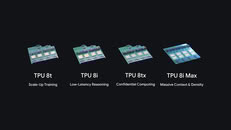
Google Extends Tensor Processor Unit Series with TPU 8tx and 8i Max

While we've always co-designed our TPUs in partnership with Google DeepMind, we're now increasingly getting feedback from external organizations on their specific needs. With computing moving from human to agent scale, businesses are asking for accelerators that can reason across AI models' massive context windows. In addition, some highly regulated customers are asking for specialized encryption capabilities for unique workloads.

The new TPU systems we are announcing today address this new reality. Coupled with our recent PyTorch announcements, our aim is to make TPUs more easily accessible to every developer and Cloud customer. By combining modular custom silicon with an open and easy-to-use software stack, we can deliver new hardware and system configurations at the pace of the AI industry.
Lenovo Introduces Its First Googlebook, Delivering Premium AI Experiences in a Sleek, Lightweight Design

Lenovo today introduced the Lenovo Googlebook 15, its first Googlebook, expanding the company's laptop portfolio by combining Google's computing experiences with Lenovo's signature design, engineering, and user-focused innovation. Powered by Intel Core Ultra 5 processors with built-in Gemini Intelligence, up to 32 GB of memory and up to 512 GB of storage, the Lenovo Googlebook 15 helps users stay productive and connected - no matter where the day takes them.

Designed for professionals, creators and business owners, the Lenovo Googlebook 15 delivers up to 47 TOPS of performance while weighing under 3 lbs., making it the lightest 15-inch device in Lenovo's portfolio.

Googlebook Launches With Intel Core Ultra Series 3 Processors

Intel today announced the first Googlebook devices powered by Intel Core Ultra Series 3 processors (codenamed Panther Lake), bringing together Google's next-generation computing with the proven performance, best-in-class connectivity and efficiency of Intel's flagship client platform. Launching with premium devices from Acer, ASUS and Lenovo, Intel-powered Googlebook laptops are thoughtfully designed and engineered to support the way people work, play and create.

Whether collaborating with colleagues, exploring new ideas, streaming content, or multitasking across apps, Intel-powered Googlebook laptops enable responsive performance and long battery life in sleek, modern designs, creating a fast, intelligent and seamless computing experience.

Snapdragon X Series Powers Googlebook: the First Laptops Designed for Gemini Intelligence

Qualcomm Technologies, Inc. today announced its collaboration with Google to bring the Snapdragon X Elite platform to the first Googlebook laptops. The collaboration builds on the leading performance, power efficiency and AI capabilities of Snapdragon X Elite paired with Googlebook, with built-in Gemini Intelligence to deliver proactive and personalized help that keeps you a step ahead. This new category of premium laptops enables cross-device experiences with Android phones and tablets powered by Snapdragon, including support for native Android applications and games for a seamless personal computing ecosystem.

Googlebook laptops powered by Snapdragon X Elite combine Google's Gemini with the incredible performance, efficiency, and connectivity of Snapdragon X Elite. Features like Cast my Apps, Magic Pointer, and Rambler help you stay more productive without breaking your flow by surfacing relevant information from emails, calendars, and on-screen content, delivering seamless phone integration and advanced security features, and building on native Android apps to enable connected, intelligent, and secure computing experiences from virtually anywhere. The global Android ecosystem enables users to create, learn, and even game on Snapdragon - with popular Snapdragon Elite Gaming features like faster frame rates and enhanced graphics also available on Googlebook laptops powered Snapdragon X Elite.

ASUS Announces the New ASUS Googlebook 14

ASUS today announced ASUS Googlebook 14 (CX9406CAA), a 14-inch ultraportable laptop that's the first ever ASUS laptop designed for Gemini Intelligence. Built for users who want a more connected experience with their Android phone, ASUS Googlebook 14 combines effortless portability, strong performance, and a premium-crafted design that keeps productivity moving seamlessly throughout the day.

ASUS Googlebook 14 comes with 12 months of Google AI Pro. Users can get expanded access to powerful features in Gemini, Flow, and Gemini Notebook as well as Gemini directly in the Google apps they know and use. Plus, they get 5 TB of cloud storage to keep photos and files backed up.

HP Googlebook 14 Brings Premium Craftsmanship to Google's Newest Connected Platform

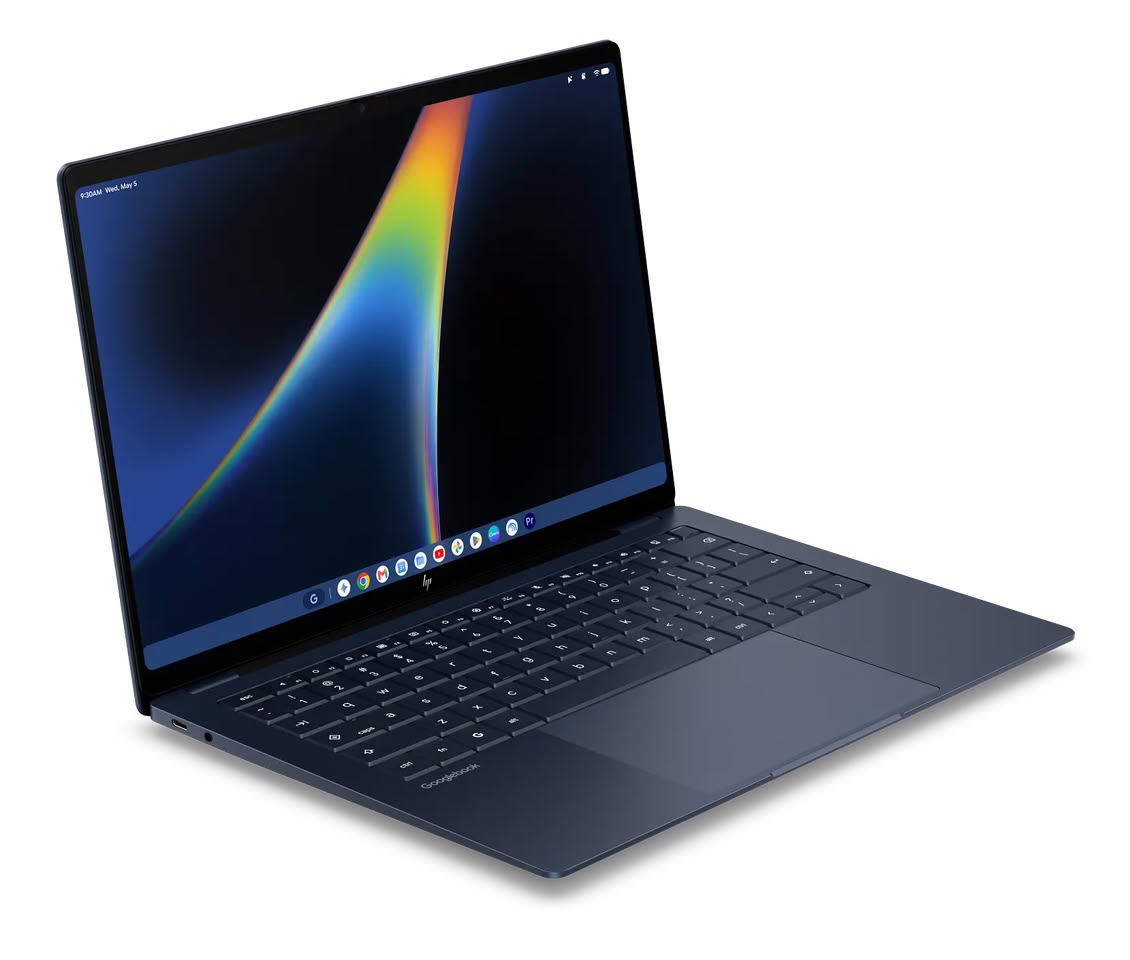
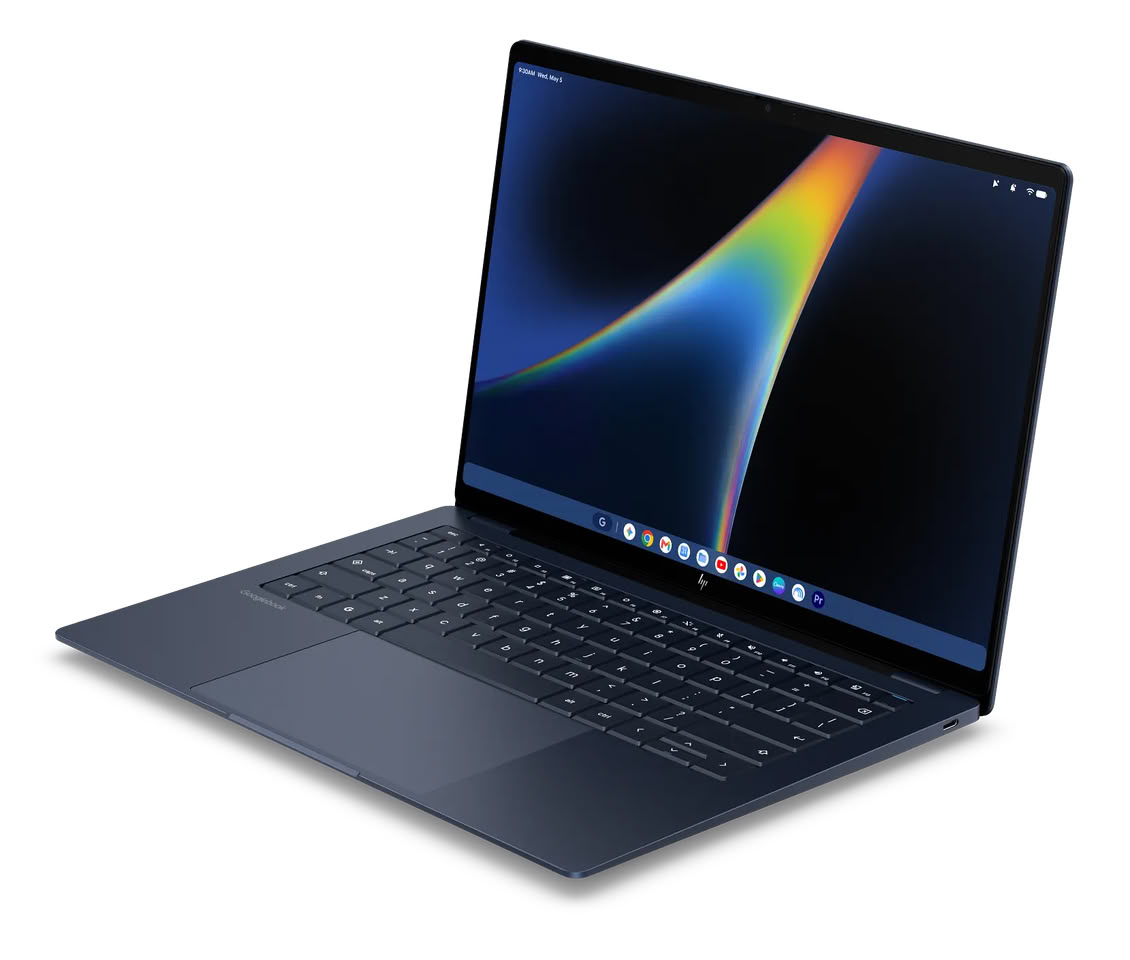
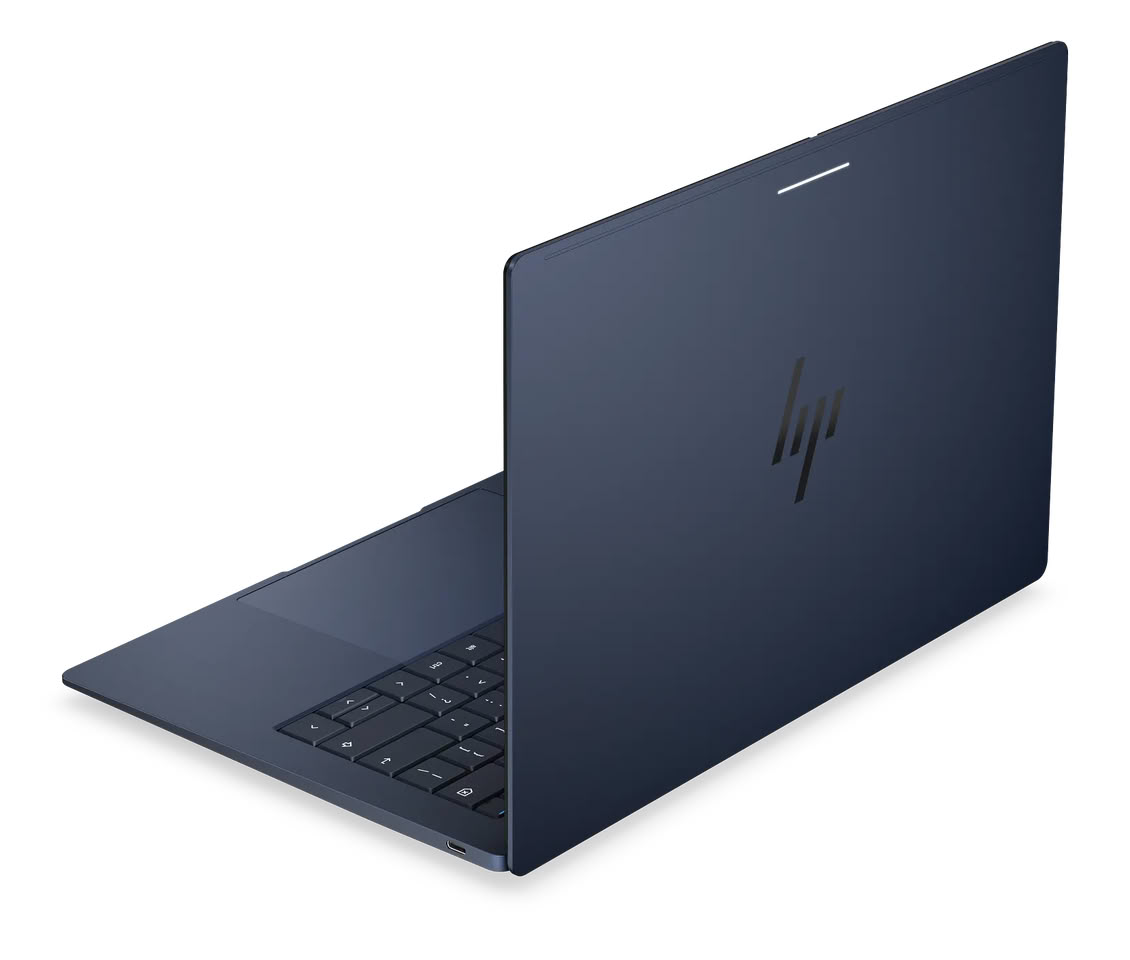
Today, HP Inc. (NYSE: HPQ) announced the HP Googlebook 14, a premium laptop designed to bring the best of HP craftsmanship and the performance and efficiency of the Snapdragon X Elite processor to the new Googlebook experience. Built for people who move fluidly between their phones, laptops, work, creativity and life, the HP Googlebook 14 combines Google Gemini, seamless Android phone synchronization and the premium performance and mobility needed to keep up with demanding days.

Designed to work seamlessly with supported Android devices, the HP Googlebook 14 helps bring phone and laptop together in a more connected experience. With features like Quick Access and Cast my Apps, users can move tasks from phone to laptop, access phone files directly from their laptop's file browser, open supported phone apps without additional installs, and move naturally between devices throughout the day.

Dell Technologies Introduces the XPS Googlebook: The First XPS Laptop Built for Gemini Intelligence

Dell Technologies announced the XPS Googlebook, a 13-inch premium laptop, powered by the Snapdragon X Elite processor, and the first XPS device designed for Gemini Intelligence. Built for Android users and supercharged to power their most advanced workflows, the XPS Googlebook brings the premium materials of the XPS portfolio to the Googlebook platform for the first time.

Why it matters
The XPS Googlebook is the first Dell laptop built for Gemini Intelligence, marking an expansion of the XPS portfolio into a space where premium options have been limited. It brings together ecosystem integration with the design, materials and performance expected from XPS.

Acer Debuts its First Googlebook - the Embodiment of Premium, Intelligence-Powered Hardware

Acer today debuted the Acer Googlebook 14, designed for Gemini Intelligence and the first from the company in a brand-new category of flagship laptops bringing together premium materials, powerful performance, intelligence features, and seamless syncing with Android phones.

Designed for the new Googlebook OS, the device works seamlessly with Android-based workflows and supports touch, keyboard, stylus, voice, and traditional laptop interaction methods within a unified user experience and help from Gemini at every step. The Acer Googlebook 14 is the industry's first convertible Googlebook and provides users with groundbreaking new features designed to boost productivity and creativity by enabling context-aware actions for personalized, proactive help and a more intuitive, streamlined workflow.

MediaTek Dimensity CX C10 Max Offers Flagship Performance to a New Era of AI-First Laptops

MediaTek, a global leader in computing and mobile technologies, today introduced the MediaTek Dimensity CX C10 Max, the inaugural SoC for the company's new Dimensity Compute Experiences (CX) family. As the flagship of the lineup, Dimensity CX C10 Max combines exceptional performance, advanced functionality, and impressive power efficiency to enable an upcoming premium, ultra-portable Googlebook device.

Built on TSMC's advanced 3 nm process, Dimensity CX C10 Max utilizes an All Big Core design with octa-core CPU, 11-core GPU, and MediaTek's 8th-generation NPU in a highly efficient platform engineered to deliver stellar performance across multitasking, productivity, entertainment, intelligent assistance, and more. Its power-efficient architecture enables manufacturers to design thinner, lighter, and fanless devices with all-day battery life.

Googlebook Laptops Arrive with Designs from ASUS, Acer, Dell, HP, and Lenovo

Google's collective effort to introduce a new generation of Gemini-powered laptops, called "Googlebook," has officially launched today. Now available on the Google storefront, Googlebooks are being produced by some of the biggest laptop OEMs, including ASUS, Acer, Dell, HP, and Lenovo. Starting with ASUS, the company has prepared a 14-inch Googlebook 14, powered by the Intel "Panther Lake" Core Ultra Series 3, with 16 GB of RAM and a 512 GB SSD. Acer offers a similarly named Googlebook 14 with comparable specifications, while Lenovo uses the same base but delivers a 15-inch screen. Dell and HP provide Googlebooks in a 14-inch body, powered by Qualcomm's Snapdragon X Elite processors, with 16 GB of memory and 512 GB of storage. Pricing ranges from $899 to $1,299, depending on the manufacturer and specifications.

Generally, Googlebooks follow a consistent philosophy across all models, featuring premium materials like aluminium, magnesium, and carbon fiber instead of traditional plastic. The screens on these models are also higher resolution. A key feature of these laptops is the integration of Android applications and Glowbar, along with Gemini intelligence throughout the operating system experience. Powered by Googlebook OS, the operating system is essentially a desktop version of Android that runs Android applications through the Google Play Store. The OS can run a Linux terminal, and since Android is a heavily modified version of Linux, Linux applications are also supported.

Google Launches Pixel 11 Series Powered by Tensor G6 Chip

Today we unveiled Pixel 11, Pixel 11 Pro, and Pixel 11 Pro XL, which come with major camera upgrades, enhanced durability, and our fastest, most powerful chip, Google Tensor G6, that runs the latest Gemini Nano model.

These phones are designed for Gemini Intelligence to deliver time-saving, personal help and include new camera experiences that will help you better capture the moment in your authentic style.

ASUS Bundles 3 Months of Google AI Pro 5TB or Google AI Plus 400GB with Eligible Notebooks

ASUS announced a new offer with Google that gives customers who purchase selected eligible ASUS and ROG laptops access to three months of Google AI Pro or Google AI Plus at no extra cost. The offer is designed to help users do more than use AI on a single device. It opens the door to a broader Google AI ecosystem for creating, studying, working, researching, and building, together with expanded cloud storage.

With this offer, eligible ASUS customers can start exploring more Google AI experiences as soon as they set up a new laptop. As the top-level offering, Google AI Pro unlocks expanded access to Google's most capable Gemini models and higher usage limits to Google's AI tools that power advanced creative and professional workflows. This plan comes with a massive 5 TB of cloud storage. Google AI Plus delivers an accessible entry point to Google's AI tools, offering elevated model performance, creative generation and productivity features, and 400 GB of cloud storage.

Lenovo Googlebook 15 Renders Appear Months Ahead of Launch

In mid-May, Google announced that it is working on bringing its new Googlebook devices to the masses, with a promise to introduce a new operating system featuring integrated Gemini AI across the board. As the company collaborates with multiple OEMs, including Acer, ASUS, Dell, HP, and Lenovo, we have received the first leak of the Lenovo Googlebook 15 model. This model is set to offer a 15-inch experience of Google's upcoming "Aluminium" operating system. Thanks to a leak by Digital Citizen, we can see the first renderings of the Lenovo Googlebook 15, showcasing a sandblasted aluminium casing in a 15-inch body. The device features the traditional Lenovo bezel and overall design, housed in a medium-thickness body.

On the keyboard front, Lenovo has included a small "G" button with the Google icon, reminiscent of the Windows key on standard Windows-based laptops. Two speakers flank the keyboard, and the left side of the unit includes an HDMI port, a USB-C or Thunderbolt port, and a 3.5 mm headphone jack. On the right, there is another USB-C port, a USB Type-A port, and a slot similar to an SD card reader. Specifications such as display resolution, refresh rate, and details about the processor powering this PC are currently unknown, but we expect to learn more when Googlebooks officially launch. Scheduled for release in the fall of this year, we are still months away from the official debut.

Online Multiplayer Cyberpunk 2.5D Brawler Spin-Off Based on Edgerunners May Be in Development

It was recently reported by MP1st that CD Projekt Red may be working with WayForward, the developer behind the 2.5D game series Shantae and RWBY: Arrowfell, on a new 2.5D brawler based in the Cyberpunk universe. The publication alleges that it has seen the portfolio of an unnamed former WayForward developer, who claims to have been working on the 2.5D brawler between 2025 end 2026.

The project is known internally as Gemini, and it would be based on the Cyberpunk Edgerunners TV series that has gained popularity on Netflix since its 2022 debut. It's currently unclear if the game is still in development or if it even made it out of the research and development phase, but the portfolio hinted that it was a brawler being designed as an online, multiplayer beat-'em-up game with rollback-safe architecture and online transport integration. The project even got so far as having its own Cyberpunk Edgerunners Gemini banner, which was included in the aforementioned portfolio.

Intel and Google Cloud Collaborate to Drive Intel's Enterprise AI Transformation

Intel and Google Cloud today announced an expansion of their previously announced multi-year strategic collaboration, which would accelerate Intel's enterprise-wide digital evolution through the deployment of Gemini Enterprise and Google Cloud.

Intel will integrate advanced, Gemini-powered generative AI across its global workforce, helping to scale capabilities and bolster traditional workflows across engineering, supply chain, and corporate operations. Google Cloud's highly scalable infrastructure will also augment Intel's semiconductor development environment, introducing custom, agentic workflows to speed the chip design lifecycle and streamline cross-functional execution.

ASUS Expands ChromeOS Lineup in the US with Chromebook CM15 and CM32 Detachable

ASUS today announced the US availability of the ASUS Chromebook CM15 and ASUS Chromebook CM32 Detachable, expanding its ChromeOS lineup with devices built for everyday productivity, mobility, and durability. Powered by the efficient the MediaTek Kompanio 540 processor, both devices feature long battery life, access to Google AI Pro tools, and military-grade toughness—making them reliable options for students and on-the-go professionals.

ASUS Chromebook CM15 (CM1505CM4A)
The ASUS Chromebook CM15 is a budget-friendly 15.6-inch laptop powered by the MediaTek Kompanio 540 processor, with support for up to 8 GB of RAM, up to 128 GB of storage, and up to 12 hours of battery life for smooth daily computing. Its portable, 3.2 6lbs. chassis is complemented by a 180° lay-flat hinge for flexible use, while a built-in webcam privacy shutter provides added peace of mind. The expansive FHD wide-viewing-angle display is paired with ergonomically repositioned I/O ports placed along the upper left edge—a layout that keeps cables routed away from the mousing area and reduces desk clutter for a more comfortable workspace. Connectivity includes HDMI and dual USB-C ports, ensuring easy support for external displays and accessories. The ASUS Chromebook CM15's eco-conscious construction incorporates 30% recycled plastics and sustainable packaging, and it's built for longevity with easy-service components and MIL-STD-810H military-grade durability.

Intel CPUs Set to Power Googlebook Laptops, with "Wildcat Lake" in Play

Google launched its "Googlebook" laptops yesterday, introducing a new intelligent platform that leverages Gemini AI, succeeding its Chromebook offerings. Initially, it was unclear what hardware Google would use for its upcoming laptop models. However, Intel announced that it has been collaborating with Google on these models, with Intel Core processors at the core of the platform. Google is likely to pair these laptops with Intel's latest Core Series 300 "Wildcat Lake" processors, which the company recently launched. This means that Googlebooks will feature an x86 platform based on Intel processors, with six CPU cores consisting of two "Cougar Cove" P-cores and four LPE "Darkmont" cores. They will also include an NPU 5 with 40 TOPS of INT8 data, an Xe display and media engine, and a GPU with up to two Xe3 cores, all built on Intel's 18A internal node.

However, Intel will not be the exclusive platform provider for Googlebooks. In an exclusive interview with Google VP John Maletis, ChromeUnboxed learned that Google has set strict requirements for its OEM partners, including specifications for CPU, memory, keyboard layout, and storage configurations for its upcoming devices. Since launch partners will also include Qualcomm and MediaTek, we can expect to see Arm-powered Googlebooks as well. Acer, ASUS, Dell, HP, and Lenovo will be participating in the launch of the new Googlebook lineup, with devices reportedly arriving this fall.

Google Prepares "Googlebook" as a Chromebook Successor, Powered By Gemini

Google is preparing to refresh its laptop lineup, replacing the traditional Chromebook branding with the new "Googlebook" name. According to a now-deleted XDA Developers post, archived by some Redditors, Google is collaborating with several PC OEMs to launch what seems to be the successor to its well-known Chromebook devices. Notably, Acer, ASUS, Dell, HP, and Lenovo will be participating in the launch of the new Googlebook lineup, with devices reportedly coming this fall. Each of these OEM partners will create their own version of the Googlebook, adding their unique style. We have seen an official render featuring what appears to be a glowing RGB strip, which the company calls "Glowbar." Whether it will be more than just a gimmick remains to be seen.

The focus of Google's customization with these Googlebooks is the deep integration of the company's AI services. These include applications such as "Magic Pointer," which takes context from the user's screen and uses Gemini AI to understand the situation, providing additional context or using an image generation mode to combine and edit photos. Another highlighted feature is "Cast My Apps," which connects Android smartphones and allows users to interact directly with their phones from the laptop. This is similar to Apple's macOS iPhone Mirroring app, indicating that Google is taking inspiration from other ecosystems. Interestingly, we still don't know what hardware these laptops will run on, but we expect more details to be revealed at today's Android Show I/O Edition or in the coming weeks.

Google Introduces Its Eighth Generation of Custom Tensor Processor Unit

Today at Google Cloud Next, we are introducing the eighth generation of Google's custom Tensor Processor Unit (TPU), coming soon with two distinct, purpose-built architectures for training and inference: TPU 8t and TPU 8i. These two chips are designed to power our custom-built supercomputers, to drive everything from cutting-edge model training and agent development, to massive inference workloads. TPUs have been powering leading foundation models, including Gemini, for years. These 8th generation TPUs together will deliver scale, efficiency and capabilities across training, serving and agentic workloads.

In this age of AI agents, models must reason through problems, execute multistep workflows and learn from their own actions in continuous loops. This places a new set of demands on infrastructure, and TPU 8t and TPU 8i were designed in partnership with Google DeepMind to take on the most demanding AI workloads and adapt to evolving model architectures at scale.

Intel and Google Strengthen Intel Trust Domain Extensions in Joint Security Review

Intel and Google published the results of a significant joint security review of Intel Trust Domain Extensions (Intel TDX). The five-month engagement between Intel's INT31 research team and Google Cloud Security focused on hardening Intel TDX Module 1.5, the core software responsible for managing confidential virtual machines. The review identified five vulnerabilities and 35 other weaknesses or areas for improvement. According to Intel, all five vulnerabilities were patched in the latest code version released to partners.

Intel TDX represents a shift in data center security. Unlike traditional virtualization, where the hypervisor has full access to guest data, TDX creates "Trust Domains" (TDs), or hardware-isolated virtual machines. These are cryptographically isolated from the hosting infrastructure using Intel's Secure Arbitration Mode (SEAM). The system relies on the Intel TDX Module, a digitally signed software shim running in SEAM. It enforces security policies that hardware alone cannot handle. Because a compromise of this module could theoretically bypass the system's isolation guarantees, it is a critical verification target.

AI Arms Race Targets Google TPUs as DOJ Charges Ex-Googler with Espionage

The AI arms race is now in full swing, and corporate espionage is reaching levels beyond what we previously imagined. According to the United States Department of Justice (DOJ), former Google software engineer Linwei Ding has been convicted of economic espionage and theft of confidential AI technology, specifically related to Google Tensor Processing Units (TPUs). An FBI investigation revealed that the ex-Googler was suspected of stealing information about the entire infrastructure surrounding TPUs, including chip architecture, external connectivity, and more. The DOJ concluded that Linwei Ding was acting for the benefit of the People's Republic of China (PRC), with the primary goal of stealing sensitive intellectual property that Google has spent years and billions of US Dollars developing. Naturally, Google collaborated with the FBI to protect its intellectual property and found the former employee guilty of stealing as many as two thousand pages of confidential information.
U.S. Department of JusticeThe trade secrets contained detailed information about the architecture and functionality of Google's custom Tensor Processing Unit chips and systems and Google's Graphics Processing Unit systems, the software that allows the chips to communicate and execute tasks, and the software that orchestrates thousands of chips into a supercomputer capable of training and executing cutting-edge AI workloads. The trade secrets also pertained to Google's custom-designed SmartNIC, a type of network interface card used to facilitate high speed communication within Google's AI supercomputers and cloud networking products.

Google's Desktop Operating System "Aluminium OS" Has Leaked

Google's return to the desktop has been now cemented with the latest leak of the so-called "Aluminium OS." Accidentally shared by Google, 9to5Google managed to capture some screen recordings of this new creation that Google has been developing behind the scenes. A recent submission to the Google Issue Tracker revealed a Chrome Incognito bug, complete with video evidence from a system running Aluminium OS. Before the video was removed, 9to5Google obtained recordings showing a new Android-powered PC operating system. Running on the latest Android 16 platform, the system is being internally tested on an HP Elite Dragonfly 13.5 Chromebook laptop equipped with 12th Generation Intel "Alder Lake-U" Core processors. As a test unit, this marks a significant shift from the Android OS used on mobile Arm-based systems, as Aluminium OS now operates smoothly on x86 architecture.

Pictured is the new operating system in all its glory. The desktop design resembles a blend of macOS aesthetics and elements from the Gnome desktop environment typical of Linux distributions. It features a taskbar at the bottom, centrally positioned like in the default version of Windows 11. The battery status and Wi-Fi icons are located in the top right corner, alongside a Gemini button for easy AI access. In September 2025, at Qualcomm's 10th annual Snapdragon Summit, Qualcomm CEO Cristiano Amon and Google's head of platforms and devices, Rick Osterloh, discussed this new operating system. Google plans to merge its ChromeOS and Android for PC projects into a single branch, resulting in an Android for PC version called "Aluminium OS." This new OS will incorporate Google's advanced AI technologies from Gemini, running on more powerful mobile designs powered by the latest x86 architecture. It will feature processors with capable NPUs, allowing Google's open-source Gemma models to run locally without any issues.

Global AI Server Shipments Forecast to Grow Over 28% YoY in 2026, with a Rising Share of ASIC-Based Systems

North American CSPs' continued investments in AI infrastructure are expected to increase global AI server shipments by more than 28% YoY in 2026, according to the latest market research from TrendForce. The rapid growth of AI inference services is boosting demand for general-purpose servers, supporting both replacement and expansion efforts. Consequently, TrendForce predicts that total global server shipments, including AI servers, will accelerate from 2025, with a 12.8% YoY growth in 2026.

The server market from 2024 to 2025 primarily centered on training advanced large language models (LLMs), utilizing AI servers with GPUs and HBM for parallel computing. However, starting in the second half of 2025, the growth of AI agents, LLaMA-based applications, and Copilot upgrades shifted CSP's focus toward inference services as a monetization strategy. AI inference workloads are now deployed not only on dedicated AI server racks but also on general-purpose servers that handle pre- and post-inference computing and storage.

EPSON Launches First Projector Powered by Google TV and Gemini

At the 2026 International CES, Japanese electronics maker EPSON showcased the first projector powered by Google TV and Gemini AI, featuring a unique form factor. On the show floor, we observed two versions: the Lifestudio Flex Plus Portable Lifestyle and the Lifestudio Grand 4K PRO-UHD Ultra Short Throw Laser projector. The first model uses a 3-Chip 3LCD Triple Core Engine to deliver 1,000 lumens of both color and white brightness. Built-in Google TV provides direct streaming access without the need for extra hardware. Gaming features include an Auto Low Latency Mode that activates when consoles are connected. Connectivity options include HDMI and a USB-C port for video and power delivery. Users can control the projector and adjust settings through the Epson Projection Studio App. The Lifestudio Flex Plus Portable Lifestyle is priced at $999.99 and comes with a two-year warranty.

Google Prepares TPUv8ax for Training and TPUv8x for Inference

Google's custom AI infrastructure is beginning to draw external interest, and the company has reportedly developed two new TPU versions: one designed for AI inference and another optimized for training. With the eighth generation of TPU designs, Google has introduced the TPUv8ax "Sunfish" for training AI models like Gemini, and the TPUv8x "Zebrafish" for large-scale model inference. For "Sunfish," Google has partnered with Broadcom and its custom design team, which handles end-to-end design, memory, supporting hardware, and packaging, providing Google with a finished product ready for integration into its extensive server infrastructure.

For the inference-focused "Zebrafish" TPUv8x, Google has enlisted MediaTek's assistance, but only in a limited capacity. Google is sourcing wafers and memory directly from suppliers, while MediaTek contributes to supporting chips and packaging efforts, areas where Google has limited expertise. This means that a lot of chip design efforts are now processed in-house, easing reliance on external partners. However, since Google is not yet up to speed with the full-stack chip design, some help is still needed. The concrete performance figures and memory capacities are still unknown. However, we expect another leap over the TPUv7 "Ironwood," which carries 4,614 TeraFLOPS at FP8 precision and 192 GB of HBM memory.
Return to Keyword Browsing
Nov 11th, 2026 03:59 CST change timezone

New Forum Posts

Popular Reviews

TPU on YouTube

Controversial News Posts