Monday, September 21st 2026

Googlebook Laptops Arrive with Designs from ASUS, Acer, Dell, HP, and Lenovo
Google's collective effort to introduce a new generation of Gemini-powered laptops, called "Googlebook," has officially launched today. Now available on the Google storefront, Googlebooks are being produced by some of the biggest laptop OEMs, including ASUS, Acer, Dell, HP, and Lenovo. Starting with ASUS, the company has prepared a 14-inch Googlebook 14, powered by the Intel "Panther Lake" Core Ultra Series 3, with 16 GB of RAM and a 512 GB SSD. Acer offers a similarly named Googlebook 14 with comparable specifications, while Lenovo uses the same base but delivers a 15-inch screen. Dell and HP provide Googlebooks in a 14-inch body, powered by Qualcomm's Snapdragon X Elite processors, with 16 GB of memory and 512 GB of storage. Pricing ranges from $899 to $1,299, depending on the manufacturer and specifications.
Generally, Googlebooks follow a consistent philosophy across all models, featuring premium materials like aluminium, magnesium, and carbon fiber instead of traditional plastic. The screens on these models are also higher resolution. A key feature of these laptops is the integration of Android applications and Glowbar, along with Gemini intelligence throughout the operating system experience. Powered by Googlebook OS, the operating system is essentially a desktop version of Android that runs Android applications through the Google Play Store. The OS can run a Linux terminal, and since Android is a heavily modified version of Linux, Linux applications are also supported.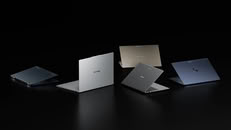
 Gemini-powered applications include features such as "Magic Pointer," which takes context from the user's screen and uses Gemini AI to understand the situation, providing additional context or using an image generation mode to combine and edit photos. Another highlighted feature is "Cast My Apps," which connects Android smartphones and allows users to interact directly with their phones from the laptop. This is similar to Apple's macOS iPhone Mirroring app, suggesting that Google is drawing inspiration from other ecosystems. With the purchase of a Googlebook, users receive a one-year subscription to Google AI Pro, valued at $249, which includes 3 months of YouTube Premium, BandLab, Adobe Photoshop, and CapCut, as well as 12 months of Luminar and GeForce NOW.
Source:
Google
Generally, Googlebooks follow a consistent philosophy across all models, featuring premium materials like aluminium, magnesium, and carbon fiber instead of traditional plastic. The screens on these models are also higher resolution. A key feature of these laptops is the integration of Android applications and Glowbar, along with Gemini intelligence throughout the operating system experience. Powered by Googlebook OS, the operating system is essentially a desktop version of Android that runs Android applications through the Google Play Store. The OS can run a Linux terminal, and since Android is a heavily modified version of Linux, Linux applications are also supported.


22 Comments on Googlebook Laptops Arrive with Designs from ASUS, Acer, Dell, HP, and Lenovo
The whole point of Chromebooks was they were cheap, disposable browsing machines. And they still failed to gain much traction.
Who wants to pay $900+ for a chromeOS laptop (because that is what this googlebookOS is)? It's not a full proper OS, these machines don't have fleshed out UEFI BIOSes so installing anything else is a royal PITA, and you are limited to whatever Google gives you.
Gross.
What is it with the needlessly mimicking of Apple, down to the complete lack of ports and a premium price because the case is made of a material that is no ABS plastic?
The Glowbar is...a battery meter? Really. That is innovative. /s
Also, I was really hoping this could have some QoL features, like quality sound with proper designed speakers (force-canceling), nice replaceable backlit keyboards, proper status LEDs and enough ports to warrant a day-to-day on the move use.
By now, this is just the most recent incarnation of the netbook, concept put to practice again.
As for Linux support. Heck, give it a year and these are running it (with sleep issues).
Why not give us actual Linux? It's almost definitely miles better, cheaper because Google wouldn't have to develop the OS, and... well... it wouldn't be Android. Honestly, the laptop would be somewhat attractive to at least me if it came with normal Linux, whether that be Bazzite, Mint, Cachy, etc, because I'd be a little more reassured that the laptop isn't just a mobile spyware machine.1: Operating systems should not be an experience. They should be background software that gets out of the way of the user doing whatever they want.
2: Windows 11 is getting continually blasted online for exactly this. Why on earth did Google think this was a good idea? Very few people want Gemini squeezing its way into everything it can. There's a place for AI, but that place is not literally everywhere.
The only way I can see this being a success is if Android users really want the "Apple experience" where every piece of hardware in their homes is connected and software compatibility is severely crippled due to Big Co.'s desire to only support Big Co. Ecosystem apps
TPU covers tech products, especially major ones, from every PR launched into the market.
You should have seen the heyday of GPU launches, where for each chip, you had 15 AIBs throwing their special flavor of the same thing +/- 15MHz core clock and cooling arrangement. :laugh:
If the remote management support is robust, I'm guessing that enterprise and education clients already running Chromebooks will eventually migrate to Googlebooks. None of them are going to pay full retail of course. I assume Googlebooks will do very well for users who spend 90% of their time in a web browser and Google Workspace or Google Classroom
Clearly Google is trying to mimick Apple's playbook (at least on the software side) where they have full control of the software experience both on mobile (smartphones, tablets) and personal computing. They don't control the hardware but someday that may happen. There's no true competitor to Apple who has full control over vertical integration, both for hardware and software on both the mobile and personal computing domains.
Microsoft had this for a while then they exited the smartphone business and now have almost zero influence on the what Steve Jobs wisely referred to as "the computer for the rest of us" (smartphone). Worse Microsoft neglected properly strategizing and maintaining Windows which is now just a resource pig. Microsoft is even pretty halfhearted about their Surface efforts these days.
In the end, Googlebook doesn't have to be the best for hardcore nerdwads and gamers. It just needs to be easy to manage by IT staff working for enterprise, government and educational organizations. Not everyone in those groups will be on a Googleboo but there's a large contingent of employees and elementary/middle/secondary school who do not need top tier hardware performance or will be playing games at their school or work desk. These are productivity devices for organizations.
I don't see the primary purchasers of these devices being consumers much like Chromebooks never ended up being top consumer items.
For sure if these are heavily using cloud computing services it's easier to integrate Google Gemini into the ecosystem without making it a bolted-on afterthought.
I also love how one of the selling points of "Googlebooks" is being able to run on device AI....a month after rescinding the promise of "on device AI" for pixel 9+ devices, moving all that AI onto the cloud instead. Yeah, good luck keeping AI on device on these things.
On an unrelated note, Remember the Chromebook Plus program? Yeah, nobody else does either.But that is exactly what these are for. Anyone doing anything beyond basic web browsing, doing any sort of serious work, isnt buying one of these. The Macbook Neo is unironically a better supported coding device and CHEAPER, with a full OS to boot.
On that note, ipads are, unironically, better productivity machines then Chromebooks. They have a full suite of editor tools available to them and high quality 4k cameras. If its not in Google Docs, good luck getting chromebooks to do much of anything. Sure the Adobe cloud is a thing, but most Chromebooks will choke trying to run it.
There's more information here:
www.pcworld.com/article/3238878/the-googlebooks-most-compelling-ai-feature-isnt-even-ai.html
Scroll a little over halfway through the article or just search for the second occurrence of "linux" on the page with your browser's native find function.
We've mentioned the earlier assumption that Googlebook would slot into the Chromebook space for enterprise and education markets. But there does seem to be some thought by Google to include an AI developer's playground by heavily integrating an AI programming environment into the system.
Googlebook appears to be a more curious critter than at first glance.
The Macbook neo is, unironically, a far better system to act as a linux dev kit.These googlebooks have nowhere near the local resources needed to be attractive to AI programmers. "some thought by google" translates to "we threw every buzzword at the wall hoping something sticks". And as previously mentioned, Google walked back their local AI promises on Pixel devices after less then a year, so who is gonna trust them here?
Just like the aforementioned Plus Chromebooks, there is nothing these Googlebooks do that an equivalently priced Windows machine cannot do better, and a whole host of things they do worse, for seemingly 0 benefit. Enterprise and educational markets have no need for a $1000 Chromebook. Nobody does serious work on ChromeOS.
This is strapping power steering and a turbocharger onto a horsecart. The fundamental underpinnings of chromeOS are not suited to a production environment, and no amount of slathering ill fitting Android apps on top is going to fix that.
Anyhow, no single individual here or elsewhere will determine the success of this new platform. It appears to have multiple target audiences that could benefit. It's clearly not a pureplay device. YOU may not care for the device but you're not the only person on this planet nor are you (and your usage case) the center of the universe. You may not drive a minivan but for some people it's a godsend, whether it be the family with four kids or that lady running a baking catering service from home.
Only time will tell, they haven't even shipped yet, today was their official launch day.
We know this, because for years, that environment has languished in ChromeOS. What cause do you have to believe Google will suddenly fix this behavior?
And if most of the work has to be done cloudside, again, why buy a googlebook over an equivalent device running real operating systems? There's lots of repeating Google's marketing jargon, but not a whole lot of explaining WHY these things are unique selling points to justify these devices.It's clear you really want Googlebooks to succeed, but to use your own words, "You're not the only person on this planet nor are you (and your usage case) the center of the universe".
Here's a legitimate question: can you describe why, exactly, someone would want one of these beyond the marketing slides? The Linux dev system? Already exists in chrome OS and failed, because ChromeOS sucks for developing. Android app support? Again, already have it on ChromeOS, and it failed, because Android apps are not built for chromeOS, many either do not function, dont function correctly, or have unusable controls because they are designed around touch interfaces. Gemini integration? Well, Gemini on ChromeOS and what little has been announced for the Googlebook pales in comparison to its capabilities on MacOS or Windows, so there's another strike.
What, exactly, does a Googlebook excel in? Why would someone want one?
What we DO know is that all of Google's previous attempts to make ChromeOS a serious contender have fallen flat on their faces, and Google has not addressed the primary complaints of these attempts with the Googlebook. As such, we can make an educated guess that the Googlebook will also fail, for the same reasons. We can see from ChomeOS' marketshare that it has utterly failed to capture the wider market.
I didn't say only for babies.
Clearly Google wants to leverage the large Android app marketspace and developer community. I sound like a broken record but some developer(s) may find this combination of software and hardware and price compelling. The PCWorld article did say that Antigravity was deeply integrated in Googlebook OS.
You repeatedly assume that Googlebook OS is a Xerox copy of Chrome OS. It's not.
Googlebook ≠ Chromebook
Googlebook OS ≠ ChromeOS
Can you get that into your little walnut?
I don't know of a single company that hits a home run every time they step up to the plate. Yes, there are websites devoted to archive dead Google projects and this may end up there, just like Google Wave, Google+, Stadia and other fine initiatives from Big G but a little serious competition for Windows, macOS, and Linux would encourage those three to work harder. We really don't want this to become a two-horse race (iOS vs. Android) or even a monoculture (CUDA for example).
The fact that Google is taking a second stab at this means they think it has some potential. If they expect it to be similar to Chromebook/ChromeOS, they probably would have just given up like they often do. Chromebooks have been around 15 years and while they have never been a breakout hit, that's they've still survived until now.
And why would they care? Let's review how Alphabet makes the lion's share of their revenue: they collect your online behavior and sell that information to the highest buyer. They want to have a popular desktop operating system so they know what you're doing when you're not on your Android phone. Microsoft knows what you're doing on your Windows PC; stupidly they bowed out of the smartphone business so now they don't really know what you're doing on your phone anymore.
Apple knows what their customers are doing on their iPhones, Macs, Apple TVs, etc. but they're different in that they're not selling their customer data to third parties like Google, Amazon, Microsoft, Facebook, etc. do.
Note: I bought a MacBook Neo in March and have a Mac mini M2 Pro as my daily driver. The M2 Pro compiles much faster than the Neo's A18 Pro smartphone SoC.
Considering it's launch day it seems a little premature to publish a Googlebook obituary given that Chromebooks have been around for 15+ years. The software can be improved. I remember Mac OS X 10.1, that was pretty creaky, nothing as refined as today's macOS.
Also, this was posted on a forum comprised entirely of hardcore nerdwads and gamers, so of course I'm gonna complain about it not having state-of-the-art specs :laugh:
Google is obligated to support Chromebooks for several more years. Time will tell whether or not they will continue releasing new Chromebook models or let that older product line just fade away.
And yes, feel free to bitch and moan that it doesn't have 128GB RAM, 2TB SSD, and a RTX 5090 GPU. Because if you don't some other random nerdwad mouth-breathing propellorhead is going to. It always happens here.
:clap: :peace: :lovetpu: