Friday, January 30th 2026

NVIDIA Keeps SHIELD TV Updated a Decade Later, Promising More Updates
Believe it or not, NVIDIA launched its first SHIELD TV in 2015, marking nearly a decade of continuous support for the platform. In an interview with Ars Technica, Andrew Bell, NVIDIA's senior VP of hardware engineering, reassured the company's loyal fan base that they have no plans to abandon the SHIELD TV anytime soon, promising ongoing updates in the years to come. Bell expressed frustration with the limited updates typically provided for phones and tablets, saying, "Early on when we were building SHIELD TV, we decided we were going to support it for a long time." He recalled a conversation with CEO Jensen Huang about the duration of support, to which Huang responded, "For as long as we shall live."
As NVIDIA enters the second decade of supporting the SHIELD TV, they continue to produce the 2019 version, featuring the NVIDIA Tegra X1+ processor, 3 GB of RAM, and 16 GB of storage. There was once talk within the gaming community and among NVIDIA engineers about venturing into making a gaming console. "Pretty much everybody who worked at NVIDIA in the early days really wanted to make a game console," Bell confirmed. However, the complexity of building a console, which requires not just a GPU but also a CPU, an OS, games, and a user interface, deterred the company from pursuing this path.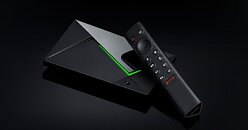 Interestingly, when NVIDIA was a smaller company, engineers initially built the SHIELD for themselves. "Selfishly, a little bit, we built SHIELD for ourselves," Bell admitted to Ars Technica. They wanted a high-quality, high-performance TV streamer outside of the Apple ecosystem. After creating some prototypes and getting excited about the potential, CEO Jensen Huang suggested, "Why don't we bring it out and sell it to people?" Sales of the NVIDIA SHIELD TV have remained consistent over the past decade, continuing to sell as strongly as they did during its launch week.
Sources:
Ars Technica, via VideoCardz
As NVIDIA enters the second decade of supporting the SHIELD TV, they continue to produce the 2019 version, featuring the NVIDIA Tegra X1+ processor, 3 GB of RAM, and 16 GB of storage. There was once talk within the gaming community and among NVIDIA engineers about venturing into making a gaming console. "Pretty much everybody who worked at NVIDIA in the early days really wanted to make a game console," Bell confirmed. However, the complexity of building a console, which requires not just a GPU but also a CPU, an OS, games, and a user interface, deterred the company from pursuing this path.

19 Comments on NVIDIA Keeps SHIELD TV Updated a Decade Later, Promising More Updates
"Say Andrew, you know where people don't remember they can subscribe to GeForce NOW? Our own shit!"
They're going to beat Microsoft to the cloud gaming optimized streamer box.
I don't know what to make of the game console talk. It's not like they haven't tried that before, including both traditional game console and GeForce Now streaming. And here we are with them being buried away in the AV aisle at the store with no gamepad in sight.
Also, this is their own chip, so they can write drivers for as long as they feel like it, for newer ATV/GTV versions.
Starting to wonder if this is a backup revenue plan for them, for when AI-related sales eventually flatter.
But those are so obselete these days anyway with their K1 chips so I can't really be mad but it would stilll be nice since they are still supporting the shield TV packages.
Wouldn't take them a whole lot of time or effort to port it over and the last ever official update from them was such a bad one. It just made it super laggy. I did manage to get an android 9 custom ROM on it though and while that worked. The hardware itself was just too far behind to really make it a good experience overall.
I would like for a newer version to be made, more to have a little more system memory and compatibility with newer codecs and standards (BT 5.3+, HDR10+, WiFi7, HDMI 2.1, maybe add DP 2.1, USB-C, etc).
I use VLC, but is atrocious with 4K HDR movies. I have to restart VLC a couple of times until it properly plays some of the HDR 4K content properly.
Like imagine one of these with a modern Tegra on par with an apple A19 pro or snapdragon elite x2, 12GB of RAM, and a M.2 slot you could pop a 8TB drive in, make it a great streaming and media NAS and emulation and even gaming box.OK, so what am I missing here? CPU? Did they forget what their own Tegra was? User interface? Yeah they already got that too. Hell they used to have their own store for Tegra games specifically, I remember using it on the OG nexus 7.
How was the company so incompetent here?
- DV Profile 7 (meaning real DV)
- HDR 10+
- Quick Media Switching (HDMI 2.1 feature)
That's about it. And please, PLEASE do not talk about AV1 since Widewine L1 is what matters to play anything 4K with streaming apps, and 4k can be played through HEVC regardless.
What it supports that no others have all in one box, which is why it's still relevant to this day:
- Support for ALL sound format (Dolby Atmos and below, DTS X and below, in full passthrough, very limited amount of boxes supporting this)
- Support for somewhat DV and HDR (it will look good no matter what you throw at it)
- support for Widevine L1 and HEVC (meaning Netlfix / Amazon Prime / HBO in 4K Atmos, which is not supported by most boxes out there, whether supporting AV1 or not)
- Android TV with native support for APK apps (KODI, obviously...)
- Frequency automated switch (60hz menu to 24hz movie)
- AI picture enhancement for less than 4K videos (seriously good)
So yeah, all this taken into account, unfortunately, to this day, the Shield is the best media streaming device out there. Dune HD, Zidoo, Minix, Ugoos, they are all great box vendors, but none of them offer the same level of features all in one, including boxes released not 3 weeks ago! and much less an updated level of features (QMS, please?!?!?!). And that's not even mentioning the pricetag and quality of remote provided. It's either you get DV profile 7 but no Widevine L1, or QMS (Apple 4K, Xbox X/S) but no OS openess and Android APK possibilities (no straight KODI), or Dolby atmos but no DTS (much less DTS X) nor full sound passthrough (meaning Atmos becomes basic DD+. and DTS HD MA becomes DTS Core), and so on.
The market is begging for a new box that does it all.$30 Walmart 4K UHD Dolby Vision android TV box is $30 for a reason.
- No lossless sound pass-through: no real Dolby Atmos, true-HD, or DTS:X, DTS HD-MA or DTS-HD (DD+ and DTS Core instead)
- Much less power, AMlogic chips
- No 2× USB 3.0, Plex server, DACs
Long story short, you cannot watch ANY movie properly with those box, you won't get the sound you're supposed to get, not to mention the features. You get what you pay for.
Oh, and android is open source. There is nothing stopping the multi trillion dollar Nvidia from rolling their own OS fork for their media box. Amazon doesn't have an issue with it.Missing AV1 is a problem. How can you talk about plex then sweep AV1 aside because " muh steaming services don't use it"?
What I care the most for device like this is to do what it says it will do and runs the apps I want it to run with no problems - in other words stability.
That what the shield updates allow, everything runs well and smoothly, and they keep app compatibility. If there is an issue they can solve - they fix it.
If you want the flashy new streamer with the newest android go get it, this is not what the shield about. And to be honest if updating to the newest Android version means
there will be issues that will need to be iron out - I'll prefer not update, I want my streamer to "just work".
About AV1 - in all honestly it's nice to have, it should have advantages at lower bit rate, since my shield is connected to gigabit fiber, it's not an issue.
With plex it even less of issue as you can locally use higher bit rate than what streaming services would provide, also shield is one of the few devices that
supports hardware accelerated streaming by default with no need for any plex subscription.
There a lot of features that would be nice to have on future Shield TV, but as it stands right now - I don't miss them. For streamer I just want something reliable that will work
for long time to come. I've been burnt or disappointed with enough streamer in the past that had poor software support that made them obsolete very fast or had major issues, but not this one.