Sunday, February 8th 2026

Intel Readies Z990 and Z970 Chipsets for Core "Nova Lake-S" Processors
Intel is preparing to give its next-generation Core Ultra Series 4 "Nova Lake-S" desktop processors not one, but two enthusiast-segment desktop motherboard chipsets, the Z990 and Z970. The new processors introduce Socket LGA1954, which will require a motherboard upgrade. The idea behind segmenting Z990 and Z970 to succeed the current Z890 is to probably bring enthusiast features such as CPU overclocking to a wider market segment.
There is no word on how the Z990 and Z970 are differentiated, but VideoCardz reports that the Z970 is based on a physically smaller chip resembling the mid-tier B960 chipset that succeeds the current B860. The difference between the two could hence be I/O. The Z990 could feature a larger number of platform PCIe lanes, and have a wider 8-lane DMI chipset bus, whereas the Z970 could have fewer PCIe lanes, and a 4-lane DMI bus, just like the B960, but with the added CPU overclocking capability. This chipset would hence be suitable for those who want enthusiast features but don't need an elaborate I/O. We still don't know the exact PCIe lane counts of Intel's 900-series chipset, so we can't tabulate them.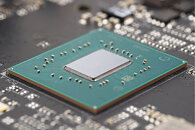
Source:
VideoCardz
There is no word on how the Z990 and Z970 are differentiated, but VideoCardz reports that the Z970 is based on a physically smaller chip resembling the mid-tier B960 chipset that succeeds the current B860. The difference between the two could hence be I/O. The Z990 could feature a larger number of platform PCIe lanes, and have a wider 8-lane DMI chipset bus, whereas the Z970 could have fewer PCIe lanes, and a 4-lane DMI bus, just like the B960, but with the added CPU overclocking capability. This chipset would hence be suitable for those who want enthusiast features but don't need an elaborate I/O. We still don't know the exact PCIe lane counts of Intel's 900-series chipset, so we can't tabulate them.

14 Comments on Intel Readies Z990 and Z970 Chipsets for Core "Nova Lake-S" Processors
I'm curious what has driven Intel to finally have a lower chipset that fully supports unlocked processors. While it's good for consumers I can't imagine Intel would suddenly care about that market now.
AMD had encouraged buying 'the board that fits your needs' along with any of their unlocked CPUs. IIRC, only A620 and B840 locks-away CPU OC (FWIW).
IMO, these changes are entirely to make Intel 'look more-attractive' to prospective customers, on paper.
I thought they were going to skip releasing chipsets this generation and just have people buy the chips to set on their desktops since the rest of the components are unobtainium
But, if there are no catches, having two different "levels," of enthusiast new board, would be a good thing.Yes it is curious. Intel deserve the skeptism they have brought on themselves.
Still, speaking for myself, I'll keep an open mind until more is revealed/known.
But what's interesting is that all core core clusters of compute tiles can be fully powered down (P core is in clusters of 2), even, the computer can boot and operate entirely off of the LPE cores if need be. Each tile can be fully shut down as well. Outside of extremely multithreaded workloads, then NovaLake should be quite efficient in benchmarks
Jaykin estimates a compute die for 8P16E cores to measure around 94mm2 and the total package size itself to be around Arrowlake size. Which is likely not far from a Zen6 CCD. Zen 5 CCD is 70mm2 roughly. Zen 6 has 50% more cores, and the cores need space to have higher IPC and higher clocks as rumored.