Tuesday, February 24th 2026

Apple Accelerates U.S. Manufacturing, with Mac Mini Production Coming Later This Year

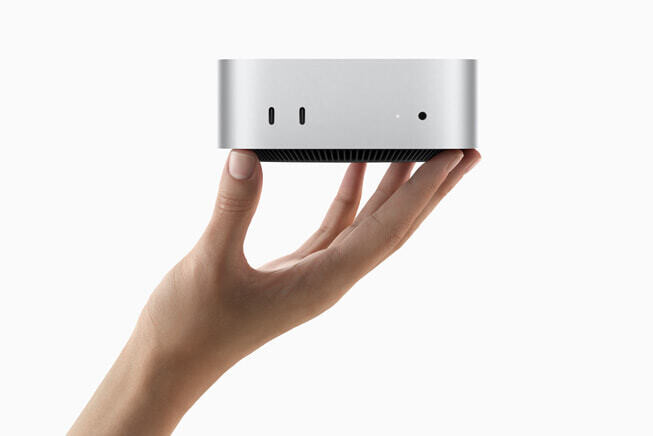
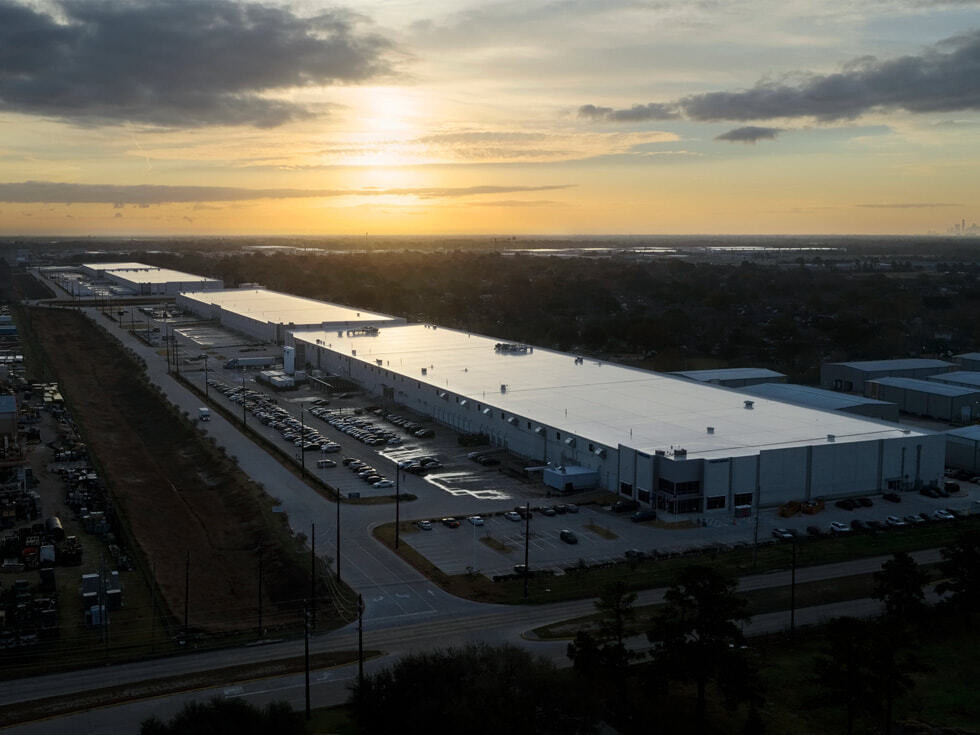
Apple today announced a significant expansion of factory operations in Houston, bringing the future production of Mac mini to the U.S. for the first time. The company will also expand advanced AI server manufacturing at the factory and provide hands-on training at its new Advanced Manufacturing Center beginning later this year. Altogether, Apple's Houston operations will create thousands of jobs.

"Apple is deeply committed to the future of American manufacturing, and we're proud to significantly expand our footprint in Houston with the production of Mac mini starting later this year," said Tim Cook, Apple's CEO. "We began shipping advanced AI servers from Houston ahead of schedule, and we're excited to accelerate that work even further."
For more than two decades, users around the world have relied on the incredibly popular Mac mini for the tremendous power it packs into its ultra-compact design. With its next-level AI capabilities, it has become an essential tool for everyone from students and aspiring creatives to small business owners. Beginning later this year, Mac mini will be produced at a new factory on Apple's Houston manufacturing site, doubling the campus's footprint.

Apple began producing advanced AI servers in Houston in 2025 for the first time, and production is already ahead of schedule. Servers assembled in Houston—including logic boards produced onsite—are used in Apple data centers around the country.

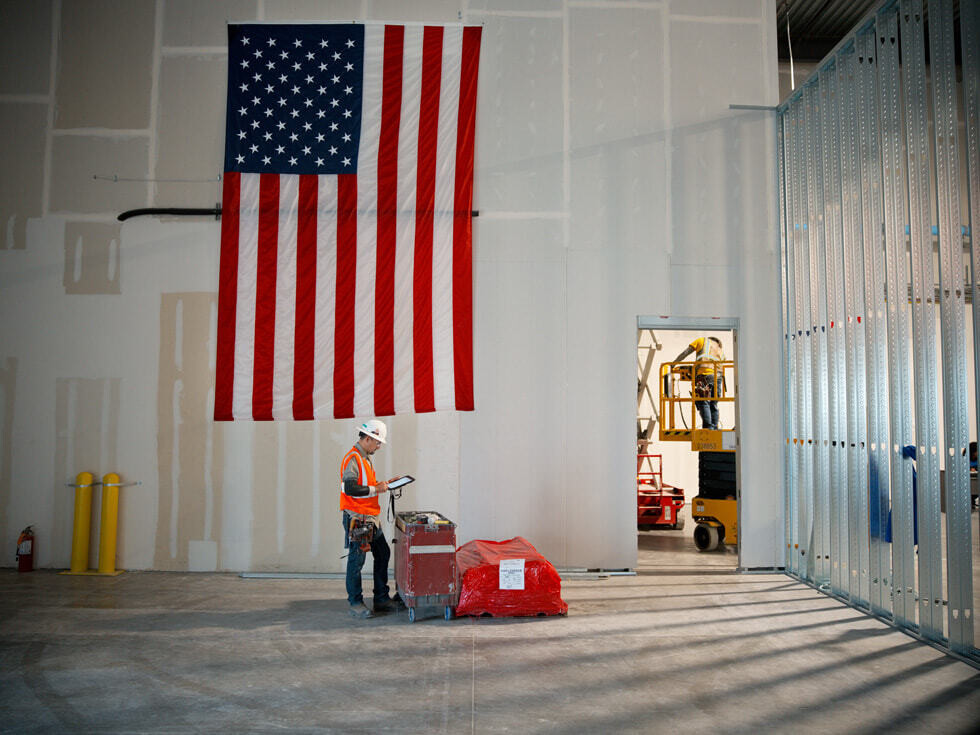
Beyond production, Apple is investing in the workforce that will drive American manufacturing forward. Later this year, Apple's 20,000-square-foot Advanced Manufacturing Center is scheduled to open its doors in Houston. Currently under construction, the dedicated facility will provide hands-on training in advanced manufacturing techniques to students, supplier employees, and American businesses of all sizes. Apple experts will teach participants the same innovative processes that are used to make Apple products, allowing American manufacturers to take their work to the next level.


Since announcing its $600 billion commitment to the U.S. last year, Apple and its American Manufacturing Program partners have already reached several milestones:
  • Apple exceeded its target and sourced more than 20 billion U.S.-made chips from 24 factories across 12 states, including those of partners like TSMC, Broadcom, and Texas Instruments.
  • GlobalWafers has begun production at its new $4 billion bare silicon wafer facility in Sherman, Texas. At Apple's direction, wafers produced in Sherman will be used by Apple's chip manufacturing partners in the U.S., including TSMC and Texas Instruments.
  • Supported by Apple's investment, Amkor broke ground on its new $7 billion semiconductor advanced packaging and test facility in Peoria, Arizona, where Apple will be the first and largest customer.
  • Corning's Harrodsburg, Kentucky, facility is now 100 percent dedicated to cover glass for iPhone and Apple Watch shipped globally, and by the end of this year, every new iPhone and Apple Watch will have cover glass made in the state.
  • In 2026, Apple is on track to purchase well over 100 million advanced chips produced by TSMC at its Arizona facility—a significant increase from 2025.
  • Apple opened its Apple Manufacturing Academy in Detroit, which is already supporting more than 130 small- and medium-sized American manufacturers with hands-on training in AI, automation, and smart manufacturing. The academy recently expanded with new virtual programming, giving businesses across the country on-demand access to the curriculum developed by Apple experts and Michigan State University faculty.
Source: Apple
Add your own comment

19 Comments on Apple Accelerates U.S. Manufacturing, with Mac Mini Production Coming Later This Year

#1
ixi
Good news for eagle.
Posted on Reply
#3
Dragokar
Isn't it funny how the world shifted? Now it becomes cheaper to assembly in the US (of course with all the money thrown at the silicon companies) than to do it overseas.

I still don't believe it will have a major impact on the needed workforce, sadly....but some might get lucky and get a job.
Posted on Reply
#4
Dr. Dro
DragokarIsn't it funny how the world shifted? Now it becomes cheaper to assembly in the US (of course with all the money thrown at the silicon companies) than to do it overseas.

I still don't believe it will have a major impact on the needed workforce, sadly....but some might get lucky and get a job.
Western reindustrialization must occur and this is a great early step, IMHO.
Posted on Reply
#5
Hecate91
Great for shareholders of course, otherwise this does nothing to make your iphone or mac any cheaper.
Posted on Reply
#6
dgianstefani
TPU Proofreader
Hecate91Great for shareholders of course, otherwise this does nothing to make your iphone or mac any cheaper.
You're right, we need to go back to suicide nets and indentured servitude from overseas labour in countries with no environmental considerations. That's the best way to make things cheaper. Very ironic you're talking about shareholders, because outsourcing almost all manufacturing was done precisely to increase shareholder value, while destroying domestic production, skilled jobs, and having complete disregard for strategic considerations.

Having 90% of silicon manufacturing and assembly in a few Asian countries that can name their price is also a thoughtful long term economic move, I'm sure.
Posted on Reply
#7
Dragokar
dgianstefaniYou're right, we need to go back to suicide nets and indentured servitude from overseas labour in countries with no environmental considerations. That's the best way to make things cheaper.
I know it's sarcasm, but I laughed my beep off because you are so right on this one :D
Posted on Reply
#8
Guwapo77
Hecate91Great for shareholders of course, otherwise this does nothing to make your iphone or mac any cheaper.
That is not the intent - Don't put all your eggs in one basket.
Posted on Reply
#9
bonehead123
Well, I am glad to see more US-based manufacturing, as it will reap benefits well beyond just mere pc's & phones ect...

And the fruity bois can spend their boatloads of money/expand/invest all they want, as long as my big, fat dividend checks keep landing like clockwork, I won't be complaining, hahaha :D
Posted on Reply
#10
evernessince
dgianstefaniYou're right, we need to go back to suicide nets and indentured servitude from overseas labour in countries with no environmental considerations. That's the best way to make things cheaper. Very ironic you're talking about shareholders, because outsourcing almost all manufacturing was done precisely to increase shareholder value, while destroying domestic production, skilled jobs, and having complete disregard for strategic considerations.

Having 90% of silicon manufacturing and assembly in a few Asian countries that can name their price is also a thoughtful long term economic move, I'm sure.
The US is getting close to twice the suicide rate of China and the minimum wage is still 7.25. Who needs a third world country when you can get home grown slaves. You mention environmental regulations as if the US has remotely strict regulations in that regard. Consider the Asbestos is still legal in the United States (EPA only regulates asbestiform, not all asbestos, and the current admin halted the rollout of planned regulation. Makes sense there's a video of Trump praising Asbestos). and US is significantly behind it's peers in terms of environmental regulation.

Let's be honest, the intent here is revealed in the last paragraph:

"Apple opened its Apple Manufacturing Academy in Detroit, which is already supporting more than 130 small- and medium-sized American manufacturers with hands-on training in AI, automation, and smart manufacturing."

The idea here is not to employ Americans but to have a US factory as automated as possible. Lower costs to ship and certain US states have taxes at or below other third world countries. There's a reason the US has become increasingly popular as a world tax haven.
Posted on Reply
#11
Dr_b_
"Apple is deeply committed to the future of American manufacturing" Are they really though? this is a drop in the bucket, and most of the components are still manufactured outside of the US, it should read "Apple is assembling certain products in America with foreign sourced components, while the majority of our other products are still made in Asia"
Posted on Reply
#12
dgianstefani
TPU Proofreader
evernessinceThe US is getting close to twice the suicide rate of China and the minimum wage is still 7.25. Who needs a third world country when you can get home grown slaves. You mention environmental regulations as if the US has remotely strict regulations in that regard. Consider the Asbestos is still legal in the United States (EPA only regulates asbestiform, not all asbestos, and the current admin halted the rollout of planned regulation. Makes sense there's a video of Trump calling praising Asbestos). and US is significantly behind it's peers in terms of environmental regulation.
It's utterly delusional to compare USA manufacturing emissions unfavourably against Chinese ones, your example of asbestos is fascinating to me, considering what we know about Chinese air and water quality. Though I did not specifically mention China in my initial comment. Quoting random general suicide statistics that seem unlikely/irrelevant when specifically talking about the known conditions of Chinese factory towns, to the point suicide nets are standard is also... interesting.
Up to 95 percent of the plastic polluting the world’s seas and oceans comes from just 10 river systems. Among these 10 rivers, eight are in Asia. Five of these filthiest rivers are in China alone: Yangtze River (ranking 1st), Yellow River (3rd), Hai River (4th), Pearl River, and Amur River. In second place in the Indus River, while the holy Ganges River takes 6th place. The Mekong River, which runs through China and five countries in Southeast Asia, occupies 10th place.
Our second finding shows that China's environmental regulations, although significantly enhanced between 2003 and 2015, remained less stringent than those in developed countries, resulting in an observable “pollution haven effect.” As trade liberalization increased and foreign competitiveness declined, China's relatively lenient environmental regulations provided a competitive advantage for pollution-intensive industries' products, boosting exports of these products. Consequently, China's relatively less stringent environmental regulations, coupled with lower trade costs, created a pollution haven within its borders.
China is responsible for 30% of global greenhouse gas emissions and for 90% of the growth in CO2 emissions since 2015.
evernessinceLet's be honest, the intent here is revealed in the last paragraph:

"Apple opened its Apple Manufacturing Academy in Detroit, which is already supporting more than 130 small- and medium-sized American manufacturers with hands-on training in AI, automation, and smart manufacturing."

The idea here is not to employ Americans but to have a US factory as automated as possible. Lower costs to ship and certain US states have taxes at or below other third world countries. There's a reason the US has become increasingly popular as a world tax haven.
So is the intent "home grown slaves" or not?

Seems blatantly obvious the intent is supply chain resilience, and not relying on fragile foreign states like Taiwan to supply 90%+ of silicon.
Posted on Reply
#13
Frank_100
evernessinceThe US is getting close to twice the suicide rate of China and the minimum wage is still 7.25. Who needs a third world country when you can get home grown slaves. You mention environmental regulations as if the US has remotely strict regulations in that regard. Consider the Asbestos is still legal in the United States (EPA only regulates asbestiform, not all asbestos, and the current admin halted the rollout of planned regulation. Makes sense there's a video of Trump calling praising Asbestos). and US is significantly behind it's peers in terms of environmental regulation.

Let's be honest, the intent here is revealed in the last paragraph:

"Apple opened its Apple Manufacturing Academy in Detroit, which is already supporting more than 130 small- and medium-sized American manufacturers with hands-on training in AI, automation, and smart manufacturing."

The idea here is not to employ Americans but to have a US factory as automated as possible. Lower costs to ship and certain US states have taxes at or below other third world countries. There's a reason the US has become increasingly popular as a world tax haven.
Texas has its own epa. Aside from oil and tech, Texas is an agricultural power house.

www.tceq.texas.gov/

They are a very serious department.
Posted on Reply
#14
mrnagant
I'd be curious how much of this stuff was already happening before Trump. Just now talking out loud about it to please someone in particular.

For example. The Kentucky facility that produces their glass. They have been making glass for Apple since the very first iPhone.
The first iPhone, 5% of the components were made in America. This latest iPhone. Still 5%.
Posted on Reply
#15
tsunami2311
Over at other site, they mention this too, but they also mention a CIA warning the "apple" of a china invading taiwan. What to believe and what not to that is the question

Posted on Reply
#16
evernessince
dgianstefaniIt's utterly delusional to compare USA manufacturing emissions unfavourably against Chinese ones,
You do always love starting off your comments with such strong statements. Either you are always right or people are delusional for daring to question you. Very rational as usual.

No one said manufacturing emissions specifically, try to change the goal posts as you might.

The US is the largest contributor to global emissions full stop: www.c2es.org/content/international-emissions/#:~:text=Greenhouse gas emissions, largely from the combustion,four largest emitters on an absolute basis.


Of course if you took only current US manufacturing emission right now, the US would be lower. The US doesn't manufacture nearly as much as China.

If your logic is that China is poor environmentally and that's mostly due to manufacturing, what do you think will happen in the US, where the per capita emissions is twice as high as China? The logic doesn't track. You can't offshore your CO2 emissions and then pretend as if those won't reappear when you reshore. The US is the root cause of manufacturing moving to China in the first place. For all intents and purpose, it was the the US that pushed the sentiment that it doesn't care about emissions while chasing profit. There's no denying it's culpability there.
dgianstefaniyour example of asbestos is fascinating to me, considering what we know about Chinese air and water quality. Though I did not specifically mention China in my initial comment.
I would say so given 21 to 32 million people were impacted by exposure to asbestos in the US. Neither the US nor China score particularly well environmentally, especially since AI rolled around.

My point wasn't that China is good, it was that the US has barely improved, if not going backwards. There are dozens of instances where we've seen US health and environmental disasters because the US takes a hands off approach (Asbestos inhalation when the world trade center fell for example). The FDA basically allows any new additive to be used under the GRAS label, which simply requires companies to claim the additive is safe. In otherworlds, only after people have died or been harmed. It's not possible to be more industry friendly than that, even the GRAS label misleads people into thinking there's some legitimacy to claims that are ultimately backed up by nothing.
dgianstefaniQuoting random general suicide statistics that seem unlikely/irrelevant when specifically talking about the known conditions of Chinese factory towns, to the point suicide nets are standard is also... interesting.
How is general suicide rates random? Manufacturing suicide rates don't exist. You seem to want something that doesn't exist, mostly likely because it dents your argument.

And please with the issues with Chinese factory towns. As if there hasn't been documentaries of the working conditions in Tyson plants or Amazon warehouses (or any number of factories that poisoned their workers knowingly like the radium girls, DuPont on multiple occasions with both Teflon and their lead based fuels, US steel, Monsanto, Dow Chemical, and Hercules). You'd be hard pressed to find a US citizen that hasn't been impacted by some company or government caused health disaster.
dgianstefaniSo is the intent "home grown slaves" or not?

Seems blatantly obvious the intent is supply chain resilience, and not relying on fragile foreign states like Taiwan to supply 90%+ of silicon.
Why are you presenting this as exclusionary when it's not? Supply chain resilience is a point, as is the low taxes and cheap labor.
Frank_100Texas has its own epa. Aside from oil and tech, Texas is an agricultural power house.

www.tceq.texas.gov/

They are a very serious department.
Texas consistently ranks near the bottom in terms of environment: www.click2houston.com/news/local/2025/04/09/texas-named-among-10-least-green-states-in-the-us-report/#:~:text=Ultimately, the results ranked Texas,was at the very lowest.

And that's just within the US, which itself is below middle of the pack compared to it's peers.
mrnagantI'd be curious how much of this stuff was already happening before Trump. Just now talking out loud about it to please someone in particular.

For example. The Kentucky facility that produces their glass. They have been making glass for Apple since the very first iPhone.
The first iPhone, 5% of the components were made in America. This latest iPhone. Still 5%.
It's been happening for a long time. The average wage in China has been increasing over the years to the point where it makes sense to move to other markets. The primary reasons keeping companies there is that the wages still aren't at 1st world levels and China has the most manufacturing expertise and good logistics. Those logistics and manufacturing expertise take 1-2 decades to build. Not an issue for simple products but for more complex one's it could be an consideration.
Posted on Reply
#17
dgianstefani
TPU Proofreader
evernessinceWhy are you presenting this as exclusionary when it's not? Supply chain resilience is a point, as is the low taxes and cheap labor.
evernessinceThe US is getting close to twice the suicide rate of China and the minimum wage is still 7.25. Who needs a third world country when you can get home grown slaves.

The idea here is not to employ Americans but to have a US factory as automated as possible
. Lower costs to ship and certain US states have taxes at or below other third world countries. There's a reason the US has become increasingly popular as a world tax haven.
Besides the fact semiconductor, complex manufacturing, and technology workers aren't minimum wage fast food workers in the USA, perhaps you can reconcile these two statements. Again, is the intent "home grown slaves" or "not to employ Americans"? These are exclusionary statements that you are "presenting", not me. I'm pointing out the incompatibility of these parts of your comment.
evernessinceNo one said manufacturing emissions specifically, try to change the goal posts as you might.
Obvious precondition in a post about manufacturing. Let's skip the bs.
evernessinceOf course if you took only current US manufacturing emission right now, the US would be lower. The US doesn't manufacture nearly as much as China.
Stuff made in the US complies with US environmental law. More stuff made domestically than internationally in the cheapest place (because of lax regulation on things like environment, as my sources mentioned) equates to less pollution than it being made by the lowest international bidder. Conflating quantity of manufacturing with quality of manufacturing is weak. Obviously China has high emissions due to high levels of manufacturing. It also has high emissions because it builds hundreds of new coal plants, and dumps industrial waste directly into rivers. Both of these things are true.
evernessinceIf your logic is that China is poor environmentally and that's mostly due to manufacturing, what do you think will happen in the US, where the per capita emissions is twice as high as China? The logic doesn't track. You can't offshore your CO2 emissions and then pretend as if those won't reappear when you reshore.
You can't pretend stuff made in the highly regulated West has the same environmental impact as stuff made in the sweatshops of Asia, where bottled air is sold, energy is generated in the cheapest and fastest way possible, and water quality is a joke.
evernessinceThe US is the root cause of manufacturing moving to China in the first place. For all intents and purpose, it was the the US that pushed the sentiment that it doesn't care about emissions while chasing profit. There's no denying it's culpability there.
Good that it is returning then. No?
evernessinceMy point wasn't that China is good, it was that the US has barely improved, if not going backwards.
The US has reduced per capita emissions over the past several decades and is continuing on that track.

China has done the opposite and is continuing on that track.
evernessinceThere are dozens of instances where we've seen US health and environmental disasters because the US takes a hands off approach (Asbestos inhalation when the world trade center fell for example).
Freedom of the press means we know when these things happen in the west. I hardly think the 9/11 tragedy is a point to be made regarding US industrial environmental regulations.
evernessinceHow is general suicide rates random? Manufacturing suicide rates don't exist. You seem to want something that doesn't exist, mostly likely because it dents your argument.
We're talking about manufacturing. Not the general population. Apple factories in the USA don't need to install suicide nets.
evernessinceThe US is the largest contributor to global emissions full stop: www.c2es.org/content/international-emissions/#:~:text=Greenhouse gas emissions, largely from the combustion,four largest emitters on an absolute basis.

Is it though.


Different chart from the source you used that for some reason you neglected to mention.


"Greenhouse Gas Emissions By Top Emitters, 2023"

Of course, using unlabelled cumulative emissions charts since 1750 is a good way to be on topic when talking about 2026 manufacturing.
Posted on Reply
#18
Visible Noise
evernessince"Apple opened its Apple Manufacturing Academy in Detroit, which is already supporting more than 130 small- and medium-sized American manufacturers with hands-on training in AI, automation, and smart manufacturing."

The idea here is not to employ Americans but to have a US factory as automated as possible. Lower costs to ship and certain US states have taxes at or below other third world countries. There's a reason the US has become increasingly popular as a world tax haven.
Your ignorance is showing. Did you spend even 5 minutes researching the academy in Detroit before posting?
tsunami2311Over at other site, they mention this too, but they also mention a CIA warning the "apple" of a china invading taiwan. What to believe and what not to that is the question

I’ll help you with that. Never believe WCCF. Never read WCCF. Don’t admit to reading WCCF. And absolutely never, ever, use WCCF as a reference, unless you want to be put on ignore.
Posted on Reply
#19
erixx
A flag at a workshop as if it was a branch of a state, and random Asian looking workers, and a server rack sized "mini" computer , what a twisted plot...
Posted on Reply
Add your own comment
Nov 17th, 2026 13:49 CST change timezone

New Forum Posts

Popular Reviews

TPU on YouTube

Controversial News Posts