Wednesday, May 6th 2026
Terafab's Cost Could Reach $119 Billion as First Phase Starts at $55 Billion
Elon Musk recently announced an ambitious project called Terafab, which he plans to build on Tesla's campus in eastern Travis County, Austin, Texas. Thanks to recent court hearings in Grimes County, Texas, we have learned that the first phase of the Terafab project is expected to cost $55 billion. However, if additional phases are constructed, this figure could rise to $119 billion. While this is an astonishingly high amount, it seems justified given Terafab's ambitious goals. Semiconductor manufacturing is one of the greatest marvels of the modern world, with only a few companies competing for the top spot. The engineering and scientific expertise required for building modern semiconductor manufacturing facilities is so rare that it is concentrated in just a few places around the globe.
The goal of Terafab is to consolidate the entire chip manufacturing process under one roof. The plant is expected to integrate several stages of semiconductor production at a single site, including logic fabrication, memory, packaging, testing, and mask production. This setup is unusual, as these steps are typically spread across multiple specialized facilities and companies. The idea behind Terafab is that consolidating these processes could accelerate development by allowing engineers to design, test, and revise chips with fewer delays, essentially enabling rapid prototyping. This contrasts with the traditional, lengthy process of manufacturing chips at one site, packaging them at another, and testing them in-house. A typical semiconductor fab for nodes below 3 nm costs over $20 billion, but that only covers silicon manufacturing. Terafab's goal to handle everything will push that cost astronomically high.
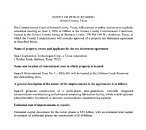 We know that Intel has joined forces with Terafab, and Tesla has signed on as Intel's first major 14A customer for Elon Musk's Terafab AI chip complex in Austin. However, the details of this deal are still unknown, and it's unclear if Terafab will license the 14A node PDK. Additionally, throwing more funds at a problem doesn't guarantee a solution. Building a competitive fab from scratch would require years of execution, including procuring parts from companies like ASML, Lam Research, KLA Corporation, and Tokyo Electron. For example, these companies receive orders years in advance before shipping the machinery to TSMC, Samsung, or Intel. Thus, creating a supply chain for equipment, raw materials, and other necessary components will take years to come to fruition.
Source:
Grimes County Court
The goal of Terafab is to consolidate the entire chip manufacturing process under one roof. The plant is expected to integrate several stages of semiconductor production at a single site, including logic fabrication, memory, packaging, testing, and mask production. This setup is unusual, as these steps are typically spread across multiple specialized facilities and companies. The idea behind Terafab is that consolidating these processes could accelerate development by allowing engineers to design, test, and revise chips with fewer delays, essentially enabling rapid prototyping. This contrasts with the traditional, lengthy process of manufacturing chips at one site, packaging them at another, and testing them in-house. A typical semiconductor fab for nodes below 3 nm costs over $20 billion, but that only covers silicon manufacturing. Terafab's goal to handle everything will push that cost astronomically high.


12 Comments on Terafab's Cost Could Reach $119 Billion as First Phase Starts at $55 Billion
Elon Musk’s bold $10 trillion goal would dwarf a third of US GDP:
www.thestreet.com/latest-news/elon-musks-bold-10-trillion-goal-would-dwarf-a-third-of-us-gdp
The Disclosure Problem $1.75 Trillion Uncovers:
substack.com/home/post/p-193639771
But don't worry as Elon Musk "Warns Dollars Could Become Obsolete As Humanity Reaches Kardashev II"
How Silicon Valley Billionaires Use Sci-Fi to Rule – and How We Can Resist:
untoldmag.org/silicon-valley-billionaires-sci-fi/
There's already way too much chip production capacity for uses cases that are actually sustainable. It gets even worse when you realize progress has dried up. What was being shipped 5 years ago can still do 99%+ of uses cases now and it'll be even worse in 10 years.
Maybe the US government will nationalize all of it, or eventually it'll all just be scrapped as there's no market there.
On the ML side, If you can create models cheap enough and / or give them away for free, like Google are doing then there's going to be a benefit.
Even ignoring whole nazi thing (for some reason) doesn't change the fact I have a legit concern of not wanting to fund idiot Elon Musk indirectly by purchasing PC components that might be fabbed at his bs companies instead at Samsung or TSMC. I'm now suppose to check that Ryzen CPU that I might buy in the future will only come from Samsung or TSMC and not "Terafab". Yeah, I'm that petty, because I have principles and I stick to them. And that is a perfectly legit concern to have.
Maybe he needs a hug?
Now he needs chips. I think everyone on this forum wants chips
Too much negativity on here. The world needs more diversified processor manufacturing, not just more processors. And all stages from mask, lithography, packaging...all of it under one roof (so to speak), would be a first. Hopefully he can pull it off.