Friday, June 26th 2026

Intel "Nova Lake-S" 52-Core OC SKU to Draw 474 W in PL2 Mode
Intel's next-generation "Nova Lake" CPU microarchitecture is shaping up to be quite power-hungry. According to the latest leak, confirmed by well-known Intel leaker Jaykihn, Intel's top-end, overclocking-focused, dual compute die "Nova Lake-S" CPU with 52 cores will feature a PL2 mode with a power level of 474 W. This is an unprecedented number for an Intel consumer desktop platform, typically expected from a high-end desktop (HEDT) design. However, since this is a 52-core design that can be overclocked, it represents the newest high CPU PL2 setting that Intel will be shipping with "Nova Lake-S." Previous rumors suggested that the Intel Z990 platform would be a power-hungry consumer design, but now we understand just how power-hungry it is.
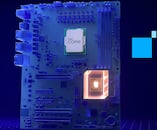
Reportedly, Intel's reference Z990 motherboard design, which it provides to partners like ASUS, MSI, GIGABYTE, ASRock, and others, now includes the possibility of three 8-pin CPU power connectors. This is an intriguing design choice, considering that most enthusiast boards typically ship with two 8-pin EPS CPU connectors. The three 8-pin connectors are mainly intended for the highest-end overclocking designs, rather than being required to run the dual compute die designs. Motherboards equipped with either two or three EPS connectors are still expected to support Intel's upcoming high-end 44-core and 52-core processors on the 175 W platform, meaning that only the overclocking-focused models will feature three connectors for additional overclocking headroom.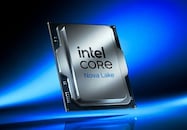
 According to current information, Intel is introducing a tiled approach to having more compute enabled across "Nova Lake-S" SKUs. Perhaps the most interesting news is the introduction of dual-die processors. These are SKUs with two compute tiles connected to the SoC tile, allowing Intel to achieve extremely high CPU core counts. Since this is essentially the same approach to high core counts as AMD, both compute tiles have equal access to memory and PCIe. A single compute tile SKU can yield a maximum of 28 cores, while a dual-compute SKU will carry up to 52 cores.
Source:
via Jaykihn on X
Reportedly, Intel's reference Z990 motherboard design, which it provides to partners like ASUS, MSI, GIGABYTE, ASRock, and others, now includes the possibility of three 8-pin CPU power connectors. This is an intriguing design choice, considering that most enthusiast boards typically ship with two 8-pin EPS CPU connectors. The three 8-pin connectors are mainly intended for the highest-end overclocking designs, rather than being required to run the dual compute die designs. Motherboards equipped with either two or three EPS connectors are still expected to support Intel's upcoming high-end 44-core and 52-core processors on the 175 W platform, meaning that only the overclocking-focused models will feature three connectors for additional overclocking headroom.


292 Comments on Intel "Nova Lake-S" 52-Core OC SKU to Draw 474 W in PL2 Mode
www.intel.com/content/www/us/en/products/sku/236791/intel-core-i9-processor-14900t-36m-cache-up-to-5-50-ghz/specifications.html
www.intel.com/content/www/us/en/products/sku/241059/intel-core-ultra-9-processor-285t-36m-cache-up-to-5-40-ghz/specifications.htmlBy redesign you mean the added 8pin? Well it wasn't needed until now cause none of the desktop chips could actually be cooled at that high power draw. I mean amd already has troubles with 8 cores burning themselves at very low wattage, they can't push that high. This thing will have a huge die - which will make it possible to push 500++ watts into it, hence the extra 8pin. Which isn't even mandatory, you can buy normal single or dual 8pin mobos anyways so...what is your point exactly? Options are good, you are basically complaining that you have the option to push however many watts you want into your CPU? I don't get itThe 8+16+4 with bllc will be pushed as the gaming chip i'd assume. The dual tile would probably perform worse in gaming and without any engagement from the user it will draw an insane amount of power for games.
I have trouble understanding why do you feel the need the prejudge the product and decide for other people that this product makes no sense.
Edit: With that said, I do think products like this make sense for people who work on their CPU, but don't need bazillion PCI-e lanes. Ryzen 9 and Core i9 CPUs wouldn't be successful otherwise (because for the money they ask for them, they're crap at everything except for heavy MT work).
The unlocked k 52 core novalake is a "this is what we can do" SKU. They have made a design that can safely push 700 watts and be cooled while doing so and they want to show off. Like a halo product 5090 type. I don't see a problem. You don't want that much power, buy the locked models or power limit it. Voila. Or instead you can buy 8 core chips from the competition, that's also an option.
They will attract some of KS enthusiast crowd and they may attract a few disgruntled HEDT users who barely afforded a four channel system and didn't really need it. That's all to it.
You're also the least likely here to buy such CPU and even less buying Intel, so I don't know why you're complaining anyways. Let people enjoy their life and their hard-earned money instead of trying to turn people to AMD like it's a religion.
I'm not saying they will as I don't think anyone has enough data to even take a guess just that the comparisons need to make sense.RZL also isn't Zen 7's competition since Zen 7 won't be out until 2H 2028 at the earliest.The current rumors point towards 144MB per Compute Tile (this is reduced as the cores are reduced for lower SKUs) for Intel and on the AMD side it's supposed to be 48MB per CCD + 96MB 3D V-cache which also comes to 144MB. Should this all end up being accurate that means parity on cache capacity so it will be down to specific implementation.
For Zen6 the 12 core CCD is apparently ~76 mm2.
So basically half.
H-O-W-E-V-E-R you have conveniently omitted the fact that the NL premium compute tile is so big because it contains the bLLC which is on the same layer so to speak, whereas the AMD 3D V-Cache is a separate layer positioned underneath the CCD (well I'm guessing they will keep the Zen5 config). A separate layer which must be accounted for because it adds cost.
Gotcha moment! :p:roll:
10900K PL2: 250W
11900K PL2: 250W
12900K PL2: 241W
13900K PL2: 253W
285K PL2: 250WThe forthcoming generations are treading new ground for everyone in terms of core count and performance period. So I guess your problem is absolute power and not relative power.You cannot extrapolate desktop performance off of enterprise slides. In high core count systems the cores are heavily starved for power compared to their desktop counterparts. Due to this efficiency improvements can have an outsized impact on performance. Zen 4 to Zen 5 is a great example of this where a lot of the performance uplift in high core count was due to higher clock speeds. Combine a more efficient and performant design with a more advanced node and it should be obvious why the high core count space can see such huge gains.
Then there's also the memory bandwidth situation to take into account. Currently the 128-core Epyc with 12 channels of DDR5-6400 has around 14% less bandwidth per core than 16-core Ryzen with 2 channels of DDR5-5600. With Zen 6 Epyc they're increasing memory bandwidth by around 2.6x due to MRDIMM support and 4 more memory channels. This undoubtedly also comes into play in the performance results they've shown.
Right now there is simply not enough public information to come to a performance conclusion. My assumption in NVL performance comes from the simple fact that for Intel to lose (or require it to compete) 16p/32e to 24c/48t they would need to have their gen on gen performance increase be significantly lower than AMD's.Not sure why you keep going back to the N2 node as if AMD isn't using the same, but I digress. It simply doesn't make any sense for Intel to lose an opportunity to beat the competition. If they're using two Compute Tiles anyways why only use cut down ones when you can use fully enabled and set a new performance standard.
Yeah but this was strictly compute vs compute.
However, I will voice my opinions and no one will stop me from doing it by trying to attach any label on me. That's not going to work. I can promise you that. You may not like or enjoy what I say, but you will defend my right to say it. Do we understand how freedom of speech works?This is true. We will need to wait for reviews.
This is how conversations work these days. If we disagree on something, I'll just brand you a fan instead of addressing your points, and that gives me an instant win (at least in my mind). Sure, neither of us learns anything new this way, but why learn when I can just dominate you like the big boy I am? Monkey talk, basically.
Rant over. :oops:
Personally, I'll criticise Intel if this new chip doesn't deliver despite the high power draw. Like I criticised AMD for increasing power draw on the 9800X3D vs the 7800X3D massively, while delivering a relatively small performance uplift (basically flushing efficiency down the toilet).
Basically, I don't necessarily think that high power draw on a high end chip is bad. But Intel has much room for improvement on the gaming efficiency front. Just like AMD has much room for improvement on idle power and heat transfer.
16+32 288MB
16+24 264MB
8+16 144MB (108MB over 270K Plus/285K/14900K/13900K)
8+12 132MB (102MB over 265K/99MB over 14700K)
6+12 108MB (78MB over 250K Plus)
edit: added comparison to existing Intel CPUsThen you shouldn't like the AMD example I gave you at all and have the same problem with it. The only reason the 9950X uses that much power is that they're trying to wring maximum performance out.
The way I view high power consumption is more in a work done type of way. If a 474W part gets the same amount of work done as a 250W part in less than half the time I'm not too concerned with the increase. It's when things start running outside of their efficiency window that power consumption becomes a problem. Pretty much all of the >200W CPUs could be dropped to 200W and most people wouldn't notice the performance difference. Both Intel and AMD have been very guilty of this, especially in the top SKUs.
Unfortunately that's what top SKUs in this industry are now just take a gander at video cards. 4090 to 5090 the performance increase scaled pretty linearly with the power increase. Companies could shift to more efficient designs, but it would cost them money so it simply isn't going to happen. For example nvidia could provide 5070 performance with around 30% less power, but it would require around 40% more die size.
One small positive on the CPU side is that the power usage when not maxing out cores has been getting better. When comparing similar core counts ARL is a bit better than Zen 5 which is better than Zen 4 with RPL way behind. While I'd love a power consumption reset I just don't think it's going to happen so the improvements where most client users' workloads reside are good.
Number of memory channels and memory bandwidth can of course affect performance and that will influence buying decisions of the consumers, as other platform features will.
I have really no idea why do you feel the need to somehow disqualify the CPU by not letting it to be called a "workstation type CPU"? Are you jealous that Intel users will have access to workstation level performance on a normal cheap desktop platform? No need to be jealous, you can buy it too! You are not forbidden to do it.