Friday, July 3rd 2026

Thermaltake Intros Dr. Power III Pro Tester for ATX 3.1 PSUs
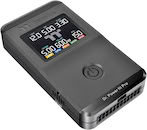
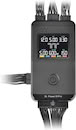
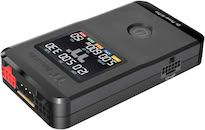
Thermaltake today introduced the Dr. Power III Pro (model: AC-083-OO1NAN-A1), a handy tool to test modern ATX 3.1 power supplies. This was first showcased by Thermaltake at the 2026 CES. The tester lets you check voltages and stability of the various connectors of an ATX 3.1 PSU, including a 600 W-capable 12V-2x6 connector, a 24-pin ATX, a 6+2 pin PCIe power, a 4+4 pin EPS, SATA power, and 4-pin Molex. The tester lets you check if the various voltage domains are within safe ranges, so you know if your PSU is broken. An LED segment display puts out measurements for the various domains, while a buzzer sounds alarm if something is off-range. Available from July 9th, the Thermaltake Dr. Power III Pro tester is priced at $49.99.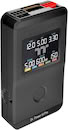



18 Comments on Thermaltake Intros Dr. Power III Pro Tester for ATX 3.1 PSUs
Kudos for TT for pricing the device at a profitable but decent price!
But... it does not put a load on the PSU, does it?
So, any issues that the PSU has only when loaded will not be found?
I guess it would still be great for quickly confirming if a PSU is obviously defective, but could not conclusively rule out the PSU when troubleshooting 🤔
www.thermaltake.com/dr-power-iii.html
something does not add up, release date 2024-02-29 for the manual
is thermaltake a low quality brand?
url did not open, non in normal window or private window, i had to use the shell
It is a toy.
no accuracy, no digits, and i would not call it a measurement device
A faulty psu can be out of range of those values. And is the psu really out of range when there is no given accuracy like any multimeter has?
This tool should be bought by companies that sells power supplies. They should test them before selling them....
if i suspect my psu is faulty, I RMA that shit. Why add insult to injury.
idk, correct me if I am wrong :/
And yes, Thermaltake is considered a lower quality brand by many, but they have the odd higher-quality products too.
www.thermaltake.com/dr-power-iii-pro.html
I am not sure what you're even on about here. If you think your PSU is faulty, it IS recommended to RMA them.
It would have prevented this:
www.tomshardware.com/pc-components/power-supplies/evga-power-supply-allegedly-blows-up-22tb-of-customer-storage-revised-model-from-rma-had-a-different-pin-layout-and-killed-all-sata-powered-devices
Modular PSU pinouts aren't standardized and often the connectors aren't uniquely keyed among manufactures so it is entirely possible to fry your devices using cables that plug in just fine to your PSU.
This tool is also useful for checking that you have correctly constructed your own cables.
Companies should use more clear names and stop using the same name. I did not do it on purpose, this time I really got the wrong serach result from taht homepage and the wrong data.
well teh manual again did not open in a browser. I will not share the measurement table as it is 1 vs 1 the same as the screenshot above.
I do not see any given accuracy + digit error on the pro also
Note: just you see what file i looked at, url.
Verdict: Toy. Not a measurement device because it lacks certain expectation whcih are common even for 10€ supermarket multimeters which are unsafe to use. First rule which I was told in school around 1996. What are you measuring and where are you measuring and how are you measuring. Is it a valid measurement. At that time we would blow fuses which could be triggered again mechanically when we set wrong measurement ranges. It was important to know beforehand what measurement range, etc. - else the fuse would blow and everyone would notice it. Analogue measurement devices are a technological high end piece.Any multimeter which is not junk has since 1990 a label on it TRUE RMS.
You are right on your argurment. Anyway why should i bother if it has or not has true rms, when any of my devices has it?
www.fluke.com/en-us/learn/blog/electrical/what-is-true-rms
When I want a bad hacky product. Take a Pic16f84A + some resistors + ADC ports. This product here does not something elseFeel free to elaborate.
When i see computers mentioned on the fluke website I just realised how many samples are taken?
I think you gave me even more fuel about this being a bad product. How many samples are taken? Is it a valid measurement? en.wikipedia.org/wiki/Nyquist–Shannon_sampling_theorem
I am aware of my true rms current clamp meter is a valid measurement device for checking if the generator, alternator and battery is fine on my diesel car. but not for computer etc because of the low sample size.
We do not measure a lightbulb where the current and voltage hardly changes. Computer changes a lot the currents. That was a bad argument with your true rms. Back to square one, what is a valid measurement device and waht is a toy? Regardless of your true-rms statement which was in fact true and I have forgotten about the AC parameter of it. Is it AC, DC or mixed voltage and current in computer? which wave form?
Back to square one, what is a valid measurement device and waht is a toy? A good product does not reveal more question but answer those in less than 1/4th a4 page in the manual on the page 1.
I did bother with the motherboard and how it seems to be measured there. the scope for the motherboard just is to know if the voltage exists in the given range or not. Therefore the low sample size and the 4% resistor values are enough to determine for the novuton chip all those voltages to initalise the motherboard.
Whatever P.G is in the manual, a time range of 0.1 to 0.5 Seconds can not really determine how stable the voltage is because of too high measurement range.
See news piece:Min, Max, Average for all measurements is a given with +/- 1% +2 digits. (that is a cheap measurement range definition)
Regardless of the waveform, what sample size should be taken, is something which guys who are paid and know more details should decide. I would start at those resolution, which e.g. ripple are usually for psu and than add a factor 10 in measurement ranges.
It would not be a bad product if the user can see in a way that his psu is out of spec. therefore ATX 3.1, ATX 3.0 and the older spec switches etc. should be included to test for that.
A nice product, just badly executed, especially with the claim to check for voltages and stability.
Here we're talking about measurement of 12 V DC and other DC voltages coming out of the PSU. Meanwhile, a true RMS voltmeter measures the AC component (the ripple voltage) or, in some cases, DC+AC (but I don't see the usefulness of this on a computer PSU).
So you want to know the ripple voltage? Good, but what is the sufficient bandwidth? Probably above the PSU switching frequency, while a cheap RMS voltmeter only reaches about 1 kHz, so you need an AC-coupled digital oscilloscope. And even then, is it really the RMS value that matters most, or is it peak-to-peak?
When testing a PC PSU, I'd rather have an instrument that captures voltage dips at a high enough sampling rate. Those dips can potentially make the system unstable. I have no idea what a high enough sampling rate would be, perhaps between 200 and 2000 Hz?
However, I agree that a $50 voltmeter should have its accuracy written in the specifications, just like most cheap multimeters from Aliexpress do (such as Zotek/Zoyi, great little tools, I have three).