Wednesday, October 21st 2026

Corsair Launches RM1200e Power Supply with Built-in PinProtect GPU OCP
Corsair is proud to announce the launch of the upgraded RM1200e with Platinum-certified efficiency, the new flagship of the best-selling RMe power supply family. It joins the latest generation of the RMe PSU series as a high-powered option for system builders who value the reliability and features of the RMe series.
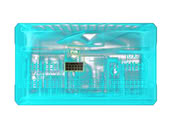
The RM1200e is also the first Corsair power supply to feature a native 12V-2x6 connection with PinProtect per-pin overcurrent protection (OCP). Designed to help protect high-end graphics cards, PinProtect monitors the on flowing through each power pin in real time and reduces power to the connection if the current exceeds a preset threshold for too long, triggering a protective GPU shutdown. If this occurs, users should completely power down their system, check for loose or improperly seated connections, and only restart once the connections are secure. This helps reduce the risk of damage caused by excessive current.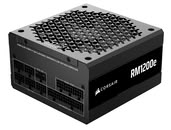
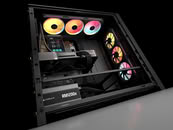 The RM1200e also introduces a new 3D Y-pattern fan grille optimized for high airflow and low-noise operation, complemented by premium debossed cables and low-profile cable combs for a clean, streamlined build. With Cybenetics Platinum certification, Intel ATX 3.1 certification, PCIe 5.1 readiness, and a 10-year warranty, the RM1200e delivers the power, efficiency, and features needed for today's high-performance PCs and future upgrades.
PinProtect GPU Protection
Built directly into the RM1200e, PinProtect operates automatically whenever the GPU is powered, requiring no configuration or user intervention. If the current on any of the six pins carrying 12 V power to the GPU exceeds a preset threshold for an extended period, PinProtect activates to limit the power to the GPU, causing the GPU to turn itself off to prevent any potential damage. The technology is similar to the popular Corsair ThermalProtect PCIe 5.1 600 W 12V-2x6 Cable launched earlier this year, and can be used with the 12V-2x6 cable included with the RM1200e. This continuous per-pin monitoring adds a layer of protection for high-end graphics cards, delivering greater peace of mind without adding complexity to your setup.
Platinum Efficiency and Reliable Power
The RM1200e is Cybenetics Platinum certified, delivering up to 91% overall efficiency for lower power consumption and reduced heat generation. It is also Intel ATX 3.1 certified and PCIe 5.1 ready, providing support for the latest PC hardware and power requirements. Inside, high-quality Japanese 105°C-rated capacitors provide high heat tolerance and help deliver steady, reliable power and dependable electrical performance.
Clean, Flexible Cable Management
With a fully modular design, the RM1200e lets you connect only the cables your system needs, reducing clutter and improving airflow for a cleaner-looking build. Premium debossed cables offer a sleek appearance and enhanced flexibility, while low-profile cable combs help keep cables neatly organized and make installation easier, particularly in tight spaces.
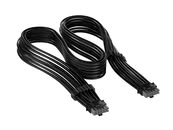
Despite its 1200 W output, the RM1200e maintains the compact 150 mm depth of the RMe Series, leaving room for cable management and making installation easier in smaller cases. The included 12V-2x6 GPU power cable also features dual-tone connectors for visual confirmation of a secure connection.
Available in Black and White
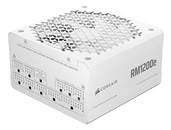
Available in black and white, the RM1200e complements a range of system styles, delivering high-capacity power in a finish that matches your build.
Availability, Warranty, and Pricing
The Corsair RM1200e is available immediately from the Corsair worldwide network of authorized retailers and distributors and on the Corsair webstore.
The Corsair RM1200e is backed by a ten-year warranty, alongside the Corsair worldwide customer service and technical support network.
Pricing:
US: $204.99
EU: €194.90
UK: £169.99
ANZ: $319 Australian
For more information, visit the product page.
The RM1200e is also the first Corsair power supply to feature a native 12V-2x6 connection with PinProtect per-pin overcurrent protection (OCP). Designed to help protect high-end graphics cards, PinProtect monitors the on flowing through each power pin in real time and reduces power to the connection if the current exceeds a preset threshold for too long, triggering a protective GPU shutdown. If this occurs, users should completely power down their system, check for loose or improperly seated connections, and only restart once the connections are secure. This helps reduce the risk of damage caused by excessive current.


PinProtect GPU Protection
Built directly into the RM1200e, PinProtect operates automatically whenever the GPU is powered, requiring no configuration or user intervention. If the current on any of the six pins carrying 12 V power to the GPU exceeds a preset threshold for an extended period, PinProtect activates to limit the power to the GPU, causing the GPU to turn itself off to prevent any potential damage. The technology is similar to the popular Corsair ThermalProtect PCIe 5.1 600 W 12V-2x6 Cable launched earlier this year, and can be used with the 12V-2x6 cable included with the RM1200e. This continuous per-pin monitoring adds a layer of protection for high-end graphics cards, delivering greater peace of mind without adding complexity to your setup.
Platinum Efficiency and Reliable Power
The RM1200e is Cybenetics Platinum certified, delivering up to 91% overall efficiency for lower power consumption and reduced heat generation. It is also Intel ATX 3.1 certified and PCIe 5.1 ready, providing support for the latest PC hardware and power requirements. Inside, high-quality Japanese 105°C-rated capacitors provide high heat tolerance and help deliver steady, reliable power and dependable electrical performance.
Clean, Flexible Cable Management
With a fully modular design, the RM1200e lets you connect only the cables your system needs, reducing clutter and improving airflow for a cleaner-looking build. Premium debossed cables offer a sleek appearance and enhanced flexibility, while low-profile cable combs help keep cables neatly organized and make installation easier, particularly in tight spaces.
Despite its 1200 W output, the RM1200e maintains the compact 150 mm depth of the RMe Series, leaving room for cable management and making installation easier in smaller cases. The included 12V-2x6 GPU power cable also features dual-tone connectors for visual confirmation of a secure connection.
Available in Black and White
Available in black and white, the RM1200e complements a range of system styles, delivering high-capacity power in a finish that matches your build.
Availability, Warranty, and Pricing
The Corsair RM1200e is available immediately from the Corsair worldwide network of authorized retailers and distributors and on the Corsair webstore.
The Corsair RM1200e is backed by a ten-year warranty, alongside the Corsair worldwide customer service and technical support network.
Pricing:
US: $204.99
EU: €194.90
UK: £169.99
ANZ: $319 Australian
For more information, visit the product page.
13 Comments on Corsair Launches RM1200e Power Supply with Built-in PinProtect GPU OCP
So now your PSU will cost more while nGreedia pockets the profits of not designing/implementing working OCP on their cards going forward.
Besides, if the manufacturer wants to find an excuse, they will find one:
• Did you use the PSU cable? No RMA for you.
• Did you use my adapter? Oh, the card and the adapter were fine, but the power supply cables you connected to the adapter were the problem.
Especially so when you consider that the faulty power delivery has originated with the world's richest company :shadedshu:
We have been here before with the multiple rail PSUs that kept shutting down. Some people really don't learn.
"What do you mean you werent using the 1600W super dazzle XXP with the extra fire prevention, its your own fault for using your "junk" CorSonic 1000W"I prevents situations where Cards are pulling the full 450+ watts over like 1-2 pairs and each of them trying to contain 30+amps while smouldering away but the CARD should be smart enough to do this.
Imagine if CPUs removed OCP......we already seen that result with OG asus with X3D...Ill did up the gamers nexus if its needed.
If you have badly designed GPUs, you will have shutdowns or burned cards. As we've seen with the endless "protection features" and cables that end up doing nothing.
The other is if your 4090 has properly designed power input, which some do. Then, what does it look like on the PSU side? If it is modular, there usually is an issue.
Most manufacturers push up to 600W on one end but the other is 2x8pin PCIe, which was never designed for anything close to 600W and at the plug level is beyond design spec. (288Wx2 IIRC)
If you are using Nvidia's adapter, the PSU side has a lot more headroom then 2x plugs. From what I've seen the 12VHPWR is not a good connector but the main issue is GPU power input design that is defective.
If you have a GPU with at least 3 balancing circuits and the NVIDIA 3x to 12VHPWR, there is enough margin on a 450W card for things to be ok.
The melting is usually due to complete disaster of current through 1 or 2 pins, where high temp causes damage on the connectors and the problem quickly compounds until it melts.
Issues didn't start because of the connector, as 3090s worked fine. They had proper input current balancing but Nvidia kept cutting that with each generation so that all pins are dumped in the same 12v plane. No shunt resistors, not even fuses sometimes - there are boards with big holes because a vrm chip shorted (though this would also be due to a bad PSU with no overcurrent protection).
Does wattage matter? I think my system needs 750 watts, but went with 1,000 watts.
MSIs of that time I think are still quite good, newer ones seem to be cutting a lot of corners. If you had the Nvidia 4090 you'd more likely to have issues than others.
See: