Friday, July 24th 2026

Intel Reaffirms: Multithreading Returns in 2028 with "Coral Rapids"

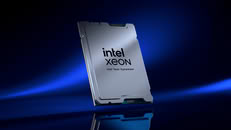
In recent years, Intel has shifted away from traditional multithreading in its CPU core designs. This change began with the 12th-Gen Core CPUs when Intel started moving away from Hyper-Threading. At the same time, the company transitioned to asymmetrical CPU designs, initially enabling SMT only on performance cores. On the consumer side, Intel completely abandoned Hyper-Threading with the Core Ultra 200 series but still maintains it in the P-Core Xeon 6 "Granite Rapids" CPU family, which features up to 128 P-Cores and 256 threads. Meanwhile, the "Clearwater Forest" E-Core Xeon 6 has 288 E-Cores without Hyper-Threading, and Intel's upcoming Xeon 7 "Diamond Rapids" P-Core SKUs will have 192 cores and 192 threads, meaning no Hyper-Threading. Intel plans to address this by reintroducing Hyper-Threading the following year with the Xeon 8 "Coral Rapids."
Intel CEO Lip-Bu TanWe have Clearwater Forest, Diamond Rapids, and also Coral Rapids with the SMT involved. I think we continue working on improving the competitiveness against our competitor. I think clearly it's very important to drive the improvement in the single thread and also multithreading. Multithreading will be coming in the Coral Rapids.
The no-SMT Xeon 7 "Diamond Rapids" is expected in 2027, but 2028 is when SMT is set to make a big comeback. This timing coincides with Intel's 14A node high-volume manufacturing, meaning "Coral Rapids" could utilize the 14A node for its compute tile. With advancements in yield, advanced packaging, and more under Intel's Foundry division, we anticipate a capable lineup in the coming years.
Source: Intel Earnings Call Transcript
Add your own comment

37 Comments on Intel Reaffirms: Multithreading Returns in 2028 with "Coral Rapids"

#1
dgianstefani
TPU Proofreader
Hopefully just for HPC/enterprise.
Posted on Reply
#2
_JP_
OOoh boy, I do not long for the days of cache starvation...again.
Posted on Reply
#3
Onasi
I assume this will be Xeon only. It doesn’t make much sense to return to it with their current consumer CPU approach.
Posted on Reply
#4
N/A
It returns to mobile with Titan and to desktops with Hammer Lake.
Posted on Reply
#5
Chrispy_
Intel can't make their minds up about SMT.

Why not try ultrathreading and go for four threads per core. What could possibly go wrong?
Posted on Reply
#6
ncrs
Chrispy_Why not try ultrathreading and go for four threads per core. What could possibly go wrong?
It's been done already: IBM's POWER and Sun/Oracle SPARC went up to 8-thread, but IBM Telum wins with up to 16-thread SMT :)
Posted on Reply
#7
TranceHead
ncrsIt's been done already: IBM's POWER and Sun/Oracle SPARC went up to 8-thread, but IBM Telum wins with up to 16-thread SMT :)
I think they know, i read it as a facetious comment.
I could be wrong though
Posted on Reply
#8
Chrispy_
TranceHeadI think they know, i read it as a facetious comment.
I could be wrong though
A rhetorical question in full italics a couple of posts below a comment about cache starvation?
How could that possibly be sarcasm?

In addition the cache starvation issues, SMT gave rise to the Spectre and Meltdown list of CVEs and all the variants like Downfall, Foreshadow, Zombieload etc. Sharing information from two different threads in the same physical registers is really hard to do in a way that is 100% unexploitable, without also reducing the effectiveness of SMT's performance to the point that it's worse than disabling SMT entirely. Doubling it to four threads is basically idiotic outside of controlled, secured environments.
Posted on Reply
#9
dgianstefani
TPU Proofreader
Chrispy_A rhetorical question in full italics a couple of posts below a comment about cache starvation?
How could that possibly be sarcasm?

In addition the cache starvation issues, SMT gave rise to the Spectre and Meltdown list of CVEs and all the variants like Downfall, Foreshadow, Zombieload etc. Sharing information from two different threads in the same physical registers is really hard to do in a way that is 100% unexploitable, without also reducing the effectiveness of SMT's performance to the point that it's worse than disabling SMT entirely. Doubling it to four threads is basically idiotic outside of controlled, secured environments.
Also, literally who needs SMT on a 24 core CPU, where it isn't worth moving to HEDT/Server grade parts. Next gen goes up to 50+ cores. Insane if they bring it back with the downsides, I'll take couple percent extra ST performance, better efficiency, and no security holes from the tech over 30% best case higher MT performance assuming the task can benefit from more than 24/50 threads in the first place.

Only reason this is coming back is so smaller chips can be sold with similar MT perf.
Posted on Reply
#10
Tek-Check
They have no choice, but to reinstate HT.
Zen6 EPYC is stomping on everything under the Sun and increasing the catch-up distance.
Posted on Reply
#11
XeonsNOpterons
While this was already known, cool to see another confirmation. Venice looks a little underwhelming given the clock speed hype before, and it only means my guess that Zen 6 desktop will barely pass 6GHz turbo is likely accurate. Diamond Rapids, despite not having SMT, will still have a massive IPC gain over Granite Rapids as Panther Cove-X is the first major architectural upgrade since Golden Cove. I think Xeon 7 will still do well against Venice, and if the rumors of 320-cores on Coral Rapids-AP are accurate, Xeon 8 will soundly beat Zen 6 and Zen 7 EPYC. That is all assuming Intel does not flop on their back and delay launch 1-2 years like they have done in the past... heck, even Diamond Rapids is delayed effectively a year as it was supposed to launch this year with Venice. That is where Intel really needs to focus: actually launching things on time.

I just have no idea what core they will be using for Coral Rapids. Maybe a Griffin Cove-X?
Posted on Reply
#12
Rulumi
Chrispy_Intel can't make their minds up about SMT.

Why not try ultrathreading and go for four threads per core. What could possibly go wrong?
They had a prototype in 2023 (Hot Chips 2023) with 8 cores and 528 threads CPU, 66 threads per core. That prototype was a custom RISC design and not x86_64 however.


Posted on Reply
#13
_roman_
And all the related CVE will come back to intel. No hyperthreading fixed a lot of CVE.

A bad choice to introduce hyperthreading. It implies intel does not help in optimising the existing scheduler for their proprietary cpu design. Hyperthreading should not give any performance boost when the software is written correctly and the hardware was designed well with the software in mind.
Posted on Reply
#14
mb194dc
Well at least they're not just re-releasing products from 5 years ago... Yet...
Posted on Reply
#15
kondamin
I don't really see the point in smt anymore in the consumer space.
What's the minimum now 5 or 6 cores? for budget CPU's?
Posted on Reply
#16
_roman_
kondaminWhat's the minimum now 5 or 6 cores? for budget CPU's?
afaik what i see was 4 cores with smt on recent budget systems.

i doubt i have ever seen any 5 core desktop amd64 based cpu.
Posted on Reply
#17
kondamin
_roman_afaik what i see was 4 cores with smt on recent budget systems.

i doubt i have ever seen any 5 core desktop amd64 based cpu.
isn't wildcat 5 or 6?
AMD hasn't made anything budget friendly in ages.
Posted on Reply
#18
Dr. Dro
Chrispy_Intel can't make their minds up about SMT.

Why not try ultrathreading and go for four threads per core. What could possibly go wrong?
SMT4 has severe performance implications, apparently. Every architecture that's ever used it has very poor single threaded performance, and regresses against regular SMT. Last one if I'm not mistaken was Xeon Phi
Posted on Reply
#19
ejolson
My understanding is symmetric multithreading becomes more effective as cores become wider with more functional units. For example, on Serve The Home in the article Normalizing NVIDIA Vera Benchmarks to AMD EPYC Turin A Framework, Patrick Kennedy writes

In our testing, loading the second thread adds roughly 12% on a Skylake-era Xeon (with default side channel mitigations active), 23-25% on Sapphire Rapids, 29-32% on Xeon 6, and 32-33% on Zen 5

To avoid duplicate engineering efforts the performance cores in consumer CPUs are essentially the same as in servers. Although it's well known people don't need more then 640KB RAM or computers at all, it makes no sense to throw an easy 30 percent performance increase away.
Posted on Reply
#20
_Flare
it is known since decades, that normal x86 workload doesn't scale well above SMT2.
IBM is not x86 so some of its custorers workloads can indeed leverage SMT8.
Nvidias little different approarch with Vera is interesting too, but again not x86.

Beside those things intel changed its trajectories a few times in the recent years and must have been rotating quiet fast since Keller dropped the mic.

edit (addition): Intels biggest obvious problem is still their non existent answer to AMDs scaleable-fabric, wich again evolved with CDNA5 wich dropped the Infinity-cache and went for bigger L2.
Intel still lags something like that in server and consumer space ... yet. Maybe the SMToff, SMTon is the visible part of that in some way.
Posted on Reply
#21
AntiX3DGlazer
XeonsNOpteronsWhile this was already known, cool to see another confirmation. Venice looks a little underwhelming given the clock speed hype before
I'd say 5 ghz across 96 vanilla cores is a pretty big deal, along with increased memory channels and support.
kondaminisn't wildcat 5 or 6?
AMD hasn't made anything budget friendly in ages.
What do you mean? Is the brand new AMD Ryzen 3 3100U based on Zen+ not budget enough for you?

This is hopefully obvious sarcasm.
Posted on Reply
#22
kondamin
AntiX3DGlazerI'd say 5 ghz across 96 vanilla cores is a pretty big deal, along with increased memory channels and support.


What do you mean? Is the brand new AMD Ryzen 3 3100U based on Zen+ not budget enough for you?

This is hopefully obvious sarcasm.
Ah yes Zen+ back from when logic was knitted by grannies next to the fireplace during long dark winter nights.
Posted on Reply
#23
maximumterror
Tek-CheckThey have no choice, but to reinstate HT.
Zen6 EPYC is stomping on everything under the Sun and increasing the catch-up distance.
This is why Intel went the E-core route. AMD created a new Zen processor design with SMT, and its efficiency increased by 30% compared to Intel, because Intel first designed the processor and only then added SMT.
Posted on Reply
#24
shuffy_losys
kondaminAMD hasn't made anything budget friendly in ages.
Sure they have! ... It's called keeping AM4 alive. 🫠
_Flareit is known since decades, that normal x86 workload doesn't scale well above SMT2.
IBM is not x86 so some of its custorers workloads can indeed leverage SMT8.
Nvidias little different approarch with Vera is interesting too, but again not x86.
In IBM's case, that would imply what the workload either was using a single functional unit in the backend or the threads were stalled heavily and the only way to keep moving the ball was to service something else and hope by the time the original thread gets its turn again, the thing it was waiting on is available.

ISA has nothing to do with how well SMT scales. SMT is purely a backend feature and the ISA doesn't matter by that point.
Posted on Reply
#25
Geddagod
N/AIt returns to mobile with Titan and to desktops with Hammer Lake.
Titan Lake unified core is not rumored to have SMT.
XeonsNOpteronsand it only means my guess that Zen 6 desktop will barely pass 6GHz turbo is likely accurate
Server Zen 4 did not see much of a Fmax bump either, but saw a very large Fmax bump in client.
Zen 5 is the only AMD Zen generation I think that didn't see a Fmax bump in DT, but in server tons of chips saw single core boost bumps.
What's interesting too is the distinction of 'single core frequency/boost' in client vs server. AFAIK, in client, only select cores have to boost up to "x" GHz for "x" GHz to be the boost clock. For server (for AMD at least), single core boost has to be achievable by any core in the chip.
XeonsNOpteronsDiamond Rapids, despite not having SMT, will still have a massive IPC gain over Granite Rapids as Panther Cove-X is the first major architectural upgrade since Golden Cove.
Lion Cove is a huge architectural shift vs GLC, even if the IPC figures did not really back it up. Similar with Zen 5 actually, another large architectural shift, not much IPC gain in specint2017 at least.
XeonsNOpteronsI think Xeon 7 will still do well against Venice,
Venice has 33% more cores, SMT, and uses a better node.
DMR will have some of it's own advantages (hybrid bonding L3, fewer chiplets also wastes less power, but I doubt it's enough to overcome the advantages Venice has.
XeonsNOpteronsI just have no idea what core they will be using for Coral Rapids. Maybe a Griffin Cove-X?
That's my assumption as well.
AntiX3DGlazerI'd say 5 ghz across 96 vanilla cores is a pretty big deal, along with increased memory channels and support.
I don't think all 96 cores will be boosting at 5GHz, just that any one of the cores can boost at that clock.
Posted on Reply
Add your own comment
Nov 12th, 2026 04:39 CST change timezone

New Forum Posts

Popular Reviews

TPU on YouTube

Controversial News Posts