Monday, August 24th 2026

Samsung Confirms HBM4E Memory Running at 16 Gbps Per Pin
At the Hot Chips 2026 conference's Advance Program, Samsung's Sangwook Han confirmed that the company is preparing to ship HBM4E memory with speeds of 16 Gbps per pin. This is a significant confidence boost for Samsung's Semiconductor division, which has been shipping HBM4E with speeds of 14 Gbps per pin since late May of this year. Essentially, the company confirmed that its scaling progress is going well, and HBM4E represents another milestone in high-bandwidth memory technology that it can produce with impressive speed. Samsung's own HBM4 is now shipping at 11.7 Gbps, making the jump to HBM4E even more impressive.
Currently, at 14 Gbps per pin and 2,048 pins per HBM4E stack, Samsung can achieve a maximum bandwidth of 3.6 TB/s. However, at 16 Gbps, this maximum memory bandwidth will increase to 4 TB/s for a single HBM4E stack. Considering about a dozen memory stacks per AI accelerator or GPU, the total memory bandwidth is remarkable. The company is also currently offering this memory in a 12-layer (or 12-high) configuration with a memory density of 48 GB per stack. However, customer requirements will also include 8-layer 32 GB and 16-layer 64 GB stacks in the future.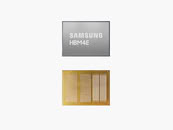
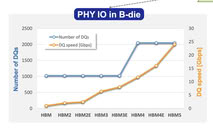 Regarding the technology, Samsung uses a 6th-generation 10 nm class process optimized for DRAM, which is then stacked across multiple layers. HBM4E technology also includes a custom base die manufactured on Samsung's 4 nm SF4 node, designed to meet customer needs for better integration across various packages.
Source:
via Jukan on X
Currently, at 14 Gbps per pin and 2,048 pins per HBM4E stack, Samsung can achieve a maximum bandwidth of 3.6 TB/s. However, at 16 Gbps, this maximum memory bandwidth will increase to 4 TB/s for a single HBM4E stack. Considering about a dozen memory stacks per AI accelerator or GPU, the total memory bandwidth is remarkable. The company is also currently offering this memory in a 12-layer (or 12-high) configuration with a memory density of 48 GB per stack. However, customer requirements will also include 8-layer 32 GB and 16-layer 64 GB stacks in the future.


10 Comments on Samsung Confirms HBM4E Memory Running at 16 Gbps Per Pin
Schadenfreude!
8K isn't going to be a thing, 2x 4k for VR maybe
They will gain know how on running this level of technology and will be able to copy it on their own in the host nation.