Wednesday, September 3rd 2008

AMD Desktop Roadmap for 2009 Reveals no Surprises
Without doubt, AMD needs something revolutionary to pull it out of the mess it set itself in. AMD's first reaction to the Conroe onslaught was to lower prices and build up a "Smarter Choice" repute, though with successive price cuts from Intel and down-scale products based on the Core architecture coming out by the fortnight, and the transit to 45nm fab process, there's been an increasing need for AMD to get back to the drawing boards with their CPU division.
From what looks like an excerpt from an AMD company slide, can be seen AMD's CPU plans for 2009. The chart broadly shows that K10 architecture is here to stay. Throughout the year, desktop CPUs based on the K10 architecture feature in the roadmap, with no signs of their "truly next-gen" architecture. AMD completes its transit to the 45nm silicon fabrication process and will finally embrace DDR3 system memory standards. To begin with, the fact that the Deneb core's entry slightly steps into the 2008 column shows that the Deneb core-based desktop CPU could release sometime towards the very end of this year. Sources note that two models based on the Deneb core could be out by the end of this year. It supports both DDR2 and DDR3 memory standards and socket compatible with current AM2+ and future AM3. From what's known so far, AM3 is the same 940 pin design that adds pins for the DDR3 memory interconnect between the CPU and the memory.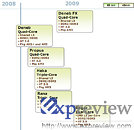 Deneb as we know is the K10 based quad-core 45nm derivative with 6 MB L3 caches. While Deneb aims to provide AM2+ and AM3 socket support, AMD will launch another quad-core chip core called Propus. This core lacks a level 3 cache, and is exclusive to the AM3. Presumably, it becomes exclusive since it might lack DDR2 memory controllers that Deneb and its predecessors had. Propus is aimed more to be a value offering, but hey, AMD's CPU lineup itself is basing heavily on the value moniker.
Towards mid-2009 a high-end Deneb FX chip is planned. The roadmap shows it to be exclusive to AM3 requiring DDR3 memory. Although it was indicated earlier about big plans to port this core to socket 1207 and possible DSDC based multi-CPU ganging, it's evidently out of the desktop roadmap, at least for 2009.
Moving on to triple-core and pretty-much the same form of variation as that between Deneb and Propus can be seen with Heka and Rana cores, with Rana lacking the L3 cache. These cores come in quick succession after Propus. There's a dual-core part on the chart called Regor as well. These 45nm AM3 supportive chips feature 1 MB L2 caches per core.
Moving on the thermal characteristics and the lineup looks largely the same except for that the highest offerings are rated at 125W followed by 95W chips and some Propus based parts being rated at even 45W. This is in comparison to current 65nm chips using the 140W, 125W and 95W ratings with some Agena parts being rated at even 65W. So there is a reduction attributing to the fab process transit, possibly higher clock speeds, though it isn't significant.
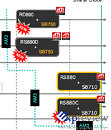
Finally, what's CPU talk without platform talk? Current 7-series chipsets find successors in the form of RD890 for the high-end and RS880D for performance thru mainstream segments. Current SB 750 southbridge chips are their sidekicks. RS880 and RS880C are the more mainstream thru value desktop platforms using the SB710 southbridge chips. The 8-series core logic exclusively supports the AM3 socket.
On the whole it doesn't look like there's something revolutionary though everything depends on how the Deneb core shapes up as it will without doubt be the torch-bearer for AMD in 2009 in its quest for a respectable market position. AMD plays a vital role in both CPU and consumer graphics segments in making sure innovations at humane prices are delivered to the consumer, from whichever market player products come from. Let the game begin.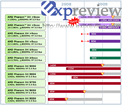
Source:
Expreview
From what looks like an excerpt from an AMD company slide, can be seen AMD's CPU plans for 2009. The chart broadly shows that K10 architecture is here to stay. Throughout the year, desktop CPUs based on the K10 architecture feature in the roadmap, with no signs of their "truly next-gen" architecture. AMD completes its transit to the 45nm silicon fabrication process and will finally embrace DDR3 system memory standards. To begin with, the fact that the Deneb core's entry slightly steps into the 2008 column shows that the Deneb core-based desktop CPU could release sometime towards the very end of this year. Sources note that two models based on the Deneb core could be out by the end of this year. It supports both DDR2 and DDR3 memory standards and socket compatible with current AM2+ and future AM3. From what's known so far, AM3 is the same 940 pin design that adds pins for the DDR3 memory interconnect between the CPU and the memory.

Towards mid-2009 a high-end Deneb FX chip is planned. The roadmap shows it to be exclusive to AM3 requiring DDR3 memory. Although it was indicated earlier about big plans to port this core to socket 1207 and possible DSDC based multi-CPU ganging, it's evidently out of the desktop roadmap, at least for 2009.
Moving on to triple-core and pretty-much the same form of variation as that between Deneb and Propus can be seen with Heka and Rana cores, with Rana lacking the L3 cache. These cores come in quick succession after Propus. There's a dual-core part on the chart called Regor as well. These 45nm AM3 supportive chips feature 1 MB L2 caches per core.
Moving on the thermal characteristics and the lineup looks largely the same except for that the highest offerings are rated at 125W followed by 95W chips and some Propus based parts being rated at even 45W. This is in comparison to current 65nm chips using the 140W, 125W and 95W ratings with some Agena parts being rated at even 65W. So there is a reduction attributing to the fab process transit, possibly higher clock speeds, though it isn't significant.
Finally, what's CPU talk without platform talk? Current 7-series chipsets find successors in the form of RD890 for the high-end and RS880D for performance thru mainstream segments. Current SB 750 southbridge chips are their sidekicks. RS880 and RS880C are the more mainstream thru value desktop platforms using the SB710 southbridge chips. The 8-series core logic exclusively supports the AM3 socket.
On the whole it doesn't look like there's something revolutionary though everything depends on how the Deneb core shapes up as it will without doubt be the torch-bearer for AMD in 2009 in its quest for a respectable market position. AMD plays a vital role in both CPU and consumer graphics segments in making sure innovations at humane prices are delivered to the consumer, from whichever market player products come from. Let the game begin.


45 Comments on AMD Desktop Roadmap for 2009 Reveals no Surprises
that what I meant , the faster ones
This roadmap is a tad underwhelming.
Allegedly, Phenom FX-82 = Deneb Rev. D, HKMG process at 4.4Ghz. Yeah, right. Believe it when I see it.
Also rumoured to be sporting SSE5, brought forward to gain a foothold but I doubt that too.
Last I heard, SB710 was still-born and SB800 is coming along just fine. This I do believe.
Really, I just wanted a nice K10 native dual core to upgrade my HTPC but instead they proffer Toliman with another whacked core. No thanks. Reckon I'll hang on for the Kumas at 45 or maybe a Rendezvous with Rana because I'm perverse like that.:cool:
Yeah sad to see AMD is still playing the underdog role when they can actually bring out something really good. I wish they have a secret weapon which will hit Intel by suprise.
No matter what I will stick with AMD to the last, afterall they made PC making fun.
And yes, I did say they would be back in the $1000 price range, or can you not read what I wrote? ;) Id like to see them go a different route myself, but the bottom line is, they arent right now. Time will tell but the Denebs are supposed to be good chips. Hell, who cares if they whoop intels ass, personally I Dont think they need to.
AMD manufacturing spin-off announcement imminent
As far as I'm concerned this roadmap is just fine, I personally believe (hopefully you guys don't take 'offense' to hard to this) that 90% of the people here are asking for 'more' performance that they don't need and will not use. It seems like they're asking for 'progress' just for the sake of seeing higher numbers. What's out today (hell what was out last year) is more than enough to run anything today and for a very long time in the future, but still people ask for 'more' and 'more'.
What point is having a 4Ghz Quad-Core when all you do is watch a few movies and play a game? How many people here actually do intensive things (real ones not just having 5 windows open) with their processors right now that requires anything above 2Ghz...I'd say 5% max. What good is having a car with 500hp when you can't even top out a 200hp with what you're doing? What good is having a $5000 12mp camera when you can't even use a $300 4mp camera efficiently?
I'm glad to see that AMD isn't trying to rush some uber (100% pointless) processor out the door and just focusing on what they have and how to make it better...isn't that what you so called 'overclockers' (term that's thrown around way too much these days for people with no knowledge/skills) are doing as well? Nothing wrong with Intel making super high clocked processors either but even they are taking a different route with the Nehalem (sp?) processors, yes they're going to be faster but this time it's a different kind of fast.
Both companies are doing what they need to do to ensure their sucess in the marketplace. For all the talk of AMD dying I find it hilarious that only 1 single person has even mentioned following the stock. I watch it everyday (for obvious reasons) thus I don't bother posting in most of these threads because I know the truth...just a few weeks ago people were talking of them going under and they were just shy of hitting the $3.xx mark per stock, now they're at $6.15 (at close today on a $.19 loss no less) the same people are still talking like that....why.
This is not directed at any one person just a general "state of the union" kinda thing so please don't make this into an argument, I'm just being the guy that points out that sometimes we get caught up in an idea and forget the big/real picture. :)
K
Edit: For the record the high for today was $6.45 (up $.17 or .19 from my memory of yesterday) and the low was $6.07 (down ~$.30) for those that are now curious.
Company of Heroes is a RTS game, that contain realistic physics, weathers, big map, ect.. The only WWII RTS game with DX10 at this moment, and require a strong CPU, and the only game I have is CPU bound.
FPS games don't need a strong CPU, because only the things in front of your eyes are active, but with RTS, everything on the map is active.
I argreed that you don't need a 4GHz cpu for gaming, but I don't think the current Phenom able to handle all the games right now, Phenom have to pass 3GHz, and I hope AMD will offer 3GHz+ processors soon.
www.youtube.com/watch?v=wCUzdJHISQE
Is there a demo for this game, I'll try it out and see how it fares for me but I've not run into a game I can't run yet.
K
K
I just found this link on another post.
This is some sick becnhmarks, why AMD processors scale so poor?
As far as people complaining, it's because AMD not being able to compete with Intel on the top end hurts their image. Look how far ATI's market share dropped when they didn't have anything to compete up top, despite the fact that the majority of buyers are on the low-mid end. It's all about image. High benchmarks sell cpus.
And I do put my 4GHz quad to good use. Nothing like encoding an HD movie to H.264 while playing a game.
This actually leads me to point about the arguement taking place in the thread. It seems to me that AMD hasn't made real architectural changes since socket 939. Socket AM2 was just 939 with DDR2 support and somewhat higher clocks, same lack of progress can be pointed out about AM2+ and, judging by the roadmap, about upcoming AM3. They were ahead of Intel for 3 years but didn't use the time wisely to develop a new architecture while intel worked hard on Core 2. This is why i said that the need something completely new to replace K8/K10.
I think Kei's statement about AMD making the kinda CPUs that will handle today's tasks kinda misses the point. If AMD could make better CPUs they would've done it already. I think it's about progress and always striving to be better than your competition not about just satisfying today's needs. I understand that AMD is doing what it thinks is best, i'm just worried that it may not be good enough. An average consumer buys PCs based on advertisements and advice from folks who know about PCs. Have you seen an AMD ad lately? Hell, no, but i see an Intel ad almolst everytime i watch TV or read a magazine. And what do you think a PC geek is gonna tell someone looking to get a new system? I bet Intel will be recomended most of the time. Enthusiasts constitute a very small percentage of the population but they greatly influence the rest of the consumers. I think Wile has a point, performance definately sells, it doesnt matter if one would never use one's CPU to its fullest the consumer will still go with a better performer. AMDs CPU division is only surviving due to low prices, but Intel has been very aggressive as well so for few bucks more one can get an Intel and be done with it. I love AMD and wish it well but unfotunately these are the facts.
www.tgdaily.com/content/view/39165/118/