News Posts matching #Arm

Return to Keyword Browsing

LG Electronics Joins the HSA Foundation

The Heterogeneous System Architecture (HSA) Foundation today announced that LG Electronics has joined as a member. LG's diverse product portfolio and industry experience are valuable additions in helping HSA and its members reach common goals, ultimately benefiting consumers. With LG Electronics on board, new possibilities emerge as the fusion of HSA and LG's current IP bring a whole new level of interactivity for consumers- from home appliances to entertainment systems, the HSA foundation acquires greater depth in the smartphone, tablets, TV, digital cameras, game consoles and even the E-reader space. This allows for an entire ecosystem of electronics that touch the lives of consumers throughout their day to be enhanced via a common Heterogeneous Systems Architecture.

The HSA Foundation continues working toward developing a single architecture specification that will unlock the performance and power efficiency of parallel computing engines found in many modern devices. These specifications also open up a more simplified approach to software development in heterogeneous environments which will enable a broad range of programmers to drive richer user experiences into their applications.

ARM Launches Cortex-A50 Series, the World's Most Energy-Efficient 64-bit Processors

ARM announced the new ARM Cortex-A50 processor series based upon the ARMv8 architecture, extending ARM's leadership in performance and low power. The series initially includes the Cortex-A53 and Cortex-A57 processors and introduces a new, energy-efficient 64-bit processing technology, as well as extending existing 32-bit processing. The scalability of the processor series enables ARM partners to create system-on-chips (SoCs) that address diverse markets, from smartphones through to high-performance servers.

The processors launched today will continue the evolution of the mobile computing experience by delivering up to three times the performance of today's superphones and extending today's superphone experience to entry-level smartphones. With a comprehensive set of ARM and ARM partner development tools and simulation models already available to enable faster and easier software development, both processors are fully compatible with the extensive ARM 32-bit ecosystem and integral to the rapidly evolving ARM 64-bit ecosystem.

Phoenix Technologies UEFI Enables Security and an IDE for ARM-Powered Server Systems

Phoenix Technologies Ltd., the global leader in UEFI firmware technology, products and tools, is announcing UEFI BIOS support for server systems based upon the ARMv8 64-bit architecture. ARM Techcon is being held at the Santa Clara Convention Center, Santa Clara, California, from October 29-November 1, 2012.

The Phoenix SecureCore UEFI provides a superior, proven solution for server systems, delivering an enhanced build environment that is independent from operating systems, flexible in compiler and assembler tools and capable of supporting modules and module packages. The benefits of SecureCore firmware include critical boot-level security, protecting the OS and entire system; rich networking and manageability; source code modularization and reusability; and significant build performance improvement. Phoenix began developing BIOS for server appliances and computing platforms in 1980, focusing on the need for reliability, performance, power management and security.

AMD First to Bridge Both x86 and ARM Processors for the Data Center

In a bold strategic move, AMD announced that it will design 64-bit ARM technology-based processors in addition to its x86 processors for multiple markets, starting with cloud and data center servers. AMD's first ARM technology-based processor will be a highly-integrated, 64-bit multicore System-on-a-Chip (SoC) optimized for the dense, energy-efficient servers that now dominate the largest data centers and power the modern computing experience. The first ARM technology-based AMD Opteron processor is targeted for production in 2014 and will integrate the AMD SeaMicro Freedom supercompute fabric, the industry's premier high-performance fabric.

AMD's new design initiative addresses the growing demand to deliver better performance-per-watt for dense cloud computing solutions. Just as AMD introduced the industry's first mainstream 64-bit x86 server solution with the AMD Opteron processor in 2003, AMD will be the only processor provider bridging the x86 and 64-bit ARM ecosystems to enable new levels of flexibility and drive optimal performance and power-efficiency for a range of enterprise workloads.

DRAM Makers Disappointed in Windows 8

Still reeling with over-production, swelling inventories, and spot-prices on free-fall, the DRAM industry had been banking on Microsoft's Windows 8 operating system launch to come to their salvation. Apparently, it didn't. As is customary with each new Windows launch, orders for DRAM components go up, as PC makers announce new products, and consumers purchase new RAM to upgrade their systems. Windows 8, which is essentially based on the same (albeit slightly tweaked) kernel as Windows 7, isn't really heavier on system resources. Let alone that, Windows 8 in itself is not expected to bring consumers to get a new PC, because Microsoft made it extremely simple and cheap to upgrade Windows 7 to 8. The industry's only real hope now is for hardware makers Intel, AMD, and ARM to introduce platforms that make use of DDR4 DRAM.

ARM, Red Hat and AppliedMicro Aim to Develop Disruptive 64-bit Server Platform

ARM, Red Hat, Inc. and Applied Micro Circuits Corporation today announced a collaboration that aims to develop a disruptive 64-bit server design platform to dramatically lower the total cost of ownership (TCO) of cloud computing, data centers and enterprises.

Fully compliant with the ARMv8 architecture, the AppliedMicro X-Gene Server on a Chip has been purpose-built for cloud and enterprise server deployment to deliver unprecedented low power, high performance and integration, with the goal of changing the way servers are designed for cloud, data center and enterprise applications.

Red Hat, the world's leading provider of open source solutions, is actively engaged in developing support within the Fedora community for the new 64-bit ARMv8 architecture, also known as AArch64.

AMD Could Place x86 and ARM Cores on the Same Silicon: Report

Following last week's 15% workforce cut that came with the company's Q3 2012 results, AMD plans to consolidate its workforce and eliminate "bureaucracy." According to a VR-Zone report, the company plans to announce its future strategy next week, on October 29. This strategy could ride heavily on recent moves the company made in the area of "heterogeneous computing," and a working alliance it built with the likes of ARM, MediaTek, Qualcomm, Samsung and TI, under the heterogeneous system alliance (HSA).

According to the report, AMD's future looks to be heading towards building highly versatile SoCs for devices in the post-PC era. It's not far-fetched to imagine, for example, that AMD could integrate ARM IP onto APUs with x86 cores, with the ARM cores based on recent micro-architectures such as Cortex-M5, performing specific kinds of tasks (such as data-encryption). Down the line, AMD could also integrate baseband components into the APU, beating Intel to the punch on similar efforts.

Dell Extends ARM-based Server Ecosystem Enablement with Open Source Development

As an extension to its ARM-based server ecosystem enablement and to further application development and testing to this technology, Dell today announced a donation of an ARM-based server concept to the Apache Software Foundation (ASF), the volunteer community that develops, stewards and incubates nearly 150 open source software projects and initiatives.

Dell believes ARM infrastructures demonstrate promise for web front-end and Hadoop environments, where advantages in performance per dollar and performance per watt are critical. Dell customers use many of Apache's open source software products, including Hadoop, Cassandra, and the Apache HTTP Web Server as part of their big data and cloud computing solutions, so Dell is providing this community with an ARM-based server concept running Calxeda EnergyCore. This server is accessible to all Apache projects for software development and native porting of applications.

Roccat Kone Domination Dynasty Expands with Launch of XTD and Pure Models

ROCCAT Studios, the German manufacturer of professional gaming peripherals, has announced the release of the ROCCAT Kone XTD - Max Customization Gaming Mouse and the ROCCAT Kone Pure - Core Performance Gaming Mouse - with the new mice to hit shelves in Europe on October 26 and in North America and Asia end of November.

Both new models feature the acclaimed Kone design, with the Pure offering a slimmer option that's 91% the size of the original Kone - a measurement decided upon after ROCCAT conducted extensive research with gamers to determine an optimally-reduced Kone version. And, as with earlier Kone mice, each comes standard with a world-beating performance package, this time featuring a fully-adjustable 8200 DPI Pro-Aim R3 laser sensor - with 41 DPI settings, ranging from 200 to 8200 - a 32-bit Turbo Core V2 72MHz ARM MCU processor, 576kB on-board memory, and the planet's most advanced Tracking & Distance Control Unit - all working in clockwork unison to deliver the world's most impressive speed, control and accuracy.

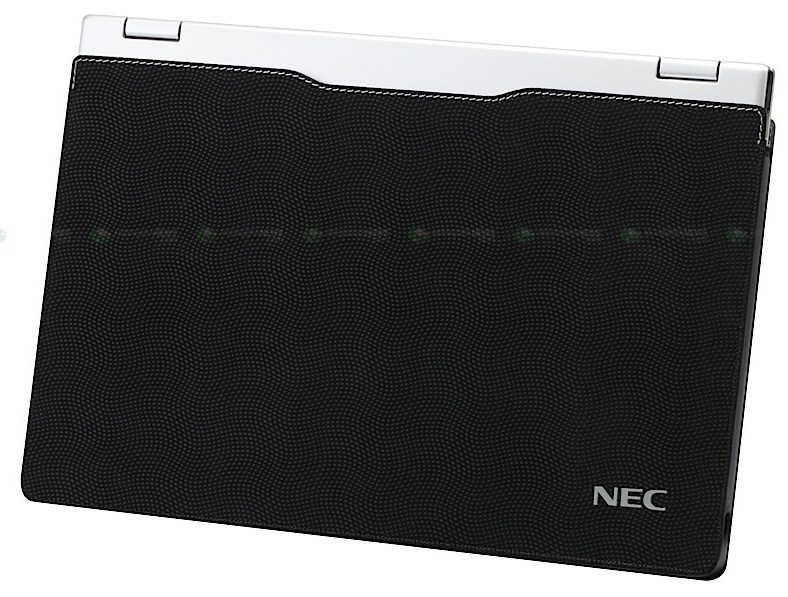
NEC Unveils LaVie Y Windows 8 RT Convertible Notebook

NEC unveiled the first full-fledged convertible notebook running Windows 8 RT, driven by ARM machine-architecture. The LaVie Y with its 11.6-inch, 1366 x 768 pixel screen works as a tablet in your hands, or as a laptop. Its "lid" (the main component housing the touchscreen and central processing) spins almost 360° along the hinge of the base (with the keyboard, trackpad, and ports), letting you orient the device in a number of ways.

Under the hood is an NVIDIA Tegra 3 quad-core processor clocked at 1.30 GHz, with GeForce graphics; 2 GB of RAM, 64 GB SSD, and connectivity that includes USB 2.0, 802.11 b/g/n, Bluetooth 4.0, 5-in-1 card reader, HDMI display output supporting 1080p video playback, and a 1.3 MP web-cam. Its battery can keep the device going for 8 hours before needing a recharge. Measuring 298 x 204 x 15.6 mm (when completely folded), the LaVie Y weighs 1.24 kg. It will be launched after October 26.

Arduino Due ARM Kit Launched

Arduino announces the release of the new Arduino Due board based on the Cortex M3 ARM processor. The release of the 1.0 Arduino platform in 2011 represented a milestone for Open Source Hardware: after six years of development, Arduino is declared mature and stable.
Once this was achieved, the team applied itself to the new version of Arduino designed to provide more creative options to users. The result of this work is the Arduino Due, a board that provides increased performance and faster connectivity at an affordable price (49 USD MSRP).

Arduino Due is ideal for those who want to build projects that require high computing power such as the remotely-controlled drones that, in order to fly, need to process a lot of sensor data per second. Arduino Due gives students the opportunity to learn the inner workings of the ARM processor in a cheaper and much simpler way than before.

Imagination Technologies Still Biggest in GPU IP, According to Jon Peddie Research

Jon Peddie Research (JPR), the industry's research and consulting firm for graphics and multimedia, announced estimated mobile devices graphics chip shipments for the first half of 2012. Mobile devices include smartphones, tablets, and game consoles.

The market for portable devices (mobile devices that we can carry) continues to soar in spite of economic difficulties and general uncertainty. Although portable devices are not necessarily replacing the PC, they are outselling the PC. All of these devices have a graphics processor (GPU) integrated in the device's system on a chip (SoC) application processor.

Google Outs 11.6-inch Samsung Chromebook

Google announced its newest Chromebook, made by Samsung. The 11.6-incher is completely fan-less, and just 0.8" thin, weighing 1.13 kg. It is designed to give you over 6.5 hours of usage on full charge, and smooth 1080p video playback. Under its hood is a Samsung Exynos 5 dual-core ARM processor, 2 GB of RAM, and 16 GB of local flash storage, in addition to which, you get 100 GB of space on Google Drive for 2 years. The latest version of Chrome OS comes with Google Now integration (real-time sync with data on the cloud). Connectivity includes HDMI, 802.11 b/g/n, and Bluetooth. A web-cam decks the top of the screen. The new Chromebook will be available through Play Store and Best Buy for US $249.99.

A video presentation follows.

Marshal Rolls Out Tiny Akitio 2.5-inch SATA NAS

Japanese company Marshal announced the MAL-4725NAS, a compact NAS box which can enclose a 2.5-inch SATA HDD or SSD. Driven by a 750 MHz ARM 11MP processor, the box features 256 MB of RAM and the same amount of NAND flash storage to house its Linux-based operating system (Fedora 12 ARM). Its software provides most consumer NAS features including FTP, SMB, print server, NFS, AFP, DLNA, and iTunes. Gigabit Ethernet is its only network interface. The 2.5-inch drive bay supports drives as thick as 12.5 mm. Its limited local storage can be expanded with flash drives, enclosures, and other mass-storage devices thanks to an eSATA and two USB 2.0 ports. Measuring 123 x 123 x 33 mm, it weighs about 536 g. Slated for October 20, it is priced at 13,800 JPY (US $176).

ARM Announces POP IP Technology for Mali-T600 Series GPUs

ARM today introduced the first POP IP solution for ARM Mali-T600 series graphics processor units (GPUs). This latest offering of POP IP -- core-hardening acceleration technology that produces the best implementations of ARM processors in the fastest time-to-market -- is optimized for the Mali-T628 and Mali-T678 on TSMC 28 nm HPM process technology. Mali GPUs go into a variety of end devices, including a wide range of smartphones, from high performance to mass market, as well as tablets and smart TVs. It is critical that designers can optimize their Mali GPU for their selected end applications.

Developed in synergistic collaboration by ARM's Media Processing and Physical IP divisions, the optimized POP IP technology has been created to produce the most efficient GPU implementations at 28 nm. The POP IP enabled Mali-T600 series GPU implementation results in superior performance density/watt, and significant silicon savings. Benefits of this POP IP have been proven to deliver up to 27 percent higher frequency, 24 percent lower area, and 19 percent lower power than implementations which do not use POP IP.

ARM Announces New High-Performance System IP

To address the significant increase in data over the next 10-15 years, and the demand for more energy-efficient network infrastructure and servers, ARM has announced the ARM CoreLink CCN-504 cache coherent network. This advanced system intellectual property (IP) can deliver up to one terabit of usable system bandwidth per second. It will enable SoC designers to provide high-performance, cache coherent interconnect for 'many-core' enterprise solutions built using the ARM Cortex-A15 MPCore processor and next-generation 64-bit processors.

LSI, a leading designer of intelligent semiconductors that accelerate storage, mobile networking and client computing, and Calxeda, an innovative supplier of disruptive SoC technology for the server market, are lead licensees for the CoreLink CCN-504 launch.

American Megatrends Introduces New Aptio V UEFI BIOS Firmware

American Megatrends Inc. (AMI), a leader in BIOS and computing innovations, announced the launch of Aptio V, the newest version of its acclaimed Aptio UEFI BIOS firmware, at a seminar titled "Touch the Future with Aptio V" in Taipei, Taiwan. As the "next generation of UEFI BIOS," Aptio V features support for the latest UEFI specifications, making the latest features such as Secure Boot for enhanced platform security and EDK II support - together with all of the previous experience, value adds and improvements of Aptio 4 - available to manufacturers and developers.

Providing development tools that are easy to use and promote efficiency has always been a core goal of the world's leading BIOS company, American Megatrends. As new computing platforms enter the market at a rapid pace, the ability of these systems to incorporate new functionality and ensure full compatibility between software and hardware components have become key factors influencing BIOS development. AMI's new flagship UEFI BIOS solution, Aptio V, solves both of these challenges with ease - positioning it as the most powerful development solution for BIOS on the market today.

HP Details Turnaround Strategy, Provides 2013 Outlook

At HP's (NYSE: HPQ) annual Securities Analyst Meeting, being held today in San Francisco, the company's leadership is mapping out strategic priorities for the future and providing a detailed multiyear roadmap to turn the company around.

During her keynote, HP's president and chief executive officer Meg Whitman outlined progress made over the past year to stabilize the business and lay the foundation for a multiyear turnaround. The operating and organizational models have been integrated, centralized and streamlined, and a talented executive team is in place to execute the strategy.

HSA Foundation Announces Qualcomm as Newest Founder Member

The Heterogeneous System Architecture (HSA) Foundation today announced that Qualcomm Incorporated has joined as a Founder Member. Qualcomm's commitment reinforces HSA as the next technological underpinning in computing for a broad range of platforms and devices. Since its formation in June, the HSA Foundation has more than doubled its membership with new Founder, Supporter, Contributor and Associate members that have joined the consortium.

Qualcomm joins AMD, ARM, Imagination Technologies, MediaTek Inc., Samsung Electronics Ltd. and Texas Instruments as founder members of the HSA Foundation. The companies are working together to drive a single architecture specification, which simplifies the programming model for software developers on modern platforms and devices. The HSA Foundation will unlock the performance and power efficiency of the parallel computing engines found in heterogeneous processors.

FXI Cstick Cotton Candy Available Now to All Global Developers

FXI announced today that the highly anticipated Cstick Cotton Candy any screen microcomputer development platform has passed CE and FCC certification and is available now for sale and immediate delivery to global software, hardware and system developers.

"The demand for Cotton Candy as a platform for mobile enterprise clients, mobile entertainment systems or as a generic computer within a wide range of industry niches including security, health, public sector, digital signage, etc. has been enormous," said Borgar Ljosland, FXI CEO. "These companies wish to provide a secure, mobile computing experience that meets their unique brand profile within a custom and controlled computing environment."

NVIDIA to Take on Xeon and Opteron with a "Boulder"

The enterprise CPU market is about to flare up soon, with the introduction of a third player in high-performance chips, next to Intel Xeon and AMD Opteron. X-bit Labs unearthed plans by NVIDIA to build on its Tegra success by designing high-performance server processors based on the ARM machine-architecture. The server market is far more varied in terms of machine-architectures, than PC, and the addition of an ARM-based high-performance chip is unlikely to fail. NVIDIA reportedly codenamed its development "Project Boulder."

Due in 2014, the CPU built under Project Boulder will be designed to, at least initially, replace traditional x86 Xeon/Opteron CPUs in Tesla Compute Accelerators, machines loaded with Tesla GPUs to process complex computational problems. The Boulder chip will be designed to handle serial processing loads, leaving parallel loads to the GPUs. A lot could ride on Boulder's success, as it could motivate NVIDIA to address other computing segments.

Marvell and Stanford Announce Availability of the SMILE Plug Computer

"Education is the key foundation for the success of our future generation globally. I am very proud that Marvell has been a long-standing and passionate supporter of education and helping to build better and affordable technologies," said Weili Dai, Co-Founder of Marvell. "I believe it is important to help our teachers better connect with their students in the classroom with effective teaching tools to give students the power to learn, create, connect and collaborate in new ways. The Marvell SMILE Plug for 'Classroom 3.0' propels education into the 21st century with technology solutions - for both teachers and students - that give access to the best information and resources the world has to offer anywhere at anytime."

VIA Magic Box Announced

VIA Technologies, Inc, a leading innovator of power efficient computing platforms, today announced VIA Magic Box, a complete hardware and software solution for dynamic digital signage. VIA Magic Box integrates the user friendly VIA Magic View content management software optimized for a range of VIA x86 hardware platforms to provide a high performance, scalable digital signage solution ideal for a wide range of user scenarios.

Currently available with the choice of a VIA ARTiGO A1150 or fanless VIA ARTiGO A1200, VIA Magic Box provides full HD support and playback of the most popular video codecs through video decoding hardware acceleration including DivX, WMV9, VC1 and H.264, in ultra compact, low power designs. The VIA Magic View content management software has been optimized to provide a user friendly interface to manage digital signage content, layout and scheduling.

ViewSonic Revolutionizes and Connects the Desktop Display Experience

ViewSonic Corp., a leading global provider of computing, consumer electronics and communications solutions, today announced its innovative new Smart Display, aimed at changing the way people think about computing. The 22" (21.5" Vis.) VSD220 Smart Display pairs a 1920x1080 full-HD resolution monitor with the dual-core, ARM-based OMAP 4 processor from Texas Instruments Incorporated (TI) and an Android 4.0 "Ice Cream Sandwich" operating system, resulting in a whole new way to experience the web.

"The VSD220 Smart Display is engineered for today's cloud connected world," said Jeff Volpe, president of ViewSonic Americas. "ViewSonic is embracing the post-PC transition with what will be a full range of connected display solutions. For consumers, the VSD220 is perfect for surfing the web, engaging on social networks and enjoying a world of Android apps. For commercial opportunities, the VSD220 serves as a flexible solution that can address the needs of Android compatible vertical market applications such as signage, hospitality, point of information, and kiosk. Whatever the need, our new Smart Displays are the future of connected computing."
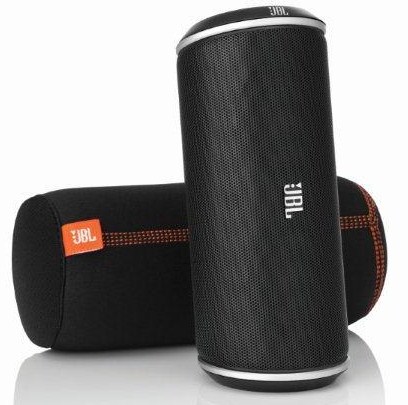
JBL Ultra-Portable Speakers Let Music Fans Enjoy a Lively, On-the-Go Performance

HARMAN International Industries, Incorporated, announces the availability of three new, ultra-portable JBL speakers built for superior on-the-go music enjoyment from a smartphone or tablet. The compact speakers - the JBL Flip (right), JBL Micro Wireless and JBL Micro II - easily fit into a backpack or back pocket and are ideal for business travel, dorm rooms or a second bedroom. Each speaker includes a built-in bass port to deliver a deep, more resonant sound than comparably sized portable speakers.

The three ultra-portable JBL speakers range from $39 to $99 and work with virtually any music-playing gadget, including the Apple iPad, iPhone or iPod touch as well as Android smartphones or tablets and BlackBerry or Windows Mobile phones. Each features a convenient, rechargeable battery that provides up to five hours of playing time. Two speakers - the JBL Flip and JBL Micro Wireless - connect via Bluetooth wireless or through a cable, while the JBL Micro Wireless and JBL Micro II can be daisy-chained with other JBL Micro speakers to create a significantly larger - and louder - soundscape.
Return to Keyword Browsing
Nov 11th, 2026 06:05 CST change timezone

New Forum Posts

Popular Reviews

TPU on YouTube

Controversial News Posts