News Posts matching #Arm

Return to Keyword Browsing

AMD and Google in Race to Buy Out MIPS

AMD and Google are locked in a race to buy out MIPS, an application processor architecture designer competitive to ARM. AMD comes from a decades old presence in the microprocessor industry, while Google is a satrap with smartphones, tablets, and other mobile computing devices thanks to its Android operating system. With Microsoft opening up to ARM architecture with Windows 8 RT, it is in Google's interests to hedge its bets on an alternative machine architecture to both x86 and ARM. The easiest way to that is buying out MIPS and funding development of powerful processors based on it. For AMD, it's a bid to stay competitive in the low-power processor market as Intel began making inroads to smartphone processor market.

NVIDIA Approaching Other Foundries than TSMC for 28 nm Production

NVIDIA, along with Qualcomm, is reportedly in talks with foundries other than TSMC, for manufacturing of its new 28 nm chips. Despite the fact that TSMC is ramping up its 28 nm capacity at a breakneck pace, NVIDIA is seeing a shortage of production that could affect its competitiveness. An interesting revelation here is that NVIDIA has begun sampling its GPUs on Samsung's 28 nanometer fab process. Samsung uses this process for contract-manufacturing of ARM application processors. Other foundries with proven 28 nm manufacturing capability include UMC.

TSMC 28 nm Capacity Ramp-Up Faster Than Older Processes

With launches of new-generation GPUs by NVIDIA and AMD, and new ARM application processor designs by various industry players, TSMC is under pressure to ramp up its production capacity for its new 28 nanometer note. DigiTimes research suggests that this ramp-up is going at a faster rate than older processes such as 40 nm and 65 nm nodes (when those were new). Digitimes Research analyst Nobunaga Chai claims that the 28 nm node started generating revenues in Q4, 2011, and sales ratio reached 5% in the following quarter. It is anticipated to see TSMC significantly ramp up its 28nm production capacity later in 2012, Chai believes.

ARM Announces Cortex-A15 Quad-Core Hard Macro

ARM today announced the availability of a high performance, power-optimized quad-core hard macro implementation of its flagship Cortex-A15 MPCore processor.

The ARM Cortex-A15 MP4 hard macro is designed to run at 2 GHz and delivers performance in excess of 20,000 DMIPS, while maintaining the power efficiency of the Cortex-A9 hard macro. The Cortex-A15 hard macro development is the result of the unique synergy arising from the combination of ARM Cortex processor IP, Artisan physical IP, CoreLink systems IP and ARM integration capabilities, and utilizes the TSMC 28HPM process.

Microsoft Reveals Main Windows 8 Editions

Crushing previous reports saying that Windows 8 would have up to nine editions, Microsoft has officially announced that its next Windows release, due in the second half of this year, will come in three main flavors, two for x86 systems - Windows 8 and Windows 8 Pro, and one for ARM-based devices - Windows 8 RT.

The 'standard' x86 Windows 8 SKU will target consumer-grade PCs and tablets and will allow upgrading from Windows 7 Starter, Home Basic and Home Premium. Windows 8 Pro, which is aimed towards tech enthusiasts and business/technical professionals, includes everything in the non-Pro SKU and adds goodies like BitLocker and BitLocker To Go, Boot from VHD, Hyper-V, Encrypting File System, Group Policy and Remote Desktop (host). This edition also supports upgrades from Windows 7 Professional and Ultimate.

ARM Expands Processor Optimization Packs for TSMC 40 nm and 28 nm Process Variants

ARM today announced the availability of a significantly expanded lineup of ARM Processor Optimization Pack (POP) solutions for TSMC 40 nm and 28 nm process technologies targeting a range of ARM Cortex processors. At least nine new POP configurations targeting Cortex-A5, Cortex-A7, Cortex-A9 and Cortex-A15 processor cores will be released. An essential element of ARM's comprehensive implementation strategy, POPs enable ARM partners to quickly close timing of single-, dual- and quad-core implementations across a broad envelope of power, performance and area optimization points. This solution reduces risk and improves time-to-market in the development of Cortex processor-based Systems-on-Chip (SoCs) with partners achieving competitive results in as little as six weeks.

At the leading-edge 28 nm HPM (high performance for mobile) and 28 nm HP (high performance) process variants, ARM is launching new POPs for the Cortex-A9 core as well as the first POPs for ARM's newest Cortex-A7 and Cortex-A15 processors. Since the Cortex-A7 and Cortex-A15 cores are used in tandem as ARM's big.LITTLE energy-efficient processing solution, the addition of POPs for both cores assures a complete solution for big.LITTLE implementations. ARM's lead licensee for the Cortex-A15 POP for TSMC 28 nm HPM is progressing toward the tape out of its first chip in the coming months.

Valve Recruiting Electronics Engineer for Developing Homegrown Hardware

It's no news that Valve is working on its own gaming hardware platform so far referred to as Steambox, but its talk has been mostly based on rumors and anecdotal information. The Steambox theory, and the theory that Valve is working on hardware, got cemented by a new job vacancy posted by Valve, which calls for experienced electronics engineers. The posting reads "For years Valve has been all about writing software that provides great gameplay experiences. Now we're developing hardware to enhance those experiences."

The skillset asked for in the posting fills a lot of holes in the Steambox theory. It requires engineers to be proficient with prototyping, system-level design, embedded systems, high-speed serial interfaces, circuit simulation, etc., with a much more juicy "recommended" skillset requirement covering areas such as board layout, ARM/x86 system design, power/thermal management, RF and antennas, etc., basically everything a company out to design a game console would seek in its new engineers. Find the posting here, under "Electronics Engineer."

Intel Plans Low Power Xeon Processors for Micro-Servers This Quarter, Centerton in 2H

Intel is planning to launch a line of low-power Xeon processors in Q2-2012, which will be the company's first Xeon processors built on the 22 nm fab process, with 3D transistors. It is quite likely that these chips are built in the LGA1155 package, however Intel is only releasing low-power variants, which ensures performance-segment Xeon E3-1200 family isn't disturbed, and more importantly, it doesn't have to pull out the best bins of its 22 nm Ivy Bridge silicon just yet (for use in higher clock-speed Xeon parts).

Intel has another emerging problem. With the advent of "micro-servers" (low power independent servers in high-density data-centers, which provide better cost-performance and manageability than virtual servers), ARM processor architecture is making inroads to the enterprise computing market. Intel's answer to that is refining the same silicon that goes into making low-power Atom processors, and making it enterprise-grade. This part is codenamed "Centerton", and Intel expects an entire micro-server platform based on these chips to be out in the second half of 2012.

TSMC Faces Acute 28 nm Capacity Shortage

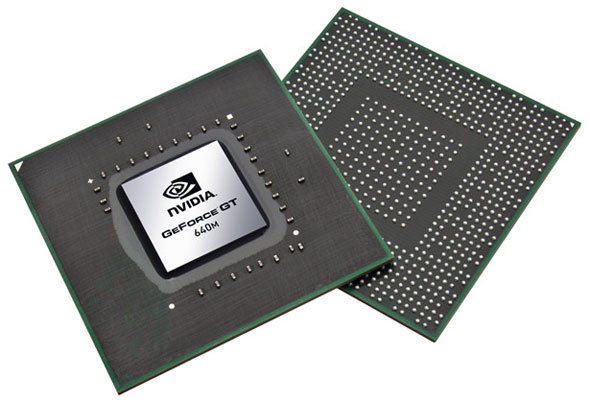
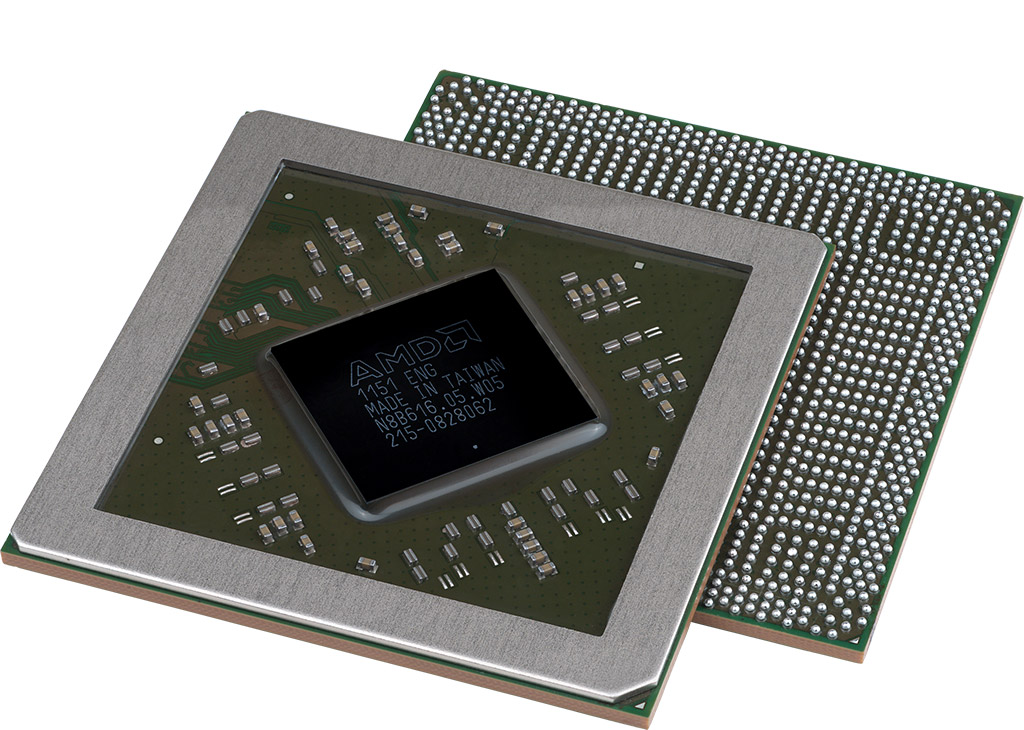
Taiwan's premier semiconductor foundry, TSMC, is reportedly facing an acute shortage in 28 nm manufacturing capacity. This shortage is expected to relax in Q3, 2012, according to sources. Qualcomm, AMD, and NVIDIA are the three biggest patrons of the 28 nm process, Qualcomm uses it to manufacture performance ARM application processors, while AMD and NVIDIA use it for their new generation GPUs. Although launched at the very end of Q4 2011, AMD's HD 7970 shipped a relatively small volume due to low manufacturing capacity. NVIDIA launched only two 28 nm GPUs, the GTX 680, and GT 640M, and has had to delay launch of more models, due to this reason, according to source. Qualcomm, meanwhile, shifted some of its orders to UMC.

Raspberry Pi Faces Another Hurdle: CE Mark Requirement

It looks like troubles have queued up for Raspberry Pi, the $25 credit card-sized wonder hobby-computer, which officially started shipping in late-February. After shipping delays and a manufacturing setback caused due to erroneous selection of RJ-45 Ethernet jacks, the hobby-kit faces a new problem. As a high-tech consumer-electronics product, it requires the CE (Conformité Européenne) mark, which denotes compliance with European standards. It is similar in function to the FCC mark that's mandatory for consumer electronics merchandise sold in the United States. The Raspberry Pi team was under the impression that it didn't need the CE mark to ship samples (read: small quantities) of its product, until its big product launch slated for later this year.

Wintel Tablets to Start at $599, Enjoy Higher Adoption Than WoA Tablets

Wintel (slang for Windows+Intel architecture) tablets, which launch along with Microsoft's latest Windows 8 operating system, which grab a greater market-share than WoA (Windows on ARM) tablets by the end of 2012, DigiTimes research predicts. This, despite the fact that the x86 and ARM versions of the operating system will be released simultaneously. PC majors such as HP, Dell, Lenovo, Acer, ASUStek and Toshiba, have all pledged 1-3 models of Wintel tablets by the end of 2012. Although still an emerging market-segment, tablets will see a clash between x86 and ARM architectures, as they are wooing for the same exact class of devices for the first time in computing history. Intel has made a lot of progress in miniaturizing the Atom processor, while led by the likes of Qualcomm and NVIDIA, ARM processors are getting stronger.

Microsoft To Launch $100 Xbox Lite Before Moving to Durango

Shortly before launching its next-generation game console (codenamed "Durango"), Microsoft is said to be working on a new product (SKU, rather), called Xbox Lite. This new console will cost as little as $100. According to a source, Xbox Lite will be ARM-based, and scheduled for "late 2013 which does Arcade-style games & all the current & future media apps with Kinect (with near-mode)." What makes the rumor plausible is that ARM chips advancing faster than ever, and so is the ecosystem of casual games on Xbox Live Arcade, which don't have very high graphical detail (and hence, aren't resource-heavy). Many of these casual games, along with Kinect-enabled games, could make up the ecosystem around Xbox Lite.

Chrome OS-powered Sony VAIO Notebook Exposed by the FCC

Things on the Chromebook front have been pretty quiet this year but it seems they will change soon as the US FCC (Federal Communications Commission) has received and tested a new machine running Google's Chrome OS. Seen below is the VAIO VCC111 Series, Sony's very first Chromebook, which features a 11.6-inch LCD screen (made by Samsung), 802.11 b/g/n WiFi, Bluetooth, 3G, an SSD, an SD card reader, two USB 2.0 ports, a HDMI output, a webcam, and a 4100 mAh battery.

Embedded Graphics: Imagination Tech Supplies More GPU IP than all Others Combined

Jon Peddie Research (JPR), the industry's research and consulting firm for graphics and multimedia, announced estimated mobile devices graphics chip shipments for 2011. Mobile devices include smartphones, tablets, cameras, vehicles, and game consoles.

The market for smart mobile devices is soaring. Mobile devices are not necessarily replacing the PC, but they are outselling PCs. Increasingly mobile devices have a graphics processor and those processors are integrated in the device's system on a chip (SoC) application processor.

Windows 8 Launches in October, x86 and ARM Simultaneously

We know from a slightly older article, that the first variants of Windows will be released to market some time in Q4-2012. A new report by Bloomberg pin-points that to October, exactly 3 years after the market-launch of Windows 7. Further, Microsoft should launch Windows 8 for both x86 and ARM machine architectures around the same time, in what could be a breather for tablet and low-cost netbook designers. Despite that, there are fewer ARM devices running Windows 8, which will launch around that time, than x86 notebooks/PCs. With an October 2012 launch Microsoft should be able to target shoppers in the crucial winter shopping season, in mature markets, according to Bloomberg Analysts.

TSMC Expanding 28 nm Manufacturing Facility

With the advent of highly-complex 28 nm discrete PC graphics processors, and ARM designers lined up with their increasingly powerful SoCs, TSMC is bound to see a pile up of orders for chips built on its newest bulk manufacturing process. In view of this, the "messiah of the fabless" is planning an expansion of its 28 nm manufacturing facility. This expansion is set to occur a little later in 2012. TSMC reportedly is running at full capacity at its 12-inch fabs because of strong demand for 28 nm as well as 40 nm and 65 nm. Due to this, some designers are approaching TSMC's competitors UMC and Samsung for 28 nm bulk manufacturing, according to sources. The expansion will follow a revision of TSMC's capex target for 2012, up from US $6 billion.

Uruguay is First Country to Get New Model XO Laptop

On the opening day of the 2012 Annual Meeting of the Inter-American Development Bank, One Laptop per Child (OLPC), a nonprofit organization whose mission is to provide every child in the world access to new channels of learning, sharing and self-expression, announced that Uruguay will be the first country in the world to receive the newest model XO children's laptop.

Uruguay began working with OLPC in 2007 and by mid-2010 achieved complete laptop saturation, providing XO's to all 570,000 primary school children in the country. The project recently ordered 60,000 XO 1.75's in order to take advantage of the many breakthrough hardware and software features in the new model.

Nokia Windows 8 Tablet Concept Art Surfaces

Earlier this week, we learned about Nokia working on a Windows 8-driven tablet. Concept art of this tablet (probably designed by well-informed fans), suggests that the tablet, Nokia "Lumia Coffee Tab", is essentially a stretched-out Lumia 800, which is its flagship Windows-driven smartphone that's extensively marketed with the monies it received from Microsoft to go Windows. The tablet features a 10.1-inch screen, and is designed to be competitive with Apple's iPad.

Interestingly, Nokia will have to use Windows 8 ARM, since the tablet reportedly uses a Qualcomm-made processor, and it is reported that Windows 8 ARM could arrive much later than Windows 8 x86. Could this mean Microsoft handing out Nokia exclusive early-access to Windows 8 ARM? Microsoft is evidently desperate to give its mobile versions of Windows a single potent launch-pad manufacturer, and as one of the most competent mobile phone makers, Nokia is the chosen one. Microsoft looks aware that the post-PC future of computing is very real, and approaching fast.

ARM Announces the Cortex-M0+ as the World's Most Energy-Efficient Processor

ARM today announced the ARM Cortex-M0+ processor, the world's most energy-efficient microprocessor. The Cortex-M0+ processor has been optimized to deliver ultra low-power, low-cost MCUs for intelligent sensors and smart control systems in a broad range of applications including home appliances, white goods, medical monitoring, metering, lighting and power and motor control devices.

The 32-bit Cortex-M0+ processor, the latest addition to the ARM Cortex processor family, consumes just 9µA/MHz on a low-cost 90 nm LP process, around one third of the energy of any 8- or 16-bit processor available today, while delivering significantly higher performance.

Windows 8 PC Has Six Variants

Poking around the registry of Windows 8 Consumer Preview, Windows8Beta discovered the operating system, at least the PC version, as having six variants. There are also mentions of ARM variants (for ARM tablets and notebooks), but let's look at the PC SKUs:
  • Windows 8 Starter Edition, for low-cost PCs, netbooks, nettops, etc., probably targeting emerging markets only
  • Windows 8 Home Basic, for value desktop PCs, netbooks, and notebooks
  • Windows 8 Home Premium, for mainstream desktops and notebooks
  • Windows 8 Professional, for home, office desktops and more functional notebooks
  • Windows 8 Professional Plus, for office desktops and notebooks in dense local networks, probably has extra management, data security features
  • Windows 8 Ultimate Edition, has the complete feature-set of the OS

Qualcomm and Microsoft to Provide Developers with Snapdragon-Based Windows Test PCs

Qualcomm Incorporated today announced that its Snapdragon processor will be joining Microsoft Corp.'s Windows on ARM developer seeding program. Qualcomm is working with Microsoft to provide test PCs to select developers in order to test and optimize apps for forthcoming Snapdragon-powered Windows on ARM PCs and tablets. This invitation-only program will combine a pre-release version of Windows on ARM with next-generation, high performance Snapdragon S4 test PCs. These test PCs are not representative of commercial form factors or the final Windows on ARM experience; they are designed to give developers early access to building and testing Windows Metro style apps on Qualcomm's latest technology.

The Windows on ARM developer seeding program will help ensure that Windows Metro style apps available in the Windows Store work great on all Windows 8-based PCs, including those with Qualcomm's ARM-compliant Snapdragon processors.

Raspberry Pi Now Selling

The season's hottest hobby-kit for electronics and embedded computing enthusiasts, Raspberry Pi, started selling. The device is a fully-functional, self-contained, ARM-powered computer, complete with modern interfaces such as SDHC, USB, HDMI, and Ethernet (USB and Ethernet with $35 Model B), for as low as $25. The device can be powered up using Fedora Remix for Raspberry Pi, a Fedora ARM variant that's heavily optimized for the device. The Raspberry Pi is now available (limited to one quantity per customer), through Premier Farnell or RS Components.

Windows 8 x86 in Q4-2012, Windows 8 ARM in Q2-2013?

Even as there's quite some buzz around Microsoft's next major version of Windows, there are reports such as one from Bright Side of News citing "multiple sources close to Microsoft, or inside [it]," revealing the tentative launch schedule of the two main branches of Windows: for x86 platforms (client and enterprise), and ARM (for tablets and compact computing devices). Windows 8 for clients and enterprise (x86 architecture), will get up to 5 months' head-start over the much hyped ARM version for tablets. It is expected to be launched some time in Q4 2012, while the ARM version, some time in Q2 2013.

Intel and AMD can rub their hands as they both have extremely compact x86 processors fit for the tablet form-factor planned, and can woo tablet designers to opt for their solutions and get Windows 8 tablets instead of waiting for the ARM version of the operating system. Tablet vendors with mature ARM-based designs can always opt for Google's Android operating system, which will see no major competition for the greater part of this year.

First 28 nm Cortex-A9 POP Available for GLOBALFOUNDRIES 28nm-SLP HKMG Process

ARM today announced the availability of the ARM Cortex-A9 MPCore Processor Optimization Pack (POP) for GLOBALFOUNDRIES' 28 nm-SLP High-K Metal Gate process technology. Optimized for mobile, networking and enterprise applications, the energy-efficient ARM POP 28 nm-SLP for Cortex-A9 processors delivers a performance range from 1 GHz to 1.6 GHz for worst case conditions, with up to 2 GHz in typical conditions. This provides a wide range of flexibility for System-on-Chip (SoC) designers to optimize performance and energy-efficiency using the ARM Artisan Physical IP Platform and Cortex-A9 POP.

Fedora Remix for Raspberry Pi Released

Developers at the Seneca College released a version of Fedora Remix ARM that's optimized for the Raspberry Pi. Fedora Remix is itself a lightweight version of the open-source Red Hat Linux derivative, which is now further optimized for this $25 self-contained hobby-kit computer. The new Fedora Remix variant fits in a 2 GB SD card that the Raspberry Pi boots from. By simply connecting a display to the HDMI port (1080p supported), a keyboard and a mouse to the two USB ports, Fedora Remix will lead you straight to user information screen, from where normal usage is a minute away, without needing any hardware configuration. The 2 GB SD card is left with some space for user data. Raspberry Pi with Fedora Remix works just like any desktop. In related news, the makers of Raspberry Pi announced that the first batch of these boards will be through QA testing by the 23rd, and out for shipping.

A video presentation of Fedora Remix for Raspberry Pi follows.
Return to Keyword Browsing
Nov 11th, 2026 06:05 CST change timezone

New Forum Posts

Popular Reviews

TPU on YouTube

Controversial News Posts