News Posts matching #Asus

Return to Keyword Browsing

ASUS Intros ROG Strix XG35VQ 21:9, UWQHD Monitor With 100 Hz FreeSync

ASUS has introduced a new ROG Strix monitor to its lineup, the XG35VQ, which brings with it UWQHD resolution (3440 x 1440) in a 21:9 aspect ratio and a 35" diagonal. It's a curved affair - 1800R at that - and ASUS says the VA panel offers 100% sRGB coverage, plus 2500:1 contrast and 300 cd/m2 brightness. Viewing angles stand at an almost perfect 178° - a standard spec in recent times.

The most interesting selling point for this monitor, however, is that it can deliver a 100 Hz refresh rate, with FreeSync support up to that frequency. A 4 ms response time means reduced ghosting, and the panel also applies ASUS' version of Extreme Low Motion Blur mode, which strobes the LED backlight to lower persistence, much like a VR display. This mode uses a fixed refresh rate, so ASUS recommends it for fast-paced games where users can comfortably maintain high frame rates.

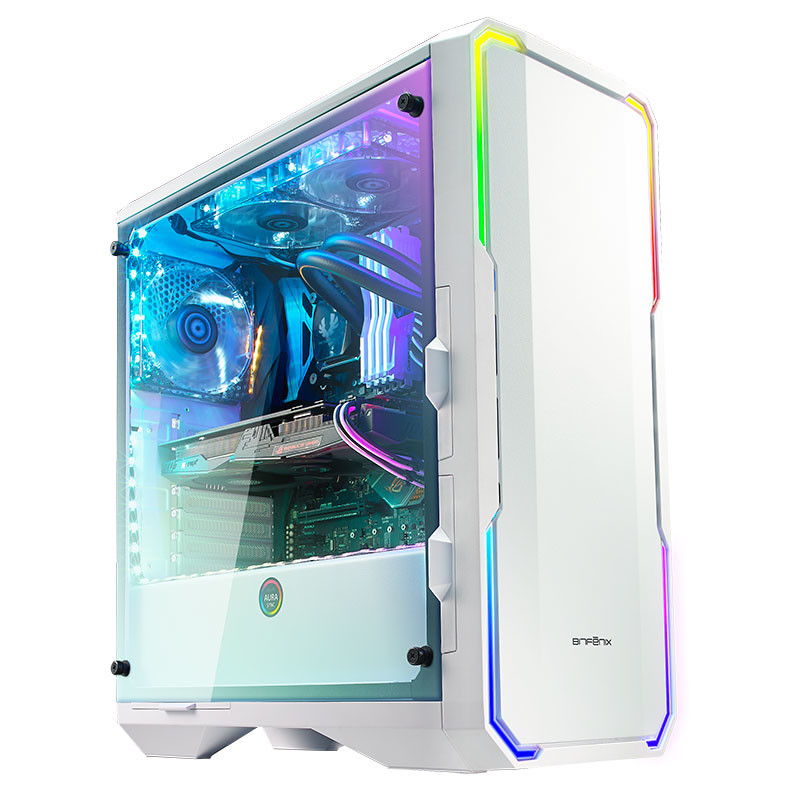
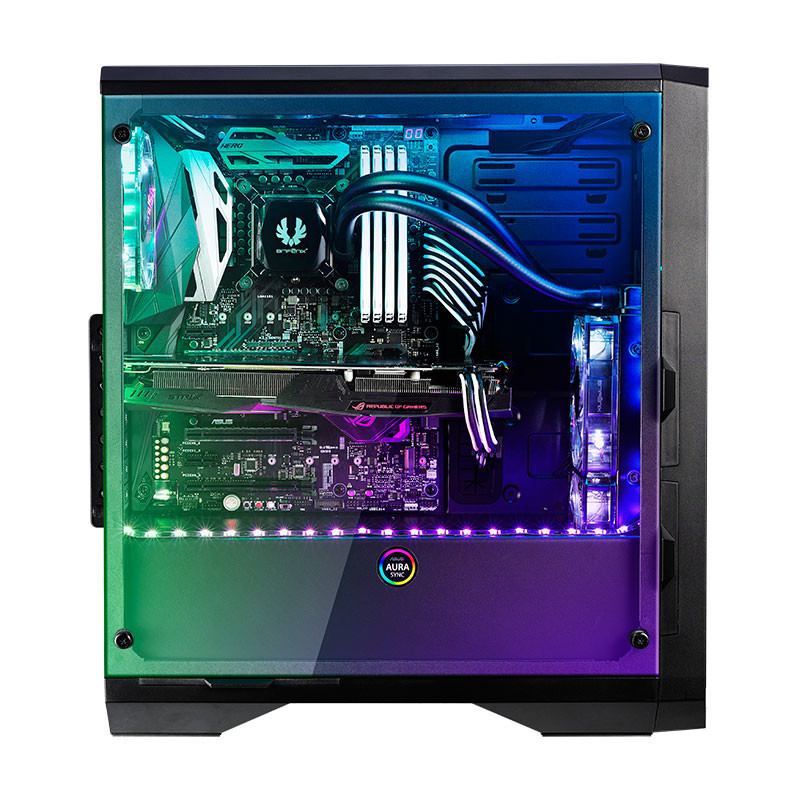
Bitfenix Reveals Enso Case and Alchemy 3.0 Addressable RGB Magnetic LED Strips

BitFenix presented Aurora, Shogun and Alchemy 2.0 RGB Magnetic LED Strips co-developing AURA SYNC technology with Asus bringing in the comprehensive neat RGB LED concept for PC build. Today BitFenix present the BitFenix ENSO and the Alchemy 3.0 Addressable RGB Magnetic LED
Strips, again co-developing with Asus, supporting the latest ASUS AURA SYNC 3-pin technology for addressable RGB illumination.

Sleek Design With Metallic Front & Enhanced AURA SYNC 3 Pin Addressable RGB illumination
With the ENSO, BitFenix is launching the long awaited case shown at Taipei's Computex 2017, available in black and white. The clean design concept is well balanced between a perfectly organized interior structure and a sleek exterior design. It is complemented by a 4mm see-through-tinted tempered glass panel on the side and addressable RGB illumination surrounding the metallic front. It comes with a pre-installed controller, compatible to both, BitFenix Alchemy 2.0, static, and BitFenix 3.0, addressable, RGB products.

AMD Expands EPYC Availability, Introduces ROCm 1.7 With Tensor Flow Support

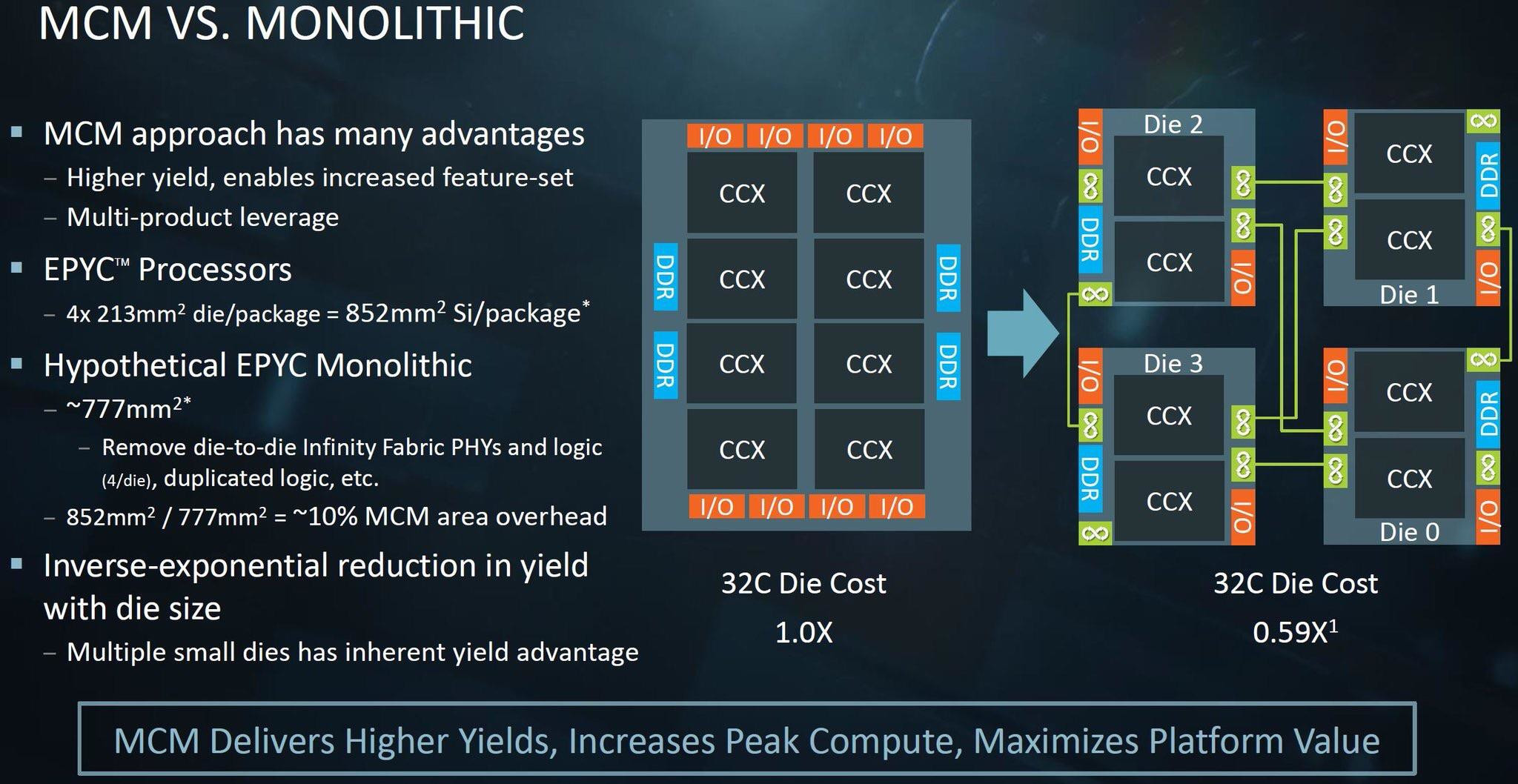
AMD has been steadily increasing output and availability of their latest take on the server market with their EPYC CPUs. These are 32-core, 64-thread monsters that excel in delivering a better feature set in 1P configuration than even some of Intel's 2P setups, and reception for these AMD processors has been pretty warm as a result. The usage of an MCM design to create a 4-way cluster of small 8-core processor packages has allowed AMD to improve yields with minimum retooling and changes to its manufacturing lines, which in turn, has increased yields and profits for a company that sorely needed a a breakout product.

ASUS Also Intros ROG Strix XG32VQ 32-inch Curved Gaming Monitor

ASUS over the weekent, also introduced the Republic of Gamers (ROG) Strix XG32VQ 32-inch curved gaming monitor. The monitor features an 1800R curved VA panel with WQHD (2560 x 1440 pixels) resolution, bolstered further by 144 Hz refresh-rate, 4 ms (GTG) response time, and AMD FreeSync technology. The panel boasts of 125 percent coverage of the sRGB palette, and features 300 cd/m² maximum brightness, with 178°/178° viewing angles.

The monitor features ASUS GameFirst, a set of nifty features such as OSD crosshairs, frame-rate counters, and display presets optimized for the various game genres. An RGB LED ornament is positioned behind the panel, around the stand mount, with the signature laser projected ROG emblem below the stand. Display inputs include DisplayPort 1.2, mini-DisplayPort 1.2, and HDMI 1.4a. The company didn't reveal pricing.

ASUS Intros the WS X299 SAGE Motherboard

ASUS today introduced the WS X299 SAGE motherboard, a socket LGA2066 motherboard designed for Intel Core X "Skylake-X" processors, in the SSI-CEB form-factor. This board is targeted at the same quasi-workstation crowd that the company's WS X299 Pro and WS X299 Pro SE are designed for, but unlike the latter, it lacks an iKVM remote-management chip. Those looking for more serious workstation builds involving something from Intel's Xeon stable or even 2P setups, should consider the larger WS C621E SAGE. The WS X299 SAGE is targeted at those who need the massive PCIe loadout of the C621E SAGE, but can make do with 1P Core X processors.

The ASUS WS X299 SAGE draws power from a combination of 24-pin ATX, two 8-pin EPS, and a 6-pin PCIe power. An 8-phase VRM powers the CPU, and is rated to power 16-core and 18-core CPU models. The CPU socket is wired to eight DDR4 DIMM slots supporting up to 128 GB of quad-channel DDR4 memory; and seven PCI-Express 3.0 x16 slots. Storage connectivity includes eight SATA 6 Gb/s ports, and two each of 32 Gb/s M.2 slots and 32 Gb/s U.2 ports. Four USB 3.1 gen 2 ports, two 1 GbE interfaces, and a dozen USB 3.0 ports make for the rest of it. The company didn't reveal pricing.

ASUS Intros WS X299 Pro SE Motherboard

ASUS today introduced the WS X299 Pro SE motherboard, a variant of the recently announced WS X299 Pro. The new Pro SE comes with an ASUS ASMB9-iKVM IPMI 2.0 compliant remote management chip, which is physically an ASPEED AST2500, but with custom firmware and software by ASUS. This chip provides a host of remote-management features, including iKVM, remote BIOS update, BSOD screen capture, and screen video recording, remote data wipe, etc., all adding to the board's enterprise credentials. The chip is tucked away underneath the secondary VRM heatsink next to the expansion slot area of the motherboard, and dissipates its heat to this heatsink via a thermal pad. The board is otherwise identical to the WS X299 Pro. We expect the WS X299 Pro SE to sell at a premium over the WS X299 Pro.

ASUS Announces its ROG Strix and Turbo GeForce GTX 1070 Ti Graphics Cards

NVIDIA has dropped the next piece of the Pascal puzzle into place. Dubbed the GeForce GTX 1070 Ti, it promises higher gaming frame rates and smoother VR experiences than the standard 1070 without completely blowing your budget. We've deployed the chip in several new graphics cards, including a range-topping ROG Strix model whose binned GPUs and beefy cooling are perfect for overclocking, and a streamlined ASUS Turbo that sticks to the essentials.

With 2432 CUDA cores, the GTX 1070 Ti boasts 27% more pixel-processing horsepower than the vanilla 1070. The 1683MHz Boost clock is the same, putting you within striking distance of the GTX 1080 at 2560 cores and 1733MHz. You get 8GB of dedicated video memory with each GPU; the Ti pushes GDDR5 to 8 Gbps, just like the GTX 1070, while the 1080 opts for pricier GDDR5X at speeds up to 11Gbps.

ASUS Reveals Their WS C621E SAGE Dual Xeon Overclocking Motherboard

Built on Intel's C621 chipset, ASUS's new WS C621E SAGE motherboard possesses some interesting traits. For a start, this workstation motherboard not only supports one LGA-3647 socket processor, but two of them in tandem. That's right. Enterprise users in need of raw processing power can drop in a pair of Intel Xeon Platinum 8180 processors and build themselves a beastly workstation with 56 cores and 112 threads at their disposal. But, what really separates the WS C621E SAGE from the competition is the motherboard's overclocking capability. Since Intel locks the multiplier for their Xeon processors, owners are accustomed to settle for factory clock speeds. However, ASUS has engineered a method to allow Xeon owners to overclock their processors to take their performance to a next level. Given the locked multiplier, we assume that overclocking is probably done through base clock adjustments.

Processing power is crucial for productivity, but having enough memory for heavy-duty tasks is equally important. For that same reason, ASUS has incorporated 12 DDR4 memory slots into the WS C621E SAGE. Users can go with either RDIMM or LR-DIMM ECC modules with speeds up to DDR4-2666. This opens the door to running 1.5 TB of memory. Now that's something you don't see everyday.

"Not So Fast": Bungie Automatically Bans Destiny 2 PC Players With Overlays

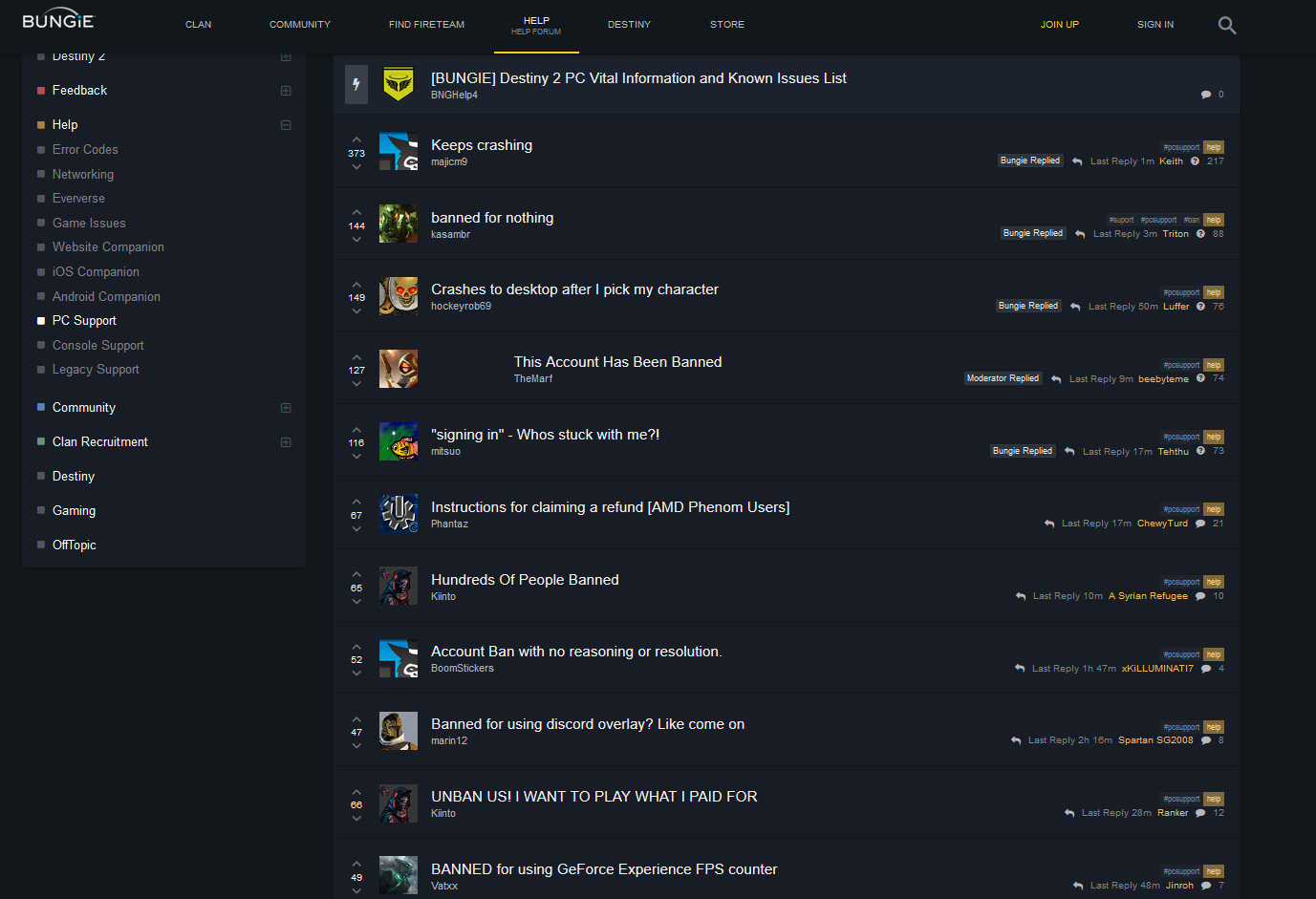
Urgent message to all would-be Destiny 2 PC players: Bungie has enabled an extremely strict, no holds-barred permanent account-banning system with Destiny 2, which activates so long as you have any kind of application with process hooks / overlay features. This is true for Twitch, Discord, MSI Afterburner, OBS, XSplit, Skype, TeamSpeak, HWMon, AIDA, as well as some hardware vendor overlays such as ASUS Tweak and Corsair Link software, GeForce Experience's FPS counter... The message screen, "Not so Fast", indicates that players have been banned, without forewarning or any further explanation.

There's a meltdown going on in Bungie's official PC Support forums, where most of the threads have been started - and then added to - by banned users. In some cases, users are banned even before entering the character creation screen; some more fortunate ones can even get to thew first three minutes of the intro video. A post from a Bungie Forum moderator didn't do much to instill confidence: "In Destiny there are account restriction and bans,", Bungie moderator "Kellogs" writes. "Restrictions are only temporary but must be waiting out while bans are permanent. Please note that Bungie will not discuss or overturn account restrictions or bans."

ASUS Intros WS X299 Pro Socket LGA2066 Motherboard

ASUS today rolled out the WS X299 Pro, a feature-rich socket LGA2066 motherboard designed for machines built in the gray-area between high-end desktops (HEDTs) and "real" workstations (based on the Xeon/EPYC platforms). The board is still based on the Intel X299 Express chipset, and will only support Intel Core X "Skylake-X" processors. It features the company's highest-grade electrical components. Built in the ATX form-factor, the board draws power from a combination of 24-pin ATX, a 6-pin PCIe power, and two 8-pin EPS connectors. It conditions power for the CPU using a 9-phase high-current VRM, which puts out heat on not just a primary heatsink making direct contact with the MOSFETs, but also a secondary heatsink over a heat-pipe. This heatsink occupies an area not just behind the rear I/O area, but also extends downwards, to just behind the expansion slots (while not intruding).

The LGA2066 socket is wired to eight reinforced DDR4 DIMM slots, supporting up to 128 GB of quad-channel memory, and four PCI-Express 3.0 x16 slots (x16/x16/NC/x4 or x16/x8/x8/x4 on 44-lane CPUs), and a fifth open-ended x4 slot. Storage connectivity includes two 32 Gbps M.2 slots (both of which feature heatsinks), a 32 Gbps U.2 port, and six SATA 6 Gbps ports. USB connectivity includes four 10 Gbps USB 3.1 ports, and six 5 Gbps USB 3.0 ports. Networking is care of two 1 GbE interfaces, driven by Intel i210-AT controllers. The onboard audio is based around a Realtek ALC1220A CODEC, fronted by a headphones amp, and backed by audio-grade capacitors, and ground-layer isolation. The company didn't reveal pricing or availability.

ASUS ROG STRIX 1070 Ti, Turbo Graphics Cards Pictured

Videocardz has done it again, and have gotten their hands on manufacturer's images of as of yet unreleased graphics cards. This time, it's ASUS' products that have been brought to the limelight, with not one, but two custom versions of their upcoming GeForce GTX 1070 Ti graphics cards being pictures next to their retail boxes.

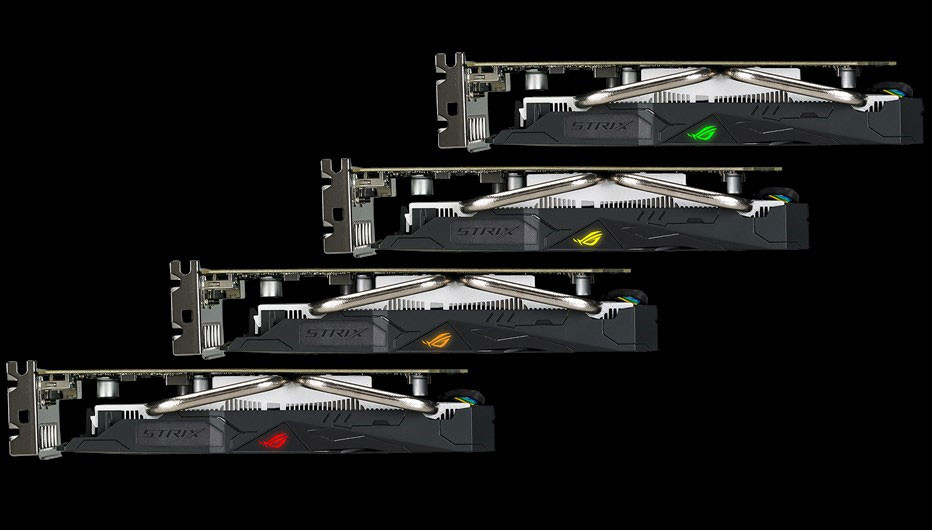
The first graphics card is the 1070 Ti Turbo (TURBO-GTX1070TI-8G), which like most ASUS Turbo models, should be among the cheapest 1070 Ti options - it forfeits any additional engineering besides NVIDIA's reference design, and adds ASUS' Turbo blower-type cooler. The 1070 Ti STRIX (ROG-STRIX-GTX1070TI-A8G-GAMING), on the other hand, is a custom-engineered version of the GTX 1070 (GP-104) silicon, and should come with the same higher margins as other ASUS custom products. A mainstay of ASUS STRIX designs is the presence of Aura Sync RGB lighting control, and a triple-fan configuration, which should bring operating temperatures down considerably. We should start seriously considering the chance that we'll see an as of yet unannounced NVIDIA graphics card actually launch with custom partner designs before custom versions of AMD's Vega graphics cards ever hit the retail channel. Though to be fair, it's much easier for AIB partners to simply recycle NVIDIA custom designs for this particular graphics card than design an entirely new one for AMD's Vega.

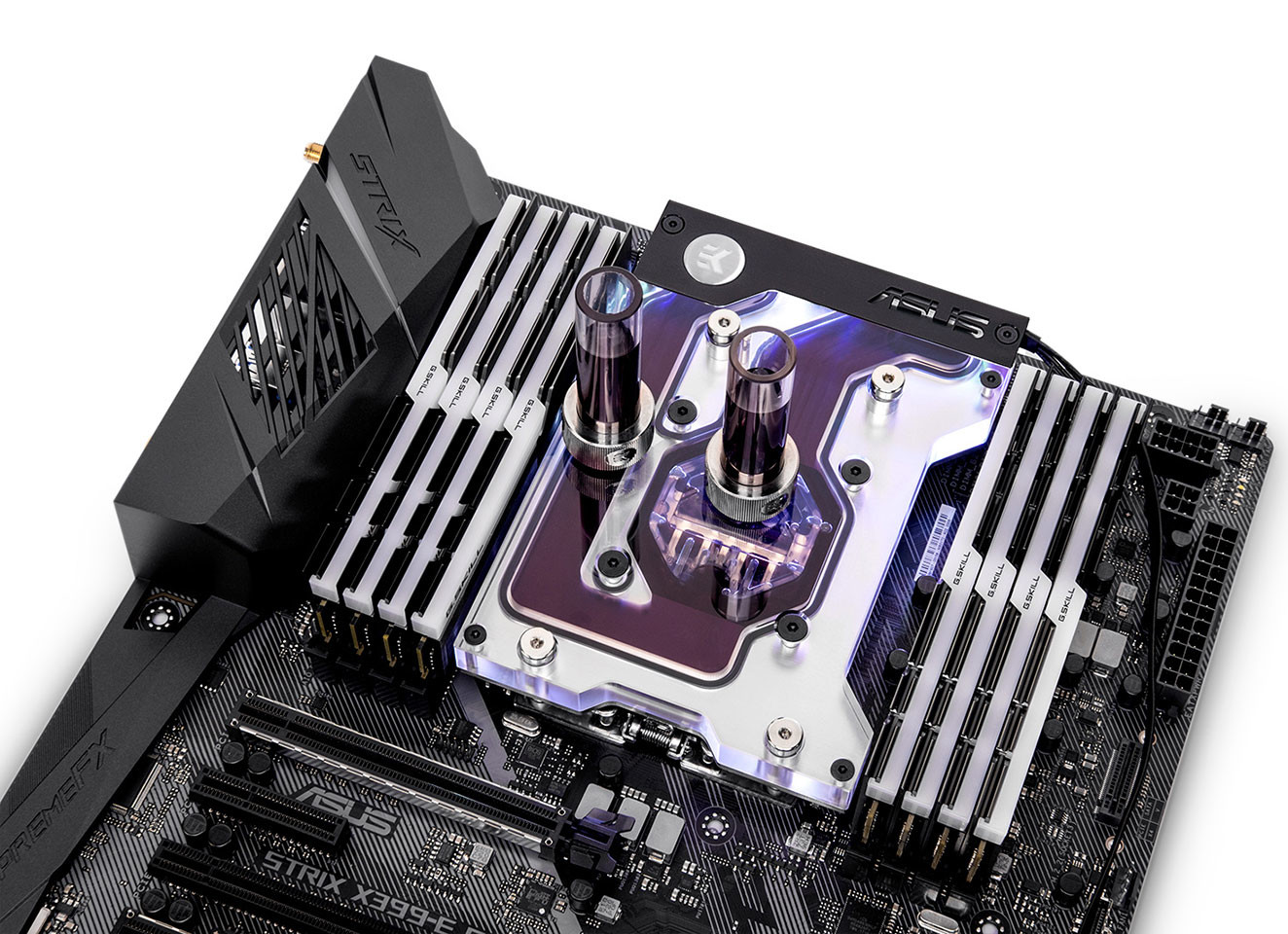
EK Releases CPU+VRM Monoblock for ASUS X399 Threadripper Motherboards

EK Water Blocks, the Slovenia-based premium computer liquid cooling gear manufacturer proves its market leadership once again by releasing the world's first Socket TR4 based monoblock made for several ASUS X399 motherboards. The EK-FB ASUS ROG ZE RGB Monoblock has an integrated 4-pin Digital RGB LED strip which makes it compatible with ASUS Aura Sync, thus offering a full lighting customization experience.

Designed and engineered in cooperation with ASUS, this monoblock uses award-winning EK-Supremacy EVO cooling engine to ensure best possible CPU cooling. This water block directly cools AMD Socket TR4 type CPU, as well as the power regulation (MOSFET) module. Liquid flows directly over all critical areas, providing the enthusiasts with a great solution for high and stable overclocks. Using such a monoblock gets rid of the small fan that can be found on some X399 motherboards, hidden under the I/O cover.

ASUS Announces ROG STRIX X370-I And B350-I Mini-ITX Motherboards For AMD Ryzen

Mini-ITX boards are among the most difficult to produce. Their diminutive 6.7" x 6.7" dimensions leave little real estate for slots and ports, let alone the extra features that make ROG unique. We're not willing to compromise your experience for a compact footprint, so it takes some time and creativity to make everything fit. But it's worth the effort, because our new Strix X370-I Gaming and Strix B350-I Gaming motherboards for Socket AM4 raise the bar for small-form-factor Ryzen builds. They match the cutting-edge features of their full-sized siblings, including liquid-ready cooling and addressable RGB lighting, and they combine an M.2 SSD heatsink and amped-up audio on an innovative riser card.

Graphics Cards Vendors Increase Orders in Wake of Expected Mining Sales Increase

DigiTimes is reporting that graphics cards vendors and AIB (add-in board partners) to both AMD and NVIDIA are increasing their orders for GPUs. Citing sources from the upstream supply chain, the report says that the reason for this is an expected increase in sales due to higher demand for cryptocurrency mining workloads. Most cryptocurrencies are mined on GPUs today, and there are miners that leverage both AMD and NVIDIA's architectures for increased mining performance. Whereas before mining was somewhat of a strictly AMD business, NVIDIA's architectures have also been developed for in most recent cryptocurrency mining efforts, which means that no one manufacturer is the sole source of mining GPUs.

As such, and counting on continued economic support for current cryptocurrency pricing (or even increase), Asustek, Gigabyte Technology, Micro-Star International (MSI), TUL, Colorful and Galaxy Microsystems have increased their orders from respective manufacturing partners. Since graphics cards pricing has stabilized and even decreased somewhat in recent weeks from their selling points just some months ago, this might mean that we'll finally see some graphics card models from both AMD and NVIDIA finally being retailed for their MSRP again. However, demand for mining-efficient GPUs is expected to increase alongside cryptocurrency value, so don't take this increased supply for granted - demand could spike at any moment, and with little warning.

ASUS Confirms Z270 Platform Could be Compatible with Intel Coffee Lake CPUs

In an interview with Bit-tech, ASUS ROG motherboard product manager Andrew Wu has let the proverbial cat out of the bag: apparently, compatibility of Z270 boards with Coffee Lake processors wouldn't have been impossible after all. When asked why the new Coffee Lake CPUs aren't compatible with the previously released Z270 platform, Andrew Wu explained that it" (...) depends on Intel's decision." Andrew Wu also went on to mention that Intel's stated power delivery reasons don't "make much difference", and that ASUS themselves could make their Z270 motherboards compatible with Coffee Lake. For that, however, they'd need "(...) an upgrade from the ME [Management Engine] and a BIOS update", for which "Intel somehow has locked the compatibility."

It seems all of that extra "pin-count" doesn't really matter in the grand scheme of the current Coffee Lake lineup with up to six core processors - the CPU socket and platform as designed with Z270 would have been able to handle the increased core counts and power loads. The question gets murkier with Intel's ability to release an 8-core CPU to the Z370 platform though - that particular amount of cores might indeed prove to be too much for Z270's power delivery. Making an educated guess, it would seem that Intel could have allowed for Coffee Lake compatibility on Z270 motherboards on CPUs up to 6 cores, but would need the new revisions on the Z370 platform to allow for operation of 8-core Coffee Lake chips.

ASUS ROG Strix RX Vega 64 Clock Speeds Revealed

ASUS may have been among the first to unveil its custom-design Radeon RX Vega 64 graphics cards with the ROG Strix Radeon RX Vega 64 (model: ROG-STRIX-RXVEGA64-O8G-GAMING), but kept its clock-speeds under the wraps. The company updated its product page, revealing the clock speeds. Out of the box, the card is clocked at 1298 MHz core, with 1590 MHz boost, and an untouched 945 MHz memory, against AMD-reference clock speeds of "up to 1546 MHz" GPU clock for the air-cooled RX Vega 64. It still pales in comparison to the RX Vega 64 Liquid Edition SKU, which ticks at 1677 MHz core and 1750 MHz boost. The company is yet to update the product page of its ROG Strix RX Vega 56 O8G.

AMD Readies AGESA 1.0.0.7 Update Enabling "Raven Ridge" APUs

AMD is readying an update to its AGESA micro-code. AGESA is an essential component of AMD platform motherboard BIOSes responsible for starting the processor at system start-up. Updates to it improve the motherboards' memory and CPU compatibility. Following its all-important AGESA 1.0.0.6 update that vastly improves memory compatibility of AMD Ryzen processors, the company is readying an even newer version. The new AGESA 1.0.0.7 update prompts significant changes to the structure of motherboard BIOSes, making it easy to implement support for upcoming socket AM4 chips, such as the "Raven Ridge" APUs, and the 2nd generation Ryzen "Pinnacle Ridge" CPUs.

Professional overclocker elmor, who is currently associated with ASUS ROG, responding to an Overclockers.net forums question about the Crosshair VI series motherboard, mentioned that AGESA 1.0.0.7 significantly changes the BIOS structure of AMD motherboards, which will make it easier implement support for future processors. "AGESA 1007 comes with support for Raven Ridge APUs. AMD has also changed the entire BIOS base structure so we have to do a lot of work to port everything to the new version, which may result in further bugs. The advantage is that it makes it easier to support future CPUs (Raven Ridge, Pinnacle Ridge)," he said. Updates to AGESA are distributed by motherboard manufacturers as BIOS updates.

ASUS Announces ROG Strix Radeon RX 560 EVO Graphics Card

ASUS today rolled out the Republic of Gamers (ROG) Strix Radeon RX 560 DirectCU II EVO graphics card (model: ROG-STRIX-RX560-O4G-EVO-GAMING), a variant of its custom-design RX 560 4 GB DirectCU II graphics card, which relies on the PCI-Express slot entirely for its power, and lacks any additional PCIe power inputs. ASUS seems to have made some pretty big hardware-level trade-offs to achieve slot-only power ability for this card.

The card comes with clock speeds that are below AMD-reference clocks, with 1149 MHz core, with a restrained 1187 MHz boost, and a software-enabled OC mode, which runs the GPU at 1197 MHz, against AMD-reference clocks of 1175 MHz core, 1275 MHz boost. The memory ticks at 6.00 GHz (GDDR5-effective), which is below the 7.00 GHz reference clock. What's even more curious about this card is it features just 896 stream processors, and not the 1,024 that are standard to the RX 560. The card features 4 GB of GDDR5 memory across the chip's 128-bit wide memory interface. The company didn't reveal pricing.

ASUS Intros Hyper M.2 x16 Riser Card

ASUS rolled out the Hyper M.2 x16 riser card, an accessory which could prove useful for those who want to add up to four extra M.2 SSDs. The card features a PCI-Express 3.0 x16 upstream interface, which it splits into four 32 Gb/s M.2-22110 slots (up to 110 mm length), with PCI-Express 3.0 x4 wiring, each. The card doesn't have any serious HBA logic of its own, beyond simple circuitry to power the four M.2 drives, and put out power/activity status LEDs for each slot.

A monolithic, stylish brushed aluminium shroud doubles up as a heatsink for the M.2 drives. There's also a lateral-blower fan, which guides air from inside your case through the drives and outside through the perforated rear bracket. You can turn this fan off with a physical switch on the card, although there's no software-based fan-control. The card is 20.2 cm long, 9.6 cm tall, and 1-slot thick. The company is advertising the card to be compatible only with its X299 chipset-based motherboards, for now. The company didn't reveal pricing.

ASUS ROG STRIX B350-I Gaming Motherboard Revealed by Online Retailer

Swedish online retailer Inet has listed an as-yet unannounced ASUS motherboard, the ROG STRIX B350-I-Gaming. It looks to be a smaller version of the ROG STRIX B350-F GAMING, featuring similar black styling, as well as ASUS's AURA Sync RGB lighting technology, in a mini-ITX format. According to Inet, the board features the AMD B350 chipset that is the board's namesake, with AMD AM4 processor support as well as up to 32 gigabytes of DDR4 3200 MHz (OC) RAM. As with most mini-ITX gaming motherboards, a single PCI-Express x16 slot is present for graphics card connectivity. However, belying the board's small size, the B350-I-Gaming features a wealth of connectivity options, including two external USB 3.1 Generation 2 ports as well as four USB 3.1 Generation 1 ports. Additionally, one USB 3.1 Generation 1 header, and even a USB 2.0 header are available internally. Four SATA 6.0 Gbit/s headers, along with two M.2 slots round out the connectivity options, all of which is great for a board this size. Gigabit ethernet as well as built-in wifi, and SupremeFX 8-Channel High Definition Audio are also featured.
While other mini-ITX AM4 motherboards are already on the market, the ASUS ROG brand has a loyal following. ASUS fans looking to build a Ryzen-powered machine with a smaller footprint will no doubt be waiting patiently for an official announcement, as the board is of course listed as Out of Stock on the retailer's site. The amount of connectivity options on such a small board will be a compelling option for portable LAN party machines, and gamers without enough space to house a larger ATX computer, without compromising on storage or speed. Inet has listed the board with a price of 1 899 kr, equivalent to about $233.49 USD. Comparing other product prices on the site with those on Newegg reveals a difference of up to 30%, so regional prices will vary and direct currency conversion is not necessarily a good indicator of local prices.

ASUS Motherboard Segmentation Explained - "Prime" Series takes Backseat

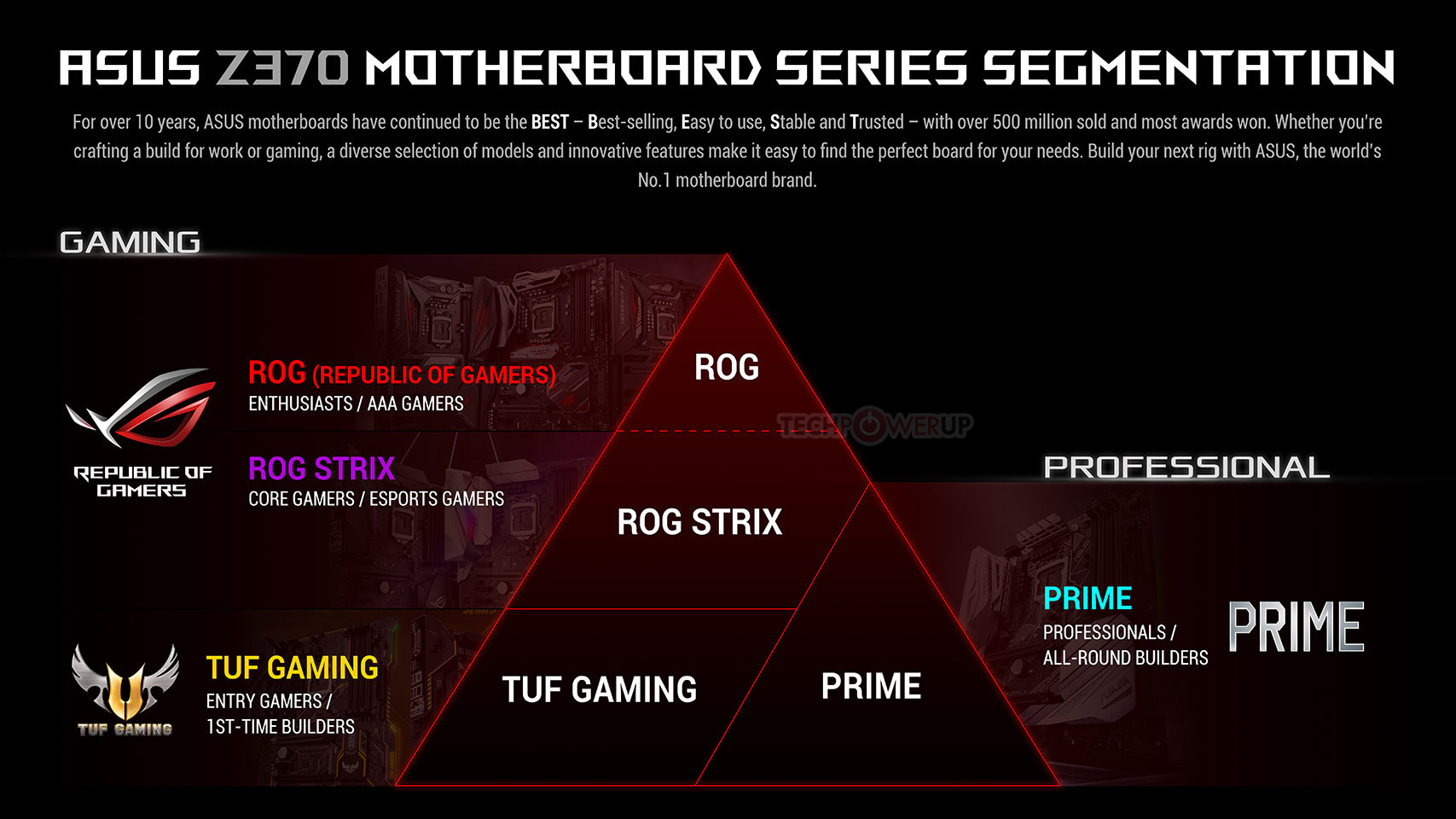
With its new Intel 300-series chipset-based motherboard family, ASUS is redoing the segmentation of its various motherboard brands, with the objective of avoiding too many similarly-priced products that bloat the lineup and confuse buyers. The company articulated its segmentation using a triangle (pictured below). At the bottom of this triangle is the mainline "Prime" series, and interestingly, the TUF (The Ultimate Force) series. The TUF series has until now been attributed to moderately expensive motherboards that are designed with very high durability. They are now relegated to the bottom of ASUS' product-stack, targeted at first-time builders and entry-level gamers. These boards are still built "tough" in that they feature high-grade components, but not as many CPU VRM phases as some of ASUS' more expensive boards.

Another revelation is that the company's mainline "Prime" series, which has served as the bedrock of the company's motherboard lineup before sub-brands such as ROG came along, is now entry-mid range, with just two SKUs based on the Z370 chipset. The Prime Z370-A is recommended for those users who want to cut through the marketing clutter and pick a board that maxes out this platform without too many frills. This move also ends the possibility of higher Prime-series SKUs such as "Deluxe" and "Premium," which were previously associated with SKUs bursting at the seams with onboard connectivity options.

Upcoming ASUS Z370 Motherboard Roundup

Normally, motherboards go on shelves at the same time as processors do. In this occasion, Intel has confirmed that their Coffee Lake processors will launch on October 5. As per tradition, images of some of the upcoming motherboards from various brands have been leaked on the web. Meanwhile, we know that many of you are already planning your future Z370 builds or deciding on which motherboard to accompany your PC upgrade. If you're a fan of ASUS products, we have a treat for you. From what VideoCardz have gathered so far, ASUS plans to release sixteen different models from their Republic of Gamers (ROG), The Ultimate Force (TUF), Strix and Prime series.

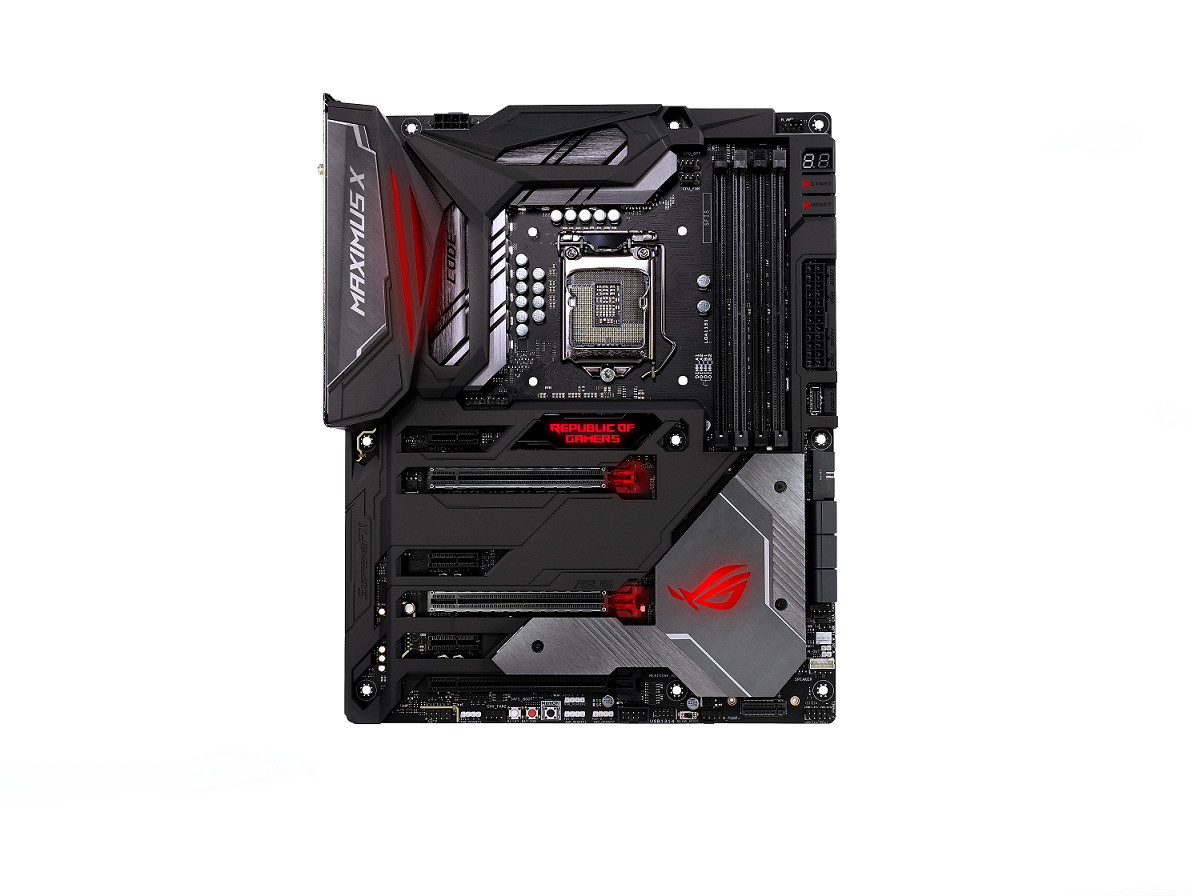
The ROG line will father five Maximus X models: Apex, Formula, Code, Hero with Wi-Fi AC, and Hero. There is no mention of an Extreme model, but our experience tells us that model usually comes at a later date. It's also possible that it may never see the light of day for this generation. From what we can make of the images, the Maximus X Hero will employ a 10-phase digital VRM design. The motherboard retains the black and grey theme with RGB illuminated heatsinks just like its predecessor. Wi-Fi and Bluetooth functionality were present on the Code models and above in the previous generation. We're happy to see ASUS offering a Hero variant this time with those two functionalities.

ASUS Intros ROG Swift PG27VQ Curved 27-inch Gaming Monitor

ASUS today rolled out the Republic of Gamers (ROG) Swift PG27VQ curved gaming monitor. This 27-inch monitor with an 1800R curved TN-film panel, offers a native resolution of 2560 x 1440 pixels. Bolstering its gaming credentials are a high refresh-rate of 165 Hz, response time as low as 1 ms (GTG), and support for NVIDIA G-SYNC technology. If the 16.8 million colors put out from the display panel itself aren't "RGB lit" enough for you, the monitor features RGB LED elements illuminating a motif behind the panel, and below the monitor stand's pivot; which can be controlled using ASUS Aura Sync RGB software.

Besides putting up a show, the RGB LED elements can be made to work as ambient lighting, which adapts to the display. The GamePlus technology lets you draw OSD crosshairs and frame-rate counter; and GameVisual, which are display presets for various genres of games (FPS, RTS, RPG, etc.). Other key panel specifications include 400 cd/m² maximum brightness, 170°/160° viewing angles, and dynamic mega-contrast ratio. Display inputs include DisplayPort 1.2 (needed for G-SYNC), and HDMI 1.4 (lower than standard refresh rate). The stand offers basic tilt adjustments. The company didn't reveal pricing.

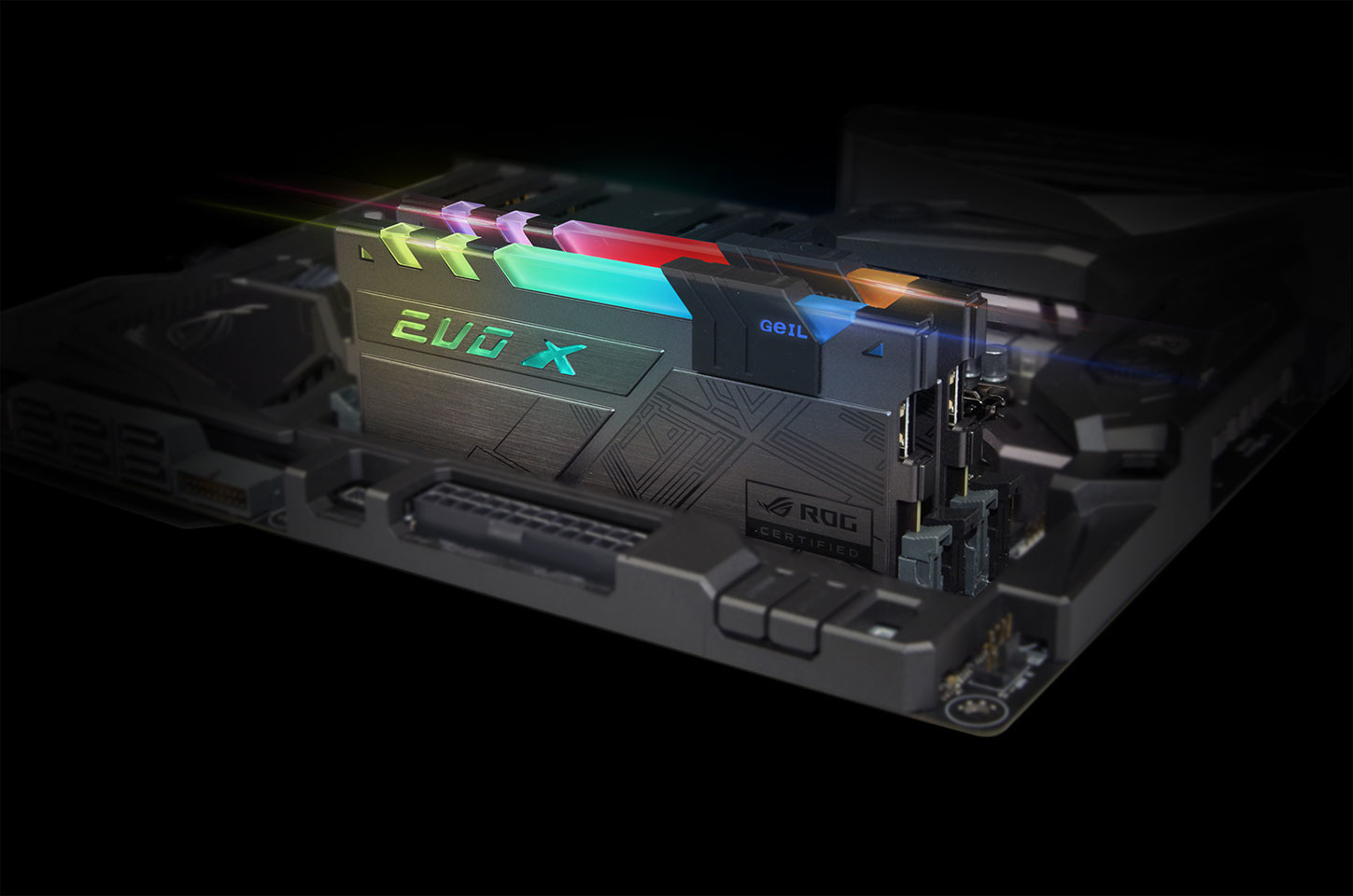
GeIL Announces EVO-X RGB Memory with ASUS ROG Certification

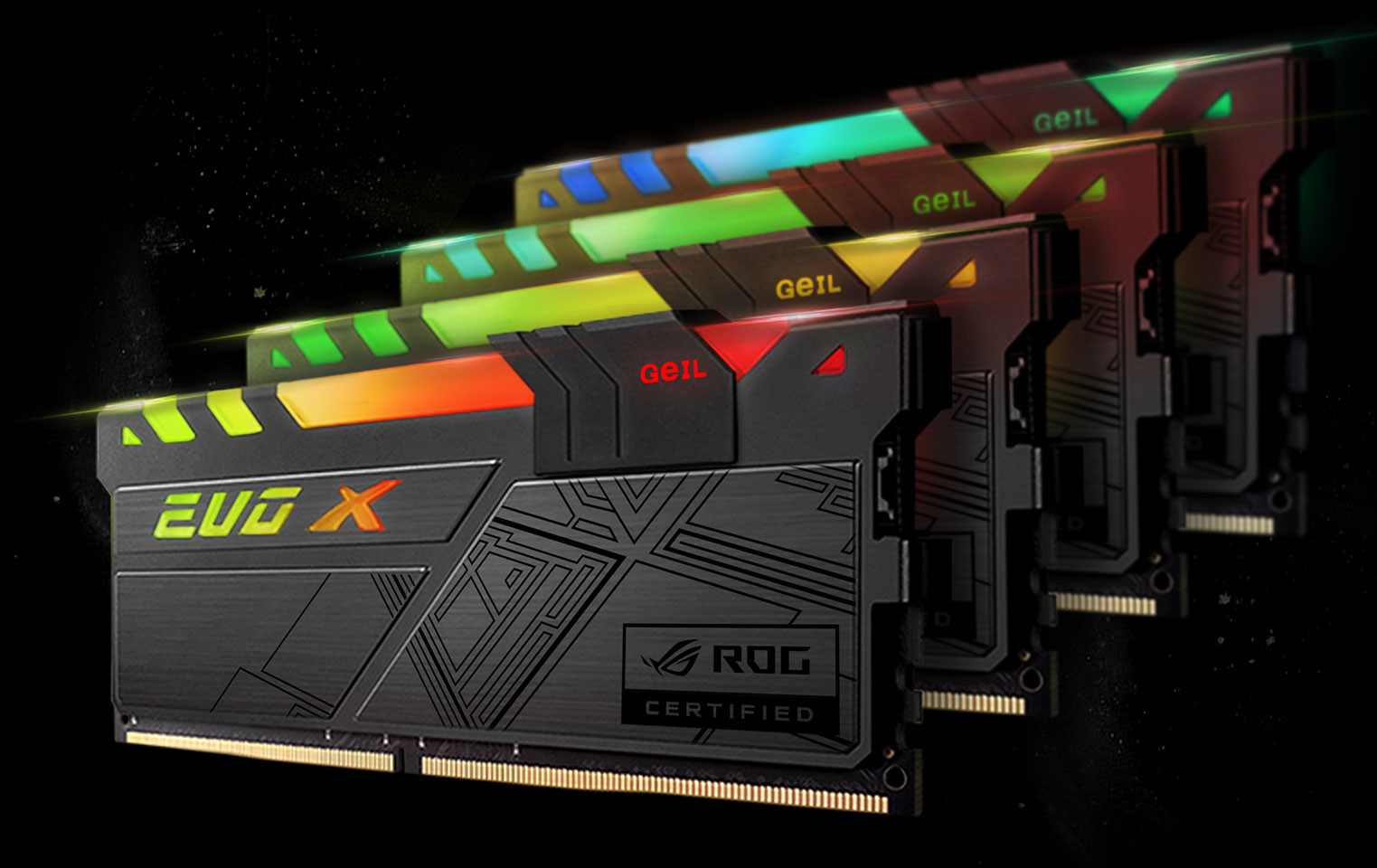
GeIL - Golden Emperor International Ltd. - one of the world's leading PC components & peripheral manufacturers announced EVO X ROG-certified RGB Gaming Memory. As world's first fully RGB illuminated DDR4 memory module with an ASUS ROG certification, EVO X ROG-certified RGB Gaming Memory combines a significant performance boost with RGB lighting effects to give enthusiasts an excellent overclocking and gaming experience.

ASUS ROG (Republic of Gamers) is recognized as the leader in PC gaming and overclocking performance with a record for delivering the most innovative hardcore hardware for gamers and enthusiasts. GeIL is proud to work with ASUS ROG to provide gamers the most innovative gaming memory, GeIL EVO X ROG-certified RGB Gaming Memory. When paired with certain ASUS ROG motherboards, an automatic performance boost will be enabled for a better overclocking experience.

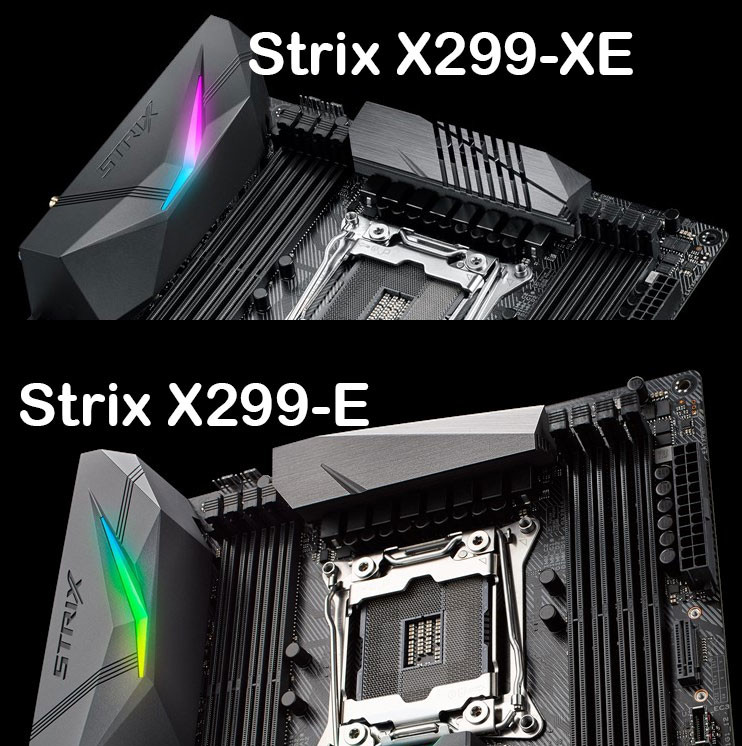
ASUS Intros ROG Strix X299-XE Gaming Motherboard

ASUS today rolled out its latest socket LGA2066 motherboard under its Republic of Gamers (ROG) Strix brand, the ROG Strix X299-XE, hinting at "readiness" for 18-core i9-7980XE processors, which Intel plans to launch before the end of this year. This board is 99.999% identical to the ROG Strix X299-E Gaming, except for one difference that should make it to the "Spot the Difference" puzzle of your favorite tabloid - the VRM heatsink.

ASUS has given the X299-XE Gaming a slightly heavier CPU VRM heatsink, and has rigorously tested the VRM to not run into thermal throttling issues, especially when powering high core-count Core i9 processors. The Core X socket LGA2066 platform has already been criticized by professional overclockers as being "a VRM disaster." As we mentioned earlier, the Strix X299-XE is otherwise identical to the Strix X299-E, and it would be disappointing if ASUS attaches a premium for a few extra grams of aluminium and quality-control that should have been done for the Strix X299-E in the first place.
Return to Keyword Browsing
Nov 26th, 2026 01:57 CST change timezone

New Forum Posts

Popular Reviews

TPU on YouTube

Controversial News Posts