News Posts matching #Asus

Return to Keyword Browsing

ASUS ROG Maximus IX Apex Leads the Pack

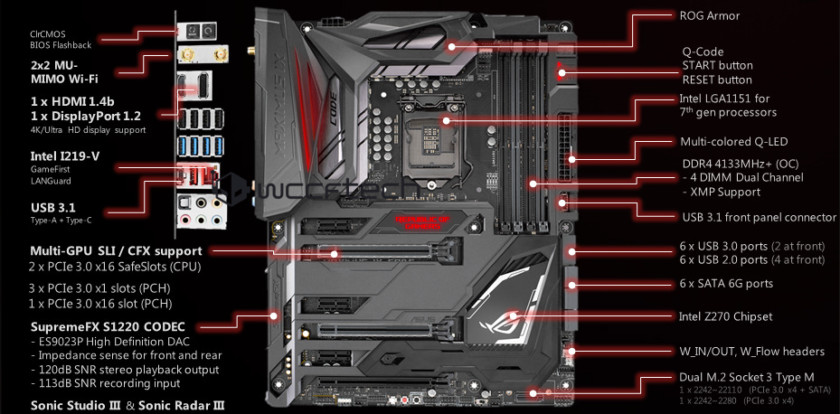
Here are some of the first pictures of ASUS Republic of Gamers (ROG) Maximus IX Apex, the company's flagship motherboard based on the Intel Z270 Express chipset. The board has many first-in-segment features. To begin with, it features a non-rectangular PCB, which probably lets you quickly pull the board out of bench-tables. Designed for extreme overclocking, the Maximus IX Apex draws power from a 24-pin ATX, two 8-pin EPS, and one 4-pin Molex. The CPU is wired to three memory slots, two of these are DDR4, and make up the dual-channel DDR4 interface. The third slot is DDR3, and can be enabled at the flick of a switch, for troubleshooting the DDR4 memory OC.

The Maximus IX Apex features four PCI-Express 3.0 x16 slots, from which two are wired to the CPU (topmost slot and third slot), and run at x8/x8 when both are populated. The second and fourth x16 slots are electrical x4 and wired to the Z270 PCH. Although not visible, it's likely that this board features one or two M.2 slots, at the reverse side of the PCB. 8-channel HD audio, Intel gigabit Ethernet, four USB 3.1 ports (including type-C), and display outputs that include DisplayPort and HDMI, make for the rest of the connectivity. The board appears to feature a great deal of onboard OC buttons and switches. ASUS will reveal these features when it launches the motherboard a little later this month.

ASUS Prime B250M-Plus Pictured, Too

The third Prime B250 series motherboard by ASUS is the B250M-Plus. This micro-ATX motherboard offers most of the features its bigger siblings ship with. The board features the same 7-phase VRM as the other boards. Expansion slots include one each of PCI-Express 3.0 x16, PCIe x1, and legacy PCI. Storage connectivity includes one 32 Gb/s M.2 slot, and six SATA 6 Gb/s ports. The board offers 8-channel HD audio (compared to 6-channel on the larger boards), gigabit Ethernet, USB 3.0 ports, and display outputs that include HDMI, DVI, and D-Sub. Expect a sub-$100 price.

ASUS Prime B250 Pro Motherboard Detailed

ASUS is introducing the new Prime family of motherboards positioned between its Pro Gaming series and its mainline series. These are motherboards that share their feature-set from the company's mainline series, but feature black PCBs, and black+red product styling reminiscent of some of its premium ROG motherboards. Here are some of the first pictures of the Prime B250 Pro, an ATX form-factor motherboard priced around the $100 mark. The board could share its PCB design with the Prime Z270 Pro. Based on the Intel B250 Express chipset, the board lacks NVIDIA SLI support, or the kind of CPU overclocking features the Z270 chipset does.

The Prime Z270 Pro draws power from a combination of 24-pin ATX and 8-pin EPS power connectors, and conditions it for the CPU with a 7-phase VRM. Expansion slots include one PCI-Express 3.0 x16 wired to the CPU, a second x16 (electrical x4) slot wired to the PCH, and two each of PCI-Express 3.0 x1 and legacy PCI slots. Storage connectivity includes two M.2 slots, from which one is 32 Gb/s (bottom), and the other 16 Gb/s (top); and six SATA 6 Gb/s ports. The board offers two USB 3.1 (10 Gb/s) ports, one USB 3.0 type-C port, two USB 3.0 type-A ports on the rear panel, and four USB 3.0 ports by headers. Display connectivity includes HDMI, DVI, and D-Sub. ASUS also has a stripped-down variant of this board, called the Prime B250 Plus. It lacks USB 3.1 ports, and the heatsink over the CPU VRM.

AMD A12-9800 "Bristol Ridge" AM4 APU with ASUS A320M-C Tested

German PC enthusiast "Crashtest" clinched a sweet combo of an AMD A12-9800 "Bristol Ridge" socket AM4 APU with an ASUS A320M-C entry-level micro-ATX motherboard, for 200€. Pairing it with 8 GB of dual-channel DDR4-2133 memory, the platform was put through the AIDA64 test-suite. In the memory front, the platform performs on-par with older platforms at comparable DDR3 bandwidth. The K15.6 integrated memory controller isn't producing the kind of memory bandwidth as the Core i7-6700K with dual-channel DDR4-2133 memory from AIDA64's internal reference bench table.
In the CPU-related tests, the APU has about the same performance as its predecessors, such as the A10-7850K. The chip features two "Excavator" x86-64 CPU modules, making up four cores, and is clocked at 4.20 GHz. There are performance upticks seen in tests such as Hash and VP8, where the chip likely benefits from new instruction sets.
More results follow.

Tom Clancy's "The Division" Gets DirectX 12 Update, RX 480 Beats GTX 1060 by 16%

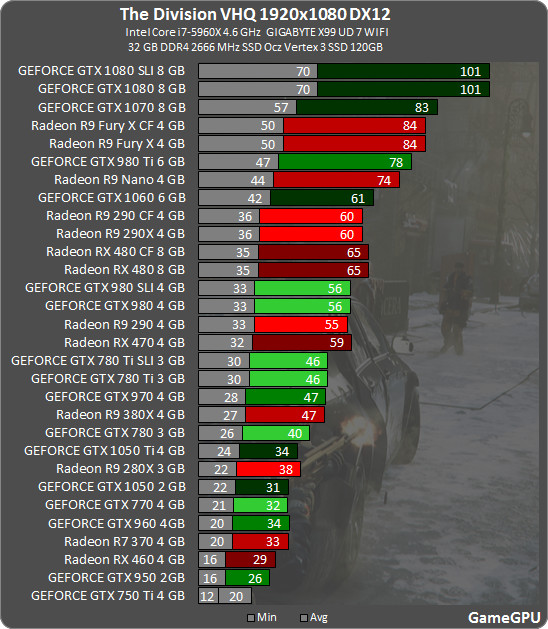
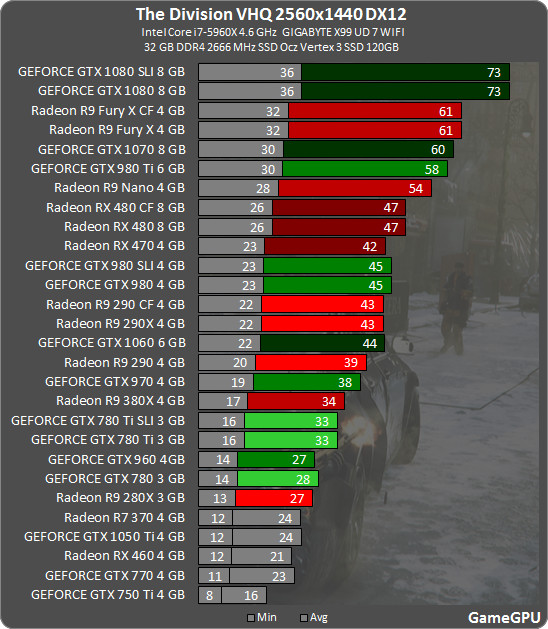
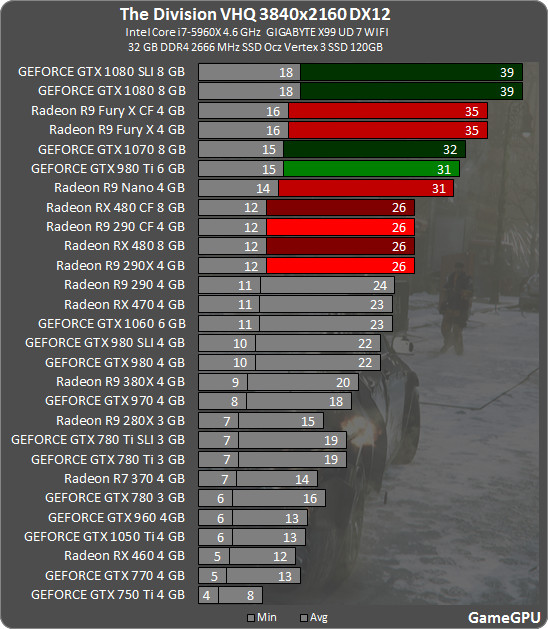
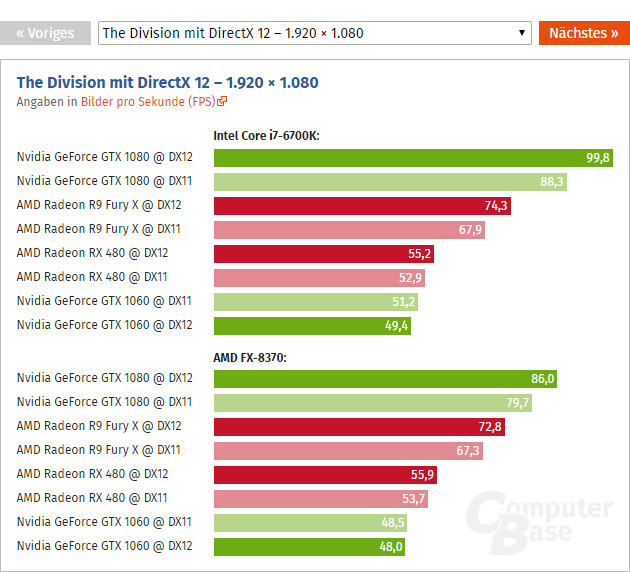
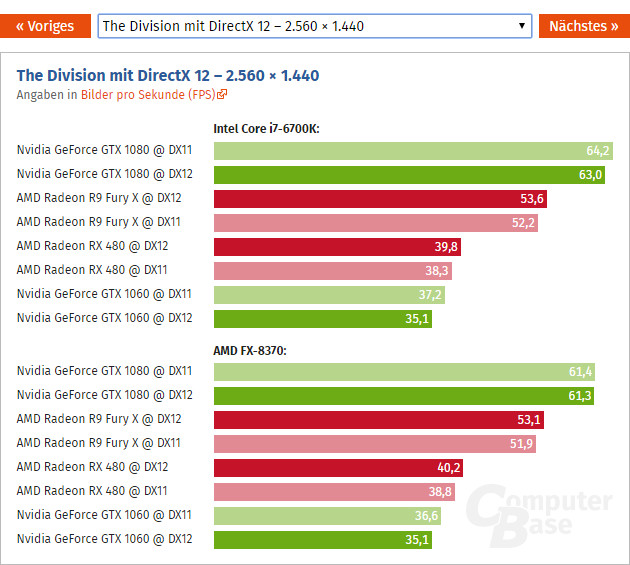
Over the weekend, gamers began testing the new DirectX 12 renderer of Tom Clancy's "The Division," released through a game patch. Testing by GameGPU (Russian media site) shows that AMD Radeon RX 480 is about 16 percent faster than NVIDIA GeForce GTX 1060 6GB, with the game running in the new DirectX 12 mode. "The Division" was tested with its new DirectX 12 renderer, on an ASUS Radeon RX 480 STRIX graphics card driven by Crimson ReLive 16.12.1 drivers, and compared with an ASUS GeForce GTX 1060 6GB STRIX, driven by GeForce 376.19 drivers. Independent testing by German tech-site ComputerBase.de supports these findings.

ASUS Announces the ROG XG Station 2 External Graphics Enclosure

ASUS today announced the Republic of Gamers (ROG) XG Station 2 external graphics enclosure. A successor to the pioneering XG Station by the company, which launched way back in 2007, this box has the connectivity to drive high-end graphics cards, and expand connectivity of your machine. The enclosure features a PCI-Express 3.0 x16 slot, and two 6+2 pin PCIe power connectors, with which it can supply the card with up to 500W of power. Its power supply can further provide up to 100W of power to recharge your notebook. The internal power supply meets 80 Plus Gold efficiency rating.

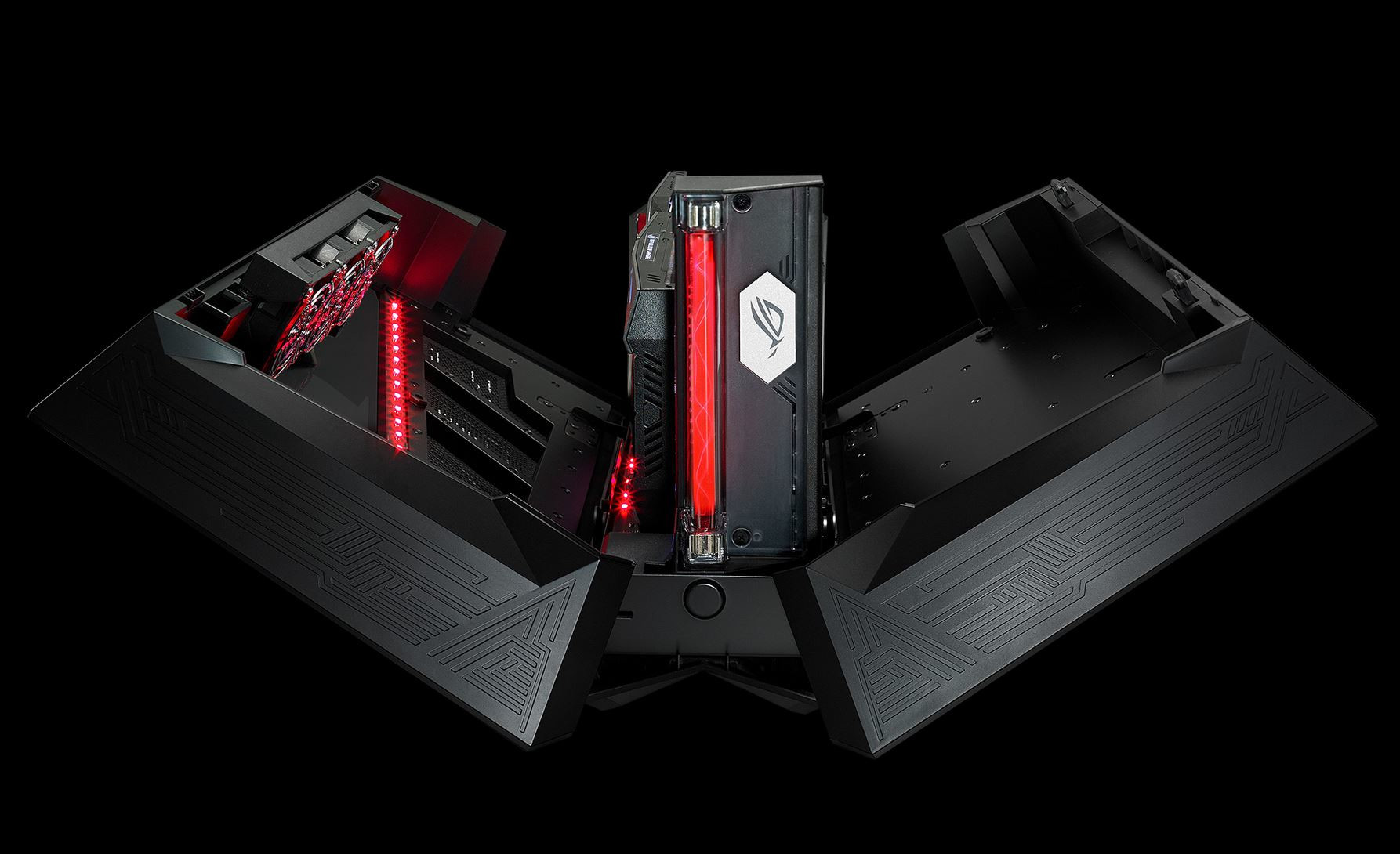
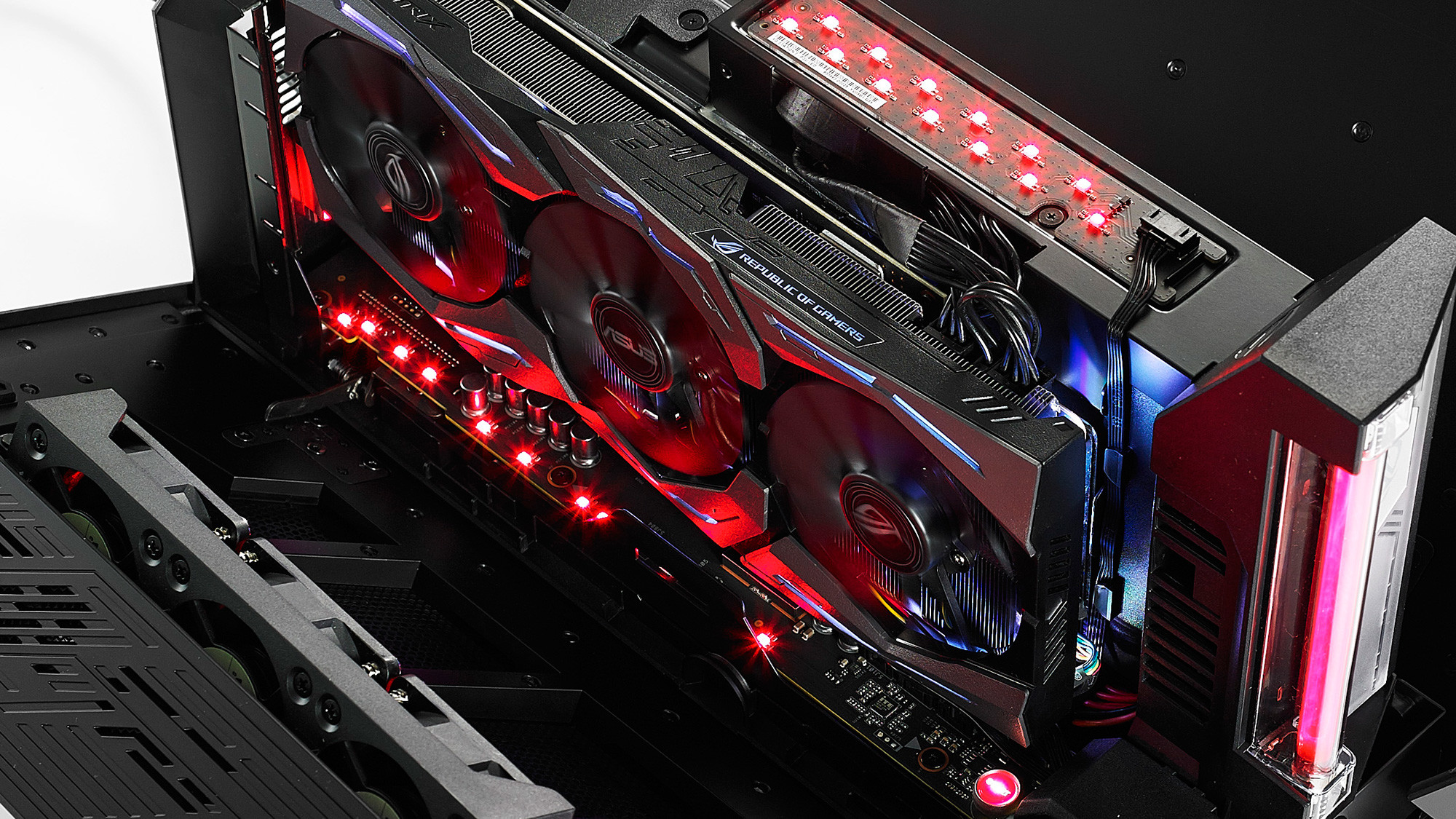
The ROG XG Station 2 connects to your notebook or desktop using Thunderbolt 3 (40 Gbps). It uses this bandwidth to drive not just the graphics card, but also a gigabit Ethernet controller, and a 4-port USB 3.0 hub. You can supplement the main Thunderbolt connection's bandwidth with an additional USB 3.0 (5 Gbps) connection to your host machine. This isn't necessary, but ASUS claims it will improve performance. The enclosure opens up at a vertical seam like an oyster, letting you easily install your graphics card. The walls of the enclosure are perforated, but a trio of 70 mm fans actively ventilate it. The enclosure also features RGB LED lighting, which can be managed using ASUS Aura software. ASUS plans to sell the ROG XG Station 2 from Q1-2017.

ASUS Intros a No-frills NVIDIA SLI HB Bridge

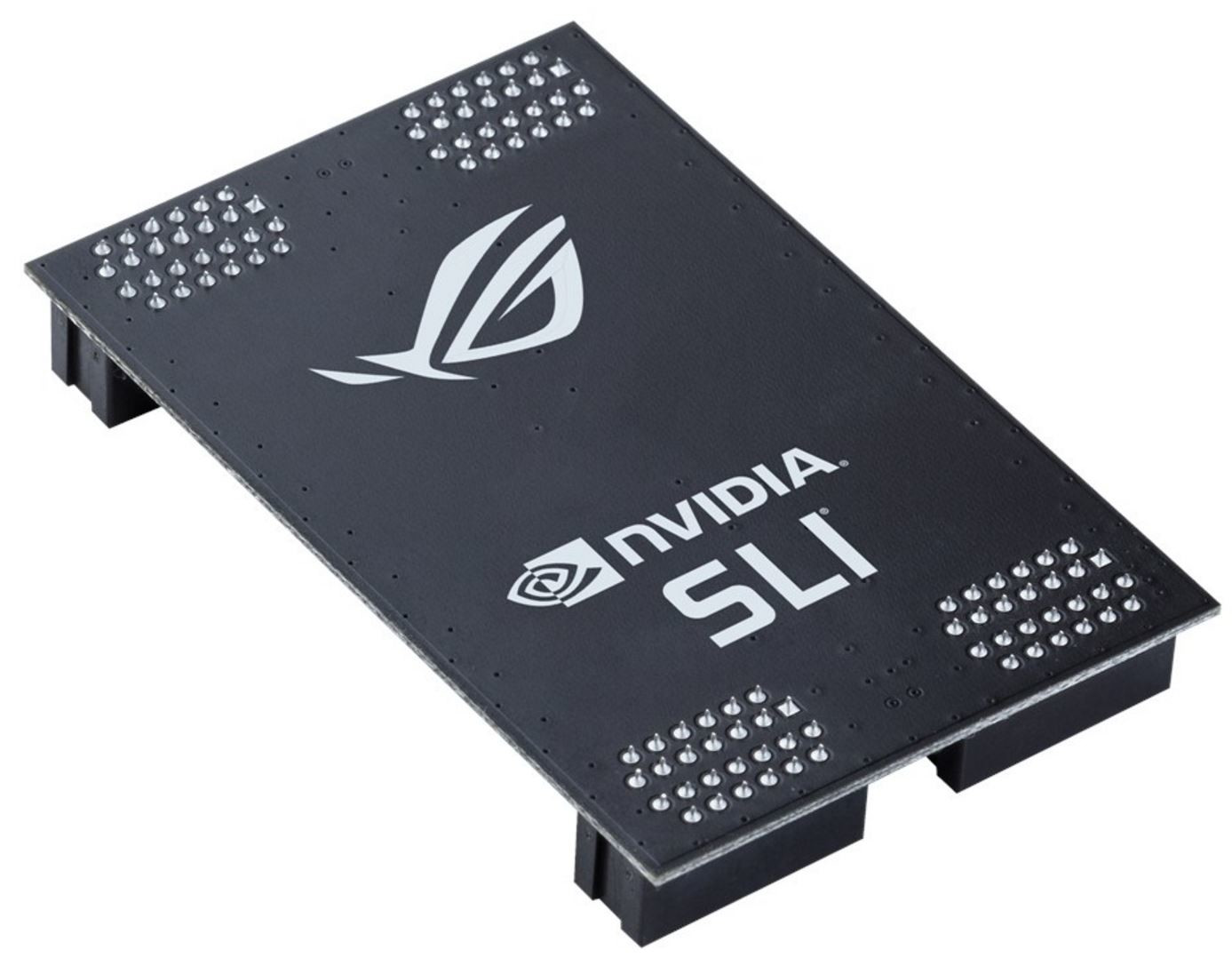
Want SLI to work right on your GeForce GTX 1080, GTX 1070, or TITAN X Pascal without having to spend $50 on a fancy SLI bridge with an LED light-show you don't need? Look no further than the "no-frills" NVIDIA SLI HB bridge by ASUS. The bridge is just a fiberglass PCB with SLI slots where you'd want them, and simple ASUS ROG branding printed on the PCB, nothing too fancy. The bridge comes with 60 mm or 2-slot spacing (1 slot between two dual-slot thick graphics cards). The bridge will be sold separately for a fraction of the price of the company's LED-lit bridges; as well as being part of some of the company's upcoming motherboards' accessory packages.

ASUS Also Announces the Xonar U7 MkII External Sound Card

ASUS today announced Xonar U7 MKII, a high-quality USB sound card and headphone amplifier. The compact Xonar U7 MKII is an upgraded version of the acclaimed Xonar U7 and features true 7.1-channel,192kHz/24-bit high-definition (HD) surround-sound output for incredible audio performance. Xonar U7 MKII comes with ASUS Sonic Studio, a software utility with an intuitive single-screen interface that provides complete control over a wide range of audio features, and Sonic Radar Pro, a feature for gamers that visually maps in-game sounds in first-person shooter (FPS) games to provide a competitive advantage.

ASUS Xonar U7 MKII retains the compact USB-powered design that was a highlight of the original Xonar U7 and delivers true 7.1-channel, 192kHz/24-bit HD audio, outperforming most available USB-powered audio devices. With a high-quality Cirrus Logic CS4398 digital-to-analog converter (DAC) and exclusive ASUS Hyper Grounding technology, Xonar U7 MKII has a 114dB signal-to-noise ratio (SNR), ensuring ultra-pure sound for the best listening experiences. The small size of Xonar U7 MKII takes up minimal room on a desk, and makes it easily portable, so laptop users can enjoy great-sounding audio anywhere.

ASUS Announces the BRT-AC828 Ultra-Fast 802.11ac Router

ASUS today announced BRT-AC828, an ultra-fast AC2600-class dual-band 802.11ac wireless router with a four-transmit, four-receive (4x4) antenna configuration. BRT-AC828 is packed with all the networking features that are vital to growing companies, whether they are new start-ups or longer-established enterprises.

ASUS AiRadar combines beamforming with the four external antennas to ensure reliable, powerful and ultra-fast Wi-Fi - with combined speeds of up to 2534 Mbps - throughout the workplace, allowing users to concentrate on growing their business. For fast and resilient internet connectivity, BRT-AC828 features dual Gigabit WAN ports that offer up to 2 Gbps aggregated bandwidth, with automatic failover in the case of interruption to one of the internet connections. Other business-focused features include an easy-to-configure secure Wi-Fi portal for customers, simplified device management using Device Grouping, and a RADIUS server for secure authentication and easy user administration.

BitFenix Announces the Shogun Chassis with ASUS Aura Support

BitFenix announces the Shogun Chassis. During Computex 2016 we showcased four of our brand new chassis, which also included Cape. With the input from some of the world's renowned enthusiasts, we have developed and tweaked the Cape to be an extremely desirable chassis with many novel features. Strength, Power and Absolute Control makes you a champion. Carrying on the theme of simplicity from our famous Shinobi Chassis, Shogun is the newest flagship design model from BitFenix. The all new BitFenix Shogun is the most capable command station that gives you the edge in the battle for victory. May it be performance or looks, Shogun is the best of both worlds. With the top level aesthetics, novel features and extreme compatibility BitFenix Shogun is one of the most advance and user friendly chassis in the market.

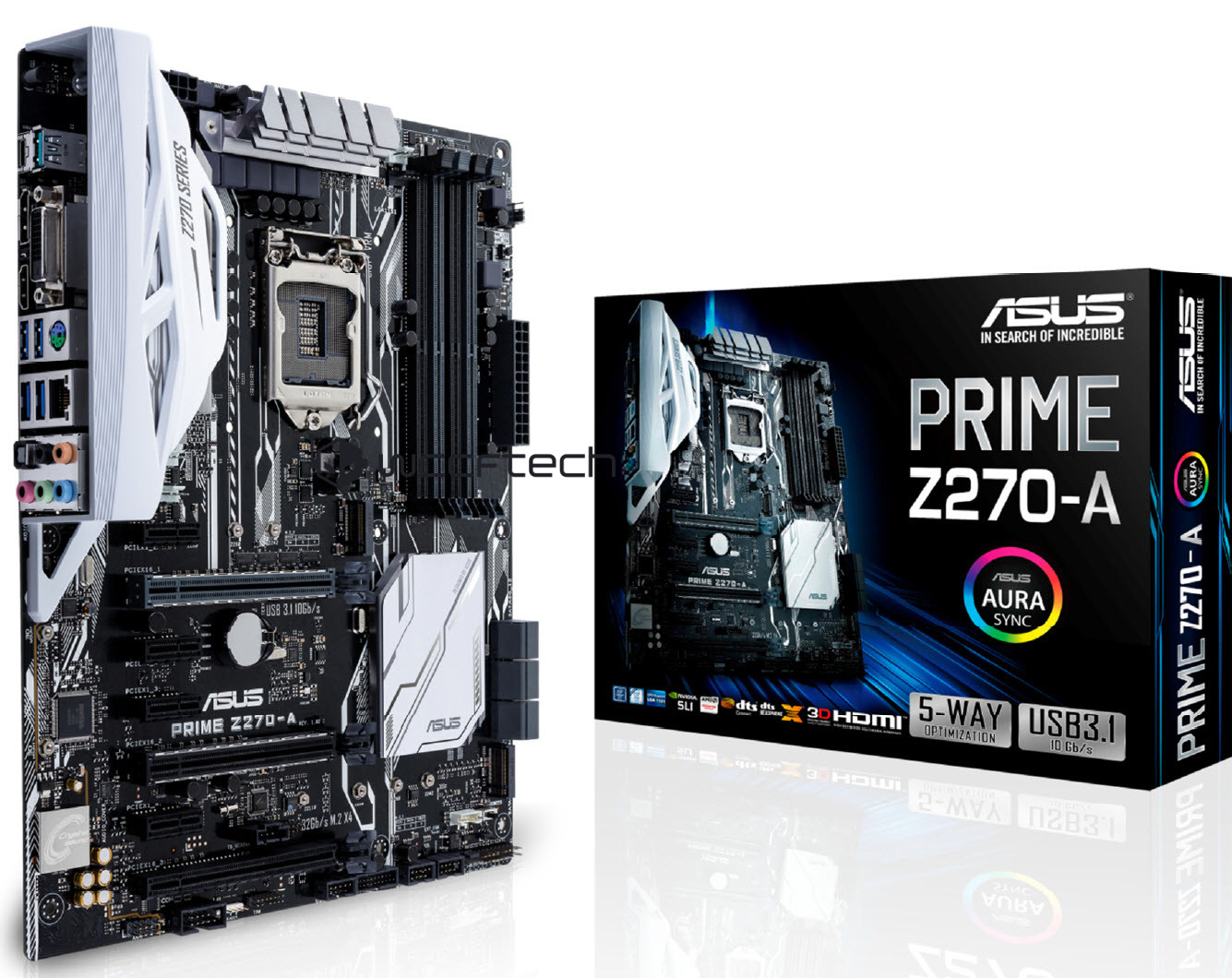
ASUS PRIME Z270-A Motherboard Also Detailed

Finally putting the lid on all of ASUS' leaked and detailed motherboards, comes, the PRIME Z270-A, which doesn't belong to a special, bang-and-whistle-filled product line, and is just concerned with getting the job done. It clads itself in a simple and appealing white and gray color-scheme, and is expected to keep most of the important features in ASUS' more expensive product lines.

The PRIME Z270-A comes with ASUS' 8+2+2 Phase Digital power design, fed by an 8-pin connector, that features 10K black metallic capacitors, MicroFine Alloy Chokes, NexFET PW (Power) block MOSFET and DIGI+ Power Control Utility for real-time adjustment, courtesy of the new ASUS Extreme Engine Digi+ technology that improves CPU stability and overclocking. It features four DDR4 DIMM slots that can support up to 64 GB of memory with speeds of up to 3866 MHZ (O.C+), and expansion slots on the motherboard include three PCIe 3.0 x16 (x16/x8/x4 electrical), four PCIe 3.0 x1 and dual M.2 slots that deliver up to 32 GB/s transfer speeds, with the PCIe slots being armored for higher resistance.

ASUS TUF Z270 MARK 1 Motherboard Detailed - Armored and Tough

Moving on from the Strix series, ASUS' TUF Z270 Mark 1 has also been detailed. Designed around so-called military standards purported to ensure longer stability and extreme durability, the new TUF Z270 motherboards incorporates features such as Tough Inside, Thermal Armor, TUF Networking, TUF Audio, Ultimate Cooling, 24/7 Durability and high speed transfer. This motherboard is one of ASUS' most premium and feature-packed products, so you should expect to pay a pretty, pretty penny for it, if history - and pricing history in particular - is anything to go by (and it usually is).

The LGA 1151 socket supports the latest 6th and 7th generation Intel Core processors, with the MARK 1 sporting an aggressive heatsink design that features ASUS' AURA RGB technology and a full cover TUF Thermal Armor and Fortifier shield. The chassis of the board houses a 40mm fan that offers significant cooling performance to the VRMs.

ASUS ROG STRIX Z270F Gaming Motherboard Details Surface

Continuing the trend of revealing ASUS' ROG lineup of motherboards based on the Z270 chipset, and zipping down the product line, comes the ROG STRIX Z270F Gaming, which also sports the standard ATX form factor. The motherboard features an all around solid design with an impressive metallic black / silver color scheme. The LGA 1151 socket supports the latest 6th and 7th generation Intel Core processors. ASUS went with an aggressive heatsink design that features their AURA RGB technology for a full LED illuminated color showcase. In terms of features, the ROG STRIX Z270F Gaming continues the trend of intelligent cost-cutting so as to achieve a product with an (expectedly) lower price-point. Compared to the ROG STRIX Z270E, this mobo cuts on the 2×2 MU-MIMO 802.11ac WI-FI on the back I/O, and the USB front header is downgraded to a 2.0 solution.

The ASUS ROG Strix Z270F comes with a 8+2+1 Phase Digital power design that features 10K black metallic capacitors, MicroFine Alloy Chokes, NexFET PW (Power) block MOSFET and DIGI+ Power Control Utility for real-time adjustment. All of these components are part of the new ASUS Extreme Engine Digi+ technology that improves CPU stability and overclocking. Power is fed through a single 8-Pin connector.

ASUS ROG STRIX Z270E Gaming Motherboard Detailed

With the ever-closer release of Intel's Kaby Lake family of CPUs, details and leaks are becoming more and more difficult to stem. Continuing the trend, we are now detailing the ROG STRIX Z270E Gaming is yet another ATX form factor motherboard by Asus, featuring an impressive metallic black / silver color scheme on the LGA 1151 socket. ASUS went with an aggressive heatsink design that features their AURA RGB technology for a full LED illuminated color showcase. The STRIX line inherits much of the other features of the Maximus line of motherboards, though they universally do away with the black and red color scheme.

ASUS ROG Strix Z270G Motherboard Leaked

The ROG STRIX Z270G Gaming is the first leaked motherboard that fills customers' needs in the microATX form factor (making it one of the more interesting ones), featuring an impressive metallic black / silver color scheme on the LGA 1151 socket, which I personally find beautiful. ASUS went with an aggressive heatsink design that features their AURA RGB technology for a full LED illuminated color showcase. The STRIX line inherits much of the other features of the Maximus line of motherboards, though they universally do away with the black and red color scheme.

ASUS ROG Maximus IX Hero Z270 Motherboard Also Detailed

ASUS' ROG Maximus IX Code, the company's step-down product from the already detailed Maximus IX Formula, has also been leaked. Like the Formula, it's in the ATX form factor with the red and black colors of the ROG line; the difference between thie Maximus IX Hero and the Code stands in that the Hero is absent from the Code's PCB front shielding, the 2×2 MU-MIMO 802.11 AC WI-FI capabilities, as well as the and USB 2.0 (2+4) front panel connectors, putting it in an even lower tier in product placement, and, we expect, pricing (though, being part of the ROG line, that doesn't mean it will be cheap).

ASUS ROG Maximus IX Code Z270 Motherboard Leaked

ASUS' ROG Maximus IX Code, the company's step-down product from the already detailed Maximus IX Formula, has also been leaked. Like the Formula, it's in the ATX form factor with the red and black colors of the ROG line; the difference between the ROG Maximus IX Code and the IX Formula stands in that the Code is absent from the Formula's integrated water-cooling solution, which puts it in a somewhat lower tier in product placement, and, we expect, pricing.

ASUS ROG Maximus IX Formula Z270 Motherboard Leaked

With the ever-closer release of Intel's Kaby Lake family of CPUs, details and leaks are becoming more and more difficult to stem. As such, the ASUS ROG Maximus IX Formula, ASUS's high-end offering for the Z270 chipset and LGA 1151 socket, has been detailed.

The board features the ATX form factor, with the solid red and black colors that are ROG's identity, with red LEDs spread throughout the board - part of the new Aura RGB lightning which offers 3+2 independent on-board LED areas that can be customized by users. The board comes with a 8+2+2 Phase Digital power design that features 10K black metallic capacitors, MicroFine Alloy Chokes, NexFET PW (Power) block MOSFET and DIGI+ Power Control Utility for real-time adjustments. All of these components are part of the new ASUS Extreme Engine Digi+ technology that improves CPU stability and overclocking, with power being fed through a single 8-Pin connector.

ASUS Intros GeForce GTX 1080 STRIX A8G Graphics Card

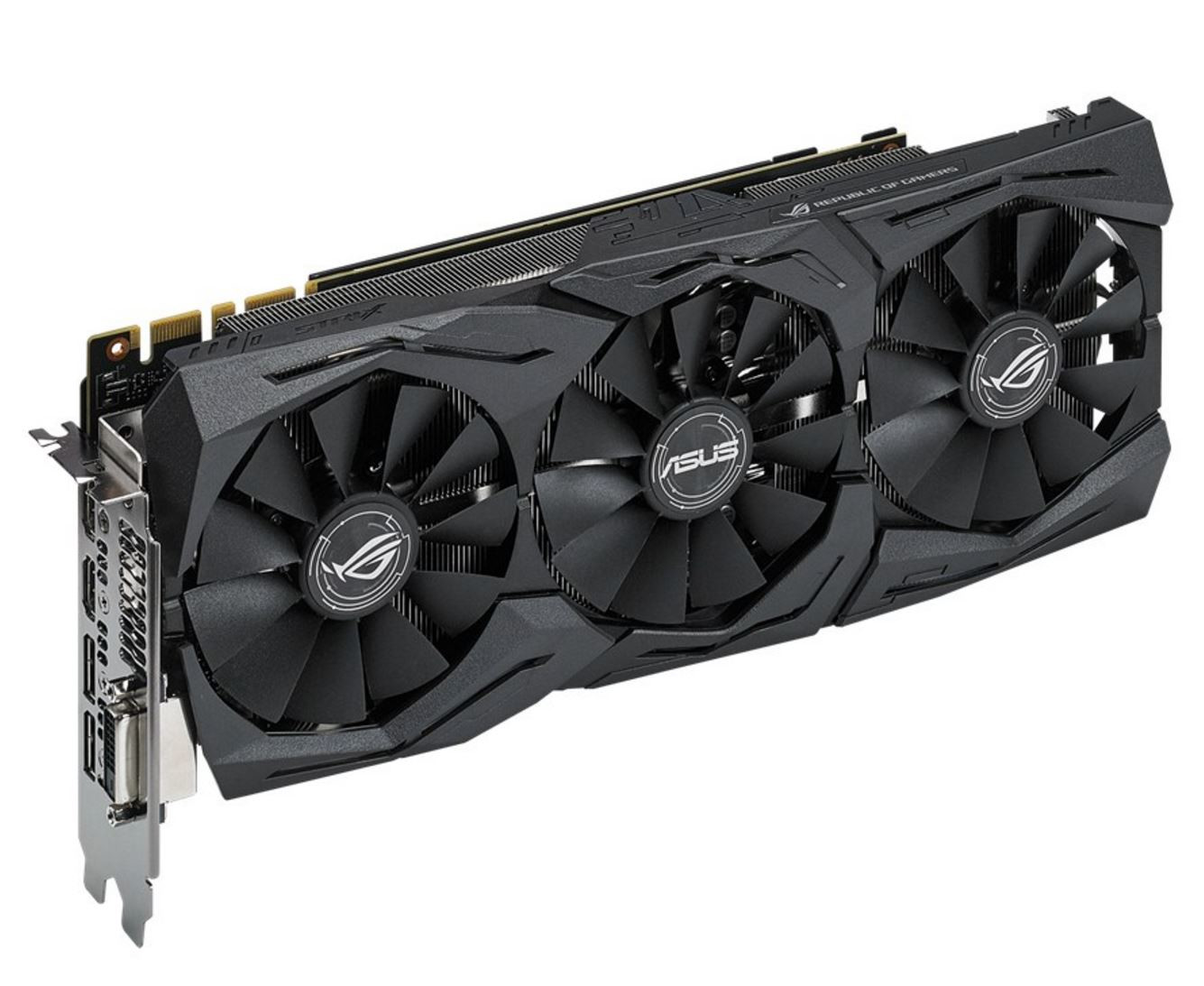
ASUS quietly slipped in the GeForce GTX 1080 STRIX A8G graphics card (model: ROG STRIX-GTX1080-A8G-GAMING). This card is a variant of the original GTX 1080 STRIX O8G graphics card the company launched its GTX 1080 lineup with, and features a slightly lower factory-overclock. The card ships with clock speeds of 1670 MHz core and 1809 MHz GPU Boost out of the box, compared to the 1759 MHz core and 1898 MHz GPU Boost, which the original STRIX O8G ships with; and NVIDIA reference clocks of 1607 MHz core and 1733 MHz GPU Boost. The included GPUTweak II utility unlocks slightly higher clocks, of 1695 MHz core and 1835 MHz GPU Boost in OC mode, which are still lower than those of the O8G STRIX OC.

Clock-speeds aside, the ASUS GeForce GTX 1080 STRIX A8G is identical to the original STRIX OC. You get a strong 10-phase VRM which draws power from a combination of 8-pin and 6-pin PCIe power connectors; two 4-pin PWM fan headers that sync your case-fans to GPU temperatures; and the company's signature DirectCU III cooling solution that features a massive aluminium fin-stack heatsink, with five copper heat pipes that make direct contact with the GPU; and ASUS Aura RGB LED lighting on the cooler shroud, which holds the three 100 mm fans. The ASUS GeForce GTX 1080 A8G is expected to be priced about 5-10% less than the original STRIX OC (O8G).

ASUS Announces the ROG GX800 Gaming Notebook with Liquid Cooling

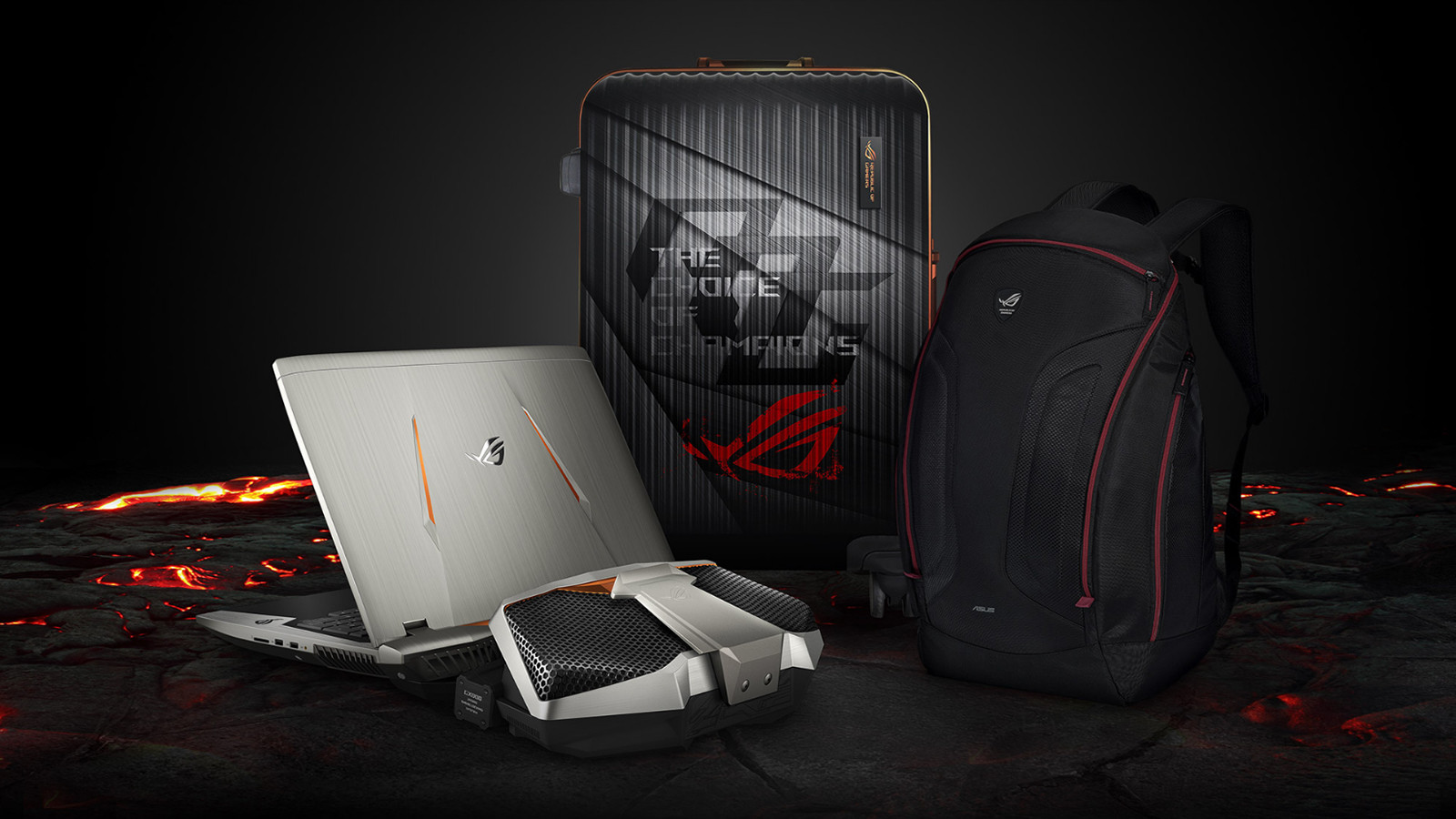
ASUS Republic of Gamers (ROG) today announced GX800, a gaming laptop with the latest NVIDIA GeForce GTX 1080 SLI graphics and an advanced version of the Hydro Overclocking System liquid-cooling module. The 18-inch GX800 is the first gaming laptop designed to deliver real 4K UHD gameplay. It features NVIDIA G-SYNC technology and supports leading virtual-reality (VR) headsets for super-smooth and stutter-free VR gaming. In addition, GX800 features the Mechanical Tactile Advanced Gaming (MechTAG) keyboard with programmable ROG Aura RGB LED effects for individual keys.

ROG GX800's NVIDIA GeForce GTX 1080 SLI graphics provides super-fast, silky-smooth gameplay and detailed gaming environments. GX800 is paired with an advanced version of its predecessor's Hydro Overclocking System to give it the cooling performance required for extreme overclocking of the processor and graphics cards. The Hydro Overclocking System helps boost GX800 clock frequencies from 3.2GHz to 4.2GHz. When overclocked, GX800 achieves a 3DMark Fire Strike Ultra score of 10395.

ASUS Begins Selling the ROG GT51 Desktop

ASUS has now begun selling their high-end ROG GT51 desktop. The system comes equipped with a factory-overclocked Intel Core i7 -6700K (@ 4.6 GHz) processor, The system comes equipped with two ASUS GeForce GTX 1080 graphics cards running in SLI mode, 64 GB of DDR4-2800 memory (4×16 GB), two Samsung SM951 512 GB M.2 SSDs operating in RAID 0 mode and with a 1 TB HDD (7200 RPM). The system is configurable, with the end user being able to opt for faster memory, up to five 3.5"/2.5" HDDs or SSDs, different M.2 drives and so on. The fully configured ROG GT51 system costs $4999 and marks ASUS' entry on the market of high-performance desktop PCs.

ASUS Intros GeForce GTX 1060 STRIX with Classic DirectCU II Cooler

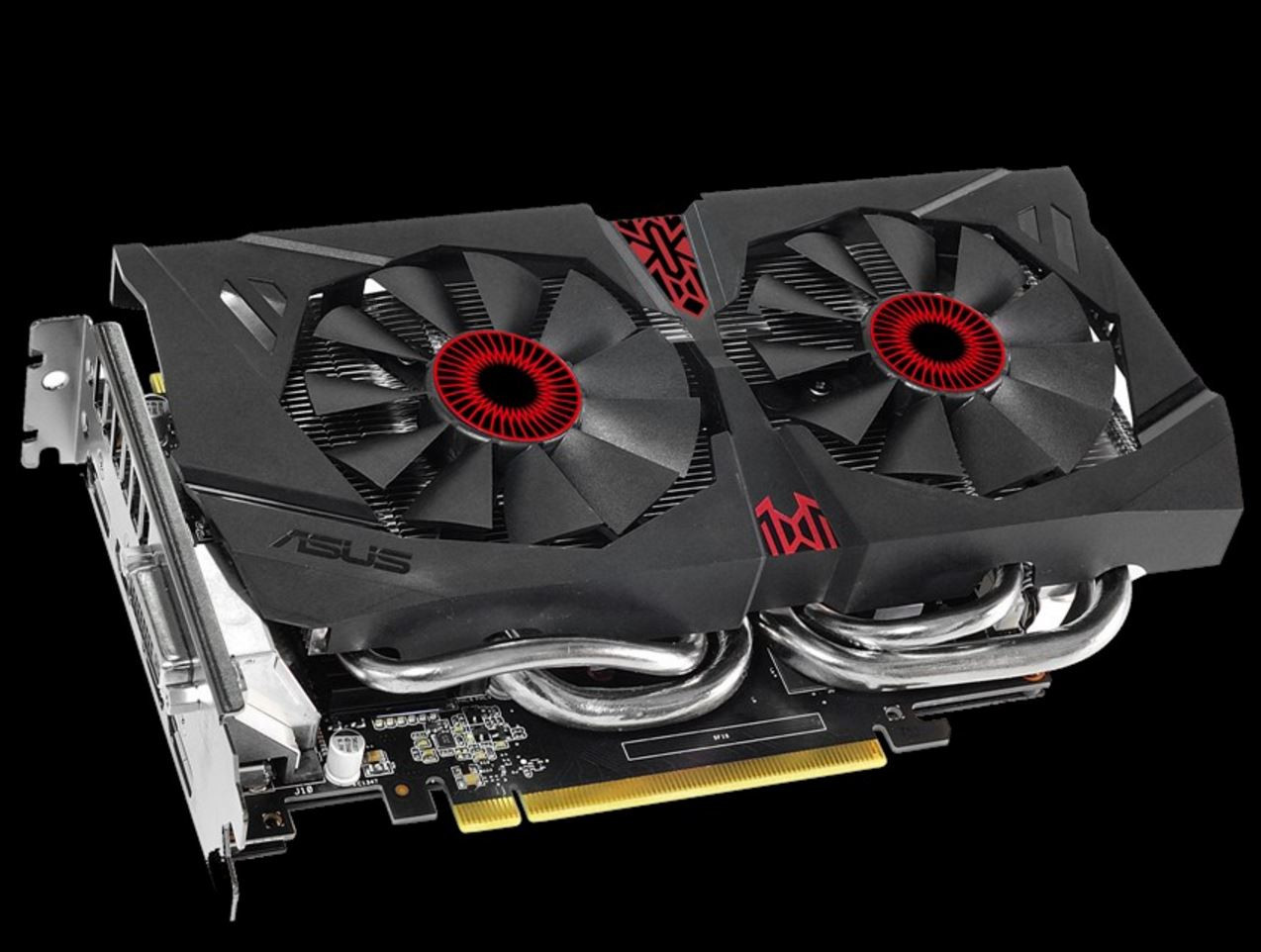
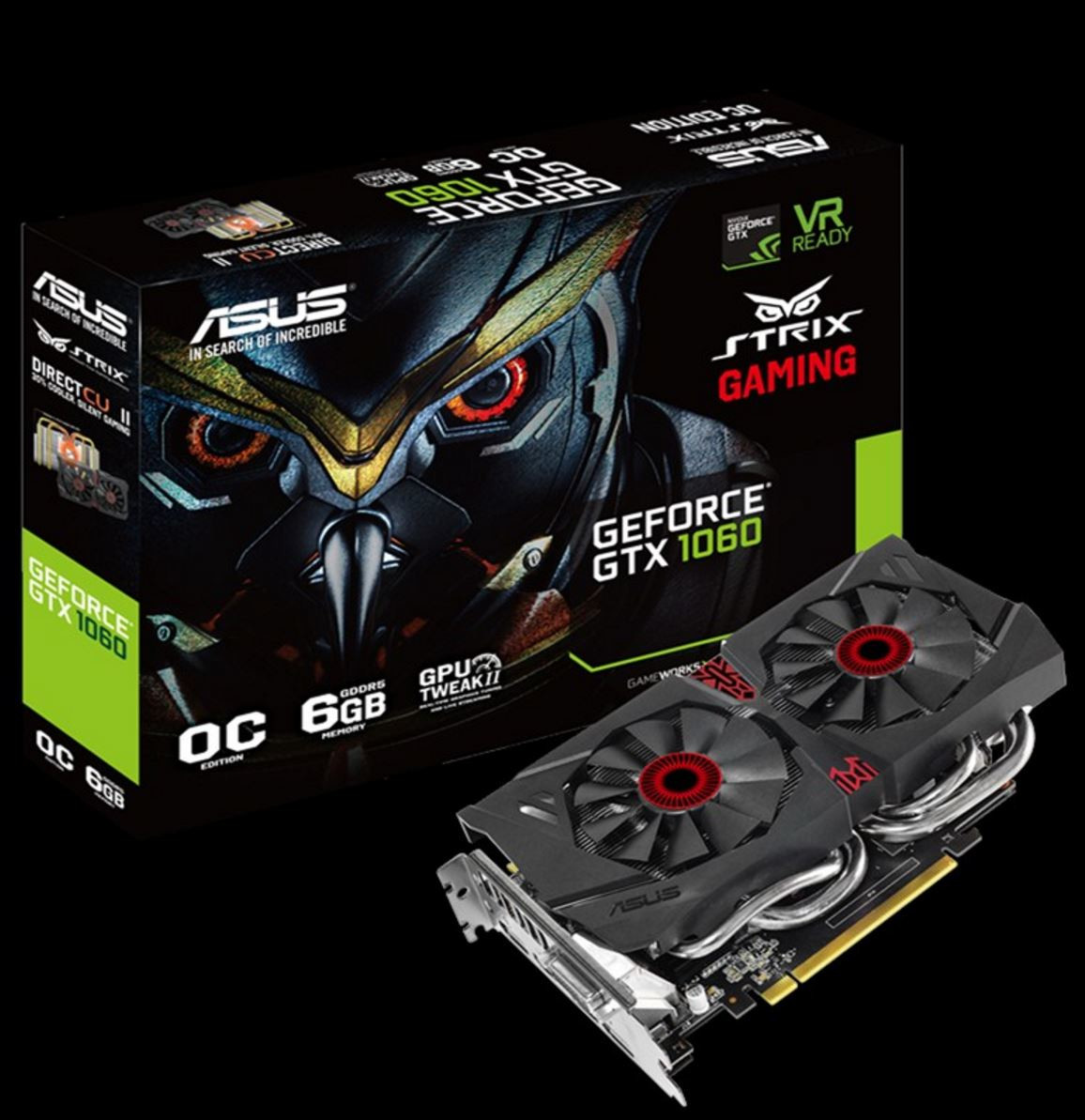
ASUS introduced a new GeForce GTX 1060 6 GB ROG STRIX series graphics card featuring the company's classic STRIX DirectCU II cooling solution (model: STRIX-GTX1060-DC2O6G). The card features a shorter custom-design PCB than the one found on the STRIX DirectCU III graphics card ASUS debuted the GTX 1060 6 GB with, although the cooler is longer than the PCB. Overall, the card is about 21 cm long. The card draws power from a single 6-pin PCIe power connector.

The ASUS GTX 1060 6 GB STRIX DirectCU II comes with factory-overclocked speeds of 1569 MHz core and 1785 MHz GPU Boost, out of the box. The included GPUTweak software unlocks OC Mode clock speeds of 1595/1811 MHz. In both modes, the memory clock is left untouched at 8.00 GHz (GDDR5-effective). Display outputs include three DisplayPort 1.4, one HDMI 2.0b, and one dual-link DVI. The company didn't reveal pricing or availability.

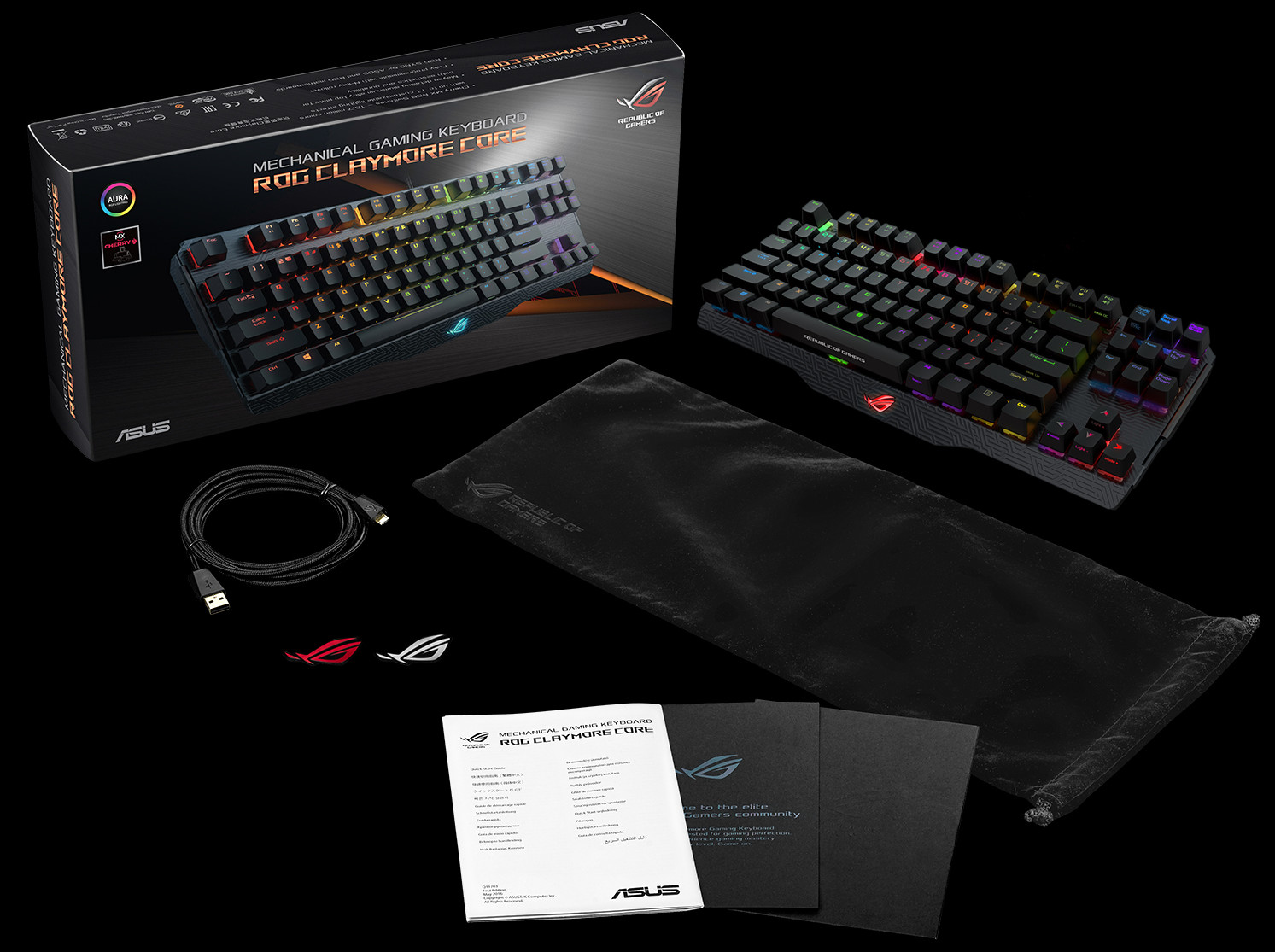
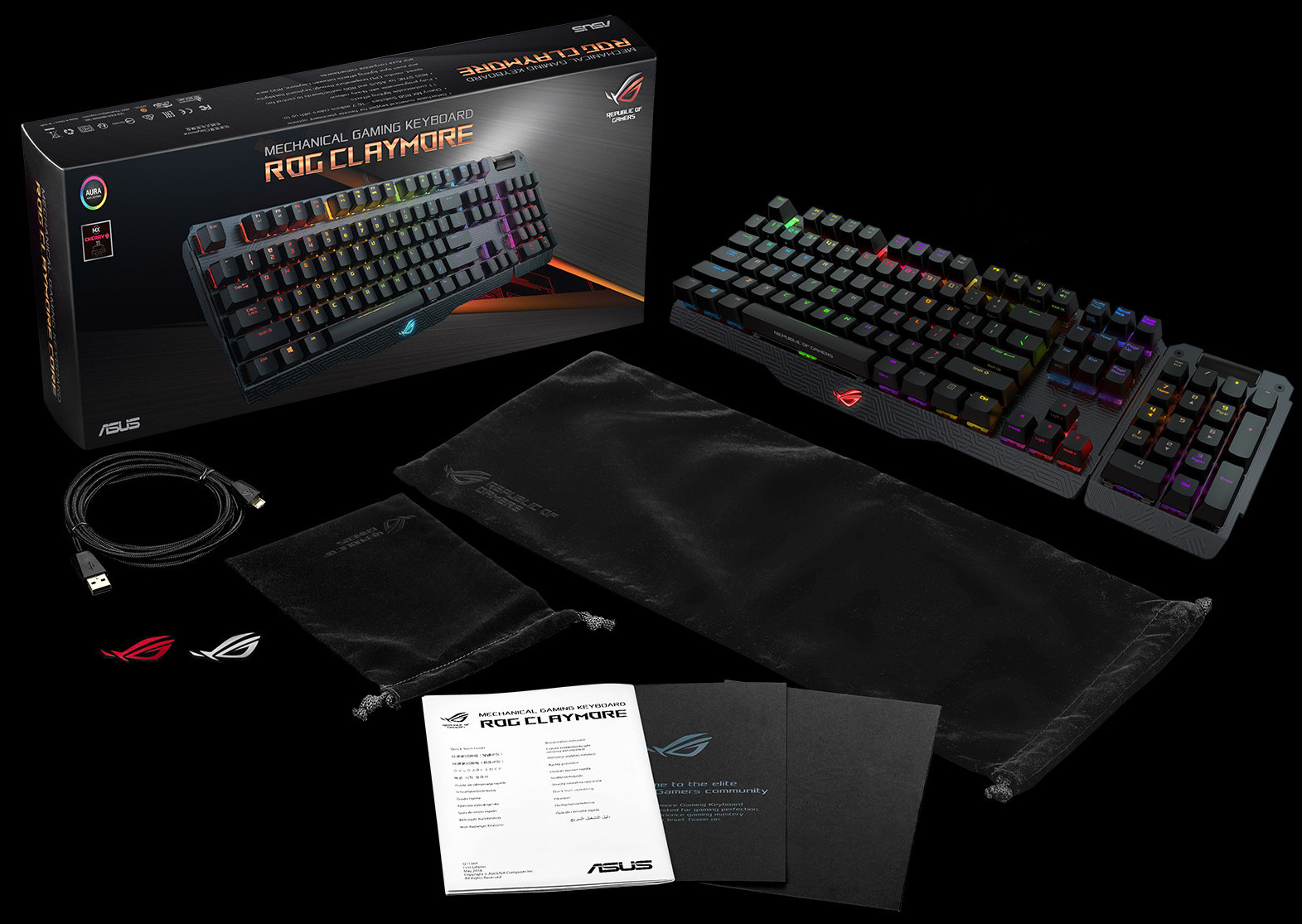
ASUS Announces Availability of the ROG Claymore Series Keyboards

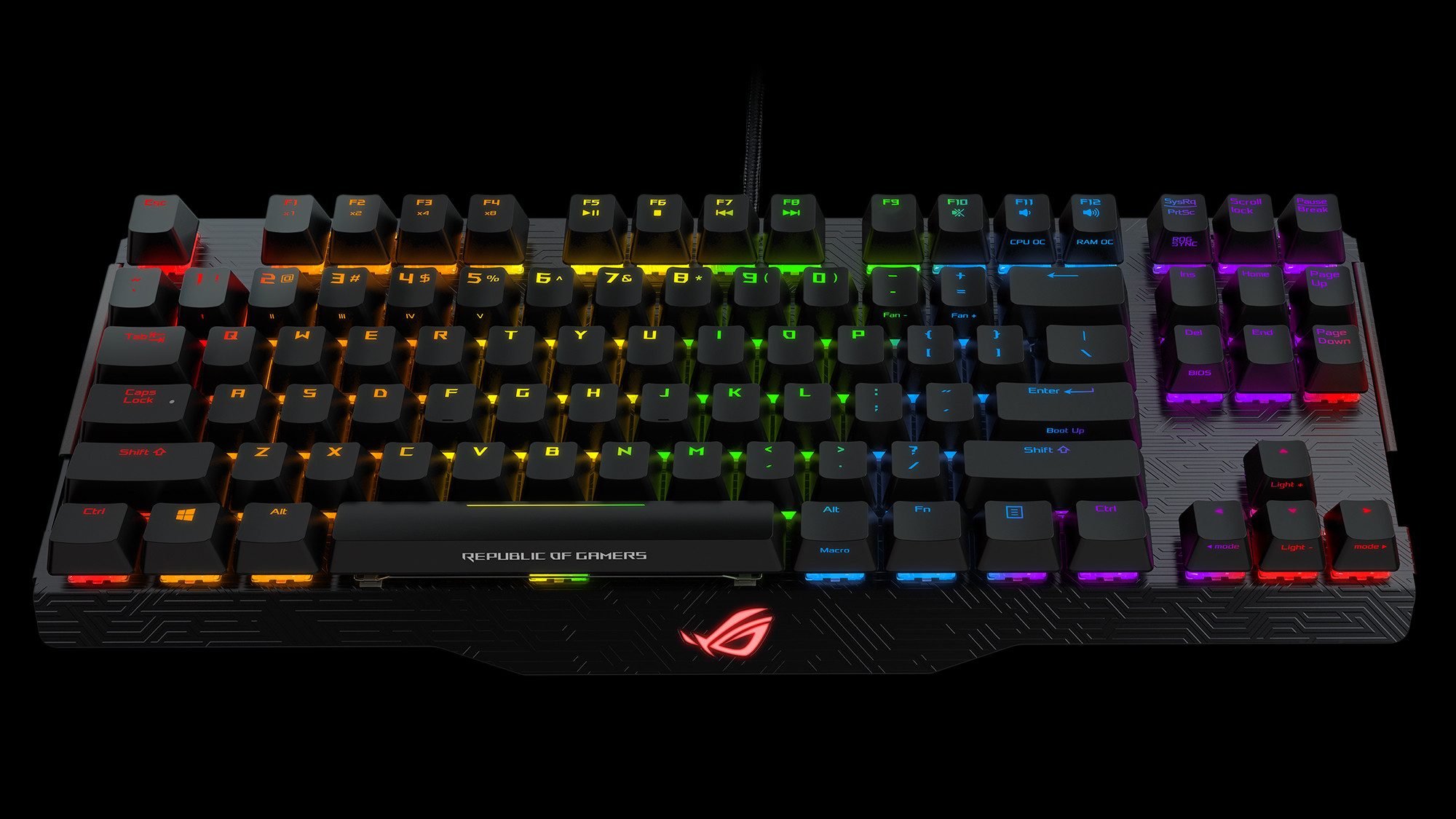
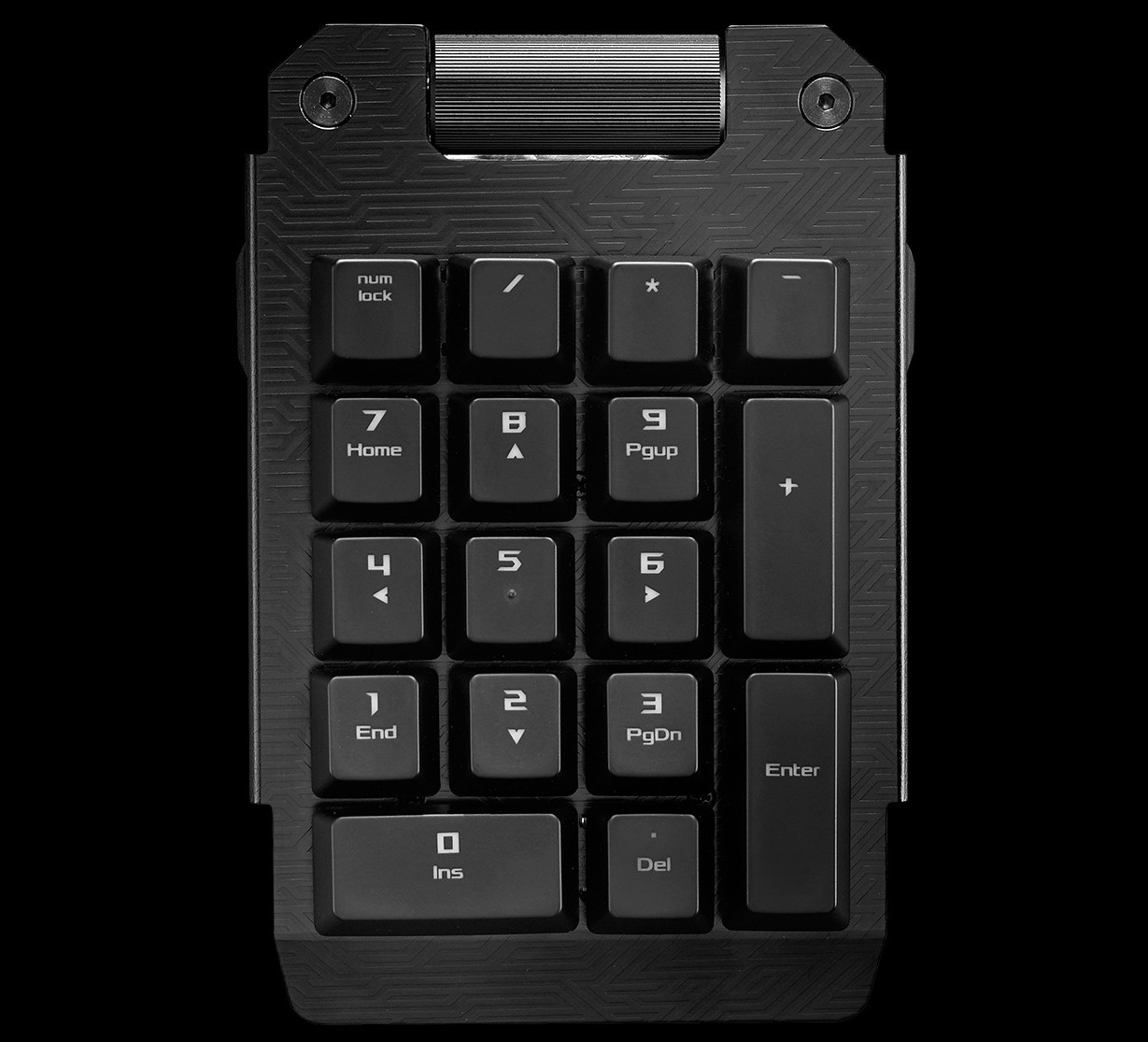
ASUS Republic of Gamers (ROG) today announced the ROG Claymore and ROG Claymore Core mechanical gaming keyboards. Claymore is also the world's first RGB LED-backlit mechanical gaming keyboard with a detachable numpad design. Both keyboards feature Cherry MX RGB LED switches, ASUS Aura Sync RGB LED technology for synchronized light effects with various Aura-compatible products, and exclusive fan control hotkeys when paired with an ASUS motherboard for a superior gaming experience.

ROG Claymore is the world's first RGB mechanical keyboard to have a detachable numpad design that allows users to use it as a full-size keyboard at home, or as an 80% TKL (an abbreviation of 'tenkeyless', which refers to the lack of a numpad) mechanical gaming keyboard at LAN parties. The detachable keypad can be placed to the left or right of the keyboard to suit different scenarios - on the left side of the keyboard as macro keys for MMO gaming, or on the right for a more traditional keypad placement. ROG Claymore Core is a compact TKL mechanical gaming keyboard and does not have a detachable numpad.

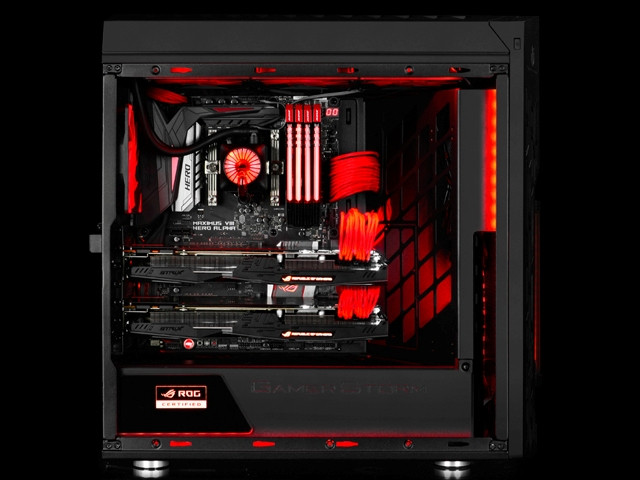
DeepCool Unveils an ASUS ROG Themed GamerStorm Genome Chassis

DeepCool today unveiled a special-edition GamerStorm Genome chassis with ASUS Republic of Gamers (ROG) branding. This launch follows the mid-October announcement of the Genome II. The ROG Genome features a matte black appearance with the shade of red found on ROG products. It also features a red+white ASUS ROG logo. These LEDs are backed by an ASUS Aura compatible LED controller, which interfaces with ASUS' motherboards Aura RGB LED headers. The rest of its features are consistent with the original GamerStorm Genome.

GIGABYTE to Sell AORUS Branded Motherboards and Graphics Cards from 2017

GIGABYTE is planning to expand its subsidiary AORUS into motherboards and graphics cards. The company currently sells gaming notebooks and gaming peripherals, including keyboards and mice, under the AORUS brand. This could be GIGABYTE's third attempt at establishing a premium motherboard/VGA brand that rivals ASUS Republic of Gamers and MSI Gaming Series; besides its G1.Gaming and Xtreme Gaming extensions under its main brand. AORUS is a brand unto itself, with products lacking any prominent GIGABYTE markings.

The first AORUS branded motherboards will be socket LGA1151, based on Intel's upcoming 200-series chipset, with out of the box support for 7th generation Core "Kaby Lake" processors. The motherboards will hit the shelves in January 2017. The first AORUS-branded graphics cards will launch when AMD and NVIDIA launch their next high-end GPUs (think NVIDIA GeForce GTX 1080 Ti and AMD "Vega"). Last we heard, the GTX 1080 Ti is headed for a January 2017 launch.
Return to Keyword Browsing
Nov 26th, 2026 01:45 CST change timezone

New Forum Posts

Popular Reviews

TPU on YouTube

Controversial News Posts