News Posts matching #Embedded

Return to Keyword Browsing

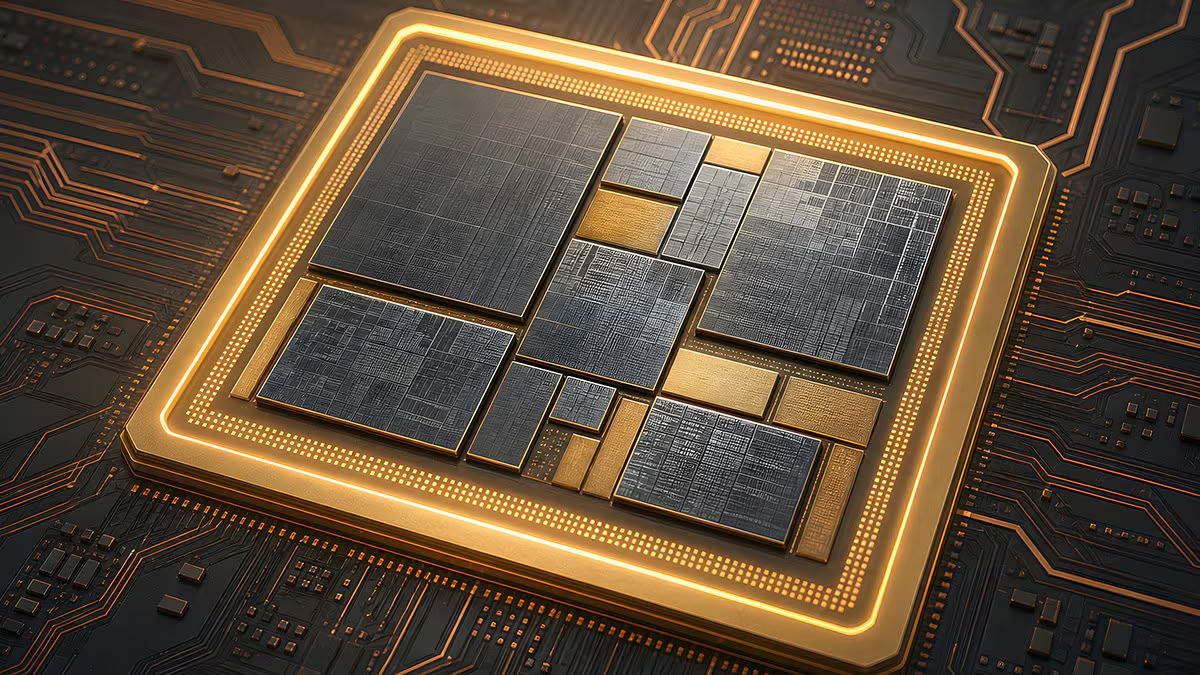
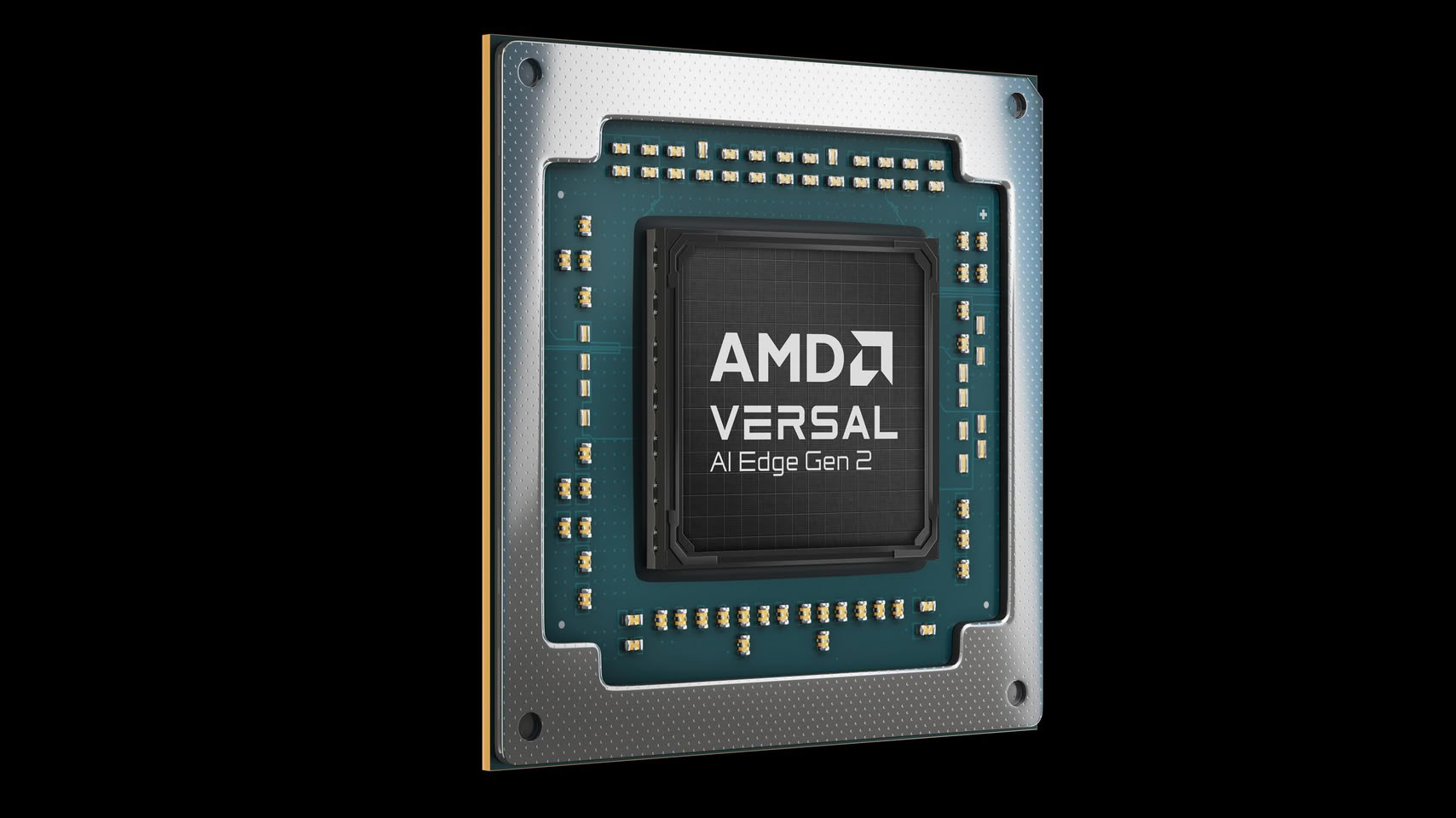
AMD Advances Built-in Protection from Physical Attacks for Security-Critical Systems

What's the News? AMD today announced AMD Versal tamper-resistant ("TR") devices, designed to protect security-critical information against sophisticated physical attacks while delivering the high-performance heterogeneous processing capabilities of AMD Versal AI Edge Series Gen 2. Versal TR devices are the industry's first adaptive SoC or FPGA-based devices providing built-in protection against physical attacks on the silicon backside. A sensor-based protection die is bonded to the main compute die using 3D active-on-active technology, shielding the entire backside of the device, protecting sensitive information, detecting physical attacks and preventing boot if the protection die is tampered with or removed. Combined with embedded CPUs, AI Engines and programmable logic, Versal TR devices help customers strengthen the protection of security-critical information without compromising system performance, size, weight, power or time to market.

Why It Matters? Protecting sensitive information from sophisticated physical attacks is a priority across markets and embedded applications. From data center networking and fintech applications to defense systems and critical industrial infrastructure, customers seeking higher levels of device security today typically build custom solutions in-house using mechanical enclosures, ASICs and other components, adding development cost, specialist resources, verification effort and re-spin risk. Versal TR devices integrate heterogeneous processing with enhanced security features including backside physical attack protection in a single device. This reduces the need for separate compute, security and enclosure-based protection components. This approach can save board area and simplify board design versus custom solutions while giving customers access to AMD tools, technical support and a broad partner ecosystem.
AMD Unveils 6th Gen EPYC Embedded Processors

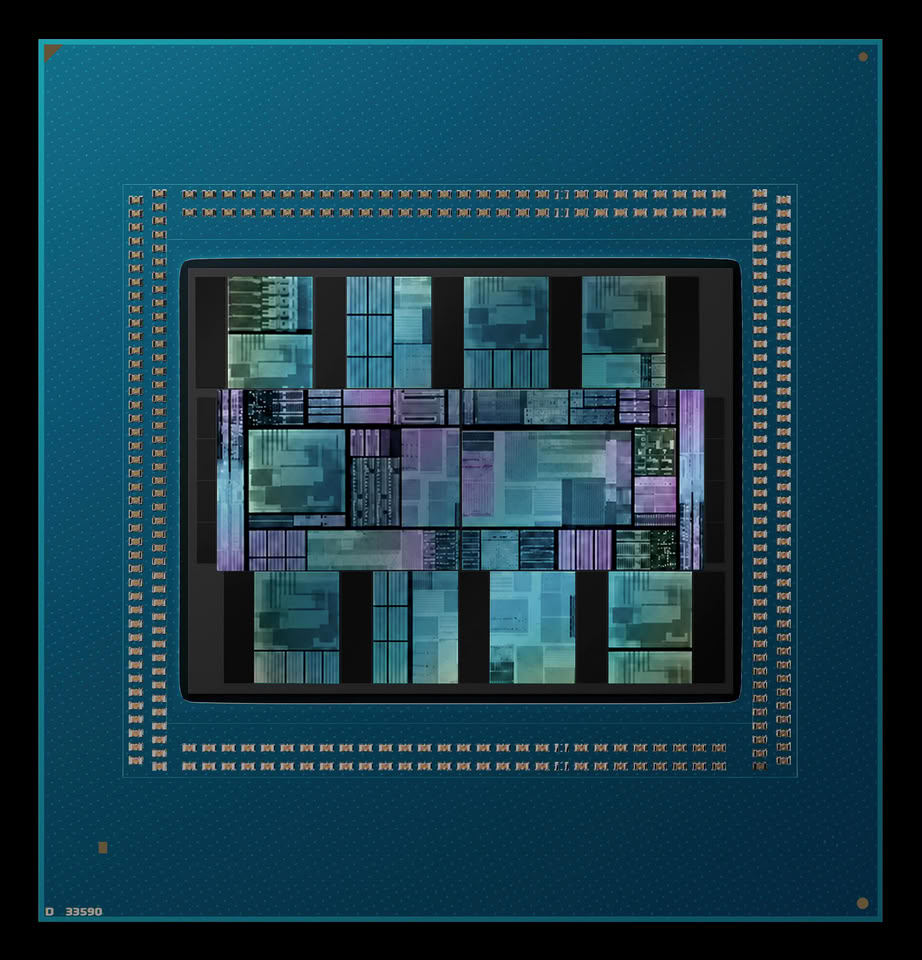
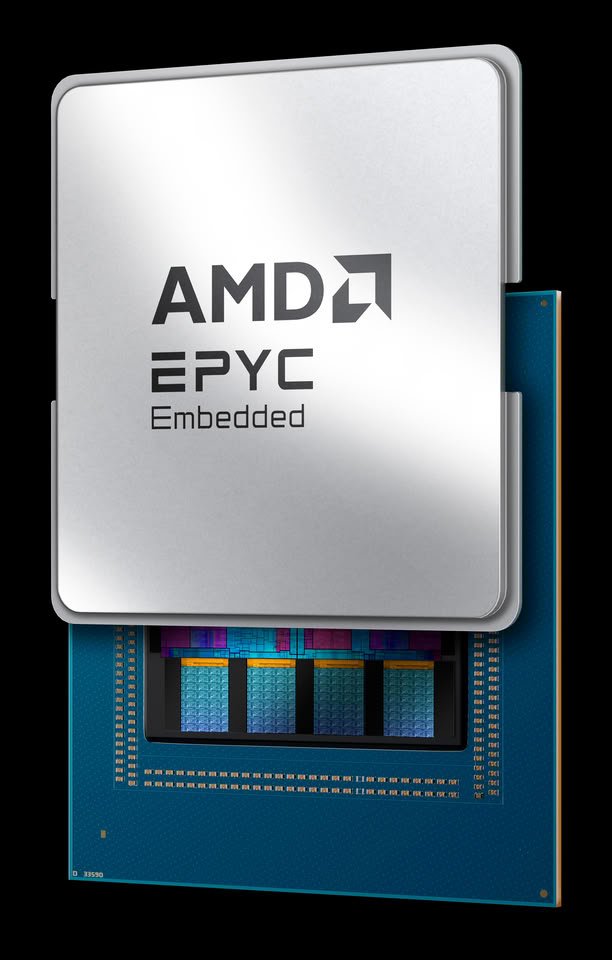
What's the News? AMD announced the AMD EPYC Embedded 9006 Series SP7 CPUs, expanding its x86 processor portfolio optimized for embedded customer requirements and deployments. Advanced by the high-performance "Zen 6" core architecture, AMD EPYC Embedded 9006 CPUs combine up to 256 cores, scalable PCIe Gen 6 and CXL 3.1 connectivity, and advanced security from secure boot through runtime. With a throughput increase of up to 1.8x compared with the previous generation 5th Gen AMD EPYC 9005 Series processors, they provide the leadership compute and high-speed connectivity needed to scale throughput and handle increasingly demanding workloads in semiconductor automated test equipment (ATE), enterprise storage and network firewall applications. Seven-year product longevity, support for post-quantum cryptography for firmware signing, and ongoing security updates simplify maintenance and long-term support for mission-critical embedded applications.

Why It Matters? As AI infrastructure expands and data volumes grow, semiconductor ATE needs to validate memory and I/O devices faster, firewalls need to process and secure more network traffic, and storage controllers need to move and process more data. AMD EPYC Embedded 9006 processors deliver the high throughput, memory bandwidth and I/O performance required to meet these growing application demands.

Biostar Shows Industrial Motherboards and EdgeComp Systems at Embedded World North America 2026

BIOSTAR, a leading manufacturer of consumer and industrial motherboards, edge computing solutions, graphics cards, and storage devices, is currently presenting its latest innovations at Embedded World North America 2026, running from September 22 to 24 at the Anaheim Convention Center in California, USA. At Hall B, Booth 6512, BIOSTAR is spotlighting its comprehensive industrial motherboards, advanced EdgeComp systems, and a cutting-edge EdgeComp MT-N150 DX-M1 edge AI demonstration, delivering high-performance computing solutions tailored for smart manufacturing, smart cities, and smart retail applications.

BIOSTAR's industrial motherboard lineup features the BIW88-AHS, BIH61-AHA, BIPTL-IHT, BITWL-IHT, BIWCL-IHT, BIWCL-PAT, BIRPL-PAT, and BIAST-PAT, offering a versatile range of computing platforms, form factors, and connectivity options for embedded system development. Highlights include the BIW88-AHS, which combines the Intel W880 platform with support for Intel Core Ultra 200 series processors, DDR5 ECC and non-ECC memory, and four 2.5GbE LAN ports. The BIPTL-IHT features the Intel Panther Lake-H platform, DDR5 memory, and quad-display support, while the Wildcat Lake-based BIWCL-IHT and BIWCL-PAT provide Mini-ITX and 3.5-inch single-board computer options, respectively.

Akasa Launches Newton N16, Compact Fanless Case for ASUS NUC 16 Pro

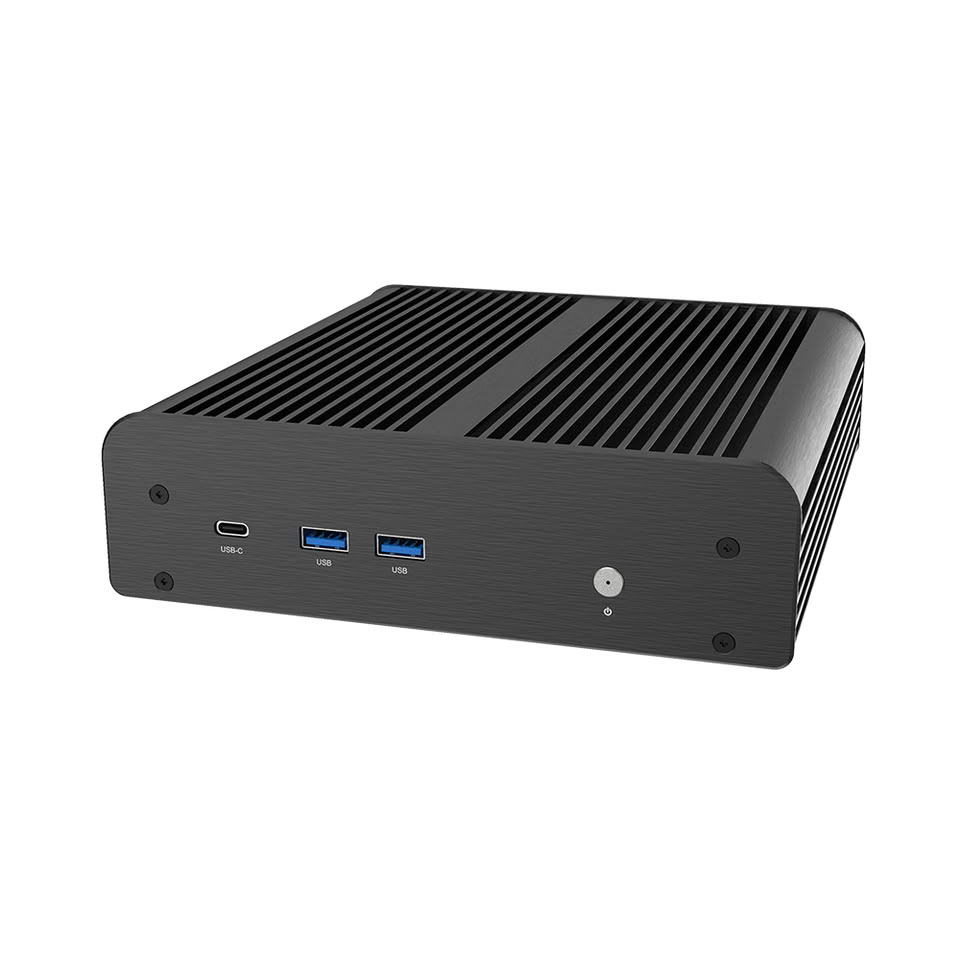
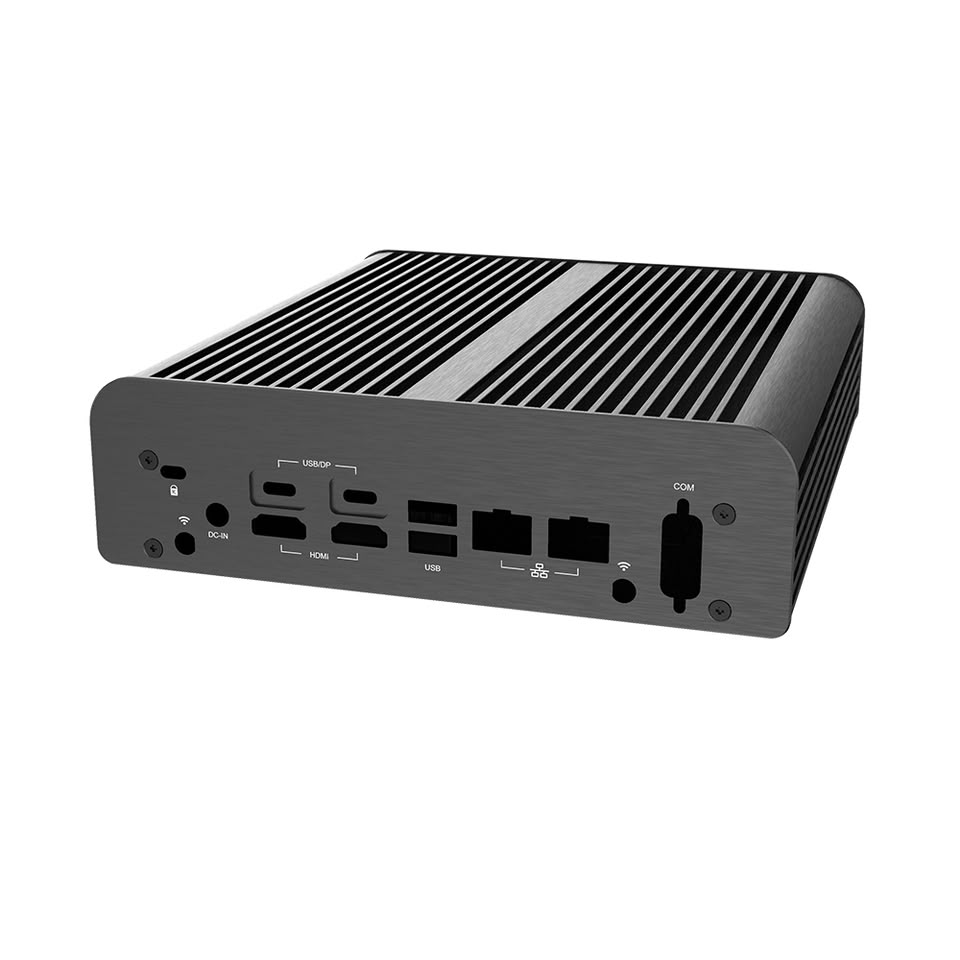
Akasa, a leading provider of thermal solutions, introduces the Newton N16, a compact aluminium fanless case designed for the ASUS NUC 16 Pro. Available in dual HDMI (A-NUC109-M1B) and dual DisplayPort (A-NUC109-M2B) versions, the Newton N16 includes dedicated passive cooling for the CPU and dual M.2 SSDs. Measuring just 188.6 x 204 x 53.6 mm (W x D x H) with a volume of 2.1 L, it provides a compact fanless platform for digital signage, industrial automation, POS, surveillance, AI and embedded computing applications.

Designed for ASUS NUC 16 Pro
Built specifically for the new ASUS NUC 16 Pro AI Mini PC, the Newton N16 keeps access to the board's native interfaces within an aluminium chassis designed for silent, passive cooling. Supporting Intel Core Ultra Series 3 processors up to 28 W TDP, the NUC 16 Pro platform combines integrated Intel Arc graphics with a dedicated NPU for business, industrial and local AI applications.

SP Industrial Launches New eMMC 5.1 Series for Embedded Applications

SP Industrial today announced the launch of its new eMMC 5.1 Series, expanding its embedded storage portfolio with compact, reliable solutions designed for space-constrained and power-conscious industrial systems. As industrial and embedded devices become increasingly compact and connected, system designers need storage solutions that deliver dependable performance while minimizing PCB space and power consumption. By integrating NAND Flash and a controller into a single package, eMMC provides a space-efficient storage architecture well suited for embedded systems requiring reliable, low-power operation and long-term storage.

Flexible Storage for Different Workloads
The new SP Industrial eMMC 5.1 Series includes the EMC3R0N and EMC5R0N, giving system designers flexibility to select storage based on capacity and workload requirements. The EMC3R0N is available in 32 GB, 64 GB, and 128 GB capacities and uses TLC NAND with up to 3,000 program/erase (PE) cycles, making it well suited for general-purpose embedded storage. For applications with more intensive write requirements, the 16 GB EMC5R0N uses pSLC technology to provide up to 30,000 PE cycles, offering significantly enhanced endurance for frequent data-writing workloads.

Samsung and Qualcomm Forge 2.1D Packaging Alliance

Samsung and Qualcomm are reportedly forming a 2.1D Packaging Alliance to provide customers with access to advanced chip packaging using bridges that connect silicon dies. Interestingly, Samsung and Qualcomm are developing an organic bridge technology that will serve as the adhesive to hold two chips together. For example, Intel already uses a similar approach with its Embedded Multi-die Interconnect Bridge (EMIB) advanced packaging, but it employs small silicon bridges. The new 2.1D packaging alliance will use organic bridges made from materials commonly found in traditional PCBs, such as organic polymer materials like epoxy and copper wiring, to interconnect multiple chips.

This organic bridge uses redistribution layers (RDL), formed by multiple layers of fine circuitry with extremely small wires and space between them. This makes the technology more similar to PCB manufacturing than silicon manufacturing, enabling packaging densities that closely match modern silicon-based EMIB. Reportedly, Samsung will manufacture this 2.1D package using multiple RDLs packaged inside a flip-chip ball grid array package. Ultimately, the company aims for the organic bridge's line width and spacing to be 1.5 to 2 micrometers each, with via sizes of 4 to 5 micrometers. Die-to-die pattern density is targeted at 500 to 1,000 per millimeter.

Qualcomm Introduces Dragonwing Q-2390 and IQ-2390 Processors for Consumer IoT and Industrial Edge

Ahead of IFA, Qualcomm Technologies, Inc. today announced the Qualcomm Dragonwing Q-2390 and IQ-2390 processors, expanding the Dragonwing portfolio with highly integrated platforms designed to make intelligent edge computing more accessible to consumer, commercial and industrial segments. As demand grows for devices that can perceive, analyze and act on data locally, the Dragonwing Q-2390 and IQ-2390 processors are designed to bring AI, vision, connectivity and security to a broader range of connected devices, helping power the next wave of intelligence across homes, businesses, cities and factories.

"AI is creating a fundamental shift in how connected devices are designed and deployed, but many product categories still face barriers around cost, complexity and integration," said Jeff Arnold, VP & GM, Auto Telematics & Industrial & Embedded IoT Consumer and Connectivity, Qualcomm Technologies, Inc. "With the Dragonwing Q-2390 and IQ-2390 processors, we're enabling intelligence to scale across a much broader range of devices, from retail systems, smart appliances and consumer robots to industrial controllers, machine vision systems and critical infrastructure. Together, these platforms help bring advanced edge AI within reach of more customers and more industries than ever before."

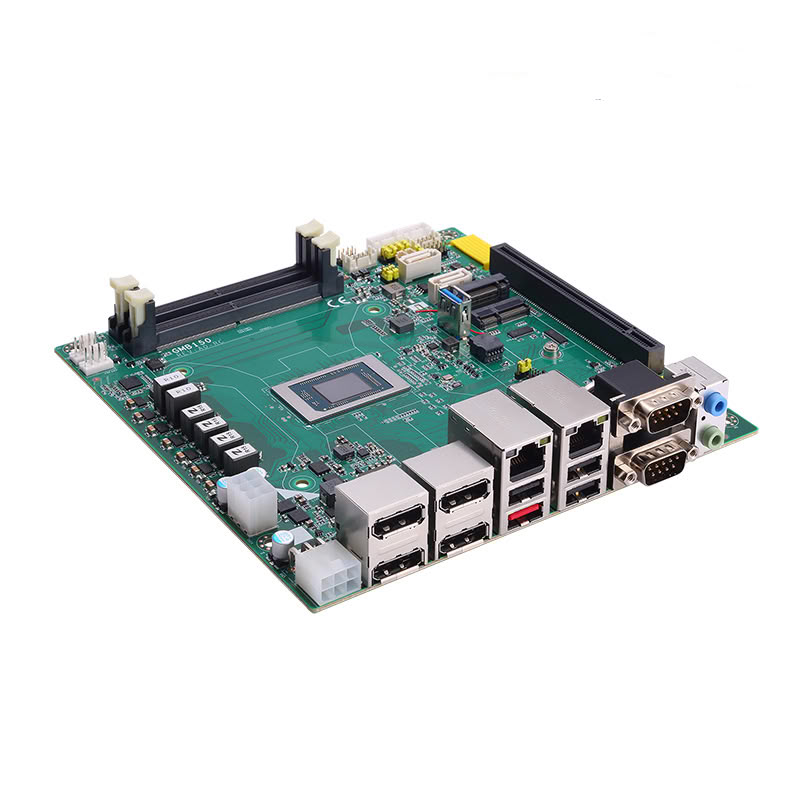
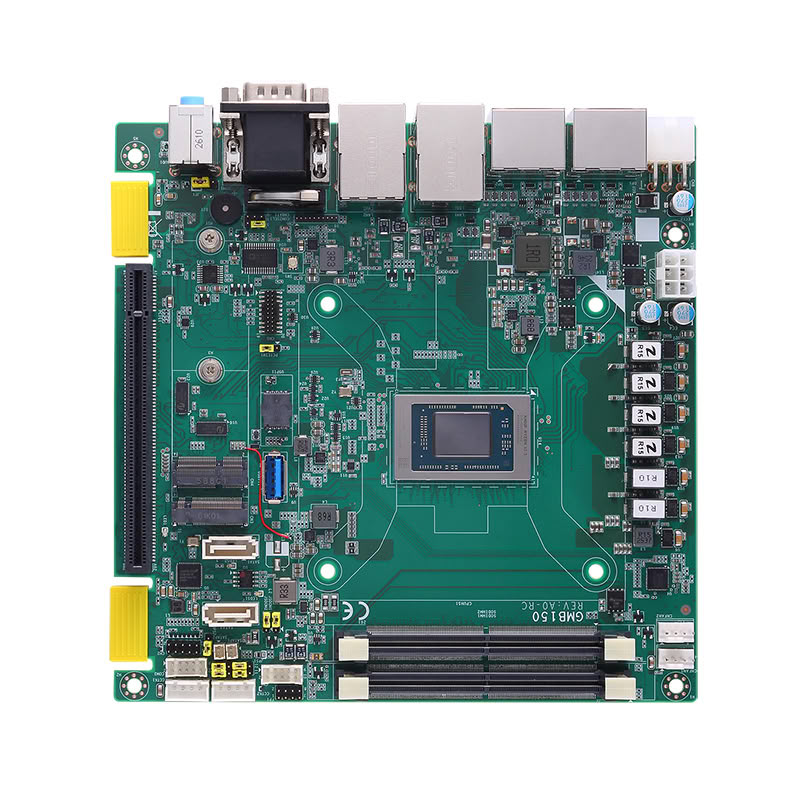
Axiomtek Launches GMB150 Mini-ITX Board Powered by AMD Ryzen Embedded P100 Series Processors

Axiomtek, a world-renowned leader relentlessly devoted to the research, development, and manufacture of innovative, highly efficient, and reliable industrial computer products, proudly introduces the GMB150, a next-generation Mini-ITX gaming motherboard powered by the latest AMD Ryzen Embedded P100 Series processors. As one of the first Mini-ITX gaming motherboards built on this new platform, the GMB150 combines advanced AMD "Zen 5" architecture, RDNA 3.5 graphics, and the AMD XDNA 2 AI engine into a single SoC, delivering up to 80 TOPS of heterogeneous AI computing performance.

Designed to meet the evolving needs of AI-powered electronic gaming machines, the GMB150 combines AI computing, gaming-specific peripheral integration, and hardware-level security in a compact Mini-ITX platform while maintaining the flexibility to support a wide range of intelligent edge applications. Leveraging the latest AMD Ryzen Embedded P100 Series platform, the GMB150 enables gaming OEMs to build more intelligent, secure, and future-ready electronic gaming machines through AI acceleration, advanced graphics, and trusted security.

AMD to Bring UCIe Connectivity to Select AMD Versal Adaptive SoCs

AMD will offer the first Versal adaptive SoCs with native support for Universal Chiplet Interconnect Express (UCIe ) 1.1 interfaces, enabling low-power, high-bandwidth communication between co-packaged AMD adaptive SoCs and specialized chiplets.

As designers seek greater flexibility, higher performance and faster development cycles, monolithic devices are giving way to modular chiplet-based systems built from specialized silicon components in a single package. UCIe, an open industry standard, allows system designers to combine specialized silicon in a single package instead of redesigning large monolithic SoCs or developing a new SoC for every application. This approach can reduce latency, power, size, development cost and complexity while accelerating time to market and giving designers greater flexibility to reuse proven silicon IP.

Transcend Launches Full Range of DDR5-7200 Embedded DRAM Modules

Transcend Information, Inc. (Transcend), a global leader in memory and storage solutions, has introduced a comprehensive lineup of DDR5-7200 embedded DRAM modules designed to meet the growing performance and data-processing demands of next-generation computing platforms. The portfolio includes CUDIMM, CSODIMM, ECC CUDIMM, ECC CSODIMM, and RDIMM modules, supporting a wide range of applications—from AI PCs, desktop computers, and industrial embedded systems to workstations, servers, and data centers. With transfer speeds of up to 7200 MT/s, the modules significantly enhance memory bandwidth, data-processing efficiency, and multitasking performance while maintaining low power consumption, stable operation, and high system reliability. This enables customers to accelerate the deployment of AI computing, edge computing, and other data-intensive applications.

7200 MT/s High-Speed Data Transfer for Next-Generation Computing
Transcend's DDR5-7200 modules accelerate large-scale data access and multitasking, making them ideal for applications such as AI inference, industrial automation, smart healthcare, in-vehicle systems, and high-performance computing. Featuring a dual-channel architecture, an integrated power management IC (PMIC), a low operating voltage of 1.1 V, and on-die ECC, the DDR5 DIMM modules enhance data access efficiency while optimizing power management and ensuring stable data transmission.

SAPPHIRE Technology Unveils EDGE+ Apex Robotics Platform

SAPPHIRE Technology today unveiled the EDGE+ Apex SOM/Carrier Robotics Platform, a production-ready hardware platform powered by AMD Ryzen AI Embedded X100 Series processors and designed to accelerate the development and deployment of physical AI in autonomous robotics. The platform has been showcased at AMD Advancing AI 2026 in San Francisco.

Built for rugged, always-on robotics deployments, the EDGE+ Apex platform pairs a COM-HPC module based on AMD Ryzen AI Embedded X100 Series processors with up to 128 GB of LPDDR5x memory and SAPPHIRE's purpose-built robotics carrier board to deliver the perception, planning and control performance autonomous machines require at the edge.

AMD Advancing AI 2026: Ryzen AI Embedded X100, Kria AI Robotics Platform, and Robotics Partner Network

At the Advancing AI 2026 event, AMD announced its first entry into "physical AI," a category that covers robotics, industrial automation, and other real-time embedded systems. The company announced new embedded silicon, a turnkey robotics platform, and an open partner ecosystem. These announcements come as three interconnected components: the new Ryzen AI Embedded X100 Series processors, the Kria AI system-on-module and Robotics Developer Platform, and the AMD Robotics Partner Network.

The Ryzen AI Embedded X100 series of processors are AMD's Strix Halo-class silicon, featuring Zen 5 CPU, RDNA 3.5 graphics, and XDNA 2 NPU. These processors are tuned for embedded and robotics applications. AMD projects that the physical AI silicon market will reach $200 billion by 2035 and is positioning its heterogeneous CPU, GPU, NPU, and FPGA portfolio to enhance robotics capabilities "from the robot body to the robot brain." The on-board FPGA can be used to implement low-latency, application-specific functions for mission-critical environments.

AMD Versal Premium Gen 2 Memory on Package SoCs Integrates up to 32 GB of LPDDR5X

AMD today announced the AMD Versal Premium Gen 2 Memory on Package (MoP) adaptive system-on-chips (SoCs). The MoP architecture integrates up to 32 GB of LPDDR5X into a single package, delivering up to 288 GB/s of bandwidth in up to 60% less board area, letting engineers build high-bandwidth systems without the risk and time of board-level memory design. As physical AI, networking, and aerospace and defense workloads push more data through ever-tighter space and power budgets, MoP targets the designs that need it most: test and measurement, professional video editing, and VPX systems for secure communications and defense acceleration.

"For years, system architects had to choose between the memory bandwidth they wanted and the space, power and longevity their programs could actually live with. Memory on Package removes that tradeoff. Our customers can design for the system they want to build, not the one their memory constraints allow, and bring it to market faster."—Sumit Shah, head of product management and marketing, Adaptive and Embedded Computing Group, AMD

TechPowerUp GPU-Z v2.70.0 Released

TechPowerUp today released the latest version of TechPowerUp GPU-Z, the graphics subsystem information, monitoring, and diagnostics utility for gamers and PC enthusiasts. Version 2.70.0 improves the security of the kernel-mode driver of the application, and you are highly encouraged to update to this latest version. This latest update also adds support for a whole range of new GPUs.

To begin with, support is added for Qualcomm Adreno 741, Snapdragon X2 Elite, Adreno 778G, and Adreno 782G iGPUs. Support is also added for Intel Arc Pro "Battlemage" B70 and B65 graphics cards; the A60 engineering sample, and certain Core "Alder Lake" engineering samples. Over in the NVIDIA front, support is added for NVIDIA RTX 6000D, RTX PRO 500 "Blackwell" Embedded GPU; Tesla V100-DGXS 32 GB; and PG500-216. Graphics card vendor detection has been added for AWES and HKC or Sambada.

DOWNLOAD: TechPowerUp GPU-Z v2.70.0
The change-log follows.

AMD Announces New Versal Prime Series Gen 2 Devices

AMD began shipping the first production units of the AMD Versal Prime Series Gen 2 2VM3858 device in late 2025. Since then, the Versal 2VM3558 device has also entered full production, and the Versal 2VM3358 device is now sampling and on track to reach production later this year. With the majority of previously-announced Versal Prime Gen 2 adaptive SoCs now in customers' hands, today AMD is announcing the expansion of this portfolio with three new devices: the Versal 2VM3454, 2VM3254, and 2VM3104. These new adaptive SoCs deliver up to 100k DMIPs of scalar compute in packaging as small as 23 mm x 23 mm for embedded applications in Pro AV, broadcast, industrial IoT, and beyond.

Next-Level Performance, Optimized for Area
Versal Prime Series Gen 2 adaptive SoCs combine high-performance embedded CPUs for scalar processing, world-class programmable logic, cutting-edge video encode/decode IP, and support for DDR5 & LPDDR5X memory to enable next-generation embedded systems. The earliest Versal Prime Gen 2 devices, the 2VM3858, 2VM3558, and 2VM3358, feature 8 Arm Cortex -A78AE application cores and 10 Cortex-R52 real-time cores, delivering up to 10X scalar compute vs. previous AMD Versal or Zynq UltraScale+ adaptive SoCs. While this level of compute is compelling for applications such as avionics and robotics that involve complex algorithms, decision-making, and control, it comes with footprint and resource trade-offs that aren't ideal for every use case.

Swissbit Launches the N7000 PCIe Gen 4 Industrial SSD Series

Swissbit introduces the N7000, a highly versatile PCIe Gen 4 SSD platform designed to balance performance, power efficiency, and cost across a wide spectrum of embedded applications. Offering more than 30 variants across a broad range of capacities, features, and temperature grades, the platform enables precise configuration for system-level power and performance requirements. Powered by 3D TLC BiCS8 NAND and a power-optimized industrial architecture, the series targets fanless, thermally constrained, and enclosed systems, while providing comprehensive data-security capabilities for mission-critical applications. The platform is further expanded by high-endurance pSLC variants and mission-critical models with enhanced protection features.

As Swissbit's first PCIe solution built entirely on in-house NAND packaging combined with Swissbit-developed controller and firmware, the N7000 strengthens supply-chain independence while delivering a reliable, energy-efficient foundation for next-generation boot and data storage drives with mixed workloads.

SK hynix Eyes Intel EMIB 2.5D Packaging for HBM Memory

SK hynix is collaborating with Intel to utilize its Embedded Multi-die Interconnect Bridge (EMIB) 2.5D packaging technology for HBM memory. As SK hynix aims to diversify its supply chain and customers are increasingly considering Intel Foundry, the South Korean memory giant is exploring research and development efforts with Intel on 2.5D packaging technology. Intel's premier 2.5D packaging technology is its EMIB, which interconnects multiple silicon dies using bridges embedded in a packaging substrate. SK hynix is interested in integrating this technology into its HBM memory, presumably to bring its HBM4 memory modules up to standard for EMIB integration, should its AI chip partners choose Intel Foundry for advanced packaging of their next-generation solutions.

We have already covered that small silicon EMIB bridges—available in variants like EMIB-M with embedded MIM capacitors and EMIB-T with TSVs—provide low-cost, high-density shoreline connections ideal for logic-to-logic and logic-to-HBM interfaces. However, until now, SK hynix has been using TSMC and its CoWoS 2.5D packaging technology. As CoWoS is gradually reaching its limits and customers are seeking alternative packaging methods, EMIB is emerging as a strong candidate to continue the scaling of chiplets in many directions beyond the traditional reticle limit of 830 mm² of silicon area.

Avalue Launches ECM-PTL 3.5 Micro Module with Intel Core Ultra Series 3 Processors

Avalue Technology Inc. (TPEx: 3479.TWO), a provider specializing in industrial computer solutions, announces the launch of its next-generation value Technology Inc. (TPEx: 3479.TWO), a provider specializing in industrial computer solutions, announces the launch of its next-generation ECM-PTL 3.5" Micro Module, powered by the latest Intel Core Ultra Series 3 processors. Purpose-built for AI-driven edge computing and industrial automation, ECM-PTL brings AI PC architecture to the edge, delivering powerful AI acceleration, enhanced energy efficiency, and advanced heterogeneous computing capabilities.

Extending AI PC Architecture to the Edge
Designed in line with the evolution of AI PCs, ECM-PTL integrates CPU, GPU, and a dedicated NPU to enable efficient workload distribution. The built-in NPU is optimized for sustained AI workloads, allowing real-time AI inference while reducing CPU and GPU utilization. This architecture makes ECM-PTL ideal for edge scenarios requiring continuous AI processing, including machine vision, smart surveillance, and intelligent automation, where performance, efficiency, and responsiveness are critical.

SolidRun Unveils Next-Gen COM Express Type 6 Modules with LPCAMM2 Support

SolidRun, a leading developer and manufacturer of high-performance system-on-module (SOM) solutions, single-board computers (SBC) and network edge solutions, announced its new P100 COM Express Type 6 module family, powered by AMD Ryzen AI Embedded P100 processors. Designed for real-world edge deployments where systems don't sit still, the P100 COMx6 series targets mobile platforms as well as harsh, mission-critical environments across industrial automation, transportation, medical systems, and robotics.

"Edge AI is moving out of controlled environments and into the real world, like mobile platforms, harsh industrial sites, and mission-critical deployments where serviceability, and longevity matter as much as raw compute," said Dr. Atai Ziv, CEO of SolidRun. "Our new P100 COM Express Type 6 modules are built to deliver powerful AI performance at the edge while improving the mechanical durability and serviceability product developers need to deploy confidently in demanding environments."

Biostar Showcases IPC and Edge AI Computing Solutions at Embedded World 2026

BIOSTAR, a leading manufacturer of edge computing solutions, industrial motherboards, graphics cards, and storage devices, is showcasing its latest IPC and edge AI computing solutions at Embedded World 2026, currently taking place from March 10 to 12 at NürnbergMesse in Germany. Visitors can explore BIOSTAR's newest industrial computing platforms, including edge AI systems powered by Intel Core Ultra processors, NVIDIA Jetson-based AI solutions, and advanced industrial networking technologies. Built to support high-performance edge processing and reliable industrial deployment, these platforms enable intelligent computing for applications such as smart manufacturing, smart cities, and smart retail. Attendees can experience BIOSTAR's latest innovations at Hall 3, Booth 3-456.

Among the technologies on display at Embedded World 2026 is BIOSTAR's next-generation edge AI platform based on Intel's Panther Lake platform, powered by the latest Intel Core Ultra Series 3 AI processors. The MT PRO-U325 platform is designed to deliver strong AI processing capability and efficient edge computing performance for industrial environments. Supporting real-time data processing and AI-driven analytics at the edge, the platform enables a wide range of embedded applications and edge AI deployments across areas such as smart manufacturing, smart city infrastructure, and smart retail environments.

Patriot Memory Showcases ACPI Industrial-Grade PCIe Gen 5 SSDs and DDR5 RDIMM at Embedded World 2026

Patriot Memory, a global leader in high-performance memory and storage solutions, is pleased to announce its participation in Embedded World 2026. Under its dedicated industrial and embedded brand, ACPI, Patriot Memory will showcase a comprehensive portfolio of next-generation hardware designed for AIoT, edge computing, and 5G infrastructure. Highlighting the display are the new M2PDR-8LP PCIe Gen 5 x4 SSD, the high-capacity Enterprise NVMe SSD series, and high-speed DDR5 RDIMM modules featuring wide-temperature support.

As industrial applications transition toward data-heavy workloads involving AI training and autonomous systems, the demand for extreme bandwidth and thermal stability has reached a critical point. ACPI's latest offerings are engineered to address these challenges by combining cutting-edge interface standards with industrial-grade reliability.

Intel "Nova Lake-S" Appears with B960 Chipset and Support for DDR5-8000

Intel's upcoming "Nova Lake-S" has been spotted in the wild for the first time. During the Embedded World 2026 event, German media outlet ComputerBase spotted an Intel Core Ultra 400 series "Nova Lake-S" mini-PC, featuring Intel's upcoming B960 chipset and support for DDR5 memory running at 8,000 MT/s. This suggests that Intel is upgrading its integrated memory controller on the "Nova Lake" platform to support these DDR5 speeds before any XMP and factory-overclocked memory are used. The support for higher-speed memory indicates that even Intel's current memory controller, which reportedly achieves DDR5 speeds of 7,200 MT/s in the upcoming "Arrow Lake Refresh," will receive an upgrade alongside the new core IP and configuration.

Speaking of configurations, ComputerBase confirmed that the 52-core top SKU of "Nova Lake" will have a TDP of 175 W, while other configurations with a TDP of 65 W will also be available. This is a significant boost of the base TDP rating that Intel is delivering, as the current flagship "Arrow Lake" Core Ultra 9 285K carries a base TDP of 125 W, a whole 50 W less. As this CPU is a 52-core model in its top-configuration, boost frequencies are going to push the power usage much higher as the processor runs a heavier load. Graphics output is powered by Xe3P GPU IP, as previously rumored, confirming that Intel's next-generation graphics is there. For AI capability, "Nova Lake" will deliver more than 100 TOPS using the 8-bit INT8 data type, thanks to the onboard NPU and the powerful Xe3P GPU IP.

MediaTek Expands Its Genio IoT Platform at Embedded World 2026

At Embedded World, MediaTek unveiled a range of new Genio platforms ideal for powering a wide variety of IoT products and applications: MediaTek Genio Pro, Genio 420 and Genio 360. The Genio Pro series is MediaTek's premium offering for high-performance IoT and embedded offerings, while Genio 420 and Genio 360 bring efficient system-level edge AI performance to smart home, retail, industrial, and commercial IoT devices.

With its impressive AI, multimedia, and display capabilities, along with rich OS support, Genio Pro enables OEMs to develop the next generation of autonomous mobile robotics, commercial drones, edge AI devices, machine vision systems, and transportation and logistics platforms.

Intel Launches Core Series 2 Processor with Real-Time Performance and Expands Edge AI Portfolio

At Embedded World 2026, Intel launched the Intel Core processor Series 2 with P-cores, an industrial-ready platform engineered for mission-critical edge applications. Intel also announced its latest Edge AI suite for Health & Life Sciences, providing validated reference pipelines and benchmarking tools for AI-powered patient monitoring solutions.

"Intel continues to lead in edge computing, which remains one of our fastest-growing business segments," said Dan Rodriguez, Intel corporate vice president and general manager of the Edge Computing Group. " With the introduction of Core Series 2, our CES launch of Core Ultra Series 3, and our expanding Edge AI Suites, we continue to deliver comprehensive platforms that meet diverse edge customer needs with breakthrough performance, reliability, and integrated AI acceleration."

Akasa Unveils Pascal MX Waterproof Fanless (Thin) Mini-ITX Industrial Case

Akasa, a leading provider of thermal solutions, announced the Pascal MX, an IP65-rated dust-tight and water jet resistant aluminium fanless case designed for Mini-ITX and Thin Mini-ITX motherboard systems operating in industrial, outdoor or mission-critical environments. The Pascal MX addresses one of the core challenges in harsh-environment embedded computing: maintaining system reliability where conventional fan-cooled cases fail due to dust ingress and moisture. For engineers and system integrators attending Embedded World 2026 in Nuremberg from 10 to 12 March, the Pascal MX will be on display at Hall 1, Booth 640, alongside Akasa's wider range of fanless cases, CPU coolers, heatsinks, and thermal solutions.

At the heart of the Pascal MX is Akasa's patented spring-loaded CPU mounting system, which maintains consistent, uniform contact pressure across all supported sockets (Intel LGA1851, LGA1700, and LGA1200). This enables the same chassis to support Intel Core processors from 10th-14th Generation and the latest Intel Core Ultra (15th Gen) processors, all at up to 65 W TDP. Heat from the CPU and M.2 2280 SSD is conducted into the aluminium chassis via dedicated thermal modules, dissipating passively through the external fins. With no fans and no moving parts, the Pascal MX eliminates the primary sources of mechanical failure and particulate ingress that limit system uptime in demanding deployments.
Return to Keyword Browsing
Nov 12th, 2026 15:36 PST change timezone

New Forum Posts

Popular Reviews

TPU on YouTube

Controversial News Posts