News Posts matching #GB300

Return to Keyword Browsing

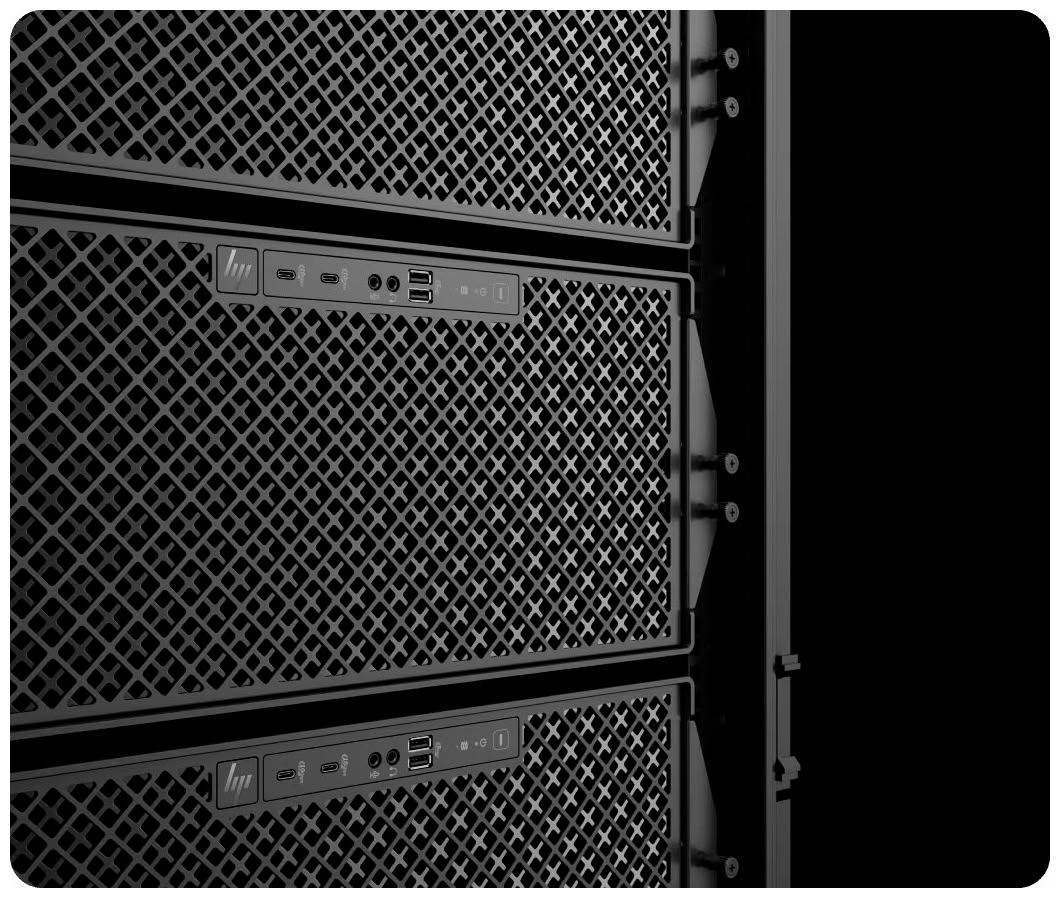
HP Launches ZGX Fury AI Station Powered by NVIDIA GB300 Grace Blackwell and Red Hat

HP Inc. today announced a collaboration with Red Hat, the world's leading provider of open-source solutions, to give organizations more choice in where AI workloads run, whether locally, in the cloud or across both environments. In collaboration with Red Hat, HP is developing an open, enterprise-grade AI platform to deliver purpose-built AI infrastructure powered by Red Hat AI Factory with NVIDIA.

HP's open enterprise-grade AI platform aims to help companies maximize local AI inference throughput with up to 20 PFLOPS FP4 AI performance, reduce environment setup time and deployment risk, and improve GPU utilization through optimized CUDA libraries, scheduling, and multi-GPU workload orchestration. Red Hat AI Factory with NVIDIA is an integrated AI platform, built on the industry-leading infrastructure of Red Hat Enterprise Linux and Red Hat OpenShift, for deploying and managing AI models, agents and applications across the hybrid cloud.
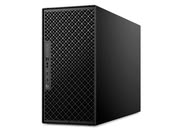
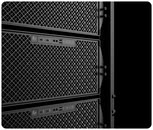

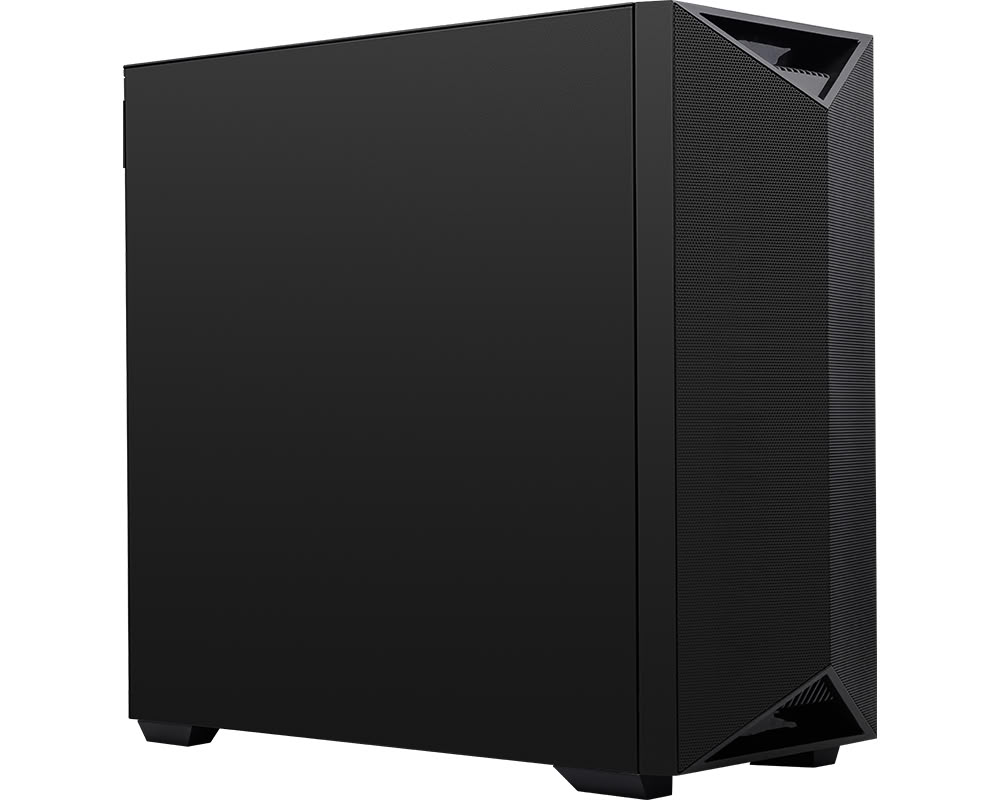
MSI XpertStation WS300 Based on NVIDIA DGX Station Now Available

MSI announced that the XpertStation WS300 based on NVIDIA DGX Station architecture is now shipping. Powered by NVIDIA GB300 Grace Blackwell Ultra Desktop Superchip, the deskside AI supercomputer is now available through ASI, D&H, and Newegg, bringing data-center-class AI capabilities closer to enterprise AI development and deployment.
Danny Hsu, General Manager of MSI's Enterprise Platform Solutions"Enterprises don't just need powerful AI systems; they need a straightforward way to bring them into production," "XpertStation WS300 is designed around that reality, a system that's ready to run demanding AI workloads the moment it arrives, not one that requires months of additional integration."

Wistron Celebrates Grand Opening of First U.S. Smart Factory

Wistron Corporation ("Wistron") celebrated the grand opening of its D1 AI smart facility in Fort Worth, Texas, the site where the first NVIDIA GB300 Grace Blackwell Ultra Superchip was built and mass-produced in the United States. The US$ 700 million facility, spanning approximately 324,000 square foot, was officially unveiled during a ceremony led by Wistron Chairman Simon Lin and NVIDIA Founder and CEO Jensen Huang. Jessica Rogers, Director of the Economic Development Department for the City of Fort Worth, and Alexander Tah-ray Yui, Taiwan's Representative to the United States, were among the government officials and business leaders who attended, marking a milestone in the expansion of Wistron's global footprint and advanced manufacturing capabilities.

This is a key hub in Wistron's global AI infrastructure manufacturing network. The facility runs on NVIDIA accelerated computing and integrates NVIDIA's Nemotron and Cosmos open frontier models and Omniverse and Metropolis libraries, using digital twin technology to optimize factory design, production workflows, and operational efficiency. It is Wistron's first U.S.-based manufacturing facility, established to serve customers locally and produce NVIDIA's most advanced and cutting-edge products. Wistron Chairman Simon Lin said "The operation here is not typical manufacturing. It is new, very comprehensive, and high-tech. Right now we produce the NVIDIA GB300 Grace Blackwell Superchip, and beyond, we are also going to produce the NVIDIA Vera Rubin Superchip here. In the next couple of years, this location will be one of the most important, as we build AI infrastructure here in the United States. I think this is the reason we say that there will be the next chapter, and we are going to empower AI from Texas. "

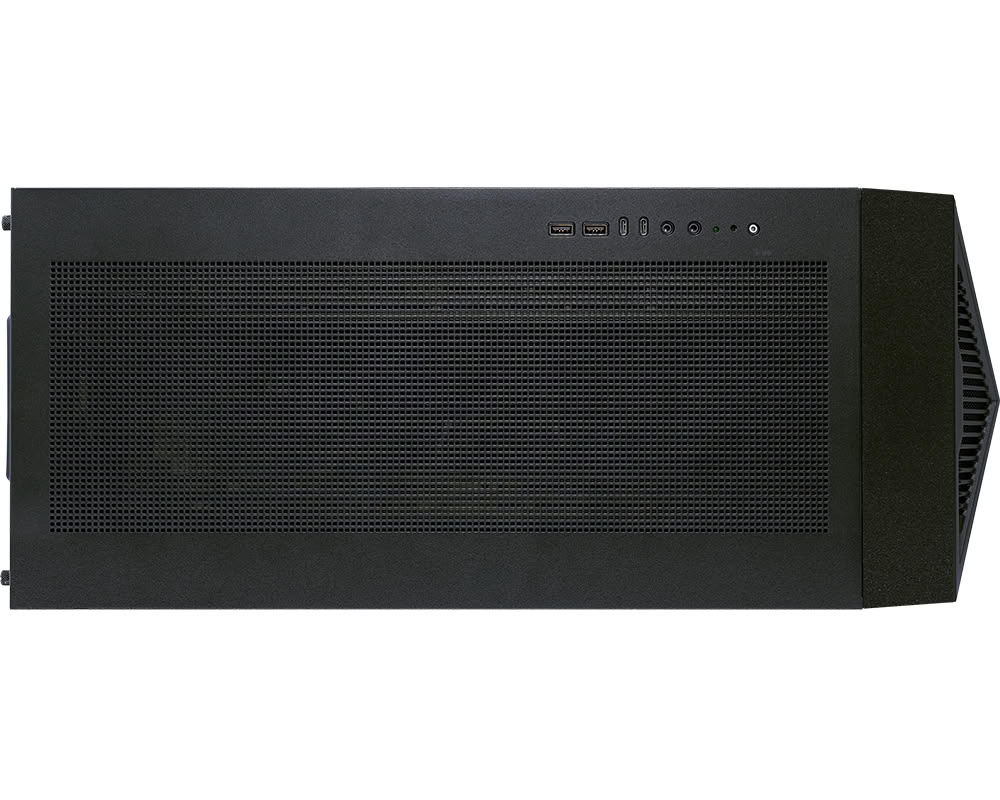
ASUS Launches ExpertCenter Pro ET900N G3 Built on NVIDIA DGX Station Architecture

ASUS today announced the availability of ASUS ExpertCenter Pro ET900N G3, a next-generation deskside AI supercomputer engineered to bring data-center-class AI performance directly to enterprises, AI developers, researchers, and data scientists. Powered by NVIDIA GB300 Grace Blackwell Ultra Desktop Superchip and built on NVIDIA DGX Station GB300 architecture, ExpertCenter Pro ET900N G3 delivers exceptional AI compute, massive coherent memory capacity, and enterprise-grade AI infrastructure in a deskside form factor, with future support planned for Windows-based AI development and agentic environments.

As AI adoption rapidly expands across industries, organizations increasingly require powerful local AI infrastructure capable of supporting large-scale AI training, inference, and autonomous agentic AI workflows without relying entirely on cloud computing. ExpertCenter Pro ET900N G3 addresses this growing demand by enabling enterprises to deploy advanced AI capabilities locally with greater control, lower latency, predictable operational costs, and enhanced data privacy. The system is now available worldwide. To learn more or explore deployment opportunities, visit the Contact Me page for further information and consultation.

HP Debuts PCs Built for the Next Wave of Windows PC Experiences Powered by NVIDIA RTX Spark

Today, HP Inc. announced its latest devices and solutions, designed to enable developers of all types to create new experiences using AI. HP is previewing PCs powered by NVIDIA RTX Spark, bringing a reinvention of personal computing, combining personal agents, advanced content creation, and high-performance gaming in a new platform engineered from the ground up for the next wave of Windows PC experiences.

"Developers are moving from experimenting with AI to shipping agentic applications, and they need PCs that are as open, fast, and flexible as their workflows," said Samuel Chang, Senior Vice President and Division President, Consumer Personal Systems at HP Inc. "Our expanded portfolio pairs compact, powerful hardware with pre-configured environments and open-source toolchains to eliminate setup friction and accelerate the path from idea to execution. Whether it is a device optimized for hybrid Windows workflows, creators, gamers, or AI practitioners or powerful workstations for edge development, we're giving builders a clear, practical path to run local agents and scale hybrid AI with confidence."

Dell Technologies Introduces Dell Deskside Agentic AI Series

Dell Technologies (NYSE: DELL) introduces Dell Deskside Agentic AI, a new addition to the Dell AI Factory with NVIDIA that gives workgroups the ability to deploy and scale agentic AI workflows locally without the cost, latency and data sovereignty constraints of cloud-only approaches. With the NVIDIA OpenShell runtime now supported across the entire Dell AI Factory with NVIDIA, enterprises benefit from a single security and policy enforcement layer from deskside workstations to Dell PowerEdge XE servers.

Why it matters
As AI workflows shift toward agentic architectures, token usage compounds at an accelerating rate, driving cloud costs that can quickly become unsustainable despite falling token prices. Cloud-only strategies fall short on what matters at scale: economics, security and data sovereignty. Organizations running agentic AI need infrastructure that addresses all three and scales with workloads without requiring a rebuild every time they mature.

Giga Computing Shows Data Center Portfolio and Infrastructure at NVIDIA GTC 2026 Including New NVIDIA Rubin Platforms

Giga Computing, a subsidiary of GIGABYTE and a leader in accelerated computing and infrastructure solutions, today announced new enterprise AI solutions that support NVIDIA Vera CPU and NVIDIA Vera Rubin platform, well as a new AI factory in Taiwan. The GIGABYTE booth at NVIDIA GTC shows scalable AI solutions that not only focus on performance and efficiency but also incorporate the software and infrastructure needed to build AI factories and other large GPU clusters. The GIGABYTE booth staff is ready to introduce the latest hardware and software for success in deploying accelerated computing.

Personal AI Supercomputers
With products spanning all segments of the supercomputer space, Giga Computing showcases professional desktop and deskside solutions that are ideal for AI development and accelerating AI training and inference workloads. These solutions are being used by data scientists and researchers in research institutions, government agencies, and enterprises.

ASUS Unveils Liquid-Cooled AI Infrastructure Powered by NVIDIA Vera Rubin Platform

ASUS today unveiled its fully liquid-cooled AI infrastructure at NVIDIA GTC 2026 (Booth# 421), delivering a comprehensive, end-to-end solution powered by the NVIDIA Vera Rubin platform. Under the theme Trusted AI, Total Flexibility, this customizable framework—from rack-scale AI Factories, desktop AI supercomputing, Edge AI to Enterprise AI solutions—enables enterprises and cloud providers to build high-performance, energy-efficient large-scale AI clusters with unmatched efficiency and dramatically reduced PUE and TCO.

As a provider of NVIDIA GB300 NVL72 and NVIDIA HGX B300 systems, the flagship ASUS offering is the ASUS AI POD built on the NVIDIA Vera Rubin platform—a liquid-cooled, rack-scale powerhouse designed for massive AI workloads. Through strategic partnerships with leading cooling and component providers, ASUS offers diverse cooling modalities, tailored thermal solutions, and redundancy to meet any enterprise requirement. Proven by global client successes, ASUS provides expert consultation, a broad portfolio of AI and storage solutions, seamless infrastructure deployment, application integration, and ongoing services—combining scalability, and sustainability to drive business value and intelligence.

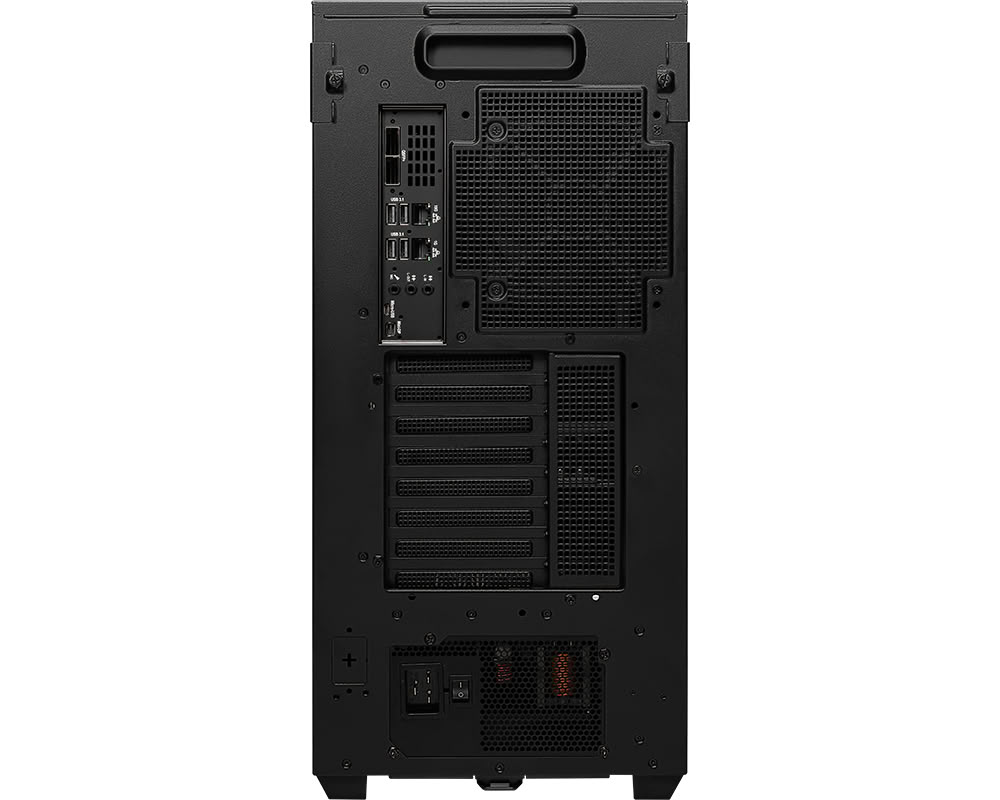
Dell First to Ship NVIDIA GB300 Desktop with NemoClaw and OpenShell

Dell Technologies (NYSE: DELL) today announces support for NVIDIA NemoClaw and NVIDIA OpenShell, expanding its collaboration with NVIDIA to advance secure, autonomous AI agents. For developers working locally, Dell and NVIDIA are teaming up on NVIDIA NemoClaw—an open source stack that simplifies running OpenClaw always-on assistants, more safely, with a single command. As part of the NVIDIA Agent Toolkit, it installs the NVIDIA OpenShell, an open source runtime providing a secure environment for running autonomous agents, and open source models like NVIDIA Nemotron.

Dell Pro Max with GB10 and GB300 provide purpose-built desktop platforms that allow enterprises to build and run autonomous, self-evolving agents locally with frontier-level intelligence. As the first OEM to ship a desktop with NVIDIA GB300 Grace Blackwell Ultra Desktop Superchip, Dell brings 20 petaFLOPS of performance and 748 GB of memory directly to developers' desks.

GIGABYTE Powers Telecom AI Transformation with End-to-End Infrastructure at MWC 2026

GIGABYTE Technology, a global leader known for its engineering excellence in high-performance computing and AI servers, extends its comprehensive end-to-end AI infrastructure portfolio designed specifically for the telecommunications industry at MWC 2026. GIGABYTE's end-to-end product solutions enable operators to convert massive volumes of network data into intelligence, automation, and new revenue streams, as telecommunications networks evolve from data carriers into AI-powered digital platforms.

At the core of the telco-to-AI transformation is the AI Factory, where network and subscriber data are converted into operational intelligence and commercialized AI services. GIGABYTE addresses this need with GB300 NVL72, a liquid-cooled rack-scale platform integrating 72 NVIDIA Blackwell Ultra GPUs and 36 NVIDIA Grace CPUs in a single system. Connected via NVIDIA Quantum-X800 InfiniBand or NVIDIA Spectrum-X Ethernet and NVIDIA ConnectX -8 SuperNIC s, GB300 NVL72 is optimized for large-scale AI training and inference workloads, enabling operators to automate operations, optimize network planning, and deploy AI-driven services at telecom scale.

Meta Partners with NVIDIA to Deploy Millions of Blackwell and Rubin GPUs

NVIDIA today announced a multiyear, multigenerational strategic partnership with Meta spanning on-premises, cloud and AI infrastructure. Meta will build hyperscale data centers optimized for both training and inference in support of the company's long-term AI infrastructure roadmap. This partnership will enable the large-scale deployment of NVIDIA CPUs and millions of NVIDIA Blackwell and Rubin GPUs, as well as the integration of NVIDIA Spectrum-X Ethernet switches for Meta's Facebook Open Switching System platform.

"No one deploys AI at Meta's scale—integrating frontier research with industrial-scale infrastructure to power the world's largest personalization and recommendation systems for billions of users," said Jensen Huang, founder and CEO of NVIDIA. "Through deep codesign across CPUs, GPUs, networking and software, we are bringing the full NVIDIA platform to Meta's researchers and engineers as they build the foundation for the next AI frontier."

Global AI Server Shipments Forecast to Grow Over 28% YoY in 2026, with a Rising Share of ASIC-Based Systems

North American CSPs' continued investments in AI infrastructure are expected to increase global AI server shipments by more than 28% YoY in 2026, according to the latest market research from TrendForce. The rapid growth of AI inference services is boosting demand for general-purpose servers, supporting both replacement and expansion efforts. Consequently, TrendForce predicts that total global server shipments, including AI servers, will accelerate from 2025, with a 12.8% YoY growth in 2026.

The server market from 2024 to 2025 primarily centered on training advanced large language models (LLMs), utilizing AI servers with GPUs and HBM for parallel computing. However, starting in the second half of 2025, the growth of AI agents, LLaMA-based applications, and Copilot upgrades shifted CSP's focus toward inference services as a monetization strategy. AI inference workloads are now deployed not only on dedicated AI server racks but also on general-purpose servers that handle pre- and post-inference computing and storage.

ASUS Showcases ExpertCenter Pro ET900N G3 at CES 2026

ASUS today announced the showcase of ExpertCenter Pro ET900N G3 at CES 2026, underscoring its commitment to delivering enterprise-grade AI infrastructure in accessible, deskside form factors. The all-new ET900N G3—accelerated by the NVIDIA GB300 Grace Blackwell Ultra Desktop Platform—sets a new standard for deskside AI supercomputers, combining extreme performance, unified memory architecture, and data-center-class connectivity.

Solving the last-mile challenge of modern AI development
AI development has reached extraordinary heights through massive cloud and data-center infrastructure, yet many researchers, developers, and data scientists still face a 'last-mile' challenge. While cloud services offer immense scale, countless workflows require local, private, and immediate compute power—especially for training, fine-tuning, or running large AI models that exceed the limits of traditional workstations. What these professionals need is a system that delivers data-center-class performance in a familiar, easily deployable deskside form factor.

Framework Pushes DDR5 Pricing 50% Higher Amid Shortage

Framework has published an official company blog post announcing that it is preparing a 50% price increase for its DDR5 memory upgrade configurations. In an effort to remain transparent with customers, the company has stated that it intends to raise the price of DDR5 memory available in Framework Laptop DIY Edition orders by 50%. This decision is a direct response to the significantly higher costs the company is facing from its DRAM suppliers and distributors. As a result, the company cannot absorb all of these cost increases on its own and needs to pass some of them on to the consumer.

The company will not increase the prices of its existing pre-configured systems that include DRAM, as these were acquired at earlier, standard prices. As the memory market becomes more volatile, this might be just the first wave of price hikes, since the company cannot absorb the added costs of new memory orders. Since Framework manufactures various components, from laptops to mini-PCs, the company uses a mix of DDR5, LPDDR5X, and GDDR. All of these are in tight supply due to the AI boom depleting any remaining DRAM inventory.

NVIDIA's GPU-powered Accelerated Computing Platforms Have Replaced CPUs as the Engine of Invention

The NVIDIA accelerated computing platform is leading supercomputing benchmarks once dominated by CPUs, enabling AI, science, business and computing efficiency worldwide. Moore's Law has run its course, and parallel processing is the way forward. With this evolution, NVIDIA GPU platforms are now uniquely positioned to deliver on the three scaling laws—pre-training, post-training and test-time compute—for everything from next-generation recommender systems and large language models (LLMs) to AI agents and beyond.

The CPU-to-GPU Transition: A Historic Shift in Computing
At SC25, NVIDIA founder and CEO Jensen Huang highlighted the shifting landscape. Within the TOP100, a subset of the TOP500 list of supercomputers, over 85% of systems use GPUs. This flip represents a historic transition from the serial-processing paradigm of CPUs to massively parallel accelerated architectures. Before 2012, machine learning was based on programmed logic. Statistical models were used and ran efficiently on CPUs as a corpus of hard-coded rules. But this all changed when AlexNet running on gaming GPUs demonstrated image classification could be learned by examples. Its implications were enormous for the future of AI, with parallel processing on increasing sums of data on GPUs driving a new wave of computing.

SK Hynix Showcases Advanced AI Memory From HBM4 to Next-Gen Storage at SC25

SK hynix showcased advanced memory technologies for the era of AI and high-performance computing (HPC) at Supercomputing 2025 (SC25), held in St. Louis, the U.S., from November 16-21. Held annually since 1988, SC is the world's largest global HPC conference. It brings together experts from industry, academia, and research institutions to share the latest trends, create opportunities for collaboration, and discuss the future direction of technological advancement. At this year's event, the convergence of AI and HPC emerged as a central topic. Under the theme "Memory, Powering AI and Tomorrow," SK hynix presented its innovative memory lineup set to lead the AI and HPC markets and shared a new technological vision to accelerate data analysis in computing systems.

Innovative Products and Tech Driving AI and HPC Performance
At the event, SK hynix presented core products including HBM, DRAM, and eSSD solutions. Visitors to the booth could also see demonstrations of the products in AI and HPC environments, highlighting the company's technological competitiveness. At the front of the booth, SK hynix displayed its latest HBM products including the 12-layer HBM4 which it developed as a world-first in September 2025. HBM4 features 2,048 input/output (I/O) channels, twice that of the previous generation, delivering a significant increase in bandwidth. Also offering more than a 40% boost in power efficiency, HBM4 is the most suitable solution for ultra-high-performance AI computing systems. In addition, the 12-layer HBM3E, the highest performing commercialized HBM currently available on the market, was presented with NVIDIA's next-generation GB300 Grace Blackwell GPU.

Foxconn Advances $1.4B NVIDIA GPU Cluster, Deepens Hardware Partnership with OpenAI

During Foxconn's annual tech day in Taipei, the company announced that its $1.4 billion supercomputing center, built in partnership with NVIDIA, will be ready in the first half of 2026. The facility will become Taiwan's largest advanced GPU cluster, powered by NVIDIA Blackwell GB300 hardware and operated under Foxconn's new AI and cloud unit, Visonbay.ai. NVIDIA VP Alexis Bjorlin said that with GPU performance rising so quickly, many companies will find it more economical to rent compute capacity instead of building their own facilities. Foxconn plans to invest $2-3 billion per year in AI as Chairman Young Liu says the company can already build around 1,000 AI racks per week, a number set to rise next year.

In a separate announcement, OpenAI confirmed a new partnership with Foxconn to co-develop hardware for data centers. Foxconn will design and manufacture components such as cabling, power systems, and other infrastructure gear. While the agreement doesn't include purchase commitments, OpenAI will get early access to test the hardware. Foxconn's deepening collaboration with OpenAI mirrors the model it already uses with Google, AWS, and Microsoft. The partnership gives Foxconn better feedback on rack design and helps speed up new system development. OpenAI CEO Sam Altman said that demand for advanced AI infrastructure continues to exceed supply, and that new AI models will require new types of server racks, cooling systems, and power hardware.

Supermicro Showcases the Future of HPC Clusters and AI Infrastructure at SC25

Super Micro Computer, Inc. (SMCI), a Total IT Solution Provider for AI/ML, HPC, Cloud, Storage, and 5G/Edge, will showcase its latest AI Factory, HPC, and liquid-cooled data center innovations at Supercomputing 2025 (SC25) in St. Louis, Missouri. This broad portfolio, ranging from desktop workstations to rack-scale solutions, demonstrates Supermicro's commitment to powering the next generation of high-performance computing, scientific research, and enterprise AI deployments.

"Supermicro continues to lead the industry in delivering complete, next-generation infrastructure solutions in close collaboration with our technology partners," said Charles Liang, president and CEO of Supermicro. "At SC25, we are demonstrating our high-performance DCBBS architecture, direct liquid cooling, and rack-scale innovations, which empower customers to deploy AI and HPC workloads faster, more efficiently, and more sustainably."

ASUS Showcases NVIDIA GB300 NVL72 at SC25

ASUS announced a showcase of its comprehensive AI infrastructure portfolio accelerated by NVIDIA Blackwell and Blackwell Ultra architectures at Supercomputing 2025 (SC25). Driven by the strategy of 'Ubiquitous AI. Incredible Possibilities.', ASUS infrastructure goes all in AI strategy, aiming to accelerate clients' time to market with superior computing performance. ASUS stands as a total infrastructure solution provider, offering robust, scalable, cloud and on-premise solutions for diverse AI workloads. This is achieved through the seamless integration of the latest NVIDIA compute platforms with advanced cooling, network orchestration, and large-scale deployment capabilities. By providing a full spectrum of AI solutions, from personal workstations to national supercomputing systems, ASUS is committed to democratizing access to powerful AI technologies for everyone.

Rack-scale AI infrastructure with NVIDIA GB300 NVL72
At the top of the portfolio, the XA GB721-E2, ASUS AI POD built on NVIDIA GB300 NVL72, embodies a field-proven rack-scale AI architecture, accelerated by 72 NVIDIA Blackwell Ultra GPUs and 36 NVIDIA Grace CPUs. Combining a 100% liquid-cooling system with integrated switch trays, the system delivers deployment-ready scalability and energy-efficient performance, offering 10-petaflops-class computing power for enterprise AI and national-cloud workloads.

MSI Unveils Next-Gen Systems Based on NVIDIA MGX and Desktop NVIDIA DGX AI Platforms

MSI, a global leader in high-performance computing, will unveil its next generation of AI computing solutions at Supercomputing 2025 (SC25), held at the America's Center in St. Louis, Missouri. Built on NVIDIA MGX, NVIDIA DGX Station, and NVIDIA DGX Spark reference architectures, the lineup is powered by NVIDIA Hopper GPUs, NVIDIA RTX PRO 6000 Blackwell Server Edition GPUs, NVIDIA Blackwell Ultra GPUs, as well as the Grace Blackwell GB10 Superchip.

Together, these platforms deliver data-center-class performance across diverse AI workloads—from large-scale model training and simulation to edge inferencing and desktop AI development. MSI's AI servers are purpose-built for large language models (LLMs), deep learning, and NVIDIA Omniverse workloads, offering flexible configurations with both Intel Xeon and AMD EPYC processors, supporting up to 600 W GPUs for maximum performance and scalability.

Liquid Cooling for NVIDIA GB300 "Blackwell Ultra" NVL72 Costs Nearly $50,000

NVIDIA's "Blackwell Ultra" server racks are undoubtedly powerful, but they demand significant system cooling. NVIDIA promotes the GB300 NVL72 as the top configuration: these liquid-cooled racks, built with Grace Blackwell Ultra Superchips, achieve exascale-class dense FP4 performance and offer substantial improvements in throughput-per-megawatt compared to previous HGX platforms. However, this extreme performance mandates massive cooling systems, which can cost around $50,000. According to a valuation model from investment bank Morgan Stanley, NVIDIA is spending nearly $50,000 on cooling for the 72-GPU configuration within its Oberon rack. With each chip rated at 1,400 W TDP, traditional air-based cooling solutions are not feasible.

Considering that there are 72 GPUs rated up to 1,400 W, that is over 100 kW from GPUs alone. Add 32 "Grace" CPUs that are powering the system, and you have more than a 100 kW of heat at the peak load. Morgan Stanley models the rack as containing 18 compute trays (each consuming roughly 6.6 kW but needing cooling for about 6.2 kW) alongside nine switch trays. The firm values the cooling components for a single compute tray at about $2,260, which multiplies to roughly $40,680 across the rack. Switch-tray cooling adds about $1,020 per tray, or $9,180 total. High-performance cold plates are singled out as the most expensive parts in the BOM, with per-unit prices in the low hundreds.

ASUS Rolls Out NVIDIA GB300 NVL72 Rack Solution

ASUS today announced the rollout of XA GB721-E2, built on NVIDIA GB300 NVL72 rack-scale system. Designed for large-scale model training, high-throughput inference, and advanced AI/HPC workloads, the system combines breakthrough performance, sustainable liquid cooling, and serviceability at rack scale to help enterprises and research institutions accelerate innovation.

Rack-scale performance with NVIDIA Grace Blackwell Ultra GPU
NVIDIA GB300 NVL72 systems integrate 36 NVIDIA Grace CPUs and 72 NVIDIA Blackwell Ultra GPUs in a single NVIDIA NVLink domain, delivering ultra-low-latency, high-bandwidth GPU-to-GPU communication for trillion-parameter workloads. Together with NVIDIA Quantum-X800 InfiniBand platform or NVIDIA Spectrum-X Ethernet platform and NVIDIA ConnectX-8 SuperNIC, the system is engineered for high-throughput inference and cluster-scale expansion, fully support the recent need of enterprise AI factory innovation.

Supermicro Expands NVIDIA Collaboration, Focuses on U.S.-Made AI Systems for Government Use

Super Micro Computer, Inc. (SMCI), a Total IT Solution Provider for AI/ML, HPC, Cloud, Storage, and 5G/Edge, is showcasing its advanced AI infrastructure solutions at NVIDIA GTC in Washington, D.C. this week, highlighting systems tailored to meet the stringent requirements of federal customers. Supermicro announced its plans to deliver next-generation NVIDIA AI platforms, including the NVIDIA Vera Rubin NVL144 and NVIDIA Vera Rubin NVL144 CPX in 2026. Additionally, Supermicro introduces U.S.-manufactured, TAA (Trade Agreements Act)-compliant systems, including the high-density 2OU NVIDIA HGX B300 8-GPU system with up to 144 GPUs per rack and an expanded portfolio featuring a Super AI Station based on NVIDIA GB300 and the new rack-scale NVIDIA GB200 NVL4 HPC solutions.

"Our expanded collaboration with NVIDIA and our focus on U.S.-based manufacturing position Supermicro as a trusted partner for federal AI deployments. With our corporate headquarters, manufacturing, and R&D all based in San Jose, California, in the heart of Silicon Valley, we have an unparalleled ability and capacity to deliver first-to-market solutions are developed, constructed, validated (and manufactured) for American federal customers," said Charles Liang, president and CEO, Supermicro. "The result of many years of working hand-in-hand with our close partner NVIDIA—also based in Silicon Valley—Supermicro has cemented its position as a pioneer of American AI infrastructure development."

Giga Computing Showcases Scalable Next-Gen AI and Visualization Solutions at NVIDIA GTC DC 2025

Giga Computing, a subsidiary of GIGABYTE and an industry innovator and leader in AI hardware and advanced cooling solutions, today announced its participation in NVIDIA GTC DC (Oct. 28-29). With the importance of AI and scalable solutions, Giga Computing demonstrates how innovation in hardware and software can drive forth the transformation into the AI-driven era. These solutions will empower developers, researchers, and creators to achieve more, from the desktop to the data center, and discussions are being held at the GIGABYTE booth #528.

The booth features four flagship GIGABYTE systems: the AI TOP ATOM, the W775-V10 workstation, the XL44-SX2 (NVIDIA RTX PRO Server), and a liquid-cooled G4L4-SD3 AI server. Together, these GIGABYTE solutions built on the NVIDIA Blackwell architecture to enable efficient, high-performance AI and visualization workloads spanning every compute tier.

NVIDIA to Build Seven New AI Supercomputers for U.S. Government

NVIDIA today announced that it is working with the U.S. Department of Energy's national labs and the nation's leading companies to build America's AI infrastructure to support scientific discovery, economic growth and power the next industrial revolution.

"We are at the dawn of the AI industrial revolution that will define the future of every industry and nation," said Jensen Huang, founder and CEO of NVIDIA. "It is imperative that America lead the race to the future—this is our generation's Apollo moment. The next wave of inventions, discoveries and progress will be determined by our nation's ability to scale AI infrastructure. Together with our partners, we are building the most advanced AI infrastructure ever created, ensuring that America has the foundation for a prosperous future, and that the world's AI runs on American innovation, openness and collaboration, for the benefit of all."
Return to Keyword Browsing
Nov 13th, 2026 22:44 CST change timezone

New Forum Posts

Popular Reviews

TPU on YouTube

Controversial News Posts