News Posts matching #Google

Return to Keyword Browsing

NexiGo Shows Smart Cabinet for Home Theaters, Aurora Pro MKIII Projectors, and More at CES 2026

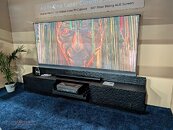
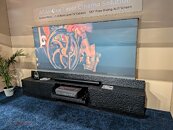
CES 2026 has officially concluded, but a few interesting highlights from the show floor remain. At the NexiGo booth, we discovered a wide array of home theater solutions designed to give your home the feel of an actual cinema. The standout was NexiGo's Aurora Pro MKIII 4K laser projector, paired with a 150-inch Fresnel screen and using the 2.39:1 Cinemascope format. This format is the most widely used in cinemas worldwide, allowing home theaters to offer a similar experience from the comfort of your couch. Shown at the floor is the Aurora Pro MKIII projector that has a maximum output of 200 inches, it supports a 142-inch 2.39:1 Cinemascope format as its maximum setting, defaulting to the classic 16:9 at 200 inches. Notably, this projector supports HDR10+ for high visual fidelity, delivers 3,000 ANSI lumens, and has a 4,000:1 native contrast ratio, with dynamic contrast reaching up to 100,000:1 for deeper blacks.

To complete this experience, NexiGo has introduced a clever solution for anyone setting up a home cinema. The company has designed a hideaway cabinet called Eclipse, which features a built-in rising screen that appears in seconds. The central part of the cabinet has a compartment for the Aurora Pro MKIII projector. When the system is turned off, the Eclipse cabinet folds, and a drawer with the laser projector closes, making it seem as if it was never there. Finished in a dark textured pattern, its neutral color will blend seamlessly with any home furniture selection.

Rokid Launches the World's First Open AI Ecosystem Smart Glasses at CES

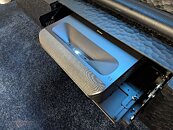
Rokid, a global pioneer in human-computer interaction and AI-powered eyewear, today unveils Rokid Ai Glasses Style at CES 2026. Style is a display-free, voice-centric AI glasses built for all-day wear, combining an open AI ecosystem, prescription-first design, dual-chip architecture, and a strong commitment to global accessibility.

Weighing just 38.5 grams, Style is among the lightest full-featured AI glasses on the market. Designed as premium eyewear rather than a gadget, it represents Rokid's answer to the industry's long-standing dilemma: how to deliver powerful AI functionality without compromising comfort, style, or battery life.

EPSON Launches First Projector Powered by Google TV and Gemini

At the 2026 International CES, Japanese electronics maker EPSON showcased the first projector powered by Google TV and Gemini AI, featuring a unique form factor. On the show floor, we observed two versions: the Lifestudio Flex Plus Portable Lifestyle and the Lifestudio Grand 4K PRO-UHD Ultra Short Throw Laser projector. The first model uses a 3-Chip 3LCD Triple Core Engine to deliver 1,000 lumens of both color and white brightness. Built-in Google TV provides direct streaming access without the need for extra hardware. Gaming features include an Auto Low Latency Mode that activates when consoles are connected. Connectivity options include HDMI and a USB-C port for video and power delivery. Users can control the projector and adjust settings through the Epson Projection Studio App. The Lifestudio Flex Plus Portable Lifestyle is priced at $999.99 and comes with a two-year warranty.

MediaTek Reportedly Prioritizing Development of AI ASICs Over Mobile Chips

MediaTek's growing partnership with Google has reportedly prompted a shift in development priorities; industry insiders propose an ongoing "realignment" of internal resources. The alleged formation of a dedicated ASIC division seems to be draining staff away from the more visible Dimensity mobile chip projects—by previous announcements, a very important aspect of the Taiwanese fabless semiconductor firm's business. Going back to March 2025, MediaTek and Google partnered up on the making of a seventh-gen "Ironwood" Tensor Processing Unit (TPU) design. Later in the year, it emerged that MediaTek engineers were assisting on Google's even more futuristic "Zebrafish" TPUv8x project.

Industry analysts posit that the demands of formulating Google's complex/intricate 3 nm TPU v7 design has taken precedence within MediaTek operations; prompting the rumored formation of a full-fledged ASIC department. Another key factor seems to be a tight timeline that leads to significant volume orders of Google TPUs. According to a Commercial Times Taiwan news article, mass production is expected to start within the third quarter of 2026. Future targets include five million units pumped out by 2027, followed by an ambitious seven million unit goal in 2028. Similarly, Broadcom is "actively preparing production capacity" for its Google TPU collaboration. Local reportage points out that Rick Tsai—MediaTek's Vice Chairman and CEO—anticipates pleasing financial results related to his team's "first ASIC project." Smooth progress in 2026 could lead to an approximate $1 billion revenue contribution, with forecasts of several billion dollars in 2027. Another major earner could emerge from a speculated deal with Meta—MediaTek's second ASIC project is said to be based on an unnamed 2 nm node process.

HP Announces New OmniBooks, OmniStudios, and Chromebooks at CES 2026

Today, HP Inc. announced the company's newest innovations powering the work of everyday life with updates to its full HP OmniBook consumer portfolio that deliver passion-ready experiences for consumers to work smarter, look sharper, and lead better. "Today's consumers use their PCs in more ways than ever before to create content, stream entertainment, code, or game. And regardless what hat they may wear at any given point - student by day, entrepreneur or freelancer by night - they all need devices that can keep up with whatever comes their way," said Samuel Chang, Senior Vice President and Division President, Consumer Personal Systems at HP Inc. "Our newest OmniBook, OmniStudio, and Chromebook portfolios deliver our widest range of PCs yet - engineered to power the most demanding types of work while designed to enable whatever consumers love to do."

Powerful Performance Meets Stunning Design
The line between work and personal life has become increasingly blurred. Up to 12.5% of the total global workforce is made up of online gig workers, and people are using their PCs not just for school or personal tasks, but for side hustles, freelancing, and exploring their entrepreneurial spirit. Knowledge workers are using AI more than ever, with a 39% increase year-over-year in daily AI use. And close to half of all knowledge workers are optimistic about work because they believe tech will improve it. The company's newest HP OmniBook Ultra and HP OmniStudio X 27 are designed to take advantage of the latest in AI, delivering Copilot+ experiences to get the work done so you have more time to enjoy what you love.

Digital Extremes Completes Warframe on Android Closed Beta Recruitment

It's been known for a while that Digital Extremes is working on an Android version of its free-to-play shooter, Warframe, with recruitment into the closed beta program having been ongoing since late November. Now, however, Digital Extremes has officially announced that the last wave of invitations for participants in the Warframe Android closed beta have been sent. According to the announcement, the closed beta will run until "early January 2026," although an exact end date has not yet been announced. There is no NDA required to take part in the closed beta, and DE encourages players to share content of their gameplay during the closed beta, suggesting that the development of the Android version of the game may be quite far along. Currently, DE has not published a full list of compatible devices, but it has confirmed that common flagships, like the Samsung Galaxy S22 and newer and Google Pixel 7 and newer, as well as mid-rangers, like the Samsung Galaxy A54 and newer, have all been tested to work by the development team, which means users with similar hardware specifications should be able to play the closed beta.

All progress achieved during the close beta will be lost when the closed beta ends, although Digital Extremes previously clarified that Warframe on mobile—both Android and iOS—will feature cross-platform saves and progression when the game eventually fully launches on the mobile platforms, but players taking part in the closed beta will start from the beginning of the game, and they will not carry over their progress. The closed beta will also omit cross-platform play, which means any multiplayer games will be played with other Android players exclusively. When Warframe initially received cross-platform progression support for consoles and PC, players could choose to merge or link their accounts, but both solutions seemed messy and likely created a fair bit of extra work for Warframe's support and development team. Critically, it should also be noted that the Android version of Warframe will feature all the same content as the PC and console versions, similarly to the Nintendo Switch version of the game.

NVIDIA Powers Nearly 72% of Cloud Accelerator Locations, AMD at 5.8%

The cloud accelerator market share study was conducted at UBS bank, one of the leading research hubs and close followers of market trends. According to UBS, NVIDIA commands 71.2% of the cloud accelerator location share, which includes GPUs and other types of ASICs. The study also included AMD, and other ASICs. For the AMD front, the situation is entirely different as the data shows AMD only captures 5.8% of the cloud accelerator location share. The remaining portion is split between ASICs designed by the likes of AWS, Meta, Broadcom, MediaTek, and many others, which command 22.3%.

For NVIDIA, the company has managed to penetrate its GPUs in 258 datacenter locations, serving as cloud GPU providers. This is a significant number considering that some of these customers are ordering tens and even hundreds of thousands of GPUs at once, especially as the demand expands. NVIDIA is still the backbone of the entire AI infrastructure, and even its older GPUs, which include A100 and H100, are capturing a significant part of the GPU cloud market share. As "Blackwell" SKUs, designed for a million GPU scale systems, are scaled, and we enter the "Rubin" era, NVIDIA's lead may only expand.

Tachyum Defends TPU Trademark from Infringement by Google TPU

Tachyum announced that it is beginning to take steps to defend the use of its registered TPU trademark. Tachyum initially applied for trademark status in September 2015 and has held the rights to TPU (for its AI Tachyum Processing Unit) since October 2020. Google recently filed for similar trademark protection of Google TPU for its Tensor Processing Unit on November 21st of this year.

Tachyum is requesting Google to stop using TPU as a part of a descriptor for its Google TPU and will petition the U.S. Trademark Office to defend its legal claims to the term. Trademarks are important and valuable property of companies in much the same way that patents, copyrights and other intellectual property assignments are. Tachyum offers its TPU AI intellectual property as a licensable core, allowing developers to take full advantage of intelligent, datacenter-trained AI when making IoT and Edge devices. Tachyum is the only owner of the TPU trademark within the AI space.

Kioxia and Google Collaborate to Boost Clean Energy Use in Japan

As part of its commitment towards a more sustainable future, Kioxia Corporation today announced a collaborative initiative with Google to boost its use of the clean electricity generated by a hydropower retrofit project in Japan's Chubu region. This project, owned by the Chubu Electric Power group, is expected to increase annual clean energy generation, contributing to the decarbonization of the grid and supporting both companies' net-zero efforts.

Kioxia, a leader in memory solutions, has begun offtake of its portion of the hydropower project's electricity, which is expected to reach 160 gigawatt-hour (GWh) per year (enough to power about 40,000 Japanese homes). This move directly supports Kioxia's goals of sourcing 100% renewable energy for use in its own business activity by fiscal year ("FY") 2040 and achieving net-zero greenhouse gas emissions by FY2050. Kioxia's hydropower offtake, which provides "round-the-clock" clean power, also helps reduce Google's scope 3 emissions and support its ambition to achieve net-zero emissions across its operations and value chain.

PowerToys v0.96 Intros Advanced Paste with Cloud and Local AI Models

We are approaching the release of version 1.0 of the renowned Microsoft PowerToys with the v0.96 update. This latest version, PowerToys 0.96, is a substantial update that focuses on enhancing intelligent clipboard operations. Microsoft has completely revamped the Advanced Paste feature, moving away from exclusive provider lock-in and offering users the flexibility to connect with either cloud-based AI services or local inference engines. The redesigned Advanced Paste now supports a wider range of content formats, including markdown, JSON, HTML fragments, images, and multimedia files, with improved processing capabilities.

Optical character recognition allows for text extraction from images, while integrated transcoding capabilities convert audio and video into standard formats when needed. Users can configure multiple endpoints simultaneously from major platforms such as Azure OpenAI, OpenAI's flagship models, Google's Gemini, and Mistral's offerings. Additionally, operations can be directed to private infrastructure through local solutions like Foundry Local or Ollama, utilizing onboard neural processing units and GPUs for offline execution.

Intel Appoints Dr. Craig H. Barratt to Board of Directors

Intel Corporation today announced that Craig H. Barratt, Ph.D., 63, has been appointed to its board of directors, effective immediately. Dr. Barratt will serve as an independent director. "Craig is a highly accomplished technology leader with a proven ability to innovate, scale, and transform businesses," said Lip-Bu Tan, Intel CEO. "He is a seasoned semiconductor executive with experience at multiple leading-edge technology companies, which will be invaluable as we continue to execute our strategy and capitalize on our long-term growth opportunities."

"I'm honored to join Intel's board at such a pivotal time for the company and the industry," said Dr. Barratt. "Intel's technology is the foundation of the world's most important innovations, and I'm excited to help strengthen the company's engineering excellence and drive the next waves of technological advancement."

Acer Debuts New Premium Chromebook Plus Enterprise 714 Line

Acer America today debuted the premium Acer Chromebook Plus Enterprise 714 laptop line designed for businesses and organizations that need the latest technology to work in the cloud more efficiently and securely. In addition, the new Acer Chromebook Plus Enterprise 514 is now shipping in North America.

The new Chromebook Plus Enterprise models come with the business capabilities of ChromeOS unlocked, ensuring best-in-class security, simple management, flexible access, and enhanced administrative support. ChromeOS has built-in Google AI features that help employees do their best work, whether it's creating compelling content, leading meetings, and more. In addition, the new Chromebooks feature a Quick Insert key that encourages creativity and efficiency by providing one-touch access to tools, menus, and other applications.

NVIDIA to Build Seven New AI Supercomputers for U.S. Government

NVIDIA today announced that it is working with the U.S. Department of Energy's national labs and the nation's leading companies to build America's AI infrastructure to support scientific discovery, economic growth and power the next industrial revolution.

"We are at the dawn of the AI industrial revolution that will define the future of every industry and nation," said Jensen Huang, founder and CEO of NVIDIA. "It is imperative that America lead the race to the future—this is our generation's Apollo moment. The next wave of inventions, discoveries and progress will be determined by our nation's ability to scale AI infrastructure. Together with our partners, we are building the most advanced AI infrastructure ever created, ensuring that America has the foundation for a prosperous future, and that the world's AI runs on American innovation, openness and collaboration, for the benefit of all."

Google's Willow Quantum Processor Achieves 13,000× Speed Advantage Over Classical Supercomputers

Google has announced a major breakthrough in quantum computing with its new Willow processor claiming a 13,000× performance advantage over the world's fastest supercomputers. The 105-qubit chip successfully executed a physics simulation using a new algorithm called Quantum Echoes completing in seconds what classical systems would take days to compute. The experiment simulated out-of-time-order correlators (OTOCs), a benchmark for complex quantum interference, marking what Google calls the first verifiable demonstration of quantum advantage with real-world applications. The Quantum Echoes algorithm was built to leverage quantum parallelism showing both high speed and accuracy.

Google says the achievement, announced on October 22 demonstrates practical potential for quantum workloads in molecular modeling, materials science, and NMR spectroscopy. While widespread applications remain several years out, the company notes that the result validates its long-term roadmap pairing hardware like Willow with custom algorithms to achieve scalable, fault-tolerant quantum computation. Meanwhile, IBM 1,121-qubit Condor processor announced in December 2023 has yet to demonstrate comparable real-world performance. However, the scope of IBM's Condor quantum processor was to pave the way for its smaller 156-qubit Heron processor integrated into IBM's Quantum System Two. Despite Willow's smaller qubit count Google's results highlight the importance of algorithmic efficiency and error correction, suggesting that raw qubit numbers alone are no longer the key determinant of quantum computing progress.

Samsung Galaxy XR: $1,800 Android-Powered Mixed Reality Headset To Challenge Apple Vision Pro

Following Apple's recent move to upgrade the Vision Pro with the latest M5 SoC and a new band, Samsung and Google revealed the first Android-powered mixed reality headset to challenge Apple's Vision Pro at nearly half the price. The Samsung Galaxy XR has dual 4K Micro-OLED displays with up to 72 Hz refresh rates (with 90 Hz "upon service request"), and it is powered by the Qualcomm Snapdragon XR2+ Gen 2 SoC, which supposedly delivers 20% faster CPU performance and 15% faster GPU frequencies. The virtual display has a field of view of 100° vertically and 109° horizontally. Much like the Vision Pro it is meant to compete with, the Galaxy XR uses cameras for video passthrough, relying on two 6.5 MP sensors with 18 mm, f/2.0 wide-angle lenses.

The inside-out tracking uses six cameras to track the world and your hands, and the Galaxy XR also has a depth sensor and five IMUs (inertial measurement units) to accurately interpret head movements. Controls are handled by a mix of eye tracking, voice commands, hand tracking, or the Samsung Galaxy XR Controllers, which are designed for gaming. In addition to eye tracking, the Galaxy XR supports iris recognition for biometric access to both the device and certain apps. The headset also comes with dual two-way speakers and a six-microphone array with support for beamforming. The headset weighs in at 545 g, with an additional 302 g coming from the external battery that should provide 2-2.5 hours of continuous use, depending on the application. It is only available with 16 GB of RAM and 256 GB of internal storage, and there is no microSD expansion. The Galaxy XR is available now on Samsung's online store at $1,799.99.

ChatGPT Atlas Launches as an AI-Powered Alternative to Regular Browsers

OpenAI has introduced a new web browser called ChatGPT Atlas, designed to serve as the ultimate AI experience center. This browser is a fork of Google's open-source Chromium and aims to compete with Google Chrome, Microsoft Edge, and Firefox. While challenging the dominant trio in the browser space is difficult for most companies, OpenAI is determined to make its mark. Initially launching on macOS, Atlas opens searches with answers generated by ChatGPT, while still providing quick access to traditional search results, images, and other views. A persistent Ask ChatGPT sidebar allows users to interact with the assistant without leaving the page. Advanced agent features, which can perform web tasks, are initially available to paid users, though the basic browsing experience is accessible to everyone from the start.

Atlas is designed to streamline the transfer of information between tabs and chat windows. The assistant can summarize pages, compare products, answer questions about on-screen content, and assist with editing or checking code by having contextual access to the active tab. The browser also includes a memory function to tailor responses over time, a Cursor Chat tool for inline editing, and an Operator agent that can handle small tasks like making reservations, creating shopping lists from recipes, and filling out forms. Familiar browser tools such as tabs, bookmarks, history, and password management are also included, presented in a straightforward layout.

Google Cloud G4 VMs With NVIDIA RTX PRO 6000 Blackwell GPU Now Generally Available

NVIDIA and Google Cloud are expanding access to accelerated computing to transform the full spectrum of enterprise workloads, from visual computing to agentic and physical AI. Google Cloud today announced the general availability of G4 VMs, powered by NVIDIA RTX PRO 6000 Blackwell Server Edition GPUs. Plus, NVIDIA Omniverse and NVIDIA Isaac Sim are now available as virtual machine images (VMIs) on the Google Cloud Marketplace to unlock physical AI-driven applications for key industries like manufacturing, automotive and logistics. This powerful combination creates a versatile, multi-workload platform for enterprises to accelerate their most demanding challenges on Google Cloud.

NVIDIA RTX PRO 6000 Blackwell GPUs excel at high-performance AI inference for multimodal, generative and agentic AI deployments, while also powering complex visual and simulation workloads ranging from computer-aided engineering and content creation to robotics simulation. Customers like WPP are using G4 VMs with NVIDIA Omniverse to instantly generate photorealistic 3D advertising environments at global scale, while Altair is using the platform within Altair One to accelerate demanding simulation and fluid dynamics workloads.

Supply Chain and Application Breakthroughs to Drive OLEDoS Penetration in VR/MR to 58% by 2030

Apple is making a notable comeback in the VR/MR market with its upgraded Vision Pro, which still uses OLEDoS display panels. The device aims to drive the next generation of head-mounted devices by enhancing computing power and weight distribution.

TrendForce's latest report on "2025 Near-Eye Display Market Trends and Technology Analysis" indicates that OLEDoS, the preferred display technology for mid-to-high-end VR/MR devices, is experiencing significant breakthroughs in both supply chain and application areas. Consequently, OLEDoS adoption in VR/MR is projected to rise to 58% by 2030.

OCP Launches AI Data Center Initiative to Standardize Power and Cooling

Today, the Open Compute Project Foundation (OCP), the nonprofit international organization bringing at-scale innovations and hyperscale best practices to all, announces an expansion to its Open Systems for AI, an umbrella initiative with the new Open Data Center for AI Strategic Initiative (SI), to increase efforts on key data center infrastructure challenges: power, cooling, mechanical, and management telemetry. The addition of this new strategic initiative is in response to a large increase in data center physical infrastructure projects and workstreams launched in the past year, learnings from the OCP Open Systems for AI SI workshop series, and the new open-letter call for collaboration.

With strong support from the OCP Board and stakeholders, the Foundation invites other organizations to sign this letter, which was initiated by Google, Meta, and Microsoft. This underscores the OCP Foundation's mission to support the entire open data center ecosystem, covering IT as well as physical data center infrastructure and facilities.

Intel Updates NPU Driver to Support Android for PC Project

Intel has today pushed an update to its NPU driver for Linux, impacting Core Ultra "Meteor Lake", "Arrow Lake," and "Lunar Lake" processors. However, among the list of changes spotted by X user @SquashBionic is an interesting support for the Android platform, likely hinting at the Android for PC project. At Qualcomm's 10th annual Snapdragon Summit, Google teased its Android for PC project, and Qualcomm's CEO described it as very impressive. Google plans to merge its ChromeOS and Android for PC projects into a single branch, which will be Android for PC. That will include all of Google's best AI technologies from Gemini, now running on a more powerful mobile design. Some of these designs could be very well powered by Intel.

While preliminary details about Android for PC are unknown, the project will be aiming to compete with Windows in everyday tasks. Google could end up sourcing SoCs from Snapdragon for Arm-based designs, and Intel/AMD for x86-based laptops. With now added support for Intel NPU support for Linux driver—Android, a Linux-based OS—could become an optimization target for various non-mobile SoCs from Intel and AMD. Google plans to re-enter the PC ecosystem with the plan to converge mobile and desktop experiences, and Android for PC could allow designs that feature good battery life, portability, and satisfactory performance targets.

Google Teases Android for PC to Converge Mobile and Desktop Experiences

Qualcomm's 10th annual Snapdragon Summit kicked off yesterday in Hawaii, with CEO Cristiano Amon and Google's head of platforms and devices, Rick Osterloh, participating in the opening keynote. During the keynote, one of the topics was Google's re-entry into the PC ecosystem with the Android for PC project, which will set the stage for Google's plan to converge mobile and desktop experiences. "In the past, we've always had very different systems between what we're building on PCs and what we're building on smartphones, and we've embarked on a project to combine that," noted Osterloh, adding that "We are building together a common technical foundation for our products on PCs and desktop computing systems."

Google plans to merge its ChromeOS and Android for PC projects into a single branch, which will be Android for PC. That will include all of Google's best AI technologies from Gemini, now running on a more powerful mobile design. As Qualcomm is expected to deliver an update to its Snapdragon processors, we are yet to see how far those processors can push local AI processing. Qualcomm's CEO has, of course, seen the project, claiming, "I've seen it, it is incredible. It delivers on the vision of convergence of mobile and PC. I can't wait to have one." This teaser is a light preview of what we can expect. No concrete technical details were given, but that could change in the coming days.

Google Launches Windows Desktop App for Local Files and Web Searches

Google has developed and released an application for Windows PCs. While it might seem unusual for Google to release a Windows app that isn't Chrome, this new app serves an intriguing purpose. Simply called the Google App, it enables users to search across various vectors on their Windows-based PCs, including local files, Google Drive files, installed applications, and the web. Emerging from Google's Search Labs, it is currently available only in supported countries for users to try out. After downloading it through a dedicated installer and following a straightforward installation process, the app can be activated using the Alt + Space keyboard shortcut. This interrupts any ongoing activity and runs as a layer above the current app, even if it's a game. Users can later change this shortcut in the settings.

The app includes Google's Lens, allowing users to search based on the current screen image or even tackle math homework. There are also options to disable Google's AI mode, which is now standard in many search queries. Initially, the app will be available only in the US, with expansion to other Google Labs-supported countries planned for the future. It is available exclusively in English and requires Windows 10 or higher. Interestingly, this app is similar to Apple's Spotlight, which is a built-in macOS search tool that scans your apps, files, emails, contacts, calendar events, system settings, and even the web. It seems that the days of separately searching through your files are over, as a single search engine can power the entire experience, from file management to web search, and even help you locate important information inside documents.

Arm Launches Lumex Compute Subsytem Platform for Next-Gen Devices

AI is no longer a feature, it's the foundation of next-generation mobile and consumer technology. Users now expect real-time assistance, seamless communication, or personalized content that is instant, private, and available on device, without compromise. Meeting these expectations requires more than incremental upgrades, it demands a step change that brings performance, privacy and efficiency together in a scalable way.

Introducing Arm Lumex
That's why we're introducing Arm Lumex, our most advanced compute subsystem (CSS) platform, purpose-built to accelerate AI experiences on flagship smartphones and next-gen PCs.

Meet Samsung Galaxy Tab S11 Series: Packing Everything You Expect From a Premium Tablet

Samsung Electronics today announced the Galaxy Tab S11 Ultra and Galaxy Tab S11, delivering its most intelligent and advanced tablet experience yet. Powered by the latest Galaxy AI, now enhanced by One UI 82 and new multimodal capabilities, Galaxy Tab S11 Ultra is the thinnest Galaxy Tab to date, without compromising performance, going beyond a slim form factor to show what a premium tablet can be. Together, the series is built for effortless productivity on the go, combining pro-grade hardware with experiences optimized for a large screen.

With upgraded Samsung DeX and a redesigned S Pen, the Galaxy Tab S11 Ultra supports focused multitasking and seamless workflows, while also enabling creative expression in a sleek, portable form. Whether capturing ideas in a meeting, summarizing lecture notes or sketching out visual concepts, the Galaxy Tab S11 Ultra empowers users to handle more with less friction, wherever they are.

Liquid Cooling to Scale in AI Data Centers, Penetration to Surpass 30% in 2025

TrendForce's latest research on the liquid cooling industry reveals that the rollout of NVIDIA's GB200 NVL72 rack servers in 2025 will accelerate AI data center upgrades, driving liquid cooling adoption from early pilot projects to large-scale deployment. Penetration in AI data centers is projected to surge from 14% in 2024 to 33% in 2025, with continued growth in the following years.

TrendForce notes that power consumption for GPUs and ASIC chips in AI servers has risen sharply. For example, NVIDIA's GB200/GB300 NVL72 systems have a TDP of 130-140 kW per rack, far exceeding the limits of traditional air-cooling systems. This has prompted the early adoption of liquid-to-air (L2A) cooling technologies.
Return to Keyword Browsing
Nov 15th, 2026 16:22 CST change timezone

New Forum Posts

Popular Reviews

TPU on YouTube

Controversial News Posts