Friday, October 24th 2025

Google's Willow Quantum Processor Achieves 13,000× Speed Advantage Over Classical Supercomputers
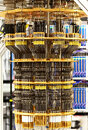
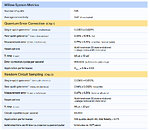
Google has announced a major breakthrough in quantum computing with its new Willow processor claiming a 13,000× performance advantage over the world's fastest supercomputers. The 105-qubit chip successfully executed a physics simulation using a new algorithm called Quantum Echoes completing in seconds what classical systems would take days to compute. The experiment simulated out-of-time-order correlators (OTOCs), a benchmark for complex quantum interference, marking what Google calls the first verifiable demonstration of quantum advantage with real-world applications. The Quantum Echoes algorithm was built to leverage quantum parallelism showing both high speed and accuracy.
Google says the achievement, announced on October 22 demonstrates practical potential for quantum workloads in molecular modeling, materials science, and NMR spectroscopy. While widespread applications remain several years out, the company notes that the result validates its long-term roadmap pairing hardware like Willow with custom algorithms to achieve scalable, fault-tolerant quantum computation. Meanwhile, IBM 1,121-qubit Condor processor announced in December 2023 has yet to demonstrate comparable real-world performance. However, the scope of IBM's Condor quantum processor was to pave the way for its smaller 156-qubit Heron processor integrated into IBM's Quantum System Two. Despite Willow's smaller qubit count Google's results highlight the importance of algorithmic efficiency and error correction, suggesting that raw qubit numbers alone are no longer the key determinant of quantum computing progress.
Sources:
Google Blog, IBTimes
Google says the achievement, announced on October 22 demonstrates practical potential for quantum workloads in molecular modeling, materials science, and NMR spectroscopy. While widespread applications remain several years out, the company notes that the result validates its long-term roadmap pairing hardware like Willow with custom algorithms to achieve scalable, fault-tolerant quantum computation. Meanwhile, IBM 1,121-qubit Condor processor announced in December 2023 has yet to demonstrate comparable real-world performance. However, the scope of IBM's Condor quantum processor was to pave the way for its smaller 156-qubit Heron processor integrated into IBM's Quantum System Two. Despite Willow's smaller qubit count Google's results highlight the importance of algorithmic efficiency and error correction, suggesting that raw qubit numbers alone are no longer the key determinant of quantum computing progress.


9 Comments on Google's Willow Quantum Processor Achieves 13,000× Speed Advantage Over Classical Supercomputers
As usual with quantum supremacy claims they are nebulous or very narrow in scope, meanwhile no "quantum computer" that publicly exists can run a classical quantum algorithm for number factorization (which would break the most common encryption schemes) on numbers larger than 35.
Great ! Decommission El Capitan, replace it with a bunch of Willow ! Oh wait, what ? That x13'000 times advantage was achieved with an algorithm that was explicitly designed to run on the Willow QPU and would take a hell of a lot longer on supercomouters because they first need a conversion layer to emulate qubits behavior ? Well shit Google, I thought you had *an actual breakthrough* that was ready to use in *real-world applications* besides just running that one arbitrary benchmark you pulled out of your ass.
Truth is that atm quantum computers are only useful in a niche of algorithms, and only when real genius-level ideas are discovered to be able to apply them while dodging all their issues. If that technology had any chance of really being useful for mainstream calculations it would have been already spread everywhere, instead we will have to wait an order of magnitude of evolutionary leaps before being able to do anything useful with it.
Talk about AI bubble, but I think major companies got into Quantum bubble.
But seriously, what do you actually do on this sort of machine? How?