
News Posts matching #Krackan Point

Return to Keyword Browsing

ASRock Presents New DeskSlim, DeskMini, & Box PC Systems at CES 2026

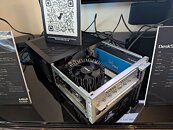
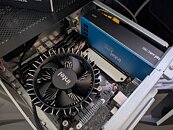
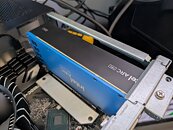
Earlier today, ASRock granted TechPowerUp access to its mostly new product laden Las Vegas hotel suite, where several brand-new mini PC systems immediately drew the eye. The Taiwanese manufacturer's DeskSlim B760 is already a somewhat known property, but over a month later, it is encouraging to examine a demonstration unit in-person. ASRock's demo example was already opened up when TPU turned up on the scene; clearly showing Intel hardware-based innards. Team Blue's reference Arc Pro B50 "Battlemage" workstation-grade graphics card is dinky enough to fit inside the DeskSlim B760 model's ultra-compact 4.9-liter chassis. Also, a Laminar RH-style air cooler was crammed into the tight interior space—tasked with cooling up to Intel 14th Gen Core CPUs. A nearby product placard mentions that the AMD-based DeskSlim X600 variant is also on the way to launch.
AMD AGESA v1.2.8.0 May Prevent BIOS Entry and Crash Systems

AMD is gradually releasing the AGESA PI 1.2.8.0 BIOS update, which primarily aims to enhance memory compatibility. However, users who have installed this BIOS version are reportedly facing issues. A member of the Chiphell forum installed the latest AGESA PI 1.2.8.0, hoping for improved system optimizations and memory tuning, only to encounter significant problems. The user is unable to access the CMOS screen, as the system crashes immediately upon each attempt. Furthermore, the computer fails to boot into the operating system, and the system boot repair utility consistently crashes when used.

The distribution of the update appears to have been limited and quietly handled by some manufacturers. MSI published BIOS files for several X870E and B850 models that reference AGESA PI v1.2.8.0, and an AMI BIOS image labelled 7E59v1A65 with a release date of 2025-12-03 and a file size near 15.9 MB lists improved memory compatibility in its release notes. Community tracking shows the new BIOS available only for a few SKUs, including the MPG X870E Edge Ti WiFi, MPG X870E Carbon WiFi and MAG B850M Mortar.

Intel 4-Core "Panther Lake" Xe3 iGPU Outperforms AMD Radeon 840M by 26%

Intel recently added another "Panther Lake" engineering sample to public benchmarking records. Geekbench reported a Core Ultra 7 366H processor featuring a four-core Xe3 integrated GPU built on the Intel 3 node. The system achieved a Vulkan API score of 22,813, placing this compact Xe3 configuration within the entry-level discrete GPU category. This score is roughly 26% higher than the 4-core AMD Radeon 840M and slightly surpasses the mobile GTX 1050 Ti, though it remains below the 8-core Radeon 860M. This indicates that Intel is now reaching performance levels similar to AMD's "Krackan Point" APUs with RDNA 3.5, making it suitable for gaming on the go.

The processor details in the listing match previous leaks. The Core Ultra 7 366H has a 16-core design, which includes 4 performance cores, 8 efficient cores, and 4 low-power efficient cores. It operates at a base clock speed of 2.00 GHz and can boost up to 4.8 GHz. The processor also includes approximately 18 MB of L3 cache. The Xe3 GPU increases its L2 cache to 4 MB in the 4-core configuration and 16 MB in the 12-core configuration, equating to 1 MB per core on the smaller tile and 1.5 MB per core on the larger tile. Additionally, Xe3 features updated ray tracing units with faster bounding-box traversal and a larger BVH cache, enhancing performance consistency in hybrid-rendered games. Nonetheless, this is an interesting preview of the upcoming "Panther Lake" Xe3 iGPU, and we expect to see more at CES 2026.

New AGESA BIOS Code Rekindles Hope For Strix Point Desktop APUs for AMD Ryzen 9000G Series

We recently reported on a rumor that AMD would soon be launching desktop APUs based on its Krackan Point architecture that has until now only been featured in mobile parts. At first, it seemed as though Strix Point and its more powerful AMD Radeon 890M iGPU would be limited to the mobile side of things, however a well-known leaker, @9550pro on X, has recently pointed out that AMD's AGESA update version 1.2.7.0 does make mention of Strix Point in its code. This observation is backed up by further evidence shown in a post by @xgfancz on X, who pointed out that the list of architectures in the latest 1.2.7.0 AGESA beta update makes clear reference to "STX," presumably "Strix Point," alongside "PHX," which would be Phoenix Point, AMD's current Ryzen 8000G series of desktop APUs.

All of this suggests that AMD Ryzen 9000G desktop APUs may launch with Strix Point architecture instead of being limited to Krackan Point, as was previously the assumption. Stepping up from Krackan Point to Strix Point would mean that iGPUs in the Ryzen 9000G series may feature up to 16 CUs and RDNA 3.5 instead of RDNA 3 in the current APUs, which could mean gaming and iGPU performance right around the level of the likes of the AMD Ryzen Z2 Extreme now making its way to swathes of gaming handhelds. The AMD Ryzen 9000G desktop APUs aren't expected to launch until closer to the end of this year, and even if they do, there's no telling if they will launch at the same time as what is essentially the 8000G refresh we have seen in rumors before.
Return to Keyword Browsing
Nov 14th, 2026 16:44 CST change timezone

New Forum Posts

Popular Reviews

TPU on YouTube

Controversial News Posts

