News Posts matching #NVIDIA

Return to Keyword Browsing

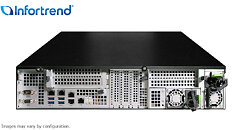
Infortrend Launches Edge AI Server, Bringing AI to The Edge Without Complex Setup

Infortrend Technology, Inc., a leading provider of enterprise storage and AI solutions, today announced the launch of the KS 3000U edge AI server. The platform enables mid-sized organizations and distributed sites to deploy AI inference at the edge with high availability and simplified setup.

While AI workloads move closer to where data is generated, organizations that continue to rely on cloud services face challenges, including latency, high operational costs, and data privacy. According to IDC, by 2030, 50% of enterprise AI inference workloads will be processed locally at the edge. For companies with limited on-site IT resources, this shift highlights the need for reliable, easy-to-deploy on-site edge AI infrastructure.

Khadas Mind Pro Mini-PC Gets Intel Panther Lake, New Mind Graphics 2 eGPU Packs RTX 5060 Ti

Amid the flurry of CES 2026 news, Khadas, a popular mini PC maker, announced a series of updates coming to its Mind product line. Most exciting of the lot of updates is the new Intel Panther Lake-powered Khadas Mind Pro mini PC and the new Mind Graphics 2 eGPU dock. The Mind Pro Mini-PC, which is slated to launch gradually in Q1 2026, is a Mini-PC with Intel's new Panther Lake Core Ultra X7 358H or Core Ultra X9 388H CPUs and all the juicy new Intel Arc graphics that come with that. Khadas describes the Mind Pro as a modular design, suggesting that the new Mini-PC could be somewhat easily upgraded. The Mind Pro's chassis is said to come in at just 0.46 liters, and the Intel Arc graphics inside the Panther Lake CPU should deliver entry-level dGPU performance. It will also be available with up to 64 GB of LPDDR5X memory and up to 2 TB of NVMe storage. Given that it's an Intel system, the Mind Pro will also have dual Thunderbolt 4 ports, which have four PCIe 4.0 lanes for connectivity. The Mind Pro is not yet available, and pricing has not yet been confirmed.

One of the coveted use cases for Thunderbolt 4 ports on a Mini-PC is the ability to connect an eGPU for additional performance. Khadas itself provides one such eGPU, the Mind Graphics dock, which has now been updated to the Mind Graphics 2, receiving an NVIDIA GeForce RTX 5060 Ti 16 GB upgrade in the process. The Mind Graphics 2 and the Mind Pro mini PC feature what Khadas calls the Mind Link, which enables PCIe 4.0 x8 support for improved performance when docked. The Mind Pro also sits neatly atop the Mind Graphics 2, in a dedicated recess in the chassis, when docked to the Mind Graphics 2. The Mind Graphics 2 dock is already available for $1,349. For users looking for an on-the-go solution, Khadas has also announced the xPlay portable monitor, which features a 2.8 K, 3:2 display and a 47.94 Wh battery, which Khadas says is capable of powering itself and Khadas's Mini-PCs—that said, battery life will likely be limited due to the size. The xPlay monitor also connects to the Mind mini PCs with the Mind Link port, which should make it a lot neater to carry around than a regular USB-C monitor, although it also operates over USB-C. The Mind xPlay portable display is available for $99 from Khadas.

j5create Shows Docks with Built-In Displays, 8K 144 Hz Support, and AI Meeting Tools at CES 2026

j5create dedicated its CES 2026 booth to high-end connectivity solutions that enhance modern IT infrastructure, particularly in video streaming at high resolutions and refresh rates. All new products are based on the Thunderbolt 5 series, offering 120 Gbps bandwidth, which is three times the capacity of the previous generation. The JTP5172 Triple 8K60 Docking Station supports 8K at 144 Hz and delivers 140 W of power. For those in need of an eGPU, the JTD5175 enclosure is compatible with NVIDIA's GeForce RTX 5090 for gaming and AI applications. Real-time monitoring is featured in two products: the JCD3195 Dashboard Dock and JCDP3140 Powerbase Docking Station, both equipped with built-in displays for performance and power status checks.

GeForce RTX 60-series Linked to Mysterious "GR20x" GPU Dies, 2H'27 Launch Predicted

A sizeable gap—not occupied by NVIDIA's heavily rumored, and possibly tenuous GeForce RTX 50 SUPER-series—has been noticed at this week's CES trade show. During kick-off hours, the North American giant's GeForce social media quietly declared that "no new GPUs will be announced" within the four-day-long event. Graphics card industry observers have seemingly become tired of pursuing mid-generation product refreshments, and have set their sights further along Team Green's timeline. Yesterday, kopite7kimi fielded a number of queries regarding a futuristic GeForce RTX 6000 graphics lineup. Logically, these next-gen designs could leverage "Rubin" GPU architecture—already previewed as a well-known property in enterprise fields.

Speculation from last September—hinging on NVIDIA's official unveiling of their "Rubin CPX" GPU, that sports CUDA cores—lead to a theory that "GR10x" dies would form the basis of truly next-wave gaming graphics cards. In early 2026, kopite7kimi has proposed the utilization of a different set of GPU dies—identified as the "GR20x" group (or "GR200" family). Specifically, the PC hardware sleuth has pinpointed an alleged "GR212" model. They surmise that NVIDIA's "Rubin" architecture-based GeForce RTX 60-series will arrive within a second half of 2027 launch window.

GIGABYTE RTX 5090 AORUS Infinity, ASUS RTX 5090 ProArt, and MSI RTX 5090 Lightning Z, Hands On

At the 2026 International CES, we went hands on with a new crop of ultra-premium custom-design GeForce RTX 5090 graphics cards that launched in quick succession of each other this year, exactly 1 year following the RTX 5090's original launch. Earlier today, we also held the Inno3D iChill RTX 5090 Frostbite PRO, another such recently announced premium RTX 5090 custom-design. The GIGABYTE RTX 5090 AORUS Infinity and ASUS RTX 5090 ProArt stand out as being the first custom design implementations of NVIDIA's Dual Flow-Through cooler design that it introduced with the RTX 5090 Founders Edition graphics card, the company's de facto reference design.

This design involves placing the main PCB of the card with the GPU, memory, and VRM, as a separate, centrally located component, with heat drawn from these hot components projecting along the length of the card, and fans located at both ends, push air through the cooler and out of the backplate, through cutouts. The PCB relies on additional breakout PCBs for the PCI-Express gold fingers, and the display I/O. GIGABYTE's design sees two large 120 mm fans pump air through the heatsink, with some of it being guided through the central region of the cooler. GIGABYTE has used a similar two-tone color scheme as NVIDIA Founders Edition. We can't wait to get our hands on this card to see how the cooler fares against rival custom designs.

GeForce NOW Recaps CES & Announces Early January Game Lineup

NVIDIA is wrapping up a big week at the CES trade show with a set of GeForce NOW announcements that are bringing more ways to play and more games to the cloud. From new native apps for Linux and Amazon Fire TV streaming sticks to hands-on throttle-and-stick (HOTAS) support for simulation fans and a new single sign-on option, GeForce NOW is expanding across devices and making it easier to jump straight into gameplay.

Topping it off, a new wave of AAA titles—including IO Interactive's 007 First Light, Capcom's Resident Evil Requiem and Pearl Abyss' Crimson Desert—is gearing up to join the GeForce NOW library for high-fidelity, low-latency streaming across the globe. Get ready with the six new games available to stream this week.

Alphacool at CES 2026: Waterblocks, Manifolds, and Massive Monoblocks

At CES 2026, the Alphacool booth was brimming with a wide array of water cooling products. Among their staple offerings was the Core GPU AIO, part of Alphacool's Core series, providing a comprehensive cooling solution for various GPU models, including those from AMD and NVIDIA. This system is built around the Core GPU cold plate and features two Core DC-LT 2 pumps. A 360 mm radiator is included, enabling significant overclocking potential even for high-performance cards like the RTX 5090. It is planned for Q2 release of ths year. In addition to this, Alphacool showcased single-slot water blocks for NVIDIA's RTX 6000 Pro "Blackwell" GPU. These are available with either a transparent acrylic finish or a sleek opaque design. The single-slot configuration allows for multiple GPUs to be stacked together in a custom loop, making them ideal for dense AI workstation deployments.

Ace Computers Shows "Firestorm" PCs and "Nightsky" Workstation Laptops at CES 2026

Ace Computers, a U.S.-based PC builder, unveiled its expanded gaming PC lineup under the Ace Gaming brand at CES 2026. Featured at the booth was the "Firestorm" PC family, available in various shapes and sizes. The most compact model, the Ignite ITX, fits an AMD Ryzen 5 9600X processor, 16 GB of DDR5 memory, and a 1 TB NVMe SSD into a small-form-factor case. It also includes an NVIDIA RTX 5070 GPU and a 750 W power supply, for decent gaming. The Spark-A model uses a standard ATX tower while maintaining the same CPU, RAM, and storage as the Ignite ITX, but upgrades the power supply to 850 W for better future expansion.

The bigger Blaze-A is designed for more demanding users, featuring a Ryzen 7 9700X processor and doubling both the memory and storage to 32 GB and 2 TB. At the top of the lineup, the Inferno-A flagship combines a Ryzen 7 9800X3D chip with an RTX 5080 graphics card, making it the most powerful option in the series for 4K gaming and intensive creative work. All four models run Windows 11 Pro.

MSI Launches the MPG 272QRF X36 G-SYNC Pulsar Gaming Monitor

MSI, in collaboration with NVIDIA, introduces the MPG 272QRF X36 G-SYNC Pulsar gaming monitor. This 27-inch Rapid IPS display features WQHD (2560 x 1440) resolution and a 360 Hz refresh rate. Designed for professional esports, it delivers the smoothest gameplay and sharpest visuals for competitive gamers seeking an edge.

G-SYNC Pulsar
The MPG 272QRF X36 features NVIDIA G-SYNC, the ultimate suite of display technologies for GeForce gamers. At its core is G-SYNC Pulsar, which utilizes variable frequency backlight strobing to deliver 4x effective motion clarity alongside the smooth, tear-free experience of G-SYNC Variable Refresh Rate. This technology sets a new standard for competitive gaming, ensuring precise aiming and crystal-clear motion even during the most fast-paced gameplay.

Digital Storm Displays "Vector" and "Aventum 5" PC Builds at CES 2026

At CES 2026 in Las Vegas, Digital Storm unveiled its latest pre-built PCs featuring custom chassis that rethink system layouts. One of the new models, the "Vector," redesigns the traditional setup by positioning the GPU at the top of the PC. The chassis measures 18x13x4 inches and accommodates an NVIDIA RTX 6000 Pro Blackwell GPU within its slim four-inch thickness. Perforations on both sides ensure adequate airflow for the GPU and radiator. The system is built on a Mini-ITX motherboard, compatible with either an AMD Ryzen 9 9950X or an Intel Core Ultra 9 285K processor. The Vector PC's exterior is adorned with vertical perforated stripes, and a tempered glass panel elegantly showcases the AIO cooler's ring that manages the CPU's temperature. Vector will start at $2,000 with planned availability in Q2 of 2026.

NVIDIA Answers TechPowerUp Questions on DLSS 4.5, 6x Multi FrameGen, and 240 Hz Mode

NVIDIA responded to our follow-up questions on its DLSS 4.5 announcement. There had been some lingering questions on what features are available across the GeForce RTX lineup, which are exclusive to the latest RTX 50-series, and exactly how some of those features work.

1) Our first question to NVIDIA was whether Dynamic Multi Frame Generation worked in some limited form on RTX 40-series / Ada, at least to automatically switch between 2x FrameGen and no FrameGen. NVIDIA says that Dynamic Multi FrameGen only works on the RTX 50-series, there's not even a limited version of it on the RTX 40-series.

2) Our next question was to understand how the 240 FPS mode picked the default target FPS, whether it did so by looking at the supported display modes reported by the monitor to Windows, or if it's always default to 240 FPS even when connected to a display with lower refresh rates, such as 144 Hz or 60 Hz. NVIDIA says that since DLSS Overrides are a user-initiated feature, the user has full control. You first have to select "Dynamic" in the Frame Generation Mode section of DLSS Override, and in the Target FPS dropdown, you are presented with two choices. The "Max refresh rate" option sets the target FPS to the maximum refresh rate supported by the monitor, while the "Custom" option lets you manually specify a target FPS value.

ASUS ROG Refreshes Zephyrus G14 and G16 Gaming Laptops at CES

ASUS Republic of Gamers (ROG) today announced the arrival of a new generation of Zephyrus G14 and G16 gaming laptops, powered by cutting edge next-gen chips. Both the Zephyrus G14 and Zephyrus G16 feature models with Intel, AMD, and NVIDIA silicon, perfect for creatives and professionals on the go who need extra power. Both laptops also now feature models with a new ROG Nebula HDR OLED display capable of 1100 nits peak brightness, and all models feature a timeless CNC-milled aluminium chassis to ensure a precise, premium experience from end to end.

Next-gen power
Both the Zephyrus G14 and G16 are available with the latest Intel Core Ultra Series 3 processors. This family employs a modular, tile-based architecture to enable broad flexibility, from low power operations to peak performance that users would expect from an ROG Zephyrus gaming laptop. With up to 50 TOPS of NPU performance available, local execution of AI tasks and potential for in-game AI workflows make the Core Ultra Series 3 family a perfect choice for modern computing. The Zephyrus G14 GU405 features up to an NVIDIA GeForce RTX 5080 Laptop GPU, while the Zephyrus G16 GU606 features up to an NVIDIA GeForce RTX 5090 Laptop GPU. Featuring the latest NVIDIA Blackwell architecture and killer software features like DLSS 4 and Frame Generation, these laptops are built for next-gen gaming.

IO Interactive Publishes 007 First Light's Minimum & Recommended PC Spec Requirements

The PC Specs for 007 First Light are here (refer to the first slide below). Dive into the PC hardware you need to Earn The Number in this re-imagined James Bond origin story. Pre-order now and get a free Deluxe Edition Upgrade. 007 First Light comes to PlayStation 5, Xbox Series X|S, Nintendo Switch 2, and PC on May 27th, 2026.

IO Interactive, the award-winning developer and publisher behind the globally-acclaimed HITMAN franchise, and Amazon MGM Studios are proud to announce a collaboration with NVIDIA GeForce to deliver an enhanced PC experience for 007 First Light, launching May 27, 2026. 007 First Light harnesses the power of NVIDIA GeForce's latest RTX technologies, bringing cinematic visuals and breakthrough performance to PC gamers worldwide. Developed in close collaboration with NVIDIA, the game features DLSS 4 with Multi Frame Generation, for an even deeper sense of immersion and improved performance.

Razer Unveils Forge AI Dev Workstation - Their Vision of Powerful Purpose-built Hardware

Razer has announced the Razer Forge AI Dev Workstation, a new addition to its growing line of high-performance hardware for AI developers. Built on over 20 years of high-performance engineering, this definitive local compute platform is designed to handle the most demanding training, inference, and simulation workloads for AI developers, researchers, and enterprises.

The Forge AI Dev Workstation fulfills Razer's vision for powerful, purpose-built AI hardware, delivering end-to-end local performance with secure on-device compute, zero subscription costs, and maximum responsiveness.

AGON by AOC Launches PRO AG276QSG2 27-inch Gaming Monitors with NVIDIA G-Sync Pulsar

As a global leader in gaming monitors, AGON by AOC continues its long-term close collaboration with NVIDIA to push the boundaries of esports display performance. The AGON PRO AG276QSG2 is built on this deep technical partnership, bringing NVIDIA G-SYNC Pulsar technology to AGON by AOC's professional esports lineup and translating advanced graphics innovations into real world competitive advantages for gamers.

"The AGON PRO AG276QSG2 was built for players who demand the highest level of performance. These hardcore gamers and esports competitors require absolute clarity at speed. By pairing our 360 Hz Fast IPS performance with NVIDIA G-SYNC Pulsar, we're delivering a monitor that helps top players track faster, react cleaner, and stay locked in when it matters most," says Kevin Wu, Head of Monitor Business Unit, TPV, AGON by AOC.

ASUS TUF Gaming TM500 Gaming Desktop With AMD Hawk Point CPU Spotted at CES

During CES 2026, ASUS announced the TUF Gaming TM500 Gaming PC, which in and of itself isn't a big deal and in fact, the TPU team on site grabbed a couple of quick snaps of it, without realising what sets it apart from your typical gaming PC. The TUF Gaming TM500 appears to be using leftover bits at ASUS, since it will be powered by either an AMD Ryzen 5 220 or a Ryzen 7 260, both of which are mobile CPUs based on AMD's Zen 4 processor architecture. These are obviously budget notebook chips with either six or eight cores, a Radeon 760M or 780M GPU and a total of 20 usable PCIe 4.0 lanes. ASUS decided that as this is a mobile CPU, the TM500 should use SO-DIMM memory. We're looking at a pair of DDR5 slots that support up to 64 GB of 5600 MT/s memory.

The motherboard itself appears to be microATX, but it has a custom layout and ASUS has even implemented a special heatpipe cooler that attaches to the rear of the chassis where the fan is located. As the TM500 is being sold as a gaming PC, it also comes with a choice of an AMD Radeon RX 9060 XT or an NVIDIA GeForce RTX 5060 graphics card. The motherboard also has room for a pair of SATA ports and a pair of PCIe 4.0 M.2 NVMe SSDs in the standard 2280 form factor. Connectivity wise, ASUS didn't seem to even have bothered, as the board only has a HDMI 2.1 port, one DP 1.4, one USB 3.2 Gen 1 (5 Gbps) Type-A port, two USB 2.0 ports, a Gigabit Ethernet port and three audio jacks around the back. The front of the chassis is home to a further two USB 3.2 Gen 1 (5 Gbps) Type-A ports and one Type-C port and a 3.5 mm combo headset jack. Considering the CPUs used have native USB4 support, as well as support for USB 3.2 Gen 2 (10 Gbps), this just feels cheap from ASUS. A Wi-Fi 6 module with Bluetooth 5.4 support and a 330 W PSU rounds off the package. There was no word on pricing, but it seems like there are competing mobile on desktop type systems out there that offer more features than the TUF Gaming TM500.

Supermicro Announces Support for Upcoming NVIDIA Vera Rubin NVL72 and HGX Rubin NVL8 Platforms

Supermicro Inc., a total IT solution provider for AI, cloud, storage, and 5G/edge, today announced expansions in manufacturing capacity and liquid-cooling capabilities, in collaboration with NVIDIA, to enable first-to-market delivery of data center-scale solutions optimized for the NVIDIA Vera Rubin and Rubin platforms. Leveraging accelerated development and collaboration with NVIDIA, Supermicro is uniquely positioned to rapidly deploy the flagship NVIDIA Vera Rubin NVL72 and NVIDIA HGX Rubin NVL8 systems. Supermicro's proven Data Center Building Block Solutions (DCBBS) approach delivers streamlined production, extensive customization options, and faster time-to-deployment, giving customers a decisive competitive edge in next-generation AI infrastructure.

"Supermicro's long-standing partnership with NVIDIA and our agile building block solutions enable us to bring the most advanced AI platforms to market faster than others," said Charles Liang, president and CEO of Supermicro. "With expanded manufacturing and industry-leading liquid-cooling expertise, we're empowering hyperscalers and enterprises to deploy the NVIDIA Vera Rubin and Rubin platforms infrastructure at scale with unmatched speed, efficiency, and reliability."

Alienware Brings Anti-Glare OLED Panels for its New Laptops to CES 2026

Dell's gaming division Alienware has a new type of OLED display panels for its new gaming laptops that has a new type of anti-glare coating that "diffuses reflections without sacrificing color quality." The new Alienware 16X Aurora, as well as the 16 Area-51, will sport the new OLED panels that deliver up to 620 nits peak HDR brightness and are VESA HDR True Black 500 certified. The new OLED display panels have a 2560 x 1600 pixel resolution, 240 Hz refresh rate and a 0.2 ms response time (not GtG, as that is 3 ms). The 16X Aurora, 16 Area-51, 18 Area-51 have all been upgraded with Intel Core Ultra 200HX processors and NVIDIA GeForce RTX 50 Series GPUs. All three models will be available sometime in Q1.

Alienware also teased what it calls an ultra-slim gaming laptop at 17 mm thick that will be available in both 14- and 16-inch sizes. The company will also be adding an entry-level gaming laptop in the future, but again didn't go into much in terms of details, except saying that it will deliver strong gaming performance. Finally, Alienware announced an updated Area-51 Desktop that will be powered by an AMD Ryzen 7 9850X3D CPU when it launches next month. No pricing was revealed, but we expect all of these products to be on the pricey side.

ASUS Unveils V Series Home Desktop PCs

ASUS today announced the ASUS V series (VM701MG, V701ML, VM501MH, V501MV, V501SV)—an all-new lineup of home-focused desktop PCs that redefines how performance computers should look, sound, and feel in modern living spaces.

Powered by up to an AMD Ryzen AI 7 processor with a built-in NPU delivering over 50 TOPS for Copilot+ AI features, and up to dual NVIDIA GeForce RTX 5060 graphics, V series delivers smooth, responsive performance for work, creativity, and entertainment alike. Combined with an advanced ASUS cooling system that keeps temperatures low and noise levels down, it's designed for quiet performance that blends harmoniously into modern homes.

Gigabyte Launches AORUS GeForce RTX 5090 INFINITY Graphics Card with Innovative Cooling

GIGABYTE, the world's leading computer brand, unveils the latest AORUS GeForce RTX 5090 INFINITY graphics card at CES 2026, showcasing a breakthrough design that combines compact dimensions with a next-generation cooling solution. Featuring the revolutionary WINDFORCE HYPERBURST Cooling System and GIGABYTE's first separated PCB layout, this latest flagship model redefines airflow performance and form factor footprint for elite gaming setups.

A well-designed cooling system is the key to unleashing the full potential of a GPU, and it has always been the top priority for every GIGABYTE graphics card. Powered by NVIDIA Blackwell, GeForce RTX 50 Series GPUs bring game-changing capabilities to gamers and creators. Equipped with a massive level of AI horsepower, the RTX 50 Series enables new experiences and next-level graphics fidelity. Multiply performance with NVIDIA DLSS 4, generate images at unprecedented speed, and unleash creativity with NVIDIA Studio.

ASUS Showcases ExpertCenter Pro ET900N G3 at CES 2026

ASUS today announced the showcase of ExpertCenter Pro ET900N G3 at CES 2026, underscoring its commitment to delivering enterprise-grade AI infrastructure in accessible, deskside form factors. The all-new ET900N G3—accelerated by the NVIDIA GB300 Grace Blackwell Ultra Desktop Platform—sets a new standard for deskside AI supercomputers, combining extreme performance, unified memory architecture, and data-center-class connectivity.

Solving the last-mile challenge of modern AI development
AI development has reached extraordinary heights through massive cloud and data-center infrastructure, yet many researchers, developers, and data scientists still face a 'last-mile' challenge. While cloud services offer immense scale, countless workflows require local, private, and immediate compute power—especially for training, fine-tuning, or running large AI models that exceed the limits of traditional workstations. What these professionals need is a system that delivers data-center-class performance in a familiar, easily deployable deskside form factor.

SK Hynix Shows 16-Layer 48 GB HBM4 Memory Modules at CES 2026

SK Hynix has showcased its most advanced high-bandwidth memory, packaged as a 16-high 48 GB HBM4, designed for high-capacity AI and HPC accelerators that require lots of memory. This is the first time SK Hynix has shown a memory module more advanced than the 12-high 36 GB HBM4, which used to run at 11.7 Gbps. For the new 16-high HBM4, we don't have official data or any speed references, but we can assume SK Hynix managed to extract a bit more bandwidth from the four additional DRAM layers. Interestingly, the announcement was somewhat vague, possibly because Micron and Samsung are also enhancing their HBM4 modules before they become available to companies like AMD and NVIDIA, allowing for potential increases in speed if needed.

The company also demonstrated the custom base die HBM called cHBM. This includes a customized base die sitting at the bottom of the DRAM stack that includes some logic usually associated with the GPU/ASIC logic die, and not memory. For example, this could include HBM PHY and memory controllers that are usually embedded on the GPU die and occupy space, which could be used for more compute logic on the die and maximize performance. In SK Hynix's demonstration and illustration, this is manifested as die-to-die PHYs, embedded memory controllers, HBM PHY, and much more. Customers can basically choose whatever they want and can even embed processing logic inside the die area.

Gigabyte Expands Its AI PC Vision with Smarter GiMATE and New Ultra-Thin AI Gaming Laptops

GIGABYTE, the world's leading computer brand, unveils an expanded AI PC vision with a redesigned GiMATE Interface and a new generation of AI gaming laptops at CES 2026. Built for clearer navigation and faster decision-making, the updated GiMATE experience brings real-time system insights and intuitive, voice-driven control into one streamlined hub, advancing GIGABYTE's commitment to truly adaptive, user-centric AI computing across its laptop lineup.

As GiMATE, GIGABYTE's exclusive AI agent for seamless hardware and software control, evolves, so does the ecosystem behind it, delivering smarter control for power, productivity, and creativity. The newly introduced AI Power Gear III enhances efficiency and flexibility with direct MUX switching between Discrete Mode and MSHybrid through GiMATE. It also brings smarter power behavior, the Auto Mode disables the GPU on battery to maximize runtime, the Optimus Mode delivers smoother, balanced performance, while the Eco Mode provides extreme power saving on AC power and battery. For creators and builders, GiMATE Creator expands its generative capabilities with the addition of Qwen-Image, supporting both English and Chinese prompts to bring powerful visual AI to users worldwide. Meanwhile, GiMATE Coder lowers the barrier to development by enabling natural-language code generation, correction, and optimization, making coding more accessible for beginners while accelerating iteration for experienced users.

LG Announces the Ultragear GX7 Dual Mode RGB Tandem OLED Gaming Monitor

LG Electronics (LG) today announced the U.S. rollout of the LG UltraGear OLED Dual Mode - 540 Hz QHD / 720 Hz HD 0.02 ms G-Sync Compatible Gaming Monitor (model: 27GX790B), built for gamers who want every visual and competitive advantage. The LG UltraGear OLED GX7 is now available for pre-order at LG.com retailing for $999.99. Customers who pre-order the GX7 starting now through February 1 will also receive a free 27" FHD 240 Hz gaming monitor (model: 27G440A-B / $299 MSRP) with expedited shipping.

Building on LG's established leadership in OLED gaming displays, the LG UltraGear OLED GX7 is LG's brightest OLED gaming monitor yet, featuring a 27" 4th Generation OLED QHD resolution display that delivers pinpoint clarity with UL verified Perfect Black and Perfect Color, exposing incredible detail and nuanced highlights. The VESA DisplayHDR True Black 500 adds deeper contrast and controlled brightness, giving gamers a sharper read on enemies, environments and effects in every gaming scenario.

Supermicro Brings Enterprise-Class AI Performance to the Client, Edge, and Consumer Markets

Super Micro Computer, Inc. (SMCI), a Total IT Solution Provider for AI/ML, HPC, Cloud, Storage, and 5G/Edge, will showcase its latest high-performance Super AI Station in Las Vegas, Nevada. Designed for AI developers, start-ups, and higher education and research professionals, Supermicro's new portfolio of products brings the latest innovation and performance to the desktop, edge, and consumer markets.

"The consumer technology landscape is evolving faster than ever, driven by breakthroughs in consumer-focused AI applications," said Charles Liang, president and CEO of Supermicro. "Supermicro introduces the latest innovations that deliver unprecedented performance and energy efficiency, empowering the next generation of users including creators and developers."
Return to Keyword Browsing
Nov 27th, 2026 20:09 CST change timezone

New Forum Posts

Popular Reviews

TPU on YouTube

Controversial News Posts