News Posts matching #NVIDIA

Return to Keyword Browsing

HP Unveils New HyperX OMEN Laptops and Gaming Monitors at CES 2026

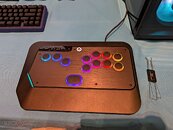
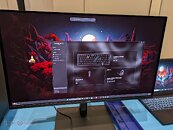
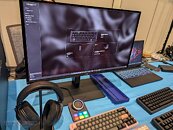
This year at CES, HP unveiled its new HyperX OMEN MAX 16 gaming laptop and HyperX OMEN OLED 34 gaming monitor, alongside the HyperX Clutch Tachi arcade controller. The HyperX OMEN MAX 16 comes with either an Intel Core Ultra 200HX series processor or a next-gen AMD Ryzen AI processor and is available with a range of graphics options that tops out with the NVIDIA GeForce RTX 5090 Laptop GPU. HP mentions that the HyperX OMEN MAX 16 packs 300 W of total platform power, which apparently is 20 percent higher than its predecessor and it sounds like this will be one loud and hot laptop. That said, HP claims that its OMEN Tempest Cooling Pro system with three fans and fan cleaner technology will keep it cool. Other new additions include a new keyboard with four times faster polling rate, again compared to previous products from HP, a 16-inch, 240 Hz WQXGA 500 nits OLED display and of course OMEN AI that is meant to offer one click optimisation for each and every game you own.

The HyperX OMEN OLED 34 is using one of the new V-Stripe QD-OLED panels and offers a 21:9 aspect ratio with a WQHD resolution and a 360 Hz refresh rate. HP has also included 100 W USB PD charging and built in KVM functionality. There's also the option to add a 3D-printable headphone hook and HP offers a three year HyperX OLED CoreProtect limited burn in warranty. The HyperX Clutch Tachi is HP's first arcade controller that is Xbox compatible and it features magnetic switches with TMR sensors. Here it's also possible to 3D print various additions to the top plate of the controller and HP's NGENUITY software allows for custom button mapping, rapid triggers and actuation adjustments. No pricing was mentioned for either of the products, which will launch sometime this spring.

NVIDIA Releases GeForce 591.74 WHQL Drivers with DLSS 4.5 Support

NVIDIA released the latest version of its GeForce Game Ready drivers. Version 591.74 WHQL introduces support for the new DLSS 4.5 technology the company announced on Monday, which brings an updated DLSS super resolution Transformer-based AI model that offers significantly higher image quality than DLSS 4, which in itself was a leap in quality over the previous DLSS versions that used convoluted neural networks (CNN) based models.

Besides driver-level support for DLSS 4.5, GeForce 591.74 adds NVIDIA App DLSS overrides for DLSS 4.5, letting you select the new technology even if a game was designed for DLSS with an older model. The drivers also improve NVIDIA Surround settings. G-SYNC monitor support has been expanded with dozens of new monitor models, listed below. Game stability issues with "Arena Breakout: Infinite" have been fixed. Grab the driver from the link below.

DOWNLOAD: NVIDIA GeForce 591.74 WHQL

NVIDIA Announces Major Updates to GeForce NOW: Sim Controllers, Linux and Fire TV Clients

NVIDIA today announced major updates to its GeForce NOW cloud gaming platform that turns practically any screen with a game controller into a powerful gaming platform with graphics akin to PCs. The company brought NVIDIA GeForce RTX 5080 performance tier to GeForce NOW in 2025, priced at $19.99 a month to be able to play on any device, at resolutions of up to 5K @ 120 FPS or 1080p @ 360 FPS, with NVIDIA Reflex low latency, and Cinematic quality streaming, with a game library spanning over 4,000. In 2026, NVIDIA is announcing a handful interesting updates.

Perhaps the biggest GeForce NOW update today is support for exotic game controller types, such as slight control, racing wheels, and newer kinds of simulator hardware. Your client device should be able to recognize the controller and let GeForce NOW use it, so you can use the controller for playing titles such as Microsoft Flight Simulator 2024, etc. Next up, NVIDIA announced the addition of more AAA games to GeForce NOW, including Resident Evil Reqium, 007 First Light, Crimson Desert, and Active Matter.

NVIDIA Updates G-SYNC Pulsar Standard and Ambient Adaptive Technology

NVIDIA today announced updated G-SYNC Pulsar display standard for fast-paced competitive e-sports gaming. The standard builds on NVIDIA's proven G-SYNC variable refresh-rate technology that ensures that the display and GPU are in perfect sync with output framerates and display refresh-rates, to eliminate screen tearing and stuttering. The new G-SYNC Pulsar spec calls for a standardized 27-inch QHD (2560 x 1440 pixels) gaming display with refresh rate of 360 Hz on the display's side, and the capability of over 1000 Hz perceived motion clarity that works at the game rendering level to eliminate motion blur. In the example shown below, G-SYNC Pulsar in "Counter Strike 2" is shown improving effective motion clarity by 4 times.

The other new standard being introduced today is Ambient Adaptive Technology. Similar to your smartphone, which uses its front-camera to gauge ambient lighting conditions to dynamically adjust display and color temperature, this feature relies on an optical sensor on the display to analyze ambient lighting conditions, and respond to broad daylight with 100% brightness, cooler white colors (higher color temperatures); and nighttime with 36% brightness, and warmer colors (lower color temps). At CES, popular gaming monitor manufacturers are announcing their G-SYNC Pulsar capable monitors, which include Acer Predator XB273U F5, AOC AGON Pro AG276QSG2, ASUS ROG Strix Pulsar XG27AQNGV, and MSI MPG 272QRF X36. These displays will be available from tomorrow (January 7), with prices starting at $599.

NVIDIA Announces DLSS 4.5 with Increased Image Quality, 6x FrameGen, and 240 FPS Mode

NVIDIA today announced the new DLSS 4.5 technology at its 2026 International CES media event, to improve gaming performance and image quality, bringing higher resolutions and refresh rates within reach of PC gamers. DLSS 4.5 is a major update over DLSS 4 that debuted in 2024 with the GeForce RTX 50-series "Blackwell" graphics cards. It is designed to bring games with performance-intensive path tracing effects to a broader audience, with the fastest RTX 50-series GPU models being able to play path-traced games at 4K Ultra HD with 240 Hz.

At the heart of the DLSS 4.5 update are two key announcements—2nd Generation Super Resolution Transformer, and Dynamic Multi Frame Generation. One of the defining features of DLSS 4 is its high-quality upscaler, which replaced convolutional neural network (CNN) based AI models with a newer Transformer-based model, resulting in a significant improvement in image quality. Now, at CES, NVIDIA announced that they have updated their algorithm with an even newer Transformer-based model that has been trained on a much larger dataset. This 2nd Gen Transformer was developed using five times the compute power that went into the first-gen DLSS 4 Transformer upscaler, and leverages the FP8 data format that's supported by the Tensor cores of GeForce RTX 40-series "Ada" and 50-series "Blackwell" GPUs. DLSS 4.5 is still supported on older 30-series "Ampere" and 20-series "Turing" GPUs, however these generations lack FP8 acceleration, so the performance uplift over native wouldn't be as significant as with newer GPUs.

MSI Shows Off New AI Mini-PCs with Intel, AMD, and NVIDIA DGX Spark Platform

MSI has officially unveiled the specifications of its new AI-centric mini PC line-up that is being debuted at CES 2026. The new line-up offers something for everyone—as long as you're looking to run local LLMs or similar AI workloads—whether you're looking for a hyper-compact x86 system powered by AMD's RDNA 3.5, a more powerful NVIDIA RTX 5070, or something more exotic with NVIDIA's new Arm-based DGX Spark platform.

Perhaps the most interesting mini PC that MSI is showing off at CES is the EdgeXpert, which is targeted at AI developers and is built on NVIDIA's DGX Spark platform. In the EdgeXpert, which was announced earlier this year, that means 20 Arm CPU cores and an AI Blackwell GPU as well as NVIDIA's NVLink C2C tech, which claims to offer "five times the bandwidth of PCIe 5.0," for improved data transfer and sharing between the CPU and GPU. According to MSI, the EdgeXpert is capable of a petaFLOP of AI performance. It also features 128 GB of LPDDR5x unified system memory and a vapor chamber cooling system.

NVIDIA DGX Spark and DGX Station Power the Latest Open-Source and Frontier Models

Open-source AI is accelerating innovation across industries, and NVIDIA DGX Spark and DGX Station are built to help developers turn innovation into impact. NVIDIA today unveiled at the CES trade show how the DGX Spark and DGX Station deskside AI supercomputers let developers harness the latest open and frontier AI models on a local deskside system, from 100-billion-parameter models on DGX Spark to 1-trillion-parameter models on DGX Station. Powered by the NVIDIA Grace Blackwell architecture, with large unified memory and petaflop-level AI performance, these systems give developers new capabilities to develop locally and easily scale to the cloud.

NVIDIA DGX SuperPOD Sets the Stage for Rubin-Based Systems

NVIDIA DGX SuperPOD is paving the way for large-scale system deployments built on the NVIDIA Rubin platform—the next leap forward in AI computing. At the CES trade show in Las Vegas, NVIDIA today introduced the Rubin platform, comprising six new chips designed to deliver one incredible AI supercomputer, and engineered to accelerate agentic AI, mixture-of-experts (MoE) models and long-context reasoning. The Rubin platform unites six chips—the NVIDIA Vera CPU, Rubin GPU, NVLink 6 Switch, ConnectX-9 SuperNIC, BlueField-4 DPU and Spectrum-6 Ethernet Switch—through an advanced codesign approach that accelerates training and reduces the cost of inference token generation.

DGX SuperPOD remains the foundational design for deploying Rubin-based systems across enterprise and research environments. The NVIDIA DGX platform addresses the entire technology stack—from NVIDIA computing to networking to software—as a single, cohesive system, removing the burden of infrastructure integration and allowing teams to focus on AI innovation and business results. "Rubin arrives at exactly the right moment, as AI computing demand for both training and inference is going through the roof," said Jensen Huang, founder and CEO of NVIDIA.

NVIDIA BlueField-Powered Cybersecurity and Acceleration Arrive on NVIDIA Enterprise AI Factory Validated Design

AI is powering breakthroughs across industries, helping enterprises operate with greater intelligence and speed. As AI factories scale, the next generation of enterprise AI depends on infrastructure that can efficiently manage data, secure every stage of the pipeline and accelerate the core services that move, protect and process information alongside AI workloads.

NVIDIA has expanded the NVIDIA Enterprise AI Factory validated design to include NVIDIA BlueField cybersecurity and infrastructure acceleration capabilities. This accelerates the data center services that keep AI factories running and delivers security that can operate at the same speed as AI. Leading software platforms from NVIDIA BlueField ecosystem partners Armis, Check Point, F5, Fortinet, Palo Alto Networks, Rafay, Red Hat, Spectro Cloud and Trend Micro are now validated as part of NVIDIA Enterprise AI Factory, helping enterprises enhance runtime protection, streamline operations and strengthen the infrastructure that powers AI.

Digital Storm Debuts High-End Vector and Aventum 5 Desktop Platforms at CES 2026

Digital Storm today unveiled two new desktop platforms at CES 2026, Vector and Aventum 5, which showcase two distinct approaches to modern high-end computing: an unapologetically extreme liquid-cooled tower and a dramatically slimmer performance desktop that condenses serious hardware into a compact footprint.

Rethinking High-End Desktops
For the last decade, many high-end desktops have grown bigger, louder, and more power hungry in the race for peak numbers. Vector and Aventum 5 take a different path, focusing on how a PC performs and behaves over hours of rendering, creation, or AI workloads, not just what it hits in a 30-second benchmark run. Both platforms are engineered around modern CPUs from Intel and AMD and graphics options up to NVIDIA RTX 6000 Pro Blackwell.

HP Announces New OmniBooks, OmniStudios, and Chromebooks at CES 2026

Today, HP Inc. announced the company's newest innovations powering the work of everyday life with updates to its full HP OmniBook consumer portfolio that deliver passion-ready experiences for consumers to work smarter, look sharper, and lead better. "Today's consumers use their PCs in more ways than ever before to create content, stream entertainment, code, or game. And regardless what hat they may wear at any given point - student by day, entrepreneur or freelancer by night - they all need devices that can keep up with whatever comes their way," said Samuel Chang, Senior Vice President and Division President, Consumer Personal Systems at HP Inc. "Our newest OmniBook, OmniStudio, and Chromebook portfolios deliver our widest range of PCs yet - engineered to power the most demanding types of work while designed to enable whatever consumers love to do."

Powerful Performance Meets Stunning Design
The line between work and personal life has become increasingly blurred. Up to 12.5% of the total global workforce is made up of online gig workers, and people are using their PCs not just for school or personal tasks, but for side hustles, freelancing, and exploring their entrepreneurial spirit. Knowledge workers are using AI more than ever, with a 39% increase year-over-year in daily AI use. And close to half of all knowledge workers are optimistic about work because they believe tech will improve it. The company's newest HP OmniBook Ultra and HP OmniStudio X 27 are designed to take advantage of the latest in AI, delivering Copilot+ experiences to get the work done so you have more time to enjoy what you love.

Origin PC Introduces the S-Class Edge AI Developer Kit

ORIGIN PC today revealed the S-Class Edge AI, a compact and turnkey developer kit built around the NVIDIA Jetson Orin NX 16 GB Super. The platform is designed for developers, researchers, and integrators who need a ready-to-use environment for robotics, computer vision, and edge AI workloads. It delivers up to 157 TOPS of performance and allows users to move from unboxing to real-time inference within minutes. S-Class Edge AI represents a new step in ORIGIN PC's expansion into advanced edge computing solutions.

A Compact and Developer Focused Form Factor
The S-Class Edge AI features a small enclosure that fits easily on a desk, lab bench, or classroom workstation. Front and rear ports include USB 3.2, USB Type C OTG, HDMI 2.0, audio I/O, DC power, and dual Ethernet connectivity. This layout supports peripherals, displays, and robotics equipment and allows developers to begin testing immediately. The thermally optimized chassis supports stable operation during extended workloads. The compact footprint reinforces the platform's role as a lab-friendly and classroom-friendly solution that provides workstation level capability without taking up significant space.

NVIDIA Prepares Native GeForce NOW Support for Linux-Powered Operating Systems

NVIDIA is reportedly preparing to offer native support for its GeForce NOW streaming service on Linux-based operating systems. This development is significant for gamers who have had to rely on unstable workarounds on their Linux desktop PCs, which often broke after updates. With native support, GeForce NOW on Linux will enhance gaming beyond traditional hardware-based acceleration, as cloud GPUs are typically more powerful than what most gamers own. The GeForce NOW Ultimate subscription, priced at $19.99 per month, provides access to a powerful GeForce RTX 5080 and a vast game library of over 4,000 titles, which continues to expand.

While there is no concrete information on when NVIDIA will launch full native Linux support, hints suggest that announcements might be made at the upcoming CES event. Additionally, NVIDIA already overhauled its GeForce NOW platform by imposing a 100-hour cap on all subscription tiers. Starting January 1, 2026, each GeForce NOW cloud gaming subscription is limited to 100 hours of playtime per month. Given that months average about 30.437 days, any playtime exceeding the 100-hour limit is rounded up to the next 15-hour block, potentially leading to extra charges if more playtime is desired. Now, Linux desktop users will face the same limitations, but they will finally receive native support.

Memory Makers Prioritize Server Applications, Driving Across-the-Board Price Increases in 1Q26

TrendForce's latest investigations indicate that DRAM suppliers in 1Q26 will continue to reallocate advanced process nodes and new capacity toward server and HBM products to support rising AI server demand. This shift has significantly limited supply in other markets, causing conventional DRAM contract prices to increase by about 55-60% QoQ. Meanwhile, disciplined capacity management by NAND Flash suppliers, along with robust server demand that is displacing other applications, is likely to increase contract prices across all NAND Flash product categories by 33-38%.

Despite weaker notebook shipments and slower growth in memory demand due to potential specification downgrades, PC DRAM prices are still set to rise sharply in the first quarter. DRAM suppliers have simultaneously tightened supply to PC OEMs and module makers, forcing some OEMs to procure memory at higher prices through modules makers. This is expected to raise DRAM suppliers' module pricing and significantly drive up PC DRAM prices.

NVIDIA Rumored to Resurrect GeForce RTX 3060

NVIDIA is rumored to be bringing back production of its GeForce RTX 3060 graphics card in Q1 2026. Based on the two generations old "Ampere" graphics architecture, the RTX 3060 could address the sub-$300 market. There is no word on which exact memory variant is on offer—whether it's the 12 GB original with a 192-bit wide memory bus, or the newer 8 GB variant with 128-bit bus. Why it has to be the RTX 3060 and not something newer, such as the RTX 4060, is anyone's guess, but if we have to speculate, it could have something to do with the fact that the RTX 4060 is based on the same NVIDIA 4N foundry node at TSMC as the current RTX 5060, whereas the RTX 3060, like the rest of the GeForce "Ampere" generation, is built on the Samsung 8N (8 nm DUV) foundry node.

MSI Launches the New PRO MAX Series

MSI introduces the new PRO MAX Series, a unified high-end platform shaped by Modernity, Acceleration, and eXperience for the evolving rhythm of everyday work. Guided by a consistent design language of color, hierarchy, and structure, PRO MAX keeps the focus on what matters most-the content itself. Performance is tuned for multitasking, image processing, data-driven workloads, and out of office collaboration, while an intuitive and predictable user experience ensures a smooth and uninterrupted flow across different work environments.

As work expands across shared, and hybrid settings, PRO MAX maintains continuity wherever work happens. The PRO MAX Series debuts with a complete product lineup spanning Monitor, Desktop PC, All-in-one PC, Motherboard, Power supply, Chassis and Liquid cooler-forming a fully integrated ecosystem for everyday work.

NVIDIA GeForce 591.67 Hotfix Drivers Released

NVIDIA over the weekend released its GeForce 591.67 Hotfix drivers to correct critical issues that can't wait for the next WHQL driver release. Version 591.67 Hotfix (a de-facto Beta), comes with a fix to Slight banding that might be observed on gradients in SDR color mode. It also addresses a bug where colors are not correctly applied when using digital vibrance. Lastly, a minor bug that causes NVIDIA Control Panel being unable to disable systray icon has been fixed. Grab the driver from the link below.

DOWNLOAD: NVIDIA GeForce 591.67 Hotfix

First AMD Radeon RX 9000 Series GPU Appears in Steam Survey Rankings

Back in December, AMD's current RDNA 4 GPU lineup apparently showed little impact on Steam's Hardware and Software Survey results. However, as we enter 2026, data from December 2025 has been processed, and the first Radeon RX 9000 series GPU has appeared in the survey rankings. At 100+ ranking, the first AMD Radeon RX 9000 series GPU based on the RDNA 4 IP is the Radeon RX 9070 SKU, commanding a 0.22% share of all gamers participating in the survey. This is also the only RDNA 4 GPU present on the list, meaning that all the remaining SKUs are below 0.15% of the total share, hence not shown in this ranking.

For other AMD GPU SKUs, there is a slight change in the overall structure, where the RDNA 3-based Radeon RX 7800 XT is the most popular AMD gamer GPU with a 1.57% share this December. This dethrones the previous RDNA 2-based Radeon RX 6600, which now stands at 1.51% of the overall group. This includes the market share of AMD GPUs on both Windows and Linux-based PCs. Additionally, this is the first time RDNA 4-based GPUs have appeared on the Steam Survey list since the initial launch in March, finally showcasing the share of the latest AMD graphics.

NVIDIA GeForce NOW Gets 14 New Games in January

New year, new games, all with RTX 5080-powered cloud energy. GeForce NOW is kicking off 2026 by looking back at an unforgettable year of wins and wildly high frame rates. From streams of the biggest blockbusters to new ways to play anywhere, members showed all year what happens when great games meet serious GeForce performance in the cloud. Grab a cozy spot, queue up a game and ring in the new year with GeForce NOW, starting with a fresh list of 14 titles coming to the cloud this January, with 5 available to stream this week..

Put a Bow on It
The star upgrade of 2025 was the arrival of NVIDIA Blackwell RTX in the cloud, bringing GeForce RTX 5080 power to the GeForce NOW Ultimate membership tier along with all the NVIDIA technologies that 50 Series GPU owners have access to, including DLSS 4 and 5K 120 frames-per-second (FPS) streaming. "The amazing announcement of the RTX 5080 being added to GeForce NOW with features like DLSS 4 and 5K 120 FPS streaming was a true game-changer for cloud gaming," said Nads from Cloud&Console. Luna, a GeForce NOW Discord community modder, called out how the Ultimate tier let her go topside in ARC Raiders and explore Castor Woods in Dying Light: The Beast "in areas where my local machine struggles - and now, the RTX 5080-powered cloud can push them even further."

LG Introduces 2026 LG gram Lineup Elevated by Aerominum

LG Electronics (LG) will unveil its 2026 LG gram lineup at CES 2026, extending the brand's decade-long leadership in ultra-portable laptops. The new lineup debuts an ultra-light Aerominum material for a more portable, durable and premium design. The new models also prioritize productivity with advanced dual AI capabilities, combining on-device intelligence with cloud-based AI for more flexible work and creativity on the go.

The LG gram's evolution as the ultra-portable laptop is accelerated by Aerominum, a composition developed by LG. This innovative material reduces the laptop's weight while reinforcing its structural strength. The resulting chassis is built for life on the move, offering improved scratch resistance, meeting military-grade standards and ensuring long-lasting resilience for everyday use. Aerominum's aeroplate structure and refined atelier brushing deliver a sleek metallic finish, elevating the design without adding bulk.

Leaks Predict $5000 RTX 5090 GPUs in 2026 Thanks to AI Industry Demand

It's no secret that gaming is suffering under something of an affordability crisis, with increased demand for AI-capable GPUs and DDR5 memory resulting in rising prices for gamers and other far-reaching side effects on the gaming hardware market. Now, though, fresh leaks suggest that things are only going to get worse in 2026. According to Korean publication, Newsis, both AMD and NVIDIA are planning to gradually and permanently increase GPU prices "over the next several months." This is expected to start as early as January 2026, when AMD is expected to increase prices. NVIDIA will allegedly follow suit in February.

If the publication's insider sources are correct, the NVIDIA RTX 5090, which launched at $1,999, will reach as high as $5,000 before the end of the year. No prediction has been made for AMD's RX 9000 series, but memory has already been said to take up as much as 80% of the average GPU BOM cost, and memory prices are expected to increase by as much as 40% by Q2 2026. We've already reported on the fact that instability and price increases in the DRAM market will likely affect launch windows for upcoming hardware, potentially reaching as far as next-gen console launches, and ASUS recently announced that it would be increasing hardware prices starting in early January 2026, despite also increasing DDR4 motherboard production in response to the changing market.

RTX 5090 With 1350 W OC Saved From Melted Connector by ASRock PSU

Reports of melting 12VHPWR and 12V-2x6 connectors on NVIDIA GPUs—as well as a handful of examples from AMD—have become so common that hardware vendors have started building in safeguards against the issue. One such safeguard is a thermal sensor found on some ASRock power supplies, like the Phantom Gaming PG-1300G, which happened to recently save a user the expense and heartbreak of losing a heavily overclocked NVIDIA GeForce RTX 5090.

The incident was reported by user motivman on the Overclock.net forums, and according to the account, the MSI Ventus NVIDIA GeForce RTX 5090 GPU was overclocked to a whopping 1350 W, which is well over the stock 575 W TDP—although it's not uncommon to exceed rated TDPs during boost scenarios anyway—and it had just completed a benchmark run in 3DMark Port Royal when the PSU triggered a shutdown. The PC would not restart until the cable had cooled down, which is a decent showing for the PSU's safety feature—at least mostly.

Maxon Introduces Cinebench 2026

Maxon is thrilled to announce the highly anticipated release of Cinebench 2026, its latest iteration of the industry-standard benchmarking software, which has been a cornerstone in computer performance evaluation for two decades. Widely used by reviewers, hardware manufacturers, and everyday computer owners, Cinebench utilizes the power of Redshift, Cinema 4D's default rendering engine, to accurately assess and evaluate CPU and GPU performance using real-world 3D rendering workloads.

Cinebench 2026 takes advantage of the latest developments in hardware technology, adding compatibility with NVIDIA's new Blackwell GPUs (5000 series) and AMD 9000 series GPUs on Windows, as well as NVIDIA Hopper and Blackwell data center GPUs. Additionally, Cinebench 2026 now supports Apple M4 and M5 powered systems.

NVIDIA Tested Intel's 18A Node but Did Not Commit to Intel Foundry

According to a report from Reuters, NVIDIA has explored using Intel Foundry's 18A node but has not proceeded to mass production. Reuters states, "NVIDIA recently tested out whether it would manufacture its chips using Intel's production process known as 18A but stopped moving forward, two people familiar with the matter said. NVIDIA did not answer a request for comment." This is not necessarily a negative sign for Intel Foundry, as many customers have previously approached Intel to try out the 18A node. It is common for chip designers to evaluate what TSMC's competitors offer before committing to additional foundry capacity.

For the 18A node, the general impression is that it primarily serves Intel's internal products. Future versions, like 18A-P and 18A-PT, aim to attract external customers and are expected to be long-term Intel Foundry products. Intel's 14A node is becoming a critical product for Intel Foundry, with active development targeting a 2027 release. As Intel collaborates with customers on the node design, potential foundry partners are assessing whether the upcoming technology meets their needs. Early customer feedback indicates strong satisfaction with the development progress, with those familiar with the node describing it as genuinely competitive.

Arch Linux Drops Support for NVIDIA Pascal and Older GPUs

Linux can be a solid option for anyone looking for an operating system that supports older hardware, but bleeding-edge distributions like Arch Linux often drop support for older hardware sooner than other distributions. This is exactly what happened recently, as the development team behind Arch Linux decided to upgrade the default NVIDIA GPU driver to version 590. This change means that Arch Linux will no longer support NVIDIA GPUs from the Pascal generation and older—this means GeForce GTX 1000 GPUs and older. Somewhat comically, this happened shortly after AMD's Linux kernel drivers extended support to AMD GPUs dating back to 2012.

Arch Linux has also migrated the default NVIDIA GPU drivers to the nvidia-open, nvidia-dkms, nvidia-open-dkms packages. Previously, the GTX 900 series GPUs were the oldest NVIDIA graphics cards supported by the Linux distro, although there are ways to work around the new support limitations. Users with older NVIDIA GPUs can manually uninstall the official nvidia, nvidia-lts, and nvidia-dkms packages and replace them with the nvidia-580xx-dkms drivers from the community-driven AUR (Arch User Repository).
Return to Keyword Browsing
Nov 27th, 2026 20:09 CST change timezone

New Forum Posts

Popular Reviews

TPU on YouTube

Controversial News Posts